
 English
 Español
 中文
中文 हिन्दी
 Français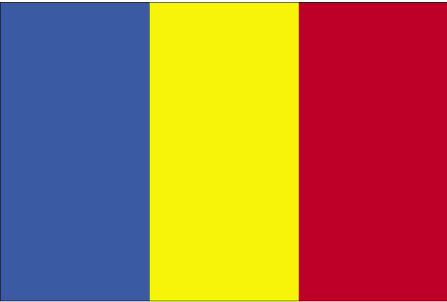
Romania
Romania
Declare Your Relationship to Romania
CountryReports Community
- Studying20
- From Romania5
- Romania heritage7
- Visited3
- Want to visit3
Customs and Culture
Customs and Culture
Cultural Attributes
The conflicting attitudes about the future of the nation have led to violence, instability, and the rise of dangerous tensions between ethnic groups. The country is not well developed our country is not so developed, but people intend to spend more money on education, and they tend to strive for financial stability. Wealth is defined in properties, possessions such as car, apartment, rest home, money and power.

Realm of the Danube Delta
Get More Customs and Culture
6 more cultural topics for members
Social Customs & Etiquette · Diet · Family · Dating Customs · Recreation · Student Life
Every country, every topic, all activities & recipes
✓ Instant access on this device · ✓ No subscription
Holidays
Unification Day
12/1Independence Day
of Romania and Transylvania
Christmas
12/25Christmas
Romania has enjoyed Christmas since the ninth century. The Christmas season extends from Christmas Eve until Epiphany. St Nicholas’s Day is also observed on December 6th. On the eve of St. Nicholas’s Day children place their boots near an entrance where Mos Nicolae (Old Nicholas) can fill them with candy and treats. Naughty children receive sticks.
Colindatul (Caroling) on Christmas Eve is one of the most important traditions and involves everyone in the community. Large groups organize and travel from door to door singing a mixture of sacred and secular colinde (carols).
Christmas Eve customs include decorating the home with fir branches and the Christmas tree with multicolored ornaments and candles.
Christmas Eve meal features roast pork, cabbage, breads, and turta (a pastry of thick rolled dough that represents the swaddling clothes of the Christ child). The holiday gift giver is Mos Craciun (a figure similar to Santa Claus).
Dates of Interest
- October
This annual festival in Piatra Neam? celebrates the Neolithic culture of the Cucuteni-Trypillian civilization with crafts, workshops, and exhibitions.
How do people greet each other in Romania?
Adults commonly greet with a handshake, and using a person's title before the surname is the most polite form of address. First-name greetings are usually reserved for close friends and relatives.
Do
- Wait for a woman to extend her hand first if you are a man
- Use a title before the surname where applicable
- Use 'Buna dimineata' (Good Morning), 'Buna ziua', or 'Buna seara'
- Say 'La revedere' or 'Pa' when parting
Good to know
- 'Salut' or 'Buna' is an informal greeting for any time of day
- Hugs are possible between close friends in informal situations
What are dining customs like in Romania?
Continental-style eating is used, and lunch is the main meal, typically including soup, meat, potatoes, bread, and vegetables with wine or beer. Toasting is common at both formal and informal meals.
Do
- Keep both hands above the table during a meal
- Wait for the hostess to indicate when the meal begins and ends
- Take part in toasting at lunches and dinners
Don’t
- Don't keep your elbows on the table
Good to know
- Try specialties like mititei (grilled meatballs), patricieni (grilled sausage), and mamaliga (cornmeal mush)
- Pastries are popular for dessert
- The head of the family usually sits at the head of the table
What etiquette should I know when visiting Romanians?
Guests are usually offered tea, coffee, or wine, and it's polite to bring a small gift when invited to dinner.
Do
- Bring an odd number of flowers or an inexpensive gift when invited to dinner
- Keep a decent space during conversation
- Maintain eye contact
- Cover your mouth when yawning
Good to know
- Say 'Noroc' (Bless you) or 'sanatate' (Good health) when someone sneezes
- On public transportation, men generally offer their seats to women
- Gentlemen remove their hats before entering buildings, except stores
How should I dress in Romania?
People generally dress conservatively in public, with conservative business suits appropriate for men. Younger people follow more relaxed trends.
Good to know
- The elderly are more likely to wear dark-colored clothes
- Traditional clothes with silver or gold detailing are usually seen only in museums or villages during holidays
What is family life like in Romania?
The father maintains a dominant role, and while most women work outside the home, they remain responsible for the home and children. Grandparents often live with the family.
Good to know
- Many families, urban and rural, lack proper housing and modern conveniences
What do people do for recreation in Romania?
Sports start early with gymnastics, volleyball, handball, and skating, while open-air activities and water sports are also popular.
Good to know
- Hiking, cycling, and cave exploring are common pastimes
- Windsurfing, water skiing, and scuba diving are enjoyed at the Black Sea tourist area
- Rivers and lakes attract canoeists
Last updated: 2026-07-12 · Sources: CountryReports
Photos of Romania
Photos of Romania


Travel and Tourism
Travel and Tourism
- Travel Alert Status
- Level 1: Exercise Normal Precautions
- Currency
- lei (RON)
- Time Difference
- UTC+2 (7 hours ahead of Washington, DC, during Standard Time)
- Airports
- 62
Read the full travel guide — health, safety, vaccinations, disease risk, sanitation, and transit details.
View full travel guideRecipes
Recipes
Transylvanian Cabbage Rolls
Main Dish
Main Dish
Chiftelute de Varza (Cabbage Pancakes)
Main Dish
Omleta cu Mere (Omelette with Apples)
Main Dish
Plachie de Crap (Carp Stew)
Main Dish
Miel in Sos de Iaurt (Lamb in Yogurt Sauce)
Main Dish
Stufat de Miel (Lamb Onion and Garlic Stew)
Main Dish
Ciuperci cu Carne de Porc (Mushrooms with Pork)
Main Dish
PremiumCartofi cu Carne de Vaca (Potatoes with Beef)
Main Dish
PremiumTransylvanian Cabbage Rolls
Main Dish
PremiumSarmale
History
History
Historical Eras
Dacian & Roman Era
700 BCE – 271
The Dacians, a Thracian people, established a powerful kingdom in the Carpathian-Danubian region before Roman Emperor Trajan conquered Dacia in 106 AD, transforming it into a Roman province. Over roughly 165 years of Roman rule, the indigenous population intermarried with colonists and adopted Latin language and culture, forming the ethnolinguistic foundation of the Romanian people. Roman legions withdrew under Emperor Aurelian in 271, leaving behind a Romanized population amid encroaching barbarian migrations.
Medieval Principalities
271 – 1859
Following Rome's withdrawal, successive waves of Goths, Huns, Avars, and Mongols swept through the territory before Romanians established the principalities of Wallachia (c. 1310) and Moldavia (c. 1352). Leaders such as Mircea the Elder, Stephen the Great, and Vlad III ("the Impaler") defended these principalities against Ottoman expansion, though by the sixteenth century both had fallen under Ottoman suzerainty. Transylvania, meanwhile, remained a semi-autonomous principality under Hungarian and later Habsburg dominion, home to a repressed Romanian majority.
United Principalities
1859 – 1881
Following the Crimean War, the Congress of Paris (1856) ended direct Russian protection over Wallachia and Moldavia, creating conditions for national unification. In 1859, both principalities elected Alexandru Ioan Cuza as their common prince, effectively merging into a single state under the name Romania. Cuza enacted sweeping reforms including land redistribution and secularization of monastic estates before being forced to abdicate in 1866; his successor, Prince Carol I of the Hohenzollern-Sigmaringen dynasty, steered Romania to full independence, recognized internationally in 1878, and proclaimed a kingdom in 1881.
Kingdom of Romania
1881 – 1947
The Romanian Kingdom expanded dramatically after World War I, in which Romania joined the Allies in 1916 and gained Transylvania, Bessarabia, and Bukovina through the 1918 treaties, creating "Greater Romania." The interwar period brought parliamentary instability, rising fascist movements, and King Carol II's royal dictatorship of 1938. Romania entered World War II aligned with the Axis in 1941, suffered catastrophic losses at Stalingrad, and in August 1944 King Michael led a coup that switched the country to the Allied side, only for Soviet occupation to rapidly extinguish the monarchy by 1947.
Communist Romania
1947 – 1989
The Romanian People's Republic, proclaimed in 1948 under Gheorghe Gheorghiu-Dej, imposed a Soviet-style constitution and collectivized agriculture while ruthlessly suppressing political opposition. Nicolae Ceaușescu succeeded in 1965 and, while cultivating an independent foreign policy that earned brief Western favour, built a suffocating cult of personality and deployed the Securitate secret police to enforce ideological conformity. Economic austerity programs in the 1980s, driven by Ceaușescu's obsession with repaying foreign debt, produced severe food and energy shortages that fueled mounting popular resentment.
Post-Communist Romania
1989 – present
The December 1989 revolution overthrew and executed Ceaușescu, though former communists under Ion Iliescu dominated politics through the early 1990s amid violent suppression of protesters. A centrist coalition swept to power in 1996, accelerating democratic consolidation and market reforms. Romania joined NATO in 2004 and acceded to the European Union in 2007, cementing its integration into Western institutions while continuing to address challenges of corruption, judicial independence, and economic modernization.
Overview
Alexandru Ioan Cuza, prince of the United Principalities of
Every country, every topic, all activities & recipes
✓ Instant access on this device · ✓ No subscription
Timeline of Key Events
15 BCE
The Romans extend their empire to include Dacia which was re-named as Romania
The Romans had begun to extend their empire to include Dacia which was re-named as Romania.
103
The Roman provinces of Moesia Superior and Dacia were connected by a bridge
The Roman provinces of Moesia Superior and Dacia were connected by a bridge over the Danube for Emperor Trajan.
395 – 1453
The Byzantine Empire
The Byzantine Empire or Eastern Roman Empire was the eastern section of the Roman Empire, with its capital at Constantinople. The Byzantine Empire was called the Roman Empire or, in later centuries, Romania. Romania was made up of a number of small states, including Transylvania, Wallachia & Moldavia, each with an independent ruler.
1451
Vlad Dracula the Impaler becomes Prince of Wallachia.
Vlad Dracula the Impaler becomes Prince of Wallachia.
1859
The modern Romania was born when the principalities of Moldavia and Wallachia merged.
The modern Romania was born when the principalities of Moldavia and Wallachia merged.
1878
Russia and the Ottomans signed the treaty of San Stefano.
Russia and the Ottomans signed the treaty of San Stefano, granting independence to Serbia. With the Treaty of San Stefano (and subsequent negotiations in Berlin) in the wake of the last Russo-Turkish War, the Ottoman Empire lost its possession of numerous territories including Bulgaria, Montenegro, Romania, and Serbia.
1895
Romanians in Constantinople were massacred.
Romanians in Constantinople were massacred.
Read the full history profile — narrative overview, defining eras, and the complete timeline in one place.
View expanded historyInteresting Facts
Interesting Facts
The Danube River travels 2850 km through eight countries, drains the whole of Romania except the Black Sea coast, and completes its course in Romania's Danube Delta.
The legendary Dracula, Prince Vlad Tepes, lived in Bran Castle in the Transylvania region of Romania.
The largest Gypsy community in the world, an estimated two million people, lives in Romania. They are the country's largest ethnic minority and are called Romany.
The Ploiesti oil fields north of Bucharest have been pumping out oil for over a century.
2 more facts for members
Every country, every topic, all activities & recipes
✓ Instant access on this device · ✓ No subscription
Geography and Environment
Geography and Environment
- Terrain
- central Transylvanian Basin is separated from the Plain of Moldavia on the east by the Carpathian Mountains and separated from the Walachian Plain on the south by the Transylvanian Alps
- Climate
- Romania has a continental climate, particularly in the Old Kingdom (east and south of the Carpathians). A long, and occasionally harsh, winter (December-March), a hot summer (May-August), and a prolonged autumn (September-November) are the principal seasons. The average daily minimum temperature for Bucharest (February) is 28.6ºF, and the average daily maximum (August) is 95ºF. Rainfall, heaviest from April through July, averages 5 inches in June.
- Natural Hazards
- earthquakes, most severe in south and southwest; geologic structure and climate promote landslides
- Current Environmental Issues
- soil erosion and degradation; water pollution; air pollution in south from industrial effluents; contamination of Danube delta wetlands
Read the full geography and environment profile — terrain, climate, natural resources, hazards, land use, and international agreements.
View full geographyPeople & Demographics
People & Demographics
Religion
Languages Spoken
Romanian (official), Hungarian, German
- Romanian
- Hungarian
- German
Population
- Population
- 19,051,562
- Population in Major Urban Areas
- BUCHAREST (capital) 1.937 million
- Nationality Noun
- Romanian(s)
- Ethnic Groups
- Romanian 89.5%, Hungarian 6.6%, Roma 2.5%, Ukrainian 0.3%, German 0.3%, Russian 0.2%, Turkish 0.2%, other 0.4%
- Language Note
- The Germans and Hungarians speak their native ethnic tongues. The Roma speak Romany.
Education
- Literacy Definition
- age 15 and over can read and write
Life Expectancy
- Life Expectancy at Birth
- Life expectancy at birth in Romania stands at approximately 74–75 years overall, with women living notably longer than men — women averaging around 78–79 years compared to approximately 71 years for men. This gender gap of roughly seven to eight years is among the more pronounced in the European Union and reflects differences in lifestyle factors, occupational hazards, and healthcare-seeking behavior between Romanian men and women. Romania's life expectancy figures fall below the EU average, which sits near 81 years, placing the country among the lower-ranking member states in this metric. This gap has persisted for decades and is closely tied to several structural and behavioral factors. High rates of cardiovascular disease remain the leading cause of premature death in Romania, accounting for a significant portion of mortality across all age groups. Stroke and ischemic heart disease are particularly prevalent, influenced by diet, smoking rates, physical inactivity, and limited preventive healthcare access in rural regions. The Romanian healthcare system, while publicly funded, faces ongoing challenges including chronic underfunding, a shortage of medical professionals, and uneven distribution of services between urban centers and rural communities. Emigration of trained doctors and nurses to higher-paying positions in Western Europe has further strained the system. Many Romanians — particularly in villages and smaller towns — have limited access to specialist care, diagnostic screening, and preventive health programs, all of which contribute to lower life outcomes compared to Western European neighbors. Romania has made measurable progress over recent decades. In the early 1990s, life expectancy at birth hovered near 69–70 years, meaning the country has added several years to its average lifespan over the past thirty years. This improvement reflects advances in neonatal care, reduced infant mortality, and gradually improving living standards following the country's transition from communism and its accession to the European Union in 2007. Despite these gains, the COVID-19 pandemic caused a notable decline in life expectancy between 2020 and 2021 — dropping to around 72–73 years at its lowest — a trend observed across much of Europe but felt more sharply in Romania due to lower vaccination rates and severely strained hospital capacity. Recovery has been gradual in the years since, and the country continues working toward closing the persistent gap with broader EU health benchmarks through targeted investments in primary care infrastructure and public health outreach.
- Infant Mortality Rate
- Romania has made substantial progress in reducing infant mortality over the past three decades, though its rate remains higher than the European Union average. As of the most recent available data, Romania's infant mortality rate stands at approximately 5 to 6 deaths per 1,000 live births. While this figure represents a dramatic improvement from the early 1990s — when the rate exceeded 20 deaths per 1,000 live births — it continues to lag behind Western European nations, where rates commonly fall below 3 per 1,000. The disparity between Romania and its EU peers is attributed to several interconnected factors. Rural areas face significant disadvantages in access to quality healthcare, with many villages lacking adequate medical facilities or trained obstetric staff. Neonatal care infrastructure, though improving in urban centers like Bucharest, Cluj-Napoca, and Timișoara, remains underdeveloped in more remote regions. Premature births and complications during delivery account for a large share of infant deaths, as does the prevalence of respiratory conditions and infections in the neonatal period. Socioeconomic inequality plays a notable role as well. Families living in poverty, particularly within certain rural communities and among the Roma population, face compounding challenges including poor nutrition, limited prenatal care, and reduced access to skilled birth attendants. These populations experience infant mortality rates considerably higher than the national average. The Romanian government, in coordination with European Union health programs and international organizations, has invested in expanding neonatal intensive care unit capacity and improving maternal health services. UNICEF has been active in supporting child health initiatives within the country, focusing on strengthening primary healthcare at the community level. Despite ongoing challenges, the long-term trajectory is encouraging. Continued investment in healthcare infrastructure, improved prenatal education, and targeted support for vulnerable communities are expected to bring Romania's infant mortality rate closer in line with broader European standards over the coming years. The country's accession to the EU in 2007 has played a meaningful role in driving health policy reform and directing resources toward maternal and child health improvements.
Read the full people and society profile — demographics, health, education, religion, languages, and notable people.
View full people and societyGovernment & Politics
Government & Politics
Country Identity
- Country Name
- Romania
- Local - Short
- Romania
Government Structure
- Government Type
- republic
- Legal System
- former mixture of civil law system and communist legal theory; is now based on the constitution of France's Fifth Republic
- Executive Branch
- chief of state: President Klaus IOHANNIS (since 21 December 2014; reelected 24 November 2019) head of government: Prime Minister Marcel CIOLACU (since 15 June 2023) cabinet: Council of Ministers appointed by the prime minister and confirmed by Parliament elections: president elected by popular vote for a five-year term (eligible for a second term); prime minister appointed by the president with the consent of Parliament election results: In the November 2019 presidential runoff, Klaus IOHANNIS won reelection with approximately 66.1% of the vote, defeating challenger Viorica DANCILA who received approximately 33.9%
- Legislative Branch
- Bicameral Parliament or Parlament consists of the Senate or Senat (136 seats; members are elected by direct, popular vote on a proportional representation basis to serve four-year terms) and the Chamber of Deputies or Camera Deputatilor (330 seats; members are elected by direct, popular vote on a proportional representation basis to serve four-year terms) Elections: Senate - last held on 1 December 2024 (next expected to be held in December 2028); Chamber of Deputies - last held on 1 December 2024 (next expected to be held in December 2028) Election results: Senate - percent of vote by party - AUR 17.9%, PSD 16.4%, POT 14.4%, PNL 13.3%, USR 11.9%, UDMR 5.8%, other 20.3%; seats by party - AUR 31, PSD 24, POT 21, PNL 20, USR 16, UDMR 8, other 16; Chamber of Deputies - percent of vote by party - AUR 18.4%, PSD 15.8%, POT 14.2%, PNL 13%, USR 12.2%, UDMR 5.8%, other 20.6%; seats by party - AUR 65, PSD 54, POT 46, PNL 47, USR 40, UDMR 22, ethnic minorities and other 56
- Judicial Branch
- Supreme Court of Justice (comprised of 11 judges appointed for three-year terms by the president in consultation with the Superior Council of Magistrates, which is comprised of the minister of justice, the prosecutor general, two civil society representatives appointed by the Senate, and 14 judges and prosecutors elected by their peers); a separate body, the Constitutional Court, validates elections and makes decisions regarding the constitutionality of laws, treaties, ordinances, and internal rules of the Parliament; it is comprised of nine members serving nine-year terms, with three members each appointed by the president, the Senate, and the Chamber of Deputies
- Suffrage
- 18 years of age; universal
- Constitution
- 8-Dec-91
- Independence
- 9 May 1877 (independence proclaimed from Turkey; independence recognized 13 July 1878 by the Treaty of Berlin; kingdom proclaimed 26 March 1881; republic proclaimed 30 December 1947)
- National Holiday
- Unification Day (of Romania and Transylvania), 1 December (1918)
Capital City
- Capital Name
- Bucharest
- Capital - geographic coordinate
- 44 26 N, 26 06 E
- Capital Time Difference
- UTC+2 (7 hours ahead of Washington, DC, during Standard Time)
related to the Romanian word "bucura" that is believed to be of Dacian origin and whose meaning is "to be glad (happy)"; Bucharest's meaning is thus akin to "city of joy"
Military
Branches: Land Forces, Naval Forces (Fortele Naval, FN), Romanian Air Force (Fortele Aeriene Romane, FAR)
Embassy / Diplomatic Mission
U.S. Embassy Bucharest
B-dul Dr. Liviu Librescu Nr. 4-6
Sector 1, Bucharest
015118 Romania
Telephone: (40) 21 200-3300 and/or (40) 21 270-6000
Emergency after-hours telephone: (40) 21 200-3433
Fax: (40) 21 200-3578
Email: ACSBucharest@state.gov
Read the full government profile — flag symbolism, national anthem, and other national symbols.
View full government detailsEconomy
Economy
Romania transitioned from communism in 1989 with an obsolete industrial base and an output structure poorly suited to the country's needs.
Snapshot
- Currency Name and Code
- Leu (RON)
- GDP — official exchange rate
- $72,700,000,000 (USD)
- GDP Real Growth Rate
- 2.4%
- Gini Index
- 28.8
Every country, every topic, all activities & recipes
✓ Instant access on this device · ✓ No subscription
News & Weather
News & Weather
Current Weather
Latest News
Another rescue operation in the Black Sea led by Romania - Euronews
Euronews · 1h ago
Love affair to staged arrest: how a Romanian from England was jailed in Russia as a spy - Reuters
Reuters · 1d ago
Models in wheelchairs take center stage at Romanian fashion show, in photos - AP News
AP News · 4h ago
Russia Looking to Escalate War, Not End it, Romanian Leader Says - Bloomberg.com
Bloomberg.com · 17h ago
Romania shot down two drones it believes were Russia’s new Geran-4s. Europe isn’t ready for swarms of them, analyst warns - Euromaidan Press
Euromaidan Press · 1d ago
Cody-Based Artillery Shell Company To Open Second Factory In Romania - Cowboy State Daily
Cowboy State Daily · 1d ago
Held Together with Wire: Inside Romania’s Neglected Arms Industry - Balkan Insight
Balkan Insight · 1d ago
Romania’s political crisis gets 6-month truce as new government formed - POLITICO.eu
POLITICO.eu · 2d ago
News via Google News
Videos
Videos
1 curated YouTube videos.
Source: YouTube
Frequently Asked Questions
Frequently Asked Questions
What is the population of Romania?
What is the capital of Romania?
Where is Romania located?
What countries border Romania?
What is the main religion practiced in Romania?
What is the currency of Romania?
What language is spoken in Romania?
What is Romania known for?
What is the geography of Romania like?
Last reviewed 2026