CountryReports
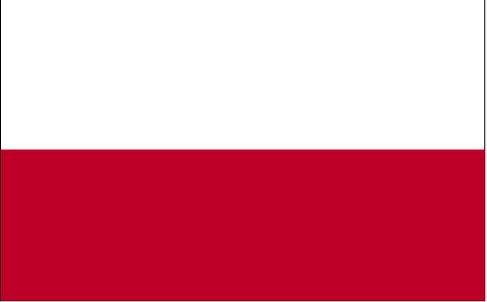
Poland flag

Poland

Polska

Capital:Warsaw
Population:38.5M
Currency:Polish Zloty (PLN)
Language:Polish
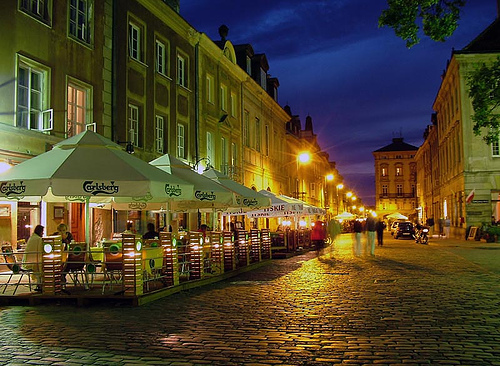
Restaurant district in Warsaw Poland

Declare Your Relationship to Poland

See full leaderboard →

CountryReports Community

  • Studying3
  • From Poland0
  • Poland heritage1
  • Visited0
  • Want to visit1

Quick Look Factsheet

A multi-page overview of Poland.

Poland Factsheet

Customs and Culture

About the People

Poles place great emphasis on family and on education. Self-reliance is valued in Polish society.

Wealth is best defined in powerful positions and different types of ownerships and possessions. Usually these are cars,clothes and houses. Some in Poland live in very poor conditions and wish for such things as running water or electricity and money to pay debts and bills.

Cultural Attributes

Poles place great emphasis on family and education. Self-reliance is valued in Polish society.

Wealth is best defined by powerful positions and different types of ownership and possessions, usually cars, clothes, and houses. Some in Poland live in deplorable conditions and wish for things like running water, electricity, and money to pay debts and bills.

Restaurant district in Warsaw Poland

Land of Resilient Fields

Greetings, Gestures & Visiting

A professional person's title is used before his or her last name. Only the person's title is used in formal conversation or business. Teenagers and children are called by their first names, but between adults, first names are used only by mutual consent. Women greet close friends by kissing both cheeks. Young girls often kiss each other on only one cheek when they meet. Adults generally shake hands upon meeting.

Common greetings include "Dzien dobry" (Good morning/afternoon) "Dobry wieczor" (Good evening) "Czeoa" (Hello)

When trying to get someone's attention, people usually call “Przepraszam!” (Excuse me)

Formal, extended visits are arranged in advance. Unannounced visits among friends and relatives are standard. It is customary to give hosts flowers for even a brief arranged visit. Entertaining is more commonly done in the home because going out is expensive.

Young people (students) mainly socialize in the city center, in the pubs and clubs. Meeting in the pubs for beer on weekends is very common among young people. In the pubs, some people may play billiards.

Parties at home involve sitting at the table, eating, and drinking (preferably wine or vodka). Sometimes, parties include dancing.

Because clothing is expensive, people's wardrobes remain small. Fashions are generally conservative, although the youth favor current European trends. Business people wear conservative suits or dresses. Students, children, and people who do not work or work in places where no official clothes are needed wear jeans.

Diet

Because workdays begin early, Poles often have only a light breakfast, taking a sandwich along to eat at 10.00 am. The main meal consists of soup, meat or fish, salad, and potatoes. Pastries or ice cream are eaten for a late-afternoon snack. Some common dishes include pierogi (dumplings with cream cheese and potatoes), uszka (a kind of ravioli), and bigos (sausage, mushroom, cabbage). Pork is more popular than beef.

Poles usually eat "niadanie" (breakfast) before 8 AM. The main meal "obiad" is at 3 PM pm and is the meal the family expects to gather for. The evening meal "kolacja" is smaller and is eaten before 8:30 PM.

The continental style of eating is used. Both hands (not the elbows) are kept above the table during the meal. Eating should not begin until everyone has been served and the host or head of the family has begun. When eating as a guest, it is impolite not to finish one's first helping.

Meals are usually eaten at home (apart from “second breakfast” that is usually eaten at school or work). Some children may eat their dinner at the school's canteen (lunchroom). Sometimes people eat in the city which is becoming more, but overall meals at home are preferred.

Farmland in Poland

Family

The average family has one or two children. The father is an authority figure who demands obedience yet wants his children to be self-disciplined and independent. The economic situation of most families demands the equal involvement of both parents in raising the family and working outside the home. However, women still bear the most responsibility for homemaking.

Dating Customs

Women marry between ages eighteen and twenty, and men begin marrying at age twenty-one. The couple's parents often provide financial assistance and allow the couple to live in their home for the first few years. Living together before being married is discouraged.

Recreation

Children play many different sports. Especially football is very popular in school and on a community basis. Volleyball is played mainly during the summer or at school. School children play basketball, handball, and table tennis at school. Swimming is quite a popular sport in Poland as well. Skiing, snowboarding, and ice skating are practiced during the winter.

Student Life

A typical Polish child's day starts at 7 a.m. One of the parents enters the kid’s room, saying it is time to get up if you don’t want to be late for school. After getting up, a child usually takes time for personal hygiene and eating and leaves for school at 8 a.m. Breakfast mainly consists of sandwiches with ham, eggs, and cheese. The Dietary Guidelines say to eat daily fruits and vegetables, but this is uncommon. Thanks to the research, we know that about 20% of children don't eat meals before school. The main reasons for skipping breakfast are the pressure of being late, sleeping in, and poverty. Although eating the first and the second breakfast at school is possible, only about 11% of children do so.

Most kids' schools are not located far from their place of living, so they usually go on foot or by bicycle. Getting to school in urban areas is by public transport like buses and trams. Children attending grades 1 to 3 use orange-painted school buses called Gimbus. The local authority provides this kind of transportation, which is the best way in rural areas where distances from school to villages are large. In some cases, children are driven by their parents, but only when the school and the parent's workplace are not far from each other.

A typical school in Poland was built during the decade of socialism and is at least 30 years old. The appearance of every construction established between 1945 and 1989 can be described as a cubic made of homogeneous concrete. The range of kids enrolled in schoolhouses is from 2000 to 10,000. This number is systematically decreasing, mainly due to negative population growth. Classrooms are modestly furnished and can accommodate up to 40 students. The layout of every room at school looks almost identically, consisting of desks, chairs, and a table in front. Of course, some classrooms are designated for chemistry, biology, physics, and informatics, where additional equipment like microscopes, computers, or projectors can be found.

A day at school is almost the same for younger and older children, but some differences exist. It depends on the level of classes they attend. A short day with few lessons, typically no more than 5, is reserved for courses from 1 to 3. The length of classes is 45 minutes and is obligatory for the whole education system. The breaks last for 5 to 25 minutes. The longest is used for lunch, but only 50% of children eat lunch at school. Meals can be bought at school, but most kids bring their lunch prepared by their parents. A primary school consists of nine years of teaching and is divided into three parts. The last one ends with the general exam, which classifies them to high school and is passed by about 90%. The teaching at primary school is focused on maths, informatics, environment, music, one foreign language, and Polish. The schedule does not overstrain children and facilitates their return home earlier. All lessons are in Polish, and there is no exception to this rule. Children cannot be taught in other primary languages at schools. A statistical school can contain up to 3000 students, and it is recommended that the number of kids in one room should not be greater than 30. There are no prescribed uniforms for children. Teachers are usually strict. They pay attention to behavior, punctuality, and cleanliness. The principals of schools want to change the image of education. It is known that children do not like to go to school. One of the main reasons for this is the relationship between a teacher and a child, which is very stiff. According to children's reports, most teachers are harsh and unpleasant, which is often reflected in their results. Teachers are asked to connect with care, warmth, and trust for children to improve school achievement and children's comfort. All these efforts are focused on better relationships between students and teachers. It is also believed that making kids feel secure and valued would be beneficial in the future. Schools are constantly evolving, but some rules are permanent for teachers and children, namely proper etiquette. Kids call for a teacher, starting with Mr, Misses, or Professor. Teachers always refer to the first name of a child.

Parents try to organize their children’s free time, dedicating it to learning and gaining new skills. They pay extra money for private English lessons, piano lessons, and other activities directly related to school. This proceeding on the part of parents is based on the opinion that more study means better results at school and gaining the maximum benefits in the future. Schools also encourage children to participate in maths, physics, or informatics societies. Children are becoming involved in these activities not only for educational reasons but also for enjoyment. Soccer is the most popular sport in Poland and is practiced by teenagers. It is worth, mention that lately because of success of Adam Malysz a lot of very young children try themselves in ski jumping and this branch of sport is now viral.

Kids spend leisure time playing computer games, surfing the web, or watching television. There is also time to hang out with friends, for example in the cinema or in a famous place characteristic of every town like the old town or just a park. Large cities and schools have swimming pools and other recreation centers teenagers use. Some parents looking after their toddlers attend amusement parks, zoos, and upcoming festivals.

The time of returning home depends on a kid's education level. For primary-level school, usually, it is 1 or 2 p.m. Kids studying from classes 4 to 9 have to stay a little bit longer, till 3 or 4 p.m. No matter what time they return, one thing is common for everyone after coming home: eating dinner. For most of them, this meal is already prepared by their parents, but sometimes they must care for themselves by buying sandwiches, pizza, or other fast food. The parents come home around 6 p.m. and always ask if they are prepared for school the next day. Until then, children are on their own, usually watching television or hanging out with friends. The leisure time after school is very often used for extracurricular activities. It could be an additional language lesson like English, German, French, or Spanish lessons. A mother prepares the supper by about 7 p.m. This meal isn't sophisticated, and for most families, it means sandwiches with cheese, ham, boiled eggs, and sometimes Mulligan. After supper, younger kids usually have a bath, wash their teeth, and do other activities to prepare themselves for bed. It is common for older children to watch the news headlines in the evening, and during this time, they discuss the day's events together. They are also allowed to watch a movie if it ends by 10 p.m., but this time is often used for homework.

Poland is one of the main European countries' leaders in education progress. Since 2000, the number of students who graduated from Universities has risen by 133%, while the European norm is 33%. The role of education in society has been growing systematically since the fall of socialism. This situation is caused by the needs of the developing industry. More and more parents understand this situation and force children to continue their education. Even if they finish their education in High School, there is always a need to take unique courses to improve their qualification. Additionally, unemployment has been above 10 % for about ten years. This means that a low level of education makes it impossible to find a job. The education system perceives exact science as something more valuable than the humanities, so art is not treated seriously in school. Most schools don't provide any additional lessons related to music or drama.

Holidays

  • Constitution Day

    5/3

    Independence

  • Birth date - Pope John Paul II (Karol Wojtyla)

    5/18

    Birthday

    Birth date - Pope John Paul II (Karol Wojtyla), first non-Italian to be elected pope in 456 years and first Polish pope. He was born in Wadowice, Poland on May 18, 1920.

  • Birth date - Maria Sklodowska Curie

    11/7

    Birthday

    Birth date - Maria Sklodowska Curie, Polish-born French physicist, first person to win two Nobel prizes, was born in Warsaw, Poland on Nov. 7, 1867.

  • Christmas

    12/25

    Christmas

    Poland started celebrating Gwiazdka (Little Star, Christmas) in the late tenth century when Mieszko introduced Christianity to the land. Advent customs such as Roraty (mass held each morning during Advent) are observed. Homes and churches display szopka(Nativity scenes) and the city of Kraków, host a national crèche competition at its historical museum and the entries are displayed from early December until February.

    Festive gatherings celebrate St. Barbara, and Swiety Mikolaj (St Nicholars) arrives on his feast day to examine children and to leave them treats such as apples, nuts and cookies.

    Sightseeing the first star of Wigilia (Christmas Eve) heralds Christmas and the Christmas Eve supper, which breaks a fast observed throughout the day. An extra place is set for any unexpected guest, commemorative of Mary and Joseph who sought shelter, for no one is turned away on this night. The Christmas Eve meal is a meatless meal and traditionally consists of an odd number of courses (at least 12 in memory of the Twelve Apostles) and an even number of diners for good luck. The menu often consists of cooked or dried carp, herring, soups such as red beet, or fermented rye; fish and barszcz (mushroom), sauerkraut with beans, pierogi (dumplings stuffed with mushrooms, cabbage or fruit), makowiec(baked poppy seed bread), strudel, and kutia (poppy seed and wheat pasta with honey raisins almonds and spices).

    After the Christmas Eve dinner, children receive gifts from the Star Man who symbolizes the Star of Bethlehem. Wigilia ends with the Pasterka (Mass of the Shepherds) the term for Midnight Mass.

    Christmas day is spent at home, St Stephen’s day (December 26th) is reserved for visiting.

Dates of Interest

  • November 29th

    This international festival, held in Kraków during Holy Week, celebrates early music and historically informed performances. Renowned musicians and ensembles from around the world present works from the Renaissance and Baroque periods.

How do people greet each other in Poland?

Adults generally shake hands upon meeting, while close female friends kiss both cheeks; titles are used with last names in formal settings.

Do

  • Use a professional person's title before their last name
  • Use only the title in formal or business conversation
  • Shake hands with adults when meeting
  • Say "Dzien dobry" (Good morning/afternoon) or "Dobry wieczor" (Good evening)

Don’t

  • Don't use first names between adults without mutual consent

Good to know

  • Women greet close friends by kissing both cheeks; young girls often kiss one cheek
  • "Czeoa" is a casual hello

What are the dining customs in Poland?

The main meal, "obiad," is eaten around 3 PM when the family gathers, and continental-style eating is used with both hands kept above the table.

Do

  • Wait until everyone is served and the host or head of family has begun
  • Finish your first helping when eating as a guest
  • Keep both hands above the table

Don’t

  • Don't put your elbows on the table
  • Don't begin eating before the host starts

Good to know

  • Breakfast ("niadanie") is before 8 AM, and a lighter evening meal ("kolacja") is before 8:30 PM
  • Common dishes include pierogi, uszka, and bigos; pork is more popular than beef
  • Meals are usually eaten at home

How does visiting and hospitality work in Poland?

Unannounced visits among friends and relatives are standard, while formal extended visits are arranged in advance; entertaining is commonly done at home.

Do

  • Bring flowers for your hosts, even for a brief arranged visit
  • Arrange formal, extended visits in advance

Good to know

  • Home parties involve sitting at the table, eating, and drinking wine or vodka, sometimes with dancing
  • Young people socialize in city-center pubs and clubs, often meeting for beer on weekends
  • Entertaining is more common at home because going out is expensive

How should I dress in Poland?

Fashions are generally conservative, with business people wearing conservative suits or dresses, though youth favor current European trends.

Do

  • Wear conservative suits or dresses for business

Good to know

  • Youth favor current European trends
  • Jeans are worn by students, children, and those in casual workplaces
  • Because clothing is expensive, wardrobes tend to be small

How do people get attention in Poland?

To get someone's attention, people usually call out "Przepraszam!" (Excuse me).

Good to know

  • Use "Przepraszam!" to get someone's attention

What is family life like in Poland?

Family and education are highly valued, with the average family having one or two children and the father seen as an authority figure.

Good to know

  • Both parents typically work outside the home, though women bear most homemaking responsibility
  • Fathers demand obedience but want children to be self-disciplined and independent
  • Living together before marriage is discouraged; parents often help couples financially early on

What do people do for recreation in Poland?

Football is very popular in schools and communities, and Poles enjoy a range of sports year-round including swimming and winter sports.

Good to know

  • Football, volleyball, basketball, handball, and table tennis are common at school
  • Swimming is quite popular
  • Skiing, snowboarding, and ice skating are practiced in winter

Last updated: 2026-07-12 · Sources: CountryReports

Photos of Poland

Travel and Tourism

Travel Alert Status
Level 1: Exercise Normal Precautions
Currency
zloty (PLN)
Time Difference
UTC+1 (6 hours ahead of Washington, DC, during Standard Time)
Climate
Poland’s climate is continental European. Winters can be severe, with heavy snows possible from December through March. Winter temperatures in Warsaw average about -3.9ºC to 0ºC. The lowest temperature in recent years was - 30ºC. Spring is usually cold and rainy. Summer can bring temperatures topping 37ºC, but a few days at about 32ºC is more typical. Autumn is usually cloudy and can be quite cold. Yearly rainfall averages about 59.69 centimeters.
Airports
122
Premium Content

Read the full travel guide — health, safety, vaccinations, disease risk, sanitation, and transit details.

View full travel guide

Recipes

History

Historical Eras

  1. Piast Dynasty

    966 – 1382

    Poland's history as a Christian kingdom begins with Duke Mieszko I's baptism in 966, uniting the Polanian tribes under the Piast dynasty. The early Piasts consolidated royal power, established the Church as a pillar of state, and expanded territory. Bolesław I the Brave became the first crowned king in 1025, laying the foundations of a distinctly Polish national identity.

  2. Jagiellonian Era

    1382 – 1572

    The Jagiellonian dynasty transformed Poland into a major European power through the 1386 dynastic union with Lithuania, creating one of the continent's largest states. The era culminated in a cultural and political golden age during the 16th century, marked by Renaissance humanism, the Copernican revolution, and the Nihil Novi statute of 1505, which gave the nobility unprecedented legislative rights.

  3. Royal Republic

    1572 – 1795

    Following the extinction of the Jagiellonian line, Poland became an elective monarchy dominated by the szlachta, or noble class, whose liberum veto paralyzed legislative governance. Despite producing great military figures such as Jan III Sobieski, who relieved Vienna from Ottoman siege in 1683, chronic internal disorder invited foreign interference. Russia, Prussia, and Austria exploited this weakness to partition Poland entirely across three agreements between 1772 and 1795.

  4. Partitions & Occupation

    1795 – 1918

    Erased from the map of Europe for over a century, Poland existed only as a cultural and national idea sustained through literature, language, and periodic uprisings. The Congress Kingdom created at Vienna in 1815 offered brief autonomy under Russian suzerainty, but insurrections in 1830 and 1863 were brutally suppressed. Tsarist Russification and Prussian Germanization campaigns sought to eradicate Polish identity, paradoxically hardening national consciousness.

  5. Interwar & World War II

    1918 – 1947

    Poland reemerged as a sovereign state after World War I, confirmed by the Treaty of Versailles and secured by victory over Soviet Russia in the 1920 Battle of Warsaw. Marshal Józef Piłsudski's 1926 coup inaugurated an authoritarian Sanacja regime. In September 1939, simultaneous invasion by Nazi Germany and the Soviet Union annihilated the state; the subsequent occupation produced the Holocaust, the Warsaw Uprising of 1944, and the deaths of nearly six million Polish citizens.

  6. Communist Poland

    1947 – 1989

    Installed as a Soviet satellite under the Polish United Workers' Party, the People's Republic of Poland collectivized the economy and suppressed political dissent, though it remained comparatively less rigid than other Eastern Bloc states. The Catholic Church preserved an independent civic space, and recurring waves of labor unrest — peaking with the 1980 founding of the Solidarity trade union led by Lech Wałęsa — eroded the regime's legitimacy until free elections in 1989 swept Solidarity to power.

  7. Democratic Poland

    1989 – present

    Poland's transition to liberal democracy was anchored by radical 'shock therapy' economic reforms that rapidly dismantled central planning and produced one of Central Europe's most dynamic market economies. NATO membership in 1999 and European Union accession in 2004 firmly embedded Poland in Western institutions. The country has since navigated tensions between liberal democratic norms and nationalist political movements, while emerging as a significant regional power and a frontline state amid the post-2022 war in Ukraine.

Overview

Clio, the muse of history, from a sculpture in Warsaw’s Saxon Gardens THE POLES POSSESS one of the richest and most venerable historical traditions of all European peoples. Convention fixes the origins of Poland as a nation near the middle of the tenth century, contemporaneous with the Carolingians, Vikings, and Saracens, and a full hundred years before the Norman conquest of Britain in 1066. Throughout the subsequent centuries, the Poles managed despite great obstacles to build and maintain an unbroken cultural heritage. The same cannot be said of Polish statehood, which was notoriously precarious and episodic. Periods of independence and prosperity alternated with phases of foreign domination and disaster. Especially in more recent centuries, frequent adversity subjected the Poles to hardships scarcely equaled in European history. Many foreign observers perceive Poland as a perennial victim of history, whose survival through perseverance and a dogged sense of national identity has left a mixed legacy of indomitable courage and intolerance toward outsiders. To Poles, their history includes brighter recollections of Poland as a highly cultured kingdom, uniquely indulgent of ethnic and religious diversity and precociously supportive of human liberty and the fundamental values of Western civilization. The contrast between these images reflects the extremes of fortune experienced by Poland. The two visions of history combine in uneasy coexistence in the Polish consciousness. One striking feature of Polish culture is its fascination with the national past; the unusual variety and intensity of that past defy tidy conclusions and produce energetic debate among Poles themselves on the meaning of their history.

Timeline of Key Events

  1. 966 – 1370

    The Piast Polish Dynasty

    The Piast Polish Dynasty.

  2. 966

    Duke Mieszko I became Poland’s first recorded Christian leader.

    Duke Mieszko I became Poland’s first recorded Christian leader.

  3. 1382 – 1572

    The Jagiellonian Dynasty

    The Jagiellonian Dynasty.

  4. 1572 – 1795

    The Royal Republic

    The Royal Republic.

  5. 1596

    Poland’s capital city is moved from Krakow to Warsaw.

    Poland’s capital city is moved from Krakow to Warsaw.

  6. 1700

    The Three Partitions of Poland - Russia, Prussia and Austria divide Poland amongst themselves.

    The Three Partitions of Poland - Russia, Prussia and Austria divide Poland amongst themselves.

  7. 1793

    During the Second Partition, Russia and Prussia take over half of what was left of Poland.

    During the Second Partition, Russia and Prussia take over half of what was left of Poland.

Premium Content

Read the full history profile — narrative overview, defining eras, and the complete timeline in one place.

View expanded history

Interesting Facts

  • The word pole means “field” in Polish. Thus Poland, some believe, means “the land of fields.” Others contend that the Poland stems from Polanie, an ancient local tribe.

  • A particular feature of Polish forests is wild mushrooms, which are exported worldwide. The tasty mushrooms add unique flavour to Polish dishes. Families and school groups often go mushroom picking, and many Polish children learn while still young how to distinguish good mushrooms from poisonous ones.

  • In 1983, Lech Walesa was awarded the Nobel Peace Prize for his leadership of Solidarity.

  • Hanna Suckocka was elected Poland's first female Prime Minister in 1992. She was the only woman in her entire coalition government.

  • Work hours in Poland begin between six and eight in the morning, and go until between two and four in the afternoon.

  • The most famous athlete in Poland is Adam Malysz, who won the world championship in ski jumping in 2001. Another well-known athlete is Irena Kirszenstein Szewinska : from 1964 to 1980 she participated in five Olympic games and won seven medals. She also set multiple world records for running.

Premium Content

See every fact — trivia, oddities, and curious tidbits gathered from across the country.

View all interesting facts

Geography and Environment

Poland ranks seventh in Europe in area and population. Most of Poland consists of lowland plains. To the north are the Baltic Sea coast and a broad belt of lake land. In the center are broad, low-lying plains and vast forest belts. To the south, the land passes into chains of mountains—the Sudety in the west and the Carpathians in the east. These mountains combine to form the southern boundary of Poland. The Tatra Mountains, a part of the Carpathians, are the highest in Poland. Rysy Mountain rises 8,212 feet above sea level. At the foot of the Tatras lies the town of Zakopane, a year-round sports center. One main seaport, Szczecin, is near the German border. Poland’s two other major port cities, Gdansk, and Gdynia, lie about 170 miles farther east, at the mouth of the Vistula River. Many summer resorts with beautiful beaches lie along the Baltic coast. About 200 miles north of Warsaw is a belt of lakes stretching from Olsztyn to Augustow, surrounded by the largest forest in Poland. The main rivers are the Vistula, on which Warsaw and Krakow are situated; the Odra, whose northern course forms a part of the German border; the Narew, in northeastern Poland; the Warta, on which Poznan is located; and the Bug, part of which helps form Poland's eastern boundary. In addition to Warsaw and the port cities, Poland has several other major cities. Krakow, a former capital, is noted for its beautiful Renaissance architecture. Wawel, the Castle Hill, is the former seat and present burial site of Poland’s past kings. Lodz is the center of Polish light industry. Poznan is an industrial and agricultural center and site of the International Poznan Fair. Other major cities are Wroclaw, Katowice, and Gdansk.
Terrain
mostly flat plain; mountains along southern border
Climate
Poland’s climate is continental European. Winters can be severe, with heavy snows possible from December through March. Winter temperatures in Warsaw average about -3.9ºC to 0ºC. The lowest temperature in recent years was - 30ºC. Spring is usually cold and rainy. Summer can bring temperatures topping 37ºC, but a few days at about 32ºC is more typical. Autumn is usually cloudy and can be quite cold. Yearly rainfall averages about 59.69 centimeters.
Natural Hazards
flooding
Current Environmental Issues
situation has improved since 1989 due to decline in heavy industry and increased environmental concern by post-Communist governments; air pollution nonetheless remains serious because of sulfur dioxide emissions from coal-fired power plants, and the resulting acid rain has caused forest damage; water pollution from industrial and municipal sources is also a problem, as is disposal of hazardous wastes; pollution levels should continue to decrease as industrial establishments bring their facilities up to European Union code, but at substantial cost to business and the government
Premium Content

Read the full geography and environment profile — terrain, climate, natural resources, hazards, land use, and international agreements.

View full geography

People & Demographics

Religion

Languages Spoken

Polish

  • Polish

Population

Population
38,463,689
Population: Male/Female
total: 38,746,310 male: 18,441,415 female: 20,304,895
Population Distribution
population concentrated in the southern area around Krakow and the central area around Warsaw and Lodz, with an extension to the northern coastal city of Gdansk
Urban Population
urban population: 60.2% of total population rate of urbanization: -0.16% annual rate of change
Population in Major Urban Areas
1.798 million WARSAW (capital), 769,000 Krakow
Nationality Noun
noun: Pole(s) adjective: Polish
Ethnic Groups
Polish 96.9%, Silesian 1.1%, German 0.2%, Ukrainian 0.1%, other and unspecified 1.7%
Language Note
Polish (official) 98.2%, Silesian 1.4%, other 1.1%, unspecified 1.2%; note - data represent the language spoken at home; shares sum to more than 100% because some respondents gave more than one answer on the census; Poland ratified the European Charter for Regional or Minority Languages in 2009 recognizing Kashub as a regional language, Czech, Hebrew, Yiddish, Belarusian, Lithuanian, German, Armenian, Russian, Slovak, and Ukrainian as national minority languages, and Karaim, Lemko, Romani (Polska Roma and Bergitka Roma), and Tatar as ethnic minority languages

Education

Literacy Definition
age 15 and over can read and write

A typical school in Poland was built during the decade of socialism and is at least 30 years old. The appearance of every construction established between 1945 and 1989 can be described as a cubic made of homogeneous concrete. The range of kids enrolled in schoolhouses is from 2000 to 10,000. This number is systematically decreasing, mainly due to negative population growth. Classrooms are modestly furnished and can accommodate up to 40 students. The layout of every room at school looks almost identically, consisting of desks, chairs, and a table in front. Of course, some classrooms are designated for chemistry, biology, physics, and informatics, where additional equipment like microscopes, computers, or projectors can be found.

Health Information

Life Expectancy at Birth
total population: 76.7 years male: 72.8 years female: 80.9 years
Major Infectious Diseases — degree of risk
degree of risk: intermediate vectorborne diseases: tickborne encephalitis
Alcohol consumption per capita
total: 10.96 liters of pure alcohol beer: 5.72 liters of pure alcohol wine: 0.88 liters of pure alcohol spirits: 4.36 liters of pure alcohol other alcohols: 0 liters of pure alcohol
Tobacco Use
total: 24% male: 27.9% female: 20.1%
Infant Mortality Rate
total: 4.9 deaths/1,000 live births male: 5.3 deaths/1,000 live births female: 4.4 deaths/1,000 live births

Life Expectancy

Life Expectancy at Birth
total population: 76.7 years male: 72.8 years female: 80.9 years
Median Age
total: 42.9 years male: 41.5 years female: 44.3 years
Age Structure
0-14 years: 14.2% (male 2,830,048/female 2,676,300) 15-64 years: 65.9% (male 12,513,402/female 13,036,977) 65 years and over: 19.8% (male 3,097,965/female 4,591,618)
Infant Mortality Rate
total: 4.9 deaths/1,000 live births male: 5.3 deaths/1,000 live births female: 4.4 deaths/1,000 live births
Premium Content

Read the full people and society profile — demographics, health, education, religion, languages, and notable people.

View full people and society

Government & Politics

Country Identity

Country Name
Poland
Full Country Name
Republic of Poland
Local - Long
Rzeczpospolita Polska
Local - Short
Polska

Government Structure

Government Type
republic
Legal System
mixture of Continental (Napoleonic) civil law and holdover Communist legal theory; changes being gradually introduced as part of broader democratization process; limited judicial review of legislative acts, but rulings of the Constitutional Tribunal are final; court decisions can be appealed to the European Court of Justice in Strasbourg
Executive Branch
chief of state: President Andrzej DUDA (since 6 August 2015; reelected for a second five-year term in July 2020) head of government: Prime Minister Donald TUSK (since 13 December 2023); Deputy Prime Ministers Krzysztof GAWKOWSKI, Wladyslaw KOSINIAK-KAMYSZ, and Tomasz SIEMONIAK (since December 2023) cabinet: Council of Ministers responsible to the prime minister and the Sejm; the prime minister proposes, the president appoints, and the Sejm approves the Council of Ministers elections: president elected by popular vote for a five-year term; election last held 28 June and 12 July 2020 (next to be held in May 2025); prime minister and deputy prime ministers appointed by the president and confirmed by the Sejm election results: Andrzej DUDA reelected president in second round; percent of popular vote - Andrzej DUDA 51.0%, Rafal TRZASKOWSKI 49.0%
Legislative Branch
bicameral legislature consisting of an upper house, the Senate or Senat (100 seats; members are elected by a majority vote on a provincial basis to serve four-year terms), and a lower house, the Sejm (460 seats; members are elected under a complex system of proportional representation to serve four-year terms); the designation of National Assembly or Zgromadzenie Narodowe is only used on those rare occasions when the two houses meet jointly elections: Senate - last held 25 September 2005 (next to be held by September 2009); Sejm elections last held 25 September 2005 (next to be held by September 2009) election results: Senate - percent of vote by party - NA%; seats by party - PiS 49, PO 34, LPR 7, SO 3, PSL 2, independents 5; Sejm - percent of vote by party - PiS 27%, PO 24.1%, SO 11.4%, SLD 11.3%, LPR 8%, PSL 7%, other 11.2%; seats by party - PiS 155, PO 133, SO 56, SLD 55, LPR 34, PSL 25, German minorities 2 note: two seats are assigned to ethnic minority parties in the Sejm only
Judicial Branch
Supreme Court (judges are appointed by the president on the recommendation of the National Council of the Judiciary for an indefinite period); Constitutional Tribunal (judges are chosen by the Sejm for nine-year terms)
Suffrage
18 years of age; universal
Constitution
16 October 1997; adopted by the National Assembly 2 April 1997; passed by national referendum 23 May 1997
Independence
11 November 1918 (independent republic proclaimed)
National Holiday
Constitution Day, 3 May (1791)

Capital City

Capital Name
Warsaw
Capital - geographic coordinate
52 15 N, 21 00 E
Capital Time Difference
UTC+1 (6 hours ahead of Washington, DC, during Standard Time)

the origin of the name is unknown; the Polish designation "Warszawa" was the name of a fishing village and several legends/traditions link the city's founding to a man named Wars or Warsz

Military

Branches: Polish Armed Forces: Land Forces, Navy, Air and Air Defense Aviation Forces, Special Forces

Embassy / Diplomatic Mission

U.S. Embassy Warsaw

Aleje Ujazdowskie 29/31, 00-540 Warszawa

Telephone: (48) (22) 504-2784

Emergency after-hours telephone: (48) (22) 504-2000

Fax: (48) (22) 504-2122

U.S. Consulate General Kraków

Ulica Stolarska 9, 31-043 Kraków

Telephone: (48) (12) 424-5100

Emergency after-hours telephone: (48) 601-483-348

Fax: (48) (12) 424-5103

Consular Agency Pozna?

Ulica Paderewskiego 8, 61-770 Pozna?

Telephone: (48) (61) 851-8516

Fax: (48) (61) 851-8966

Please check the individual web page for the embassy or consulate you will visit to verify the public hours and security regulations. You are not allowed to bring electronic devices such as cell phones and laptops into our facilities. You need an appointment for most services; you can find instructions for making appointments on our website.

Premium Content

Read the full government profile — flag symbolism, national anthem, and other national symbols.

View full government details

Economy

Poland has pursued sustained economic liberalization since the early 1990s and stands as one of the most successful transition economies in Central Europe. It joined the European Union in May 2004 and is now the sixth-largest economy in the EU, having avoided recession during the 2008-2009 global financial crisis and posted steady growth in the decades since. The private sector accounts for the vast majority of economic activity, though legal complexity, bureaucratic hurdles, and concerns over the rule of law have at times weighed on the business climate and investor confidence.

The agricultural sector continues to face structural challenges, including a large number of small, fragmented farms and persistent underinvestment, although EU subsidies have driven significant modernization. Restructuring of sensitive sectors such as coal, steel, railroads, and energy has progressed unevenly, with coal remaining particularly difficult given Poland's heavy reliance on it for electricity generation and the country's commitments to the EU's climate transition.

Reforms in health care, education, pensions, and public administration have produced ongoing fiscal pressures, and social spending programs introduced in recent years have further expanded the budget. Strengthening public finances depends on broadening the tax base, improving tax compliance, and continuing to modernize state institutions. Poland's economy is heavily integrated with the EU single market, with Germany its largest trading partner, and manufacturing, services, and a growing technology sector are central drivers of growth.

Key priorities include sustaining export competitiveness, managing inflation, absorbing EU recovery and cohesion funds, accommodating a large influx of Ukrainian refugees following Russia's 2022 invasion, and advancing the energy transition. Poland retains its national currency, the zloty, and has not adopted the euro. GDP per capita has risen substantially and now exceeds that of several other Central and Eastern European EU members, reflecting two decades of convergence with Western European living standards.

Snapshot

Currency Name and Code
Polish Zloty (PLN)
GDP — official exchange rate
$246,200,000,000 (USD)
GDP Real Growth Rate
3.2%
Gini Index
34.1

Banknotes

Poland Money - Front
Poland Money - Back
Poland Money - Back

Budget & Public Finance

Fiscal Year
calendar year
Annual Budget
$63,220,000,000 (USD)
Public Debt (% of GDP)
47.3%
External Debt
$123,400,000,000 (USD)
Investment (% of GDP)
18.5%
Current Account Balance
-$4,159,000,000 (USD)
Reserves of Foreign Exchange
$2,147,483,647 (USD)

Labor, Industry & Trade

Labor Force by Occupation
industry 22.1%; agriculture 27.5%; services 50.4%
Household Income — highest 10%
26.7%
Industries
machine building, iron and steel, coal mining, chemicals, shipbuilding, food processing, glass, beverages, textiles
Agriculture Products
potatoes, fruits, vegetables, wheat; poultry, eggs, pork
Export Commodities
machinery and transport equipment 30.2%, intermediate manufactured goods 25.5%, miscellaneous manufactured goods 20.9%, food and live animals 8.5%
Export Partners
Germany 32.3%, France 6%, Italy 5.5%, UK 5.2%, Netherlands 4.5%, Czech Republic 4%
Import Commodities
machinery and transport equipment 38.2%, intermediate manufactured goods 20.8%, chemicals 14.3%, miscellaneous manufactured goods 9.5%
Import Partners
Germany 24.3%, Italy 8.4%, Russia 8%, France 7%

Energy

Oil Production
24,530 bbl/day
Oil Consumption
476,200 bbl/day
Oil Reserves
142,400,000 bbl/day
Natural Gas Production
4,330,000,000 cu m
Natural Gas Consumption
14,970,000,000 cu m
Natural Gas Imports
9,450,000,000 cu m
Natural Gas Exports
44,000,000 cu m
Natural Gas Reserves
154,400,000,000 cu m

Communications

Telephone System
general assessment: modernization of the telecommunications network has accelerated with market-based competition; fixed-line service, dominated by the former state-owned company, is dwarfed by the growth in mobile-cellular services domestic: mobile-cellular service available since 1993 and provided by three nation-wide networks with a fourth provider beginning operations in late 2006; coverage is generally good with some gaps in the east; fixed-line service lags in rural areas international: country code - 48; international direct dialing with automated exchanges; satellite earth station - 1 with access to Intelsat, Eutelsat, Inmarsat, and Intersputnik
Internet Country Code
.pl

News & Weather

Current Weather

Loading current conditions…
Loading forecast…

Climate Overview

Poland’s climate is continental European. Winters can be severe, with heavy snows possible from December through March. Winter temperatures in Warsaw average about -3.9ºC to 0ºC. The lowest temperature in recent years was - 30ºC. Spring is usually cold and rainy. Summer can bring temperatures topping 37ºC, but a few days at about 32ºC is more typical. Autumn is usually cloudy and can be quite cold. Yearly rainfall averages about 59.69 centimeters.

Videos

1 curated YouTube videos.

  • Source: YouTube

Frequently Asked Questions

What is the population of Poland?
The population of Poland is approximately 38.5M.
How do people greet each other in Poland?
Adults generally shake hands upon meeting, while close female friends kiss both cheeks; titles are used with last names in formal settings. Do: Use a professional person's title before their last name Use only the title in formal or business conversation Shake hands with adults when meeting Say "Dzien dobry" (Good morning/afternoon) or "Dobry wieczor" (Good evening) Don't: Don't use first names between adults without mutual consent Women greet close friends by kissing both cheeks; young girls often kiss one cheek "Czeoa" is a casual hello
What are the dining customs in Poland?
The main meal, "obiad," is eaten around 3 PM when the family gathers, and continental-style eating is used with both hands kept above the table. Do: Wait until everyone is served and the host or head of family has begun Finish your first helping when eating as a guest Keep both hands above the table Don't: Don't put your elbows on the table Don't begin eating before the host starts Breakfast ("niadanie") is before 8 AM, and a lighter evening meal ("kolacja") is before 8:30 PM Common dishes include pierogi, uszka, and bigos; pork is more popular than beef Meals are usually eaten at home
How does visiting and hospitality work in Poland?
Unannounced visits among friends and relatives are standard, while formal extended visits are arranged in advance; entertaining is commonly done at home. Do: Bring flowers for your hosts, even for a brief arranged visit Arrange formal, extended visits in advance Home parties involve sitting at the table, eating, and drinking wine or vodka, sometimes with dancing Young people socialize in city-center pubs and clubs, often meeting for beer on weekends Entertaining is more common at home because going out is expensive
How should I dress in Poland?
Fashions are generally conservative, with business people wearing conservative suits or dresses, though youth favor current European trends. Do: Wear conservative suits or dresses for business Youth favor current European trends Jeans are worn by students, children, and those in casual workplaces Because clothing is expensive, wardrobes tend to be small
How do people get attention in Poland?
To get someone's attention, people usually call out "Przepraszam!" (Excuse me). Use "Przepraszam!" to get someone's attention
What is family life like in Poland?
Family and education are highly valued, with the average family having one or two children and the father seen as an authority figure. Both parents typically work outside the home, though women bear most homemaking responsibility Fathers demand obedience but want children to be self-disciplined and independent Living together before marriage is discouraged; parents often help couples financially early on
What do people do for recreation in Poland?
Football is very popular in schools and communities, and Poles enjoy a range of sports year-round including swimming and winter sports. Football, volleyball, basketball, handball, and table tennis are common at school Swimming is quite popular Skiing, snowboarding, and ice skating are practiced in winter
What is the capital of Poland?
Warsaw (Polish: Warszawa) is the capital and largest city of Poland. Situated on the Vistula River in the east-central part of the country, it serves as Poland's political, economic, and cultural center. Warsaw was almost entirely destroyed during World War II but was meticulously rebuilt, and its reconstructed Old Town is now a UNESCO World Heritage Site. Today it stands as one of Central Europe's most dynamic metropolitan areas.
Where is Poland located?
Poland is located in Central Europe, occupying a broad plain between the Baltic Sea to the north and the Carpathian Mountains to the south. It is the fifth-largest country in the European Union by area. The country's relatively flat terrain has historically made it a crossroads of European civilizations and, at times, a battleground for competing empires. Poland has been a member of NATO since 1999 and of the European Union since 2004.
What countries border Poland?
Poland shares borders with seven countries. To the west lies Germany; to the southwest, the Czech Republic; to the south, Slovakia; to the southeast, Ukraine; to the east, Belarus; to the northeast, Lithuania; and to the north, the Russian exclave of Kaliningrad. This position at the intersection of Eastern and Western Europe has profoundly shaped Poland's history, culture, and geopolitical significance over the centuries.
What is the predominant religion in Poland?
Roman Catholicism is by far the dominant religion in Poland, practiced by approximately 95% of the population. The Catholic Church has played a central role in Polish national identity, particularly during the long periods of foreign partition and communist rule when it served as a unifying cultural force. The remaining population includes small communities of Eastern Orthodox Christians, Protestants, and other faiths. The election of Polish-born Cardinal Karol Wojtyła as Pope John Paul II in 1978 deepened the country's ties to the Catholic faith.
What currency is used in Poland?
Poland's official currency is the Polish Złoty, with the ISO code PLN. The złoty, meaning "golden" in Polish, has been the country's monetary unit in various forms since the 15th century. Although Poland is a member of the European Union, it has not adopted the euro and retains the złoty as its national currency. The National Bank of Poland (Narodowy Bank Polski) is responsible for monetary policy and currency issuance.
What language is spoken in Poland?
Polish is the sole official language of Poland and is spoken by the vast majority of the population. It belongs to the West Slavic branch of the Indo-European language family and is written in the Latin alphabet, augmented by several diacritical characters unique to Polish. Polish is one of the most widely spoken Slavic languages in the world. Minority languages including Kashubian, German, and Belarusian are spoken by small regional communities in various parts of the country.
What is Poland's geography like?
Poland's landscape is predominantly low-lying plain, part of the vast North European Plain, though the terrain rises significantly toward the Carpathian and Sudeten mountain ranges along the southern border. The country is crossed by several major rivers, including the Vistula and the Oder. Poland's forests are notably rich in biodiversity — the ancient Białowieża Forest, straddling the border with Belarus, is one of the last primeval lowland forests in Europe and a UNESCO World Heritage Site.
What is Poland known for?
Poland is known for its millennium-long history as one of Europe's oldest nations, its tradition of wild-mushroom foraging — a pastime passed down through families and a source of globally exported produce — and the legacy of Solidarity, the trade union movement whose leader Lech Wałęsa was awarded the Nobel Peace Prize in 1983. Polish cuisine, including dishes like bigos (hunter's stew) and pierogi, reflects deep culinary traditions, while the country's amber deposits along the Baltic coast have made Poland one of the world's leading sources of this prized fossilized resin.

Last reviewed 2026