
 English
 Español
 中文
中文 हिन्दी
 Français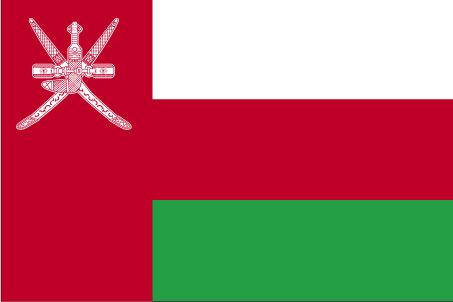
Oman
Uman
Declare Your Relationship to Oman
CountryReports Community
- Studying5
- From Oman2
- Oman heritage3
- Visited2
- Want to visit4
Customs and Culture
Customs and Culture
Cultural Attributes
Omani culture is deeply rooted in Islamic traditions and a rich Bedouin heritage, shaped over centuries by the country's history as a major trading hub connecting the Arabian Peninsula, East Africa, Persia, and South Asia. This mercantile legacy has produced a society that is notably open and hospitable toward outsiders while maintaining a strong sense of cultural identity. The family unit remains the cornerstone of Omani society, with extended family networks playing a central role in social and economic life. Tribal affiliations also continue to carry significant social weight, influencing everything from marriage customs to community decision-making. Elders are accorded deep respect, and consultation with senior family and community members is an important aspect of daily life. Islam permeates virtually all aspects of Omani culture. The majority of Omanis follow the Ibadi school of Islam, a moderate and distinct branch that predates both Sunni and Shia traditions and emphasizes piety, community consensus, and tolerance. This religious foundation shapes daily rhythms, from the five daily prayers to dietary habits and dress codes. Traditional dress remains widespread and is a source of cultural pride — men typically wear the dishdasha, a long white robe, often paired with the kuma, an embroidered cap, or a turban. Women generally wear the abaya in public, often accompanied by a headscarf. Omani music, poetry, and craftsmanship reflect the country's diverse cultural influences. Traditional music forms such as the leiwah show African roots brought through centuries of trade, while the art of silver crafting, weaving, and pottery represent important indigenous traditions. The khanjar, a curved ceremonial dagger, is a national symbol and appears on the Omani coat of arms. Hospitality is a core cultural value. Guests are traditionally welcomed with qahwa, a lightly spiced cardamom coffee served with dates, a gesture considered both a social ritual and a mark of respect. Public behavior is generally conservative, and modesty in dress and conduct is expected of both residents and visitors throughout the country.

The Sultanate of Incense and Monsoons
Get More Customs and Culture
5 more cultural topics for members
Social Customs & Etiquette · Diet · Family · Dating Customs · Recreation
Every country, every topic, all activities & recipes
✓ Instant access on this device · ✓ No subscription
Holidays
Birthday of Sultan QABOOS
11/18Birthday
Dates of Interest
- November 18th
How do people greet and interact in Oman?
Omanis often stand very close when talking, and people of the same sex may hold hands while walking or talking. Conversations can be loud with frequent interruptions.
Good to know
- Expect people to stand close during conversation
- Same-sex hand-holding is a normal sign of friendship
- Loud talking and interrupting are part of normal conversation
What are the dining customs in Oman?
Staple foods include rice, dates, fish, fruit, and meat, and meals are often eaten on the floor with dishes spread on a cloth. The main meal is at noon, while breakfast and supper are light.
Do
- Always take food and drink with your right hand
- Expect to eat seated on the floor or ground
Good to know
- The noon meal is the main meal of the day
- Guests are traditionally welcomed with qahwa (cardamom coffee) and dates
What etiquette should travelers know in Oman?
Omani society values hospitality, modesty, and deep respect for elders, with consultation of senior family and community members central to daily life. Public behavior is generally conservative.
Do
- Show respect to elders
- Behave modestly in public
- Accept qahwa and dates when offered as a mark of respect
What should I wear in Oman?
Traditional dress is widespread: men wear the ankle-length dishdasha with a skullcap or turban, and women wear colorful dresses over loose pants with headscarves, most wearing a black ankle-length abaya in public. Modesty in dress is expected of visitors.
Do
- Dress modestly throughout the country
Good to know
- Omanis commonly wear leather sandals
- Men often pair the dishdasha with a kuma cap or turban
What is family life like in Oman?
Omanis are a tribal people and the family is the center of life, with women traditionally handling domestic roles and men managing business and public transactions. Extended family networks and tribal affiliations carry strong social weight.
Good to know
- Men typically handle business and public dealings
- Omani women are allowed to vote
- The mahr (marriage gift) is paid by the groom and becomes the bride's property
What do people do for recreation in Oman?
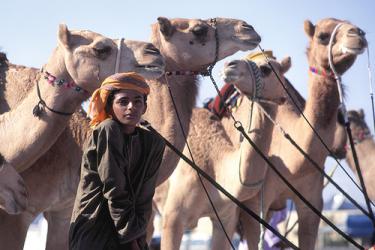
Popular pastimes include camel racing and horse racing, along with hockey and target shooting. Boy and Girl Scouts are also popular.
Good to know
- Camel and horse racing are popular spectator sports
- Scouting is a common activity
Last updated: 2026-07-12 · Sources: CountryReports


Travel and Tourism
Travel and Tourism
- Travel Alert Status
- Level 2: Exercise Increased Caution
- Currency
- Omani rial (OMR)
- Time Difference
- UTC+4 (9 hours ahead of Washington, DC, during Standard Time)
- Airports
- 135
Read the full travel guide — health, safety, vaccinations, disease risk, sanitation, and transit details.
View full travel guideRecipes
Recipes
History
History
Historical Eras
Ancient & Pre-Islamic
3000 BCE – 700
Oman's coastal position made it a vital node in ancient maritime trade networks connecting Mesopotamia, the Indus Valley, and East Africa. The region, known in antiquity as Magan, exported copper and was integrated into Bronze Age trading systems. Various Persian and South Arabian influences shaped the population and culture of the territory before the arrival of Islam.
Early Islamic & Imamate
700 – 1507
Arab tribes brought Islam to Oman in the 7th century, and the region adopted the Ibadi sect, a distinct branch of Islam tracing roots to the early Kharijite movement. The Imamate system — elective religious-political leadership — became Oman's defining political institution. Omani seafarers extended trade networks as far as China and East Africa, establishing a maritime culture of remarkable reach.
Portuguese Occupation
1507 – 1650
Portugal seized Muscat in 1507 and dominated Oman's key coastal ports for nearly a century and a half, using them as strategic bases to control Indian Ocean trade routes. Portuguese fortifications, including Forts Jalali and Mirani, still stand in Muscat today. The Ya'ariba Imamate eventually united Omani tribes and expelled the Portuguese by 1650, reasserting indigenous sovereignty.
Ya'ariba & Al Bu Sa'id Rise
1650 – 1749
Following the expulsion of the Portuguese, the Ya'ariba Imams presided over an era of Omani imperial expansion, projecting power into Persia, India, and along the East African coast, capturing Zanzibar and Mombasa. Internal dynastic conflict invited a Persian invasion in 1737, but Ahmad ibn Sa'id successfully expelled the Persians by 1749 and founded the Al Bu Sa'id dynasty, which rules Oman to the present day.
Sultanate & British Era
1749 – 1970
The Al Bu Sa'id dynasty consolidated power, and by 1861 the ruler formally adopted the title of Sultan. Britain established a protectorate relationship by 1890, shaping Oman's external affairs while internal tensions between the Sultan and the interior Imamate periodically erupted into conflict, notably in 1913 and again in the Imamate rebellion of 1954–59. The discovery of oil in 1964 and the Dhofar insurgency (1965–75) defined the late period, marking Oman's transition toward a modern state.
Modern Sultanate
1970 – present
Sultan Qaboos bin Said seized power from his isolationist father in 1970 and launched a sweeping modernization program that transformed Oman's infrastructure, education, healthcare, and economy using oil revenues. He suppressed the Dhofar rebellion by 1975 with British assistance and pursued a notably moderate, independent foreign policy, maintaining dialogue with all regional actors. His reign of nearly five decades made Oman one of the most stable and diplomatically respected states in the Arab world.
Overview
Sharjah Mosque, built in the 1980s in traditional style
Every country, every topic, all activities & recipes
✓ Instant access on this device · ✓ No subscription
Timeline of Key Events
700
Beginning of Arab control and the introduction of Islam.
Beginning of Arab control and the introduction of Islam.
1507
Muscat is captured by Portuguese.
Muscat is captured by Portuguese.
1650
The Portuguese expelled from Oman.
The Portuguese expelled from Oman.
1659
The Ottoman Empire takes control of Oman.
The Ottoman Empire takes control of Oman.
1737
Persians invade.
Persians invade.
1749
Persians are driven out.
Persians are driven out. The Al Bu Said dynasty comes to power, and continues to rule to this day.
1800 – 1900
The Portuguese expelled from Oman.
Omani empire expands to include Zanzibar and Mombasa on Africa’s east coast and parts of the Indian subcontinent, reflecting Oman’s strong maritime heritage.
Read the full history profile — narrative overview, defining eras, and the complete timeline in one place.
View expanded historyInteresting Facts
Interesting Facts
When a child loses a tooth they face the sun and throw their tooth as far as they can while they say “Oh mighty sun, take this tooth, play with it, and do not froget to bring it back.”
In 1970, QABOOS bin Said Al Said ousted his father and has ruled as sultan ever since. His extensive modernization program has opened the country to the outside world and has preserved a long-standing political and military relationship with the UK.
See every fact — trivia, oddities, and curious tidbits gathered from across the country.
View all interesting factsGeography and Environment
Geography and Environment
- Terrain
- central desert plain, rugged mountains in north and south
- Climate
- Oman’s climate is one of the hottest in the world. Temperatures reach 130°F in the summer from April to October and rarely drop below 65°F in the cooler season from November to March. Average annual rainfall measures only 4 or 5 inches and occurs during December into April. Despite limited rainfall, however, humidity averages 65% to 80%. Summer monsoons create a tropical climate in the south.
- Natural Hazards
- summer winds often raise large sandstorms and dust storms in interior; periodic droughts
- Current Environmental Issues
- rising soil salinity; beach pollution from oil spills; very limited natural fresh water resources
Read the full geography and environment profile — terrain, climate, natural resources, hazards, land use, and international agreements.
View full geographyPeople & Demographics
People & Demographics
Religion
Languages Spoken
Arabic (official), English, Baluchi, Urdu, Indian dialects
- Arabic
- Urdu
Population
- Population
- 4,644,384
- Population in Major Urban Areas
- MUSCAT (capital) 743,000
- Nationality Noun
- Omani(s)
- Ethnic Groups
- Arab, Baluchi, South Asian (Indian, Pakistani, Sri Lankan, Bangladeshi), African
Life Expectancy
- Life Expectancy at Birth
- Life expectancy at birth in Oman has risen dramatically over the past several decades, reflecting the country's substantial investments in healthcare infrastructure, public health programs, and overall economic development. As of the most recent estimates, the average life expectancy at birth in Oman stands at approximately 78 to 79 years overall, with women typically living slightly longer than men — around 80 years for females compared to roughly 77 years for males. This represents a remarkable transformation. In the early 1970s, before the modern development era initiated under Sultan Qaboos bin Said, life expectancy in Oman was estimated to be as low as 49 to 50 years. The rapid improvements since then are attributable to several key factors, including the expansion of a nationwide network of hospitals and primary healthcare centers, improved access to clean water and sanitation, reductions in infant and child mortality rates, and successful vaccination and disease prevention campaigns. Oman's Ministry of Health has played a central role in this progress, establishing healthcare facilities across both urban centers such as Muscat and Salalah and more remote interior and coastal regions. The country operates a largely government-funded healthcare system that provides services to Omani nationals at low or no cost. Maternal and neonatal health programs have also contributed significantly to longevity gains, helping to reduce complications during childbirth that historically weighed heavily on life expectancy figures. Non-communicable diseases such as cardiovascular disease, diabetes, and obesity-related conditions have become increasingly prevalent as Oman has modernized, presenting ongoing public health challenges that the government is actively addressing through awareness campaigns, dietary guidance, and lifestyle initiatives. Road traffic accidents also remain a notable concern affecting mortality statistics in the country. Compared to regional neighbors, Oman's life expectancy figures are competitive and reflect a well-developed national health system for a country that began its modern development journey only in the 1970s. The government's continued investment in healthcare capacity, preventive medicine, and Vision 2040 health sector goals suggests that life expectancy in Oman is likely to continue its upward trend in the coming decades.
- Infant Mortality Rate
- Oman has made remarkable strides in reducing infant mortality over the past several decades, transforming from a country with very high rates in the 1970s to one of the stronger performers in the Middle East and North Africa region. As of the most recent available data, Oman's infant mortality rate stands at approximately 9 to 10 deaths per 1,000 live births, a figure that reflects sustained investment in public health infrastructure and maternal and child health services. In the early 1970s, before the modernization efforts initiated under Sultan Qaboos bin Said, infant mortality in Oman was estimated at well over 100 deaths per 1,000 live births. The dramatic decline since then is attributed to the rapid expansion of healthcare facilities, increased access to skilled birth attendants, improved nutrition programs, widespread immunization campaigns, and greater educational opportunities for women. The Omani government has prioritized mother and child health through its national health strategy, establishing a network of primary health care centers across urban and rural areas alike. These centers provide prenatal care, postnatal support, and vaccination services that directly contribute to keeping infant mortality low. Immunization coverage for major childhood diseases such as measles, polio, and diphtheria-tetanus-pertussis remains consistently high, typically above 95 percent nationally. UNICEF data also highlights that Oman has met or approached several targets related to child survival, and the country ranks favorably compared to regional neighbors. Nonetheless, some disparities between rural and urban areas persist, and health authorities continue to focus on ensuring equitable access to quality care across all governorates. The neonatal component — deaths occurring within the first 28 days of life — accounts for a significant share of remaining infant deaths, a pattern common across countries that have already reduced post-neonatal mortality through vaccination and disease prevention. Efforts to improve obstetric care, neonatal intensive care capacity, and management of premature births are central to pushing the rate even lower in coming years.
Read the full people and society profile — demographics, health, education, religion, languages, and notable people.
View full people and societyGovernment & Politics
Government & Politics
Country Identity
- Country Name
- Oman
- Full Country Name
- Sultanate of Oman
- Local - Long
- Saltanat Uman
- Local - Short
- Uman
- Former Name
- Muscat and Oman
Government Structure
- Government Type
- monarchy
- Legal System
- based on English common law and Islamic law; ultimate appeal to the monarch; has not accepted compulsory ICJ jurisdiction
- Executive Branch
- chief of state: Sultan HAITHAM bin Tariq Al Said (sultan since 11 January 2020); note - the monarch is both the chief of state and head of government head of government: Sultan HAITHAM bin Tariq Al Said (sultan since 11 January 2020); note - the monarch is both the chief of state and head of government cabinet: Cabinet appointed by the monarch elections: none; the monarch is hereditary; Sultan HAITHAM bin Tariq Al Said assumed power following the death of his cousin, Sultan QABOOS bin Said al-Said, who had ruled since 1970
- Legislative Branch
- Bicameral Majlis Oman consists of an upper chamber, the Majlis al-Dawla (85 seats; members appointed by the Sultan; serves in an advisory capacity only), and a lower chamber, the Majlis al-Shura (90 seats; members elected by popular vote to serve four-year terms; the body holds limited authority to propose and review legislation but otherwise functions in an advisory role). Elections: last held on 29 October 2023 (next to be held in 2027). Election results: Voter turnout was approximately 63 percent; all 90 seats were contested by independent candidates, as political parties are not permitted in Oman; no women won seats in the 2023 election despite a number standing as candidates.
- Judicial Branch
- Supreme Court note: the nascent civil court system, administered by region, has judges who practice secular and Shari'a law
- Suffrage
- in Oman's most recent elections in 2000, limited to approximately 175,000 Omanis chosen by the government to vote in elections for the Majlis al-Shura
- Constitution
- none; note - on 6 November 1996, Sultan QABOOS issued a royal decree promulgating a new basic law which, among other things, clarifies the royal succession, provides for a prime minister, bars ministers from holding interests in companies doing business with the government, establishes a bicameral legislature, and guarantees basic civil liberties for Omani citizens
- Independence
- 1650 (expulsion of the Portuguese)
- National Holiday
- Birthday of Sultan QABOOS, 18 November (1940)
Capital City
- Capital Name
- Muscat
- Capital - geographic coordinate
- 23 37 N, 58 35 E
- Capital Time Difference
- UTC+4 (9 hours ahead of Washington, DC, during Standard Time)
the name, whose meaning is uncertain, traces back almost two millennia; two 2nd century A.D. scholars, the geographer PTOLEMY and the historian ARRIAN, both mention an Arabian Sea coastal town of Moscha, which most likely referred to Muscat
Military
Branches: Sultan's Armed Forces (SAF): Royal Army of Oman, Royal Navy of Oman, Royal Air Force of Oman (al-Quwwat al-Jawwiya al-Sultanat Oman)
Embassy / Diplomatic Mission
U.S. Embassy Muscat
Jamiat A'Duwal Al Arabiya Street,
Al Khuwair Area (Shatti Al-Qurum), in the capital city of Muscat.
Mailing address: PO Box 202, Medinat Al Sultan Qaboos 115, Sultanate of Oman,
Telephone: (968) 24-643-400
Facsimile: (968) 24-643-53
The Embassy's Consular e-mail address is ConsularMuscat@state.gov
Read the full government profile — flag symbolism, national anthem, and other national symbols.
View full government detailsEconomy
Economy
Oman is a high-income Middle Eastern economy with substantial oil and gas reserves, which continue to underpin government revenue and exports.
Snapshot
- Currency Name and Code
- Omani Rial (OMR)
- GDP — official exchange rate
- $24,980,000,000 (USD)
- GDP Real Growth Rate
- 1.3%
Every country, every topic, all activities & recipes
✓ Instant access on this device · ✓ No subscription
News & Weather
News & Weather
Current Weather
Latest News
King praises Strait of Hormuz peace efforts at glittering banquet - BBC
BBC · 2h ago
Kate Middleton Chooses Her Favorite Lover’s Knot Tiara for the Oman State Banquet - Town & Country Magazine
Town & Country Magazine · 7h ago
Kate Middleton and Prince William Share Glamorous New State Banquet Portrait, But There’s a Twist - People.com
People.com · 6h ago
Why Sophie, Duchess of Edinburgh Missed the Oman State Banquet - Yahoo
Yahoo · 7h ago
Kate Middleton Dazzles in Diana’s Favorite Tiara—and a New Yellow Gown—at the Oman State Banquet - Vogue
Vogue · 6h ago
Security Alert: U.S. Embassy Muscat – October 18, 2026 - U.S. Embassy Oman (.gov)
U.S. Embassy Oman (.gov) · 2d ago
Two Tankers On Fire Off Oman As IRGC Boasts Of Naval Mine Warfare - Forex Factory
Forex Factory · 15h ago
Princess of Wales dazzles in Diana's tiara as she sits beside King Charles and Sultan of Oman at State Banquet - GB News
GB News · 8h ago
News via Google News
Frequently Asked Questions
Frequently Asked Questions
What is the population of Oman?
What is the capital of Oman?
Where is Oman located?
What countries border Oman?
What is the main religion practiced in Oman?
What is the currency of Oman?
What language is spoken in Oman?
What is the geography of Oman like?
What is Oman known for?
Last reviewed 2026