
 English
 Español
 中文
中文 हिन्दी
 Français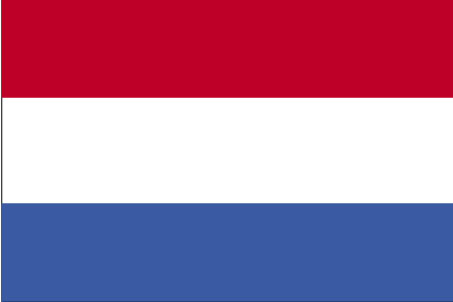
Netherlands
Nederland
Declare Your Relationship to Netherlands
CountryReports Community
- Studying24
- From Netherlands2
- Netherlands heritage10
- Visited6
- Want to visit10
Customs and Culture
Customs and Culture
Cultural Attributes
The Netherlands has a strong tradition of involvement in international affairs. Dutch openness to the world has made them no less proud of their own culture and heritage, whether it is in the arts, politics, technology, or a strong tradition of liberalism.
Until age 25, a good life consists of plenty of money to buy clothes, a mobile phone with camera, viewing DVDs at home, and physical activities/sports.
When getting older they work for a house, preferably in a quiet neighborhood, with a garden. Parents have become increasing worried about the financial future of their children. The younger generation may never have the same possibilities as the older generation; in most cases, it is not possible for parents to provide their children with a mortgage on their house.
Although higher education is not guaranteed a good job, parents should encourage their children to pursue higher education. At present many of the former securities provided the Dutch government, such as health insurance, relatively cheap universities, student loans and possibilities for early retirement, are already limited or subject to change. This provides people with a sense of an untrustworthy government. It has become more liberal than it used to be. Due to this atmosphere people start to only rely on themselves for creating their own financial security.

The World on Two Wheels
Get More Customs and Culture
6 more cultural topics for members
Social Customs & Etiquette · Diet · Family · Dating Customs · Recreation · Student Life
Every country, every topic, all activities & recipes
✓ Instant access on this device · ✓ No subscription
Holidays
Queen's Day
4/30Birthday
Birthday of Queen-Mother JULIANA in 1909 and accession to the throne of her oldest daughter BEATRIX in 1980
Birthdate - Juliana Louise Emma Marie Wilhelmina
4/30Birthday
Birthdate - Juliana Louise Emma Marie Wilhelmina, queen of the Netherlands.
Birth date - Vincent Van Gogh
3/30Birthday
Birth date - Vincent Van Gogh, Dutch artist, was born, Groot Zundert, Holland on March 30, 1853.
Birth date - Rembrandt Van Rijn Harmenszoon Rijn
7/15Birthday
Birth date - Rembrandt Van Rijn Harmenszoon Rijn, Dutch artist, was born in Leyden of the Netherlands on July 15, 1606.
Christmas
12/25Christmas
On December 5, Sinter Klass Eve, children set their wooden shoes by the fireplace, window or kitchen stove. Other gift giving takes place at this time or on Christmas eve. Many gifts hold poems or funny rhymes.
The Christmas season is announced on the first Sunday of Advent with the blowing of horns.
Holland celebrates Christmas on December 25 & 26. Gift giving is past so these two days are spent at church service or family dinners.
The noon meal on Christmas day is called Koffietafel and is like Breakfast. At 7:00 p.m. families enjoy a ham meal
Dates of Interest
- May 4th
Date varies (usually in February or March): Carnival is celebrated in the southern provinces of the Netherlands, particularly in Limburg and North Brabant, with colorful parades, parties, and costume events leading up to Lent.
How do people greet each other in the Netherlands?
A warm, hearty handshake suits both men and women, while younger and adult people (up to about 55) often exchange kisses on alternating cheeks or hug; older people stay more formal with a handshake and 'how are you'.
Do
- Shake hands warmly with men and women
- Use titles and family names except with close friends and relatives
- Say 'Goede morgen', 'goeie dag' or 'goeie avond' to adults
- Say 'Meneer/mevrouw' (Sir/madam) to get someone's attention
Don’t
- Don't use given names with people who aren't close friends or relatives
- Don't use 'Mejuffrouw' (Miss) — it is no longer used
Good to know
- Young people use informal 'Hi' when meeting and 'Doei' when leaving
- Females and male-female pairs may exchange kisses on alternating cheeks; males may hug
What are dining customs like in the Netherlands?
Meals are eaten at set times, usually at home, and you eat continental style with fork and knife, waiting until everyone is seated before starting.
Do
- Eat with fork and knife, continental style
- Wait until everyone is at the table before eating
- Keep both hands on the table
- Let a parent or host indicate when to eat
Don’t
- Don't rest your elbows on the table
- Don't scream or talk loudly at the table
- Don't start eating before everyone is seated
Good to know
- Breakfast is around 7:30–8:15 AM, lunch about 12:30 PM, dinner 5:30–7:30 PM
- Families often have standard seats at the table
- Typical dishes include potatoes with gravy, poffertjes, pea soup and hutspot; Dutch pastries are famous
What should I know about visiting and hospitality?
You seldom visit a home without an appointment, so always phone or text first; on arrival shake hands with everyone present, including children, and expect to be offered coffee.
Do
- Phone or text before visiting
- Shake hands with everyone present, including children
- Bring flowers or a small gift as a dinner guest
- Accept the offered coffee or other drink
Don’t
- Don't drop by a house without an appointment
Good to know
- Coffee (sometimes with a cookie) is served during the day until 9 p.m.
- People talk rather than play games when visiting
- The host accompanies guests to the door or their car/bike when they leave
- Formal guests say 'Thank you for this evening'; close friends say 'Ontzettend fijn dat je er was'
How should I dress in the Netherlands?
Clothing depends heavily on your job: some organizations like banks require formal suits and ties, while others are more informal, though jeans are not accepted.
Do
- Wear formal suits and ties in banks and similar organizations
- Dress according to your workplace's norms
Don’t
- Don't wear jeans in workplaces
- Don't assume a tie is always required — going without one is becoming more popular
Good to know
- Brands and labels matter, especially for young people and in the business world
- Traditional clothes and wooden clogs (klompen) exist only in small enclaves and souvenir shops
Which gestures matter in the Netherlands?
Eye contact and facial expressions are important, and some gestures are considered rude.
Do
- Keep eye contact and use facial expressions
- Cover your mouth when you yawn
Don’t
- Don't chew gum while talking
- Don't point a finger to your forehead — it implies someone is crazy
What is family life like in the Netherlands?
Dutch families are moderate in size, both parents typically work, and couples usually live close to relatives.
Good to know
- Young people often leave home at eighteen for education or a career
- Couples commonly live together before or instead of marrying
- Young men and women begin dating in groups
What do people do for recreation in the Netherlands?
Cycling is hugely popular for commuting, recreation and sport, involving at least half the population, alongside football, tennis, field hockey and ice skating.
Good to know
- Football (soccer) is widely played and followed
- The Elfstedentocht is an ice-skating race through eleven cities in Friesland, held only in winters with heavy ice
- Young people enjoy pool bars and evening bars starting around 11 pm
Last updated: 2026-07-12 · Sources: CountryReports
Photos of Netherlands
Photos of Netherlands
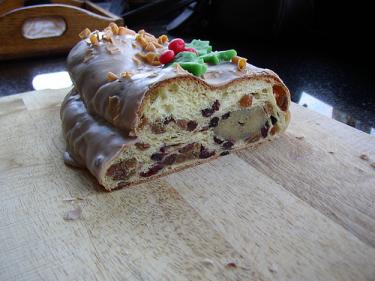
Dutch home made christmas cake (kerststol)
Queensday Celebration -- The Netherlands
Queensday Celebration -- The Netherlands
Queensday Celebration -- The Netherlands
Netherland Skyscraper
Netherland Train
Netherland Building Expansion
Netherland Park
Netherland Bicycle Parking Lot
Netherland Bicycle Parking Lot
The canals of Amsterdam
Spring flowers on the way to Den Haag


Travel and Tourism
Travel and Tourism
- Travel Alert Status
- Level 2: Exercise Increased Caution
- Currency
- euro (EUR)
- Time Difference
- UTC+1 (6 hours ahead of Washington, DC, during Standard Time) time zone note: time descriptions apply to the continental Netherlands only, for the constituent countries in the Caribbean, the time difference is UTC-4
- Airports
- 27
Read the full travel guide — health, safety, vaccinations, disease risk, sanitation, and transit details.
View full travel guideRecipes
Recipes
Christmas Cake (kerststol)
Dessert
Main Dish
Beef Croquettes
Main Dish
Baked Noodles with Ham
Main Dish
Saucijzen Broodjes (Sausage Rolls)
Side Dish
Snert (Dutch Pea Soup)
Side Dish
Dutch Potatoes
Side Dish
Dutch Ham Roll Ups
Side Dish
PremiumCucumber Salad
Side Dish
PremiumAardapple Soep (Dutch Potato Soup)
Side Dish
PremiumHot Dutch Potato Salad
History
History
Historical Eras
Ancient & Frankish Period
55 BCE – 1477
Julius Caesar encountered Germanic tribes — the Batavians in the west and Frisians in the east — when Rome pushed into the Low Countries in the first century BCE. Between the fourth and eighth centuries, the Franks conquered most of the region, integrating it into the Carolingian Empire. The area subsequently passed through the hands of various feudal lords before falling under the control of the House of Burgundy.
Habsburg Rule
1477 – 1581
The marriage of Mary of Burgundy to Maximilian I brought the Low Countries under Habsburg dominion, later consolidated under Charles V and his son Philip II of Spain. Harsh Spanish taxation and religious persecution — particularly under the Duke of Alba — provoked widespread revolt beginning in 1568 under Willem of Orange. The Union of Utrecht in 1579 united the seven northern provinces, setting the stage for a formal declaration of independence.
Dutch Republic
1581 – 1795
The Republic of the United Netherlands, declared independent from Spain in 1581, rose to become one of the world's foremost maritime and commercial powers during its seventeenth-century Golden Age. The Dutch East India Company (VOC) dominated global trade, while artists such as Rembrandt and Frans Hals defined an extraordinary cultural flowering. Protracted wars with Spain, England, and France gradually eroded Dutch dominance, and French Revolutionary forces expelled Stadhouder Willem V in 1795.
Kingdom of the Netherlands
1795 – 1940
After the Napoleonic interlude, the Congress of Vienna established the Kingdom of the United Netherlands in 1815 under Willem I of the House of Orange-Nassau, though Belgium seceded to form its own kingdom in 1830. Constitutional liberalization under Willem II in 1848 transformed the country into a parliamentary monarchy, and a long period of economic prosperity followed under Willem III and Queen Wilhelmina. The Netherlands declared neutrality in both world wars, successfully avoiding occupation in 1914–18.
WWII & Decolonization
1940 – 1949
German forces invaded and occupied the Netherlands in May 1940, subjecting the country to five years of brutal occupation that included the deportation and murder of the vast majority of Dutch Jews. Queen Wilhelmina led a government-in-exile from London, and the country was liberated in May 1945. The immediate postwar years saw the painful dissolution of the Dutch colonial empire, culminating in Indonesian independence in 1949.
Modern Netherlands
1949 – present
As a founding member of NATO and the European Community, the Netherlands anchored itself firmly within the Western international order and rebuilt its economy into one of Europe's most prosperous. Suriname gained independence in 1975, and successive queens — Juliana, Beatrix, and King Willem-Alexander from 2013 — oversaw a liberal, pluralistic society. The Netherlands became a leading exporter of agricultural products and a central node in European trade and finance.
Overview
The Dutch are primarily of Germanic stock with some Gallo-Celtic mixture. Their small homeland frequently has been threatened with destruction by the North Sea and has often been invaded by the great European powers.
Every country, every topic, all activities & recipes
✓ Instant access on this device · ✓ No subscription
Timeline of Key Events
1 – 100
The Frisians settled in what is now the Netherlands
A Teutonic tribe known as the Frisians (or Friesians) settled in what is now the Netherlands in the first century A.D.
600 – 700
Frisians clashed with the Franks
In the seventh century the Frisians clashed with the Franks and resisted Christianity, but succumbed to Frankish rule and accepted Christianity a century later. Citizens of the Netherlands’s province of Friesland are still called Frisians and the Frisian language is still spoken there.
1100
Wittem Castle in Limburg dates to this time.
Wittem Castle in Limburg dates to this time.
1421
Beginning of the Eighty Years’ War
Dutch rally against Spain in the beginning of the Eighty Years’ War.
1421
A flood that drowns 10,000 people
A storm on St. Elizabeth’s Day breaks dikes along the Maas and Waal rivers, causing a flood that drowns 10,000 people.
1460
The courtyard Episcopal palace at Atrecht had witch burnings
The courtyard Episcopal palace at Atrecht had witch burnings.
1477
Beginning of the rule of the Austrian Habsburgs.
Beginning of the rule of the Austrian Habsburgs.
Read the full history profile — narrative overview, defining eras, and the complete timeline in one place.
View expanded historyInteresting Facts
Interesting Facts
The world's busiest port is in Rotterdam with over - 385,800 tons being transported.
The country with the most bicycles has approximately 16 million bikes. That would average to be one bike per person in the country.
The Netherlands is also known as Holland, because it contains the provinces of North and South Holland. These provinces, along with the province of Utrecht, are the mostly densely populated part of the country. The northern provinces are largely rural. Altogether there are 12 provinces in the Netherlands.
Disastrous flooding in 1953 killed 1,800 people and destroyed more than 70,000 homes. This led to a huge flood-control project. Flooding struck again in 1995. Rising rivers forced 240,000 people to relocate until the water receded.
2 more facts for members
Every country, every topic, all activities & recipes
✓ Instant access on this device · ✓ No subscription
Geography and Environment
Geography and Environment
- Terrain
- mostly coastal lowland and reclaimed land (polders); some hills in southeast
- Climate
- The Netherlands lies in the temperate zone of the Northern Hemisphere, and for the most part possesses a maritime climate. The summers are cool while winters are quite cold. The warmest months fall between July and September with temperatures ranging from 60-75°F. The winter months are long and dreary with strong winds and some snow. Temperatures range from 20-35°F. Due to the proximity of the sea, rain is quite common and spread pretty evenly all year round.
- Natural Hazards
- flooding
- Current Environmental Issues
- water pollution in the form of heavy metals, organic compounds, and nutrients such as nitrates and phosphates; air pollution from vehicles and refining activities; acid rain
Read the full geography and environment profile — terrain, climate, natural resources, hazards, land use, and international agreements.
View full geographyPeople & Demographics
People & Demographics
Religion
Languages Spoken
Dutch (official language), Frisian (official language)
- Dutch
- Frisian
Population
- Population
- 17,890,000
- Population in Major Urban Areas
- AMSTERDAM (capital) 1.056 million; Rotterdam 1.014 million; The Hague (seat of government) 635,000
- Nationality Noun
- Dutchman(men), Dutchwoman(women)
- Ethnic Groups
- Dutch 83%, other 17% (of which 9% are non-Western origin mainly Turks, Moroccans, Antilleans, Surinamese and Indonesians)
Education
- Literacy Definition
- age 15 and over can read and write
Life Expectancy
- Life Expectancy at Birth
- Life expectancy at birth in the Netherlands is among the highest in the world, reflecting the country's strong public health infrastructure, universal healthcare access, and high standard of living. As of the most recent available data, the average life expectancy at birth in the Netherlands stands at approximately 82 years, with women living longer on average — around 83 to 84 years — compared to men at approximately 80 to 81 years. The Netherlands operates a regulated, mandatory health insurance system that ensures virtually all residents have access to comprehensive medical care, including preventive services, specialist treatment, and long-term care. This universal coverage plays a central role in sustaining the nation's strong longevity outcomes. Several lifestyle and environmental factors also contribute to the Netherlands' favorable life expectancy figures. The Dutch population benefits from a well-developed cycling culture that promotes regular physical activity, relatively low rates of obesity compared to many other developed nations, and strong public health campaigns targeting smoking, alcohol consumption, and diet. Smoking rates have declined significantly over recent decades following sustained government intervention and public health initiatives. The country performs well across key health indicators that are closely linked to longevity. Infant mortality rates are very low, at fewer than 4 deaths per 1,000 live births, and maternal health outcomes are consistently strong. Access to clean water, sanitation, and food safety standards further supports population health at all age levels. Chronic non-communicable diseases such as cardiovascular disease and cancer remain the leading causes of death, as is typical in high-income nations. However, the Dutch healthcare system has invested heavily in early detection programs, including national screening initiatives for breast, cervical, and colorectal cancers, which help reduce mortality from these conditions. Compared globally, the Netherlands consistently ranks in the upper tier of life expectancy among European Union member states and OECD countries, performing comparably to nations such as Sweden, Spain, and Switzerland. It is worth noting that life expectancy in the Netherlands, as in many Western European countries, experienced a temporary dip during the COVID-19 pandemic period before recovering in subsequent years. This sustained long-term performance is a reflection of decades of investment in public health policy, medical research, and social welfare systems that support healthy aging across all segments of the population.
- Infant Mortality Rate
- The Netherlands maintains one of the lowest infant mortality rates in the world, reflecting its highly developed healthcare system, strong social infrastructure, and comprehensive prenatal and postnatal care programs. As of the most recent available data, the infant mortality rate in the Netherlands stands at approximately 3 to 4 deaths per 1,000 live births, a figure that places the country among the top performers globally in child health outcomes. This low rate is the result of decades of investment in public health. The Dutch healthcare system provides universal access to maternity care, including midwifery services, obstetric care, and postpartum home visits through the kraamzorg program — a uniquely Dutch system in which trained maternity nurses visit newborns and their families at home for up to eight days after birth. This structured early intervention helps monitor both infant and maternal health during the critical first days of life. The Netherlands also benefits from high levels of maternal education, low rates of teenage pregnancy, strong nutritional standards, and widespread access to prenatal screenings. Vaccination programs administered through the national immunization schedule ensure that infants are protected against a range of preventable diseases shortly after birth. Despite its strong overall performance, health authorities have noted that infant mortality rates are not uniform across all population groups. Children born to mothers from lower socioeconomic backgrounds or certain immigrant communities have historically shown slightly higher rates, prompting targeted public health initiatives aimed at reducing these disparities. In a European context, the Netherlands compares favorably to the EU average, which hovers around 3.5 to 4.5 deaths per 1,000 live births depending on the year. Global organizations that monitor child health trends consistently rank the Netherlands alongside countries such as Finland, Iceland, and Japan as leaders in infant survival rates. Continued efforts by the Dutch government and public health organizations focus on closing remaining gaps and sustaining these gains as the population and healthcare demands evolve over time.
Read the full people and society profile — demographics, health, education, religion, languages, and notable people.
View full people and societyGovernment & Politics
Government & Politics
Country Identity
- Country Name
- Netherlands
- Full Country Name
- Kingdom of the Netherlands
- Local - Long
- Koninkrijk der Nederlanden
- Local - Short
- Nederland
Government Structure
- Government Type
- constitutional monarchy
- Legal System
- civil law system incorporating French penal theory; constitution does not permit judicial review of acts of the States General; accepts compulsory ICJ jurisdiction, with reservations
- Executive Branch
- chief of state: King WILLEM-ALEXANDER (since 30 April 2013); Heir Apparent Princess CATHARINA-AMALIA (born 7 December 2003), daughter of the monarch head of government: Prime Minister Dick SCHOOF (since 2 July 2024) and Deputy Prime Ministers Fleur AGEMA, Sophie HERMANS, Mona KEIJZER, and Eddy VAN HIJUM (all since 2 July 2024) cabinet: Council of Ministers appointed by the monarch elections: none; the monarchy is hereditary; following Second Chamber elections, the leader of the majority party or leader of a majority coalition is usually appointed prime minister by the monarch; deputy prime ministers appointed by the monarch note: there is also a Council of State composed of the monarch, heir apparent, and councilors that provides advisory consultations to the cabinet on legislative and administrative policy
- Legislative Branch
- bicameral States General or Staten Generaal consists of the First Chamber or Eerste Kamer (75 seats; members indirectly elected by the country's 12 provincial councils for four-year terms) and the Second Chamber or Tweede Kamer (150 seats; members directly elected by popular vote to serve four-year terms) elections: First Chamber - last held on 30 May 2023 (next to be held in 2027); Second Chamber - last held on 22 November 2023 (next to be held by 2027) election results: First Chamber - percent of vote by party - NA%; seats by party - BBB 16, VVD 10, GL-PvdA 8, D66 6, CDA 5, PVV 5, SP 4, CU 3, Volt 2, JA21 2, SGP 2, FvD 2, PvdD 2, 50PLUS 1, DENK 1, other 10; Second Chamber - percent of vote by party - PVV 23.5%, GL-PvdA 15.5%, VVD 15.2%, NSC 12.9%, D66 6.3%, BBB 4.7%, CDA 3.3%, SP 3.1%, other 15.5%; seats by party - PVV 37, GL-PvdA 25, VVD 24, NSC 20, D66 9, BBB 7, CDA 5, SP 5, SGP 3, CU 3, PvdD 3, Volt 2, JA21 1, DENK 1, FvD 1, other 4
- Judicial Branch
- Supreme Court or Hoge Raad (justices are nominated for life by the monarch)
- Suffrage
- 18 years of age; universal
- Constitution
- adopted 1814; amended many times, last time 17 February 1983
- Independence
- 1579 (from Spain); note - the northern provinces of the Low Country concluded the Union of Utrecht, but it was not until 1648 that Spain recognized their independence
- National Holiday
- Queen's Day (Birthday of Queen-Mother JULIANA in 1909 and accession to the throne of her oldest daughter BEATRIX in 1980), 30 April
Capital City
- Capital Name
- Amsterdam; note - The Hague is the seat of government
- Capital - geographic coordinate
- 52 21 N, 4 55 E
- Capital Time Difference
- UTC+1 (6 hours ahead of Washington, DC, during Standard Time) time zone note: time descriptions apply to the continental Netherlands only, for the constituent countries in the Caribbean, the time difference is UTC-4
the original Dutch name, Amstellerdam, meaning "a dam on the Amstel River," dates to the 13th century; over time the name simplified to Amsterdam
Military
Branches: Royal Netherlands Army, Royal Netherlands Navy (includes Naval Air Service and Marine Corps), Royal Netherlands Air Force (Koninklijke Luchtmacht, KLu), Royal Military Police
Embassy / Diplomatic Mission
Consulate General of the United States, Amsterdam
Museumplein 19
1071 DJ Amsterdam
Telephone: (31) (20) 575-5309
Emergency after-hours telephone: (31) (70) 310-2209
Facsimile: (31) (20) 679-0321
Embassy of the United States, The Hague
Lange Voorhout 102
2514 EJ The Hague
Telephone: (31) (70) 310-2209
Facsimile: (31) (70) 361-4688
Read the full government profile — flag symbolism, national anthem, and other national symbols.
View full government detailsEconomy
Economy
The Netherlands has a prosperous and open economy that depends heavily on foreign trade, with exports and imports together accounting for more than 150% of GDP.
Snapshot
- Currency Name and Code
- Euro (EUR)
- GDP — official exchange rate
- $581,300,000,000 (USD)
- GDP Real Growth Rate
- 1.5%
- Gini Index
- 30.9
Every country, every topic, all activities & recipes
✓ Instant access on this device · ✓ No subscription
News & Weather
News & Weather
Current Weather
Latest News
The Netherlands confronts Israel while hiding from its own Jewish history - opinion - The Jerusalem Post
The Jerusalem Post · 1d ago
Dutch Treat: What brands from the Netherlands brought to their national audio show - Stereophile.com
Stereophile.com · 1d ago
Netherlands Defense Intelligence and Security Service hacked Jared Kushner’s iPhone. They found stuff. - Daily Kos
Daily Kos · 2d ago
Netherlands moves billions in gold to London in 'crisis preparedness' move - BBC
BBC · 53d ago
The Netherlands forced Meta to let users ditch algorithmic feeds. Here’s what happened - The Conversation
The Conversation · 46d ago
Dutch Central Bank Cuts Gold Reserves in U.S., Citing ‘Geopolitical Unrest’ - The New York Times
The New York Times · 52d ago
Legendary Drummer Alex Van Halen Knighted in the Netherlands - Rolling Stone
Rolling Stone · 52d ago
Colombia seizes 7.6 tonnes of Netherlands-bound cocaine at Cartagena port - Euronews.com
Euronews.com · 3d ago
News via Google News
Videos
Videos
1 curated YouTube videos.
Source: YouTube
Frequently Asked Questions
Frequently Asked Questions
What is the population of Netherlands?
What is the capital of the Netherlands?
Where is the Netherlands located?
What countries border the Netherlands?
What religion is practiced in the Netherlands?
What currency does the Netherlands use?
What languages are spoken in the Netherlands?
What is the Netherlands known for?
Last reviewed 2026