
 English
 Español
 中文
中文 हिन्दी
 Français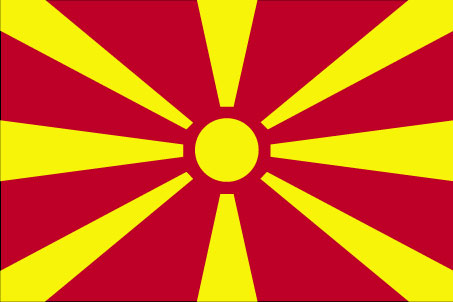
Macedonia
Makedonija
Declare Your Relationship to Macedonia
CountryReports Community
- Studying6
- From Macedonia3
- Macedonia heritage1
- Visited2
- Want to visit1
Customs and Culture
Customs and Culture
Cultural Attributes
Macedonian culture stresses the importance of the family. Parents sacrifice a great deal to support their children into adulthood, and assist them financially. This is particularly important for the poorer Macedonians who came to Australia wanting a better life for their children. The care of grand-parents is in the hands of the son, but in reality daughters do most of the caring of sick and elderly. Herbal remedies are used by many of the older generation. Women are seen as the primary carers. However, in Australia, some families use residential care for their elderly due to work and professional commitments.
In Macedonia, the unemployment rate is between 25-30%. As yet, there is no Republic of Macedonia. However, the drive for autonomy is very strong.

Land of the Vardar, Legacy of Empires
Get More Customs and Culture
5 more cultural topics for members
Social Customs & Etiquette · Diet · Family · Dating Customs · Recreation
Every country, every topic, all activities & recipes
✓ Instant access on this device · ✓ No subscription
Holidays
Uprising Day
8/2Independence
also known as Saint Elijah's Day and Ilinden
How do people greet each other in Macedonia?
Macedonians greet friends and family warmly, with people of the same gender embracing or kissing on the cheeks. Formal titles are used for introductions, while friends use first names.
Do
- Use a person's formal title when first introduced
- Shake hands with each person when entering a room where others are seated
- Use first names with friends
Don’t
- Do not expect Muslim men and women to shake hands, as they use verbal greetings only
- Do not stare at strangers, which is considered impolite
Good to know
- Useful phrases: dobro utro (good morning), dobro vecher (good evening), alo (hello), prijatno (goodbye)
What are dining customs like in Macedonia?
Dinner is the main meal, taken around 2 PM, and meals are always prepared just before eating. Staples include root vegetables, grains, fruit, wine, meats, and the basic bean casserole tavche-gravche.
Do
- Try appetizers (meze) served with fruit brandy (rakia)
- Expect breakfast of bread, cheese and sometimes eggs, around 9 AM for office workers
Good to know
- Hot food is often left to cool to room temperature
- Pizza is very popular
- Sweet desserts mark religious holidays, New Year's Day, births, weddings and funerals
- A bird is eaten at Christmas and lamb at Easter among Christians; lamb is slaughtered for Kurban Bayram among Muslims
What should I know about visiting and hospitality in Macedonia?
Hospitality is a hallmark of the culture, and relatives, friends and neighbors visit regularly and informally.
Do
- Give advance notice of a visit if you are a stranger, so the host can receive you properly
- Shake hands with each person when entering a room
- Traditionally remove your shoes at the door as a show of respect
Good to know
- The shoe-removal practice is diminishing among urban Christians
How should I dress in Macedonia?
Most urban Macedonians follow Western European styles within their budget, and a clean, tidy appearance is important.
Do
- Keep a clean, tidy appearance
Good to know
- Albanian Muslim men wear loose pants, a long tunic and a turban
- Muslim women wear head scarves and long dresses
What is family life like in Macedonia?
Macedonian culture stresses the importance of family, traditionally an extended household of a couple, their unmarried daughters, and their sons with spouses and children. Parents sacrifice greatly to support their children into adulthood.
Good to know
- The extended family unit is becoming less common in urban areas due to changes in workforce participation
- Children often live with their parents until married
- Women are seen as the primary carers and retain major responsibility for household chores and childcare
- Grandmothers often help care for children
What do people do for recreation in Macedonia?
Soccer and basketball are the two most popular sports, with table tennis and chess also popular.
Good to know
- In cities, the korzo is popular: a main street is closed to traffic and turned into an evening promenade
Last updated: 2026-07-12 · Sources: CountryReports
Photos of Macedonia
Photos of Macedonia


Travel and Tourism
Travel and Tourism
- Travel Alert Status
- Level 1: Exercise Normal Precautions
- Time Difference
- UTC+1 (6 hours ahead of Washington, DC, during Standard Time)
Read the full travel guide — health, safety, vaccinations, disease risk, sanitation, and transit details.
View full travel guideRecipes
Recipes
History
History
Historical Eras
Ancient Macedon
800 BCE – 148 BCE
The Kingdom of Macedon rose to dominance under Philip II (359–336 BCE) and reached its zenith under Alexander the Great, whose campaigns extended Macedonian influence from Egypt to the borders of India. After Alexander's death in 323 BCE, his empire fragmented among rival successors. Rome steadily encroached on the weakened kingdom, finally conquering it at the Battle of Pydna in 168 BCE and formally annexing it as a Roman province in 148 BCE.
Roman & Byzantine Rule
148 BCE – 1371
As a Roman province, Macedonia served as a vital corridor along the Via Egnatia linking Rome to the eastern empire, and witnessed pivotal events such as the Battle of Philippi in 42 BCE. After the fall of the Western Roman Empire, the territory passed to Byzantine control, during which Slavic peoples migrated into the Balkans in the 6th and 7th centuries. Serbs, Bulgarians, and Byzantines then contested the region for centuries, leaving a complex ethnic and cultural legacy.
Ottoman Macedonia
1371 – 1912
Ottoman forces conquered Macedonia in the late 14th century, incorporating it into an empire that would hold the territory for over five hundred years. The period saw significant demographic and religious transformation, alongside the gradual emergence of Macedonian nationalist sentiment in the 19th century. This culminated in the Ilinden Uprising of August 2, 1903, when Macedonian revolutionaries briefly established the Republic of Krushevo before Ottoman forces suppressed the revolt after ten days.
Balkan Wars & World Wars
1912 – 1944
The First Balkan War of 1912 ended Ottoman rule in Macedonia, but the Second Balkan War immediately followed as Bulgaria, Serbia, and Greece fought over the territory's division, settled by the 1913 Treaty of Bucharest. After World War I, Vardar Macedonia was absorbed into the Kingdom of Serbs, Croats, and Slovenes under the 1919 Treaty of Versailles. During World War II, Bulgaria and Italy occupied the region, prompting widespread partisan resistance that eventually liberated Macedonia in late 1944.
Yugoslav Republic
1944 – 1991
Following liberation, Macedonia became a constituent republic of Marshal Tito's Socialist Federal Republic of Yugoslavia, gaining formal recognition of a distinct Macedonian national identity, language, and culture for the first time. The republic experienced relative stability and cultural flourishing within the Yugoslav federation throughout the Cold War era. As communism collapsed across Eastern Europe, Macedonia declared independence from Yugoslavia in late 1991, adopting a new constitution on November 20, 1991.
Independent Macedonia
1991 – present
Independent Macedonia faced immediate challenges, including a Greek trade blockade over the use of the name 'Macedonia' and symbols, delaying international recognition until the country joined the UN in 1993 as the Former Yugoslav Republic of Macedonia. An ethnic Albanian armed insurgency in 2001 threatened the country's stability, resolved through the internationally brokered Ohrid Framework Agreement. In 2019, a landmark agreement with Greece — the Prespa Agreement — saw the country officially renamed North Macedonia, clearing the path for NATO and EU accession processes.
Overview
Throughout its history, the present-day territory of Macedonia has been a crossroads for both traders and conquerors moving between the European continent and Asia Minor. Each of these transiting powers left its mark upon the region, giving rise to a rich and varied cultural and historical tradition.
Every country, every topic, all activities & recipes
✓ Instant access on this device · ✓ No subscription
Timeline of Key Events
359 BCE – 336 BCE
Philip II ruled the Kingdom of Macedonia.
Philip II ruled the Kingdom of Macedonia.
336 BCE
Alexander inherited the throne of Macedonia and all of Greece.
Alexander inherited the throne of Macedonia and all of Greece.
199 BCE – 150 BCE
The Romans made Macedonia into a province and obliterated the city of Corinth.
The Romans made Macedonia into a province and obliterated the city of Corinth.
42 BCE
Octavian and Mark Antony defeated Brutus and Cassius at Philippi in Macedonia.
Octavian and Mark Antony defeated Brutus and Cassius at Philippi in Macedonia.
1908
Russia and Britain threatened action in Macedonia if peace was not reached soon.
Russia and Britain threatened action in Macedonia if peace was not reached soon.
1912 – 1913
Balkan Wars
During the Balkan Wars the Kingdom of Greece acquired Macedonia from the Turkish Ottoman Empire.
1913
Ottoman rule in Europe ends after five centuries.
Ottoman rule in Europe ends after five centuries. Macedonia is partitioned between Serbia, Bulgaria and Greece. What is now FYROM is incorporated into Serbia.
Read the full history profile — narrative overview, defining eras, and the complete timeline in one place.
View expanded historyInteresting Facts
Interesting Facts
The youngest Prime Minister is Ljupco Georgievski. He was 32 when he became Prime Minister of the Former Yogoslav Republic of Macedonia on Nov. 30, 1998.
Macedonia had the world's oldest President, Kiro Gligorov President of the Former Yugoslav Republic of Macedonia who was 83 years old.
See every fact — trivia, oddities, and curious tidbits gathered from across the country.
View all interesting factsGeography and Environment
Geography and Environment
- Climate
- Mostly a country of hills and mountains, Macedonia has a continental Mediterranean climate characterized by long, dry, rather hot summers and short, cold winters. The average air temperature in the summer is 25°C (77°F) and 0.5°C (33°F) in winter. However, short periods of extreme temperatures of 110–115°F in summer and low 20s in the winter are common. The average annual precipitation is 445.5 mm. The humidity in Macedonia averages 66%. Occasionally, there are dust storms in the Vardar River valley. Macedonia is on a fault line and the country averages four earthquakes a year (most go unnoticed) with a median reading of 6 on the Medvedev-Sponheuer-Karnik International Seismological Scale.
Read the full geography and environment profile — terrain, climate, natural resources, hazards, land use, and international agreements.
View full geographyPeople & Demographics
People & Demographics
Religion
Languages Spoken
Macedonian 68%, Albanian 25%, Turkish 3%, Serbo-Croatian 2%, other 2%
- Albanian
- Macedonian
- Serbo-Croatian
- Turkish
Population
- Population
- 2,085,679
- Population in Major Urban Areas
- SKOPJE (capital) 499,000
- Nationality Noun
- Macedonian(s)
- Ethnic Groups
- Macedonian 58.4%, Albanian 24.3%, Turkish 3.9%, Romani 2.5%, Serb 1.3%, other 2.3%, persons for whom data were taken from administrative sources and no ethnic affiliation data was available 7.2%
- Language Note
- The official language is Macedonian, which is written in a Cyrillic script. Albanian, Turkish, and Serbian are spoken widely. Sixty-seven per cent of the population in Macedonia are Macedonian, 22.9% are Albanian and there are between 2-3% Gypsy and Serb minorities.
Education
- Literacy Definition
- NA
Life Expectancy
- Life Expectancy at Birth
- Life expectancy at birth in North Macedonia stands at approximately 75 to 76 years, reflecting steady improvements in public health over recent decades. Women in the country tend to live longer than men, with female life expectancy hovering around 78 years compared to roughly 73 years for males — a pattern consistent with regional and global trends. North Macedonia has made notable progress in extending the lifespan of its population since the post-Yugoslav transition period of the early 1990s, when economic instability and disrupted healthcare services created significant challenges. Over the following decades, investments in healthcare infrastructure, expanded access to medical services, and improvements in living standards contributed to gradual gains in longevity. Despite this progress, life expectancy in North Macedonia remains notably lower than the European Union average, which stands at approximately 81 years. Contributing factors include a high prevalence of cardiovascular disease, which remains the leading cause of death in the country. Lifestyle-related conditions such as smoking, sedentary behavior, and dietary habits associated with elevated risk of heart disease and stroke continue to place a significant burden on public health outcomes. Air pollution in urban areas, particularly in the capital Skopje, has also been identified as a serious concern affecting population health. The city frequently experiences elevated levels of fine particulate matter during winter months, linked to home heating practices, industrial activity, and vehicle emissions. Prolonged exposure to poor air quality contributes to respiratory and cardiovascular conditions that negatively affect overall life expectancy and quality of life. Healthcare access in rural areas continues to lag behind that in urban centers, creating disparities in health outcomes across the country. The government has pursued reforms aimed at strengthening primary care and expanding coverage, though persistent challenges related to funding, infrastructure, and healthcare workforce retention remain obstacles to achieving more uniform improvements nationwide. North Macedonia's demographic profile reflects broader trends seen across the Western Balkans, where life expectancy has risen considerably since the 1990s but still trails western European nations by several years. Continued investment in preventive healthcare, chronic disease management, tobacco control, and environmental quality improvements is expected to support further gains in population longevity in the coming years.
- Infant Mortality Rate
- North Macedonia has made significant progress in reducing infant mortality over recent decades, reflecting broader improvements in healthcare access, prenatal care, and public health infrastructure. As of the most recent available data, the country's infant mortality rate stands at approximately 5 to 6 deaths per 1,000 live births, a figure that places it broadly in line with regional averages for Southeastern Europe, though still somewhat higher than the rates seen in Western European nations. In the early 1990s, following independence from Yugoslavia, the infant mortality rate in North Macedonia was considerably higher, hovering around 25 to 30 deaths per 1,000 live births. The steady decline over the subsequent three decades represents one of the more notable public health achievements in the country's recent history. This improvement has been driven by expanded access to maternal and child healthcare services, increased rates of skilled birth attendance, immunization programs, and stronger nutritional support for mothers and newborns. Despite this overall progress, disparities remain within the country. Rural communities and certain ethnic minority populations, particularly Roma communities, tend to experience higher infant mortality rates than the national average. These groups often face barriers including limited access to healthcare facilities, lower rates of prenatal care utilization, and socioeconomic challenges that can affect both maternal and infant health outcomes. The Macedonian government, in cooperation with international organizations such as UNICEF and the World Health Organization, has implemented targeted programs aimed at bridging these gaps. Initiatives have focused on improving access to antenatal care in underserved areas, training community health workers, and promoting awareness of newborn care practices. North Macedonia's infant mortality rate continues to be monitored as part of its broader commitments to the United Nations Sustainable Development Goals, particularly SDG 3, which targets reducing neonatal mortality to no more than 12 deaths per 1,000 live births in all countries by 2030. Based on current trends, the country is well-positioned to sustain this progress, provided that healthcare investments and targeted social interventions continue in the years ahead.
Read the full people and society profile — demographics, health, education, religion, languages, and notable people.
View full people and societyGovernment & Politics
Government & Politics
Country Identity
- Country Name
- Macedonia
- Full Country Name
- The Former Yugoslav Republic of Macedonia
- Local - Long
- Republika Makedonija
- Local - Short
- Makedonija
Government Structure
- Legal System
- based on civil law system; judicial review of legislative acts
- Executive Branch
- chief of state: President Gordana SILJANOVSKA-DAVKOVA (since 12 May 2024) head of government: Prime Minister Hristijan MICKOSKI (since 23 June 2024) cabinet: Council of Ministers elected by majority vote of all deputies in the Assembly; the current cabinet was formed by the governing coalition led by VMRO-DPMNE along with DUI and several smaller coalition partners elections: president elected by popular vote for a five-year term; election last held on 24 April and 8 May 2024 (next to be held in 2029); prime minister elected by the Assembly following legislative elections election results: Gordana SILJANOVSKA-DAVKOVA elected president in the second round; percent of vote - Gordana SILJANOVSKA-DAVKOVA 65.2%, Stevo PENDAROVSKI 32.0%; she is the first woman to hold the office of president in the country's history
- Legislative Branch
- Unicameral Assembly or Sobranie (120 seats; members elected by popular vote from party lists based on the percentage of the overall vote the parties gain in each of six electoral districts; members serve four-year terms). Elections: Last held on 8 May 2024 (next to be held in 2028). Election results: Percent of vote by party - VMRO-DPMNE-led "Your Macedonia" coalition approximately 43%, SDSM-led coalition approximately 15%, DUI approximately 10%, VLEN coalition approximately 11%, others remaining share; seats by party - VMRO-DPMNE coalition 58, VLEN 18, SDSM-led coalition 18, DUI 11, Levica 6, Worth It 6, others 3. Following the elections, VMRO-DPMNE leader Hristijan Mickoski was designated to form a government, marking a significant shift in the country's political landscape. The country, officially known as North Macedonia since adopting the Prespa Agreement in 2019, continues to hold regular multiparty elections monitored by international observers.
- Judicial Branch
- Supreme Court - the Assembly appoints the judges; Constitutional Court - the Assembly appoints the judges; Republican Judicial Council - the Assembly appoints the judges
- Suffrage
- 18 years of age; universal
- Constitution
- adopted 17 November 1991, effective 20 November 1991; amended November 2001 by a series of new constitutional amendments strengthening minority rights
- Independence
- 8 September 1991
- National Holiday
- Uprising Day, 2 August (1903); note - also known as Saint Elijah's Day and Ilinden
Capital City
- Capital Name
- Skopje
- Capital - geographic coordinate
- 42 00 N, 21 26 E
- Capital Time Difference
- UTC+1 (6 hours ahead of Washington, DC, during Standard Time)
Skopje derives from its ancient name Scupi, the Latin designation of a classical era Greco-Roman frontier fortress town; the name may go back even further to a pre-Greek, Illyrian name
Military
Branches: Army of the Republic of Macedonia (ARM; includes General Staff and subordinate Joint Operational Command, Training and Doctrine Command, Special Operations Regiment)
Embassy / Diplomatic Mission
U.S. Embassy Skopje
Samoilova 21, 1000 Skopje, Macedonia
Telephone: (389) (2) 310-2000
Emergency after-hours telephone: (389) (2) 310-2000
Facsimile: (389) (2) 310-2299
Email: consularskopje@state.govconsularskopje@state.gov
The Consular Section is open for American Citizen Services Monday through Friday from 2:00 p.m. to 4:00 p.m., except on U.S. and Macedonian holidays. All non-emergency services are by appointment only.
Read the full government profile — flag symbolism, national anthem, and other national symbols.
View full government detailsEconomy
Economy
Since gaining independence in September 1991, North Macedonia has transformed from the least developed of the former Yugoslav republics—producing just 5% of federal output—into a small, open, upper-middle-income economy.
Snapshot
- Currency Name and Code
- Macedonian Denar (MKD)
- GDP — official exchange rate
- $5,304,000,000 (USD)
- GDP Real Growth Rate
- 2.9%
- GDP by Sector
- agriculture: 11.7% industry: 32.1% services: 56.2%
- Gini Index
- 28.2
Every country, every topic, all activities & recipes
✓ Instant access on this device · ✓ No subscription
News & Weather
News & Weather
Current Weather
Latest News
Polish cave-diver claims world depth record with 338m descent - Divernet
Divernet · 3d ago
Cleveland musician ZuP revisits the nostalgia of Macedonia childhood - WYSO Public Radio
WYSO Public Radio · 2d ago
Air quality in Central Macedonia - IQAir
IQAir · 2d ago
Macedonia passes ‘Megan’s Way Out’ drive-through safety law - Cleveland.com
Cleveland.com · 1d ago
North Macedonia 0-2 Scotland (Oct 3, 2026) Game Analysis - ESPN
ESPN · 21d ago
Elwyn Teddington "Ted" Humphries Obituary Oct 22, 2026 - Blakely Funeral Home & Crematory
Blakely Funeral Home & Crematory · 2d ago
How three teenagers from North Macedonia are using AI to protect women and girls online - UN Women Europe and Central Asia
UN Women Europe and Central Asia · 15d ago
North Macedonia joins the Council of Europe Coalition for Health Literacy and Human Rights - coe.int
coe.int · 5d ago
News via Google News
Videos
Videos
1 curated YouTube videos.
Source: YouTube
Frequently Asked Questions
Frequently Asked Questions
What is the population of Macedonia?
What is the capital of Macedonia?
Where is Macedonia located?
What countries border Macedonia?
What religion is practiced in Macedonia?
What is the currency of Macedonia?
What languages are spoken in Macedonia?
What is Macedonia known for?
Who are some notable political figures in Macedonia's modern history?
Last reviewed 2026