
 English
 Español
 中文
中文 हिन्दी
 Français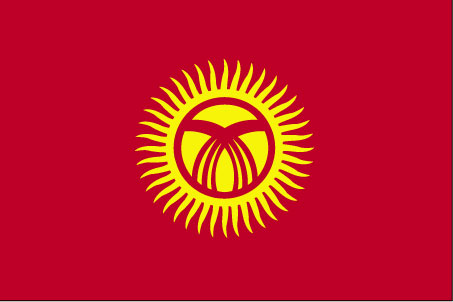
Kyrgyzstan
Declare Your Relationship to Kyrgyzstan
CountryReports Community
- Studying3
- From Kyrgyzstan0
- Kyrgyzstan heritage2
- Visited0
- Want to visit1
Customs and Culture
Customs and Culture
Cultural Attributes
Kyrgyzs are very hospitable. They often honor their guests by serving them a cooked sheep's head. For the most part Kyrgyz people have been influenced by Russian culture. Parents tend to favor a broad education for their children and it is not always possible for the parents to send their children to universities.

Land of Walnut Forests and Mountain Horizons
Get More Customs and Culture
5 more cultural topics for members
Social Customs & Etiquette · Diet · Family · Dating Customs · Recreation
Every country, every topic, all activities & recipes
✓ Instant access on this device · ✓ No subscription
Holidays
Independence Day
8/31Independence Day
Christmas
12/25Christmas
Kyrgyzstan is a former nation of the Union of Soviet Socialist Republic and is a mix of both the Western and Russian culture. The country is predominantly Islamic in nature and religion. However due to the existence of the Greek Orthodox churches the celebrations of Christmas have been made with fervor and traditional customs.
As the country uses Russian as their main language, the greeting that they used to great one another during Christmas is also S Rozhdestvom, pronounced ‘rosh-des-vum’.
The Santa Claus symbol is known popularly among the former Soviet Republics as Father Frost or “Dyed Moroz.” The traditions of placing shoes and stocking outside their bedroom doors have also been observed by the local Christian children. On Christmas Eve, legends say Santa Claus will be passing by their houses and leaving toys and gifts of clothes, candies and chocolates for them.
Kyrgyzstan observes the celebration of the holiday like most Eastern European countries on January 7th which is based on the Julian calendar. The celebrations start on December 25, wherein those days leading to the New Year of December 31 and the Christmas celebration of January 7 are just preliminaries to the festivities that will be held on Christmas Day. The Christmas season ends with the Old New Year’s Day celebration that is held annually on January 14.
On Christmas Eve, a midnight mass is held at the cathedrals and churches of the orthodox Christians and Catholics. A traditional and festive Christmas dinner is also held after the mass. In Eastern European countries it has been a tradition to bring in hay or straw to set the table for the dinner. Also brought in is the badnjak, a piece of log that is to be placed in the fireplace and kept burning all throughout the night. This is to keep certain curses and evil spirits away from the family and to bring them good luck for the coming year. A traditional prayer is then said to signify their desire to be one with their creator. The troparion song of Nativity is sung.
Traditional dishes and cuisine is served for the family. This includes roast pig, roast turkey, lamb meats dishes, vegetables. Christmas trees are decorated with Crystals, icicles, Christmas balls, local embroidered dolls, figurines and Christmas bells. Also part of the decorations of the tree is Nativity scenes that depict the birth of Christ. Handmade figurines and ornaments are made hung on the Christmas tree.
How do people greet each other in Kyrgyzstan?
Women typically greet one another with handshakes or hugs.
What are dining customs like in Kyrgyzstan?
Traditional dining centers on a shared central dish from which everyone is served into individual bowls, with people seated on a ground cloth or carpet around the pot, and men served separately and first.
Do
- Sit on the ground cloth or carpet around the central pot
- Expect to be served from a central dish into your own bowl
Good to know
- Traditional foods include manti (mutton dumplings), irikat (a pasta salad of noodles, carrots and radishes), and koumiss (fermented mare's milk)
- Breakfast often features yogurt, heavy cream, butter and honey served with bread and tea
- Men are served separately and first, women and children later
- A cooked sheep's head may be served to honor guests
How should I dress in Kyrgyzstan?
Traditional attire includes the ak-kalpak (white hat) worn by men, and ornate silks used for special occasions and ceremonies.
Good to know
- Ornate silks are reserved for special occasions and ceremonies
What is family life like in Kyrgyzstan?
Women perform most household chores, though city women are encouraged to be both professionals and homemakers, and knowing one's ancestry is highly valued.
Good to know
- Both men and women may marry more than one spouse, though it is more typical for men to have multiple wives
- A husband must provide each wife with a separate house and support her children
- Many Kyrgyz can recite their ancestors back six or seven generations
What do people do for recreation in Kyrgyzstan?
Horse sports are very popular, including racing, wrestling on horseback, and falconry, while urban people enjoy opera, ballet, parks and folklore groups.
Good to know
- Ulak tartysh is wrestling on horseback for a goat's carcass, played on a field about 300 by 150 meters
- Jumby atmai involves shooting at a target while galloping on horseback
- Urban residents often spend weekends at a country cottage
Last updated: 2026-07-12 · Sources: CountryReports
Photos of Kyrgyzstan
Photos of Kyrgyzstan


Travel and Tourism
Travel and Tourism
- Currency
- Kyrgyzstani som (KGS)
- Time Difference
- UTC+6 (11 hours ahead of Washington, DC, during Standard Time)
- Airports
- 61
Read the full travel guide — health, safety, vaccinations, disease risk, sanitation, and transit details.
View full travel guideRecipes
Recipes
Plov, Oriental pilaf with vegetables and raisins
Beverage
Main Dish
Assip (Sausages Made from By-Products and Rice)
Main Dish
Kesme (Lamb and Noodle Soup)
Bread
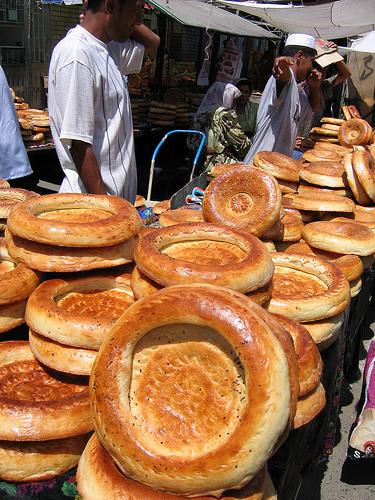
Sanza (Fried Buns)
Dessert
Tan-Mosho (Kyrgyz Cookies)
Beverage
Bal (A National Kyrgyz Beverage Made From Honey And Spices)
Beverage
Plov, Oriental pilaf with vegetables and raisins
History
History
Historical Eras
Ancient Nomadic Era
500 BCE – 1207
For millennia, the Tian Shan mountain region was inhabited by nomadic and semi-nomadic Turkic and Iranian peoples. The Kyrgyz people emerged as a distinct group, with the Yenisei Kyrgyz establishing a notable presence in the region. The Uighur Empire (745–840) briefly dominated the northern steppes before Mongol expansion under Genghis Khan swept through Central Asia in the early thirteenth century, reshaping the ethnic and political landscape.
Migration & Settlement
1207 – 1876
Following Mongol conquest, the Kyrgyz gradually migrated southward from the Yenisei River region into the Tian Shan mountains, with significant settlement of the present-day territory consolidated by the seventeenth century. Kyrgyz tribal confederations maintained a proud nomadic culture and resisted absorption by neighboring khanates, including the Kokand Khanate, which extended suzerainty over much of the region by the early nineteenth century. Islam became firmly established as the dominant faith during this period.
Russian Imperial Rule
1876 – 1917
Russian imperial forces completed the annexation of Kyrgyz territory by incorporating the Kokand Khanate in 1876, bringing the Kyrgyz under tsarist administration as part of the Fergana and Semirechye oblasts. Colonial land policies dispossessed many nomadic Kyrgyz in favor of Slavic settlers, generating deep resentment that culminated in the violent uprising of 1916, which was brutally suppressed, forcing tens of thousands of Kyrgyz to flee into China.
Soviet Kyrgyzstan
1917 – 1991
After the Bolshevik Revolution, Kyrgyzstan was incorporated into the Turkestan Autonomous Soviet Socialist Republic in 1921, progressing through successive administrative designations before becoming a full constituent republic of the USSR in 1936. Soviet rule brought forced collectivization, sedentarization of nomadic populations, mass literacy campaigns, and industrial development, while suppressing traditional culture and religious practice. The republic functioned primarily as a supplier of raw materials and agricultural products within the centrally planned Soviet economy.
Independence & Reform
1991 – present
Kyrgyzstan declared independence in 1991 upon the dissolution of the Soviet Union, adopting its current name and joining the United Nations in 1992. The country distinguished itself as one of the more liberal Central Asian states under President Askar Akayev, becoming the first former Soviet republic to join the World Trade Organization in 1998. Persistent challenges including corruption, ethnic tensions, economic transition, and political instability — marked by the ousters of presidents in 2005 and 2010 — have defined the post-independence era.
Overview
IN 1991 THE FIVE SOVIET REPUBLICS of Central Asia--Kazakstan,
Every country, every topic, all activities & recipes
✓ Instant access on this device · ✓ No subscription
Timeline of Key Events
745 – 840
The Uighur of eastern Turkestan formed an empire in the north.
The Uighur of eastern Turkestan formed an empire in the north that was ended by an invasion of the Kyrgyz peoples.
1685
Kyrgyz people settle in the area that is now Kyrgyzstan.
Kyrgyz people settle in the area that is now Kyrgyzstan; area conquered by the Oirats, a Mongol people, after centuries of Turkic rule.
1876
Russian forces ncorporate what is now Kyrgyzstan into the Russian empire.
Russian forces conquer the khanate of Kokand and incorporate what is now Kyrgyzstan into the Russian empire.
1916 – 1917
Many Kyrgyz seek refuge in China.
Many Kyrgyz seek refuge in China, across the eastern border, following the Russian suppression of rebellion in Central Asia and the outbreak of civil war in the wake of the 1917 October Revolution in Russia.
1920
Many formerly nomadic Kyrgyz resettled as part of land reforms.
Many formerly nomadic Kyrgyz resettled as part of land reforms; improvements in literacy and education made.
1921
Kyrgyzstan becomes part of the Turkestan Autonomous Soviet Socialist Republic.
Area of present-day Kyrgyzstan becomes part of the Turkestan Autonomous Soviet Socialist Republic (ASSR) within the Russian Soviet Federated Socialist Republic (RSFSR).
1924
Kara-Kirgiz Autonomous Region (renamed Kirgiz Autonomous Region in 1925) formed.
Kara-Kirgiz Autonomous Region (renamed Kirgiz Autonomous Region in 1925) formed, corresponding to the borders of present-day Kyrgyzstan, after the Soviet authorities delineate new territories in Central Asia along ethnic lines.
Read the full history profile — narrative overview, defining eras, and the complete timeline in one place.
View expanded historyInteresting Facts
Interesting Facts
Kyrgyzstan is famous for its walnut-fruit forests that are the largest natural walnut forests in the world.
Kyrgyz nomads live in tent-like dwellings called Yurts.
Tien Shan mountains straddle Kyrgyzstan, China, Kazakhstan.
See every fact — trivia, oddities, and curious tidbits gathered from across the country.
View all interesting factsGeography and Environment
Geography and Environment
- Terrain
- peaks of Tien Shan and associated valleys and basins encompass entire nation
- Climate
- The Kyrgyz Republic is positioned near the middle of the Eurasian landmass, and there is no body of water large enough to influence weather patterns. Those factors create a distinctly continental climate that has significant local variations. Although the mountains tend to collect clouds and block sunlight (reducing some narrow valleys at certain times of year to no more than three or four hours of sunlight per day), the country is generally sunny, receiving as much as 2,900 hours of sunlight per year in some areas. The same conditions also affect temperatures, which can vary significantly from place to place. In January the warmest average temperature (24.8°F, -4°C) occurs around the southern city of Osh, and around Lake Issyk-Kul. The latter, which has a volume of 416 cubic miles (1738 cubic kilometers), does not freeze in winter. Indeed, its name means "hot lake" in Kyrgyz. The coldest temperatures are in mountain valleys. There, readings can fall to -22°F (30°C) or lower; the record is -64°F (-53.6°C) . The average temperature for July similarly varies from 81°F (27°C) in the Fergana Valley, where the record high is 111°F (44°C) , to a low of 14°F (-10°C) on the highest mountain peaks. Precipitation varies from 79 inches per year in the mountains above the Fergana Valley to less than 4 inches per year on the west bank of Issyk-Kul. Bishkek’s weather is fairly mild. In Bishkek, nighttime temperatures in January can be in the teens (Fahrenheit), but daytime temperatures often rise to above freezing, enough for snow and ice to begin melting. Summer temperatures can rise above 90°F (32°C) by the end of May. The air is dry year round.
- Natural Hazards
- NA
- Current Environmental Issues
- water pollution; many people get their water directly from contaminated streams and wells; as a result, water-borne diseases are prevalent; increasing soil salinity from faulty irrigation practices
Read the full geography and environment profile — terrain, climate, natural resources, hazards, land use, and international agreements.
View full geographyPeople & Demographics
People & Demographics
Religion
Languages Spoken
Kyrgyz - official language, Russian - official language
- Kyrgyz
- Russian
Population
- Population
- 6,735,347
- Population in Major Urban Areas
- BISHKEK (capital) 839,000
- Nationality Noun
- Kyrgyzstani(s)
- Ethnic Groups
- Kyrgyz 64.9%, Uzbek 13.8%, Russian 12.5%, Dungan 1.1%, Ukrainian 1%, Uygur 1%, other 5.7% (1999 census)
Education
- Literacy Definition
- age 15 and over can read and write
Life Expectancy
- Life Expectancy at Birth
- Life expectancy at birth in Kyrgyzstan stands at approximately 73 years overall, with notable differences between men and women. Women in Kyrgyzstan can expect to live to around 76 to 77 years, while men have a considerably shorter average lifespan of roughly 68 to 69 years. This gender gap of nearly eight years reflects broader regional patterns seen across Central Asia and the former Soviet republics. Over the past several decades, Kyrgyzstan has made measurable progress in extending the lifespan of its population. Life expectancy figures declined sharply during the turbulent 1990s following the dissolution of the Soviet Union, when economic hardship, reduced healthcare funding, and social instability took a significant toll on public health. Since the early 2000s, however, steady improvements in healthcare access, nutrition, and maternal care helped push life expectancy upward from those post-independence lows. The COVID-19 pandemic caused a notable but temporary setback in the early 2020s, reversing some of those gains before figures began recovering. Despite this progress, Kyrgyzstan still faces meaningful challenges that constrain longevity. Cardiovascular disease remains the leading cause of death in the country, accounting for a substantial share of adult mortality. Stroke, ischemic heart disease, and hypertension are particularly prevalent, driven in part by diets high in animal fats, low rates of physical activity in urban populations, and relatively limited access to specialist cardiac care outside of the capital, Bishkek. Respiratory diseases and road traffic accidents also contribute disproportionately to premature deaths, especially among working-age men. Rural populations tend to face greater health risks than urban residents due to limited access to hospitals and qualified medical personnel. Many rural Kyrgyz rely on underfunded local clinics with restricted diagnostic equipment and medicine supplies, which can delay treatment for serious conditions. Infant and maternal mortality rates, while improved from earlier decades, remain higher than in many neighboring upper-middle-income countries, and continued improvements in neonatal care are expected to positively influence overall life expectancy figures in coming years. Compared to global averages, Kyrgyzstan now sits close to the worldwide life expectancy benchmark of approximately 73 years, and remains broadly comparable with several of its Central Asian neighbors, though it trails higher-income countries in the region by a meaningful margin.
- Infant Mortality Rate
- Kyrgyzstan has made notable progress in reducing infant mortality over recent decades, though rates remain higher than in many other Central Asian and Eastern European nations. The infant mortality rate in Kyrgyzstan stands at approximately 19 to 21 deaths per 1,000 live births, reflecting gradual but steady improvements driven by investments in maternal and child health services. In the early 1990s, following the dissolution of the Soviet Union, Kyrgyzstan experienced a deterioration in public health infrastructure, contributing to elevated infant mortality figures that reached over 40 deaths per 1,000 live births during that period. Since then, concerted efforts by the Kyrgyz government, alongside support from international organizations such as UNICEF and the World Health Organization, have helped bring that number down significantly. Key factors influencing infant mortality in Kyrgyzstan include access to skilled birth attendants, neonatal care quality, nutritional standards among mothers and infants, and the prevalence of preventable infectious diseases. Rural and mountainous regions of the country face considerably greater challenges than urban centers like Bishkek, where healthcare facilities are more developed and better staffed. Disparities between rural and urban infant mortality rates highlight ongoing inequalities in healthcare access across the country. Neonatal mortality — deaths occurring within the first 28 days of life — accounts for a significant share of overall infant deaths in Kyrgyzstan, with conditions such as birth asphyxia, preterm complications, and neonatal infections among the leading causes. Immunization programs and improved prenatal care have contributed to reducing deaths from vaccine-preventable diseases among infants. Kyrgyzstan has committed to achieving the Sustainable Development Goal targets related to child mortality, aiming to reduce under-five mortality to no more than 25 deaths per 1,000 live births by 2030. Continued investment in healthcare workforce training, expansion of essential health services into underserved communities, and improved nutrition programs are considered critical pathways toward further reducing infant mortality in the country.
Read the full people and society profile — demographics, health, education, religion, languages, and notable people.
View full people and societyGovernment & Politics
Government & Politics
Country Identity
- Country Name
- Kyrgyzstan
- Full Country Name
- Kyrgyz Republic
- Local - Long
- Kyrgyz Respublikasy
- Former Name
- Kirghiz Soviet Socialist Republic
Government Structure
- Government Type
- republic
- Legal System
- based on civil law system
- Executive Branch
- chief of state: President Sadyr JAPAROV (since 28 January 2021); note - Japarov was initially appointed acting president in October 2020 following the resignation of President Sooronbay JEENBEKOV amid mass protests over disputed parliamentary election results; Japarov subsequently won the presidential election held on 10 January 2021 head of government: Chairman of the Cabinet of Ministers Adylbek KASYMALIEV (since January 2024); note - the office was previously held by Akylbek JAPAROV (no relation to the president) from 2021 to 2024 cabinet: Cabinet of Ministers appointed by the president; the cabinet structure was significantly reorganized following the adoption of a new constitution in April 2021, which shifted Kyrgyzstan toward a presidential system and replaced the former prime ministerial structure with a Cabinet Chairman subordinate to the president elections: president directly elected by popular vote for a single six-year term (not eligible for re-election); election last held on 10 January 2021; the 2021 constitution introduced the single-term limit and extended the presidential term from five to six years election results: Sadyr JAPAROV elected president in the January 2021 election; percent of vote - Sadyr JAPAROV 79.2%, Adakhan MADUMAROV 6.8%, other candidates 14.0%
- Legislative Branch
- Unicameral Supreme Council or Jogorku Kenesh (90 seats; members are elected by proportional representation from party lists to serve five-year terms; parties must clear a 5% threshold nationally to gain seats) Elections: The most recent parliamentary elections were held on 28 November 2021, replacing the previous legislature that had been dissolved following political unrest and mass protests in October 2020, which erupted over disputed election results and led to the resignation of President Sooronbay Jeenbekov. A constitutional referendum in April 2021 introduced a new presidential system and expanded the legislature from 75 to 90 seats. Election results: Jogorku Kenesh — seats by party: Ata-Zhurt Kyrgyzstan 28 seats; Ishenim 24 seats; Yntymak 12 seats; Butun Kyrgyzstan 9 seats; Yiman Nuru 6 seats; Kyrgyzstan Party 5 seats; with remaining seats distributed among additional qualifying parties. The elections were monitored by international observers who noted both improvements and ongoing concerns regarding political pluralism and campaign conditions.
- Judicial Branch
- Supreme Court (judges are appointed for 10-year terms by the Supreme Council on the recommendation of the president); Constitutional Court; Higher Court of Arbitration
- Suffrage
- 18 years of age; universal
- Constitution
- adopted 5 May 1993; note - amendment proposed by President AKAYEV and passed in a national referendum on 2 February 2003 significantly expands the powers of the president at the expense of the legislature
- Independence
- 31 August 1991 (from Soviet Union)
- National Holiday
- Independence Day, 31 August (1991)
Capital City
- Capital Name
- Bishkek
- Capital - geographic coordinate
- 42 52 N, 74 36 E
- Capital Time Difference
- UTC+6 (11 hours ahead of Washington, DC, during Standard Time)
founded in 1868 as a Russian settlement on the site of a previously destroyed fortress named "Pishpek"; the name was retained and overtime became "Bishkek"
Military
Branches: Ground Forces, Air Force (includes Air Defense Forces)
Embassy / Diplomatic Mission
Embassy of the United States of America in the Kyrgyz Republic
171 Prospect Mira, Bishkek 720016
Kyrgyz Republic
Telephone: (996-312) 551-241
Facsimile: (996-312) 551-264
consularbishkek@state.gov
Read the full government profile — flag symbolism, national anthem, and other national symbols.
View full government detailsEconomy
Economy
Kyrgyzstan is a landlocked, mountainous country in Central Asia with a small, lower-middle-income economy that remains heavily dependent on agriculture, mining, and remittances from migrant workers abroad.
Snapshot
- Currency Name and Code
- Som (KWD)
- GDP — official exchange rate
- $2,144,000,000 (USD)
- GDP Real Growth Rate
- 3.6%
- Gini Index
- 29
Every country, every topic, all activities & recipes
✓ Instant access on this device · ✓ No subscription
News & Weather
News & Weather
Current Weather
Latest News
Dead-goat polo and horseback wrestling: Welcome to the ‘Olympics’ of Central Asia - telegraph.co.uk
telegraph.co.uk · 1d ago
Kyrgyzstan offers backing for Chinese stance on UN reform - Eurasianet
Eurasianet · 1h ago
'Million Dollar' Mutton: Kyrgyzstan's New Monster Sheep Breed - Radio Free Europe/Radio Liberty
Radio Free Europe/Radio Liberty · 5h ago
Economy Minister calls for integration of China-Kyrgyzstan-Uzbekistan railway into regional transport corridors - AKIpress News Agency
AKIpress News Agency · 12h ago
Arkhangelskiy And Petrashov Earn First-Ever Asian Games Medals for Bahrain And Kyrgyzstan - swimswam.com
swimswam.com · 8h ago
Kyrgyzstan targets 5-fold increase in kidney transplant surgeries by 2030 under new healthcare program - AKIpress News Agency
AKIpress News Agency · 12h ago
Kyrgyzstan, Kazakhstan, Uzbekistan hold third round of talks in Almaty on Kambar-Ata-1 HPP project - AKIpress News Agency
AKIpress News Agency · 13h ago
National Bank maintains Kyrgyzstan's 2026 inflation forecast up to 15% - AKIpress News Agency
AKIpress News Agency · 16h ago
News via Google News
Frequently Asked Questions
Frequently Asked Questions
What is the population of Kyrgyzstan?
What is the capital of Kyrgyzstan?
Where is Kyrgyzstan located?
What countries border Kyrgyzstan?
What religion is practiced in Kyrgyzstan?
What is the currency of Kyrgyzstan?
What languages are spoken in Kyrgyzstan?
What is the geography of Kyrgyzstan like?
What is Kyrgyzstan known for?
Last reviewed 2026