
 English
 Español
 中文
中文 हिन्दी
 Français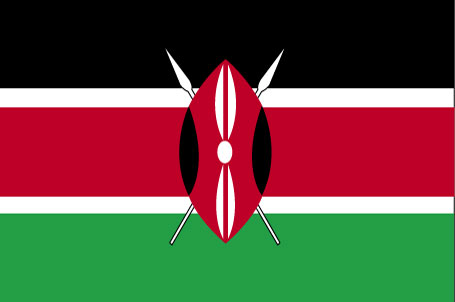
Kenya
Declare Your Relationship to Kenya
CountryReports Community
- Studying42
- From Kenya4
- Kenya heritage4
- Visited3
- Want to visit4
Customs and Culture
Customs and Culture
Cultural Attributes
Patriotism is evident in people’s respect for the national flag. When the flag is raised or lowered, Kenyans stop what they are doing and observe the short ceremony.
Social systems are group oriented. The individual is expected to be willing to sacrifice personal interests for the interests of the group. The “group” is usually defined by family, which has the highest value in society. To fail to keep close ties with the extended family is considered rebellious behavior.

Land of the Great Migration
Get More Customs and Culture
6 more cultural topics for members
Social Customs & Etiquette · Diet · Family · Dating Customs · Recreation · Student Life
Every country, every topic, all activities & recipes
✓ Instant access on this device · ✓ No subscription
Holidays
Independence Day
7/12Independence Day
Christmas
12/25Christmas
Christmas dinner includes nyama choma (roasted meat) usually goat, along with chapattis (flat bread) Carolers make their rounds house to house on Christmas Eve and the monetary gifts received are donated to local churches.
How do people greet each other in Kenya?
English greetings are acceptable, but Swahili greetings are widely used since most Kenyans speak Swahili. Customs vary between ethnic groups.
Do
- Use "Hujambo, habari" (Greetings! How are you?)
- Say "Habari gani?" (What is the news?) in non-coastal areas
- Use a casual "Jambo" in coastal cities
- Say "Tuta onana" (We will meet) when parting
What are the dining customs in Kenya?
Afternoon tea is a daily custom, and staple foods include ugali, chapati, red bean stew, and meats like goat, beef, lamb, chicken, and fish. Depending on the food, people eat with utensils or the right hand.
Do
- Wash your hands before and after a meal
- Eat with your right hand when eating by hand
- Enjoy afternoon tea, a daily custom
Good to know
- Popular fruits include pineapples, mangoes, oranges, bananas, and papaya
- Sweet potatoes and avocado are common foods
What should I know about visiting and hospitality in Kenya?
Visiting is often done unannounced, with people dropping by for a visit and a cup of tea. A host does not usually end the visit.
Do
- Bring a small gift when invited
- Offer wine among Christians, or flowers and tea leaves
- In urban areas, give flour, sugar, or coffee
Good to know
- Kenyans stop and observe the short ceremony when the flag is raised or lowered
How should I dress in Kenya?
Kenyans generally dress modestly, favoring light fabrics and short sleeves due to the warm climate.
Do
- Dress modestly
- Wear light fabrics and short sleeves for the warm climate
Don’t
- Avoid sleeveless dresses or blouses, which are not considered modest
- Women should reserve shorts for resort areas
Good to know
- Women often wear a "kanga" (long cotton fabric) around the waist, to carry children, or as cover from wind or rain
- Many young urban women wear pants
What is family life like in Kenya?
Family has the highest value in society and usually includes the extended family, with much interaction among uncles, aunts, and cousins. Failing to keep close ties with the extended family is considered rebellious.
Good to know
- Children call maternal aunts "mother" and parental uncles "father"
- Families tend to be large, with smaller families in urban areas
- The dowry system still occurs, with money now substituted for livestock
- Most partners are self-selected, though some marriages are still arranged
What do people do for recreation in Kenya?
Football (soccer) is the national pastime, with school sports including soccer and track and field.
Good to know
- Urban Kenyans often join clubs for billiards, squash, swimming, and tennis
- Walking and window shopping are frequent urban weekend and evening pastimes
- In rural areas, the board game Bao (played with holes and seeds) is popular
Last updated: 2026-07-12 · Sources: CountryReports
Photos of Kenya
Photos of Kenya
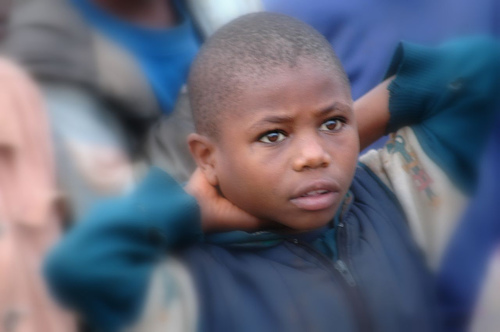
A young Kenyan boy
Church service in Nairobi
Taxis service in Nairobi
Education and training school, Kenya
Boys from Moussai, Kenya
Young men take a break from school.
Urban street in a major Kenya city.
Shopping district in Nakuru, Kenya
Waterfall in rural Kenya.
Forest in rural Kenya
Tour guide bus, Kenya
A young Kenyan girl.


Travel and Tourism
Travel and Tourism
- Travel Alert Status
- Level 2: Exercise Increased Caution
- Currency
- Kenyan shilling (KES)
- Time Difference
- UTC+3 (8 hours ahead of Washington, DC, during Standard Time)
- Airports
- 221
Read the full travel guide — health, safety, vaccinations, disease risk, sanitation, and transit details.
View full travel guideRecipes
Recipes
Maandazi
Bread
Main Dish
Samosas
Main Dish
Beef Stew
Main Dish
Kuku na Nazi (Chicken with Coconut Milk)
Main Dish
Mtuza wa Samaki (Baked Curried Fish)
Main Dish
Chicken Tika
Main Dish
Kunde (Vegetarian Stew)
Side Dish
PremiumIrio
Side Dish
PremiumUgali (A Stiff Dough Made from Cornmeal)
Side Dish
PremiumSukuma Wiki (Collard Greens)
History
History
Historical Eras
Early Peoples & Coast
2000 BCE – 1885
Cushitic, Nilotic, and Bantu peoples successively settled the East African interior, while Arab and Persian traders established coastal towns from the 8th century onward, giving rise to Swahili language and culture. Portuguese explorer Vasco da Gama arrived at Mombasa in 1498, initiating European contact, but Omani Arabs ultimately displaced Portuguese influence and controlled the coastline by 1698. This long era was defined by maritime commerce, the spread of Islam, and the blending of African and Arabian cultures along the Swahili Coast.
Colonial Era
1885 – 1944
The Berlin Conference of 1885 partitioned East Africa among European powers, and Britain formally established the East African Protectorate in 1895, later declared a Crown Colony in 1920. The construction of the Uganda Railway opened the fertile highlands to white settlers, who were granted political representation while Africans were barred from direct participation. Land alienation, forced labor, and racial policies generated deep African resentment that would fuel future resistance movements.
Mau Mau & Road to Independence
1944 – 1963
African political participation accelerated from 1944, but systemic inequality drove the predominantly Kikuyu Mau Mau movement to armed revolt against British rule, prompting a state of emergency from 1952 to 1959 in which tens of thousands were detained or killed. The brutal suppression ultimately hastened political reform; direct African elections to the Legislative Council were held in 1957, and nationalist leader Jomo Kenyatta, released from detention in 1961, led negotiations culminating in independence on December 12, 1963.
Kenyatta & Single-Party Rule
1963 – 1978
Jomo Kenyatta became Kenya's first President under the Kenya African National Union (KANU), overseeing relative economic growth and political consolidation. Rival parties dissolved or were banned, and by 1969 Kenya functioned as a de facto one-party state; opposition leader Oginga Odinga's Kenya People's Union was banned and Odinga detained. Kenyatta's tenure was marked by Kikuyu political dominance, land redistribution controversies, and the suppression of dissent until his death in August 1978.
Moi Era
1978 – 2002
Daniel arap Moi succeeded Kenyatta and in 1982 formalized Kenya's one-party system by constitutional amendment, ruling through patronage, detention of opponents, and tight media control. Sustained domestic unrest and international pressure forced political liberalization in 1991; multiparty elections followed in 1992 and 1997, though both were marred by ethnic violence and irregularities that nonetheless kept KANU and Moi in power. Moi stepped down after peaceful elections in December 2002, ending 24 years of authoritarian dominance.
Multiparty & Modern Kenya
2002 – present
Mwai Kibaki's 2002 election on an anticorruption platform marked Kenya's first genuine democratic transfer of power, though disputed 2007 elections triggered post-election violence that killed over a thousand people and prompted a power-sharing accord. Subsequent constitutional reform produced a new constitution in 2010, devolving power to 47 counties and strengthening rights protections. Uhuru Kenyatta (2013–2022) and William Ruto (2022–present) have presided over a Kenya grappling with debt, security threats from al-Shabaab, and ongoing demands for accountability and inclusive governance.
Overview
Fossils found in East Africa suggest that protohumans roamed the area more than 20 million years ago. Recent finds near Kenya’s Lake Turkana indicate that hominids lived in the area 2.6 million years ago.
Every country, every topic, all activities & recipes
✓ Instant access on this device · ✓ No subscription
Timeline of Key Events
500 BCE
Start of Bantu migration into Eastern Africa
Start of Bantu migration into Eastern Africa.
600
Arabs begin settling coastal areas
Arabs begin settling coastal areas, over the centuries developing trading stations which facilitated contact with the Arab world, Persia and India. Farmers, herders and hunters from other parts of Africa begin moving into Kenya.
1000
Islam is introduced to the region by Arab merchants
Islam is introduced to the region by Arab merchants, more trading posts are set up along coast.
1200
Swahili culture and language becomes dominant near the coast
Swahili culture and language becomes dominant near the coast, from a mixture of Arab traders, Africans, and even Persians and Indians. Inland is still dominated by Bantu and Nilotic speakers, as well as southwards migrating Cushite speakers from the north.
1498
Vasco da Gama arrived at Mombasa, Kenya
Vasco da Gama, Portuguese explorer, arrived at Mombasa, Kenya, where the Arabs repelled him. He sailed on to Malindi and came to terms with the local sultan, who supplied a pilot that knew the route to Calicut (Kozhikode), the most important commercial port in Southwest India at the time.
1502 – 1509
Vasco da Gama arrived at Mombasa, Kenya
Portuguese briefly take control of the Swahili ports on the coast. Swahili states force them out.
1630
Omani Arab traders start to settle along coast.
Omani Arab traders start to settle along coast.
Read the full history profile — narrative overview, defining eras, and the complete timeline in one place.
View expanded historyInteresting Facts
Interesting Facts
The highest point of Kenya's highlands is Mt. Kenya, which is over 5000 metres.
In 1985, Kenya hosted the third International Women's Conference.
Kenya is one of the main producers of pyrethrum which is a mosquito repellent. It comes from a plant which people burn to ward off mosquitoes.
Kenya took home eight track and field medals from the 1996 Summer Olympics.
2 more facts for members
Every country, every topic, all activities & recipes
✓ Instant access on this device · ✓ No subscription
Geography and Environment
Geography and Environment
- Terrain
- low plains rise to central highlands bisected by Great Rift Valley; fertile plateau in west
- Climate
- Nairobi has four seasons, but overall temperature changes are moderate. Mid‑ December through March are mainly sunny and warm by day, cool at night, and generally dry. April and May constitute the principal rainy season with lower day temperatures. The months of June through September are mainly dry, but often cloudy and cool, with cool nights. October and November make up the short rainy season, with long sunny periods, warm days, and cool nights. Average annual rainfall in Nairobi is about 39 inches, but the actual amount varies widely in any year.
- Natural Hazards
- recurring drought; flooding during rainy seasons
- Current Environmental Issues
- water pollution from urban and industrial wastes; degradation of water quality from increased use of pesticides and fertilizers; water hyacinth infestation in Lake Victoria; deforestation; soil erosion; desertification; poaching
Read the full geography and environment profile — terrain, climate, natural resources, hazards, land use, and international agreements.
View full geographyPeople & Demographics
People & Demographics
Religion
Languages Spoken
English (official), Kiswahili (official), numerous indigenous languages
- English
- Swahili
Population
- Population
- 54,027,487
- Population: Male/Female
- male: 29,091,800 female: 29,154,578
- Population Distribution
- population heavily concentrated in the west along the shore of Lake Victoria; other areas of high density include the capital of Nairobi, and in the southeast along the Indian Ocean coast
- Urban Population
- urban population: 29.5% of total population rate of urbanization: 4.09% annual rate of change
- Population in Major Urban Areas
- 5.325 million NAIROBI (capital), 1.440 million Mombassa
- Nationality Noun
- noun: Kenyan(s) adjective: Kenyan
- Ethnic Groups
- Kikuyu 17.1%, Luhya 14.3%, Kalenjin 13.4%, Luo 10.7%, Kamba 9.8%, Somali 5.8%, Kisii 5.7%, Mijikenda 5.2%, Meru 4.2%, Maasai 2.5%, Turkana 2.1%, non-Kenyan 1%, other 8.2%
- Language Note
- English (official), Kiswahili (official), numerous indigenous languages
Demographic Profile
Kenya has experienced dramatic population growth since the mid-20th century as a result of its high birth rate and its declining mortality rate. Almost 40% of Kenyans are under the age of 15 as of 2020 because of sustained high fertility, early marriage and childbearing, and an unmet need for family planning. Kenya’s persistent rapid population growth strains the labor market, social services, arable land, and natural resources. Although Kenya in 1967 was the first Sub-Saharan country to launch a nationwide family planning program, progress in reducing the birth rate has largely stalled since the late 1990s, when the government decreased its support for family planning to focus on the HIV epidemic. Government commitment and international technical support spurred Kenyan contraceptive use, decreasing the fertility rate (children per woman) from about 8 in the late 1970s to less than 5 children twenty years later, but it has plateaued at about 3 children as of 2022.
Kenya is a source of emigrants and a host country for refugees. In the 1960s and 1970s, Kenyans pursued higher education in the UK because of colonial ties, but as British immigration rules tightened, the US, the then Soviet Union, and Canada became attractive study destinations. Kenya’s stagnant economy and political problems during the 1980s and 1990s led to an outpouring of Kenyan students and professionals seeking permanent opportunities in the West and southern Africa. Nevertheless, Kenya’s relative stability since its independence in 1963 has attracted hundreds of thousands of refugees escaping violent conflicts in neighboring countries; Kenya was sheltering nearly 280,000 Somali refugees as of 2022.
Education
- Literacy Definition
- age 15 and over can read and write
Health Information
- Major Infectious Diseases — degree of risk
- degree of risk: very high food or waterborne diseases: bacterial and protozoal diarrhea, hepatitis A, and typhoid fever vectorborne diseases: malaria, dengue fever, Rift Valley fever, and sexually transmitted diseases: HIV/AIDS water contact diseases: schistosomiasis animal contact diseases: rabies note: on 31 August 2023, the US Centers for Disease Control and Prevention (CDC) issued a Travel Alert for polio in Asia; Israel is currently considered a high risk to travelers for circulating vaccine-derived polioviruses (cVDPV); vaccine-derived poliovirus (VDPV) is a strain of the weakened poliovirus that was initially included in oral polio vaccine (OPV) and that has changed over time and behaves more like the wild or naturally occurring virus; this means it can be spread more easily to people who are unvaccinated against polio and who come in contact with the stool or respiratory secretions, such as from a sneeze, of an “infected” person who received oral polio vaccine; the CDC recommends that before any international travel, anyone unvaccinated, incompletely vaccinated, or with an unknown polio vaccination status should complete the routine polio vaccine series; before travel to any high-risk destination, the CDC recommends that adults who previously completed the full, routine polio vaccine series receive a single, lifetime booster dose of polio vaccine
- Alcohol consumption per capita
- total: 1.68 liters of pure alcohol beer: 0.81 liters of pure alcohol wine: 0.04 liters of pure alcohol spirits: 0.81 liters of pure alcohol other alcohols: 0.03 liters of pure alcohol
- Tobacco Use
- total: 11.1% male: 19.5% female: 2.7%
Life Expectancy
- Life Expectancy at Birth
- Total population: 66.9 years Male: 65.3 years Female: 68.6 years
- Median Age
- total: 21.2 years male: 21.1 years female: 21.4 years
- Age Structure
- 0-14 years: 35.8% (male 10,464,384/female 10,366,997) 15-64 years: 60.9% (male 17,731,068/female 17,723,012) 65 years and over: 3.4% (male 896,348/female 1,064,569)
- Infant Mortality Rate
- total: 21.3 deaths/1,000 live births male: 23.8 deaths/1,000 live births female: 18.7 deaths/1,000 live births
Read the full people and society profile — demographics, health, education, religion, languages, and notable people.
View full people and societyGovernment & Politics
Government & Politics
Country Identity
- Country Name
- Kenya
- Full Country Name
- Republic of Kenya
- Former Name
- British East Africa
Government Structure
- Government Type
- republic
- Legal System
- based on Kenyan statutory law, Kenyan and English common law, tribal law, and Islamic law; judicial review in High Court; accepts compulsory ICJ jurisdiction, with reservations; constitutional amendment of 1982 making Kenya a de jure one-party state repealed in 1991
- Executive Branch
- chief of state: President William RUTO (since 13 September 2022); Deputy President Rigathi GACHAGUA (since 13 September 2022); note - the president is both the chief of state and head of government head of government: President William RUTO (since 13 September 2022); Deputy President Rigathi GACHAGUA (since 13 September 2022); note - the president is both the chief of state and head of government cabinet: Cabinet appointed by the president and approved by the National Assembly elections: president elected by popular vote for a five-year term (eligible for a second term); to avoid a runoff, the winning candidate must receive more than 50% of all votes cast, as well as at least 25% of the votes in at least 24 of Kenya's 47 counties; election last held on 9 August 2022 (next to be held in August 2027); deputy president appointed by the president election results: William RUTO elected president in the first round; percent of vote - William RUTO 50.5%, Raila ODINGA 48.9%, other 0.6%
- Legislative Branch
- Kenya's legislature is bicameral, consisting of the National Assembly (Bunge) and the Senate, established under the 2010 Constitution. The National Assembly comprises 350 seats: 290 members elected by popular vote from single-member constituencies, 47 women representatives elected from each county, 12 nominated members selected by political parties in proportion to their share of seats, and the Speaker as an ex-officio member. The Senate consists of 67 seats: 47 senators elected from each of Kenya's counties, 16 nominated women members, 2 nominated members representing youth, 2 nominated members representing persons with disabilities, and the Speaker as an ex-officio member. All elected members serve five-year terms. Elections: last held on 9 August 2022 (next to be held in August 2027). Election results for the National Assembly: percent of vote by party - NA; seats by party - Kenya Kwanza coalition (including UDA) approximately 176 seats, Azimio la Umoja coalition (including ODM and Jubilee) approximately 160 seats, other and independents 14 seats. In the Senate, Kenya Kwanza secured approximately 33 seats and Azimio la Umoja approximately 32 seats, with remaining seats distributed among smaller parties and nominated members.
- Judicial Branch
- Court of Appeal (chief justice is appointed by the president); High Court
- Suffrage
- 18 years of age; universal
- Constitution
- 12 December 1963, amended as a republic 1964; reissued with amendments 1979, 1983, 1986, 1988, 1991, 1992, 1997, and 2001
- Independence
- 12 December 1963 (from UK)
- National Holiday
- Independence Day, 12 December (1963)
Capital City
- Capital Name
- Nairobi
- Capital - geographic coordinate
- 1 17 S, 36 49 E
- Capital Time Difference
- UTC+3 (8 hours ahead of Washington, DC, during Standard Time)
the name derives from the Maasai expression meaning "cool waters" and refers to a cold water stream that flowed through the area in the late 19th century
Military
Branches: Kenya Defence Forces: Kenya Army, Kenya Air Force, Kenya Navy
Embassy / Diplomatic Mission
U.S. Embassy Nairobi
United Nations Avenue
Gagarin, Nairobi, Kenya
Telephone: (254) (20) 363-6451
Emergency after-hours telephone: (254) (20) 363-6000
Read the full government profile — flag symbolism, national anthem, and other national symbols.
View full government detailsEconomy
Economy
Kenya serves as the regional hub for trade and finance in East Africa, with the most diversified economy in the region.
Snapshot
- Currency Name and Code
- Kenyan Shilling (KES)
- GDP — official exchange rate
- $16,110,000,000 (USD)
- GDP Real Growth Rate
- 5.5%
- Gini Index
- 44.5
Every country, every topic, all activities & recipes
✓ Instant access on this device · ✓ No subscription
News & Weather
News & Weather
Current Weather
Latest News
Many feared trapped as a tall building collapses in Kenya - ABC News - Breaking News, Latest News and Videos
ABC News - Breaking News, Latest News and Videos · 4h ago
Fighting in Ethiopia border town kills nine, thousands flee to Kenya - Reuters
Reuters · 3h ago
Hundreds of Ethiopians flee into Kenya after border town fighting - Reuters
Reuters · 1d ago
Hundreds of Ethiopians cross into Kenya to flee regional fighting - Al Jazeera
Al Jazeera · 21h ago
Many feared trapped as a tall building collapses in Kenya - The Washington Post
The Washington Post · 25m ago
Authorities investigating whether first Kenya and Nigeria Ebola cases crossed paths - NPR
NPR · 7h ago
Is Ebola under control in Kenya after nine cases confirmed? - BBC
BBC · 2d ago
Nine Ebola Cases Have Kenya Holding Its Breath - WSJ
WSJ · 2d ago
News via Google News
Videos
Videos
2 curated YouTube videos.
Source: YouTube
Source: YouTube
Frequently Asked Questions
Frequently Asked Questions
What is the population of Kenya?
What is the capital of Kenya?
Where is Kenya located?
What countries border Kenya?
What religion is practiced in Kenya?
What is the currency of Kenya?
What languages are spoken in Kenya?
What is the geography of Kenya like?
What is Kenya known for?
Last reviewed 2026