
 English
 Español
 中文
中文 हिन्दी
 Français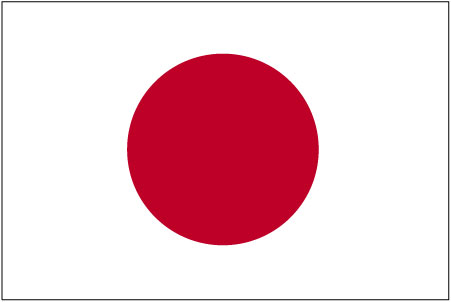
Japan
Declare Your Relationship to Japan
CountryReports Community
- Studying85
- From Japan9
- Japan heritage12
- Visited23
- Want to visit55
Customs and Culture
Customs and Culture
Cultural Attributes
The Japanese believe in returning favors and giving gifts when they have personally received them from others. Age and tradition are honored. Various social strains are leading many people to re-evaluate what is most important in life.

Tradition Forged in Steel and Snow
Get More Customs and Culture
6 more cultural topics for members
Social Customs & Etiquette · Diet · Family · Dating Customs · Recreation · Student Life
Every country, every topic, all activities & recipes
✓ Instant access on this device · ✓ No subscription
Holidays
Birthday of Emperor AKIHITO
12/23Birthday
Setsubun
2/3Other
Setsubun (seasonal division) is a festival held on February 3 or 4, one day before the start of spring according to the Japanese lunar calendar. Setsubun is not a national holiday.
For many centuries, the people of Japan have been performing rituals with the purpose of chasing away evil spirits at the start of spring.
Around the 13th century, for example, it became a custom to drive away evil spirits by the strong smell of burning dried sardine heads, the smoke of burning wood and the noise of drums. While this custom is not popular anymore, a few people still decorate their house entrances with fish heads and holy tree leaves in order to deter evil spirits from entering.
In modern days, the most commonly performed setsubun ritual is the throwing of roasted beans around one’s house and at temples and shrines across the country. When throwing the beans, you are supposed to shout "Oni wa soto! Fuku wa uchi!" (Devils out, happiness in). Afterwards you should pick up and eat the number of beans, which corresponds to your age.
Hina Matsuri
3/3Other
The Hina Matsuri or Doll Festival or Girl’s Festival is celebrated on March 3. On this day, families with girls wish their daughters a successful and happy life. Dolls are displayed in the house together with peach blossoms. The doll festival has its origin in a Chinese custom in which bad fortune is transferred to dolls and then removed by abandoning the doll on a river. On Hina Matsuri, sweet sake is drunken and chirashi sushi is eaten.
Birthdate - Mitsumasa Anno
3/20Birthday
Birthdate - Mitsumasa Anno, Japanese author, illustrator
Christmas
12/25Christmas
Hoteiosho is the bearer of gifts to the Japanese.
Because many Japanese people are not Christians. New Year’s day is the biggest Celebration for Japanese people.
Dates of Interest
- December 25th
Hoteiosho is the bearer of gifts to the Japanese. Because most Japanese people are not Christians, New Year’s day is the biggest Celebration for Japanese people.
How do people greet each other in Japan?
Bowing is the normal greeting between Japanese people, but a handshake is preferred with foreign visitors. Titles are used when introduced, and first names are reserved for family and friends.
Do
- Bow lower than the other person to show respect
- Use titles when introduced
- Offer a handshake to foreign visitors
Don’t
- Don't use someone's first name unless you are family or a friend
Good to know
- Greetings vary by relationship; a worker may say 'Ohayogozaimasu' (Good morning) to someone of higher standing or 'Irasshaimase' (welcome) to others
What are the dining customs in Japan?
The Japanese diet is largely rice, fresh vegetables, seafood, fruit, and small portions of meat, with rice and tea at almost every meal. The main meal is eaten in the evening.
Do
- Use chopsticks (hashi) for most meals
- Hold your bowl at chest level to eat from it in a traditional meal
- Use Western utensils when eating Western food
- Eat street snacks at the stand
Don’t
- Adults shouldn't eat while walking in public
Good to know
- The tea ceremony, cha no yu, is 600 years old and follows special etiquette to achieve peacefulness
- Sushi is small portions of savory rice wrapped in seaweed; teriyaki sauce is famous
What etiquette should I know when visiting a Japanese home?
Visits are usually arranged in advance, and shoes are removed before stepping into a home. The Japanese emphasize modesty and are generally reserved.
Do
- Remove shoes in the genkan and place them together pointing toward the outdoors
- Remove your coat before stepping into the genkan
- Remove slippers before entering rooms with tatami (straw mat) floors
- Return favors and give gifts when you have received them
Don’t
- Don't make surprise visits, especially in urban areas
- Don't bring potted plants to hospital patients (bad luck)
- Don't give chrysanthemums or white flowers (associated with death and funerals)
Good to know
- Guests often hesitate before accepting an offered meal, and modesty dictates denying a compliment
- Food and drink are the most common gifts
How should I dress in Japan?
Most Japanese adults dress to blend in with the crowd, and business people usually wear suits with ties. Youth prefer the latest American and European styles.
Good to know
- Youth wear jeans, t-shirts, and sneakers
- The kimono (wafuku) is a long robe held together by a sash (obi), worn for social events or special occasions
What gestures are important in Japan?
Gestures matter greatly, from how you present a business card to how you signal 'no.' Laughter can signify embarrassment rather than amusement.
Do
- Beckon by waving all fingers with the palm down
- Point with the entire hand
- Sit up straight with both feet on the floor
- Present a business card with both hands, printing facing the recipient, and bow slightly
Don’t
- Don't yawn in public
- Don't place an ankle over a knee
- Don't chew gum in public
- Don't blow your nose in public
Good to know
- Shaking one hand side to side with the palm forward means 'no'
- Refer to yourself by pointing your index finger at your nose
- The 'OK' sign is often read as the symbol for money
- Place a received business card on the table in front of you for reference
What is family life like in Japan?
The family is the foundation of society, with the father considered head of the home and the mother responsible for household affairs. Many aged parents still live with their married children.
Good to know
- Many women now work outside the home
- Most people live in crowded cities in small-roomed homes or tall apartment buildings
- Shoes come off at the door to protect the tatami mats
- Some sit on cushions at low tables and sleep on futons that roll out
What do people do for fun and sport in Japan?
Popular pastimes include origami, strategy games, video games, and manga, while traditional sports include sumo wrestling and martial arts. Baseball, golf, skiing, karaoke, and pachinko are also enjoyed.
Good to know
- Sumo wrestlers train from age 15 and aim to force opponents out of the dohyo ring
- Judo, karate, and aikido use kicks and throws, with the Kiai 'combat shout' signifying concentration
- Kendo uses bamboo swords and kyudo is bamboo-bow archery
- Karaoke means 'empty orchestra'; manga comic books are enjoyed by adults too
Last updated: 2026-07-12 · Sources: CountryReports
Photos of Japan
Photos of Japan


Travel and Tourism
Travel and Tourism
- Travel Alert Status
- Level 1: Exercise Normal Precautions
- Currency
- 132.44
- Time Difference
- UTC+9 (14 hours ahead of Washington, DC, during Standard Time)
- Climate
- Temperature extremes are fewer than in the U.S. since no part of the interior is more than 100 miles from the coast. At the same time, because the islands run almost directly north-south, the climate varies. Sapporo, on the northern island, has warm summers and long, cold winters with heavy snowfall. Tokyo, Nagoya, Kyoto, Osaka, and Kobe, on the southern part of the largest island of Honshu, experience relatively mild winters with little or no snowfall and hot, humid summers. Fukuoka, on the island of Kyushu, has a climate with mild winters and short summers. Okinawa is subtropical. Spring, with its profusion of cherry blossoms and other flowering trees and shrubs, and autumn, with its gold and flaming red trees and lovely fall flowers, are the most pleasant seasons. The hot, humid summers are difficult in the cities, but the sandy beaches along the coast and the many fine mountain resorts provide pleasant relief. With rather mild and dry winters it rarely snows or rains in the Tokyo area at this time of year.
- Airports
- 175
Read the full travel guide — health, safety, vaccinations, disease risk, sanitation, and transit details.
View full travel guideRecipes
Recipes
Kuri Kinton (Golden Chestnuts)
Dessert
Main Dish
Suki
Main Dish
Halibut Teriyaki
Main Dish
Tempura
Main Dish
Sweet and Sour Pickled Scallions
Main Dish
Shabu Shabu
Main Dish
Buta Zen Mai
Main Dish
PremiumKuri Kinton (Golden Chestnuts)
Side Dish
PremiumSushemi
Side Dish
PremiumJapanese Style Potato Salad
History
History
Historical Eras
Ancient & Classical
300 BCE – 794
From the Yayoi period through the Kofun, Asuka, and Nara eras, early Japanese society coalesced around powerful clans, culminating in the Yamato imperial line claiming divine descent. Chinese political models, Buddhism, and Confucian ethics were systematically adopted, producing a centralized imperial court. The Nara period saw Japan's first permanent capital and the compilation of foundational texts such as the Kojiki and Nihon Shoki.
Heian & Court Culture
794 – 1185
The imperial capital at Heian-kyō (modern Kyoto) became the center of a refined aristocratic civilization dominated by the Fujiwara clan, who controlled the throne through hereditary regency. Literature and the arts flourished, producing masterworks such as Murasaki Shikibu's The Tale of Genji. The era ended as rival warrior clans — the Taira and Minamoto — plunged the country into civil war.
Feudal & Shogunate Era
1185 – 1600
A succession of military governments — the Kamakura, Muromachi, and brief Azuchi-Momoyama shogunates — ruled Japan in the emperor's name, establishing a feudal order dominated by samurai culture. The Kamakura period saw the repulsion of two Mongol invasion fleets in 1274 and 1281, while the Ōnin War (1467–1477) triggered a century of near-constant civil strife known as the Sengoku period. Warlords Oda Nobunaga and Toyotomi Hideyoshi ultimately reunified the country, and Portuguese contact in 1542 introduced firearms and Christianity.
Edo (Tokugawa) Period
1600 – 1868
Tokugawa Ieyasu's victory at Sekigahara in 1600 established the Edo shogunate, inaugurating over two and a half centuries of enforced peace, political stability, and strict social hierarchy. The regime implemented sakoku — a policy of near-total isolation — limiting foreign trade to Dutch and Chinese merchants at Nagasaki. Urban merchant culture, kabuki theater, woodblock printing, and haiku poetry flourished during this era of internal prosperity.
Meiji & Imperial Expansion
1868 – 1945
The Meiji Restoration ended shogunal rule and restored imperial authority, unleashing rapid Westernization, industrialization, and the construction of a modern military state. Japan defeated China (1895) and Russia (1905), annexed Korea (1910), and acquired Taiwan, emerging as a major imperial power. Ultranationalist politics gradually displaced representative government, leading Japan into military adventurism in China and ultimately into World War II, which ended with atomic bombings of Hiroshima and Nagasaki in August 1945.
Postwar & Modern Japan
1945 – present
Under Allied occupation, Japan adopted a pacifist constitution (1947), renounced war, and rebuilt its economy with remarkable speed, becoming the world's second-largest economy by the 1960s. The U.S.-Japan Security Alliance anchored Japan firmly in the Western bloc throughout the Cold War. Economic stagnation following the collapse of the asset bubble in the early 1990s — the so-called Lost Decade — defined subsequent decades, even as Japan retained its status as a global cultural and technological power.
Overview
The ideograph wa, translated as "harmony,"
Every country, every topic, all activities & recipes
✓ Instant access on this device · ✓ No subscription
Timeline of Key Events
300 BCE – 300
YAYOI
Rice cultivation, metalworking, and the potter’s wheel are introduced from China and Korea. Era named “Yayoi” after the place in Tokyo where wheel-turned pottery was found. In Shinto, Japan’s oldest religion, people identify kami (divine forces) in nature and in such human virtues as loyalty and wisdom. 100-300: Local clans form small political units.
300 – 645
KOFUN (YAMATO)
Unified state begins with emergence of powerful clan rulers; Japan establishes close contacts with mainland Asia. Clan rulers are buried in kofun (large tomb mounds), surrounded by haniwa (clay sculptures). Yamato clan rulers, claiming descent from Amaterasu Omikami, begin the imperial dynasty that continues to occupy the throne today. Japan adopts Chinese written characters. Shotoku Taishi (574-622) begins to shape Japanese society and government more after the pattern of China. He seeks centralization of government and a bureaucracy of merit. He also calls for reverence for Buddhism and the Confucian virtues.
645 – 710
ASUKA
A great wave of reforms called the Taika no Kaishin (Taika Reforms) aims to strengthen the emperor’s power. New aristocratic families are created. Especially powerful is that of Fujiwara no Kamatari, who helped push the reforms.
710 – 794
NARA
Imperial court builds new capital, modeled upon Chang-an in China, at Nara. Though emperors are Shinto chiefs, they patronize Buddhism in the belief that its teachings will bring about a peaceful society and protect the state. Legends surrounding the founding of Japan are compiled as history in the Kojiki (Record of Ancient Matters) and the Nihon shoki (Chronicle of Japan). With the adoption of Buddhism as the state religion, its monasteries gain political power.
794 – 1185
HEIAN
Imperial court moves to Heiankyo (now Kyoto) to escape domination of Nara’s Buddhist establishment. Official contacts with China stop in 838. Buddhism, in combination with native Shinto beliefs, continues to flourish. Flowering of classical Japanese culture aided by invention of kana (syllabary for writing Japanese language). Court women produce the best of era’s literature. Murasaki Shikibu’s Tale of Genji (ca. 1002) is the world’s first novel. Court undergoes decline of power with rise of provincial bushi (warrior class).
1191
The Zen sect is introduced.
The Zen sect is introduced.
1192 – 1333
KAMAKURA
Kamakura became the political center of Japan, when Minamoto Yoritomo chose the city as the seat of his new military government. The Kamakura government continued to rule Japan for over a century, first under the Minamoto shogun and then under the Hojo regents.
Read the full history profile — narrative overview, defining eras, and the complete timeline in one place.
View expanded historyInteresting Facts
Interesting Facts
When a child loses a tooth, if they lose an upper tooth, they throw it in the dirt. If they lose a lower tooth, they throw it on the roof. Their new tooth will grow in toward the old one and will come in straight.
Japan has the highest cost of living in the world.
Japan had the world highest paid Prime Minister, Yoshiro Mori at $676,000 per year which included monthly allowances and bonuses.
Japan’s flag, a red circle on a white background, symbolizes the land of the rising sun.
2 more facts for members
Every country, every topic, all activities & recipes
✓ Instant access on this device · ✓ No subscription
Geography and Environment
Geography and Environment
- Terrain
- mostly rugged and mountainous
- Climate
- Temperature extremes are fewer than in the U.S. since no part of the interior is more than 100 miles from the coast. At the same time, because the islands run almost directly north-south, the climate varies. Sapporo, on the northern island, has warm summers and long, cold winters with heavy snowfall. Tokyo, Nagoya, Kyoto, Osaka, and Kobe, on the southern part of the largest island of Honshu, experience relatively mild winters with little or no snowfall and hot, humid summers. Fukuoka, on the island of Kyushu, has a climate with mild winters and short summers. Okinawa is subtropical. Spring, with its profusion of cherry blossoms and other flowering trees and shrubs, and autumn, with its gold and flaming red trees and lovely fall flowers, are the most pleasant seasons. The hot, humid summers are difficult in the cities, but the sandy beaches along the coast and the many fine mountain resorts provide pleasant relief. With rather mild and dry winters it rarely snows or rains in the Tokyo area at this time of year.
- Natural Hazards
- many dormant and some active volcanoes; about 1,500 seismic occurrences (mostly tremors) every year; tsunamis; typhoons
- Current Environmental Issues
- air pollution from power plant emissions results in acid rain; acidification of lakes and reservoirs degrading water quality and threatening aquatic life; Japan is one of the largest consumers of fish and tropical timber, contributing to the depletion of these resources in Asia and elsewhere
Read the full geography and environment profile — terrain, climate, natural resources, hazards, land use, and international agreements.
View full geographyPeople & Demographics
People & Demographics
Religion
Languages Spoken
Japanese
- Japanese
Population
- Population
- 123,294,513
- Population: Male/Female
- male: 59,875,269 female: 63,326,676
- Population Distribution
- all primary and secondary regions of high population density lie on the coast; one-third of the population resides in and around Tokyo on the central plain (Kanto Plain)
- Urban Population
- urban population: 92% of total population (2023) rate of urbanization: -0.25% annual rate of change
- Population in Major Urban Areas
- 37.194 million TOKYO (capital), 19.013 million Osaka, 9.569 million Nagoya, 5.490 million Kitakyushu-Fukuoka, 2.937 million Shizuoka-Hamamatsu, 2.666 million Sapporo
- Nationality Noun
- noun: Japanese (singular and plural) adjective: Japanese
- Ethnic Groups
- Japanese 97.5%, Chinese 0.6%, Vietnam 0.4%, South Korean 0.3%, other 1.2% (includes Filipino, Brazilian, Nepalese, Indonesian, American, and Taiwanese)
- Language Note
- Japanese
Education
- Literacy Definition
- Age 15 and over can read and write
The school system in Japan is free to students from ages 6 through 14. After that, many attend private high schools to prepare for college entrance exams. These schools can be quite expensive but are the best way to ensure that a student can get accepted to the school he or she wants.
Menus for lunch will vary according to the region of the country the school is in, but some foods are typical throughout most of the country. Examples of these might be rice (which can be served at most meals), soup, tofu stew, assorted vegetables, frozen yogurt, and milk. The student’s family pays about one-third of the price of lunch, at the government pays for the rest, although financial help is available to low-income families. Some students bring lunch from home. Common foods in home lunches are cold rice balls, grilled fish, and pickled vegetables. Regardless of whether a student eats a prepared lunch from home or at the school cafeteria, it is an important part of the daily experience at school, and educators and parents alike understand that a healthy lunch will help the students do better in school.
All teachers teach the same material throughout the country from the same books, which have been approved by the Japanese government. Some teachers feel that while this gives all students the same education, it does not allow the teachers much creativity in how they teach. The classes can be quite large, in fact, it is not unusual to have as many as 40 students in each class.
It is also interesting to learn that students help to clean up the school and gardens, organize lunch, and clean up after lunch. This helps them to develop responsibility. In general, Japanese schools place more emphasis on teaching moral values and good character traits than schools in other countries.
Health Information
- Life Expectancy at Birth
- total population: 84.3 years male: 81.1 years female: 87.1 years
- Alcohol consumption per capita
- total: 8.36 liters of pure alcohol beer: 1.35 liters of pure alcohol wine: 0.29 liters of pure alcohol spirits: 1.63 liters of pure alcohol other alcohols: 5.09 liters of pure alcohol
- Tobacco Use
- total: 20.1% male: 30.1% female: 10%
- Infant Mortality Rate
- total: 1.8 deaths/1,000 live births male: 1.9 deaths/1,000 live births female: 1.6 deaths/1,000 live births
Life Expectancy
- Life Expectancy at Birth
- total population: 84.3 years male: 81.1 years female: 87.1 years
- Median Age
- total: 49.9 years male: 48.3 years female: 51.3 years
- Age Structure
- 0-14 years: 12.1% (male 7,701,196/female 7,239,389) 15-64 years: 58.4% (male 36,197,840/female 35,777,966) 65 years and over: 29.5% (male 15,976,233/female 20,309,321)
- Infant Mortality Rate
- total: 1.8 deaths/1,000 live births male: 1.9 deaths/1,000 live births female: 1.6 deaths/1,000 live births
Read the full people and society profile — demographics, health, education, religion, languages, and notable people.
View full people and societyGovernment & Politics
Government & Politics
Country Identity
- Country Name
- Japan
- Full Country Name
- Japan
Government Structure
- Government Type
- constitutional monarchy with a parliamentary government
- Legal System
- modeled after European civil law system with English-American influence; judicial review of legislative acts in the Supreme Court; accepts compulsory ICJ jurisdiction with reservations
- Executive Branch
- chief of state: Emperor NARUHITO (since 1 May 2019); note: Emperor NARUHITO ascended to the Chrysanthemum Throne following the abdication of his father, Emperor AKIHITO, who became the first Japanese emperor to abdicate in roughly 200 years head of government: Prime Minister ISHIBA Shigeru (since 1 October 2024) cabinet: Cabinet appointed by the prime minister elections: Diet designates prime minister; constitution requires that the prime minister command a parliamentary majority; following legislative elections, the leader of the majority party or majority coalition in the House of Representatives usually becomes prime minister; monarch is hereditary
- Legislative Branch
- bicameral Diet or Kokkai consists of the House of Councillors or Sangi-in (248 seats - members elected for six-year terms; half reelected every three years; 148 members in multi-seat constituencies and 100 by proportional representation) and the House of Representatives or Shugi-in (465 seats - members elected for four-year terms; 289 in single-seat constituencies; 176 members by proportional representation in 11 regional blocs) elections: House of Councillors - last held 10 July 2022 (next to be held in July 2025); House of Representatives - last held 27 October 2024 (next election by October 2028) election results: House of Councillors - percent of vote by party - NA; seats by party following 2022 election - LDP 119, CDP 39, Ishin 21, Komeito 18, DPP 11, JCP 11, Reiwa 5, SDP 1, others 23 : House of Representatives - percent of vote by party - LDP 26.7%, CDP 21.9%, Ishin 9.2%, DPP 11.3%, Komeito 5.2%, others 25.7%; seats by party following 2024 election - LDP 191, CDP 148, Ishin 38, DPP 28, Komeito 24, Yuishikai 12, Reiwa 9, JCP 8, SDP 1, others 6 (2024)
- Judicial Branch
- Supreme Court (chief justice is appointed by the monarch after designation by the cabinet; all other justices are appointed by the cabinet) )
- Suffrage
- 20 years of age; universal
- Constitution
- Enacted May 3, 1947
- Independence
- 660 BC (traditional founding by Emperor Jimmu)
- National Holiday
- Birthday of Emperor AKIHITO, 23 December (1933)
Capital City
- Capital Name
- Tokyo
- Capital - geographic coordinate
- 35 41 N, 139 45 E
- Capital Time Difference
- UTC+9 (14 hours ahead of Washington, DC, during Standard Time)
originally known as Edo, meaning "estuary" in Japanese, the name was changed to Tokyo, meaning "eastern capital," in 1868
Military
Branches: Japanese Ministry of Defense (MOD): Ground Self-Defense Force (Rikujou Jieitai, GSDF); Maritime Self-Defense Force (Kaijou Jieitai, MSDF); Air Self-Defense Force (Koukuu Jieitai, ASDF)
Embassy / Diplomatic Mission
U.S. Embassy in Tokyo
1-10-5 Akasaka, Minato-ku, Tokyo 107-8420 Japan
Telephone: 81-3-3224-5000
Emergency after-hours telephone: 81-3-3224-5000
Facsimile: 81-3-3224-5856
U.S. Consulate General in Osaka-Kobe
2-11-5 Nishitenma, Kita-ku, Osaka 530-8543
Telephone: 81-6-6315-5900
Emergency after-hours telephone: 81-6-6315-5900
Facsimile: 81-6-6315-5914
U.S. Consulate General in Naha
2-1-1 Toyama, Urasoe, Okinawa 901-2104
Telephone: 81-98-876-4211
Emergency after-hours telephone:
81-3-3224-5000 (Emergency calls are routed through the Embassy switchboard after hours)
Facsimile: 81-98-876-4243
U.S. Consulate General in Sapporo
Kita 1-Jo Nishi 28-chome, Chuo-ku, Sapporo 064-0821
Telephone: 81-11-641-1115
Emergency after-hours telephone: 81-11-641-1115
Facsimile: 81-11-643-1283.
U.S. Consulate in Fukuoka
2-5-26 Ohori, Chuo-ku, Fukuoka 810-0052
Telephone: 81-92-751-9331
Emergency after-hours telephone:
81-3-3224-5000 (Emergency calls are routed through the Embassy switchboard after hours)
Facsimile: 81-92-713-9222
U.S. Consulate in Nagoya
Nagoya International Center Bldg. 6th floor, 1-47-1 Nagono, Nakamura-ku, Nagoya 450-0001
Telephone: 81-52-581-4501
Emergency after-hours telephone: 81-52-581-4501
Facsimile: 81-52-581-3190.
Read the full government profile — flag symbolism, national anthem, and other national symbols.
View full government detailsEconomy
Economy
Japan is the fourth-largest economy in the world by nominal GDP, having been surpassed by Germany in 2023, and ranks behind the United States, China, and Germany.
Snapshot
- Currency Name and Code
- Yen (JPY)
- GDP — official exchange rate
- $4,664,000,000,000 (USD)
- GDP Real Growth Rate
- -0.2%
- Gini Index
- 37.9
Every country, every topic, all activities & recipes
✓ Instant access on this device · ✓ No subscription
News & Weather
News & Weather
Current Weather
Latest News
Newcomer triumphs in Okinawa governor race | NHK WORLD-JAPAN News - nhk.or.jp
nhk.or.jp · 20h ago
Takaichi says Okinawa election reflected voters' wish for economic growth - Japan Today
Japan Today · 9h ago
Japan's Okinawa ousts anti-US base governor - Yahoo
Yahoo · 14h ago
Private equity plans to put the swing back into Japan’s golf tour - ft.com
ft.com · 1d ago
North Korea Tests Missiles, Attack Drones on Island in Sea of Japan - USNI News
USNI News · 2h ago
President, chairman of Japan's Chubu Electric step down over data manipulation - Yahoo
Yahoo · 2h ago
Japan Now Has An Ambulance Offering EMS For Humanoid Robots - Currently.com
Currently.com · 2h ago
'Like a jewel': Japan's luxury ice hits bars worldwide - dw.com
dw.com · 2d ago
News via Google News
Climate Overview
Temperature extremes are fewer than in the U.S. since no part of the interior is more than 100 miles from the coast. At the same time, because the islands run almost directly north-south, the climate varies. Sapporo, on the northern island, has warm summers and long, cold winters with heavy snowfall. Tokyo, Nagoya, Kyoto, Osaka, and Kobe, on the southern part of the largest island of Honshu, experience relatively mild winters with little or no snowfall and hot, humid summers. Fukuoka, on the island of Kyushu, has a climate with mild winters and short summers. Okinawa is subtropical.
Spring, with its profusion of cherry blossoms and other flowering trees and shrubs, and autumn, with its gold and flaming red trees and lovely fall flowers, are the most pleasant seasons. The hot, humid summers are difficult in the cities, but the sandy beaches along the coast and the many fine mountain resorts provide pleasant relief. With rather mild and dry winters it rarely snows or rains in the Tokyo area at this time of year.
Videos
Videos
2 curated YouTube videos.
Source: YouTube
Source: YouTube
Frequently Asked Questions
Frequently Asked Questions
What is the population of Japan?
How do people greet each other in Japan?
What are the dining customs in Japan?
What etiquette should I know when visiting a Japanese home?
How should I dress in Japan?
What gestures are important in Japan?
What is family life like in Japan?
What do people do for fun and sport in Japan?
What is the capital of Japan?
Where is Japan located?
What bodies of water surround Japan?
What religion is practiced in Japan?
What is the currency of Japan?
What language is spoken in Japan?
What is the geography of Japan like?
What is Japan known for?
Last reviewed 2026