
 English
 Español
 中文
中文 हिन्दी
 Français
Finland
Suomi
Declare Your Relationship to Finland
CountryReports Community
- Studying10
- From Finland1
- Finland heritage1
- Visited1
- Want to visit3
Customs and Culture
Customs and Culture
Cultural Attributes
Sisu (SEE-soo) a Finnish word that means independent, courageous, and strong defines the ideal Finn. People are generally reserved, they speak quietly and value punctuality and their privacy. They rarely show affection in public. Because Finns value privacy, many of them have second homes or summer cottages in areas away from the cities or near one of the country's many lakes. They are proud of their cultural heritage, especially in the light of the national identity having survived centuries of foreign domination.
In 1917, Finland was finally declared an independent Republic. Finns are also proud of their clean natural environment. Women are expected to participate in careers, political life and the social arena as well as the family. Although many Finns are bilingual they continue to be proud of their language. Because of their winter's harshness, Finland's people make the most of their summer months. Some Finns spend all or part of their summer living in waterfront family cabins.

Land of Sisu and a Thousand Lakes
Get More Customs and Culture
6 more cultural topics for members
Social Customs & Etiquette · Diet · Family · Dating Customs · Recreation · Student Life
Every country, every topic, all activities & recipes
✓ Instant access on this device · ✓ No subscription
Holidays
Independence Day
12/6Independence Day
Independence day is usually celebrated at home where Finns ligh candles to honor the heroes of independence.
Vappu
5/1Other
Vappu is also known as May Day.
Christmas
12/25Christmas
Joulua (Christmas) season begins with the Advent season. Decorations in the shops include Advent candles, Advent wreaths, Advent calendars and additional lights helping to fill the long winter nights with light. Finland celebrates St Lucia’s Day on December 13th, a tradition they learned from Sweden.
Christmas trees are put up a few days before Christmas Eve and are decorated with candles, miniatures of the national flag, himmeli (straw mobiles), and paper and wood ornaments.
Christmas Eve officially starts with the “Peace of Christmas” a ceremony that is televised throughout Finland and Sweden at Noon on Christmas Eve Day. The broadcast originates from Turku, Finland’s former capital which is also referred to as Finland’s Christmas city. From the balcony of Brinkkala Mansion in the Old Great Square, a public official reads a medieval document which orders all citizens to maintain peace during the Christmas season or face criminal charges. At sundown families place candles and wreathes on the graves of ancestors. Children also receive gifts from Joulupukki (Father Christmas) who arrives dressed similar to Santa Claus and asks “Are there any good children here?” Father Christmas lives with wife, reindeer, and his elves atop Mount Korvatunturi in the eastern region of Finland.
The Christmas Eve meal follows the distribution of gifts and includes salmon, ham, herring, lutefisk (codfish), assorted casseroles, liver pâté, mixed fruit soup with cinnamon, joululeipä (Christmas Bread), joulutortut (Christmas Fruit Pastry), piparkakut (ginger cookies), korvapuustit (cinnamon buns), glögg (a warmed spiced drink composed of red wine, sugar, raisins, cinnamon, cloves, orange pealing and almonds), and the traditional holiday dish of rice porridge with one almond in the batch. The person who receives the almond in their serving will have good luck in the coming year.
Christmas Day is devoted to attending church services with family and enjoying family time at home.
How do people greet each other in Finland?
Finns typically greet with a simple nod and a quiet "hei" or "terve"; embracing when greeting is unusual.
Do
- Nod and say "hei" or "terve" when greeting
- Say "hei hei" or "nakemiin" to say goodbye
- Use first names in informal settings, surnames in formal ones
Don’t
- Don't embrace people when greeting
- Don't use formal titles except at formal events
What are dining customs like in Finland?
Finns eat continental style and enjoy meals ranging from open-faced rye sandwiches to hearty fish soups, with lunch being the biggest meal of the day.
Do
- Eat continental style: fork in the left hand, knife in the right
- Dress conservatively when dining out at restaurants
- Wait to be shown your seat on formal occasions
Good to know
- Lunch is the largest meal, often fish, chicken or meat with a side of rice, potatoes or pasta
- Try local specialties like lohikeitto (salmon soup), mati (Finnish caviar) and reindeer
- Milk and coffee are the most popular drinks
- Table conversation may span many topics
What should I know about Finnish etiquette and attitudes?
Finns are generally reserved, speak quietly, and highly value punctuality and privacy.
Do
- Be punctual
- Honor your promises and agreements
- Respect people's privacy
Don’t
- Don't show affection in public
Good to know
- The ideal of "sisu"—independent, courageous and strong—defines Finnish character
- Finns are proud of their language, cultural heritage and clean natural environment
How should I dress in Finland?
Casual dress is the norm, with formal dress reserved for special occasions.
Good to know
- Colorful native costumes may appear at festivals and weddings
- Women's costumes include a striped, layered dress with apron, bonnet and cap; men wear a peaked cap, woolen cap or felt hat
What is family life like in Finland?
An average Finnish family has up to two children, both parents often work, and family decisions are usually made together.
Good to know
- Women have equal status, are well-educated, and make up about half the workforce
- Young people become independent early with the aid of housing subsidies
- In farming areas, more traditional gender roles often remain
- A newborn is celebrated with visits and gifts of food and clothes
What do people do for fun in Finland?
Finns embrace the outdoors year-round, enjoying summer sports like pesapallo and soccer and winter activities like skiing, ice hockey and snowmobiling.
Good to know
- Pesapallo is the national sport, played like American baseball
- Winter favorites include snowboarding, skiing, ski jumping, ice skating, ice fishing and ice hockey
- Thousands take part in the 75 km Finlandia cross-country ski race
- Yukigassen (organized snowball fighting) is popular; reindeer races feature in Lapland
Last updated: 2026-07-12 · Sources: CountryReports
Photos of Finland
Photos of Finland
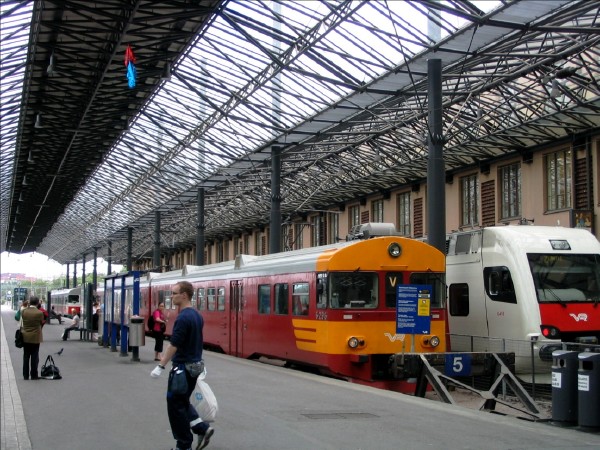
Helsinki Central Railway Station in Helsinki
Nokia HQ Helsinki
Finland Creche
Helsinki Transportation
Helsinki City
Eduskuntatalo - House of Parliament in Helsinki
Olympic Stadium in Helsinki
Flowers at Hakaniemi Market in Helsinki
Hakaniemi Market in Helsinki
Hakaniemi Market in Helsinki
Hakaniemi Market in Helsinki
The Round House at Hakaniemi in Helsinki


Travel and Tourism
Travel and Tourism
- Travel Alert Status
- Level 1: Exercise Normal Precautions
- Currency
- .885
- Time Difference
- UTC+2 (7 hours ahead of Washington, DC, during Standard Time)
- Airports
- 148
Read the full travel guide — health, safety, vaccinations, disease risk, sanitation, and transit details.
View full travel guideRecipes
Recipes
Karjalanpiirakat (Karelian Rice Pasties)
Bread
Main Dish
Kaalikaaryleet (Cabbage Rolls)
Main Dish
Graavilohi (Freshly-Salted Salmon)
Bread
Karjalanpiirakat (Karelian Rice Pasties)
Dessert
Finnish Curd Cake
Dessert
Mustikkapiirakka (Blueberry Pie)
Dessert
Raparperikiisseli (Rhubarb Pudding)
History
History
Historical Eras
Prehistoric Finland
8000 BCE – 1150
Following the retreat of glaciers, hunter-gatherer peoples gradually settled the Finnish peninsula. Between 100 and 400 AD, migrations from the southern Baltic brought ancestral Finnic peoples who established the linguistic and cultural foundations of Finnish identity. The Viking Age (800–1100) connected Finland's coastal regions to Norse trade networks, though Finland remained a stateless, tribal society without centralized political authority.
Swedish Rule
1150 – 1809
Beginning with Swedish-led crusades converting southwestern Finland to Christianity around 1150, Finland was progressively incorporated into the Kingdom of Sweden through three crusades concluded by 1293. The Peace of Pähkinäsaari (1323) formalized the border between Swedish and Russian spheres of influence. Over six centuries, Sweden integrated Finland into Western European religion, law, and culture, founding Helsinki in 1550, though Finland repeatedly served as a brutal battleground in Russo-Swedish wars.
Russian Grand Duchy
1809 – 1917
Following Napoleon's alliance with Tsar Alexander I, Russia invaded and Sweden ceded Finland in 1809, making it an autonomous Grand Duchy within the Russian Empire. Helsinki became the capital in 1812 and grew into a significant administrative city. A Finnish national awakening flourished through the nineteenth century, fueled by the epic Kalevala and growing linguistic nationalism, until the February Manifesto of 1899 sharply curtailed Finnish autonomy and inflamed independence sentiment.
Independence & Civil War
1917 – 1939
Finland declared independence on December 6, 1917, following the Russian Revolution. A brutal civil war erupted in 1918 between socialist Reds and bourgeois Whites, ending in a White victory that left deep class divisions scarring Finnish political life for decades. The interwar period saw Finland consolidate its democratic institutions while navigating the competing pressures of communism and far-right movements, gradually stabilizing into a functioning parliamentary republic.
World War II Era
1939 – 1944
The Soviet Union invaded Finland in November 1939, launching the Winter War in which Finnish forces under Marshal Carl Gustaf Emil Mannerheim mounted a celebrated resistance before ceding territory in March 1940. Finland subsequently entered the Continuation War (1941–1944) alongside Germany to reclaim lost lands, ultimately signing the Moscow Armistice with the Soviets. The wars cost Finland roughly eleven percent of its territory but preserved its sovereignty and independence.
Modern Finland
1944 – present
Post-war Finland pursued a carefully calibrated policy of neutrality and reconciliation with the Soviet Union, encapsulated in the Paasikivi–Kekkonen doctrine, which preserved independence at the cost of certain foreign policy constraints. Rapid industrialization and the construction of a comprehensive welfare state transformed Finnish society by the late twentieth century. Finland joined the European Union in 1995 and, following Russia's invasion of Ukraine, acceded to NATO in 2023, marking a historic realignment of its security policy.
Overview
Fifteenth-century Olavinlinna Fortress in Savonlinna
Every country, every topic, all activities & recipes
✓ Instant access on this device · ✓ No subscription
Timeline of Key Events
100 – 400
Migrations to Finland from southern Baltic .
Migrations to Finland from southern Baltic.
800 – 1100
The Viking Age
Swedish Vikings established trade ties with Russia via Finland.
1150
Swedish led crusades to southwestern Finland; converted Finns to Christianity .
Swedish led crusades to southwestern Finland; converted Finns to Christianity.
1155 – 1809
Finland incorporated into Kingdom of Sweden
Finland incorporated into Kingdom of Sweden .
1238 – 1249
Second crusade to Tavasita by Swedes
Second crusade to Tavasita by Swedes.
1293
Third Crusade by Swedes to eastern Finland
Third Crusade by Swedes to eastern Finland; established dividing line between Catholic West and Orthodox East.
1323
Peace treaty of Pähkinäsaari signed.
Peace treaty of Pähkinäsaari signed. Territory of present-day Finland becomes part of the Swedish realm
Read the full history profile — narrative overview, defining eras, and the complete timeline in one place.
View expanded historyInteresting Facts
Interesting Facts
This country consumes the most coffee averaging 24 pounds per year (that's about 4.5 cups of coffee a day.) The world average is more than 400 billion cups which are consumed each year.
See every fact — trivia, oddities, and curious tidbits gathered from across the country.
View all interesting factsGeography and Environment
Geography and Environment
- Terrain
- mostly low, flat to rolling plains interspersed with lakes and low hills
- Climate
- Virtually all of Finland lies between latitudes 60°N and 70°N, but the Gulf Stream and the prevalence of warm westerly winds make the climate several degrees warmer than elsewhere at the same latitude. Summers are short and mild, and the days are long. In June and July only a 2–3 hour period of twilight separates sunset from sunrise. In the extreme north the sun does not set for 73 days during the mid-summer period. Precipitation, averaging 63cm (25 inches) annually, is distributed over all seasons. Winters are long and cold. Snow is possible from October through April, with January through March having the heaviest accumulations. Temperatures may vary from north to south, as does the snow coverage from one winter to the next. Despite Helsinki’s location on the Gulf of Finland, the humidity is low. The city’s average temperature is +5°C (42°F). February and July mean temperatures are -5°C (23°F) and +17°C (63°F) respectively. Average temperatures in Lapland are -12°C (10°F) in January and +17°C (63°F) in July.
- Natural Hazards
- NA
- Current Environmental Issues
- air pollution from manufacturing and power plants contributing to acid rain; water pollution from industrial wastes, agricultural chemicals; habitat loss threatens wildlife populations
Read the full geography and environment profile — terrain, climate, natural resources, hazards, land use, and international agreements.
View full geographyPeople & Demographics
People & Demographics
Religion
Languages Spoken
Finnish 93.4% (official), Swedish 5.9% (official), small Sami- and Russian-speaking minorities
- Finnish
- Swedish
Population
- Population
- 5,626,414
- Population in Major Urban Areas
- HELSINKI (capital) 1.134 million
- Nationality Noun
- Finn(s)
- Ethnic Groups
- Finn 93%, Swede 6%, Sami 0.11%, Roma 0.12%, Tatar 0.02%
- Language Note
- The Finnish people take great pride in their language. Through the years they have resisted other nation's attempts to impose their language on them. Over 93% of the population speaks Finnish, a Finnish-Ugric language coming from a language family different from Scandinavian languages. It is closely related to Estonian. Finland recognizes Sami, the tongue of the indigenous minority Sami. English is popular as a second language. Swedish is the second official language, spoken by 6% of the population. Finnish is a hard language to learn because the same word is used for "he" and "she" and the articles "a" and "the" are rarely used.
Education
- Literacy Definition
- Age 15 and over can read and write
Life Expectancy
- Life Expectancy at Birth
- Finland consistently ranks among the top countries in the world for life expectancy, reflecting the nation's strong public health infrastructure, high standard of living, and comprehensive social welfare system. As of the most recent available data, the average life expectancy at birth in Finland is approximately 82 years overall, with women living to around 84–85 years and men to approximately 79–80 years. This gender gap, while notable, has been narrowing steadily over recent decades due to sustained improvements in men's health outcomes. Several factors contribute to Finland's impressive longevity statistics. The country operates a universal healthcare system that provides residents with access to preventive care, early disease detection, and high-quality medical treatment regardless of income. Finland also invests heavily in public health education and has made significant strides in reducing cardiovascular disease, which was historically one of the leading causes of premature death among Finnish men during the mid-20th century. Targeted public health campaigns beginning in the 1970s — most notably the North Karelia Project — dramatically reduced smoking rates and improved dietary habits, contributing to a sharp and sustained decline in heart disease mortality over subsequent decades. Finland's relatively low rates of poverty, strong environmental protections, clean air and water, and a culture that values physical activity — including widespread participation in outdoor pursuits such as Nordic skiing, hiking, and swimming — all play important roles in supporting longer, healthier lives. The country also maintains low levels of occupational hazards and has robust workplace safety regulations. Life expectancy in Finland has increased by more than 20 years since the mid-20th century and continues to trend upward, consistent with broader patterns seen across Nordic countries. While Finland faces some ongoing public health challenges — including alcohol consumption rates that have historically exceeded the European Union average, as well as mental health concerns among younger populations — continued policy efforts and a well-funded health system position the country to maintain and build upon its already strong longevity outcomes in the decades ahead.
- Infant Mortality Rate
- Finland maintains one of the lowest infant mortality rates in the world, reflecting the country's exceptional healthcare infrastructure, high standard of living, and long-standing commitment to maternal and child health. As of the most recent available data, Finland's infant mortality rate stands at approximately 2 to 3 deaths per 1,000 live births, placing it consistently among the top-performing nations globally in this measure. This remarkable outcome is the result of decades of investment in public health services. Finland's universal healthcare system ensures that prenatal care, skilled birth attendance, and postnatal support are accessible to all residents regardless of income. The country's network of maternity clinics, known locally as neuvolat, has been a cornerstone of Finnish child health policy since the 1940s. These clinics provide free, regular health checkups for expectant mothers and newborns, monitoring development and addressing health concerns early. Finland also benefits from very high rates of hospital deliveries, nearly 100 percent, and a well-trained medical workforce. Neonatal intensive care capabilities are advanced, ensuring that premature and low-birth-weight infants receive timely and effective treatment. Socioeconomic factors further support these outcomes. Finland has low poverty rates, strong gender equality, high levels of maternal education, and generous parental leave policies that allow parents to focus on infant care during critical early months. The country also has very low rates of teenage pregnancy, which is statistically associated with higher infant health risks. Comparatively, Finland's infant mortality rate is significantly below the global average of approximately 27 deaths per 1,000 live births and even below the average for high-income countries. It consistently ranks alongside Iceland, Japan, Norway, and Singapore as countries with the safest environments for newborns. Finland's success in this area serves as a model for global health policy, demonstrating that a combination of universal healthcare access, preventive care infrastructure, and strong social support systems can virtually eliminate preventable infant deaths.
Read the full people and society profile — demographics, health, education, religion, languages, and notable people.
View full people and societyGovernment & Politics
Government & Politics
Country Identity
- Country Name
- Finland
- Full Country Name
- Republic of Finland
- Local - Long
- Suomen Tasavalta
- Local - Short
- Suomi
Government Structure
- Government Type
- republic
- Legal System
- civil law system based on Swedish law; Supreme Court may request legislation interpreting or modifying laws; accepts compulsory ICJ jurisdiction, with reservations
- Executive Branch
- chief of state: President Alexander STUBB (since 1 March 2024) head of government: Prime Minister Petteri ORPO (since 20 June 2023) and Deputy Prime Minister Riikka PURRA (since 20 June 2023) cabinet: Council of State or Valtioneuvosto appointed by the president, responsible to parliament elections: president elected by popular vote for a six-year term; election last held 28 January 2024, with a runoff on 11 February 2024 (next to be held in 2030); the president appoints the prime minister from the majority party or majority coalition following parliamentary elections, subject to approval by parliament election results: percent of vote in first round - Alexander STUBB (Kok) 27.2%, Pekka HAAVISTO (Vihr) 25.8%, Jussi HALLA-AHO (PS) 19.0%, Olli REHN (Kesk) 15.3%; runoff held 11 February 2024 - STUBB 51.6%, HAAVISTO 48.4% note: government coalition - Kok, PS, RKP/SFP, and KD
- Legislative Branch
- Unicameral Parliament or Eduskunta (200 seats; members are elected by popular vote on a proportional basis to serve four-year terms) Elections: last held 2 April 2023 (next to be held in April 2027) Election results: percent of vote by party - NCP 20.8%, PS 20.1%, SDP 19.9%, Kesk 11.3%, Vihr 6.3%, Vas 7.1%, SFP 4.3%, KD 4.2%; seats by party - NCP 48, PS 46, SDP 43, Kesk 23, Vas 11, Vihr 13, SFP 10, KD 5, other 1
- Judicial Branch
- Supreme Court or Korkein Oikeus (judges appointed by the president)
- Suffrage
- 18 years of age; universal
- Constitution
- 1-Mar-00
- Independence
- 6 December 1917 (from Russia)
- National Holiday
- Independence Day, 6 December (1917)
Capital City
- Capital Name
- Helsinki
- Capital - geographic coordinate
- 60 10 N, 24 56 E
- Capital Time Difference
- UTC+2 (7 hours ahead of Washington, DC, during Standard Time)
The name may derive from the Swedish helsing, an archaic name for "neck" (hals), and which may refer to a narrowing of the Vantaa River that flows into the Gulf of Finland at Helsinki; fors refers to "rapids," so helsing fors meaning becomes "the narrows' rapids"
Military
Branches: Finnish Defense Forces (FDF): Army (Puolustusvoimat), Navy (Merivoimat; includes Coastal Defense Forces), Air Force (Ilmavoimat)
Embassy / Diplomatic Mission
U.S. Embassy Helsinki
Itäinen Puistotie 14B
Hours: Mon – Fri, 0830 - 1700
Tel: 358-9-616-250 (24 hour switchboard number)
Fax: 358-9-612-3003
e-mail: HelsinkiACS@state.gov
Read the full government profile — flag symbolism, national anthem, and other national symbols.
View full government detailsEconomy
Economy
Finland operates a highly developed, mixed economy that combines a competitive private sector with a comprehensive Nordic welfare state.
Snapshot
- Currency Name and Code
- Euro (EUR)
- GDP — official exchange rate
- $184,200,000,000 (USD)
- GDP Real Growth Rate
- 1.6%
- Gini Index
- 26.9
Every country, every topic, all activities & recipes
✓ Instant access on this device · ✓ No subscription
News & Weather
News & Weather
Current Weather
Latest News
Finland, Ukraine Seal Major Drone Deal as Stubb Exposes Russia’s Stalled Donbas Offensive at UN - kyivpost.com
kyivpost.com · 2h ago
Finland’s Stubb Sees Trump Taking Stronger Role Again in Ukraine - Bloomberg.com
Bloomberg.com · 23h ago
Finland and Ukraine Join Forces on Next-Gen Drone Production - UNITED24 Media
UNITED24 Media · 10h ago
Finland tests shelters against threats of modern warfare - TVP World
TVP World · 20h ago
Finland’s Military Is Getting New Anti-Air Missiles - The National Interest
The National Interest · 1d ago
Finland’s first F-35s arrive home with full fleet expected by 2030 - FlightGlobal
FlightGlobal · 2d ago
TASTE OF FINLAND - The Globe Homepage
The Globe Homepage · 8h ago
‘Tango Metal’ Kickstarts Partnership Between Finland’s Helsinki-filmi and Iceland’s Glassriver (EXCLUSIVE) - Variety
Variety · 1d ago
News via Google News
Videos
Videos
2 curated YouTube videos.
Source: YouTube
Source: YouTube
Frequently Asked Questions
Frequently Asked Questions
What is the population of Finland?
What is the capital of Finland?
Where is Finland located?
What countries border Finland?
What is the main religion practiced in Finland?
What currency does Finland use?
What languages are spoken in Finland?
What is the geography of Finland like?
What is Finland known for?
Last reviewed 2026