
 English
 Español
 中文
中文 हिन्दी
 Français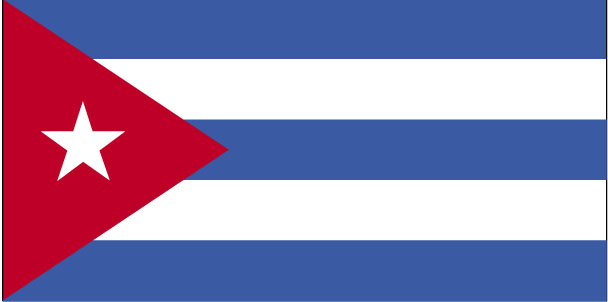
Cuba
Cuba
Declare Your Relationship to Cuba
CountryReports Community
- Studying1
- From Cuba1
- Cuba heritage0
- Visited0
- Want to visit0
Customs and Culture
Customs and Culture
Cultural Attributes
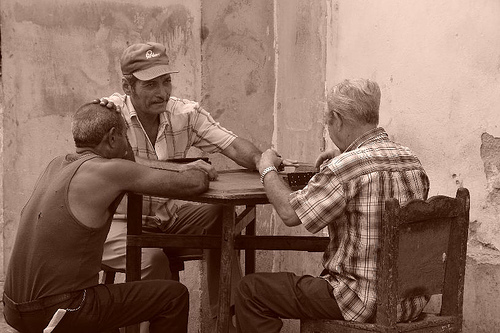
Cubans are a generous, resourceful, and cheerful people. Daily life is challenged by economic and political problems. Nevertheless, Cubans are happy people, always wanting to help and enjoy having fun. Cubans have a straightforward approach to life.

Island of Resilience and Rhythm
Get More Customs and Culture
5 more cultural topics for members
Social Customs & Etiquette · Diet · Family · Dating Customs · Recreation
Holidays
Independence Day
12/10Independence Day
10 December 1898 is the date of independence from Spain, 20 May 1902 is the date of independence from US administration; Rebellion Day, 26 July (1953)
Birth date - Alma Flor Ada
1/3Birthday
Birth date - Alma Flor Ada, Cuban author, was born Jan. 3, 1938.
Dates of Interest
- January 3rd
Birth date - Alma Flor Ada, a Cuban author, was born on January 3, 1938.
How do people greet each other in Cuba?
Cubans commonly shake hands when meeting and saying goodbye, and greet friends and family with hugs and a kiss on the cheek. They speak more formally with strangers and elderly people as a sign of respect.
Do
- Shake hands when meeting and leaving
- Greet friends and family with a hug and a kiss on the cheek
- Use more formal speech with elders or first meetings
Good to know
- Women may be addressed as "compañera" and men as "compañero" (comrade)
- Men commonly exchange a hug ("un abrazo") as a sign of affection
- Cubans speak rapidly and may drop final consonants, making Spanish harder to follow
What is Cuban food and dining like?
Traditional Cuban cuisine, called criollo, blends Spanish, Afro-Caribbean, Portuguese, French, Arabic and Chinese influences, based on rice, beans, meats and vegetables. Coffee is served strong and sweet, and rum is the national drink.
Good to know
- Try classics like moros y cristianos (rice with black beans), congrí, ajiaco stew and pork with mojo criollo
- Breakfast is often toast dipped in café con leche
- Sample rum cocktails such as the mojito and daiquiri
- Guarapo, a sugar cane juice, is a popular drink
What etiquette should I know when visiting a Cuban home?
It is customary to bring a small gift for your hosts when visiting.
Do
- Bring wine or a small gift for the hosts
How should I dress in Cuba?
Casual dress and lightweight slacks are normal during the day, with more formal wear in the evenings.
Do
- Wear lightweight, casual clothing during the day
- Dress more formally in the evenings
Don’t
- Don't wear shorts at night in public places
Good to know
- Shorts are popular at the beach
What should I know about gestures and body language in Cuba?
Eye contact is important, and Cubans often stand close, touching or tapping to make a point. Interrupting a friend during conversation is not considered rude.
Do
- Maintain eye contact while talking
Good to know
- Expect close personal space and touching when making a point
- Interrupting friends in conversation is acceptable
What is family life like in Cuba?
Housing shortages mean three generations often share one apartment, and the 1974 Family Code gives men and women equal rights and responsibilities in the home.
Good to know
- Many women have entered the workforce with the help of child-care centers
- In the countryside some people live in traditional palm-wood huts called "bohíos"
What do Cubans do for fun?
Baseball ("pelota") is Cuba's favorite sport. Cubans also enjoy dancing, music, television, radio, dominoes, and attending baseball and boxing matches.
Good to know
- Catch a baseball or boxing match
- Enjoy dancing and playing dominoes
Last updated: 2026-07-12 · Sources: CountryReports
Photos of Cuba
Photos of Cuba


Travel and Tourism
Travel and Tourism
- Travel Alert Status
- Level 2: Exercise Increased Caution
- Currency
- 1
- Time Difference
- UTC-5 (same time as Washington, DC during Standard Time)
- Climate
- Cuba is bordered on the south by the Caribbean Sea and on the north by the Gulf of Mexico and the Straits of Florida. Prevailing trade winds combine with warm waters of the Gulf Stream to produce a mild and semitropical climate. Cuba's mean temperature is about 77°F (25°C) in winter and only slightly more, perhaps 80°F to 85°F (26°C), in summer. Averages range only between 70°F (21°C) and 82°F (27°C) for the coldest and warmest months. Summer readings as high as 100°F (37°C) have been recorded. Occasional near-freezing temperatures occur only in mountain areas. Relative humidity varies from 60% to 70% in the daytime and from 80% to 90% during the night, regardless of the season, of which there are only two. The dry season lasts from November to April. During the May through October rainy season, Cuba receives up to 75% of its yearly rainfall, which averages 54 inches (137 cm).
- Airports
- 136
- Recommended Vaccinations
- How important is it to do your research about vaccinations? It might just save your life! Make yourself aware of the different types of vaccinations and which ones you may need to travel to your destination. Schedule an appointment with your doctor at least four to six weeks before you travel to ensure you receive all important shots. Be sure that you and your family are up to date on your routine vaccinations. Which vaccinations you need will depend on a number of factors including your destination, whether you will be spending time in rural areas, the season of the year you are traveling, your age, health status, and previous immunizations.
Read the full travel guide — health, safety, vaccinations, disease risk, sanitation, and transit details.
View full travel guideRecipes
Recipes
Platanos Dulces Fritos (Fried Sweet Plantains)
Side Dish
Main Dish
Ropa Vieja (Shredded Beef)
Main Dish
Puerco Asado (Cuban Pork Roast)
Main Dish
Puerco Asado (Cuban Pork Roast)
Side Dish
Moros (black beans and rice)
Side Dish
Yuca (Cassava)
Side Dish
Platanos Dulces Fritos (Fried Sweet Plantains)
History
History
Historical Eras
Pre-Colonial Cuba
1250 – 1492
The Taíno people, arriving from the east around 1250, established flourishing agricultural and fishing communities across the island. They lived in organized villages under cacique chieftains, cultivating cassava, tobacco, and corn. This era ended abruptly with Columbus's arrival in 1492, which set in motion the near-total destruction of the indigenous population through disease, forced labor, and violence.
Spanish Colonial Era
1492 – 1868
Spain transformed Cuba into a vital imperial hub, with Diego Velázquez directing colonization from 1511 and Havana becoming the staging point for treasure fleets bound from the Americas to Seville. The indigenous population was rapidly replaced by enslaved Africans imported to work expanding sugar and tobacco plantations, making Cuba one of the hemisphere's most profitable colonies. Slavery was finally abolished in 1886, but social inequalities and Spanish misrule had already ignited calls for independence.
Wars of Independence
1868 – 1898
Cuba fought two major independence wars against Spain: the Ten Years' War (1868–1878) and the final campaign launched in 1895 by national hero José Martí, who died in battle that same year. U.S. intervention followed the mysterious sinking of the USS Maine in Havana Harbor in February 1898, drawing Washington into the Spanish-American War. Spain was defeated and relinquished Cuba under the Treaty of Paris in December 1898, ending nearly four centuries of Spanish rule.
Republic & U.S. Influence
1898 – 1959
Cuba formally gained independence on May 20, 1902, but the Platt Amendment allowed the United States to intervene in Cuban affairs and secured the lease of Guantánamo Bay, limiting true sovereignty. Decades of political instability followed, punctuated by authoritarian rule; Fulgencio Batista rose from a 1933 sergeants' revolt, was elected president in 1940, and returned via coup in 1952. Corruption and repression under Batista's dictatorship galvanized opposition, setting the stage for revolutionary overthrow.
Castro's Revolution
1959 – 1991
Fidel Castro's 26th of July Movement toppled Batista on January 1, 1959, and rapidly consolidated a one-party Communist state, executing or imprisoning thousands of opponents. Cuba aligned closely with the Soviet Union, survived the U.S.-backed Bay of Pigs invasion in 1961, and stood at the center of the Cuban Missile Crisis in 1962. The regime actively exported revolution to Latin America and Africa throughout the 1960s–1980s, becoming a defining ideological force of the Cold War.
Post-Soviet Cuba
1991 – present
The collapse of the Soviet Union in 1991 plunged Cuba into a severe economic crisis known as the "Special Period," forcing painful austerity and limited market reforms. Fidel Castro governed until illness led him to transfer power to his brother Raúl in 2008, and a slow process of normalization with the United States began under President Obama in 2014–2016. Cuba continues to navigate economic hardship, emigration pressures, and cautious political transition under Communist Party rule.
Overview
Spanish settlers established the raising of cattle, sugarcane, and tobacco as <st1:country-region><st1:place>Cuba</st1:place></st1:country-region>’s primary economic pursuits. As the native Indian population died out, African slaves were imported to work the ranches and plantations. Slavery was abolished in 1886.
Timeline of Key Events
1250
Taino Indians arrive from the east.
Taino Indians arrive from the east.
1492
The navigator Christopher Columbus claims Cuba for Spain.
The navigator Christopher Columbus claims Cuba for Spain.
1511
Spanish colonization of the island begins under the direction of Diego Velazquez.
Spanish colonization of the island begins under the direction of Diego Velazquez.
1514
The city of Havana is established by Pánfilo de Narváez.
The city of Havana is established by Pánfilo de Narváez. The city is named after San Cristóbal de Habana, a local chief.
1526
Importing of slaves from Africa begins.
Importing of slaves from Africa begins.
1602
Cuba’s population is estimated at about 20,000.
Cuba’s population is estimated at about 20,000, of which about 13,000 live in and around Havana.
1603
In order to end smuggling activities the government sets out a decree.
In order to end smuggling activities (mostly in Bayamo) the government decrees that the sale of tobacco to foreigners is punishable by death.
Read the full history profile — narrative overview, defining eras, and the complete timeline in one place.
View expanded historyInteresting Facts
Interesting Facts
During the 17th century, pirates buried stolen treasure on an island off Cuba called the Isle of Youth. According to legend, this was the famous Treasure Island described in Robert Louis Stevenson's novel.
About 150 million years ago, Cuba was part of a submerged North American mountain range. Movements of the earth's crust below the sea made the mountain tops appear above the surface of the water. These peaks became the Caribbean islands that we know today.
The royal palm is the symbol of Cuba. It occupies the central position in Cuba's national coat of arms and symbolizes strength.
Many mountains, rivers and towns in Cuba retain the names given to them by the indigenous peoples. The name “ Cuba” comes from the Taino word cubanacán, meaning a centre or central place.
See every fact — trivia, oddities, and curious tidbits gathered from across the country.
View all interesting factsGeography and Environment
Geography and Environment
- Terrain
- mostly flat to rolling plains, with rugged hills and mountains in the southeast
- Climate
- Cuba is bordered on the south by the Caribbean Sea and on the north by the Gulf of Mexico and the Straits of Florida. Prevailing trade winds combine with warm waters of the Gulf Stream to produce a mild and semitropical climate. Cuba’s mean temperature is about 77ºF (25 ºC) in winter and only slightly more, perhaps 80ºF to 85ºF (26ºC), in summer. Averages range only between 70°F (21°C) and 82°F (27°C) for the coldest and warmest months. Summer readings as high as 100°F (37°C) have been recorded. Occasional near-freezing temperatures occur only in mountain areas. Relative humidity varies from 60% to 70% in the daytime and from 80% to 90% during the night, regardless of the season, of which there are only two. The dry season lasts from November to April. During the May through October rainy season, Cuba receives up to 75% of its yearly rainfall, which averages 54 inches (137 cm.).
- Natural Hazards
- the east coast is subject to hurricanes from August to November (in general, the country averages about one hurricane every other year); droughts are common
- Current Environmental Issues
- air and water pollution; biodiversity loss; deforestation
Read the full geography and environment profile — terrain, climate, natural resources, hazards, land use, and international agreements.
View full geographyPeople & Demographics
People & Demographics
Religion
Languages Spoken
Spanish (official)
- Spanish
Population
- Population
- 11,089,511
- Population: Male/Female
- male: 5,441,507 female: 5,524,531
- Population Distribution
- large population clusters found throughout the country, the more significant ones being in the larger towns and cities, particularly the capital of Havana
- Urban Population
- urban population: 77.5% of total population rate of urbanization: 0.19% annual rate of change
- Population in Major Urban Areas
- 2.149 million HAVANA (capital)
- Nationality Noun
- noun: Cuban(s) adjective: Cuban
- Ethnic Groups
- White 64.1%, Mulatto or mixed 26.6%, Black 9.3%
- Language Note
- Spanish (official)
Education
- Literacy Definition
- age 15 and over can read and write
Health Information
- Life Expectancy at Birth
- Total population: 78.7 years Male: 76.5 years Female: 81.0 years
- Major Infectious Diseases — degree of risk
- degree of risk: intermediate food or waterborne diseases: bacterial diarrhea and hepatitis A vectorborne diseases: dengue fever
- Alcohol consumption per capita
- total: 4.7 liters of pure alcohol beer: 1.77 liters of pure alcohol wine: 0.23 liters of pure alcohol spirits: 2.69 liters of pure alcohol other alcohols: 0.01 liters of pure alcohol
- Tobacco Use
- total: 17.9% male: 25.5% female: 10.3%
- Child Marriage
- women married by age 15: 4.8% women married by age 18: 29.4% men married by age 18: 5.9%
- Infant Mortality Rate
- total: 4.4 deaths/1,000 live births male: 4.8 deaths/1,000 live births female: 3.9 deaths/1,000 live births
Life Expectancy
- Life Expectancy at Birth
- Total population: 78.7 years Male: 76.5 years Female: 81.0 years
- Median Age
- total: 42.6 years male: 41 years female: 44.4 years
- Age Structure
- 0-14 years: 16.3% (male 918,066/female 866,578) 15-64 years: 66.5% (male 3,670,531/female 3,623,658) 65 years and over: 17.2% (male 852,910/female 1,034,295)
- Infant Mortality Rate
- total: 4.4 deaths/1,000 live births male: 4.8 deaths/1,000 live births female: 3.9 deaths/1,000 live births
Read the full people and society profile — demographics, health, education, religion, languages, and notable people.
View full people and societyGovernment & Politics
Government & Politics
Country Identity
- Country Name
- Cuba
- Full Country Name
- Republic of Cuba
- Local - Long
- Republica de Cuba
- Local - Short
- Cuba
Government Structure
- Government Type
- Communist state
- Legal System
- based on Spanish and American law, with large elements of Communist legal theory; has not accepted compulsory ICJ jurisdiction
- Executive Branch
- chief of state: President of the Republic Miguel DIAZ-CANEL Bermudez (since 19 April 2018; reelected 21 October 2019 for a five-year term); note - the president is both the chief of state and head of government head of government: President of the Republic Miguel DIAZ-CANEL Bermudez (since 19 April 2018); Prime Minister Manuel MARRERO Cruz (since 21 December 2019); note - the office of Prime Minister was reinstated under the 2019 constitution, separating some executive responsibilities previously held solely by the president cabinet: Council of Ministers proposed by the president and ratified by the National Assembly of People's Power; a smaller Executive Committee of the Council of Ministers oversees day-to-day governance elections: president elected by the National Assembly of People's Power for a five-year term; under the 2019 constitution, a president is limited to two consecutive five-year terms; election last held 21 October 2019 (next to be held in 2024) election results: Miguel DIAZ-CANEL Bermudez reelected president; percent of legislative vote - 97.7%
- Legislative Branch
- unicameral National Assembly of People's Power or Asamblea Nacional del Poder Popular (470 seats; members are elected from slates approved by special candidacy commissions and serve five-year terms) elections: last held on 26 March 2023 (next to be held in 2028) election results: percent of vote - Cuban Communist Party (PCC) approved candidates 97.66%; seats - PCC 470
- Judicial Branch
- People's Supreme Court or Tribunal Supremo Popular (president, vice president, and other judges are elected by the National Assembly)
- Suffrage
- 16 years of age; universal
- Constitution
- 24 February 1976, amended July 1992 and June 2002
- Independence
- 20 May 1902 (from Spain 10 December 1898; administered by the US from 1898 to 1902)
- National Holiday
- Independence Day, 10 December (1898); note - 10 December 1898 is the date of independence from Spain, 20 May 1902 is the date of independence from US administration; Rebellion Day, 26 July (1953)
Capital City
- Capital Name
- Havana
- Capital - geographic coordinate
- 23 07 N, 82 21 W
- Capital Time Difference
- UTC-5 (same time as Washington, DC during Standard Time)
The sites of Spanish colonial cities often retained their original Taino names; Habana, the Spanish name for the city, may be based on the name of a local Taino chief, HABAGUANEX
Military
Branches: Revolutionary Armed Forces (Fuerzas Armadas Revolucionarias, FAR): Revolutionary Army (Ejercito Revolucionario, ER, includes Territorial Militia Troops (Milicia de Tropas de Territoriales, MTT)); Revolutionary Navy (Marina de Guerra Revolucionaria, MGR, includes Marine Corps); Revolutionary Air and Air Defense Forces (Defensas Anti-Aereas y Fuerza Aerea Revolucionaria, DAAFAR), Youth Labor Army (Ejercito Juvenil del Trabajo, EJT)
Embassy / Diplomatic Mission
The United States does not maintain an embassy in Cuba.
For current information on Cuban entry and customs requirements, travelers should contact:
Cuban Interests Section (an office of the Cuban government)
2630 16th Street NW
Washington, DC 20009
Telephone (202) 797-8518/8520
Fax (202) 797-8521
Consular Section (part of the Cuban Interests Section)
2639 16th Street NW
Washington, DC 20009
Telephone (202) 797-8609/8610/8615
Fax (202) 986-7283
Read the full government profile — flag symbolism, national anthem, and other national symbols.
View full government detailsEconomy
Economy
Cuba's centrally planned economy continues to struggle as the government attempts to balance limited market-oriented reforms with a desire for firm political control.
Snapshot
- Currency Name and Code
- Cuban pesos (CUP)
- GDP Real Growth Rate
- -2%
News & Weather
News & Weather
Current Weather
Latest News
Cuba plunged into darkness as aging power grid collapses for second time in 24 hours - Reuters
Reuters · 1d ago
C.I.A. Sets Up Secret Cuba Task Force as Trump Pressures Havana - The New York Times
The New York Times · 1d ago
Cuban government open to the idea of an Arab investor to develop ‘Trump Island’ - EL PAÍS English
EL PAÍS English · 1d ago
New CIA task force on Cuba signals escalating U.S. pressure for regime change - Miami Herald
Miami Herald · 16h ago
Cuba: Independent experts condemn new US sanctions as humanitarian crisis deepens - UN News
UN News · 18h ago
US sanctions Cuba’s military representative in Beijing over China procurement - South China Morning Post
South China Morning Post · 20h ago
US diplomat Rubio targets Cuban military officials, companies in sanctions - Al Jazeera
Al Jazeera · 16h ago
"No escape:" Inside Rubio's Cuba pressure campaign - Axios
Axios · 3h ago
News via Google News
Climate Overview
Cuba is bordered on the south by the Caribbean Sea and on the north by the Gulf of Mexico and the Straits of Florida. Prevailing trade winds combine with warm waters of the Gulf Stream to produce a mild and semitropical climate. Cuba's mean temperature is about 77°F (25°C) in winter and only slightly more, perhaps 80°F to 85°F (26°C), in summer. Averages range only between 70°F (21°C) and 82°F (27°C) for the coldest and warmest months. Summer readings as high as 100°F (37°C) have been recorded. Occasional near-freezing temperatures occur only in mountain areas.
Relative humidity varies from 60% to 70% in the daytime and from 80% to 90% during the night, regardless of the season, of which there are only two. The dry season lasts from November to April. During the May through October rainy season, Cuba receives up to 75% of its yearly rainfall, which averages 54 inches (137 cm).
Videos
Videos
2 curated YouTube videos.
Source: YouTube
Source: YouTube
Frequently Asked Questions
Frequently Asked Questions
What is the population of Cuba?
How do people greet each other in Cuba?
What is Cuban food and dining like?
What etiquette should I know when visiting a Cuban home?
How should I dress in Cuba?
What should I know about gestures and body language in Cuba?
What is family life like in Cuba?
What do Cubans do for fun?
What is the capital of Cuba?
Where is Cuba located?
What are Cuba's ocean and sea borders?
What religion is practiced in Cuba?
What is the currency of Cuba?
What language is spoken in Cuba?
What is the geography of Cuba like?
What is Cuba known for?
Last reviewed 2026