
 English
 Español
 中文
中文 हिन्दी
 Français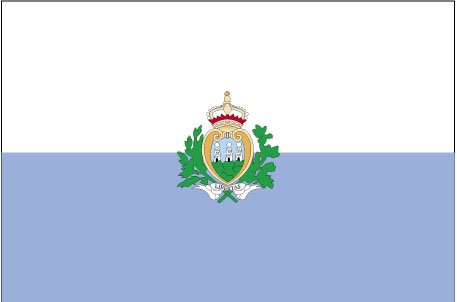
San Marino
San Marino
Declare Your Relationship to San Marino
CountryReports Community
- Studying2
- From San Marino1
- San Marino heritage1
- Visited1
- Want to visit2
Customs and Culture
Customs and Culture
Cultural Attributes
San Marino, one of the world's smallest and oldest republics, possesses a rich cultural heritage shaped by its unique history, traditions, and influences.
Historical Significance: San Marino's cultural identity is deeply rooted in its rich history as a sovereign state founded in 301 AD. Its status as the world's oldest surviving republic has shaped its national consciousness and pride, strongly emphasizing preserving its heritage and independence.
Medieval Architecture: The picturesque landscape of San Marino is adorned with medieval architecture, including ancient fortifications, castles, and towers. The iconic Three Towers of San Marino, perched atop Mount Titano, are UNESCO World Heritage Sites and symbolize the country's historic significance and defensive prowess.
Art and Museums: San Marino boasts a vibrant arts scene with numerous museums, galleries, and cultural institutions showcasing local and international artworks. The State Museum of San Marino houses a diverse collection of historical artifacts, artworks, and archaeological treasures, offering insight into the country's past.
Cultural Festivals and Events: Throughout the year, San Marino hosts various cultural festivals and events celebrating its heritage, traditions, and customs. These include the Medieval Days, a lively reenactment of medieval life and festivities, and the San Marino Arts Festival, featuring music, dance, and theater performances.
Religious Traditions: The Catholic Church plays a significant role in San Marino's cultural fabric, with religious traditions and festivals observed yearly. Events such as the Feast of Saint Agatha and the Feast of Saint Marinus are celebrated with religious processions, ceremonies, and cultural festivities.
Cuisine: San Marino's culinary tradition is influenced by its Mediterranean location and Italian heritage. Local dishes feature fresh seafood, pasta, olive oil, and regional specialties such as piadina, a flatbread stuffed with savory fillings. Wine production is also integral to San Marino's gastronomy, with vineyards dotting the countryside.
Hospitality and Community: San Marino's tight-knit community values hospitality, warmth, and camaraderie. Visitors to the republic are welcomed with open arms and encouraged to partake in local customs, traditions, and cultural experiences, fostering a sense of belonging and connection.

Europe's Oldest Republic, Forever Free
Get More Customs and Culture
5 more cultural topics for members
Social Customs & Etiquette · Diet · Family · Dating Customs · Recreation
Every country, every topic, all activities & recipes
✓ Instant access on this device · ✓ No subscription
Holidays
Founding of the Republic
9/3Independence
Dates of Interest
- August 15th
San Marino hosts Medieval Days, an event that brings the Middle Ages to life with historical reenactments, jousting tournaments, and medieval markets. Visitors can experience the sights and sounds of medieval times in the picturesque setting of San Marino.
How do people greet each other in San Marino?
Greetings are warm and courteous; a firm handshake with eye contact and a smile is standard, while friends may exchange a light kiss on one or both cheeks in social settings.
Do
- Shake hands firmly while making eye contact and smiling
- Use "buon giorno" (good morning), "buona sera" (good evening), or "ciao" depending on time and familiarity
- Address elders and authority figures formally with titles and last names
- Use nods, smiles, and hand waves to acknowledge others
Good to know
- Cheek kisses are for informal or social settings with friends and acquaintances
What are the dining customs in San Marino?
Cuisine draws on Mediterranean and Italian heritage, featuring dishes like piadina, fagioli con le cotiche (a Christmas bean soup with bacon rind), zuppa di ciliege, and bustrengo.
Do
- Wait to be seated or until the host indicates where to sit
- Try a bit of everything served and compliment the host on the meal
Don’t
- Don't start eating or drinking before the host does
Good to know
- Fagioli con le cotiche is a holiday dish eaten at Christmas time
- Local wines pair with the cuisine
What etiquette should I follow when visiting someone's home?
San Marino values politeness, formality, and respect for elders; arrive on time and bring a small gift for your host.
Do
- Be punctual for social gatherings and visits
- Bring a modest gift such as chocolates, wine, or flowers
- Address people by title and last name until invited to use first names
- Thank hosts and say goodbye to each person individually when leaving
Don’t
- Don't raise controversial topics like politics or religion unless the host initiates
- Don't use first names before being invited to
Good to know
- Stick to positive, neutral topics like travel, food, and culture
- Show extra deference and use formal language with older people
What should I wear in San Marino?
Everyday dress is modern Western-style clothing similar to neighboring Italy; traditional attire appears mainly at cultural events, festivals, and special occasions.
Good to know
- Casual wear like jeans and t-shirts is normal day to day
- Suits and formal wear suit formal occasions
- Expect traditional costumes at weddings, religious festivals, and cultural celebrations
What is family life like in San Marino?
Families are very close-knit, with older members often living with younger relatives, and respect for elders is an important tradition.
Good to know
- Families are now smaller than in the past due to the shift from a rural to an industrial economy
- Marriage rates are high and divorce is uncommon
- The government provides financial allowances to families with children
What can I do for recreation in San Marino?
Options range from exploring medieval historic sites and hiking Monte Titano to cycling, shopping, wine tasting, and spa relaxation.
Do
- Visit the Three Towers, the Basilica di San Marino, and the Palazzo Pubblico
- Hike scenic trails in Monte Titano Natural Park
- Cycle or mountain bike the countryside routes
- Tour local vineyards to taste wines like Sangiovese, Trebbiano, and Albana
Good to know
- Guided tours give insight into the republic's history
- Cultural events like Medieval Days and the San Marino Arts Festival run throughout the year
- Spas, wellness centers, and thermal baths offer relaxation
Last updated: 2026-07-12 · Sources: CountryReports
Photos of San Marino
Photos of San Marino


Travel and Tourism
Travel and Tourism
- Currency
- euro (EUR)
- Time Difference
- UTC+1 (6 hours ahead of Washington, DC, during Standard Time)
Read the full travel guide — health, safety, vaccinations, disease risk, sanitation, and transit details.
View full travel guideRecipes
Recipes
History
History
Historical Eras
Legendary Founding
301 – 1243
According to tradition, the Christian stonemason Marinus the Dalmatian fled Roman persecution under Emperor Diocletian and established a small devout community atop Mount Titano in 301 AD. Governed by the Arengo, a self-ruling assembly of family heads, the community gradually developed into a recognized political entity. This era laid the cultural and religious foundations that would define San Marino's identity as the world's oldest republic.
Medieval Republic
1243 – 1463
In 1243, San Marino established the institution of the Captains Regent — two jointly serving heads of state — creating a governmental structure that endures to this day. The republic maintained its autonomy against surrounding Italian powers, though it remained confined to Mount Titano. This period cemented San Marino's republican traditions and its resilience against absorption by more powerful neighbors.
Territorial Expansion
1463 – 1600
After allying against Sigismondo Pandolfo Malatesta, Lord of Rimini, San Marino was rewarded by Pope Pius II with the towns of Fiorentino, Montegiardino, and Serravalle in 1463; Faetano joined voluntarily the same year. These acquisitions defined the republic's territory permanently — its borders have remained essentially unchanged ever since. Brief foreign occupations by Cesare Borgia in 1503 tested but did not extinguish Sammarinese sovereignty.
Early Modern Period
1600 – 1815
San Marino navigated the turbulent politics of early modern Italy, enduring a military occupation by Cardinal Alberoni in 1739 that was reversed after the Pope recognized the republic's rights and restored its independence. Napoleon, during his Italian campaigns of 1797, respected San Marino's sovereignty and reportedly admired its republican model. This era reinforced the republic's remarkable tradition of independence amid the dynastic conflicts reshaping Europe.
Unification & Modern State
1815 – 1945
As Italian unification unfolded in the 19th century, San Marino maintained its independence, signing a treaty of friendship with the newly unified Kingdom of Italy in 1862. The republic declared neutrality in both World Wars; during World War II it sheltered approximately 100,000 Italian refugees despite Allied bombing in 1944. San Marino emerged from this era with its sovereignty intact and its republican institutions uninterrupted.
Contemporary Republic
1945 – present
Post-war San Marino modernized its economy through tourism, banking, and light industry while maintaining its distinctive dual-headed republican government. The republic joined the United Nations in 1992, deepening its integration into international institutions. Today San Marino remains the world's oldest constitutional republic, closely aligned with Italy and the European Union while preserving the ancient institutions established over seventeen centuries ago.
Overview
According to tradition, San Marino was founded in AD 301 when a
Every country, every topic, all activities & recipes
✓ Instant access on this device · ✓ No subscription
Timeline of Key Events
301
According to tradition, San Marino is founded by Marinus.
According to tradition, San Marino is founded by Marinus, a Christian stonemason seeking refuge from religious persecution on Mount Titano.
1463
The Pope awards the towns to San Marino.
The Pope awards the towns of Fiorentino, Montegiardino and Serravalle to San Marino. The town of Faetano joins the republic in 1464, defining its present-day borders.
1797
Napoleon invades Italy, but respects the rights of San Marino.
Napoleon invades Italy, but respects the rights of San Marino.
1940
World War II. Neutral San Marino hosts some 100,000 refugees from neighboring parts of Italy.
World War II. Neutral San Marino hosts some 100,000 refugees from neighboring parts of Italy.
1992
San Marino joins the United Nations.
San Marino joins the United Nations.
Read the full history profile — narrative overview, defining eras, and the complete timeline in one place.
View expanded historyInteresting Facts
Interesting Facts
Those born in San Marino remain citizens and can vote no matter where they live.
See every fact — trivia, oddities, and curious tidbits gathered from across the country.
View all interesting factsGeography and Environment
Geography and Environment
- Terrain
- rugged mountains
- Climate
- Mediterranean; mild to cool winters; warm, sunny summers
- Natural Hazards
- NA
- Current Environmental Issues
- NA
Read the full geography and environment profile — terrain, climate, natural resources, hazards, land use, and international agreements.
View full geographyPeople & Demographics
People & Demographics
Religion
Languages Spoken
Italian
- Italian
Population
- Population
- 34,892
- Nationality Noun
- Sammarinese (singular and plural)
- Ethnic Groups
- Sammarinese, Italian
Education
- Literacy Definition
- age 10 and over can read and write
Life Expectancy
- Life Expectancy at Birth
- San Marino consistently ranks among the highest in the world for life expectancy at birth, reflecting the microstate's exceptional standards of living, healthcare, and social stability. The average life expectancy in San Marino is approximately 85 to 86 years overall, with women typically living longer than men. Female life expectancy hovers around 87 to 88 years, while male life expectancy averages closer to 83 to 84 years. These figures place San Marino well above global averages and on par with — or even surpassing — many of the world's wealthiest nations. Several factors contribute to this remarkable longevity. San Marino maintains a high-quality universal healthcare system that provides residents with access to comprehensive medical services, including preventive care and specialist treatment. The country benefits from its longstanding partnership with Italy in terms of healthcare infrastructure, with residents able to access Italian medical facilities as needed. The population also tends to follow a Mediterranean-style diet, rich in fresh vegetables, legumes, olive oil, and lean proteins, which is associated globally with reduced risks of cardiovascular disease and other chronic conditions. San Marino's small population — approximately 34,000 to 35,000 people — allows for efficient delivery of public services and a tightly knit social environment. Low crime rates, minimal environmental pollution, and a strong sense of community contribute to the overall well-being of its citizens. The country also boasts a high per capita income and very low unemployment, both of which are well-documented correlates of longer, healthier lives. Historically, San Marino has maintained consistently high life expectancy figures over recent decades, with only modest fluctuations tied to broader regional health trends. The COVID-19 pandemic caused a temporary dip in life expectancy statistics in the early 2020s, as it did across much of Europe, but recovery has been swift and the country's figures have remained among the highest in the world. By the mid-2020s, life expectancy in San Marino had returned to and stabilized at pre-pandemic levels, consistent with trends observed across other high-income European nations. For travelers and students alike, San Marino's life expectancy statistics serve as a testament to the effectiveness of small, stable, and well-governed societies in promoting long and healthy lives for their populations.
- Infant Mortality Rate
- San Marino boasts one of the lowest infant mortality rates in the world, reflecting the microstate's exceptional standard of living, advanced healthcare infrastructure, and high level of socioeconomic development. The infant mortality rate — defined as the number of deaths of infants under one year of age per 1,000 live births — stands at approximately 1 to 2 deaths per 1,000 live births, placing San Marino consistently among the top performers globally on this critical public health indicator. This remarkably low rate is the result of several interconnected factors. San Marino provides universal access to high-quality healthcare for all residents, ensuring that expectant mothers receive comprehensive prenatal care, skilled attendance at birth, and thorough postnatal monitoring for both mother and child. The country's small population — approximately 34,000 people — allows for highly personalized medical attention and efficient delivery of health services. San Marino's strong economy, with one of the highest GDP per capita figures in Europe, means that poverty-related risk factors for infant mortality, such as malnutrition and inadequate housing, are essentially nonexistent. High levels of maternal education further contribute to healthy infant outcomes, as educated mothers are more likely to access prenatal services, follow safe infant feeding practices, and recognize early warning signs of illness. The country benefits from close ties with Italy's broader healthcare system, with residents able to access specialized medical facilities and pediatric care across the border when needed. This proximity to a large, well-developed national health system effectively extends San Marino's own medical capacity beyond what its size alone would suggest. Due to its very small number of annual births — typically fewer than 300 per year — San Marino's infant mortality statistics can fluctuate noticeably from year to year. In some years, no infant deaths are recorded at all, which can produce a reported rate of zero. International health organizations therefore often apply smoothed or averaged estimates when presenting long-term trend data for the country. Regardless of annual variation, the overall trajectory demonstrates sustained, excellent infant health outcomes consistent with San Marino's status as one of the world's most prosperous and well-governed nations.
Read the full people and society profile — demographics, health, education, religion, languages, and notable people.
View full people and societyGovernment & Politics
Government & Politics
Country Identity
- Country Name
- SanMarino
- Full Country Name
- Republic of San Marino
- Local - Long
- Repubblica di San Marino
- Local - Short
- San Marino
Government Structure
- Government Type
- independent republic
- Legal System
- based on civil law system with Italian law influences; has not accepted compulsory ICJ jurisdiction
- Executive Branch
- chief of state: co-chiefs of state Captain Regent Alessandro ROSSI and Captain Regent Milena GASPERONI (for the period 1 October 2024 - 31 March 2025) head of government: Secretary of State for Foreign and Political Affairs Luca BECCARI (since 3 January 2020) cabinet: Congress of State elected by the Grand and General Council for a five-year term elections: co-chiefs of state (Captains Regent) elected by the Grand and General Council for a six-month term; elections held twice yearly, in March and September; Secretary of State for Foreign and Political Affairs elected by the Grand and General Council for a five-year term; last election held 9 December 2019 election results: Alessandro ROSSI and Milena GASPERONI elected Captains Regent; percent of legislative vote - NA; Luca BECCARI elected Secretary of State for Foreign and Political Affairs; percent of legislative vote - NA note: the popularly elected parliament (Grand and General Council) selects two of its members to serve as the Captains Regent (co-chiefs of state) for a six-month term; they preside over meetings of the Grand and General Council and its cabinet (Congress of State), which includes 10 other members, all selected by the Grand and General Council; assisting the Captains Regent are 10 secretaries of state; the Secretary of State for Foreign Affairs has assumed many of the prerogatives of a prime minister
- Legislative Branch
- Unicameral Grand and General Council or Consiglio Grande e Generale (60 seats; members are elected by direct popular vote to serve five-year terms). Elections: last held on 9 June 2024 (next to be held by June 2029). Election results: percent of vote by party - DC 34.1%, RETE 18.7%, PSD 14.5%, RF 8.9%, Motus Liberi 7.6%, Domani Motus Liberi 6.5%, PSD-Noi Sammarinesi 4.6%, others 5.1%; seats by party - DC 22, RETE 12, PSD 9, RF 6, Motus Liberi 5, Domani Motus Liberi 4, PSD-Noi Sammarinesi 2.
- Judicial Branch
- Council of Twelve or Consiglio dei XII
- Suffrage
- 18 years of age; universal
- Constitution
- 8 October 1600; electoral law of 1926 serves some of the functions of a constitution
- Independence
- 3 September 301
- National Holiday
- Founding of the Republic, 3 September (301)
Capital City
- Capital Name
- San Marino (city)
- Capital - geographic coordinate
- 43 56 N, 12 25 E
- Capital Time Difference
- UTC+1 (6 hours ahead of Washington, DC, during Standard Time)
named after Saint MARINUS, who in A.D. 301 founded a monastic settlement around which the city and later the state of San Marino coalesced
Military
Branches: no regular military forces; voluntary Military Corps (Corpi Militari) performs ceremonial duties and limited police support functions
Embassy / Diplomatic Mission
See Italy entry
Read the full government profile — flag symbolism, national anthem, and other national symbols.
View full government detailsEconomy
Economy
The tourism sector plays a vital role in San Marino's economy, contributing a significant share of GDP, with the country attracting roughly 2 million visitors annually. Key industries include banking, tourism, textiles, electronics, and ceramics.
Snapshot
- Currency Name and Code
- Euro (EUR)
- GDP Real Growth Rate
- 1.1%
Every country, every topic, all activities & recipes
✓ Instant access on this device · ✓ No subscription
News & Weather
News & Weather
Current Weather
Latest News
3 art museum shows to see in Riverside, San Marino and Pomona - pressenterprise.com
pressenterprise.com · 18h ago
0-13: Historic five-goal performance by Carlos Espí in Spain U21's thrashing of San Marino - Real Madrid CF | Web Oficial
Real Madrid CF | Web Oficial · 3d ago
EU Heads of Missions meeting in San Marino - European External Action Service (EEAS)
European External Action Service (EEAS) · 3d ago
San Marino Police Department Crime Report - Outlook Newspapers
Outlook Newspapers · 23h ago
San Marino football rallies past Crescenta Valley - San Gabriel Valley Tribune
San Gabriel Valley Tribune · 2d ago
NASA Welcomes San Marino Signing the Artemis Accords - NASA (.gov)
NASA (.gov) · 10d ago
👊Over 10 GOALS: La Rojita tore San Marino apart - Yahoo Sports
Yahoo Sports · 3d ago
Malta 3-1 San Marino (Sep 9, 2025) Final Score - ESPN
ESPN · 6d ago
News via Google News
Videos
Videos
1 curated YouTube videos.
Source: YouTube
Frequently Asked Questions
Frequently Asked Questions
What is the population of San Marino?
What is the capital of San Marino?
Where is San Marino located?
What countries border San Marino?
What religion is practiced in San Marino?
What currency is used in San Marino?
What language is spoken in San Marino?
What is San Marino known for?
Last reviewed 2026