
 English
 Español
 中文
中文 हिन्दी
 Français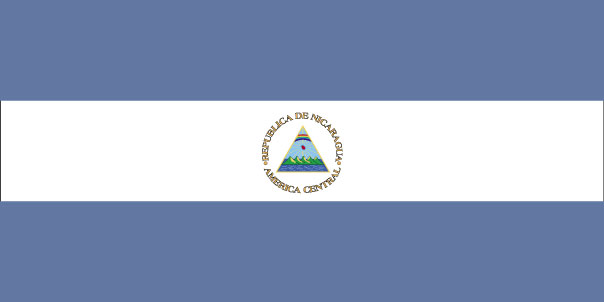
Nicaragua
Nicaragua
Declare Your Relationship to Nicaragua
CountryReports Community
- Studying5
- From Nicaragua2
- Nicaragua heritage2
- Visited0
- Want to visit0
Customs and Culture
Customs and Culture
Cultural Attributes
Nicaraguans enjoy the company of other people and are generally sociable. Honor is important and defended vigorously, sometimes even physically. Personal criticism of others should be avoided. Schedules and punctuality at meetings is not strictly observed. Power is highly valued and often sought.

Volcano's Fire, Freedom's Heart
Get More Customs and Culture
5 more cultural topics for members
Social Customs & Etiquette · Diet · Family · Dating Customs · Recreation
Every country, every topic, all activities & recipes
✓ Instant access on this device · ✓ No subscription
Holidays
Independence Day
9/15Independence Day
Christmas
12/25Christmas
The Christmas Season starts with the Feast of the Immaculate Conception, the night which is termed La Noche de Griteria (The night of the Shouting)
Christmas decorations include flores de pastor (Shepherd’s Flowers, poinsettias) muérdagos (aromatic decorations suspended overhead) colored streamers, artificial Christmas trees.
The Christmas Eve dinner included gallina de patio (stuffed chicken), Spanish rice, nacatamal (tamales), tortillas, and ponche (a rum beverage).
Gifts are hidden around the house and children believing that el Niño Jesus (Baby Jesus) brings them, search for them following Midnight Mass.
New Year’s Eve is filled with parties and fireworks.
Dates of Interest
- August 1st
Celebrated in Managua, this festival honors Santo Domingo de Guzmán, the patron saint of Managua. It features religious processions, traditional dances, music, and cultural performances.
How do people greet each other in Nicaragua?
People usually shake hands and smile with those they are on friendly terms with, giving the other person their complete attention.
Do
- Shake hands and smile when meeting
- Give the person your complete attention when greeting
Good to know
- Between female friends, greetings often include a kiss on the cheek and a hug
What are dining customs like in Nicaragua?
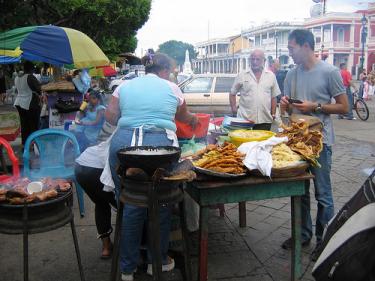
Meals are complemented with pleasant conversation, and the main meal is eaten at midday.
Do
- Keep both hands on or above the table at all times
- Enjoy pleasant conversation during the meal
Don’t
- Don't put your elbows on the table
Good to know
- Beans and rice accompany most meals, and corn is a key ingredient
- Typical dishes include tortillas, enchiladas, nacatamales, mondongo, and baho
What should I know about etiquette and social attitudes in Nicaragua?
Nicaraguans are sociable and hospitable, but honor is important and defended vigorously, so personal criticism should be avoided.
Do
- Bring a small gift such as flowers or candy when invited to dinner
- Expect a warm welcome, as Nicaraguans are very hospitable
Don’t
- Avoid personal criticism of others
- Don't expect strict punctuality, as schedules are loosely observed
Good to know
- Power is highly valued and often sought
- Nicaraguans enjoy arguing about politics
What should I wear in Nicaragua?
Clothing is lightweight and cool: men wear washable cotton or lightweight material, and women wear cool cotton dresses.
Good to know
- Traditional costumes are worn for special occasions and festivals
Are there any gestures to avoid in Nicaragua?
Most gestures common in Western countries are acceptable in Nicaragua, with one exception.
Don’t
- Don't make a fist with the thumb between the index and middle fingers, as it is vulgar
How important is family in Nicaragua?
Family is the basis of society and influences an individual's life and decision making.
Good to know
- A person has two family names
- Group dating is common among youth, and a girl formally enters social life at age fifteen
What do people do for fun in Nicaragua?
Nicaraguans are passionate about baseball, and many also go to the beach, camp in the mountains, or swim in volcanic crater lakes.
Good to know
- Baseball is hugely popular; the biggest stadium in Managua holds 40,000 people
- Women and girls often play volleyball and basketball; men and boys also play soccer and boxing
- Children play rayuela (hopscotch), hide and seek, marbles, and with a trompo
- Beaches are especially busy during Semana Santa, and most holidays fall in the dry season (December to May)
Last updated: 2026-07-12 · Sources: CountryReports
Photos of Nicaragua
Photos of Nicaragua


Travel and Tourism
Travel and Tourism
- Travel Alert Status
- Level 3: Reconsider Travel
- Currency
- gold cordoba (NIO)
- Time Difference
- UTC-6 (1 hour behind Washington, DC, during Standard Time)
- Climate
- Nicaragua’s climate varies with altitude and season. The summer, or dry season, from mid-November to mid-May, is hot and dry, with cooler nights. Winter, better described as the rainy season, from mid-May to mid-November, is hot and humid, with short, heavy tropical showers that may occur daily, often accompanied by violent electrical storms. Streams flood in the rainy season and dry up the rest of the year. The average daily high temperature in Managua ranges from 79°F to 93°F. Nights are usually temperate. Temperatures in the mountains can dip as low as 61°F, while the east coast high may be a humid 84°F.
- Airports
- 176
Read the full travel guide — health, safety, vaccinations, disease risk, sanitation, and transit details.
View full travel guideRecipes
Recipes
History
History
Historical Eras
Pre-Colonial Era
3000 BCE – 1522
Nicaragua's Pacific lowlands were inhabited by Nahuatl-speaking peoples, including the Nicarao and Chorotega, whose agricultural societies shaped the region's cultural foundations. The Caribbean coast supported distinct indigenous groups including the Miskito and Sumo peoples. These civilizations maintained complex trade networks and ritual traditions prior to European contact.
Spanish Colonial Period
1522 – 1821
Spanish conquistador Gil González Dávila made first European contact in 1522, and colonization proceeded from Panama under Francisco Hernández de Córdoba, who founded the cities of Granada and León in 1524. Nicaragua was administered as part of the Captaincy General of Guatemala for nearly three centuries. Colonial rule entrenched a plantation economy, Catholic missionary culture, and a rigid social hierarchy that would define Nicaraguan society for generations.
Independence & Early Republic
1821 – 1855
Nicaragua declared independence from Spain in 1821, briefly joined the Mexican Empire, then became part of the Central American Federation before emerging as a fully sovereign republic in 1838. The era was defined by fierce rivalry between the Conservative city of Granada and the Liberal city of León, producing chronic civil conflict. Britain simultaneously occupied the Caribbean Mosquito Coast, asserting a protectorate over Miskito territory that challenged Nicaraguan sovereignty.
Filibuster War & Foreign Intervention
1855 – 1909
In 1855, Nicaraguan Liberals hired American mercenary William Walker, who seized the presidency in 1856 and briefly reintroduced slavery before a Central American coalition expelled and executed him in 1857. The Clayton-Bulwer Treaty of 1850 between Britain and the United States reflected Nicaragua's geostrategic importance as a potential canal route, drawing relentless foreign pressure. Conservative governments subsequently dominated but remained unable to prevent escalating U.S. commercial and military encroachment.
U.S. Occupation & Somoza Rule
1909 – 1979
U.S. Marines intervened repeatedly from 1910 onward, imposing client governments and signing the Bryan-Chamorro Treaty of 1914, which granted the United States canal rights. Nationalist guerrilla leader Augusto César Sandino waged a celebrated armed resistance against U.S. occupation from 1927 until the Marine withdrawal in 1934, after which National Guard commander Anastasio Somoza García had Sandino assassinated and seized power in 1936. The Somoza family dynasty then controlled Nicaragua's government, military, and economy for over four decades until its violent overthrow in 1979.
Revolution & Democratic Transition
1979 – present
The Sandinista National Liberation Front (FSLN) toppled the Somoza regime on July 19, 1979, establishing a revolutionary government that enacted sweeping literacy and land-reform programs while receiving Soviet and Cuban support. The United States responded by funding Contra insurgents throughout the 1980s, plunging Nicaragua into a devastating proxy war. Free elections in 1990 brought Violeta Barrios de Chamorro to the presidency and began a fragile democratic transition, though political polarization, economic hardship, and natural disasters such as Hurricane Mitch in 1998 continued to challenge the country's stability.
Overview
Augusto Cesar Sandino, guerrilla leader in the struggle
Every country, every topic, all activities & recipes
✓ Instant access on this device · ✓ No subscription
Timeline of Key Events
1821
Nicaragua gain their independence from the Spanish Crown.
Nicaragua and other Central American colonies gain their independence from the Spanish Crown.
1847
British sailors invade San Juan del Norte, Nicaragua.
British sailors invade San Juan del Norte, Nicaragua.
1850
The United States and Great Britain sign the Clayton-Bulwer Treaty
The United States and Great Britain sign the Clayton-Bulwer Treaty without Nicaraguan consent. They are granted access to an inter-oceanic trade route through Nicaraguan territory.
1855
Nicaraguan Liberal forces to crush the Conservative opposition hire William Walker
Nicaraguan Liberal forces to crush the Conservative opposition hire William Walker, a North American adventurer with a small band of followers. Walker captures Granada.
1856
Walker assumes the Nicaraguan presidency
Walker assumes the Nicaraguan presidency and seeks U.S. annexation. As president, his first decree is to sanction slavery in Nicaragua.
1870
Nicaragua protests U.S. intervention
Nicaragua protests U.S. intervention and demands reparations for damages incurred in the 1855-armed conflict.
1907
U.S. war ships take possession of the Fonseca Gulf.
U.S. war ships take possession of the Fonseca Gulf.
Read the full history profile — narrative overview, defining eras, and the complete timeline in one place.
View expanded historyInteresting Facts
Interesting Facts
Nicaragua is named for one of its original inhabitants, Chief Nicarao, who ruled part of the area at the time the Spanish arrived in Central America.
The coat of arms of Nicaragua is a triangle in which there are five mountains, representing the five countries of Central America, a rainbow representing peace, and a red cap of the style worn by revolutionaries in the French Revolution, which symbolizes freedom.
Volcán Masaya is an important national park. It is home to Crater Santiago, the only Central American crater where you can see molten lava. Even though the crater emits strong sulphuric fumes, green parakeets nest and roost on its walls.
The only freshwater sharks in the world live in Lake Nicaragua. They are thought to be the descendants of saltwater sharks that were trapped there when the lake separated from the ocean, and that evolved to survive in a freshwater environment.
See every fact — trivia, oddities, and curious tidbits gathered from across the country.
View all interesting factsGeography and Environment
Geography and Environment
- Terrain
- extensive Atlantic coastal plains rising to central interior mountains; narrow Pacific coastal plain interrupted by volcanoes
- Climate
- Nicaragua’s climate varies with altitude and season. The summer, or dry season, from mid-November to mid-May, is hot and dry, with cooler nights. Winter, better described as the rainy season, from mid-May to mid-November, is hot and humid, with short, heavy tropical showers that may occur daily, often accompanied by violent electrical storms. Streams flood in the rainy season and dry up the rest of the year. The average daily high temperature in Managua ranges from 79°F to 93°F. Nights are usually temperate. Temperatures in the mountains can dip as low as 61°F, while the east coast high may be a humid 84°F.
- Natural Hazards
- destructive earthquakes, volcanoes, landslides; extremely susceptible to hurricanes
- Current Environmental Issues
- deforestation; soil erosion; water pollution
Read the full geography and environment profile — terrain, climate, natural resources, hazards, land use, and international agreements.
View full geographyPeople & Demographics
People & Demographics
Religion
Languages Spoken
Spanish (official)
- Spanish
Population
- Population
- 6,760,000
- Population in Major Urban Areas
- MANAGUA (capital) 970,000
- Nationality Noun
- Nicaraguan(s)
- Ethnic Groups
- mestizo (mixed Amerindian and white) 69%, white 17%, black 9%, Amerindian 5%
Education
- Literacy Definition
- age 15 and over can read and write
Health Information
- Life Expectancy at Birth
- Life expectancy at birth in Nicaragua stands at approximately 74 to 75 years overall, with women living notably longer than men. Female life expectancy averages around 78 years, while male life expectancy falls closer to 71 years. These figures place Nicaragua in a favorable position relative to many of its Central American neighbors and reflect meaningful progress achieved over recent decades. In the 1960s and 1970s, life expectancy in Nicaragua hovered around 50 to 55 years, a period marked by political instability, the devastating 1972 Managua earthquake, and limited access to healthcare. The Sandinista government of the 1980s introduced mass literacy and vaccination campaigns that contributed to notable improvements in public health outcomes. Since then, sustained investment in primary healthcare infrastructure, expanded immunization programs, and improvements in maternal and child health services have steadily pushed life expectancy upward. Despite these gains, Nicaragua continues to face health challenges that affect longevity. Non-communicable diseases such as cardiovascular disease, diabetes, and chronic kidney disease — particularly chronic kidney disease of non-traditional causes (CKDnt), which disproportionately affects agricultural workers in sugarcane-growing regions — remain significant contributors to premature mortality among adult men. This partially explains the persistent gap between male and female life expectancy. Access to healthcare varies considerably between urban and rural areas. Residents of Managua and other major cities generally benefit from more comprehensive medical facilities, while communities in the Caribbean Coast Autonomous Regions and remote rural zones often rely on limited clinic networks and community health workers. Poverty and food insecurity also remain underlying factors that influence overall health outcomes and longevity. Infant mortality, which directly affects life expectancy calculations, has declined substantially over recent decades to approximately 13 to 15 deaths per 1,000 live births. Continued reductions in infant and child mortality have been among the primary drivers of the overall increase in life expectancy at birth. Nicaragua's life expectancy trajectory reflects both the resilience of its public health programs and the ongoing socioeconomic and environmental challenges that the country must address to sustain and improve upon these outcomes for future generations.
- Major Infectious Diseases — degree of risk
- high
- Infant Mortality Rate
- Nicaragua has made meaningful progress in reducing infant mortality over recent decades, though challenges remain in ensuring equitable healthcare access across the country's diverse regions. As of the most recent available data, Nicaragua's infant mortality rate stands at approximately 14 to 16 deaths per 1,000 live births. This figure represents a dramatic improvement from earlier decades — in 1990, the rate was estimated at over 50 deaths per 1,000 live births, reflecting significant long-term gains in maternal and child health outcomes. Several factors have contributed to this decline. Expansion of primary healthcare infrastructure throughout rural and indigenous communities has improved access to prenatal care, skilled birth attendants, and postnatal support. Vaccination campaigns, oral rehydration therapy programs, and initiatives to promote breastfeeding have also played key roles in reducing deaths from preventable causes such as diarrheal diseases, acute respiratory infections, and neonatal complications. Despite these gains, disparities persist between urban and rural areas. The Caribbean Coast regions, which are home to significant indigenous and Afro-descendant populations, tend to have higher infant mortality rates compared to the Pacific lowlands and the capital, Managua. Limited transportation infrastructure, geographic isolation, and shortages of trained medical personnel in these areas contribute to ongoing inequities in health outcomes. Neonatal mortality — deaths occurring within the first 28 days of life — accounts for a growing proportion of overall infant deaths as post-neonatal causes are increasingly brought under control. Preterm birth complications, birth asphyxia, and neonatal infections remain leading causes of death among newborns. Nicaragua's progress reflects a broader trend seen across Central America, where sustained investment in community health workers and preventive medicine has driven improvements. However, economic constraints and political factors affecting healthcare funding mean that further reductions in infant mortality will depend on continued commitment to public health infrastructure and targeted interventions for the country's most vulnerable populations.
Life Expectancy
- Life Expectancy at Birth
- Life expectancy at birth in Nicaragua stands at approximately 74 to 75 years overall, with women living notably longer than men. Female life expectancy averages around 78 years, while male life expectancy falls closer to 71 years. These figures place Nicaragua in a favorable position relative to many of its Central American neighbors and reflect meaningful progress achieved over recent decades. In the 1960s and 1970s, life expectancy in Nicaragua hovered around 50 to 55 years, a period marked by political instability, the devastating 1972 Managua earthquake, and limited access to healthcare. The Sandinista government of the 1980s introduced mass literacy and vaccination campaigns that contributed to notable improvements in public health outcomes. Since then, sustained investment in primary healthcare infrastructure, expanded immunization programs, and improvements in maternal and child health services have steadily pushed life expectancy upward. Despite these gains, Nicaragua continues to face health challenges that affect longevity. Non-communicable diseases such as cardiovascular disease, diabetes, and chronic kidney disease — particularly chronic kidney disease of non-traditional causes (CKDnt), which disproportionately affects agricultural workers in sugarcane-growing regions — remain significant contributors to premature mortality among adult men. This partially explains the persistent gap between male and female life expectancy. Access to healthcare varies considerably between urban and rural areas. Residents of Managua and other major cities generally benefit from more comprehensive medical facilities, while communities in the Caribbean Coast Autonomous Regions and remote rural zones often rely on limited clinic networks and community health workers. Poverty and food insecurity also remain underlying factors that influence overall health outcomes and longevity. Infant mortality, which directly affects life expectancy calculations, has declined substantially over recent decades to approximately 13 to 15 deaths per 1,000 live births. Continued reductions in infant and child mortality have been among the primary drivers of the overall increase in life expectancy at birth. Nicaragua's life expectancy trajectory reflects both the resilience of its public health programs and the ongoing socioeconomic and environmental challenges that the country must address to sustain and improve upon these outcomes for future generations.
- Infant Mortality Rate
- Nicaragua has made meaningful progress in reducing infant mortality over recent decades, though challenges remain in ensuring equitable healthcare access across the country's diverse regions. As of the most recent available data, Nicaragua's infant mortality rate stands at approximately 14 to 16 deaths per 1,000 live births. This figure represents a dramatic improvement from earlier decades — in 1990, the rate was estimated at over 50 deaths per 1,000 live births, reflecting significant long-term gains in maternal and child health outcomes. Several factors have contributed to this decline. Expansion of primary healthcare infrastructure throughout rural and indigenous communities has improved access to prenatal care, skilled birth attendants, and postnatal support. Vaccination campaigns, oral rehydration therapy programs, and initiatives to promote breastfeeding have also played key roles in reducing deaths from preventable causes such as diarrheal diseases, acute respiratory infections, and neonatal complications. Despite these gains, disparities persist between urban and rural areas. The Caribbean Coast regions, which are home to significant indigenous and Afro-descendant populations, tend to have higher infant mortality rates compared to the Pacific lowlands and the capital, Managua. Limited transportation infrastructure, geographic isolation, and shortages of trained medical personnel in these areas contribute to ongoing inequities in health outcomes. Neonatal mortality — deaths occurring within the first 28 days of life — accounts for a growing proportion of overall infant deaths as post-neonatal causes are increasingly brought under control. Preterm birth complications, birth asphyxia, and neonatal infections remain leading causes of death among newborns. Nicaragua's progress reflects a broader trend seen across Central America, where sustained investment in community health workers and preventive medicine has driven improvements. However, economic constraints and political factors affecting healthcare funding mean that further reductions in infant mortality will depend on continued commitment to public health infrastructure and targeted interventions for the country's most vulnerable populations.
Read the full people and society profile — demographics, health, education, religion, languages, and notable people.
View full people and societyGovernment & Politics
Government & Politics
Country Identity
- Country Name
- Nicaragua
- Full Country Name
- Republic of Nicaragua
- Local - Long
- Republica de Nicaragua
- Local - Short
- Nicaragua
Government Structure
- Government Type
- republic
- Legal System
- civil law system; Supreme Court may review administrative acts
- Executive Branch
- chief of state: President Daniel ORTEGA Saavedra (since 10 January 2007, reelected 10 January 2012, reelected 10 January 2017, reelected 10 January 2022); Vice President Rosario MURILLO Zambrana (since 10 January 2017); note - the president is both chief of state and head of government; Rosario MURILLO is the wife of President ORTEGA and has been widely regarded as a co-ruler sharing significant executive power head of government: President Daniel ORTEGA Saavedra (since 10 January 2007); Vice President Rosario MURILLO Zambrana (since 10 January 2017); note - the president is both chief of state and head of government cabinet: Council of Ministers appointed by the president elections: president and vice president elected on the same ticket by popular vote for a five-year term; election last held on 7 November 2021 (next to be held in November 2026) election results: Daniel ORTEGA Saavedra (FSLN) reelected president - 75.9%, Walter ESPINOZA (PLC) 14.3%, Guillermo OSORNO (CCN) 3.3%, other 6.5%; note - the 2021 election was widely criticized by international observers and foreign governments as neither free nor fair, as numerous prominent opposition candidates had been arrested and disqualified from participating in the months preceding the vote
- Legislative Branch
- Unicameral National Assembly or Asamblea Nacional (92 seats; members are elected by proportional representation and party lists to serve five-year terms; 1 seat is reserved for the outgoing president, and 1 seat for the runner-up in the previous presidential election). Elections: Last held on 7 November 2021 (next to be held in November 2026). Election results: Percent of vote by party — Sandinista National Liberation Front (FSLN) 75.87%, Liberal Constitutionalist Party (PLC) 13.97%, Nicaraguan Liberal Alliance (ALN) 3.61%, other parties remainder; seats by party — FSLN 75, PLC 10, ALN 2, other parties 5. Note: The 2021 elections were widely condemned by international observers as neither free nor fair, as numerous opposition candidates and political figures had been arrested or barred from participating in the months preceding the vote, leaving President Daniel Ortega effectively unopposed and the FSLN dominant in the legislature.
- Judicial Branch
- Supreme Court or Corte Suprema (16 judges elected for five-year terms by the National Assembly)
- Suffrage
- 16 years of age; universal
- Constitution
- 9 January 1987, with reforms in 1995 and 2000
- Independence
- 15 September 1821 (from Spain)
- National Holiday
- Independence Day, 15 September (1821)
Capital City
- Capital Name
- Managua
- Capital - geographic coordinate
- 12 08 N, 86 15 W
- Capital Time Difference
- UTC-6 (1 hour behind Washington, DC, during Standard Time)
may derive from the indigenous Nahuatl term "mana-ahuac," which translates as "adjacent to the water" or a site "surrounded by water"; the city is situated on the southwestern shore of Lake Managua
Military
Branches: National Army of Nicaragua (Ejercito Nacional de Nicaragua, ENN; includes Navy, Air Force)
Embassy / Diplomatic Mission
U.S. Embassy Managua
Km 5 ½ Carretera Sur, Managua - Nicaragua
Telephone: (505) 2252-7100
Emergency after-hours telephone: (505) 2252-7171
Facsimile: (505) 2252-7250
Read the full government profile — flag symbolism, national anthem, and other national symbols.
View full government detailsEconomy
Economy
Nicaragua remains one of the poorest countries in the Western Hemisphere, with persistent challenges including low per capita income, underemployment, and significant income inequality.
Snapshot
- Currency Name and Code
- Nicaraguan Cordoba (NIO)
- GDP — official exchange rate
- $5,030,000,000 (USD)
- GDP Real Growth Rate
- 4%
- Gini Index
- 55.1
Every country, every topic, all activities & recipes
✓ Instant access on this device · ✓ No subscription
News & Weather
News & Weather
Current Weather
Latest News
Little League Baseball® World Series – Game 18 Recap - Little League
Little League · 1d ago
Little League World Series recaps, highlights, box scores for Aug. 23 games - USA Today
USA Today · 1d ago
Nicaragua scores 8 unanswered runs to rally past Mexico at LLWS - ESPN
ESPN · 1d ago
Nicaragua Moves to Reject International Rulings and Foreign Laws - The Tico Times
The Tico Times · 2d ago
Nicaraguan Dictatorship to Reopen Theater Locale They Stole - Havana Times
Havana Times · 1d ago
Recap: Mexico vs. Nicaragua - Little League
Little League · 1d ago
The ‘revolutionary’ life in Nicaragua of devoted Trump aide Natalie Harp’s brother - EL PAÍS English
EL PAÍS English · 4d ago
OAS votes to convene emergency meeting over Nicaragua’s Ortega government - Al Jazeera
Al Jazeera · 5d ago
News via Google News
Climate Overview
Nicaragua’s climate varies with altitude and season. The summer, or dry season, from mid-November to mid-May, is hot and dry, with cooler nights. Winter, better described as the rainy season, from mid-May to mid-November, is hot and humid, with short, heavy tropical showers that may occur daily, often accompanied by violent electrical storms. Streams flood in the rainy season and dry up the rest of the year. The average daily high temperature in Managua ranges from 79°F to 93°F. Nights are usually temperate. Temperatures in the mountains can dip as low as 61°F, while the east coast high may be a humid 84°F.
Videos
Videos
1 curated YouTube videos.
Source: YouTube
Frequently Asked Questions
Frequently Asked Questions
What is the population of Nicaragua?
How do people greet each other in Nicaragua?
What are dining customs like in Nicaragua?
What should I know about etiquette and social attitudes in Nicaragua?
What should I wear in Nicaragua?
Are there any gestures to avoid in Nicaragua?
How important is family in Nicaragua?
What do people do for fun in Nicaragua?
What is the capital of Nicaragua?
Where is Nicaragua located?
What countries border Nicaragua?
What religion is practiced in Nicaragua?
What is the currency of Nicaragua?
What language is spoken in Nicaragua?
What is Nicaragua known for?
Last reviewed 2026