
 English
 Español
 中文
中文 हिन्दी
 Français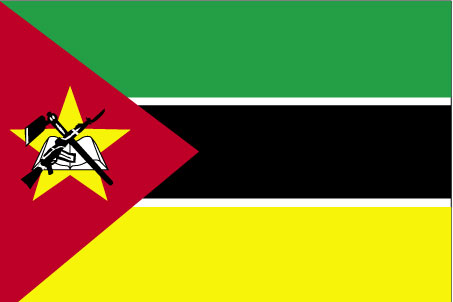
Mozambique
Mocambique
Declare Your Relationship to Mozambique
CountryReports Community
- Studying43
- From Mozambique0
- Mozambique heritage2
- Visited1
- Want to visit1
Customs and Culture
Customs and Culture
Cultural Attributes
Agriculture is the people's leading economic activity. Cashew trees and coconut palms grow throughout the country. Other farm products include cassava, cotton and sugar cane. While some use modern techniques most farming methods are simple and labor intensive. A slash and burn method of farming still exists. This involves cutting and burning trees to clear the land for planting. After a few years when the soil is no longer as fertile the farmers move on to a new plot of ground. While most Mozambicans are farmers some people catch fish or shrimp in the Indian Ocean.
About half the people practice traditional African religions, Many of the people are animist who believe that everything in nature has a soul.

The Spice Coast of Africa
Get More Customs and Culture
5 more cultural topics for members
Social Customs & Etiquette · Diet · Family · Dating Customs · Recreation
Every country, every topic, all activities & recipes
✓ Instant access on this device · ✓ No subscription
Holidays
Independence Day
6/25Independence Day
Dates of Interest
- September 25th
Celebrates Mozambique's traditional music and dance, particularly the Marrabenta genre, with performances, workshops, and cultural exhibitions.
How do people greet each other in Mozambique?
Greetings and introductions matter greatly; greet each person individually with a handshake and a friendly exchange of pleasantries, using respectful titles.
Do
- Greet each person individually with a handshake
- Use titles like 'Senhor', 'Senhora', or 'Dona' followed by the last name
- Greet older family members first
Good to know
- Respect for elders is deeply ingrained—let elders speak first and defer to their opinions
What are the dining customs in Mozambique?
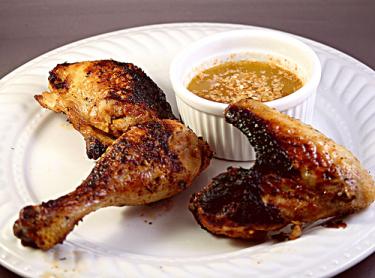
Maize (corn) is the staple food, with pork and wild pig prepared in sauces and shellfish and shrimp popular in coastal regions; hosts take great pride in hospitality.
Do
- Accept offered food and drinks with gratitude
- Try a bit of everything offered
- Compliment the cook on the meal
What etiquette should I follow when visiting a home in Mozambique?
Mozambicans value hospitality, respect for elders, and gift-giving; be polite, modest, and follow your host's lead on customs like removing shoes.
Do
- Bring a small gift such as flowers, chocolates, or a local handicraft
- Remove your shoes before entering if that's the custom—ask if unsure
- Show genuine interest in your hosts' lives and listen attentively
- Express gratitude at the end of your visit, and consider a follow-up thank-you
Don’t
- Don't give sharp objects like scissors, or black-colored items
- Don't raise controversial topics such as politics or religion unless invited
How should I dress in Mozambique?
Dress modestly and conservatively, especially in rural or traditional areas; urban and formal settings may follow Western styles, while traditional garments like the capulana are common at cultural events.
Do
- Choose neat, modest clothing covering shoulders and knees
- Wear lightweight, loose-fitting clothes for the warm climate
- Consider sandals or flip-flops and a hat for sun protection
Don’t
- Avoid revealing clothing or overly casual attire in traditional communities
Which gestures should I avoid in Mozambique?
Several gestures can cause offense; be mindful of your hands, feet, and head-related etiquette.
Don’t
- Don't point with your index finger—use an open hand instead
- Don't show the sole of your foot or shoe toward someone
- Don't use your left hand for gestures or handing objects
- Don't touch someone's head, which is considered sacred
Good to know
- Avoid thumbs down or vigorous head shaking—express disagreement verbally
- Avoid crossing your fingers, as it may be misunderstood
- Avoid any obscene or vulgar gestures
What are family roles like in Mozambique?
Families practice subsistence farming with traditional gender roles: men do the initial plowing, while women maintain the farm, gather the harvest, and handle childcare and homemaking.
Good to know
- Women are responsible for childcare, food preparation, and homemaking
What do people do for recreation in Mozambique?
Recreation is diverse, with football hugely popular alongside basketball, capoeira, traditional dancing, beach and water sports, hiking, cycling, and traditional games.
Good to know
- Football (soccer) is immensely popular and played informally and in leagues
- Enjoy beach activities like swimming, surfing, snorkeling, and fishing along the Indian Ocean coast
- Watch or join traditional dances performed at celebrations
- Try traditional games like mbube, marimba, and mankala
Last updated: 2026-07-12 · Sources: CountryReports
Photos of Mozambique
Photos of Mozambique


Travel and Tourism
Travel and Tourism
- Travel Alert Status
- Level 2: Exercise Increased Caution
- Currency
- metical (MZM)
- Time Difference
- UTC+2 (7 hours ahead of Washington, DC, during Standard Time)
- Airports
- 158
Read the full travel guide — health, safety, vaccinations, disease risk, sanitation, and transit details.
View full travel guideRecipes
Recipes
History
History
Historical Eras
Early Settlements
1 – 1498
Mozambique's earliest inhabitants were San hunter-gatherers, later displaced or absorbed by waves of Bantu-speaking farmers and ironworkers migrating southward through the Zambezi River valley between the first and fourth centuries AD. By the medieval period, Swahili and Arab traders had established prosperous coastal settlements and island entrepôts, integrating the region into Indian Ocean commerce. Numerous independent kingdoms and chieftaincies defined the interior, with no unified political entity encompassing the territory.
Portuguese Contact & Early Colony
1498 – 1752
Vasco da Gama's arrival in 1498 opened the Mozambican coast to Portuguese penetration, and from around 1500 trading posts and fortified feitorias became regular stops on the route to India. Portuguese influence expanded slowly inland through individual settlers called prazeiros, granted extensive autonomous landholdings, while Lisbon prioritized the more lucrative Indian and Brazilian trade. Gold and slave trading drove deeper interior penetration, though effective Portuguese administrative control remained shallow and contested.
Colonial Consolidation
1752 – 1932
Portugal formally declared Mozambique a crown colony in 1752, inaugurating intensified administrative and commercial exploitation including the slave trade, which was nominally abolished only in 1869. Following the Berlin Conference of 1884–85, Portugal negotiated firm borders with Britain and leased vast territorial concessions to private chartered companies — largely British-financed — that built railways, extracted resources, and supplied forced African labor to South African mines. Lourenço Marques became the colonial capital in 1902, symbolizing the colony's growing role as a service economy for neighboring British territories.
Late Colonial & Liberation War
1932 – 1975
Portugal dissolved the chartered companies in 1932 and imposed direct authoritarian rule, intensifying settler immigration — particularly after World War II — while systematically neglecting African education, economic development, and political rights. FRELIMO, founded in 1962 under Eduardo Mondlane, launched an armed liberation struggle in September 1964 that continued for a decade despite Mondlane's assassination in 1969. The April 1974 coup in Lisbon finally ended Portuguese colonial resolve, and Mozambique achieved independence on June 25, 1975.
One-Party State & Civil War
1975 – 1992
FRELIMO under President Samora Machel rapidly established a Soviet-aligned Marxist single-party state, nationalizing industries, suppressing religious institutions, and eliminating traditional authorities while supporting ANC and ZANU liberation movements regionally. Rhodesia and later apartheid South Africa responded by sponsoring RENAMO, fueling a devastating civil war that killed an estimated one million people, displaced millions more, and rendered the government powerless outside major urban centers. By 1983 Machel acknowledged the failure of socialist economics, and after his death in 1986 his successor Joaquim Chissano pursued reform, culminating in a new multiparty constitution in 1990 and a UN-brokered peace accord in 1992.
Democratic & Modern Era
1992 – present
The 1992 Rome General Peace Accords ended the civil war and set Mozambique on a path of multiparty democracy, with FRELIMO winning successive elections against RENAMO in a fragile but functioning political system. Severe flooding in 1999–2000 tested reconstruction, yet sound macroeconomic policies and growing foreign investment produced some of Africa's highest GDP growth rates in the early 2000s. Periodic RENAMO insurgencies and, from the late 2010s, a jihadist insurgency in Cabo Delgado province amid major natural gas discoveries continue to challenge the country's stability and long-term development.
Overview
Mozambique’s first inhabitants were San hunter and gatherers, ancestors of the Khoisani peoples. Between the first and fourth centuries AD, waves of Bantu-speaking peoples migrated from the north through the Zambezi River valley and then gradually into the plateau and coastal areas. The Bantu were farmers and ironworkers.
Every country, every topic, all activities & recipes
✓ Instant access on this device · ✓ No subscription
Timeline of Key Events
1 – 1000
Bantu-speaking people settle in Mozambique.
Bantu-speaking people settle in Mozambique.
1200 – 1400
Mozambique does not exist as a unified country, but as numerous kingdoms.
Mozambique does not exist as a unified country, but as numerous kingdoms. The region is divided with natural boundaries by the two great rivers: Zambezi and Limpopo. The area north of Zambezi river is dominated by the kingdoms of Makua, Yao, Maravi and others. These groups are again organised in several more or less integrated sub-groups. The Shona Empire rules between the two rivers and this area later again becomes known as the kingdom of Zimbabwe.
1498
Portuguese explorer Vasco da Gama reaches the shores of Mozambique with four ships.
Portuguese explorer Vasco da Gama reaches the shores of Mozambique with four ships.
1500
Vasco da Gama returns to Mozambique with more ships and weapons.
Vasco da Gama returns to Mozambique with more ships and weapons.
1506
Mozambique, Africa, was colonized by the Portuguese.
Mozambique, Africa, was colonized by the Portuguese.
1752
Portugal announces that Mozambique is now their colony. The slave trade starts.
Portugal announces that Mozambique is now their colony. The slave trade starts.
1869
Portugal officially abolishes slavery.
Portugal officially abolishes slavery, but the cruel trade with humans goes on in Mozambique until around 1900.
Read the full history profile — narrative overview, defining eras, and the complete timeline in one place.
View expanded historyInteresting Facts
Interesting Facts
Mozambique became a Portuguese center for the slave trade.
A birthday tradition in Mozambique is the child gets tapped on the arm for each birth year. Usually a big party which includes a formal dinner is held.
See every fact — trivia, oddities, and curious tidbits gathered from across the country.
View all interesting factsGeography and Environment
Geography and Environment
- Terrain
- mostly coastal lowlands, uplands in center, high plateaus in northwest, mountains in west
- Climate
- The climate in the plains and along the coast is warm and humid; the mountainous areas are cooler, although at times, equally wet. A hot, rainy season lasts from October to April. The rest of the year has a more moderate climate, with the coolest months in June and July. Rainfall is uneven and unpredictable; periodic droughts and floods occur. Mozambique experienced devastating floods in February and March 2000, causing loss of life and much destruction.
- Natural Hazards
- severe droughts; devastating cyclones and floods occur in central and southern provinces
- Current Environmental Issues
- a long civil war and recurrent drought in the hinterlands have resulted in increased migration of the population to urban and coastal areas with adverse environmental consequences; desertification; pollution of surface and coastal waters; elephant poaching for ivory is a problem
Read the full geography and environment profile — terrain, climate, natural resources, hazards, land use, and international agreements.
View full geographyPeople & Demographics
People & Demographics
Religion
Languages Spoken
Portuguese (official), indigenous dialects
- Portuguese
Population
- Population
- 33,897,354
- Population in Major Urban Areas
- MAPUTO (capital) 1.15 million; Matola 790,000
- Nationality Noun
- Mozambican(s)
- Ethnic Groups
- indigenous tribal groups 99.66% (Shangaan, Chokwe, Manyika, Sena, Makua, and others), Europeans 0.06%, Euro-Africans 0.2%, Indians 0.08%
Education
- Literacy Definition
- age 15 and over can read and write
Health Information
- Major Infectious Diseases — degree of risk
- very high
Life Expectancy
- Life Expectancy at Birth
- Life expectancy at birth in Mozambique stands at approximately 60 to 62 years, reflecting significant improvements over recent decades but remaining well below the global average of around 73 years. Men in Mozambique tend to live slightly shorter lives than women, with male life expectancy hovering near 59 to 60 years compared to roughly 62 to 64 years for females. This relatively low life expectancy is the product of several interconnected challenges. Mozambique continues to carry one of the highest burdens of infectious disease in the world, with HIV/AIDS remaining a leading cause of premature death. An estimated 11 to 13 percent of adults between the ages of 15 and 49 are living with HIV, a prevalence rate that places enormous strain on healthcare outcomes across generations. Malaria is equally significant, particularly in rural and low-lying coastal regions, where access to preventive measures and treatment remains limited. Maternal and child mortality rates contribute meaningfully to the overall life expectancy figure. The under-five mortality rate, while on a long-term declining trajectory, remains elevated compared to regional peers, driven by complications from preventable diseases, malnutrition, and limited access to skilled healthcare workers during childbirth. Infrastructure gaps are a defining factor. Mozambique has a very low density of physicians and nurses relative to its population, and healthcare facilities are concentrated in urban centers such as Maputo, leaving large rural populations underserved. The country also faces recurring natural disasters — including cyclones, flooding, and drought — which periodically devastate communities in the central and northern regions, disrupting food security and medical services. Tropical Cyclone Idai in 2019 and subsequent storms in the years that followed caused widespread displacement and set back health and development gains in vulnerable areas. Despite these pressures, Mozambique's life expectancy has risen considerably since the early 1990s, when it hovered near 40 years due to the combined effects of civil conflict, famine, and the early AIDS epidemic. Expanded vaccination programs, international health partnerships, antiretroviral therapy rollouts, and improvements in child nutrition have all contributed to this gradual but meaningful upward trend. Continued investment in public health infrastructure and primary care will be essential for sustaining further gains in the decades ahead.
- Infant Mortality Rate
- Mozambique faces significant challenges in infant health, with one of the higher infant mortality rates in sub-Saharan Africa. The infant mortality rate stands at approximately 55 to 60 deaths per 1,000 live births, meaning that roughly one in every 17 to 18 infants does not survive to their first birthday. This figure, while still concerning, represents a notable improvement over previous decades, when the rate exceeded 100 deaths per 1,000 live births in the early 2000s. Several factors contribute to the elevated infant mortality rate. Neonatal conditions — including birth asphyxia, preterm birth complications, and neonatal infections — account for a substantial portion of deaths in the first month of life. Beyond the neonatal period, malaria remains a leading killer of infants, given Mozambique's tropical climate and the widespread presence of the Anopheles mosquito. Diarrheal diseases and acute respiratory infections also claim many young lives, largely due to limited access to clean water, adequate sanitation, and healthcare facilities. Geographic disparities are pronounced. Infants born in rural and remote provinces such as Nampula, Zambezia, and Cabo Delgado face considerably higher risks than those born in urban centers like Maputo, where hospitals and trained healthcare workers are more accessible. Skilled attendance at birth and postnatal care visits remain relatively low in underserved areas, compounding the risk during the critical first weeks of life. Efforts to reduce infant mortality have included expanded vaccination programs targeting measles, polio, and other preventable diseases, as well as increased distribution of insecticide-treated mosquito nets. UNICEF and the World Health Organization have been active partners in supporting Mozambique's Ministry of Health in improving community-based health services and training community health workers known locally as Agentes Polivalentes Elementares (APEs). Despite measurable progress, Mozambique continues to fall short of global targets for child survival. Ongoing humanitarian crises in the north, including conflict and cyclone-related displacement, have reversed some gains in affected regions, highlighting the fragility of progress and the need for sustained international and domestic investment in maternal and infant health.
Read the full people and society profile — demographics, health, education, religion, languages, and notable people.
View full people and societyGovernment & Politics
Government & Politics
Country Identity
- Country Name
- Mozambique
- Full Country Name
- Republic of Mozambique
- Local - Long
- Republica de Mocambique
- Local - Short
- Mocambique
- Former Name
- Portuguese East Africa
Government Structure
- Government Type
- republic
- Legal System
- based on Portuguese civil law system and customary law
- Executive Branch
- chief of state: President Daniel CHAPO (since 15 January 2025) head of government: Prime Minister Benvinda LEVY (since 2025) cabinet: Council of Ministers appointed by the president elections: president elected by popular vote for a five-year term; election last held on 9 October 2024 (next to be held in 2029); prime minister appointed by the president election results: Daniel CHAPO elected president; percent of vote - Daniel CHAPO (FRELIMO) 65.2%, Venancio MONDLANE (Independent) 24.2%, Ossufo MOMADE (RENAMO) 3.2%
- Legislative Branch
- Unicameral Assembly of the Republic or Assembleia da República (250 seats; members are directly elected by popular vote on a secret ballot to serve five-year terms) Elections: last held on 9 October 2024 (next to be held in 2029) Election results: percent of vote by party - FRELIMO 65.2%, PODEMOS 24.0%, RENAMO 6.0%; seats by party - FRELIMO 171, PODEMOS 43, RENAMO 28, other 8
- Judicial Branch
- Supreme Court (the court of final appeal; some of its professional judges are appointed by the president and some are elected by the Assembly); other courts include an Administrative Court, customs courts, maritime courts, courts marshal, labor courts note: although the constitution provides for a separate Constitutional Court, one has never been established; in its absence the Supreme Court reviews constitutional cases
- Suffrage
- 18 years of age; universal
- Constitution
- 30-Nov-90
- Independence
- 25 June 1975 (from Portugal)
- National Holiday
- Independence Day, 25 June (1975)
Capital City
- Capital Name
- Maputo
- Capital - geographic coordinate
- 25 57 S, 32 35 E
- Capital Time Difference
- UTC+2 (7 hours ahead of Washington, DC, during Standard Time)
reputedly named after the Maputo River, which drains into Maputo Bay south of the city
Military
Branches: Mozambique Armed Defense Forces (Forcas Armadas de Defesa de Mocambique, FADM): Mozambique Army, Mozambique Navy (Marinha de Guerra de Mocambique, MGM), Mozambique Air Force (Forca Aerea de Mocambique, FAM)
Embassy / Diplomatic Mission
U.S. Embassy Maputo
Avenida Kenneth Kaunda, 193
Maputo, Mozambique
Telephone: 258 21 49 2797
Emergency after-hours telephone: 258 21 49 0723
Facsimile: 258 21 49 0448
Read the full government profile — flag symbolism, national anthem, and other national symbols.
View full government detailsEconomy
Economy
At independence in 1975, Mozambique was one of the world's poorest countries. Socialist mismanagement and a brutal civil war from 1977 to 1992 deepened its economic struggles.
Snapshot
- Currency Name and Code
- Mozambican Metical (MZM)
- GDP — official exchange rate
- $5,727,000,000 (USD)
- GDP Real Growth Rate
- 5%
- Gini Index
- 39.6
Every country, every topic, all activities & recipes
✓ Instant access on this device · ✓ No subscription
News & Weather
News & Weather
Current Weather
Latest News
Between two shores: The ‘Monhés,’ nationality, and a sense of belonging in Mozambique - Global Voices
Global Voices · 10h ago
Mozambique safari operator wins conservation award at COP17 - news - Mongabay
news - Mongabay · 2d ago
Communities and health authorities weigh tissue sampling and verbal autopsy for mortality surveillance in Mozambique - Bioengineer.org
Bioengineer.org · 11h ago
Mozambique: Humanitarian Snapshot, as of September 2026 [EN/PT] - ReliefWeb
ReliefWeb · 4d ago
Sustainable Energy for All Expands Flagship STEM Traineeship Programme to Nigeria and Mozambique - Sustainable Energy for All | SEforALL
Sustainable Energy for All | SEforALL · 4d ago
Oceaneering Sees Mozambique, Guyana Driving Offshore Growth in 2027 - Hart Energy
Hart Energy · 3d ago
Mozambique: Dingsheng Minerals may resume operations very soon - Club of Mozambique
Club of Mozambique · 4h ago
Mozambique's LNG Outlook Brightens as Projects Advance - Energy Intelligence
Energy Intelligence · 3d ago
News via Google News
Videos
Videos
1 curated YouTube videos.
Source: YouTube
Frequently Asked Questions
Frequently Asked Questions
What is the population of Mozambique?
What is the capital of Mozambique?
Where is Mozambique located?
What countries border Mozambique?
What religion is practiced in Mozambique?
What is the currency of Mozambique?
What language is spoken in Mozambique?
What is Mozambique known for?
What is the geography of Mozambique like?
Last reviewed 2026