
 English
 Español
 中文
中文 हिन्दी
 Français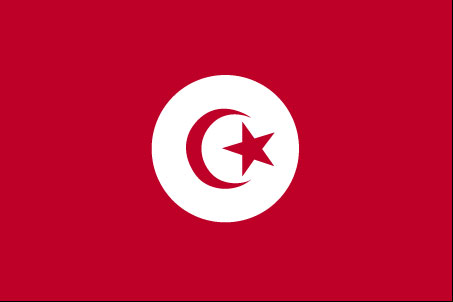
Tunisia
Tunis
Declare Your Relationship to Tunisia
CountryReports Community
- Studying6
- From Tunisia1
- Tunisia heritage2
- Visited0
- Want to visit1
Customs and Culture
Customs and Culture
Cultural Attributes
Most Tunisians are Muslim belonging to the Sunni school of Islam. Some Tunisians believe in evil spirits called jinn. To ward off the evil spirits they wear verses of the Koran on an amulet.

Land of Carthage and a Thousand Mosques
Get More Customs and Culture
5 more cultural topics for members
Social Customs & Etiquette · Diet · Family · Dating Customs · Recreation
Every country, every topic, all activities & recipes
✓ Instant access on this device · ✓ No subscription
Holidays
Independence Day
3/20Independence Day
Dates of Interest
- March 20th
Tabarka Jazz Festival (July): This music festival features jazz musicians from around the world, and takes place in the coastal town of Tabarka.
How do people greet each other in Tunisia?
Men shake hands with other men and women, while women shake hands or kiss on the cheeks with other women; male-female relations follow the Islamic code of modesty.
Do
- Shake hands when greeting
- Kiss on the cheeks with same-sex friends you haven't seen in a while
Don’t
- Don't kiss between men and women in public
What are the eating customs in Tunisia?
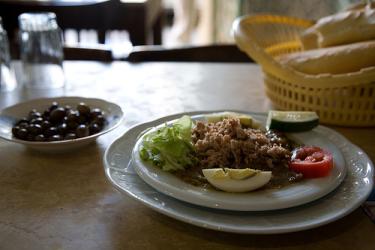
Couscous is the most popular dish, along with shish kebabs, chakachoukaia salad, and stews called tagines.
Don’t
- Don't expect pork or alcohol, as both are forbidden by the Islamic religious code
What should I know about visiting and hospitality in Tunisia?
Visiting family and friends is an important part of the culture, with hosts offering hospitality such as tea, coffee, refreshments, and sweets.
Do
- Bring a small gift like flowers, sweets, or a token of appreciation
- Engage in conversation about family, work, and current events
- Accept offered tea, coffee, or snacks
Good to know
- Exchanging gifts and sharing news helps strengthen relationships
How should I dress in Tunisia?
Western-style clothing is the norm, while traditional dress is common among the elderly and in rural areas; modest dress is expected when visiting homes.
Do
- Dress modestly and cover shoulders and knees when visiting someone's home
Don’t
- Don't wear revealing or provocative outfits
Good to know
- Traditional men's dress includes a chehia headdress, jalabiyya, and baggy pants
- Traditional women's dress includes a sifsari or, for rural women, a mellia
What is family life like in Tunisia?
The family usually consists of a father, mother, and their immediate children, and women are legally equal with men in custody, property, and divorce rights.
Good to know
- Marriages require the consent of both parties
- Minimum marriage age is 17 for women and 20 for men
What do people do for fun in Tunisia?
Football (soccer) is the national sport, alongside horseback and camel riding, enjoying Mediterranean beaches, and listening to Malouf music.
Good to know
- Socializing in hammams (public bathhouses) is popular, with separate hours for men and women
- Malouf music is played on lutes, guitars, violins, and drums
Last updated: 2026-07-12 · Sources: CountryReports
Photos of Tunisia
Photos of Tunisia


Travel and Tourism
Travel and Tourism
- Travel Alert Status
- Level 2: Exercise Increased Caution
- Currency
- Tunisian dinar (TND)
- Time Difference
- UTC+1 (6 hours ahead of Washington, DC during Standard Time)
- Airports
- 30
Read the full travel guide — health, safety, vaccinations, disease risk, sanitation, and transit details.
View full travel guideRecipes
Recipes
Mechouia (Grilled Vegetable Salad)
Side Dish
Main Dish
(Tunisian Couscous with Anise, Red Peppers and Garlic)
Main Dish
Tagine (Stew)
Main Dish
(Turmeric-Scented Potato Stew)
Side Dish
TUNISIAN EGGPLANT SALAD
Side Dish
Harissa (North African Hot Sauce)
Side Dish
Mechouia (Grilled Vegetable Salad)
History
History
Historical Eras
Phoenician & Carthage
814 BCE – 146 BCE
Phoenician settlers founded Carthage near present-day Tunis in 814 BCE, traditionally attributed to Queen Dido. Carthage grew into a dominant Mediterranean naval and commercial power, establishing colonies across North Africa, Sicily, and Iberia. Its rivalry with Rome culminated in the three Punic Wars, ending with the total destruction of Carthage by Roman forces in 146 BCE.
Roman & Vandal Rule
146 BCE – 647
Rome rebuilt Carthage as a provincial capital and Tunisia — known as Africa Proconsularis — became one of the empire's most productive agricultural regions, supplying grain to Rome. Roman culture, cities, and Christianity took deep root across the territory. Following the Western Empire's collapse, the Vandals seized the region in 429 CE before Byzantine forces recaptured it in 534, holding it until the Arab conquest.
Arab & Islamic Era
647 – 1574
Arab Muslim forces invaded in 647 CE, and by 670 the garrison city of Kairouan was founded, becoming a major center of Islamic scholarship and culture. Successive dynasties — the Aghlabids, Fatimids, Zirids, Hafsids, and others — ruled the region, overseeing a flourishing of Arab learning and architecture. The Aghlabids extended Muslim influence into Sicily and Malta, while the Hafsid sultanate presided over a prosperous, autonomous North African state.
Ottoman Tunisia
1574 – 1881
Ottoman forces incorporated Tunisia in 1574, though the territory retained considerable autonomy under local beys who increasingly governed as de facto independent rulers. The Husainid dynasty, established in 1705, cultivated a distinct Tunisian identity while maintaining nominal Ottoman suzerainty. Waves of Andalusian Moors and Jewish refugees from Spain enriched the cultural and demographic fabric of the region.
French Protectorate
1881 – 1956
French troops occupied Tunis in 1881 and imposed the Treaty of Bardo, making Tunisia a protectorate while preserving the Husainid bey as a figurehead. French settlers, infrastructure investment, and administrative control transformed the economy, but also fueled a growing nationalist movement. The Neo-Destour party, led by Habib Bourguiba, spearheaded the independence struggle, which succeeded on March 20, 1956.
Independent Tunisia
1956 – present
Tunisia declared independence in 1956 with Bourguiba as prime minister; the monarchy was abolished in 1957 and a republic established with a constitution adopted in 1959. Bourguiba's secular, modernizing rule gave way in 1987 to Zine El Abidine Ben Ali's authoritarian presidency. The 2011 Jasmine Revolution ousted Ben Ali, triggering the broader Arab Spring and leading to a new democratic constitution in 2014, though political instability has continued.
Overview
Modern Tunisians are the descendents of indigenous Berbers and of people from numerous civilizations that have invaded, migrated to, and been assimilated into the population over the millenia. Recorded history in Tunisia begins with the arrival of Phoenicians, who founded Carthage and other North African settlements in the 8th century BC. Carthage became a major sea power, clashing with Rome for control of the Mediterranean until it was defeated and captured by the Romans in 146 B.C.
Every country, every topic, all activities & recipes
✓ Instant access on this device · ✓ No subscription
Timeline of Key Events
814 BCE
Foundation of Carthage by Phoenician settlers led by Queen Dido.
Foundation of Carthage by Phoenician settlers led by Queen Dido.
670
The city of Kairouan in what is now Tunisia is founded.
The city of Kairouan in what is now Tunisia is founded.
868
Aghlabid dynasty of Tunisia takes Malta.
Aghlabid dynasty of Tunisia takes Malta.
1600
Tunisia becomes part of the Turkish Ottoman empire, but has a high degree of autonomy.
Tunisia becomes part of the Turkish Ottoman empire, but has a high degree of autonomy.
1881
French troops occupy Tunis.
French troops occupy Tunis. France controls economic and foreign affairs; Tunisia is a French protectorate from 1883.
1942
World War II.
World War II. German troops arrive to resist allied forces in Algeria. Allied forces drive German, Italian troops out in 1943.
1956
Tunisia becomes independent with Bourguiba as prime minister.
Tunisia becomes independent with Bourguiba as prime minister.
Read the full history profile — narrative overview, defining eras, and the complete timeline in one place.
View expanded historyInteresting Facts
Interesting Facts
There is a first celebration when the baby starts having teeth. The family meets and covers the baby with sweets and gifts are offered to the parents. When a child loses a tooth, it is kept in a little bottle to compare it with friends and classmates but no specific feast or gifts.
Dido, a princess of the Phoenician city-state of Tyre, is said to have been the first queen of Carthage. At the end of the Third Punic War, Carthage was destroyed and its inhabitants sold into slavery.
See every fact — trivia, oddities, and curious tidbits gathered from across the country.
View all interesting factsGeography and Environment
Geography and Environment
- Terrain
- mountains in north; hot, dry central plain; semiarid south merges into the Sahara
- Climate
- Tunisia's climate is temperate with generally mild winters and hot summers. The countryside is quite green in winter and spring; and becomes dry and brown in summer. Winters are are short, rainy, humid and chilly. The temperature is rarely below freezing. Snow falls in the northwestern mountain region. Summers in Tunis are characterized by high temperatures, occasionally reaching 120°F, with an average humidity of 60% to 70% during June, July, and August; evenings are pleasant. From mid-May until mid-October, the sky is usually cloudless and little rain falls. In an average year, only 120 days have any rainfall.
- Natural Hazards
- NA
- Current Environmental Issues
- toxic and hazardous waste disposal is ineffective and poses health risks; water pollution from raw sewage; limited natural fresh water resources; deforestation; overgrazing; soil erosion; desertification
Read the full geography and environment profile — terrain, climate, natural resources, hazards, land use, and international agreements.
View full geographyPeople & Demographics
People & Demographics
Religion
Languages Spoken
Arabic (official and one of the languages of commerce), French (commerce)
- Arabic
- French
- Tunisian (Arabic Dialect)
Population
- Population
- 12,048,736
- Population in Major Urban Areas
- TUNIS (capital) 790,000
- Nationality Noun
- Tunisian(s)
- Ethnic Groups
- Arab 98%, European 1%, Jewish and other 1%
Education
- Literacy Definition
- age 15 and over can read and write
Life Expectancy
- Life Expectancy at Birth
- Life expectancy at birth in Tunisia stands at approximately 76 years overall, with women typically outliving men by several years. Female life expectancy is around 78 years, while male life expectancy falls closer to 74 years. These figures place Tunisia among the higher-performing nations in the North Africa and Middle East region when it comes to population health outcomes. Tunisia's relatively strong life expectancy reflects decades of investment in public health infrastructure, expanded access to healthcare services, and improvements in maternal and child health. The country has maintained a functioning national health system with both public and private sector providers, and it has seen significant reductions in infant and child mortality rates since the mid-twentieth century. Vaccination programs, improved sanitation, and broader access to clean water have all contributed to longer lifespans across the population. Chronic non-communicable diseases, including cardiovascular disease, diabetes, and certain cancers, have become the leading causes of death as infectious disease burdens have declined. This epidemiological transition mirrors trends seen in many middle-income countries and places new demands on Tunisia's healthcare system in terms of long-term disease management and elderly care. Urbanization has played a role in health outcomes as well. Residents in major cities such as Tunis, Sfax, and Sousse generally have greater access to hospitals, specialists, and preventive care compared to those in rural interior regions, where health services can be more limited. This urban-rural divide remains one of the persistent challenges in achieving uniform health outcomes across the country. Tunisia's Human Development Index scores have historically reflected its above-average regional standing in health, education, and income, and life expectancy is a key driver of those scores. Continued investment in primary healthcare, management of chronic conditions, and reducing regional disparities will be important factors in sustaining and improving life expectancy figures in the coming decades.
- Infant Mortality Rate
- Tunisia has made significant and measurable progress in reducing infant mortality over recent decades, reflecting broader improvements in public health infrastructure, maternal care, and access to medical services. The infant mortality rate — defined as the number of deaths of infants under one year of age per 1,000 live births — stands at approximately 14 to 16 deaths per 1,000 live births in recent years, a figure that places Tunisia among the better-performing nations in the Middle East and North Africa (MENA) region. This represents a dramatic improvement from earlier decades. In the 1970s and 1980s, Tunisia's infant mortality rate was well above 80 per 1,000 live births. The sustained decline is attributed to several key factors: expansion of prenatal and postnatal care services, increased vaccination coverage, wider access to clean water and sanitation, improvements in maternal nutrition, and a rise in the proportion of births attended by skilled health personnel. Tunisia's national health system has played a central role in this progress. The country has invested in a network of primary health care centers distributed across urban and rural areas, helping to reduce disparities in care that historically contributed to higher infant death rates in remote regions. Immunization programs targeting diseases such as measles, diphtheria, and pertussis have achieved relatively high coverage rates, further lowering the risk of preventable infant deaths. Despite these achievements, regional inequalities persist. Rural and interior governorates tend to have higher rates of infant mortality compared to coastal urban centers such as Tunis, Sfax, and Sousse, where hospital infrastructure and specialist services are more concentrated. Poverty and limited transportation access remain barriers for some families in reaching adequate care. UNICEF and World Health Organization data consistently highlight Tunisia as a country that has met or exceeded regional benchmarks for reducing child mortality, though continued investment in rural health services and addressing socioeconomic disparities will be essential to sustaining this trajectory.
Read the full people and society profile — demographics, health, education, religion, languages, and notable people.
View full people and societyGovernment & Politics
Government & Politics
Country Identity
- Country Name
- Tunisia
- Full Country Name
- Tunisian Republic
- Local - Long
- Al Jumhuriyah at Tunisiyah
- Local - Short
- Tunis
Government Structure
- Government Type
- republic
- Legal System
- based on French civil law system and Islamic law; some judicial review of legislative acts in the Supreme Court in joint session
- Executive Branch
- chief of state: President Kais SAIED (since 23 October 2019) head of government: Prime Minister Ahmed HACHANI (since 1 August 2023) cabinet: Council of Ministers appointed by the president elections: president elected by popular vote for a five-year term; election last held 6 October 2024 (next to be held in 2029); prime minister appointed by the president election results: President Kais SAIED reelected for a second term; percent of vote - Kais SAIED 90.7%, Ayachi ZAMMEL 7.4%, Zouhair MAGHZAOUI 1.9%
- Legislative Branch
- Tunisia's legislature has undergone significant transformation following the 2022 constitutional referendum, which established a new unicameral parliament replacing the previous bicameral structure. The current legislature is the unicameral Assembly of the Representatives of the People (Majlis Nawwab al-Sha'b), consisting of 161 seats. Members are elected by popular vote to serve five-year terms. A second chamber, the National Council of Regions and Districts, was also established under the 2022 constitution as an upper advisory body, with 77 members representing Tunisia's regions and districts. Elections for the reconstituted Assembly of the Representatives of the People were held in December 2022, the first under the new constitutional framework. Voter turnout was notably low. The elections were largely boycotted by major opposition parties and civil society groups, resulting in a chamber composed predominantly of independents aligned with President Kais Saied's political agenda. A second round was held in January 2023 to resolve seats where no candidate achieved a majority in the first round. The 2022 constitution, approved by referendum in July 2022, significantly expanded presidential powers and reduced the legislature's role compared to the post-2011 democratic transition framework. The previous bicameral structure — consisting of the Chamber of Deputies and the Chamber of Advisors — had itself been suspended in July 2021 when President Saied invoked emergency powers and dissolved the sitting parliament.
- Judicial Branch
- Court of Cassation or Cour de Cassation
- Suffrage
- 20 years of age; universal
- Constitution
- 1 June 1959; amended 12 July 1988
- Independence
- 20 March 1956 (from France)
- National Holiday
- Independence Day, 20 March (1956)
Capital City
- Capital Name
- Tunis
- Capital - geographic coordinate
- 36 48 N, 10 11 E
- Capital Time Difference
- UTC+1 (6 hours ahead of Washington, DC during Standard Time)
three possibilities exist for the derivation of the name; originally a Berber settlement (earliest reference 4th century B.C.), the strategic site fell to the Carthaginians (Phoenicians) and the city could be named after the Punic goddess Tanit, since many ancient cities were named after patron deities; alternatively, the Berber root word "ens," which means "to lie down" or "to pass the night," may indicate that the site was originally a camp or rest stop; finally, the name may be the same as the city of Tynes, mentioned in the writings of some ancient authors
Military
Branches: Tunisian Armed Forces (Forces Armees Tunisiens, FAT): Tunisian Army (includes Tunisian Air Defense Force), Tunisian Navy, Republic of Tunisia Air Force (Al-Quwwat al-Jawwiya al-Jamahiriyah At'Tunisia)
Embassy / Diplomatic Mission
U.S. Embassy in Tunis
Les Berges du Lac
1053 Tunis, Tunisia
Telephone: (216) 71-107-000, Fax: (216) 71-964-360
Email: consulartunis@state.gov
Read the full government profile — flag symbolism, national anthem, and other national symbols.
View full government detailsEconomy
Economy
Tunisia operates a diversified, lower-middle-income economy that blends agriculture, manufacturing, energy, tourism, and services. With a gross domestic product of roughly 50 billion US dollars and a population of about 12 million, the country has long been considered one of…
Snapshot
- Currency Name and Code
- Tunisian Dinar (TND)
- GDP — official exchange rate
- $30,940,000,000 (USD)
- GDP Real Growth Rate
- 0.4%
- Gini Index
- 40
Every country, every topic, all activities & recipes
✓ Instant access on this device · ✓ No subscription
News & Weather
News & Weather
Current Weather
Latest News
Rare unrest flares in Tunisian capital as police clash with protesters - Al Jazeera
Al Jazeera · 1d ago
Tunisia military court sentences opposition figure Olfa Hamdi to four years in prison - Reuters
Reuters · 3d ago
Tunisia increases sentences over synagogue attack that killed two Jews - The Jerusalem Post
The Jerusalem Post · 3d ago
Tunisia jails 10 environmental activists over anti-pollution protests in Gabes - Africanews
Africanews · 3d ago
Tunisia targets 16% renewable power share in 2027, plans 1,600 MW of new capacity - Reuters
Reuters · 3d ago
Tunisian police clash with protesters in capital on day of heightened tensions - Reuters
Reuters · 1d ago
Tunisia jails opposition politician for four years over social media posts - Al Jazeera
Al Jazeera · 2d ago
Tunisians tell the story of their summer of shortages - France 24
France 24 · 47d ago
News via Google News
Videos
Videos
1 curated YouTube videos.
Source: YouTube
Frequently Asked Questions
Frequently Asked Questions
What is the population of Tunisia?
What is the capital of Tunisia?
Where is Tunisia located?
What countries border Tunisia?
What is the predominant religion in Tunisia?
What is the currency of Tunisia?
What languages are spoken in Tunisia?
What is Tunisia known for?
What cultural traditions are unique to Tunisia?
Last reviewed 2026