
 English
 Español
 中文
中文 हिन्दी
 Français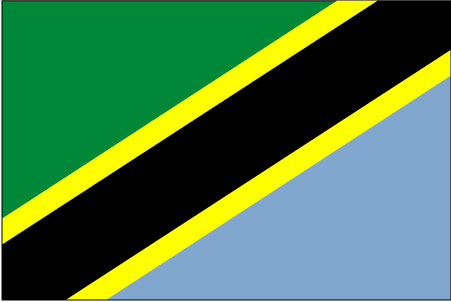
Tanzania
Declare Your Relationship to Tanzania
CountryReports Community
- Studying6
- From Tanzania0
- Tanzania heritage0
- Visited1
- Want to visit2
Customs and Culture
Customs and Culture
Cultural Attributes
Tanzania is a culturally diverse country with over 120 ethnic groups, each with its unique traditions and customs. Here are some unique cultural attributes of Tanzania:
Traditional Maasai culture: The Maasai are one of Tanzania's most famous ethnic groups, known for their traditional pastoralist way of life and distinctive clothing, which includes brightly colored shukas (cloths) and beaded jewelry.
Music and dance: Tanzania is known for its vibrant music and dance scene, which draws from traditional tribal music, as well as modern influences. Tanzanian music often features the use of drums, xylophones, and other traditional instruments.
Swahili culture: Tanzania is home to a large Swahili-speaking population, and Swahili culture has had a significant influence on the country's history and traditions. Swahili culture is characterized by its unique blend of African, Arab, and Indian influences, as well as its rich poetry, literature, and art.
Art and handicrafts: Tanzania has a thriving arts and handicrafts scene, with traditional crafts such as weaving, pottery, and beadwork still practiced in many rural communities. Tanzanian art often features bright colors and bold patterns and is inspired by the country's wildlife and landscapes.
Traditional medicine: Tanzania has a long history of traditional medicine, with many traditional healers still practicing in rural areas. Traditional medicine in Tanzania often involves the use of herbs, roots, and other natural remedies, as well as spiritual practices such as prayer and meditation.
Food culture: Tanzania's food culture is influenced by the country's diverse ethnic groups, as well as its history as a center of trade and commerce. Traditional Tanzanian cuisine includes dishes such as ugali (a type of porridge made from maize flour), nyama choma (grilled meat), and pilau (spiced rice).

Land of Kilimanjaro and the Serengeti
Social Customs & Etiquette
Greetings
Greetings are important because they show politeness and respect. The type of greeting offered depends on the person's status and age. A common Swahili greeting among friends is "Hujambo, habari gani" (How are you? What is your news?).
Greetings may vary according to the time of the day or the length of time since the last meeting. "Shikamoo" is used to greet respected persons. Young children are taught to greet older people by kissing their hands or kneeling down. Friends who meet after a long time may shake hands and kiss each other on both cheeks.
Gestures
In Tanzania, the right hand is thought to be "clean" and the left hand "unclean." Therefore, people use the right hand to eat or to give or receive gifts. The polite way to accept a gift is to place the left palm under the right palm, so that the right hand touches the gift first.
Visiting
Women gather to talk at the homes of their friends and relatives, while men usually meet friends in public places. Visiting is an important custom. Women often go visiting or receive visitors in the afternoons. Hospitality is prized in Tanzania, and friends or relatives who arrive from distant places are asked to stay overnight.
Personal Appearance
Dress in the Iringa region is predominantly Western-style, with khanga and kitenge clothes mixed in. Easily regarded by the female population as their most useful garment, they are worn by all ages and for all occasions. For the men, a light toga-like drape covers their lithe bodies. Spears, knives (some), and sticks are essential accessories.
The woman heavily load their necks, arms, legs, and ears with bead jewelry, resisting Western makeup and decorations. Only silver, bronze or copper, and glass beads are used by the Masai for jewelry. In fact, the beads are often given as barter for these valued metals.
The men smear ochre mixed with oils over their bodies and on their elaborately plaited hair. Young males approaching circumcision paint their faces white while dressing in black calico.
Diet
Tanzanians usually eat two main meals a day. It is common practice to pass a bowl of water for washing hands before and after the meal. A dish known as ugali, made from cassava, corn, sorghum or millet flour, is very common. It is often accompanied by a fish stew, vegetables or meat. People who live on the coast often prefer rice to ugali. A popular main dish is pilau, cinnamon-flavored rice.
Each cultural and religious group in Tanzania has its own eating customs. Some women do not eat any eggs or chicken. In some tribes, it is forbidden for a father-in-law to eat at the same table as his daughter-in-law. In others, the men in the family are not allowed to enter the kitchen. In some Muslim households, men and women do not eat together.
Tanzanians' tastes in food vary a great deal, but they are generally fond of goat, chicken, beef and lamb. Barbecued meat called mishikaki is very popular and is often eaten at restaurants and pubs. Plantains (cooking bananas) are common in the northern part of the country, the southern highlands and the region surrounding Lake Victoria. On the islands of Zanzibar and Pemba, people enjoy Swahili dishes, such as seafood seasoned with coconut milk and spices.

Family
In most ethnic groups there is a strict division of labor between men and women. Men are generally considered the heads of the household. Women perform most of the household chores. They also plant and tend crops, and fetch firewood and water. If both parents work outside the home, young children are usually looked after by a close relative. Children are expected to listen to their elders. In general, older people are respected in Tanzania and are often asked for advice.
Dating Customs
Young girls are considered marriageable when they reach their early teens. In rural areas, young people choose their spouses, often with the help of a matchmaker, who may be a friend or a relative.
Before marriage, a bridegroom's family must offer a bride price to the bride's family. The bride price usually consists of gifts, cattle, or money paid to the bride's parents, grandparents, and other close relatives.
Marriage is an important milestone in the lives of Tanzanian women. It defines a woman's rights to land, labor, and resources in the community. Great importance is also attached to motherhood. Adult women are often called by the name of their first child. For example, after giving birth to a boy called Juma or a girl called Christina, the mother may be called Mama Juma or Mama Christina.
Recreation
Young boys play soccer and girls run races or play a game called netball, which is similar to basketball. Poor children often make toys such as kites, dolls, toy cars, or playhouses out of items that they find at home. Hopscotch and dodgeball are very popular.
A common Tanzanian game called bao or mbao is enjoyed by young and old alike. It uses a board that has several circles carved into it and is played with small round objects, such as seeds, as markers. The object of this game is to capture an opponent's markers.
During their leisure time, Tanzanians enjoy visiting their friends and relatives. They gather at people's homes or chat while drinking tea or coffee from roadside vendors. Some Tanzanians enjoy picnics and going to the beach in their spare time. Traditional dances, such as “sindimba” and “mdundiko” are popular forms of recreation.
Student Life
Most children wake up to a light meal mostly consisting of either home made coffee or tea drink or porridge in some of the rural areas of the country. School kids in the urban towns such as Arusha, Dodoma and Daresalam are more likely to have breakfast consisting of tea and bread or the locally famous “mahamri” which is a local type of deep fried bun that is spiced in the Arabian style of cooking. It is important to note that some of the kids in the rural may be obliged to carry out some light duties in the mornings especially depending on the predominant economic activity in their respective areas before going to school. This may include taking the animals out of their sheds and tethering them strategically within the compound or other simple chores.
For students who reside in the towns, it is common for them to use public transport to go to school although some well established primary schools may have their own school transport. Depending on the distance from your home to the school, the students may either walk or board public buses in order to get to school. It is however important to note that the privately owned schools are usually more expensive.
The early traces of formal education were introduced by the German colonialists in the early days. The influence of these early education systems can still be felt although not to a great extent. The nature of class rooms vary a great deal depending on the location, it is much easier to find better class rooms in the urban areas. Aome rural schools may have less permanent structures due to the remote locations where electricity and other infrastructure are unavailable. The typical greeting between the children and teachers or their parents is usually in Kiswahili and the greeting is “Shikamoo” to which the kids respond “marahaba”. This greeting is similar in meaning to the common English greeting “how do you do”. The only difference is the fact that this greeting is only administered from the teacher or an older person to a younger person. The school class rooms are equipped with learning materials although some of the class rooms and learning materials may not be up to standard due to the economic situation. Computers and electronic learning materials are not a common feature in public primary schools since some of them especially in the rural areas do not have electricity to power the computers even if they were available. The only common electronics leaning equipment is the radio which the government uses to broadcast some educative programs during regular school lessons.
All school kids are expected to wear school uniform and to be on time when going to school. The school curriculum is taught in the Swahili language which happens to be the national and official language in Tanzania. The school runs for about eight hours every day with mid morning break and lunch breaks in between. Some private schools have a school feeding program which the students pay for together with the school fees. Public schools however are not able to provide regular school meals unless in special situations. The normal school day begins at eight in the morning and ends at four o’clock in the afternoon. The education system in Tanzania is based on a 7-4-2-3 system where the kids start school by attending their first seven years in pre-primary and primary school before proceeding to secondary level where the students spend four years before proceeding to A levels for another two years. It is after the two years at A level that students can seat for their three year course leading to the world recognized Advanced Certificate Examination. Tanzanians value education a great deal and scholars are widely respected across he country.
After leaving school in the evening, children are likely to get some time to carry out small chores in the home. It is a common practice that children take their showers after school and therefore this time is usually spent taking care of their personal needs such as showers or cleaning the uniform for the next day. This scenario is more prevalent in the rural areas since the urban school kid may be more privileged depending on their financial status.
Due to the tight schedule of the school children and considering the responsibilities that they have to carry out and the time available, children only find playing time in school during school breaks. Besides the school breaks, it may not be very easy for the children to get enough play time since after leaving school at about four in the afternoon, some of them may have to walk for thirty minutes to get home by which time they have to look after their personal care such as cleaning and taking a bath. Some children have to take bath at the stream while others may be forced to carry the water from the nearest spring in order to take a bath. The nearest spring may be a few meters down hill or even kilometers away depending on the area in question. In simple terms, the rural kid in Tanzania may only get free playing time on weekends. At such times, the kids engage in soccer games for boys and the girls may play some games such as hide and seek or rope skipping or racing.
During school days, most children in the rural simply find themselves reaching night fall without getting time to relax at all. The urban kid may be lucky to get some time if they are living nearer to their school. Since most schools will always give children some home work, most children will find time to do the home work only after finishing the domestic chores that they may be given and after having the evening meals. Evening meals may vary depending on the location of the children. Children living in urban areas are more likely to eat rice and meat or beans or the famous “Pilau’ meal which comprises of spiced rice tactfully mixed with meat and other numerous flavors. This is a national favorite in the country for any body who is financially stable. For the rural kids, the evening meal will be dictated by the crop in season in their particular areas. Beans and maize meal is a common staple food for most of Tanzanians and therefore the kids will most likely be treated to the same. It is also at these evening mealtimes that the family may find time to sit together and discuss any matters that may need the entire family’s attention.
Holidays
Union Day
4/26Independence
Tanganyika and Zanzibar
Dates of Interest
- August 8th
A harvest festival celebrated by the Chaga people in the Kilimanjaro region. It involves feasting, dancing, and the sharing of crops with neighbors and relatives.
How do people greet each other in Tanzania?
Greetings show politeness and respect, and the type used depends on the person's status and age. A common Swahili greeting among friends is "Hujambo, habari gani" (How are you? What is your news?).
Do
- Use "Shikamoo" to greet respected persons
- Adapt your greeting to the time of day and how long since you last met
- Shake hands and kiss both cheeks with friends you haven't seen in a long time
Good to know
- Young children greet older people by kissing their hands or kneeling down
What are the dining customs in Tanzania?
Tanzanians usually eat two main meals a day, and eating customs vary by cultural and religious group. Ugali (a flour porridge) with fish stew, vegetables or meat is very common, while coastal people often prefer rice.
Do
- Wash your hands from the bowl of water passed before and after the meal
- Try pilau (cinnamon-flavored rice) and mishikaki (barbecued meat)
- On Zanzibar and Pemba, enjoy Swahili seafood seasoned with coconut milk and spices
Good to know
- In some Muslim households men and women do not eat together
- In some tribes a father-in-law may not eat at the same table as his daughter-in-law
- In some families men are not allowed to enter the kitchen
What should I know about visiting and hospitality in Tanzania?
Visiting is an important custom and hospitality is highly prized; friends or relatives arriving from distant places are asked to stay overnight.
Good to know
- Women often go visiting or receive visitors in the afternoons
- Women gather to talk at homes, while men usually meet friends in public places
How do people dress in Tanzania?
Dress in the Iringa region is predominantly Western-style, mixed with khanga and kitenge clothes, which women regard as their most useful garment and wear for all occasions.
Good to know
- Maasai women wear heavy bead jewelry made of silver, bronze or copper, and glass beads
- Maasai men wear a light toga-like drape and smear ochre mixed with oils on their bodies and plaited hair
- Young males approaching circumcision paint their faces white and dress in black calico
What gestures should I be aware of in Tanzania?
The right hand is considered "clean" and the left hand "unclean," so the right hand is used to eat or to give and receive gifts.
Do
- Use your right hand to eat and to give or receive gifts
- To politely accept a gift, place your left palm under your right palm so the right hand touches the gift first
What is family life like in Tanzania?
Most ethnic groups have a strict division of labor, with men considered heads of the household and women performing household chores, tending crops, and fetching firewood and water. Older people are respected and often asked for advice.
Good to know
- Children are expected to listen to their elders
- If both parents work outside the home, a close relative usually looks after young children
- Adult women are often called by the name of their first child, such as Mama Juma
What do people do for fun in Tanzania?
Tanzanians enjoy visiting friends and relatives, chatting over tea or coffee, picnics, and the beach, while children play games like soccer, netball, hopscotch, and dodgeball.
Good to know
- Try bao (mbao), a board game enjoyed by young and old where you capture an opponent's markers
- Watch traditional dances such as "sindimba" and "mdundiko"
Last updated: 2026-07-12 · Sources: CountryReports
Photos of Tanzania
Photos of Tanzania
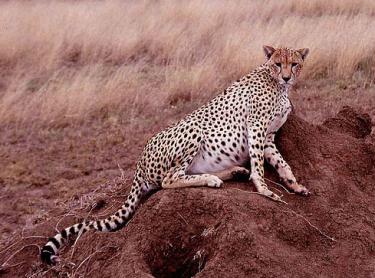
Cheetah
A fishing boat lies offshore in Zanzibar, Tanzania
Collecting seaweed in Zanzibar, Tanzania
Stone town doorway in Zanzibar, Tanzania
Scooters in Zanzibar, Tanzania
Boys on Kendwa Beach in Zanzibar, Tanzania
Kendwa Beach in Zanzibar, Tanzania
Boat off Kendwa Beach in Zanzibar, Tanzania
Sunset off Kendwa Beach in Zanzibar, Tanzania
Boat building on Kendwa Beach in Zanzibar, Tanzania
Low tide at Stone Town in Zanzibar, Tanzania
Night market in Stone Town, Zanzibar, Tanzania


Travel and Tourism
Travel and Tourism
- Travel Alert Status
- Level 2: Exercise Increased Caution
- Currency
- Tanzanian shilling (TZS)
- Time Difference
- UTC+3 (8 hours ahead of Washington, DC, during Standard Time)
- Airports
- 123
Read the full travel guide — health, safety, vaccinations, disease risk, sanitation, and transit details.
View full travel guideRecipes
Recipes
Coconut Bean Soup
Main Dish
Main Dish
Samaki Wa Kukuango (Steamed Whole Fish with Sauteed Onions)
Main Dish
Coconut Bean Soup
Side Dish
Ugali (Cornmeal Mush)
Side Dish
(Braised Cabbage)
Soup
Mtori Supu (Cream of Banana Soup)
Bread
Chapatis (Bread of East Africa)
Main Dish
PremiumCoconut Bean Soup
History
History
Historical Eras
Early Peoples & Coast
600 BCE – 1884
Bantu-speaking migrants settled the interior from around 600 BCE, gradually displacing earlier click-language peoples. Arab traders arrived on the coast by the 8th century CE, establishing prosperous Swahili city-states; Persian and Indian merchants followed. The Portuguese briefly seized coastal control after Vasco da Gama's 1498 voyage, but Omani Arabs expelled them by 1699 and dominated the coast and Zanzibar's lucrative slave trade into the 19th century.
German East Africa
1884 – 1919
Karl Peters and the German Colonisation Society secured treaties with interior chiefs beginning in 1884, and by 1891 the German government administered the territory directly from Dar es Salaam. Colonial rule brought cash crops, railways, and roads but provoked fierce resistance, most notably the Maji Maji Rebellion of 1905–07, in which an estimated 120,000 Africans perished. British, Belgian, and South African forces occupied German East Africa during World War I, ending German rule by 1916.
British Mandate & Trust
1919 – 1961
The League of Nations awarded Tanganyika to Britain as a mandate in 1919, converted to a UN trusteeship after World War II in 1946. British administration developed infrastructure and introduced limited African participation in governance, but nationalist sentiment grew steadily. Julius Nyerere founded the Tanganyika African National Union (TANU) in 1954, transforming it into the dominant vehicle for independence, which was achieved peacefully on December 9, 1961.
Independence & Union
1961 – 1985
Tanganyika gained independence in 1961 with Nyerere as prime minister, and Zanzibar followed in 1963 before a 1964 revolution merged the two into the United Republic of Tanzania. Nyerere pursued an African socialist policy, Ujamaa, collectivizing agriculture and nationalizing industry, with mixed economic results. Tanzania's regional role expanded dramatically when its forces expelled Idi Amin's invading Ugandan troops in 1978–79 and helped overthrow Amin's regime.
Multiparty Modern Era
1985 – present
Nyerere stepped down in 1985, and his successor Ali Hassan Mwinyi began liberalizing the economy, formally ending single-party rule in 1992. Subsequent multiparty elections have maintained relative stability, though challenges including poverty, corruption, and the absorption of refugees from regional conflicts persist. Tanzania has emerged as a significant East African economy, bolstered by tourism centered on Kilimanjaro, the Serengeti, and Zanzibar's historic Stone Town.
Overview
Northern Tanganyika’s famed Olduvai Gorge has provided rich evidence of the area’s prehistory, including fossil remains of some of humanity’s earliest ancestors. Discoveries suggest that East Africa may have been the site of human origin.
Little is known of the history of Tanganyika’s interior during the early centuries of the Christian era. The area is believed to have been inhabited originally by ethnic groups using a click-tongue language similar to that of Southern Africa’s Bushmen and Hottentots. Although remnants of these early tribes still exist, most were gradually displaced by Bantu farmers migrating from the west and south and by Nilotes and related northern peoples. Some of these groups had well-organized societies and controlled extensive areas by the time the Arab slavers, European explorers, and missionaries penetrated the interior in the first half of the 19th century.
The coastal area first felt the impact of foreign influence as early as the 8th century, when Arab traders arrived. By the 12th century, traders and immigrants came from as far away as Persia (now Iran) and India. They built a series of highly developed city and trading states along the coast, the principal one being Kibaha, a settlement of Persian origin that held ascendancy until the Portuguese destroyed it in the early 1500s.
The Portuguese navigator Vasco da Gama explored the East African coast in 1498 on his voyage to India. By 1506, the Portuguese claimed control over the entire coast. This control was nominal, however, because the Portuguese did not colonize the area or explore the interior. Assisted by Omani Arabs, the indigenous coastal dwellers succeeded in driving the Portuguese from the area north of the Ruvuma River by the early 18th century. Claiming the coastal strip, Omani Sultan Seyyid Said (l804-56) moved his capital to Zanzibar in 1841.
European exploration of the interior began in the mid-19th century. Two German missionaries reached Mt. Kilimanjaro in the 1840s. British explorers Richard Burton and John Speke crossed the interior to Lake Tanganyika in 1857. David Livingstone, the Scottish missionary-explorer who crusaded against the slave trade, established his last mission at Ujiji, where he was "found" by Henry Morton Stanley, an American journalist-explorer, who had been commissioned by the New York Herald to locate him.
German colonial interests were first advanced in 1884. Karl Peters, who formed the Society for German Colonization, concluded a series of treaties by which tribal chiefs in the interior accepted German "protection." Prince Otto von Bismarck’s government backed Peters in the subsequent establishment of the German East Africa Company.
In 1886 and 1890, Anglo-German agreements were negotiated that delineated the British and German spheres of influence in the interior of East Africa and along the coastal strip previously claimed by the Omani sultan of Zanzibar. In 1891, the German Government took over direct administration of the territory from the German East Africa Company and appointed a governor with headquarters at Dar es Salaam.
Although the German colonial administration brought cash crops, railroads, and roads to Tanganyika, European rule provoked African’s resistance, culminating in the Maji Maji rebellion of 1905-07. The rebellion, which temporarily united a number of southern tribes and ended only after an estimated 120,000 Africans had died from fighting or starvation, is considered by most Tanzanians to have been one of the first stirrings of nationalism.
German colonial domination of Tanganyika ended after World War I when control of most of the territory passed to the United Kingdom under a League of Nations mandate. After World War II, Tanganyika became a UN trust territory under British control. Subsequent years witnessed Tanganyika moving gradually toward self-government and independence.
In 1954, Julius K. Nyerere, a school teacher who was then one of only two Tanganyikans educated abroad at the university level, organized a political party--the Tanganyika African National Union (TANU). TANU-supported candidates were victorious in the Legislative Council elections of September 1958 and February 1959. In December 1959, the United Kingdom agreed to the establishment of internal self-government following general elections to be held in August 1960. Nyerere was named chief minister of the subsequent government.
In May l961, Tanganyika became autonomous, and Nyerere became Prime Minister under a new constitution. Full independence was achieved on December 9, 1961. Mr. Nyerere was elected President when Tanganyika became a republic within the Commonwealth a year after independence.
Zanzibar
An early Arab/Persian trading center, Zanzibar fell under Portuguese domination in the 16th and early 17th centuries but was retaken by Omani Arabs
Timeline of Key Events
600 BCE – 400 BCE
Bantu-speaking peoples move into the area east of Lake Victoria.
Bantu-speaking peoples move into the area east of Lake Victoria.
1498
Portuguese explorer Vasco da Gama visits Tanzanian coast.
Portuguese explorer Vasco da Gama visits Tanzanian coast.
1699
Portuguese ousted from Zanzibar by Omani Arabs.
Portuguese ousted from Zanzibar by Omani Arabs.
1867
British campaign against Zanzibar slave trade starts.
British campaign against Zanzibar slave trade starts.
1873
The Sultan of Zanzibar is forced to close his slave market by the British.
The Sultan of Zanzibar is forced to close his slave market by the British.
1884
German Colonisation Society begins to acquire territory on the mainland.
German Colonisation Society begins to acquire territory on the mainland.
1886
Germany and Britain sign an agreement giving Germany control of a portion of East Africa.
Germany and Britain sign an agreement giving Germany control of a portion of East Africa.
Read the full history profile — narrative overview, defining eras, and the complete timeline in one place.
View expanded historyInteresting Facts
Interesting Facts
Mount Kilimanjaro in Tanzania is the highest mountain in Africa.
Archaeological remains almost two million years old were found at Olduvai Gorge in the Serengeti Plain in northern Tanzania by Louis and Mary Leakey. They have given scientists many clues about how the earliest humans lived.
Jane Goodall, the famous zoologist, conducted her 30-year study of chimpanzees in Gombe Stream National Park, on the shores of Lake Tanganyika.
Jane Goodall, the famous zoologist, conducted her 30-year study of chimpanzees in Gombe Stream National Park, on the shores of Lake Tanganyika.
The bottom of Lake Tanganyika, at 358 metres below sea level, is the lowest point in Africa. This lake lies in the Great Rift Valley, a geological fault line that extends 9,700 kilometres, crossing the continent from Jordan to Mozambique.
The Stone Town of Zanzibar, with its whitewashed houses, carved doorways and winding lanes, looks much the same today as it did 200 years ago. It has been named a UNESCO World Heritage Site.
See every fact — trivia, oddities, and curious tidbits gathered from across the country.
View all interesting factsGeography and Environment
Geography and Environment
- Terrain
- plains along coast; central plateau; highlands in north, south
- Climate
- The coastal strip is tropical with high humidity; temperatures range from 80°F–95°F. The country’s annual rainfall averages 65 inches. The central plateau (altitude 3,000–4,000 feet; rainfall 2–30 inches), which covers much of the country, is hot and dry. The semi-temperate highlands (up to 6,000 feet; rainfall 40–100 inches) are fertile and cool. The islands of Zanzibar (rainfall 60-75 inches), 25 miles off the coast, are tropical and humid. Tanzania has two rainy and two dry seasons. During the long rains, from March through May, heavy downpours can occur daily (though it is not unusual to have as many as 2-3 days of sunny, pleasant weather between showers). The short rains come in November and December. Temperatures and humidity are high from November to April, and surface winds are moderate. June through September is pleasant and generally mild. Another weather phenomenon are the monsoon winds, or tradewinds, which blow in different directions during the year. From April to November, the winds can be quite cool.
- Natural Hazards
- flooding on the central plateau during the rainy season; drought
- Current Environmental Issues
- soil degradation; deforestation; desertification; destruction of coral reefs threatens marine habitats; recent droughts affected marginal agriculture; wildlife threatened by illegal hunting and trade, especially for ivory
Read the full geography and environment profile — terrain, climate, natural resources, hazards, land use, and international agreements.
View full geographyPeople & Demographics
People & Demographics
Religion
Languages Spoken
Kiswahili or Swahili (official), Kiunguju, English (official, Arabic, many local languages
- Swahili
- English
Population
- Population
- 63,298,550
- Population in Major Urban Areas
- DAR ES SALAAM (capital) 3.588 million
- Nationality Noun
- Tanzanian(s)
- Ethnic Groups
- mainland - native African 99% (of which 95% are Bantu consisting of more than 130 tribes), other 1% (consisting of Asian, European, and Arab); Zanzibar - Arab, native African, mixed Arab and native African
Education
- Literacy Definition
- age 15 and over can read and write Kiswahili (Swahili), English, or Arabic
Health Information
- Major Infectious Diseases — degree of risk
- very high
Life Expectancy
- Life Expectancy at Birth
- Life expectancy at birth in Tanzania has shown meaningful improvement over recent decades, reflecting advances in public health infrastructure, disease control, and maternal and child health programs. As of the most recent estimates, the average life expectancy at birth in Tanzania stands at approximately 67 to 68 years overall, with women typically outliving men by several years — women averaging around 69 to 70 years and men around 65 to 66 years. This represents a significant gain compared to earlier periods. In the 1990s, Tanzania's life expectancy dipped sharply due to the devastating impact of the HIV/AIDS epidemic, which pushed figures into the low 50s in some estimates. The subsequent rollout of antiretroviral therapy programs, increased access to HIV testing, and broader international health partnerships helped reverse this trend considerably through the 2000s and 2010s. Several factors continue to influence life expectancy in Tanzania. Malaria remains a leading cause of death, particularly among children under five, though national mosquito net distribution campaigns and artemisinin-based treatment programs have reduced mortality rates. Maternal mortality, while still elevated compared to global averages, has also declined as more women gain access to skilled birth attendants and prenatal care services. Infectious and communicable diseases account for a disproportionate share of deaths compared to high-income nations. Tuberculosis, pneumonia, and diarrheal diseases remain significant health burdens, especially in rural regions where healthcare facilities are sparse and access to clean water is not universal. Malnutrition also contributes to reduced resistance to illness, particularly among children in lower-income households. Tanzania's government, alongside international health organizations, continues to invest in expanding primary healthcare coverage, training medical personnel, and improving sanitation — all of which are expected to support further gains in life expectancy in the coming decades. Non-communicable diseases, including cardiovascular conditions and diabetes, are also receiving growing attention as Tanzania's health system matures and the disease burden gradually shifts. Despite ongoing challenges, the overall trend remains positive, and Tanzania's health outcomes reflect a country that has made measurable strides in improving the length and quality of life for its citizens.
- Infant Mortality Rate
- Tanzania's infant mortality rate has declined significantly over recent decades, reflecting ongoing improvements in public health infrastructure, maternal care, and access to essential medicines. As of the most recent available data, the infant mortality rate stands at approximately 32 to 35 deaths per 1,000 live births, a notable reduction from rates exceeding 90 per 1,000 live births recorded in the early 1990s. Despite this progress, Tanzania's infant mortality rate remains higher than the global average and substantially above the averages seen in high-income countries, where rates often fall below 5 deaths per 1,000 live births. The leading causes of infant death in Tanzania include neonatal complications such as birth asphyxia and prematurity, as well as preventable infectious diseases including malaria, pneumonia, and diarrheal illness. Malnutrition continues to be a compounding factor, weakening immune responses and increasing vulnerability in young children. Significant disparities exist between urban and rural areas. Infants born in rural regions face considerably higher mortality risks due to limited access to skilled birth attendants, functioning health facilities, and timely emergency obstetric care. The country's remote geography and underdeveloped road networks in certain zones can delay critical medical interventions during the perinatal period. The Tanzanian government, in partnership with international organizations such as UNICEF and the World Health Organization, has implemented programs targeting these disparities. Expanded vaccination coverage, community health worker initiatives, improved antenatal care attendance, and efforts to increase facility-based deliveries have all contributed to the downward trend. Programs addressing malaria prevention — including the distribution of insecticide-treated bed nets — have had a measurable impact on reducing infant deaths attributable to the disease. Continued progress will depend on sustained investment in rural health infrastructure, nutritional support programs for mothers and children, and further expansion of skilled birth attendance across all regions of the country. Tanzania's trajectory demonstrates that meaningful reductions in infant mortality are achievable with coordinated public health efforts, though significant work remains to meet internationally benchmarked targets.
Read the full people and society profile — demographics, health, education, religion, languages, and notable people.
View full people and societyGovernment & Politics
Government & Politics
Country Identity
- Country Name
- Tanzania
- Full Country Name
- United Republic of Tanzania
- Former Name
- United Republic of Tanganyika and Zanzibar
Government Structure
- Government Type
- republic
- Legal System
- based on English common law; judicial review of legislative acts limited to matters of interpretation; has not accepted compulsory ICJ jurisdiction
- Executive Branch
- chief of state: President Samia Suluhu HASSAN (since 19 March 2021); note - the president is both chief of state and head of government; President Hassan is the first woman to hold this office, having assumed the presidency following the death of President John MAGUFULI head of government: President Samia Suluhu HASSAN (since 19 March 2021); Prime Minister Kassim Majaliwa MAJALIWA (since 20 November 2015) note: Zanzibar elects a president who is head of government for matters internal to Zanzibar; Hussein Ali MWINYI has served as President of Zanzibar since November 2020 cabinet: Cabinet appointed by the president from among the members of the National Assembly elections: president and vice president elected on the same ballot by popular vote for five-year terms; election last held on 28 October 2020 (next to be held in October 2025); prime minister appointed by the president election results: John MAGUFULI reelected president in 2020; percent of vote - John MAGUFULI (CCM) 84.4%, Tundu LISSU (CHADEMA) 13.0%; following MAGUFULI's death in March 2021, Vice President Samia Suluhu HASSAN was sworn in as president in accordance with the constitution
- Legislative Branch
- Tanzania's legislature consists of a unicameral National Assembly, known as the Bunge, which serves as the supreme legislative body of the United Republic of Tanzania. As of the most recent constitutional arrangements, the National Assembly comprises 393 seats: 264 members elected by popular vote from single-member constituencies, 113 seats reserved for women appointed by political parties on a proportional basis, 5 seats allocated to members of the Zanzibar House of Representatives, 10 seats for presidential appointees, and 1 seat for the Attorney General. Members serve five-year terms. The Assembly enacts laws applicable to the entire United Republic of Tanzania, as well as laws pertaining specifically to the mainland. Zanzibar retains its own semi-autonomous legislature, the Zanzibar House of Representatives, which enacts legislation specific to the Zanzibar archipelago. The Zanzibar House of Representatives comprises 85 seats, with members elected by universal suffrage to serve five-year terms, along with additional seats reserved for women and presidential appointees. Elections for the National Assembly are held concurrently with presidential elections every five years. The most recent general elections were held in October 2020, in which the ruling Chama Cha Mapinduzi (CCM) party secured a dominant majority in the National Assembly. The main opposition parties include Chama cha Demokrasia na Maendeleo (CHADEMA) and the Civic United Front (CUF). In the Zanzibar House of Representatives, CCM similarly retained its majority following the 2020 elections. The next general elections are scheduled for 2025.
- Judicial Branch
- Permanent Commission of Enquiry (official ombudsman); Court of Appeal (consists of a chief justice and four judges); High Court (consists of a Jaji Kiongozi and 29 judges appointed by the president; holds regular sessions in all regions); District Courts; Primary Courts (limited jurisdiction and appeals can be made to the higher courts)
- Suffrage
- 18 years of age; universal
- Constitution
- 25 April 1977; major revisions October 1984
- Independence
- 26 April 1964; Tanganyika became independent 9 December 1961 (from UK-administered UN trusteeship); Zanzibar became independent 19 December 1963 (from UK); Tanganyika united with Zanzibar 26 April 1964 to form the United Republic of Tanganyika and Zanziba
- National Holiday
- Union Day (Tanganyika and Zanzibar), 26 April (1964)
Capital City
- Capital Name
- Dodoma; note - Dodoma was designated the national capital in 1996; Dar es Salaam, the original national capital, is the country's largest city and commercial center
- Capital - geographic coordinate
- 6 48 S, 39 17 E
- Capital Time Difference
- UTC+3 (8 hours ahead of Washington, DC, during Standard Time)
Dodoma, in the native Gogo language, means "it has sunk"; supposedly, one day during the rainy season, an elephant drowned in the area; the villagers in that place were so struck by what had occurred, that ever since the locale has been referred to as the place where "it (the elephant) sunk"
Military
Branches: Tanzania People's Defense Force (Jeshi la Wananchi la Tanzania, JWTZ): Army, Naval Wing (includes Coast Guard), Air Defense Command (includes Air Wing), National Service
Embassy / Diplomatic Mission
U.S. Embassy Dar es Salaam
686 Old Bagamoyo Road, Msasani
Dar es Salaam
Telephone: 255- (0)22- 229-4122
Facsimile: 255- (0) 22- 266-8247
Email: drsacs@state.gov (U.S. citizen services only)
Emergency after hours: U.S. citizen emergencies should call 255- (0)22- 229-4000 and select ‘1’ for an emergency operator.
Read the full government profile — flag symbolism, national anthem, and other national symbols.
View full government detailsEconomy
Economy
Tanzania has a mixed economy that has transitioned from socialist-oriented central planning, established under President Julius Nyerere's Ujamaa policies of the 1960s and 1970s, to a market-based system following liberalization reforms in the mid-1980s. It is one of East Africa's largest economies, with a gross domestic product of approximately 79 billion US dollars in 2023, and the country achieved lower-middle-income status in 2020.
Agriculture remains the backbone of the economy, employing around 65 percent of the workforce and contributing roughly a quarter of GDP. Key crops include coffee, cotton, cashew nuts, tobacco, cloves (particularly from Zanzibar), tea, and sisal. Maize, rice, and cassava are central to domestic food production. The sector is dominated by smallholder farmers and remains vulnerable to drought and fluctuating global commodity prices.
The services sector accounts for the largest share of GDP, driven significantly by tourism. Tanzania's natural attractions, including Mount Kilimanjaro, the Serengeti, Ngorongoro Crater, and the beaches of Zanzibar, draw over a million international visitors annually, generating substantial foreign exchange earnings. Tourism contributes approximately 17 percent of GDP and is a leading source of employment.
Mining is an expanding sector, with Tanzania being Africa's fourth-largest gold producer. The country also exports diamonds, tanzanite (a gemstone found nowhere else in the world), coal, and iron ore. Natural gas reserves discovered offshore have prompted significant investment, though development of liquefied natural gas export facilities has progressed slowly.
Manufacturing remains relatively modest, concentrated in food processing, textiles, cement, and beverages. Major infrastructure projects, including the Standard Gauge Railway, the Julius Nyerere Hydropower Project, and expansion of the port of Dar es Salaam, aim to position Tanzania as a regional trade and transit hub for landlocked neighbors such as Rwanda, Burundi, Uganda, and the Democratic Republic of the Congo.
Economic growth has averaged 6 to 7 percent annually over the past decade, though challenges persist, including poverty affecting roughly a quarter of the population, youth unemployment, limited access to electricity in rural areas, and reliance on rain-fed agriculture.
Snapshot
- Currency Name and Code
- Tanzanian Shilling (TZS)
- GDP — official exchange rate
- $12,120,000,000 (USD)
- GDP Real Growth Rate
- 5.5%
- Gini Index
- 38.2
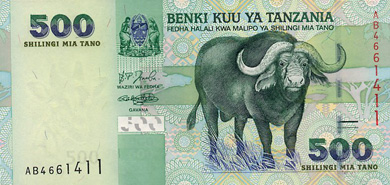
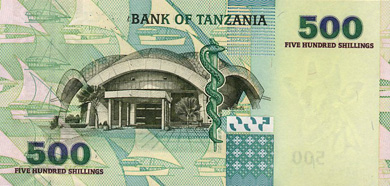
Banknotes
Budget & Public Finance
- Fiscal Year
- 1 July - 30 June
- Public Debt (% of GDP)
- 5%
- External Debt
- $7,950,000,000 (USD)
- Investment (% of GDP)
- 19.5%
- Economic Aid
- $1,200,000,000 (USD)
- Current Account Balance
- -$508,000,000 (USD)
Labor, Industry & Trade
- Labor Force by Occupation
- agriculture 80%; industry and services 20%
- Household Income — highest 10%
- 30.1%
- Industries
- agricultural processing (sugar, beer, cigarettes, sisal twine), diamond and gold mining, oil refining, shoes, cement, textiles, wood products, fertilizer, salt
- Agriculture Products
- coffee, sisal, tea, cotton, pyrethrum (insecticide made from chrysanthemums), cashew nuts, tobacco, cloves, corn, wheat, cassava (tapioca), bananas, fruits, vegetables; cattle, sheep, goats
- Export Commodities
- gold, coffee, cashew nuts, manufactures, cotton
- Export Partners
- UK 17.1%, France 16.2%, Japan 10.1%, India 6.7%, Netherlands 5.7%
- Import Commodities
- consumer goods, machinery and transportation equipment, industrial raw materials, crude oil
- Import Partners
- South Africa 10.8%, Japan 7.9%, India 6.1%, UAE 5.5%, Kenya 5.4%, UK 5.4%, US 5.2%, China 4.5%, Australia 4.1%, Bahrain 4%
Energy
- Oil Production
- 0 bbl/day
- Oil Consumption
- 47,000 bbl/day
- Oil Reserves
- 574,000,000 bbl/day
- Natural Gas Production
- 649,000,000 cu m
- Natural Gas Consumption
- 502,000,000 cu m
- Natural Gas Imports
- 0 cu m
- Natural Gas Exports
- 0 cu m
- Natural Gas Reserves
- 6,513,000,000,000 cu m
Communications
- Telephone System
- general assessment: telecommunications services are marginal; system operating below capacity and being modernized for better service; small aperture terminal (VSAT) system under construction domestic: fixed-line telephone network inadequate with less than 1 connection per 100 persons; mobile-cellular service, aided by multiple providers, is increasing rapidly and in 2011 exceeded a subscriber base of 50 telephones per 100 persons; trunk service provided by open-wire, microwave radio relay, tropospheric scatter, and fiber-optic cable; some links being made digital international: country code - 255; landing point for the EASSy fiber-optic submarine cable system linking East Africa with Europe and North America; satellite earth stations - 2 Intelsat (1 Indian Ocean, 1 Atlantic Ocean)
- Internet Country Code
- .tz
News & Weather
News & Weather
Current Weather
Latest News
Suspected poisoning kills 10 lions at wildlife reserve in Tanzania - CBS News
CBS News · 3d ago
Boat heading from Tanzania to Congo on Lake Tanganyika capsizes, leaving at least 41 dead - thehill.com
thehill.com · 4h ago
In Tanzania, the sea is moving inland – and taking livelihoods with it - UN News
UN News · 2d ago
Tanzanian opposition leader urges courageous verdict in treason trial - africanews.com
africanews.com · 1d ago
Ten Lions Found Dead in Shock Suspected Poison Plot - The Daily Beast
The Daily Beast · 3d ago
Several lions are dead after they were poisoned, wildlife refuge says - NJ.com
NJ.com · 3d ago
One country, two extraordinary escapes: British Airways announces new Tanzania routes and network update for summer 2027 - British Airways Media Centre
British Airways Media Centre · 7d ago
Ten lions found dead in suspected poisoning in Tanzania wildlife reserve - Sky News
Sky News · 4d ago
News via Google News
Videos
Videos
1 curated YouTube videos.
Source: YouTube
Frequently Asked Questions
Frequently Asked Questions
What is the population of Tanzania?
What is the capital of Tanzania?
Where is Tanzania located?
What countries border Tanzania?
What religion is practiced in Tanzania?
What is the currency of Tanzania?
What languages are spoken in Tanzania?
What is the geography of Tanzania like?
What is Tanzania known for?
Last reviewed 2026