
 English
 Español
 中文
中文 हिन्दी
 Français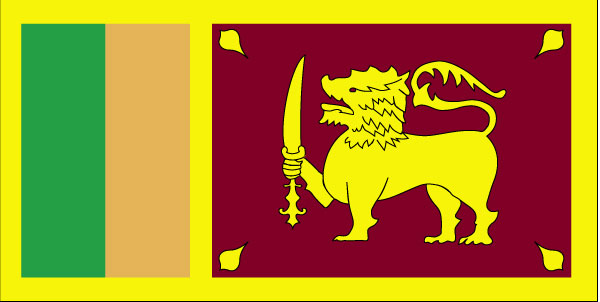
Sri Lanka
Declare Your Relationship to Sri Lanka
CountryReports Community
- Studying1
- From Sri Lanka1
- Sri Lanka heritage2
- Visited2
- Want to visit1
Customs and Culture
Customs and Culture
Cultural Attributes
While some groups seek independence, people generally seek peace, unity, and economic development for the entire population. Sri Lankans are usually friendly people and are tolerant of opinions and beliefs.

The Emerald Isle of Spice and Spirit
Get More Customs and Culture
5 more cultural topics for members
Social Customs & Etiquette · Diet · Family · Dating Customs · Recreation
Holidays
Independence Day
2/4Independence Day
Dates of Interest
- January
Celebrated by the Tamil community in January, Thai Pongal is a harvest festival dedicated to the Sun God. It involves cooking a special dish called "Pongal" and making offerings of thanks for the harvest.
How do people greet each other in Sri Lanka?
The traditional greeting is placing the palms together under the chin with a slight bow of the head, though a Western handshake is also acceptable.
Do
- Address acquaintances by their titles, which are important
- Use the palms-together gesture with a slight head bow
Good to know
- Different ethnic groups may greet each other in different ways
What are the dining and food customs in Sri Lanka?
Rice is the staple at all meals, accompanied by a variety of curries ranging from mild to very spicy, with tea served at most meals. Religion strongly shapes what people eat.
Do
- Accept refreshments offered by hosts
- Expect tea served with meals and as refreshment
Don’t
- Don't refuse refreshments offered by hosts, as it is impolite
Good to know
- Strict Buddhists eat no flesh; some include fish or eggs
- Hindus avoid beef and pork; Muslims avoid pork
- Sri Lankans eat little meat but many pulses and nuts
What etiquette should I follow when visiting Sri Lankans?
Sri Lankans are very hospitable and welcome even unexpected visits; when visiting, men and women often split into separate groups.
Do
- Remove your shoes when entering some homes and always at Buddhist temples
Good to know
- Men may play bridge while women chat, sing, and weave outside
- A caste system still exists, so someone you invite to sit may be reluctant to do so
How should I dress in Sri Lanka?
Western-style clothing is popular alongside traditional dress, with two basic styles for men and women.
Good to know
- Women may wear a saree with a tight blouse
- Men may wear loose-fitting pants with a long shirt, or a sarong (lunghi) wrapped at the waist
What gestures are important to know in Sri Lanka?
The head is considered the most sacred part of the body, and images of Buddha are sacred, so certain gestures must be respected.
Do
- Pass objects with the right hand or both hands
- Beckon by waving all fingers with the palm facing down
Don’t
- Don't touch a person's head
- Don't point with your foot or your index finger
- Don't touch, lean on, or sit on any image of Buddha
Good to know
- People often smile instead of saying thank you
- Women are forbidden to touch a Buddhist monk
- Western women should avoid smiling too much, as it may be seen as flirtation
What is family life like in Sri Lanka?
The family is the central social unit; the wife manages the household and has influence in all family matters, and the elderly receive deep respect.
Do
- Show deep respect to the elderly and yield to their counsel
Good to know
- Children expect to care for their elderly parents if needed
- Arranged marriages still prevail, though individual choice occurs in Westernized circles
- The minimum marriage age for women is 18, except among Muslims who follow customary practices
What do people do for recreation in Sri Lanka?
Cricket is the country's most popular sport, and people commonly spend leisure time with family, at school events, or in religious observances.
Good to know
- "Elle" is Sri Lanka's version of baseball, played with a bamboo stick
- Women enjoy badminton and netball
- Children play soccer, volleyball, cricket, hide-and-seek, dice, and string games
- Families near the ocean enjoy going to the beach
Last updated: 2026-07-12 · Sources: CountryReports
Photos of Sri Lanka
Photos of Sri Lanka
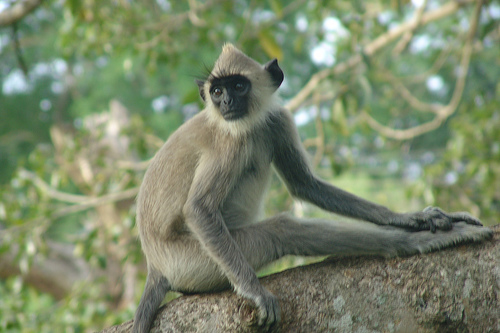
Monkeys are everywhere in Sri Lanka
Tangalla beach on the southern coast
Tamil woman picks tea leaves near Ella
Ruvanwelisiya Dagoba
Old Dutch fort at Galle, Sri Lanka
Dagoba at Mihintale, Sri Lanka
Buddhist site at Mihintale
Ancient building at Polonnaruwa
Ancient carvings at Polonnaruwa
Cave No 4 at Dambulla
Wild elephant near Habarana
Farm in the countryside


Travel and Tourism
Travel and Tourism
- Travel Alert Status
- Level 2: Exercise Increased Caution
- Currency
- Sri Lankan rupee (LKR)
- Time Difference
- UTC+5.5 (10.5 hours ahead of Washington, DC, during Standard Time)
- Climate
- Monsoons produce two rainy seasons. The southwest monsoon lasts roughly from May to September. During this period, the southwestern part of the island, including Colombo, receives much of its average annual rainfall of 100 inches. The northeast monsoon, from about October or November through February, provides the northern and eastern parts of the island virtually all their average annual rainfall of 60 inches. Monsoon showers can become torrential in the Colombo area. December through March generally proves the driest period.
- Airports
- 14
Read the full travel guide — health, safety, vaccinations, disease risk, sanitation, and transit details.
View full travel guideRecipes
Recipes
History
History
Historical Eras
Ancient Kingdoms
500 BCE – 1070
Sinhalese settlers from northern India established the island's first great civilization, centered on Anuradhapura from around 200 BCE. Buddhism, introduced in the 3rd century BCE during the reign of the Mauryan emperor Ashoka's emissary Mahinda, became the cornerstone of Sinhalese identity and statecraft. The era was defined by sophisticated hydraulic engineering, Buddhist chronicle-writing, and dynastic conflicts with South Indian invaders, including the legendary King Dutugamunu's victory over the Chola king Elara around 161 BCE.
Polonnaruwa & Decline
1070 – 1400
Following Chola occupation, King Vijayabahu I reunified the island and shifted the capital to Polonnaruwa, which flourished under Parakramabahu I in the 12th century as a center of Buddhist art, architecture, and expansive irrigation works. The kingdom fragmented after 1200 amid internal strife and further South Indian incursions. By the 14th century, a Tamil dynasty established the Kingdom of Jaffna in the north, permanently altering the island's political and ethnic geography.
European Colonial Era
1505 – 1815
Portuguese arrival in Colombo in 1505 initiated over three centuries of European dominance, during which successive colonial powers suppressed Buddhism and promoted Christianity. The Dutch expelled the Portuguese in 1658, controlling coastal territories until Britain assumed power in 1796 and declared Ceylon its first Crown Colony in 1802. British forces completed their conquest with the fall of the Kingdom of Kandy in 1815, extinguishing the last independent Sinhalese polity.
British Crown Colony
1815 – 1948
Under consolidated British rule, Ceylon was unified administratively and transformed economically through plantation agriculture, with Tamil laborers imported from South India to work tea and rubber estates. The British progressively extended political participation, culminating in universal suffrage under the Donoughmore Constitution of 1931. A growing nationalist movement leveraging these constitutional reforms ultimately secured full independence for Ceylon on February 4, 1948.
Ceylon / Early Independence
1948 – 1983
Independent Ceylon maintained democratic governance through successive elected governments, though communal tensions escalated sharply after Solomon Bandaranaike's 1956 election on a platform of Sinhalese nationalism and the Official Language Act, which marginalized Tamil speakers. The country adopted a new republican constitution in 1972 and renamed itself Sri Lanka. Tamil political grievances deepened through this period, leading to the formation of the Liberation Tigers of Tamil Eelam in 1976.
Civil War & Modern Era
1983 – present
The anti-Tamil pogrom of July 1983 ignited a devastating civil war between the Sri Lankan state and the LTTE, marked by four escalating Eelam Wars, suicide bombings, and the assassination of President Premadasa in 1993. The government declared military victory over the LTTE in May 2009, ending 26 years of armed conflict at enormous human cost. Post-war Sri Lanka has grappled with reconciliation, accountability for wartime abuses, economic development, and the political turbulence that culminated in the popular uprising of 2022.
Overview
Reclining and standing Buddhas at Polonnaruwa
Timeline of Key Events
161 BCE – 137
The legendary King Duthagamani ruled Sri Lanka.
The legendary King Duthagamani ruled Sri Lanka.
993
The south Indian Cola Empire captured Anuradhapura (Sri Lanka).
The south Indian Cola Empire captured Anuradhapura (Sri Lanka).
1505
Portuguese arrive in Colombo, marking beginning of European interest.
Portuguese arrive in Colombo, marking beginning of European interest.
1658
Dutch force out Portuguese.
Dutch force out Portuguese and establish control over whole island except central kingdom of Kandy.
1796
Britain begins to take over island.
Britain begins to take over island.
1800 – 1900
Tamil people of southern India were taken by the British.
Tamil people of southern India were taken by the British to Ceylon to clear the jungles and work plantations.
1931
British grant the right to vote and introduce power sharing with Sinhalese-run cabinet.
British grant the right to vote and introduce power sharing with Sinhalese-run cabinet.
Read the full history profile — narrative overview, defining eras, and the complete timeline in one place.
View expanded historyInteresting Facts
Interesting Facts
When a child loses a tooth they close their eyes and say “Squirrel, squirrel, take this tooth and give me a new one.” Then they throw it on the roof and run into the house without looking.
Sri Lanka has the world's highest rate of suicide with 47 per 1,000 people.
The oldest Prime Minister Sirimavo Bandaranaike was 78 years old when he was elected.
Elephants are an important part of Sri Lankan culture. They are decorated for religious processions called peraheras, and their images appear in temples and palaces. Some elephants are still used for work. Others are in danger of extinction due to uncontrolled expansion of agriculture and development.
See every fact — trivia, oddities, and curious tidbits gathered from across the country.
View all interesting factsGeography and Environment
Geography and Environment
- Terrain
- mostly low, flat to rolling plain; mountains in south-central interior
- Climate
- Monsoons produce two rainy seasons. The southwest monsoon lasts roughly from May to September. During this period, the southwestern part of the island, including Colombo, receives much of its average annual rainfall of 100 inches. The northeast monsoon, from about October or November through February, provides the northern and eastern parts of the island virtually all their average annual rainfall of 60 inches. Monsoon showers can become torrential in the Colombo area. December through March generally proves the driest period.
- Natural Hazards
- occasional cyclones and tornadoes
- Current Environmental Issues
- deforestation; soil erosion; wildlife populations threatened by poaching and urbanization; coastal degradation from mining activities and increased pollution; freshwater resources being polluted by industrial wastes and sewage runoff; waste disposal; air pollution in Colombo
Read the full geography and environment profile — terrain, climate, natural resources, hazards, land use, and international agreements.
View full geographyPeople & Demographics
People & Demographics
Religion
Languages Spoken
Sinhala (official) 74%, Tamil (national language) 18%, other 8%. English is widely understood.
- Sinhala
- Sinhala
- Tamil
Population
- Population
- 22,156,000
- Population in Major Urban Areas
- COLOMBO (capital) 693,000; Sri Jayewardenepura Kotte (legislative capital) 126,000
- Nationality Noun
- Sri Lankan(s)
- Ethnic Groups
- Sinhalese 74%, Tamil 18%, Moor 7%, Burgher, Malay, and Vedda 1%
Education
- Literacy Definition
- age 15 and over can read and write
Health Information
- Life Expectancy at Birth
- Life expectancy at birth in Sri Lanka stands at approximately 76 years overall, with women living to around 79 years and men to about 73 years. These figures place Sri Lanka among the highest-performing nations in South Asia for longevity, reflecting decades of sustained investment in public health infrastructure, education, and primary care services. Sri Lanka's relatively strong life expectancy outcomes are rooted in its long-standing commitment to free, universal healthcare. The country established a public health system in the mid-twentieth century that expanded access to maternal and child health services, immunization programs, and communicable disease control across both urban and rural areas. As a result, infant and child mortality rates declined sharply over the following decades, contributing significantly to improved average lifespans. The prevalence of non-communicable diseases, including cardiovascular disease, diabetes, and cancer, has grown in recent years as the population ages and urbanization increases. These conditions now represent the leading causes of death, and the government has responded with national programs targeting screening, early detection, and lifestyle education. Road traffic accidents and mental health concerns are also recognized as emerging public health challenges that affect overall mortality trends. Sri Lanka's relatively high female life expectancy reflects strong rates of female literacy and educational attainment, which correlate closely with better health outcomes for women and their families. Access to prenatal care is widespread, and maternal mortality rates have fallen to among the lowest in the region. Rural populations, particularly in the Northern and Eastern provinces, have historically faced disparities in healthcare access partly due to the prolonged civil conflict that ended in 2009. Ongoing efforts to rehabilitate and expand health infrastructure in these areas have gradually narrowed the gap between regional life expectancy outcomes. However, the severe economic crisis that struck Sri Lanka in 2022 placed considerable strain on the public health system, disrupting the supply of essential medicines and medical equipment, which poses a longer-term risk to the health gains the country has achieved. Overall, Sri Lanka's life expectancy at birth serves as a marker of the country's broader social development, demonstrating that strong public health commitments can produce outcomes comparable to much wealthier nations, even as new economic and demographic pressures test the resilience of that system.
- Major Infectious Diseases — degree of risk
- high
- Infant Mortality Rate
- Sri Lanka has achieved remarkably low infant mortality rates by South Asian standards, reflecting decades of investment in public health infrastructure, maternal care, and universal healthcare access. The country's infant mortality rate stands at approximately 6 to 7 deaths per 1,000 live births, a figure that places it among the best-performing nations in the broader Asia-Pacific region and far ahead of many of its regional neighbors. This achievement is especially notable given Sri Lanka's status as a lower-middle-income country. The government has long prioritized accessible healthcare through a network of public hospitals, maternity clinics, and trained midwives operating at the community level. Nearly all births in Sri Lanka take place in health facilities attended by skilled medical personnel, which dramatically reduces risks associated with complications during delivery. Immunization programs have played a central role in keeping infant mortality low. Coverage rates for vaccines targeting diseases such as measles, polio, diphtheria, and tuberculosis consistently exceed 90 percent nationwide, protecting newborns and young infants from conditions that remain leading causes of infant death in many developing countries. Breastfeeding promotion, oral rehydration therapy, and community-based nutrition programs have further contributed to infant survival. Sri Lanka's relatively high literacy rate among women, particularly in maternal health education, has also supported better newborn care practices at the household level. Despite these successes, disparities do exist between urban and rural areas, as well as among certain estate sector communities where access to healthcare services has historically lagged behind national averages. The government and international organizations have directed targeted programs toward these populations to help close the gap. Compared to the global average infant mortality rate of roughly 27 deaths per 1,000 live births, Sri Lanka's performance reflects a public health model that many development experts point to as a benchmark for low-income and lower-middle-income countries seeking to improve child survival outcomes.
Life Expectancy
- Life Expectancy at Birth
- Life expectancy at birth in Sri Lanka stands at approximately 76 years overall, with women living to around 79 years and men to about 73 years. These figures place Sri Lanka among the highest-performing nations in South Asia for longevity, reflecting decades of sustained investment in public health infrastructure, education, and primary care services. Sri Lanka's relatively strong life expectancy outcomes are rooted in its long-standing commitment to free, universal healthcare. The country established a public health system in the mid-twentieth century that expanded access to maternal and child health services, immunization programs, and communicable disease control across both urban and rural areas. As a result, infant and child mortality rates declined sharply over the following decades, contributing significantly to improved average lifespans. The prevalence of non-communicable diseases, including cardiovascular disease, diabetes, and cancer, has grown in recent years as the population ages and urbanization increases. These conditions now represent the leading causes of death, and the government has responded with national programs targeting screening, early detection, and lifestyle education. Road traffic accidents and mental health concerns are also recognized as emerging public health challenges that affect overall mortality trends. Sri Lanka's relatively high female life expectancy reflects strong rates of female literacy and educational attainment, which correlate closely with better health outcomes for women and their families. Access to prenatal care is widespread, and maternal mortality rates have fallen to among the lowest in the region. Rural populations, particularly in the Northern and Eastern provinces, have historically faced disparities in healthcare access partly due to the prolonged civil conflict that ended in 2009. Ongoing efforts to rehabilitate and expand health infrastructure in these areas have gradually narrowed the gap between regional life expectancy outcomes. However, the severe economic crisis that struck Sri Lanka in 2022 placed considerable strain on the public health system, disrupting the supply of essential medicines and medical equipment, which poses a longer-term risk to the health gains the country has achieved. Overall, Sri Lanka's life expectancy at birth serves as a marker of the country's broader social development, demonstrating that strong public health commitments can produce outcomes comparable to much wealthier nations, even as new economic and demographic pressures test the resilience of that system.
- Infant Mortality Rate
- Sri Lanka has achieved remarkably low infant mortality rates by South Asian standards, reflecting decades of investment in public health infrastructure, maternal care, and universal healthcare access. The country's infant mortality rate stands at approximately 6 to 7 deaths per 1,000 live births, a figure that places it among the best-performing nations in the broader Asia-Pacific region and far ahead of many of its regional neighbors. This achievement is especially notable given Sri Lanka's status as a lower-middle-income country. The government has long prioritized accessible healthcare through a network of public hospitals, maternity clinics, and trained midwives operating at the community level. Nearly all births in Sri Lanka take place in health facilities attended by skilled medical personnel, which dramatically reduces risks associated with complications during delivery. Immunization programs have played a central role in keeping infant mortality low. Coverage rates for vaccines targeting diseases such as measles, polio, diphtheria, and tuberculosis consistently exceed 90 percent nationwide, protecting newborns and young infants from conditions that remain leading causes of infant death in many developing countries. Breastfeeding promotion, oral rehydration therapy, and community-based nutrition programs have further contributed to infant survival. Sri Lanka's relatively high literacy rate among women, particularly in maternal health education, has also supported better newborn care practices at the household level. Despite these successes, disparities do exist between urban and rural areas, as well as among certain estate sector communities where access to healthcare services has historically lagged behind national averages. The government and international organizations have directed targeted programs toward these populations to help close the gap. Compared to the global average infant mortality rate of roughly 27 deaths per 1,000 live births, Sri Lanka's performance reflects a public health model that many development experts point to as a benchmark for low-income and lower-middle-income countries seeking to improve child survival outcomes.
Read the full people and society profile — demographics, health, education, religion, languages, and notable people.
View full people and societyGovernment & Politics
Government & Politics
Country Identity
- Country Name
- SriLanka
- Full Country Name
- Democratic Socialist Republic of Sri Lanka
- Former Name
- Serendib, Ceylon
Government Structure
- Government Type
- republic
- Legal System
- a highly complex mixture of English common law, Roman-Dutch, Muslim, Sinhalese, and customary law; has not accepted compulsory ICJ jurisdiction
- Executive Branch
- chief of state: President Anura Kumara DISSANAYAKE (since 23 September 2024); the president is considered both the chief of state and head of government head of government: President Anura Kumara DISSANAYAKE (since 23 September 2024); the president is considered both the chief of state and head of government cabinet: Cabinet appointed by the president in consultation with the prime minister elections: President elected by popular vote for a five-year term; election last held on 21 September 2024 (next to be held in 2029) election results: Anura Kumara DISSANAYAKE elected president in the first election conducted under a preferential voting system; percent of first-preference vote - Anura Kumara DISSANAYAKE 42.3%, Sajith PREMADASA 32.8%, Ranil WICKREMESINGHE 17.3%, other 7.6%
- Legislative Branch
- Unicameral Parliament (225 seats; members elected by popular vote on the basis of a proportional representation system by electoral district to serve five-year terms) Elections: last held on 14 August 2024 (next to be held by 2029) Election results: percent of vote by party or electoral alliance - NPP/JVP 61.56%, SJB 18.17%, SLPP 2.77%, ITAK 2.16%, UNP 0.67%, others 14.67%; seats by party - NPP/JVP 159, SJB 40, ITAK 8, SLPP 3, SLFP 3, UNP 1, others 11
- Judicial Branch
- Supreme Court; Court of Appeals; judges for both courts are appointed by the president
- Suffrage
- 18 years of age; universal
- Constitution
- adopted 16 August 1978
- Independence
- 4 February 1948 (from UK)
- National Holiday
- Independence Day, 4 February (1948)
Capital City
- Capital Name
- Colombo (commercial capital); Sri Jayewardenepura Kotte (legislative capital)
- Capital - geographic coordinate
- 6 55 N, 79 50 E
- Capital Time Difference
- UTC+5.5 (10.5 hours ahead of Washington, DC, during Standard Time)
Colombo may derive from the Sinhala "kolon thota," meaning "port on the river" (referring to the Kelani River that empties into the Indian Ocean at Colombo); alternatively, the name may derive from the Sinhala "kola amba thota" meaning "harbor with mango trees"; it is also possible that the Portuguese named the city after Christopher COLUMBUS, who lived in Portugal for many years (as Cristovao COLOMBO) before discovering the Americas for the Spanish crown in 1492 - not long before the Portuguese made their way to Sri Lanka in 1505; Sri Jayewardenepura Kotte translates as "Resplendent City of Growing Victory" in Sinhala
Military
Branches: Sri Lanka Army, Sri Lanka Navy, Sri Lanka Air Force
Embassy / Diplomatic Mission
U.S. Embassy Colombo
210 Galle Road
Colombo 03
Sri Lanka
Telephone: 94 11 249 8500
Emergency after-hours telephone: 94 77 725 6307
Facsimile: 94 11 249 8590
Email for American Citizens Services issues: ColomboACS@state.gov
Please note that the U.S. Embassy’s normal business hours in Colombo are Monday to Thursday from 8 a.m. to 5:30 p.m. and Fridays from 8 a.m. to noon. The Embassy in Colombo also covers the Republic of Maldives.
Read the full government profile — flag symbolism, national anthem, and other national symbols.
View full government detailsEconomy
Economy
In 1977, Sri Lanka abandoned statist economic policies and import substitution in favor of market-oriented reforms and export-led growth. Today, the country's most dynamic sectors include textiles and apparel, tourism, food and beverage processing, telecommunications, financial services, and information technology.
Snapshot
- Currency Name and Code
- Sri Lanka Rupee (LKR)
- GDP — official exchange rate
- $21,620,000,000 (USD)
- GDP Real Growth Rate
- -2.3%
- Gini Index
- 34.4
News & Weather
News & Weather
Current Weather
Latest News
Buddhist monks lead protest against Chabad House in southern Sri Lanka resort town - Ynetnews
Ynetnews · 15h ago
Sri Lanka fight back through spinners, India 460-9 - Reuters
Reuters · 5h ago
Jaiswal's controversial run-out vs Sri Lanka sparks debate - Rediff
Rediff · 1d ago
LIVE: India vs Sri Lanka 1st Test, Day 2 live updates, score, weather report, win chances, result and highlights from Galle - Yahoo Sports
Yahoo Sports · 5h ago
India's Padikkal hits unbeaten century in first Sri Lanka Test - France 24
France 24 · 1d ago
India reaches 447-8 against Sri Lanka at stumps of rain-affected day 2 of 1st test - WRAL
WRAL · 5h ago
Buddhist Monks Protest Chabad House in Southern Sri Lanka as Tensions Rise - VINnews
VINnews · 5h ago
India opt to bat in Galle opener against Sri Lanka - Reuters
Reuters · 1d ago
News via Google News
Climate Overview
Monsoons produce two rainy seasons. The southwest monsoon lasts roughly from May to September. During this period, the southwestern part of the island, including Colombo, receives much of its average annual rainfall of 100 inches.
The northeast monsoon, from about October or November through February, provides the northern and eastern parts of the island virtually all their average annual rainfall of 60 inches. Monsoon showers can become torrential in the Colombo area. December through March generally proves the driest period.
Videos
Videos
2 curated YouTube videos.
Source: YouTube
Source: YouTube
Frequently Asked Questions
Frequently Asked Questions
What is the population of Sri Lanka?
How do people greet each other in Sri Lanka?
What are the dining and food customs in Sri Lanka?
What etiquette should I follow when visiting Sri Lankans?
How should I dress in Sri Lanka?
What gestures are important to know in Sri Lanka?
What is family life like in Sri Lanka?
What do people do for recreation in Sri Lanka?
What is the capital of Sri Lanka?
Where is Sri Lanka located?
What are the ocean and sea borders of Sri Lanka?
What is the main religion of Sri Lanka?
What currency is used in Sri Lanka?
What languages are spoken in Sri Lanka?
What is the geography of Sri Lanka like?
What is Sri Lanka known for?
Last reviewed 2026