
 English
 Español
 中文
中文 हिन्दी
 Français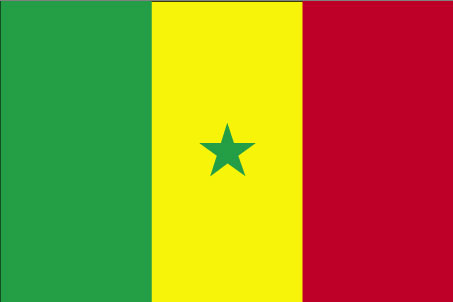
Senegal
Senegal
Declare Your Relationship to Senegal
CountryReports Community
- Studying4
- From Senegal1
- Senegal heritage4
- Visited2
- Want to visit1
Customs and Culture
Customs and Culture
Cultural Attributes
Senegal is home to many different groups of people. Most belong to one of seven ethnic groups: The Wolof, Serer, Fulani(Peul), Tukulor, Diola, Malinke(Mandingo), and Soninke. Generally, the different ethnic groups are cordial to one another and have lived alongside each other for many centuries. The Wolof language is spoken by most of the population. The name of the Tukulor group is derived from the ancient kingdom of Tekrur. The Tukulor were among the first converts to Islam south of the Sahara and they take great pride in their religious fervor. The traditional occupation of the Fulani is raising livestock. The Serer are usually farmers with exceptional farming skills. The name Malinke is a Fulani word meaning "the people of the ancient empire of Mali".

Land of Seven Nations, One Song
Get More Customs and Culture
5 more cultural topics for members
Social Customs & Etiquette · Diet · Family · Dating Customs · Recreation
Holidays
Independence Day
4/4Independence Day
Dates of Interest
- April 4th
Festival Kaay Fecc is an international dance festival held in Dakar, showcasing contemporary dance performances from Senegal and around the world. The festival promotes artistic exchange, cultural diversity, and innovation in dance.
How do people greet each other in Senegal?
Greetings are important and can last up to ten minutes, usually beginning with a handshake, as people ask about each other's family, health and friends.
Do
- Begin greetings with a handshake
- Ask about family, health, work and mutual friends before getting down to business
- Exchange handshakes or cheek kisses and extend best wishes to family when leaving
- Learn a few basic phrases in Wolof or French
Don’t
- Don't rush straight into the reason for a meeting
Good to know
- Traditionally men do not shake hands with women
- Among friends and family, hugs and cheek kisses may also be exchanged
What are the dining customs in Senegal?
Senegalese eat from a communal bowl using the right hand, with the main meal at midday and the evening meal served late.
Do
- Eat with your right hand from the communal bowl
Don’t
- Don't make eye contact while eating
Good to know
- Staple foods include rice, corn, millet, sorghum, peanuts, beans, milk and sugar
- The national dish is Tiébou Dienn, a fish stew eaten on rice
What etiquette should I know when visiting Senegal?
Show respect for elders, be hospitable and mindful of Islamic customs, as Senegal is a predominantly Muslim country.
Do
- Remove your shoes before entering someone's home
- Express gratitude for any food or drink offered
- Show deference to elders with polite language and gestures
- Bring small gifts such as food, sweets or souvenirs when visiting a home
Don’t
- Don't ask personal questions
- Don't ask about someone's children or their ages, as this is thought to bring bad luck
- Don't eat, drink or smoke in public during the fasting month of Ramadan
Good to know
- Avoid eye contact with those considered superior in age or status
- Senegalese time can be relaxed, so be patient and flexible with scheduling
How should I dress in Senegal?
Personal appearance matters and dress is generally modest, especially in rural areas and religious settings.
Do
- Dress conservatively at mosques and religious sites, covering shoulders and knees
- Dress modestly, particularly in rural areas
Good to know
- In cities businessmen wear European-style clothing by day and change into a boubou in the evening
- In rural areas people wear the traditional boubou, a loose cotton tunic; some men wear a pagne wrapped around the hips
- Wolof women are known for their love of ornamentation
Are there gestures or body language to be careful with in Senegal?
Eye contact is used cautiously and personal questions are considered impolite.
Don’t
- Don't make eye contact while eating
- Don't make eye contact with someone considered superior in age or status
- Don't ask personal questions, especially about children
What is family life like in Senegal?
The extended family is the norm and elders are highly respected, with families often living together in a compound.
Good to know
- Wolof families group in compounds (ker) around a village center (pencha)
- Senegalese take their father's name, but land passes through the mother's side
- Except for the Diola, ethnic groups follow a rigid social stratification, and marriage across castes is forbidden
- Many families hold a naming ceremony when a child is seven days old
What do people do for fun and sport in Senegal?
Soccer, basketball, track and field, and traditional wrestling are popular, and visiting friends is a favorite pastime.
Good to know
- Traditional wrestling (laamb) combines wrestling and judo and is valued for its ceremonial aspects
- Wrestlers wear amulets and dance around the arena to drummers and singers
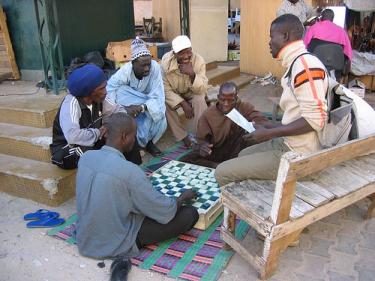
- Older men enjoy playing checkers
Last updated: 2026-07-12 · Sources: CountryReports
Photos of Senegal
Photos of Senegal


Travel and Tourism
Travel and Tourism
- Travel Alert Status
- Level 1: Exercise Normal Precautions
- Time Difference
- UTC 0 (5 hours ahead of Washington, DC, during Standard Time)
- Climate
- Senegal has two well-defined seasons: northeasterly winds produce the cool, dry winter season (November to June) and southwesterly winds produce the hot, humid summer (July to October). During winter, Dakar days are invariably sunny with temperatures between 63 and 80° F. During summer, the average temperature is 86° F to 96° F with high humidity. Beginning in January, the harmattan brings dust and sand from the Sahara Desert for 2 or 3 months. Between July and October, Dakar receives 16 - 20 inches of rainfall. Precipitation increases farther south, exceeding 60 inches in parts of the Casamance Region in the southern part of the country. Typically, Senegal is considered a dry, almost desert country with a pleasant climate along the coast and much higher temperatures inland.
- Airports
- 20
Read the full travel guide — health, safety, vaccinations, disease risk, sanitation, and transit details.
View full travel guideRecipes
Recipes
L’Assiette Des Assiettes
Main Dish
Main Dish
Yassa au Poulet de la Casamance — Barbecued Chicken with Lemon and Onions over Rice
Main Dish
Ceeb u Jenn — Rice with Fish
Main Dish
Senegalese Stew with Millet
Main Dish
Maffe aux Legumes Arachid — Chopped Beef in the Boer Manner
Main Dish
L’Assiette Des Assiettes
Main Dish
L’Assiette Des Assiettes
History
History
Historical Eras
Prehistoric & Early Kingdoms
500 BCE – 1444
Archaeological evidence confirms human habitation of the Senegal region from prehistoric times. Islam took root in the Senegal River valley in the 11th century, and by the 13th and 14th centuries the powerful Jolof Empire had emerged as a dominant political force, alongside influence from the Mandingo empires to the east. These early polities established the cultural and religious foundations — most notably Islam — that continue to define Senegalese society.
European Contact & Slave Trade
1445 – 1816
Portuguese navigators reached the Senegalese coast in 1445, initiating sustained European commercial engagement with West Africa. The island of Gorée became a focal point of the Atlantic slave trade, passing from Dutch to French control in 1677, and briefly to Britain before returning to France in 1816. France abolished the slave trade in 1815, marking the beginning of a shift toward colonial economic and administrative ambitions.
French Colonial Era
1816 – 1960
France consolidated its grip on Senegal throughout the 19th century, formally incorporating it into French West Africa in 1895 and later into the French Union in 1946. Dakar served as the administrative capital of the entire French West African federation, making Senegal the political and economic hub of French sub-Saharan Africa. Nationalist sentiment grew steadily in the postwar period, culminating in the formation of the Mali Federation with French Soudan in January 1959.
Independence & Nation-Building
1960 – 1981
Senegal achieved full independence on June 20, 1960, following the rapid dissolution of the Mali Federation, with Léopold Sédar Senghor — celebrated poet and statesman — elected as the country's first president. A 1962 attempted coup by Prime Minister Mamadou Dia was suppressed, prompting a new constitution that centralized presidential authority. Senghor guided Senegal toward relative stability and intellectual prominence before voluntarily retiring in 1980, handing power to Abdou Diouf.
Democratic Consolidation
1981 – 2000
President Abdou Diouf broadened political participation, liberalized the economy, and elevated Senegal's diplomatic profile among developing nations. The country joined the Senegambia Confederation with The Gambia in 1982, though the union collapsed by 1989 without achieving meaningful integration. A persistent separatist insurgency in the southern Casamance region produced sporadic violence, yet Senegal's democratic institutions and commitment to human rights continued to deepen.
Modern Senegal
2000 – present
The landmark 2000 presidential election saw opposition leader Abdoulaye Wade defeat Diouf in a free and fair contest, marking Senegal's first peaceful transfer of power between political parties. A new constitution backed by voters in 2001 further reformed governance structures. Senegal has since maintained a reputation as one of West Africa's most stable democracies, while continuing to manage the low-level Casamance conflict and expanding its role in international peacekeeping missions.
Overview
Archaeological findings throughout the area indicate that Senegal was inhabited in prehistoric times. Islam established itself in the Senegal River valley in the 11th century; 95% of Senegalese today are Muslims. In the 13th and 14th centuries, the area came under the influence of the Mandingo empires to the east; the Jolof Empire of Senegal also was founded during this time.
Timeline of Key Events
1445
Portuguese navigators reached the Senegal coast; begin of European-West African trade.
Portuguese navigators reached the Senegal coast; begin of European-West African trade.
1588
Dutch establish slave port on island of Goree.
Dutch establish slave port on island of Goree.
1677
French take over island of Goree from the Dutch.
French take over island of Goree from the Dutch.
1800
British occupation of Senegal.
British occupation of Senegal.
1815
France abolished slave trade.
France abolished slave trade.
1816
The British returned Senegal to France.
The British returned Senegal to France.
1895
Senegal becomes part of French West Africa.
Senegal becomes part of French West Africa.
Read the full history profile — narrative overview, defining eras, and the complete timeline in one place.
View expanded historyInteresting Facts
Interesting Facts
People travel from all over West Africa to the town of Yoff, near Dakar, to have their mental illness treated by a faith healer. This usually involves a public ceremony, animal sacrifice and large payments to the faith healer.
See every fact — trivia, oddities, and curious tidbits gathered from across the country.
View all interesting factsGeography and Environment
Geography and Environment
- Terrain
- generally low, rolling, plains rising to foothills in southeast
- Climate
- Senegal has two well-defined seasons: northeasterly winds produce the cool, dry winter season (November to June) and southwesterly winds produce the hot, humid summer (July to October). During winter, Dakar days are invariably sunny with temperatures between 63 and 80° F. During summer, the average temperature is 86° F to 96° F with high humidity. Beginning in January, the harmattan brings dust and sand from the Sahara Desert for 2 or 3 months. Between July and October, Dakar receives 16 - 20 inches of rainfall. Precipitation increases farther south, exceeding 60 inches in parts of the Casamance Region in the southern part of the country. Typically, Senegal is considered a dry, almost desert country with a pleasant climate along the coast and much higher temperatures inland.
- Natural Hazards
- lowlands seasonally flooded; periodic droughts
- Current Environmental Issues
- wildlife populations threatened by poaching; deforestation; overgrazing; soil erosion; desertification; overfishing
Read the full geography and environment profile — terrain, climate, natural resources, hazards, land use, and international agreements.
View full geographyPeople & Demographics
People & Demographics
Religion
Languages Spoken
French (official), Wolof, Pulaar, Jola, Mandinka
- French
Population
- Population
- 17,316,449
- Population in Major Urban Areas
- DAKAR (capital) 3.035 million
- Nationality Noun
- Senegalese (singular and plural)
- Ethnic Groups
- Wolof 43.3%, Pular 23.8%, Serer 14.7%, Jola 3.7%, Mandinka 3%, Soninke 1.1%, European and Lebanese 1%, other 9.4%
Education
- Literacy Definition
- age 15 and over can read and write
Health Information
- Life Expectancy at Birth
- Life expectancy at birth in Senegal stands at approximately 69 years overall, with women typically outliving men by several years — averaging around 71 years for females compared to roughly 67 years for males. These figures reflect a notable improvement over the past several decades, driven by sustained investments in public health infrastructure, vaccination campaigns, and expanded access to maternal and child healthcare services. Senegal's life expectancy compares favorably with many of its neighbors in sub-Saharan Africa, a region where the average hovers closer to 62–63 years. This relatively stronger performance is attributed in part to Senegal's political stability, which has allowed for more consistent implementation of national health programs over time. Despite the progress, significant challenges remain. Infant and child mortality continue to weigh on overall life expectancy figures. Malaria remains one of the leading causes of death, particularly among children under five, and access to quality healthcare is unevenly distributed between urban centers like Dakar and rural regions such as Ziguinchor, Kolda, and Tambacounda. Residents in rural areas often face longer distances to medical facilities, lower rates of skilled birth attendance, and limited access to essential medicines. Non-communicable diseases, including cardiovascular conditions, diabetes, and hypertension, are also rising contributors to mortality as Senegal undergoes an epidemiological transition — a shift typical of developing nations where lifestyle-related illnesses begin to supplement infectious diseases as primary causes of death. The Senegalese government, in partnership with international organizations, has prioritized expanding community health worker programs and improving sanitation and clean water access, both of which are closely linked to longevity. Continued progress on reducing malaria prevalence, improving nutrition, and strengthening the healthcare workforce are considered essential factors in pushing life expectancy higher in the coming decades. If current trends hold, demographic projections suggest Senegal's life expectancy could approach or exceed 73–74 years by 2040, provided that ongoing public health investments are maintained and economic development continues to expand access to healthcare across all regions of the country.
- Major Infectious Diseases — degree of risk
- very high
- Infant Mortality Rate
- Senegal's infant mortality rate reflects the country's ongoing efforts to improve child health outcomes while still facing the challenges common to many sub-Saharan African nations. As of the most recent available data, Senegal records approximately 33 to 36 deaths per 1,000 live births, meaning that roughly three to four infants out of every hundred born do not survive to their first birthday. While this figure remains elevated compared to global averages — the worldwide infant mortality rate sits closer to 28 per 1,000 live births — Senegal has made notable progress over the past two decades. In the early 2000s, the country's infant mortality rate exceeded 60 per 1,000 live births, meaning the rate has been nearly cut in half through sustained public health interventions. Several factors continue to influence infant mortality in Senegal. Neonatal causes — including birth asphyxia, infections, and preterm birth complications — account for a significant share of infant deaths, particularly in rural and semi-arid regions where access to skilled birth attendants and postnatal care remains limited. Malaria, acute respiratory infections, and diarrheal diseases also contribute to post-neonatal mortality during the first year of life. Urban areas such as Dakar generally report lower infant mortality rates than rural regions, largely due to better access to hospitals, trained healthcare workers, and maternal and child health services. The disparity between urban and rural settings highlights the uneven distribution of healthcare infrastructure across the country. The Senegalese government, in partnership with international organizations including UNICEF and the World Health Organization, has implemented programs focused on expanding vaccination coverage, promoting exclusive breastfeeding, improving access to oral rehydration therapy, and increasing the proportion of births attended by skilled health personnel. Immunization rates for key childhood diseases such as measles, diphtheria, pertussis, and tetanus have improved markedly, contributing directly to the decline in infant deaths. Despite these advances, reaching the most vulnerable populations in remote areas remains a persistent challenge, and continued investment in maternal and child health services is considered essential to further reducing infant mortality across the country.
Life Expectancy
- Life Expectancy at Birth
- Life expectancy at birth in Senegal stands at approximately 69 years overall, with women typically outliving men by several years — averaging around 71 years for females compared to roughly 67 years for males. These figures reflect a notable improvement over the past several decades, driven by sustained investments in public health infrastructure, vaccination campaigns, and expanded access to maternal and child healthcare services. Senegal's life expectancy compares favorably with many of its neighbors in sub-Saharan Africa, a region where the average hovers closer to 62–63 years. This relatively stronger performance is attributed in part to Senegal's political stability, which has allowed for more consistent implementation of national health programs over time. Despite the progress, significant challenges remain. Infant and child mortality continue to weigh on overall life expectancy figures. Malaria remains one of the leading causes of death, particularly among children under five, and access to quality healthcare is unevenly distributed between urban centers like Dakar and rural regions such as Ziguinchor, Kolda, and Tambacounda. Residents in rural areas often face longer distances to medical facilities, lower rates of skilled birth attendance, and limited access to essential medicines. Non-communicable diseases, including cardiovascular conditions, diabetes, and hypertension, are also rising contributors to mortality as Senegal undergoes an epidemiological transition — a shift typical of developing nations where lifestyle-related illnesses begin to supplement infectious diseases as primary causes of death. The Senegalese government, in partnership with international organizations, has prioritized expanding community health worker programs and improving sanitation and clean water access, both of which are closely linked to longevity. Continued progress on reducing malaria prevalence, improving nutrition, and strengthening the healthcare workforce are considered essential factors in pushing life expectancy higher in the coming decades. If current trends hold, demographic projections suggest Senegal's life expectancy could approach or exceed 73–74 years by 2040, provided that ongoing public health investments are maintained and economic development continues to expand access to healthcare across all regions of the country.
- Infant Mortality Rate
- Senegal's infant mortality rate reflects the country's ongoing efforts to improve child health outcomes while still facing the challenges common to many sub-Saharan African nations. As of the most recent available data, Senegal records approximately 33 to 36 deaths per 1,000 live births, meaning that roughly three to four infants out of every hundred born do not survive to their first birthday. While this figure remains elevated compared to global averages — the worldwide infant mortality rate sits closer to 28 per 1,000 live births — Senegal has made notable progress over the past two decades. In the early 2000s, the country's infant mortality rate exceeded 60 per 1,000 live births, meaning the rate has been nearly cut in half through sustained public health interventions. Several factors continue to influence infant mortality in Senegal. Neonatal causes — including birth asphyxia, infections, and preterm birth complications — account for a significant share of infant deaths, particularly in rural and semi-arid regions where access to skilled birth attendants and postnatal care remains limited. Malaria, acute respiratory infections, and diarrheal diseases also contribute to post-neonatal mortality during the first year of life. Urban areas such as Dakar generally report lower infant mortality rates than rural regions, largely due to better access to hospitals, trained healthcare workers, and maternal and child health services. The disparity between urban and rural settings highlights the uneven distribution of healthcare infrastructure across the country. The Senegalese government, in partnership with international organizations including UNICEF and the World Health Organization, has implemented programs focused on expanding vaccination coverage, promoting exclusive breastfeeding, improving access to oral rehydration therapy, and increasing the proportion of births attended by skilled health personnel. Immunization rates for key childhood diseases such as measles, diphtheria, pertussis, and tetanus have improved markedly, contributing directly to the decline in infant deaths. Despite these advances, reaching the most vulnerable populations in remote areas remains a persistent challenge, and continued investment in maternal and child health services is considered essential to further reducing infant mortality across the country.
Read the full people and society profile — demographics, health, education, religion, languages, and notable people.
View full people and societyGovernment & Politics
Government & Politics
Country Identity
- Country Name
- Senegal
- Full Country Name
- Republic of Senegal
- Local - Long
- Republique du Senegal
- Local - Short
- Senegal
Government Structure
- Government Type
- republic under multiparty democratic rule
- Legal System
- based on French civil law system; judicial review of legislative acts in Constitutional Court; the Council of State audits the government's accounting office; has not accepted compulsory ICJ jurisdiction
- Executive Branch
- chief of state: President Bassirou Diomaye FAYE (since 24 March 2024) head of government: Prime Minister Ousmane SONKO (since 2 April 2024) cabinet: Council of Ministers appointed by the prime minister in consultation with the president elections: president elected by popular vote for a five-year term; election last held on 24 March 2024 (next to be held in 2029); prime minister appointed by the president election results: Bassirou Diomaye FAYE elected president in the first round; percent of vote - Bassirou Diomaye FAYE (PASTEF) 54.99%, Amadou BA (APR) 35.79%, other candidates 9.22%
- Legislative Branch
- Senegal's legislature is unicameral, consisting of the National Assembly (Assemblée Nationale), which currently has 165 seats. Members are elected through a mixed electoral system combining majoritarian and proportional representation to serve five-year terms. The most recent legislative elections were held on July 31, 2022. Voter turnout was notably low. The results reflected a highly competitive political environment, with President Macky Sall's Benno Bokk Yaakaar (BBY) coalition winning 82 seats, a significant reduction from its previous majority. The opposition Yewwi Askan Wi coalition secured 56 seats, while Wallu Senegal won 24 seats, and other parties and independents accounted for the remaining seats. The outcome marked a significant shift in Senegalese legislative politics, as the ruling coalition lost its outright majority for the first time in years, requiring it to negotiate more broadly to pass legislation. Senegal has experienced several structural changes to its legislature in recent decades. A Senate existed alongside the National Assembly for a period but was abolished in 2012 as a cost-cutting measure, returning the parliament to its unicameral form. Presidential and legislative election cycles have at various points been adjusted or realigned, reflecting ongoing political negotiations over the country's electoral calendar.
- Judicial Branch
- Constitutional Court; Council of State; Court of Final Appeals or Cour de Cassation; Court of Appeals
- Suffrage
- 18 years of age; universal
- Constitution
- a new constitution was adopted 7 January 2001
- Independence
- 4 April 1960 (from France); complete independence was achieved upon dissolution of federation with Mali on 20 August 1960
- National Holiday
- Independence Day, 4 April (1960)
Capital City
- Capital Name
- Dakar
- Capital - geographic coordinate
- 14 44 N, 17 38 W
- Capital Time Difference
- UTC 0 (5 hours ahead of Washington, DC, during Standard Time)
the Atlantic coast trading settlement of Ndakaaru came to be called "Dakar" by French colonialists
Military
Branches: Senegalese Armed Forces: Army, Senegalese National Navy (Marine Senegalaise, MNS), Senegalese Air Force (Armee de l'Air du Senegal)
Embassy / Diplomatic Mission
U.S. Embassy Dakar
Route des Almadies – B.P. 49
Dakar, Senegal
Telephone: (221) 33-879-4000
Emergency after-hours telephone: (221) 33-879-4444.
Facsimile: (221) 33-879-4050
Read the full government profile — flag symbolism, national anthem, and other national symbols.
View full government detailsEconomy
Economy
Senegal is one of West Africa's most stable economies and has undergone significant transformation since launching an ambitious economic reform program in January 1994 with support from the international donor community.
Snapshot
- Currency Name and Code
- CFA Franc BCEAO (XOF)
- GDP — official exchange rate
- $7,972,000,000 (USD)
- GDP Real Growth Rate
- 5.3%
- Gini Index
- 41.3
News & Weather
News & Weather
Current Weather
Latest News
Senegal court jails three TikTok influencers for insulting the president - Daily Nation
Daily Nation · 1d ago
RFPs: Expanding Global Health Security Through Local Partnerships in Senegal (US) - fundsforNGOs
fundsforNGOs · 2d ago
USMNT rides Christian Pulisic breakout to 3–2 win over Senegal in chaotic friendly - Yahoo Sports
Yahoo Sports · 69d ago
Nigeria outlast Tunisia as Cameroon trounce Senegal on opening day - FIBA
FIBA · 2d ago
Senegal 0-0 Morocco | Match Highlights l TotalEnergies WAFCON 2026 l Group A - cafonline.com
cafonline.com · 5d ago
Senegal jails three TikTok influencers for insulting President Faye as political tensions with former ally Sonko deepen - Business Insider Africa
Business Insider Africa · 1d ago
Senegal jails three TikTok influencers over posts criticising president Faye - africanews.com
africanews.com · 1d ago
‘It’s not about the Qur’an, it’s about the money’: how boys of five are forced to beg on Senegal’s streets - The Guardian
The Guardian · 5d ago
News via Google News
Climate Overview
Senegal has two well-defined seasons: northeasterly winds produce the cool, dry winter season (November to June) and southwesterly winds produce the hot, humid summer (July to October). During winter, Dakar days are invariably sunny with temperatures between 63 and 80° F. During summer, the average temperature is 86° F to 96° F with high humidity. Beginning in January, the harmattan brings dust and sand from the Sahara Desert for 2 or 3 months. Between July and October, Dakar receives 16 - 20 inches of rainfall. Precipitation increases farther south, exceeding 60 inches in parts of the Casamance Region in the southern part of the country. Typically, Senegal is considered a dry, almost desert country with a pleasant climate along the coast and much higher temperatures inland.
Videos
Videos
1 curated YouTube videos.
Source: YouTube
Frequently Asked Questions
Frequently Asked Questions
What is the population of Senegal?
How do people greet each other in Senegal?
What are the dining customs in Senegal?
What etiquette should I know when visiting Senegal?
How should I dress in Senegal?
Are there gestures or body language to be careful with in Senegal?
What is family life like in Senegal?
What do people do for fun and sport in Senegal?
What is the capital of Senegal?
Where is Senegal located?
What countries border Senegal?
What is the predominant religion in Senegal?
What is the currency of Senegal?
What languages are spoken in Senegal?
What is the geography of Senegal like?
What is Senegal known for?
Last reviewed 2026