
 English
 Español
 中文
中文 हिन्दी
 Français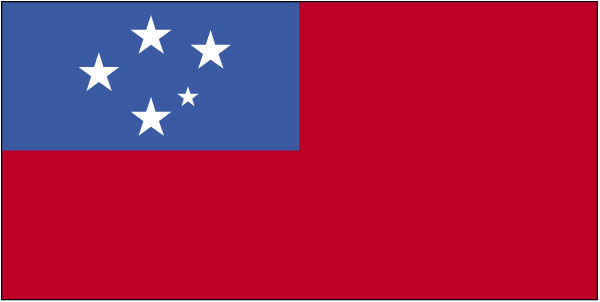
Samoa
Declare Your Relationship to Samoa
CountryReports Community
- Studying7
- From Samoa0
- Samoa heritage1
- Visited1
- Want to visit3
Customs and Culture
Customs and Culture
Cultural Attributes
Samoans approach life in a friendly and playful way, with a strong sense of 'fa'a Samoa' or 'the Samoan way'. This indicates a relaxed way of life with respect for family and tradition. Respect, cooperation, consensus, a sense of humor, and hospitality are all valued highly. The individual gives way for the good of the group. Sharing is more prized than ownership. Oral skills are praised and cultivated, and people tend to solve disputes through verbal negotiation.

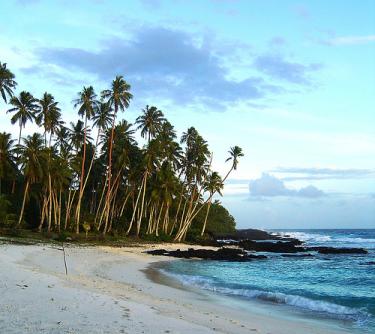
Island of the Fa'a Samoa
Get More Customs and Culture
5 more cultural topics for members
Social Customs & Etiquette · Diet · Family · Dating Customs · Recreation
Every country, every topic, all activities & recipes
✓ Instant access on this device · ✓ No subscription
Holidays
Independence Day Celebration
6/1Independence
1 January 1962 is the date of independence from the New Zealand-administered UN trusteeship, 1 June 1962 is the date that independence is celebrated
Dates of Interest
- June 1st
Fiafia Night is a cultural dinner and entertainment experience offered at resorts and hotels throughout Samoa. Visitors can enjoy a buffet of traditional Samoan cuisine, including roasted pig (umu), fresh seafood, taro, and tropical fruits, accompanied by live music, dance performances, and fire dancing.
How do people greet each other in Samoa?
Family and friends hug and kiss on the cheek, while others are greeted with a handshake and warm smile, or by raising the eyebrows and smiling. Strangers and community leaders are addressed respectfully by title.
Do
- Use first names for friends
- Address chiefs or professionals with a title like Lau Susuga
- Say 'Susu mai' or 'Afio mai' ('Welcome') before opening a conversation
Good to know
- Raising eyebrows with a smile is a friendly way to greet someone
What are dining customs like in Samoa?
Meals are communal and central to family life and ceremonies, with hospitality toward guests considered a fundamental social obligation. Staples include taro, breadfruit, bananas, coconut and fresh seafood.
Do
- Enjoy classic dishes like palusami (taro leaves with coconut cream and meat)
- Try Koko Samoa, the traditional national drink
- Drop a few drops of kava on the ground before drinking it
Good to know
- The umu (earth oven) is used on Sundays and for feasts, with whole families joining preparation
- Chop suey and pisupo (corned beef) are common at family feasts
- Market stalls and roadside vendors in Apia offer fresh produce and cooked snacks
What etiquette should I know when visiting a Samoan home?
Wait until the mats are spread before entering, leave your shoes at the door and sit cross-legged on the mat. The host makes a welcome speech and the guest gives a formal response.
Do
- Leave shoes outside the door
- Sit cross-legged with legs tucked behind you
- Wait to be seated before beginning conversation
Don’t
- Don't speak while standing in the home
- Don't stretch out your legs unless they are properly covered
- Don't point your feet at anyone
Good to know
- Best floor mats are laid out for visitors in traditional homes
- Refreshments like coconut, biscuits and soft drinks may be served
- Visiting unannounced is common, and guests may stay late into the night
How should I dress in Samoa?
Traditional attire is still common, with men wearing a wraparound lavalava and shirt, and women wearing a puletasi or muumuu. People take pride in neat, well-pressed clothing.
Do
- Wear a shirt with pockets and a lavalava for church or official gatherings
- Wear rubber flip-flops or sandals as everyday footwear
Don’t
- Women should not wear pants except in athletic events
Good to know
- Western clothing is gaining popularity
Which gestures matter in Samoa?
Gestures carry strong meaning: lifting the eyebrows means 'yes' and furrowing the brow means 'no'. Samoans point with the chin rather than the index finger.
Don’t
- Don't point with your index finger
- Don't beckon adults by waving fingers palm down (reserved for small children)
- Don't scratch your head during conversation, as it is a hostile gesture
- Avoid public displays of affection between the sexes
Good to know
- Bow from the waist if walking in front of someone
What is family life like in Samoa?
Family and hierarchy are central, with children taught to respect elders and support parents in old age. A matai (chief), chosen for loyalty and service, holds authority over the extended family and village.
Good to know
- Grandparents care for grandchildren when both parents work
- Discipline is strict, and an adult relative may freely scold a child
- A village is typically made up of several families, each led by a matai
- Youth generally meet at church activities or in the village
What sports and recreation are popular in Samoa?
Rugby football is popular, and entire villages sometimes play kirikiti, a cricket-like game with teams of unrestricted size. Traditional pastimes include canoe racing and more.
Good to know
- Kirikiti games are social as well as sporting events
- Outrigger canoes are paddled in ocean races
- Footracing, cockfighting, tiak (darts) and spear throwing are traditional sports
Last updated: 2026-07-12 · Sources: CountryReports
Photos of Samoa
Photos of Samoa


Travel and Tourism
Travel and Tourism
- Travel Alert Status
- Level 1: Exercise Normal Precautions
- Currency
- tala (SAT)
- Time Difference
- UTC+13 (18 hours ahead of Washington, DC, during Standard Time)
- Airports
- 4
Read the full travel guide — health, safety, vaccinations, disease risk, sanitation, and transit details.
View full travel guideRecipes
Recipes
Creamed Breadfruit Vegetable Dish With Meat
Side Dish
Main Dish
Palusami (Coconut Cream Baked in Taro Leaves)
Main Dish
Oka (Mussels or Fish)
Main Dish
Koko Araisa (Cocoa Rice)
Main Dish
Pani Popo (Samoan Rolls)
Main Dish
Pisupo (Corned Beef Wrapped in Taro Leaves)
Side Dish
Creamed Breadfruit Vegetable Dish With Meat
History
History
Historical Eras
Polynesian Settlement
1000 BCE – 1722
Migrants from Southeast Asia arrived in the Samoan archipelago over 3,000 years ago, establishing one of the cradles of Polynesian civilization. From these islands, voyagers spread eastward to settle much of the Pacific. Samoan society developed complex chiefly systems, oral traditions, and a distinctive culture centered on the concept of fa'asamoa — the Samoan way.
European Contact
1722 – 1899
Dutch navigator Jacob Roggeveen became the first European to sight Samoa in 1722, followed by French and British explorers later in the century. English missionaries and traders arrived in the 1830s, profoundly reshaping religious and economic life. Rival European powers — Britain, Germany, and the United States — competed for influence throughout the 19th century, culminating in the 1899 Tripartite Convention that divided the islands.
German Colonial Era
1899 – 1914
Following the 1899 partition, Germany formally annexed Western Samoa and governed it as a colonial protectorate. German administration introduced plantation agriculture, particularly copra production, and imposed significant economic and political changes on indigenous Samoans. The Mau resistance movement had early roots in this period as Samoans chafed under foreign rule.
New Zealand Administration
1914 – 1962
New Zealand occupied Western Samoa at the outbreak of World War I in 1914 and subsequently governed it under a League of Nations mandate and later a UN trusteeship. The period was marked by the devastating 1918 influenza pandemic, which killed roughly 20% of the population, and the Mau nonviolent independence movement, which suffered its darkest moment on Black Saturday in 1929 when New Zealand police killed paramount chief Tupua Tamasese Lealofi III.
Independence & Nation-Building
1962 – 1997
On January 1, 1962, Western Samoa became the first Pacific Island nation to gain independence in the 20th century, with Malietoa Tanumafili II and Tupua Tamasese Mea'ole serving as joint heads of state. The new constitutional framework uniquely blended parliamentary democracy with traditional Samoan chiefly governance, requiring most voters and candidates to hold matai (chiefly) titles. The country joined the United Nations in 1976 and steadily built its international relationships.
Modern Samoa
1997 – present
In 1997 the constitution was amended to officially shorten the country's name from Western Samoa to simply Samoa, reflecting its identity as the cultural heartland of the Samoan people. The death of Malietoa Tanumafili II in 2007 ended the last lifetime head-of-state tenure, transitioning the role to a five-year elected term. Samoa continues to navigate challenges of climate vulnerability, emigration, and economic development while maintaining strong cultural traditions.
Overview
Migrants from Southeast Asia arrived in the Samoan islands more than 2,000 years ago and from there settled the rest of Polynesia further to the east. Contact with Europeans began in the early 1700s but did not intensify until the arrival of English missionaries and traders in the 1830s. At the turn of the 20th century, the Samoan islands were split into two sections.
Every country, every topic, all activities & recipes
✓ Instant access on this device · ✓ No subscription
Timeline of Key Events
1722
Dutch navigator Jacob Roggeveen is the first European to explore Samoa.
Dutch navigator Jacob Roggeveen is the first European to explore Samoa.
1899
Germany annexes Western Samoa.
Germany annexes Western Samoa, the US takes over eastern Samoa and Britain withdraws its claim to the islands in accordance with treaty between Germany, Britain and the US.
1914
New Zealand occupies Western Samoa during World War I.
New Zealand occupies Western Samoa during World War I and continues to administer it after the war by virtue of a League of Nations mandate (and a United Nations mandate after World War II).
1939 – 1945
US troops stationed in Western Samoa during World War II.
US troops stationed in Western Samoa during World War II, but no battles are fought on the islands.
1962
Western Samoa becomes independent, the first Pacific island nation to do so.
Western Samoa becomes independent, the first Pacific island nation to do so.
1962
Western Samoa becomes independent, the first Pacific island nation to do so.
Western Samoa becomes independent, the first Pacific island nation to do so.
1997
Western Samoa changes its name to Samoa.
Western Samoa changes its name to Samoa, a move which causes some tension with American Samoa.
Read the full history profile — narrative overview, defining eras, and the complete timeline in one place.
View expanded historyInteresting Facts
Interesting Facts
Evidence suggests that Samoa has been inhabited for over three thousand years.
In 2009, Samoa switched to driving on the left side of the road. The government brought about the change to bring Samoa in line with other South Pacific countries.
See every fact — trivia, oddities, and curious tidbits gathered from across the country.
View all interesting factsGeography and Environment
Geography and Environment
- Terrain
- two main islands (Savaii, Upolu) and several smaller islands and uninhabited islets; narrow coastal plain with volcanic, rocky, rugged mountains in interior
- Climate
- Samoa's proximity to the Equator results in hot and humid conditions throughout most of the year. There are two distinct seasons, the dry season (winter) between May and October and the wet season (summer) between November and April. The average annual temperature is 26.5 °C in coastal areas, with a decrease in temperature as the land rises inland. Southeasterly trade winds make April to October the more pleasant months. Samoa lies in the cyclone belt and is periodically buffeted and bruised by cyclones, the majority of which occur between November and April.
- Natural Hazards
- occasional typhoons; active volcanism
- Current Environmental Issues
- soil erosion, deforestation, invasive species, overfishing
Read the full geography and environment profile — terrain, climate, natural resources, hazards, land use, and international agreements.
View full geographyPeople & Demographics
People & Demographics
Religion
Languages Spoken
Samoan (Polynesian), English
- English
- Samoan
Population
- Population
- 218,764
- Population in Major Urban Areas
- APIA (capital) 37,000
- Nationality Noun
- Samoan(s)
- Ethnic Groups
- Samoan 92.6%, Euronesians 7% (persons of European and Polynesian blood), Europeans 0.4%
- Language Note
- Samoan is probably the oldest Polynesian language, and it is the official language of both Independent Samoa and American Samoa. English is the second official language. Samoans are proud of their language.
Education
- Literacy Definition
- age 15 and over can read and write
Life Expectancy
- Life Expectancy at Birth
- Life expectancy at birth in Samoa stands at approximately 74 years overall, with women typically living longer than men. Female life expectancy is estimated at around 77 years, while male life expectancy is approximately 71 years. These figures reflect meaningful improvements over recent decades, driven by advances in healthcare access, vaccination programs, and public health infrastructure across the island nation. Samoa's life expectancy compares reasonably well with other Pacific Island nations, though it remains somewhat below the averages seen in high-income countries. The country has benefited from ongoing support from international health organizations and regional partners, which have helped strengthen maternal and child health services, reduce infant mortality, and improve disease prevention efforts. Non-communicable diseases represent a significant and growing health challenge in Samoa and have a notable impact on longevity. Conditions such as type 2 diabetes, cardiovascular disease, and obesity are highly prevalent in the population, partly linked to dietary shifts toward processed foods and reduced physical activity across recent generations. These chronic conditions contribute to premature mortality and place a considerable burden on the national health system. Infectious diseases, including those that can affect young children, have historically influenced life expectancy figures as well. Samoa experienced a severe measles outbreak in 2019, which caused a sharp spike in child mortality before an accelerated vaccination campaign brought the situation under control. The event highlighted critical gaps in immunization coverage and reinforced the importance of sustained public health vigilance in maintaining population health outcomes. Despite these challenges, the overall trend in Samoan life expectancy has been upward over the past several decades. Improved access to clean water and sanitation, better nutritional awareness, and expanded healthcare services in both urban Apia and more rural communities have all contributed to longer lifespans. Continued investment in preventive health measures, early intervention programs, and chronic disease management will be key factors in shaping how life expectancy evolves in Samoa in the years ahead.
- Infant Mortality Rate
- Samoa has made meaningful progress in reducing infant mortality over recent decades, though challenges remain for this small Pacific island nation. The infant mortality rate in Samoa stands at approximately 16 to 18 deaths per 1,000 live births, reflecting improvements in healthcare access and maternal health services compared to figures recorded in earlier decades. Infant mortality in Samoa is influenced by several interconnected factors, including geographic remoteness, limited healthcare infrastructure, and the economic constraints faced by many families. The main island of Upolu hosts the majority of the population and has better access to hospitals and clinical services, while communities on Savai'i and smaller outer islands may encounter greater difficulty reaching specialized pediatric care. The leading causes of infant death in Samoa include neonatal complications such as birth asphyxia and preterm birth complications, as well as respiratory infections and diarrheal diseases in the post-neonatal period. These causes are common across many developing Pacific nations and are closely tied to clean water access, sanitation, and the quality of antenatal and postnatal care. The Samoan government, supported by international partners including UNICEF and the World Health Organization, has worked to strengthen maternal and child health programs. Efforts have included improving vaccination coverage, training community health workers, and expanding access to skilled birth attendants. Immunization rates in Samoa have historically been relatively strong, though a measles outbreak in 2019 underscored vulnerabilities in childhood health systems and resulted in a significant number of infant and child deaths. For comparison, the infant mortality rate in Samoa remains higher than those seen in high-income Pacific nations such as Australia and New Zealand, where rates fall below 4 per 1,000 live births, but it is comparable to or better than several other Pacific island states at similar stages of development. Continued investment in rural health outreach, nutrition programs, and emergency obstetric care will be central to further reducing infant deaths across the islands.
Read the full people and society profile — demographics, health, education, religion, languages, and notable people.
View full people and societyGovernment & Politics
Government & Politics
Country Identity
- Country Name
- Samoa
- Full Country Name
- Independent State of Samoa
- Former Name
- Western Samoa
Government Structure
- Government Type
- constitutional monarchy under native chief
- Legal System
- based on English common law and local customs; judicial review of legislative acts with respect to fundamental rights of the citizen; has not accepted compulsory ICJ jurisdiction
- Executive Branch
- chief of state: Head of State Tuimalealiifano Va'aletoa Sualauvi II (since 21 July 2017); note - upon the death of Chief Tanumafili II Malietoa on 11 May 2007, the Legislative Assembly elected a new head of state; the position is now elected by the Legislative Assembly for a five-year term head of government: Prime Minister Fiame Naomi Mata'afa (since 24 May 2021); note - Fiame Naomi Mata'afa is Samoa's first female prime minister, having led the Fa'atuatua i le Atua Samoa ua Tasi (FAST) party to a narrow election victory; former long-serving Prime Minister Sailele Malielegaoi Tuilaepa, who had held office since 1998, conceded defeat following a ruling by the Supreme Court confirming the election result cabinet: Cabinet consists of no more than 12 members, appointed by the head of state on the advice of the prime minister elections: the head of state is elected by the Legislative Assembly for a five-year term; following legislative elections, the leader of the majority party or coalition is usually appointed prime minister by the head of state with the approval of the Legislative Assembly
- Legislative Branch
- Unicameral Legislative Assembly or Fono (51 seats — 51 members elected from single-member constituencies; only chiefs (matai) were traditionally required to stand for election from village-based electorates, though this restriction has evolved over time; members serve five-year terms) Elections: election last held on 9 April 2021 (next election to be held in 2026) Election results: percent of vote by party — FAST Party 55%, HRPP 40%, independents 5%; seats by party — FAST Party 26, Human Rights Protection Party (HRPP) 23, independents 2; note: the 2021 election was historically significant as it resulted in the first transfer of power in nearly four decades, ending the long-ruling HRPP's dominance and bringing the Faʻatuatua i le Atua Samoa ua Tasi (FAST) Party to government under Prime Minister Fiamē Naomi Mataʻafa, who also became Samoa's first female prime minister
- Judicial Branch
- Supreme Court; Court of Appeal; Land and Titles Court
- Suffrage
- 21 years of age; universal
- Constitution
- 1-Jan-62
- Independence
- 1 January 1962 (from New Zealand-administered UN trusteeship)
- National Holiday
- Independence Day Celebration, 1 June (1962); note - 1 January 1962 is the date of independence from the New Zealand-administered UN trusteeship, 1 June 1962 is the date that independence is celebrated
Capital City
- Capital Name
- Apia
- Capital - geographic coordinate
- 13 49 S, 171 46 W
- Capital Time Difference
- UTC+13 (18 hours ahead of Washington, DC, during Standard Time)
name derives from the native village around which the capital was constructed in the 1850s; the village still exists within the larger modern capital
Military
Branches: no regular military forces; Samoa Police Force
Embassy / Diplomatic Mission
The U.S. Embassy in Apia
Accident Compensation Corporation Building (ACB)
Fifth Floor
P.O. Box 3430
Apia, Samoa
Ph: +685 21436
Emergency after-hours telephone: (685) 777-1776
Fax: +685 22030
The Embassy is open for public inquiries from 9:00 – 11:00 am, Monday – Friday, and by appointment.
Read the full government profile — flag symbolism, national anthem, and other national symbols.
View full government detailsEconomy
Economy
Samoa's economy has traditionally depended on development aid, family remittances from overseas, agriculture, and fishing. The country remains highly vulnerable to natural disasters, including cyclones, tsunamis, and the effects of climate change.
Snapshot
- Currency Name and Code
- Tala (WST)
- GDP Real Growth Rate
- -5.1%
Every country, every topic, all activities & recipes
✓ Instant access on this device · ✓ No subscription
News & Weather
News & Weather
Current Weather
Latest News
Johnson addresses Samoa project issues - Mad River Union
Mad River Union · 11h ago
Photo & Video Chronology — Fieldwork in American Samoa - usgs.gov
usgs.gov · 5d ago
ʻFrom Samoa to Sinatra’ gives one-night-only performance in Honolulu - Aloha State Daily
Aloha State Daily · 2d ago
Press Release: Amata Welcomes $250,586 CDC Grant for American Samoa Epidemiology Program - Quiver Quantitative
Quiver Quantitative · 23h ago
American Samoans punished for voting in Alaska get relief after a yearslong nightmare - hcn.org
hcn.org · 5d ago
How many disasters are declared in American Samoa? - USA Facts
USA Facts · 10d ago
AP report: RFK Jr. said a Samoa trip had nothing to do with vaccines. New documents refute that - PBS
PBS · 28d ago
Lawsuit Targets First Deep-Sea Mining Lease Sale in U.S. Waters - Earthjustice
Earthjustice · 37d ago
News via Google News
Videos
Videos
2 curated YouTube videos.
Source: YouTube
Source: YouTube
Frequently Asked Questions
Frequently Asked Questions
What is the population of Samoa?
What is the capital of Samoa?
Where is Samoa located?
What ocean and seas surround Samoa?
What is the predominant religion in Samoa?
What is the currency of Samoa?
What languages are spoken in Samoa?
What is Samoa known for?
How long has Samoa been inhabited?
Last reviewed 2026