
 English
 Español
 中文
中文 हिन्दी
 Français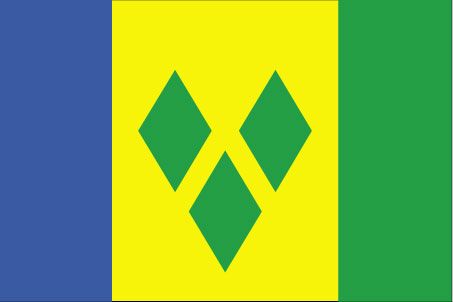
Saint Vincent and the Grenadines
Declare Your Relationship to Saint Vincent and the Grenadines
CountryReports Community
- Studying1
- From Saint Vincent and the Grenadines0
- Saint Vincent and the Grenadines heritage1
- Visited0
- Want to visit0
Quick Look Factsheet
A multi-page overview of Saint Vincent and the Grenadines.
Saint Vincent and the Grenadines FactsheetCustoms and Culture
Customs and Culture
Cultural Attributes
The culture of Saint Vincent and the Grenadines reflects a rich blend of African, British colonial, Carib, and East Indian influences, shaped over centuries of settlement, slavery, and independence. This small Caribbean nation, which gained full independence from Britain in 1979, retains strong ties to its heritage while forging a distinct national identity. The majority of the population is of African descent, a legacy of the transatlantic slave trade that brought laborers to the island's sugar plantations. This African heritage is most visibly expressed in music, dance, and spiritual practices. Calypso and soca music are central to everyday cultural life, while Vincentian folk music known as "bele" preserves older African and French Creole traditions. The national folk dance, also called bele, is performed in colorful dress and remains an important symbol of cultural pride. Carnival, known locally as Vincy Mas, is the country's most celebrated cultural event. Held annually in late June and early July, it features mas (masquerade) bands, steel pan competitions, soca competitions, and elaborate street parades. The Carnival draws participants and visitors from across the Caribbean and diaspora communities abroad. The Garifuna people, descendants of the Island Caribs and African maroons, represent one of the most unique cultural groups in the nation. Garifuna Heritage Month is observed each March, honoring their history and traditional customs, including the Garifuna language, drumming, and the yurumein celebration marking their ancestral journey. Cricket holds a near-sacred status in the sporting culture, deeply embedded from British colonial rule. The national team contributes players to the West Indies cricket squad, and matches are major social occasions. Football (soccer) has grown in popularity alongside cricket, particularly among younger generations. Religion plays a significant role in daily life, with Christianity — particularly Anglican, Methodist, and Pentecostal denominations — practiced by the vast majority of the population. Church attendance is high, and religious observances are woven into community events and public holidays. The local cuisine reflects the island's multicultural roots, with dishes such as roasted breadfruit and jackfish, black cake, and saltfish featuring prominently in home cooking and cultural celebrations.

Land of Blessed Rainbows and Fire
Get More Customs and Culture
5 more cultural topics for members
Social Customs & Etiquette · Diet · Family · Dating Customs · Recreation
Holidays
Independence Day
10/27Independence Day
Dates of Interest
- October 27th
How do people greet each other in Saint Vincent and the Grenadines?
When meeting a friend, Vincentians may offer a clever remark or witty challenge rather than a conventionally polite phrase.
Good to know
- Popular sayings include "Monkey know which tree to climb" (don't anger someone or they'll get you)
- "Never hang your hat where your hand cannot reach" means don't overextend yourself
- "Shoulder can't go above head" means you can't overreach people in authority
What are the dining customs in Saint Vincent and the Grenadines?
People start the morning with "tea" — a range of hot beverages — while dinner is the main family meal, and Sunday dinners are especially important gatherings.
Do
- Expect "tea" to mean coffee, hot chocolate, fish broth tea, or cocoa tea
- Gather with family for an elaborate Sunday dinner
Good to know
- Cocoa tea is made from processed local cocoa beans and spices, served with milk and sugar
- Lunch is generally a light meal
- Dinner often features fish, chicken, beef, or goat
- Cassava appears in dishes like chokee bam bam and farine, and in cassava pone pudding
What should I wear in Saint Vincent and the Grenadines?
Modern Western-style clothing is worn, especially light, bright-colored clothes.
Good to know
- Most children wear uniforms to school
What is family life like in Saint Vincent and the Grenadines?
Women are at the center of family life, responsible for raising children, caring for elderly relatives who often live with them, and tending the family garden.
Good to know
- Family arrangements include legal marriage, common-law cohabitation, and "visiting unions" or "friending"
- Most families own their homes, often built themselves or inherited, typically a bungalow
- In the Grenadines, households collect rainwater in barrels and buckets due to a lack of freshwater
What do people do for fun in Saint Vincent and the Grenadines?
Cricket and soccer are popular, and the coastlines invite water sports, while young people gather at dances and enjoy traditional storytelling.
Do
- Enjoy the beach, swimming, diving, snorkeling, sailing, and wind surfing
- Attend dances featuring reggae, calypso, soca, steel band, and Big Drum music
Good to know
- Anansi tales, African in origin, feature animals outwitting one another
- Emphasis is placed on the storyteller's performance and use of local elements
Last updated: 2026-07-12 · Sources: CountryReports
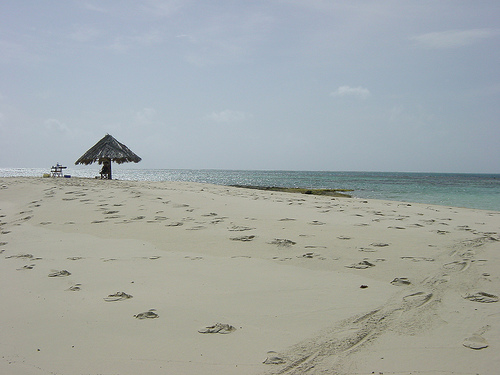
Photos of Saint Vincent and the Grenadines
Photos of Saint Vincent and the Grenadines


Travel and Tourism
Travel and Tourism
- Travel Alert Status
- Level 1: Exercise Normal Precautions
- Currency
- East Caribbean dollar (XCD)
- Time Difference
- UTC-4 (1 hour ahead of Washington, DC, during Standard Time)
- Climate
- tropical; little seasonal temperature variation; rainy season (May to November)
- Airports
- 6
Read the full travel guide — health, safety, vaccinations, disease risk, sanitation, and transit details.
View full travel guideRecipes
Recipes
History
History
Historical Eras
Indigenous Peoples Era
1300 – 1719
Arawak peoples inhabited the islands before Carib Indians from South America conquered them around 1300. Christopher Columbus sighted the main island in 1498, but fierce Carib resistance prevented sustained European colonization for over two centuries. Escaped and shipwrecked African slaves intermarried with the Caribs, forming the distinct Black Carib (Garifuna) people.
French Colonial Period
1719 – 1763
French settlers began cultivating coffee, tobacco, indigo, cotton, and sugar on St. Vincent from 1719, establishing plantation agriculture worked by enslaved Africans. France developed the island economically but faced ongoing tensions with indigenous Carib populations. This era laid the foundation for a plantation economy that would define Vincentian society for over a century.
British Colonial Rule
1763 – 1969
Britain acquired St. Vincent by the Treaty of Paris in 1763, though France briefly regained control from 1779 to 1783. The British suppressed a major Black Carib revolt in 1796, deporting more than 5,000 Garifuna to Roatan off the Honduran coast. Slavery was abolished in 1834, bringing Portuguese and East Indian indentured laborers to fill plantation labor shortages, while constitutional development progressed slowly toward universal suffrage in 1951.
Associate Statehood
1969 – 1979
Britain granted St. Vincent associate statehood in 1969, conferring full control over internal affairs while Westminster retained responsibility for defense and foreign policy. This transitional decade saw growing nationalist sentiment and political organization under leaders such as Milton Cato of the Saint Vincent Labour Party. La Soufrière volcano erupted in April 1979, causing widespread agricultural devastation and mass evacuations just months before independence.
Independence & Modern Era
1979 – present
Saint Vincent and the Grenadines became a fully independent nation within the Commonwealth on October 27, 1979, the last of the Windward Islands to do so. The country has navigated recurring natural disasters, including devastating hurricanes in 1980, 1987, and 1999, and a major La Soufrière eruption in 2021. Voters rejected a constitutional referendum to become a republic in 2009, retaining the British monarch as head of state while pursuing economic diversification beyond banana agriculture.
Overview
Carib Indians aggressively prevented European settlement on St. Vincent until the 18th century. African slaves--whether shipwrecked or escaped from St. Lucia and Grenada and seeking refuge in St. Vincent--intermarried with the Caribs and became known as "black Caribs." Beginning in 1719, French settlers cultivated coffee, tobacco, indigo, cotton, and sugar on plantations worked by African slaves. In 1763, St. Vincent was ceded to Britain. Restored to French rule in 1779, St.
Timeline of Key Events
1300
Carib Indians of South America conquer the indigenous Arawak Indians.
Carib Indians of South America conquer the indigenous Arawak Indians.
1498
Christopher Columbus visits the main island on St Vincent’s Day.
Christopher Columbus visits the main island on St Vincent’s Day.
1627
St Vincent granted to Britain’s Lord Carlisle.
St Vincent granted to Britain’s Lord Carlisle.
1834
Slavery abolished, forcing plantation owners to free more than 18,000 slaves.
Slavery abolished, forcing plantation owners to free more than 18,000 slaves.
1951
St Vincent granted universal adult suffrage.
St Vincent granted universal adult suffrage.
1979
St Vincent and the Grenadines become independent .
St Vincent and the Grenadines become independent with Milton Cato of the centre-left St Vincent Labour Party (SVLP) as prime minister.
2009
Voters reject the proposal to replace the monarchy with a republic in a constitutional referendum.
Voters reject the proposal to replace the monarchy with a republic in a constitutional referendum.
Read the full history profile — narrative overview, defining eras, and the complete timeline in one place.
View expanded historyInteresting Facts
Interesting Facts
The Caribs, who lived in St. Vincent before its colonization, called the island Yurumein, which means “the beauty of the rainbows in the valleys.” Another Carib name for the island is Hairoun, meaning “and of the blessed.”
Radiocarbon evidence suggests that eruptions of La Soufrière occurred as early as 160 A.D. The volcano's repeated activity has created “dry rivers” such as the Wallibou and Rabacca. These rivers were so choked with volcanic matter that they were driven underground, although the riverbeds remain.
The descendants of people deported from St. Vincent by the English, known as the Garifuna, still live in Honduras, Belize, Guatemala and other areas of Central America, where they maintain a distinct cultural identity.
Ferries, supply boats and airplanes run daily between St. Vincent and the larger Grenadine islands. Some of the Grenadines depend on supply boats for almost everything except supplies of fish.
See every fact — trivia, oddities, and curious tidbits gathered from across the country.
View all interesting factsGeography and Environment
Geography and Environment
- Terrain
- volcanic, mountainous
- Climate
- tropical; little seasonal temperature variation; rainy season (May to November)
- Natural Hazards
- hurricanes; Soufriere volcano on the island of Saint Vincent is a constant threat
- Current Environmental Issues
- pollution of coastal waters and shorelines from discharges by pleasure yachts and other effluents; in some areas, pollution is severe enough to make swimming prohibitive
Read the full geography and environment profile — terrain, climate, natural resources, hazards, land use, and international agreements.
View full geographyPeople & Demographics
People & Demographics
Religion
Languages Spoken
English, French patois
- English
- French patois
Population
- Population
- 103,698
- Population in Major Urban Areas
- KINGSTOWN (capital) 31,000
- Nationality Noun
- Saint Vincentian(s) or Vincentian(s)
- Ethnic Groups
- black 66%, mixed 19%, East Indian 6%, Carib Amerindian 2%, other 7%
Education
- Literacy Definition
- age 15 and over has ever attended school
Health Information
- Life Expectancy at Birth
- Life expectancy at birth in Saint Vincent and the Grenadines stands at approximately 72–73 years overall, with women living longer than men on average. Female life expectancy is estimated at around 75–76 years, while male life expectancy falls somewhat lower, at approximately 70–71 years. These figures reflect steady improvements in health outcomes over recent decades, driven by advances in medical care, increased access to healthcare services, and public health initiatives targeting preventable diseases. The country has made notable progress in reducing mortality from communicable diseases, though non-communicable diseases now represent a significant and growing health burden. Conditions such as diabetes, hypertension, and cardiovascular disease are among the leading causes of death in Saint Vincent and the Grenadines, mirroring broader trends seen across Caribbean nations. Obesity-related health issues have also drawn increasing attention from public health officials, as lifestyle and dietary changes have contributed to rising rates of chronic illness. The Milton Cato Memorial Hospital in Kingstown serves as the primary referral hospital for the nation, supplemented by a network of health centers and clinics distributed across the main island and the Grenadines. The government, in partnership with regional organizations such as the Caribbean Community (CARICOM) and the Pan American Health Organization (PAHO), has worked to strengthen primary healthcare delivery and expand access to essential medicines and preventive care. Infant mortality, a key factor influencing life expectancy at birth, has declined significantly over the past several decades, contributing to the overall upward trend in longevity. Improved maternal health services, prenatal care, and childhood vaccination programs have played important roles in this progress. The devastating eruption of La Soufrière volcano in April 2021 posed a significant short-term disruption to health services and displaced a substantial portion of the population, adding strain to the healthcare system during an already challenging period marked by the global COVID-19 pandemic. While life expectancy in Saint Vincent and the Grenadines compares reasonably well with other small island developing states in the Eastern Caribbean, challenges remain in addressing health disparities between urban and more remote island communities, particularly in ensuring consistent access to specialist care for residents of the Grenadines.
- Infant Mortality Rate
- Saint Vincent and the Grenadines has made meaningful progress in reducing infant mortality over recent decades, reflecting broader improvements in healthcare access, maternal health services, and public health infrastructure across the island nation. As of the most recent available data, the infant mortality rate in Saint Vincent and the Grenadines stands at approximately 13 to 15 deaths per 1,000 live births. This figure represents a significant decline from rates recorded in previous decades, when infant mortality was considerably higher due to limited access to neonatal care and rural health services. By regional standards, Saint Vincent and the Grenadines performs comparably to several of its Caribbean neighbors, though it still faces challenges that contribute to infant deaths, including preterm birth complications, neonatal infections, and congenital conditions. Access to skilled birth attendants has improved substantially, and the majority of births now take place in clinical settings with trained medical staff present, which has been a key driver in reducing early infant deaths. The Milton Cato Memorial Hospital in Kingstown serves as the country's main referral hospital and provides the most advanced neonatal care available on the islands. Rural and outer island communities, including those in the Grenadines, may face logistical challenges in reaching higher levels of care quickly, which can affect outcomes in emergency situations. Government health programs, supported by regional organizations such as the Pan American Health Organization and international partners, have focused on expanding prenatal care, promoting breastfeeding, and educating mothers on infant health practices. Vaccination coverage rates are generally high, helping to prevent infectious diseases that historically contributed to infant deaths. While the overall trend is positive, continued investment in maternal and neonatal health services, particularly in underserved areas, remains important for sustaining and further improving these outcomes. Addressing socioeconomic factors such as poverty, nutrition, and access to clean water also plays a role in the long-term reduction of infant mortality across the country.
Life Expectancy
- Life Expectancy at Birth
- Life expectancy at birth in Saint Vincent and the Grenadines stands at approximately 72–73 years overall, with women living longer than men on average. Female life expectancy is estimated at around 75–76 years, while male life expectancy falls somewhat lower, at approximately 70–71 years. These figures reflect steady improvements in health outcomes over recent decades, driven by advances in medical care, increased access to healthcare services, and public health initiatives targeting preventable diseases. The country has made notable progress in reducing mortality from communicable diseases, though non-communicable diseases now represent a significant and growing health burden. Conditions such as diabetes, hypertension, and cardiovascular disease are among the leading causes of death in Saint Vincent and the Grenadines, mirroring broader trends seen across Caribbean nations. Obesity-related health issues have also drawn increasing attention from public health officials, as lifestyle and dietary changes have contributed to rising rates of chronic illness. The Milton Cato Memorial Hospital in Kingstown serves as the primary referral hospital for the nation, supplemented by a network of health centers and clinics distributed across the main island and the Grenadines. The government, in partnership with regional organizations such as the Caribbean Community (CARICOM) and the Pan American Health Organization (PAHO), has worked to strengthen primary healthcare delivery and expand access to essential medicines and preventive care. Infant mortality, a key factor influencing life expectancy at birth, has declined significantly over the past several decades, contributing to the overall upward trend in longevity. Improved maternal health services, prenatal care, and childhood vaccination programs have played important roles in this progress. The devastating eruption of La Soufrière volcano in April 2021 posed a significant short-term disruption to health services and displaced a substantial portion of the population, adding strain to the healthcare system during an already challenging period marked by the global COVID-19 pandemic. While life expectancy in Saint Vincent and the Grenadines compares reasonably well with other small island developing states in the Eastern Caribbean, challenges remain in addressing health disparities between urban and more remote island communities, particularly in ensuring consistent access to specialist care for residents of the Grenadines.
- Infant Mortality Rate
- Saint Vincent and the Grenadines has made meaningful progress in reducing infant mortality over recent decades, reflecting broader improvements in healthcare access, maternal health services, and public health infrastructure across the island nation. As of the most recent available data, the infant mortality rate in Saint Vincent and the Grenadines stands at approximately 13 to 15 deaths per 1,000 live births. This figure represents a significant decline from rates recorded in previous decades, when infant mortality was considerably higher due to limited access to neonatal care and rural health services. By regional standards, Saint Vincent and the Grenadines performs comparably to several of its Caribbean neighbors, though it still faces challenges that contribute to infant deaths, including preterm birth complications, neonatal infections, and congenital conditions. Access to skilled birth attendants has improved substantially, and the majority of births now take place in clinical settings with trained medical staff present, which has been a key driver in reducing early infant deaths. The Milton Cato Memorial Hospital in Kingstown serves as the country's main referral hospital and provides the most advanced neonatal care available on the islands. Rural and outer island communities, including those in the Grenadines, may face logistical challenges in reaching higher levels of care quickly, which can affect outcomes in emergency situations. Government health programs, supported by regional organizations such as the Pan American Health Organization and international partners, have focused on expanding prenatal care, promoting breastfeeding, and educating mothers on infant health practices. Vaccination coverage rates are generally high, helping to prevent infectious diseases that historically contributed to infant deaths. While the overall trend is positive, continued investment in maternal and neonatal health services, particularly in underserved areas, remains important for sustaining and further improving these outcomes. Addressing socioeconomic factors such as poverty, nutrition, and access to clean water also plays a role in the long-term reduction of infant mortality across the country.
Read the full people and society profile — demographics, health, education, religion, languages, and notable people.
View full people and societyGovernment & Politics
Government & Politics
Country Identity
- Country Name
- SaintVincentandtheGrenadines
Government Structure
- Government Type
- parliamentary democracy; independent sovereign state within the Commonwealth
- Legal System
- based on English common law
- Executive Branch
- chief of state: King CHARLES III (since 8 September 2022), represented by Governor General Susan DOUGAN (since 1 August 2019) head of government: Prime Minister Ralph E. GONSALVES (since 29 March 2001) cabinet: Cabinet appointed by the governor general on the advice of the prime minister elections: none; the monarch is hereditary; the governor general is appointed by the monarch; following legislative elections, the leader of the majority party is usually appointed prime minister by the governor general; deputy prime minister appointed by the governor general on the advice of the prime minister
- Legislative Branch
- Unicameral House of Assembly (21 seats; 15 members elected by popular vote from single-member constituencies and 6 senators appointed by the governor-general on the advice of the prime minister and the leader of the opposition; members serve five-year terms). Elections: last held on 5 November 2020 (next to be held by 2025). Election results: percent of vote by party - ULP 49.68%, NDP 50.28%; seats by party - ULP 9, NDP 6.
- Judicial Branch
- Eastern Caribbean Supreme Court (based on Saint Lucia; one judge of the Supreme Court resides in Saint Vincent and the Grenadines)
- Suffrage
- 18 years of age; universal
- Constitution
- 27-Oct-79
- Independence
- 27 October 1979 (from UK)
- National Holiday
- Independence Day, 27 October (1979)
Capital City
- Capital Name
- Kingstown
- Capital - geographic coordinate
- 13 08 N, 61 13 W
- Capital Time Difference
- UTC-4 (1 hour ahead of Washington, DC, during Standard Time)
an earlier French settlement was renamed Kingstown by the British in 1763 when they assumed control of the island; the king referred to in the name is GEORGE III (r. 1760-1820)
Military
Branches: no regular military forces; Royal Saint Vincent and the Grenadines Police Force (RSVPF)
Embassy / Diplomatic Mission
U.S. Embassy in Bridgetown
Wildey Business park
Wildey
St. Michael, Barbados
Telephone: (246) 227-4399
Emergency after-hours telephone: (246) 227-4000
Facsimile: (246) 431-0179
Email: BridgetownACS@state.gov
Hours of operation are 8:30 a.m. – 4:30 p.m. Monday through Friday, except Barbadian and U.S. holidays.
Read the full government profile — flag symbolism, national anthem, and other national symbols.
View full government detailsEconomy
Economy
Saint Vincent and the Grenadines is a lower-middle-income economy whose performance depends heavily on tourism, agriculture, construction, and remittances.
Snapshot
- Currency Name and Code
- East Caribbean Dollar (XCD)
- GDP Real Growth Rate
- 5.3%
News & Weather
News & Weather
Current Weather
Latest News
Delta Air Lines Is Dropping All Flights to Saint Vincent and the Grenadines - Travel Market Report
Travel Market Report · 11h ago
Delta Air Lines Is Canceling Its Flights From Atlanta to This Caribbean Island - Caribbean Journal
Caribbean Journal · 2d ago
Saint Vincent and the Grenadines Travel Guide: Best Hotels, Restaurants, and Museums - ELLE
ELLE · 96d ago
St. Vincent and the Grenadines advances Integrated Health Surveillance Guidelines with PAHO support - Pan American Health Organization (PAHO)
Pan American Health Organization (PAHO) · 13d ago
Haiti vs St.Vincent and the Grenadines - Group Phase - FIBA AmeriCup 2029 Caribbean Pre-Qualifiers - FIBA
FIBA · 25d ago
Delta cancels all flights to one Caribbean destination starting next month - The Independent
The Independent · 1d ago
Saint Vincent and the Grenadines vs. French Guiana - Live Score - September 26, 2026 - FOX Sports
FOX Sports · 8d ago
Caribbean Roundup: Cuba, Guyana, Jamaica, and St. Vincent and the Grenadines - caribbeanlife.com
caribbeanlife.com · 2d ago
News via Google News
Climate Overview
tropical; little seasonal temperature variation; rainy season (May to November)
Frequently Asked Questions
Frequently Asked Questions
What is the population of Saint Vincent and the Grenadines?
How do people greet each other in Saint Vincent and the Grenadines?
What are the dining customs in Saint Vincent and the Grenadines?
What should I wear in Saint Vincent and the Grenadines?
What is family life like in Saint Vincent and the Grenadines?
What do people do for fun in Saint Vincent and the Grenadines?
What is the capital of Saint Vincent and the Grenadines?
Where is Saint Vincent and the Grenadines located?
What are the ocean and sea borders of Saint Vincent and the Grenadines?
What religion is practiced in Saint Vincent and the Grenadines?
What currency is used in Saint Vincent and the Grenadines?
What language is spoken in Saint Vincent and the Grenadines?
What is Saint Vincent and the Grenadines known for?
Who were the original inhabitants of Saint Vincent?
Last reviewed 2026