
 English
 Español
 中文
中文 हिन्दी
 Français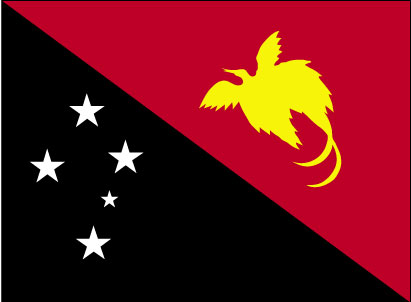
Papua New Guinea
Declare Your Relationship to Papua New Guinea
CountryReports Community
- Studying0
- From Papua New Guinea1
- Papua New Guinea heritage0
- Visited0
- Want to visit0
Customs and Culture
Customs and Culture
Cultural Attributes
The people are proud of their diversity and land. Most individuals have a strong sense of belonging to a tribe or language group. They also value their gardens, and their own physical abilities, endurance, and strength. There is a desire for material things and a sense of inadequacy in not being able to obtain them. Family and clan loyalty is strong and there is an obligation to share one's income and possessions. People are event oriented. Meetings or gatherings may not take place on time.

Land of a Thousand Tribes
Get More Customs and Culture
5 more cultural topics for members
Social Customs & Etiquette · Diet · Family · Dating Customs · Recreation
Holidays
Independence Day
9/16Independence Day
Dates of Interest
- September 16th
How do people greet each other in Papua New Guinea?
Papua New Guineans greet by shaking hands, though customs vary by area and language group. A nod and a smile are enough when passing a stranger.
Do
- Shake hands when greeting
- Nod and smile when passing a stranger
- Use the appropriate title with a full name for important officials
- Use first names in most casual cases
What are the dining customs in Papua New Guinea?
People typically eat two large meals with snacking throughout the day, usually sitting on the ground or floor, using a spoon or their hands.
Do
- Use a spoon, the most common utensil
- Sit on the ground or floor to eat (tables may be used in urban areas)
Don’t
- Don't ask for second helpings, as it can imply the host did not provide adequately
Good to know
- Staple foods include kaukau (sweet potato) in the Highlands and saksak (sago palm extract) on the coast and lowlands
- Taro, bananas, and yams are common; beer is popular as a status drink among men
What should I know about social etiquette in Papua New Guinea?
Visiting is a big part of daily life and is welcomed whether planned or impromptu, and people are event-oriented rather than time-oriented.
Do
- Welcome and enjoy informal, often lengthy visits
- Share food, tobacco, or betel nut and discuss the day's news when visiting
Good to know
- Meetings and gatherings may not start on time
- Family and clan loyalty is strong, with an obligation to share income and possessions
How should I dress in Papua New Guinea?
Western-style clothing is most common, with traditional attire limited to extremely remote areas.
Good to know
- Men wear shorts or pants; a shirt is optional when hot or doing physical labor
- Both men and women often wear laplap (a wraparound sarong)
Which gestures matter in Papua New Guinea?
Gestures with the head, eyes, and eyebrows are important to communication, and some gestures carry strong meanings.
Don’t
- Don't stare at a person of the opposite sex, as it is very offensive
- Don't hold hands with a member of the opposite sex in public
- Avoid the thumbs-up sign, which some consider offensive
Good to know
- Men holding hands, and women holding hands, is a sign of friendship
- A short hiss and sideways motion of the head indicates disgust or derision
What is family life like in Papua New Guinea?
The extended family is the basis of support, sharing food, wealth, and work, with a great deal of obligation and duty.
Good to know
- A child may refer to having more than one mother or father and many siblings
- Infertile parents or those who lost a child are often given a child by relatives
- Most family structures are patriarchal, though some societies are matriarchal
- Men usually handle construction; women cook, care for children, animals, and the garden
What do people do for fun in Papua New Guinea?
Soccer, rugby, and cricket are popular sports, while traditional recreation involves storytelling, dance, and song.
Good to know
- Electricity is not available everywhere, so television is a luxury
Last updated: 2026-07-12 · Sources: CountryReports
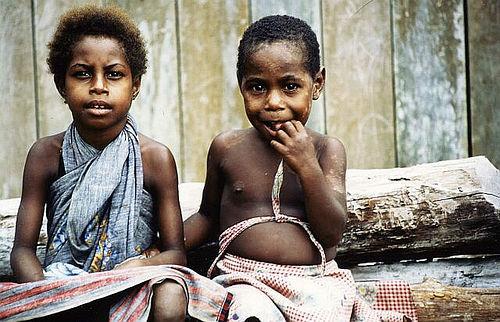
Photos of Papua New Guinea
Photos of Papua New Guinea


Travel and Tourism
Travel and Tourism
- Travel Alert Status
- Level 3: Reconsider Travel
- Currency
- kina (PGK)
- Time Difference
- UTC+10 (15 hours ahead of Washington, DC, during Standard Time) time zone note: Papua New Guinea has two time zones, including Bougainville (UTC+11)
- Climate
- Papua New Guinea lies wholly within the Tropics, and its climate is monsoonal. The "wet" northwest monsoon season extends from December to March and the "dry" southeast monsoon from May to October. Average annual rainfall is high, ranging from 80 to 100 inches. Although many areas have a wet and dry season, these terms are relative. Even in the so‑called dry season, 2–4 inches of rain per month fall in most areas. Many areas receive more than 200 inches, but a few, like Port Moresby, lie in a rain shadow and receive 40 inches or less annually. Although tropical, temperatures are not extreme. Most lowland, coastal, and island areas have a daily average temperature of 81°F, and seasonal variations are slight. In the highlands, temperature varies with altitude. At 6,000 feet, the average temperature is 61°F; daytime temperatures rise to 90°F and nighttime temperatures fall between 40°F and 50°F. Lowland humidity is uniformly about 80% with very little seasonal variation. Humidity fluctuates more in the highlands where temperatures are lower.
- Airports
- 559
Read the full travel guide — health, safety, vaccinations, disease risk, sanitation, and transit details.
View full travel guideRecipes
Recipes
History
History
Historical Eras
Prehistoric Settlement
50000 BCE – 1526
Papua New Guinea was among the earliest regions outside Africa to be settled by modern humans, with evidence of habitation dating back roughly 50,000 years. Inhabitants developed sophisticated agriculture independently — cultivating sugarcane, taro, yams, and bananas — at roughly the same time farming emerged in Mesopotamia and Egypt. Coastal communities engaged in active trade networks exchanging pottery, shell ornaments, and foodstuffs long before European contact.
Early European Contact
1526 – 1884
Portuguese navigator Don Jorge de Meneses became the first European credited with landing on the main island in 1526–27, giving it the name 'Papua.' In 1545, Spanish explorer Íñigo Ortiz de Retes named the island 'New Guinea' for its perceived resemblance to the African Guinea coast. For the next three centuries Europeans mapped coastlines but made little sustained contact with interior populations, whose complex societies remained largely undisturbed.
Colonial Partition
1884 – 1914
In 1884–85, Germany and Britain formally partitioned eastern New Guinea, establishing German New Guinea in the north and British New Guinea in the south. Britain transferred its southern territory to Australia in 1902, renamed it the Territory of Papua, and brought it under Australian administration. Colonial rule introduced cash crops, Christian missions, and administrative infrastructure while displacing traditional governance structures across the island.
Australian Mandate & WWII
1914 – 1945
Australian forces seized German New Guinea at the outbreak of World War I in 1914, and the League of Nations subsequently granted Australia a formal mandate over the territory in 1921. During World War II, the island became a critical theater of the Pacific War, with Japanese forces advancing to within striking distance of Australia before being repelled in brutal campaigns along the Kokoda Track and at Guadalcanal. Tens of thousands of soldiers and civilians perished during the Japanese occupation and Allied counteroffensives.
Path to Independence
1945 – 1975
Following World War II, Australia administered both Papua and the former German territory under a United Nations trusteeship, gradually introducing elected representation and preparing the territory for self-governance. The combined entity was renamed Papua New Guinea in 1971, and a House of Assembly with significant indigenous participation was established. Full independence was achieved on September 16, 1975, with Sir Michael Somare — widely regarded as the 'Father of the Nation' — becoming the country's first Prime Minister.
Independent Nation
1975 – present
Since independence, Papua New Guinea has navigated significant challenges including a nine-year secessionist conflict on Bougainville Island that claimed approximately 20,000 lives before a peace agreement was reached in 1997. The country possesses vast natural resources — including gold, copper, and liquefied natural gas — that have attracted major international investment, notably a landmark LNG deal with China in 2009. Persistent issues of political instability, crime, and uneven development continue to shape the nation's trajectory.
Overview
Although the first arrivals were hunters and gatherers, early evidence shows that people managed the forest environment to provide food. There also are indications of gardening having been practiced at the same time that agriculture was developing in Mesopotamia and Egypt. Early garden crops--many of which are indigenous--included sugarcane, Pacific bananas, yams, and taros, while sago and pandanus were two commonly exploited native forest crops.
Timeline of Key Events
1546
Spanish explorer Inigo Ortiz de Retes names the other main island New Guinea .
Spanish explorer Inigo Ortiz de Retes names the other main island New Guinea because the islanders resemble the people of Guinea in Africa.
1873
Port Moresby
Port Moresby is named after one of several English explorers to lay claim to the island for Great Britain.
1906
Control of British New Guinea transferred.
Control of British New Guinea transferred to the newly independent Commonwealth of Australia and renamed Territory of Papua.
1914
Australian forces occupy German New Guinea during World War I.
Australian forces occupy German New Guinea during World War I.
1921
After the war the League of Nations grants Australia a mandate to run German New Guinea.
After the war the League of Nations grants Australia a mandate to run German New Guinea. This new Mandated Territory of New Guinea is governed totally separately from the Territory of Papua.
1971
Renamed Papua New Guinea.
Renamed Papua New Guinea.
1975
Attains full independence from Australia. Sir Michael Somare becomes PM.
Attains full independence from Australia. Sir Michael Somare becomes PM.
Read the full history profile — narrative overview, defining eras, and the complete timeline in one place.
View expanded historyInteresting Facts
Interesting Facts
Papua New Guinea gained full independence from Australia in September 1975.
See every fact — trivia, oddities, and curious tidbits gathered from across the country.
View all interesting factsGeography and Environment
Geography and Environment
- Terrain
- mostly mountains with coastal lowlands and rolling foothills
- Climate
- Papua New Guinea lies wholly within the Tropics, and its climate is monsoonal. The "wet" northwest monsoon season extends from December to March and the "dry" southeast monsoon from May to October. Average annual rainfall is high, ranging from 80 to 100 inches. Although many areas have a wet and dry season, these terms are relative. Even in the so‑called dry season, 2–4 inches of rain per month fall in most areas. Many areas receive more than 200 inches, but a few, like Port Moresby, lie in a rain shadow and receive 40 inches or less annually. Although tropical, temperatures are not extreme. Most lowland, coastal, and island areas have a daily average temperature of 81°F, and seasonal variations are slight. In the highlands, temperature varies with altitude. At 6,000 feet, the average temperature is 61°F; daytime temperatures rise to 90°F and nighttime temperatures fall between 40°F and 50°F. Lowland humidity is uniformly about 80% with very little seasonal variation. Humidity fluctuates more in the highlands where temperatures are lower.
- Natural Hazards
- active volcanism; situated along the Pacific ""Ring of Fire""; the country is subject to frequent and sometimes severe earthquakes; mud slides; tsunamis
- Current Environmental Issues
- rain forest subject to deforestation as a result of growing commercial demand for tropical timber; pollution from mining projects; severe drought
Read the full geography and environment profile — terrain, climate, natural resources, hazards, land use, and international agreements.
View full geographyPeople & Demographics
People & Demographics
Religion
Languages Spoken
Melanesian Pidgin serves as the lingua franca, English spoken by 1%-2%, Motu spoken in Papua region
- Melanesian Pidgin
Population
- Population
- 10,329,931
- Population in Major Urban Areas
- PORT MORESBY (capital) 343,000
- Nationality Noun
- Papua New Guinean(s)
- Ethnic Groups
- Melanesian, Papuan, Negrito, Micronesian, Polynesian
- Language Note
- In Papua New Guinea, languages fall within two basic language stocks: Melanesian and Papuan. English is the official language and is taught in public schools. The language used at home, however, is almost always that of one’s language group. Melanesian Pidgin (Tok Pisin) is the most widely used language. Motu is the most common indigenous language, used primarily in the Papuan region.
Education
- Literacy Definition
- age 15 and over can read and write
Health Information
- Life Expectancy at Birth
- Life expectancy at birth in Papua New Guinea stands at approximately 65 years overall, with estimates placing male life expectancy around 63 years and female life expectancy around 67 years. These figures reflect modest but measurable improvements over the past few decades, driven by gradual advances in healthcare access, immunization programs, and maternal health initiatives. Papua New Guinea faces significant public health challenges that continue to weigh on life expectancy outcomes. The country carries a high burden of infectious diseases, including tuberculosis, malaria, and HIV/AIDS, all of which contribute meaningfully to premature mortality. Malaria in particular remains endemic across much of the country, especially in lowland and coastal regions, and represents one of the leading causes of illness and death among both children and adults. Tuberculosis rates are among the highest in the Western Pacific region, and drug-resistant strains have added further complexity to containment efforts. Maternal and child mortality rates remain elevated compared to regional neighbors. Neonatal mortality and deaths among children under five years of age are disproportionately high, reflecting limited access to skilled birth attendants, essential medicines, and emergency obstetric care, particularly in rural and remote highland communities. A large share of the population lives outside the reach of formal healthcare infrastructure, relying instead on community health workers or traditional practices. Non-communicable diseases, including cardiovascular disease and diabetes, are also on the rise as urbanization increases and dietary patterns shift, adding a growing layer of complexity to the country's overall health profile. Despite these challenges, life expectancy in Papua New Guinea has risen from roughly 55 years in the early 1990s, reflecting a long-term upward trend. Government health programs supported by international partners, including the World Health Organization and various bilateral aid donors, have worked to expand vaccination coverage, improve water and sanitation access, and strengthen primary healthcare delivery. Papua New Guinea's National Health Plan has outlined priorities for reducing preventable deaths and improving service delivery across the country's highly fragmented geography. Continued progress will depend heavily on sustained investment in rural health infrastructure and the training and retention of healthcare workers across the country's diverse and geographically challenging terrain.
- Major Infectious Diseases — degree of risk
- very high
- Infant Mortality Rate
- Papua New Guinea faces significant challenges in reducing infant mortality, reflecting broader difficulties in delivering healthcare across a geographically fragmented and largely rural nation. The infant mortality rate stands at approximately 33 to 36 deaths per 1,000 live births, meaning that roughly 3 to 4 out of every 100 infants born in the country do not survive to their first birthday. While this figure represents meaningful improvement from rates exceeding 60 per 1,000 live births recorded in the early 1990s, it remains considerably higher than the average for East Asia and the Pacific region as a whole. The underlying causes of infant death in Papua New Guinea are closely tied to preventable and treatable conditions. Neonatal infections, pneumonia, diarrheal diseases, and complications arising from preterm birth account for a substantial share of infant deaths. Malnutrition and limited access to clean water and sanitation further compound these risks, particularly in highland and remote coastal communities where healthcare infrastructure is sparse or nonexistent. Access to skilled birth attendance is a critical factor. A significant proportion of births in Papua New Guinea occur outside of formal health facilities, often without trained medical personnel present. This increases the risk of birth complications going unmanaged, contributing to both infant and maternal deaths. Vaccination coverage, while improving, has historically been inconsistent across the country's more than 600 islands and rugged interior terrain. Government initiatives supported by international organizations have worked to extend immunization programs, improve maternal health services, and train community health workers to reach isolated populations. Despite these efforts, funding gaps, infrastructure deficits, and a shortage of qualified health professionals continue to hamper progress. Compared globally, Papua New Guinea's infant mortality rate places it among countries with medium-high infant death rates, a reflection of the development challenges the country continues to navigate. Sustained investment in rural health access, nutrition programs, and clean water supply remains essential to further reducing preventable infant deaths in the decades ahead.
Life Expectancy
- Life Expectancy at Birth
- Life expectancy at birth in Papua New Guinea stands at approximately 65 years overall, with estimates placing male life expectancy around 63 years and female life expectancy around 67 years. These figures reflect modest but measurable improvements over the past few decades, driven by gradual advances in healthcare access, immunization programs, and maternal health initiatives. Papua New Guinea faces significant public health challenges that continue to weigh on life expectancy outcomes. The country carries a high burden of infectious diseases, including tuberculosis, malaria, and HIV/AIDS, all of which contribute meaningfully to premature mortality. Malaria in particular remains endemic across much of the country, especially in lowland and coastal regions, and represents one of the leading causes of illness and death among both children and adults. Tuberculosis rates are among the highest in the Western Pacific region, and drug-resistant strains have added further complexity to containment efforts. Maternal and child mortality rates remain elevated compared to regional neighbors. Neonatal mortality and deaths among children under five years of age are disproportionately high, reflecting limited access to skilled birth attendants, essential medicines, and emergency obstetric care, particularly in rural and remote highland communities. A large share of the population lives outside the reach of formal healthcare infrastructure, relying instead on community health workers or traditional practices. Non-communicable diseases, including cardiovascular disease and diabetes, are also on the rise as urbanization increases and dietary patterns shift, adding a growing layer of complexity to the country's overall health profile. Despite these challenges, life expectancy in Papua New Guinea has risen from roughly 55 years in the early 1990s, reflecting a long-term upward trend. Government health programs supported by international partners, including the World Health Organization and various bilateral aid donors, have worked to expand vaccination coverage, improve water and sanitation access, and strengthen primary healthcare delivery. Papua New Guinea's National Health Plan has outlined priorities for reducing preventable deaths and improving service delivery across the country's highly fragmented geography. Continued progress will depend heavily on sustained investment in rural health infrastructure and the training and retention of healthcare workers across the country's diverse and geographically challenging terrain.
- Infant Mortality Rate
- Papua New Guinea faces significant challenges in reducing infant mortality, reflecting broader difficulties in delivering healthcare across a geographically fragmented and largely rural nation. The infant mortality rate stands at approximately 33 to 36 deaths per 1,000 live births, meaning that roughly 3 to 4 out of every 100 infants born in the country do not survive to their first birthday. While this figure represents meaningful improvement from rates exceeding 60 per 1,000 live births recorded in the early 1990s, it remains considerably higher than the average for East Asia and the Pacific region as a whole. The underlying causes of infant death in Papua New Guinea are closely tied to preventable and treatable conditions. Neonatal infections, pneumonia, diarrheal diseases, and complications arising from preterm birth account for a substantial share of infant deaths. Malnutrition and limited access to clean water and sanitation further compound these risks, particularly in highland and remote coastal communities where healthcare infrastructure is sparse or nonexistent. Access to skilled birth attendance is a critical factor. A significant proportion of births in Papua New Guinea occur outside of formal health facilities, often without trained medical personnel present. This increases the risk of birth complications going unmanaged, contributing to both infant and maternal deaths. Vaccination coverage, while improving, has historically been inconsistent across the country's more than 600 islands and rugged interior terrain. Government initiatives supported by international organizations have worked to extend immunization programs, improve maternal health services, and train community health workers to reach isolated populations. Despite these efforts, funding gaps, infrastructure deficits, and a shortage of qualified health professionals continue to hamper progress. Compared globally, Papua New Guinea's infant mortality rate places it among countries with medium-high infant death rates, a reflection of the development challenges the country continues to navigate. Sustained investment in rural health access, nutrition programs, and clean water supply remains essential to further reducing preventable infant deaths in the decades ahead.
Read the full people and society profile — demographics, health, education, religion, languages, and notable people.
View full people and societyGovernment & Politics
Government & Politics
Country Identity
- Country Name
- PapuaNewGuinea
- Full Country Name
- Independent State of Papua New Guinea
- Former Name
- Territory of Papua and New Guinea
Government Structure
- Government Type
- constitutional monarchy with parliamentary democracy
- Legal System
- based on English common law
- Executive Branch
- chief of state: King CHARLES III (since 8 September 2022), represented by Governor General Sir Bob DADAE (since 28 February 2017) head of government: Prime Minister James MARAPE (since 30 May 2019); Deputy Prime Minister John ROSSO (since 2023) cabinet: National Executive Council appointed by the governor general on the recommendation of the prime minister elections: none; the monarch is hereditary; governor general appointed by the National Executive Council; following legislative elections, the leader of the majority party or the leader of the majority coalition is typically appointed prime minister by the governor general
- Legislative Branch
- unicameral National Parliament — sometimes referred to as the House of Assembly (118 seats; 89 members elected from open electorates and 22 from provincial electorates, plus 1 from the Autonomous Region of Bougainville and 6 from regional electorates; members elected by popular vote to serve five-year terms) elections: last held 4–22 July 2022 (next to be held in 2027) election results: percent of vote by party — Pangu Party 22%, People's National Congress 8%, United Resources Party 7%, National Alliance 6%, People's Movement for Change 5%, others and independents 52%; seats by party — Pangu Party 39, People's National Congress 12, United Resources Party 11, National Alliance 9, People's Movement for Change 7, others and independents 40; James Marape of the Pangu Party retained the position of Prime Minister following the election note: affiliation with political parties remains fluid, and coalition arrangements frequently shift following elections
- Judicial Branch
- Supreme Court (the chief justice is appointed by the governor general on the proposal of the National Executive Council after consultation with the minister responsible for justice; other judges are appointed by the Judicial and Legal Services Commission)
- Suffrage
- 18 years of age; universal
- Constitution
- 16-Sep-75
- Independence
- 16 September 1975 (from the Australian-administered UN trusteeship)
- National Holiday
- Independence Day, 16 September (1975)
Capital City
- Capital Name
- Port Moresby
- Capital - geographic coordinate
- 9 27 S, 147 11 E
- Capital Time Difference
- UTC+10 (15 hours ahead of Washington, DC, during Standard Time) time zone note: Papua New Guinea has two time zones, including Bougainville (UTC+11)
named in 1873 by Captain John MORESBY (1830-1922) in honor of his father, British Admiral Sir Fairfax MORESBY (1786-1877)
Military
Branches: Papua New Guinea Defense Force (PNGDF; includes Maritime Operations Element, Air Operations Element)
Embassy / Diplomatic Mission
U.S. EmbassyPort Moresby
Douglas Street, adjacent to the Bank of Papua New Guinea
Port Moresby, Papua New Guinea, P.O. Box 1492, Port Moresby, NCD 121, Papua New Guinea.
Telephone: 675 321-1455
After-hours duty-officer telephone: 675 7200-9439
E-mail: ConsularPortMoresby@state.gov
Read the full government profile — flag symbolism, national anthem, and other national symbols.
View full government detailsEconomy
Economy
Papua New Guinea is richly endowed with natural resources, including mineral and petroleum deposits, forests, fisheries, and agricultural land, but exploitation has been hampered by rugged terrain, the high cost of developing infrastructure, land tenure issues, and a complex regulatory…
Snapshot
- Currency Name and Code
- Papua New Guinean Kina (PGK)
- GDP — official exchange rate
- $3,924,000,000 (USD)
- GDP Real Growth Rate
- 4.5%
- Gini Index
- 50.9
News & Weather
News & Weather
Current Weather
Latest News
News - WWII Artifact Begins Journey Home as U.S., Papua New Guinea Honor Shared History - DVIDS
DVIDS · 9h ago
Papua New Guinea completes constitutional consultation process and prepares to hold Bougainville vote - ConstitutionNet
ConstitutionNet · 9h ago
New ‘conservation deed’ aims to protect tree kangaroos, forests, people in Papua New Guinea - news - Mongabay
news - Mongabay · 3d ago
National Species Symposium: strengthening national capacity for species conservation in Papua New Guinea through the Red List training workshop - International Union for Conservation of Nature
International Union for Conservation of Nature · 1d ago
Sheraton Hotels & Resorts Debuts in Papua New Guinea with the Opening of Sheraton Port Moresby Stanley Hotel & Suites - WebWire
WebWire · 2d ago
From Ukraine to the Jungles of Papua New Guinea: A Love Story That's Changing Countless Lives - cbn.com
cbn.com · 17d ago
32nd Military Police Company Strengthens Relationship with Papua New Guinea Defence Force During Tamiok Strike 2026 - DVIDS
DVIDS · 15h ago
Taiwan Halts $800 Million in Spot LNG Buys From Papua New Guinea - Crude Oil Prices Today | OilPrice.com
Crude Oil Prices Today | OilPrice.com · 8d ago
News via Google News
Climate Overview
Papua New Guinea lies wholly within the Tropics, and its climate is monsoonal. The "wet" northwest monsoon season extends from December to March and the "dry" southeast monsoon from May to October. Average annual rainfall is high, ranging from 80 to 100 inches. Although many areas have a wet and dry season, these terms are relative. Even in the so‑called dry season, 2–4 inches of rain per month fall in most areas. Many areas receive more than 200 inches, but a few, like Port Moresby, lie in a rain shadow and receive 40 inches or less annually.
Although tropical, temperatures are not extreme. Most lowland, coastal, and island areas have a daily average temperature of 81°F, and seasonal variations are slight. In the highlands, temperature varies with altitude. At 6,000 feet, the average temperature is 61°F; daytime temperatures rise to 90°F and nighttime temperatures fall between 40°F and 50°F. Lowland humidity is uniformly about 80% with very little seasonal variation. Humidity fluctuates more in the highlands where temperatures are lower.
Frequently Asked Questions
Frequently Asked Questions
What is the population of Papua New Guinea?
How do people greet each other in Papua New Guinea?
What are the dining customs in Papua New Guinea?
What should I know about social etiquette in Papua New Guinea?
How should I dress in Papua New Guinea?
Which gestures matter in Papua New Guinea?
What is family life like in Papua New Guinea?
What do people do for fun in Papua New Guinea?
What is the capital of Papua New Guinea?
Where is Papua New Guinea located?
What countries border Papua New Guinea?
What religion is practiced in Papua New Guinea?
What is the currency of Papua New Guinea?
What languages are spoken in Papua New Guinea?
What is Papua New Guinea known for?
What is the history of Papua New Guinea's independence?
Last reviewed 2026