
 English
 Español
 中文
中文 हिन्दी
 Français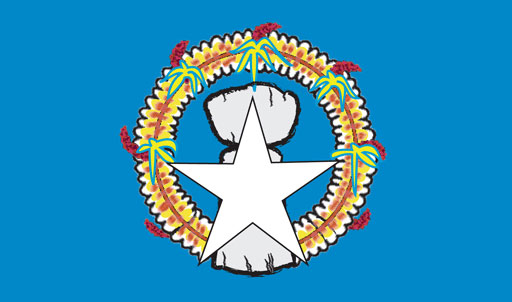
Northern Mariana Islands
Declare Your Relationship to Northern Mariana Islands
CountryReports Community
- Studying0
- From Northern Mariana Islands0
- Northern Mariana Islands heritage0
- Visited0
- Want to visit1
Customs and Culture
Customs and Culture
Cultural Attributes
The Northern Mariana Islands carry a rich cultural identity shaped by thousands of years of indigenous Chamorro heritage, centuries of Spanish colonial rule, and the more recent influences of Japanese occupation and American administration. This layered history has produced a society that blends ancient Pacific traditions with Spanish Catholic practices and contemporary American civic life. The indigenous Chamorro people are central to the islands' cultural identity. Traditional Chamorro values emphasize respect for elders, strong family bonds, and communal responsibility — concepts captured in the word "inafa'maolek," which roughly translates to fostering interdependence and the well-being of the group. Alongside the Chamorro, the Carolinian people, descendants of migrants from the Caroline Islands who arrived in the 19th century, form a distinct and recognized cultural group with their own language, traditions, and oral histories. Spanish influence left a lasting imprint, most visibly in the Roman Catholic faith, which remains the dominant religion across the islands. Local festivals, known as fiestas, are held throughout the year in honor of patron saints and serve as community gatherings that combine religious observance with music, food, and dance. These events remain among the most important social occasions on the islands. The Chamorro and Carolinian languages are taught in public schools alongside English, reflecting deliberate efforts to preserve indigenous linguistic heritage in the face of modernizing pressures. Local crafts such as weaving, the construction of traditional canoes, and the creation of thatched structures represent living connections to pre-colonial life. The arts scene includes storytelling, traditional dance performances, and carving, with the latte stone — an ancient pillar used as the foundation of Chamorro structures — serving as a powerful cultural symbol found in architecture, logos, and public artwork across the islands. Annual events such as the Flame Tree Arts Festival celebrate local visual and performing arts, giving residents and visitors an opportunity to engage directly with the creative traditions of the Northern Mariana Islands.

Island Crossroads of Pacific History
Get More Customs and Culture
2 more cultural topics for members
Social Customs & Etiquette · Dating Customs
Holidays
Commonwealth Day
1/8Other
Dates of Interest
- January 8th
What social values and etiquette matter in the Northern Mariana Islands?
Traditional Chamorro values emphasize respect for elders, strong family bonds, and communal responsibility, captured in the concept of "inafa'maolek," which means fostering interdependence and the well-being of the group.
Do
- Show respect for elders
- Recognize the value placed on family and community well-being
Good to know
- The islands blend indigenous Chamorro heritage, Spanish Catholic practices, and American civic life
- The Carolinian people are a distinct recognized cultural group with their own language and traditions
- Roman Catholicism remains the dominant religion
How important is family in the Northern Mariana Islands?
Strong family bonds and communal responsibility are central to Chamorro culture, reflected in the value of "inafa'maolek."
Good to know
- Respect for elders is a core traditional value
What festivals and cultural activities can travelers experience?
Fiestas honoring patron saints are held throughout the year, combining religious observance with music, food, and dance, and remain among the most important social occasions.
Good to know
- The Flame Tree Arts Festival celebrates local visual and performing arts
- Look for traditional crafts like weaving, canoe construction, and thatched structures
- The arts scene includes storytelling, traditional dance, and carving
- The latte stone is a powerful cultural symbol seen in architecture, logos, and public artwork
What should travelers know before visiting the Northern Mariana Islands?
The islands have a layered cultural identity shaped by Chamorro and Carolinian heritage, Spanish colonial rule, and Japanese and American influences.
Good to know
- Chamorro and Carolinian languages are taught in schools alongside English
- Roman Catholicism is the dominant religion
- Fiestas are key community gatherings held throughout the year
Last updated: 2026-07-12 · Sources: CountryReports
Photos of Northern Mariana Islands
Photos of Northern Mariana Islands


Travel and Tourism
Travel and Tourism
- Currency
- US dollar (USD)
- Time Difference
- UTC+10 (15 hours ahead of Washington, DC, during Standard Time)
- Climate
- tropical marine; moderated by northeast trade winds, little seasonal temperature variation; dry season December to June, rainy season July to October
- Airports
- 6
Read the full travel guide — health, safety, vaccinations, disease risk, sanitation, and transit details.
View full travel guideHistory
History
Historical Eras
Ancient Chamorro Settlement
1000 BCE – 1521
Seafaring migrants from the Indo-Malaysian region settled the Mariana Islands approximately 3,000 years ago, developing a sophisticated society known for its Latte Culture. Massive coral and limestone pillar structures served as foundations for the homes of the upper class, reflecting complex social hierarchies and engineering capability. By the time of European contact, the Latte Culture had already declined and its origins were largely forgotten by the inhabitants.
Spanish Colonial Era
1521 – 1898
Ferdinand Magellan's violent 1521 landfall inaugurated devastating Spanish contact; systematic colonization began in 1668 when Father Sanvitores established the first European mission on Guam. Protracted Spanish-Chamorro wars and introduced diseases reduced an estimated population of 50,000 to fewer than 2,000 by 1720. Survivors were resettled on Guam, converted to Catholicism, and intermarried with Mexican, Filipino, and Spanish garrison troops, forming the modern Chamorro ethnic identity.
German Administration
1898 – 1914
Following Spain's defeat in the Spanish-American War, Germany purchased the Northern Marianas in 1899, retaining them while the United States claimed Guam separately. A small German administration of no more than twenty officials introduced scientific agriculture and Western concepts of private land ownership to the islands. This brief period also saw the continued settlement of Carolinian migrants on Saipan, establishing the second indigenous ethnic group of the Northern Marianas.
Japanese Mandate
1914 – 1944
Japan seized the Northern Marianas from Germany at the outset of World War I and later received them as a League of Nations mandate in 1920. Thousands of Japanese and Okinawan civilians settled the islands, developing a thriving sugar cane and commercial fishing economy that brought the settler population to roughly 20,000. During World War II the islands became a critical theater of the Pacific War; the 1944 Battle of Saipan and Battle of the Philippine Sea were among the bloodiest engagements of the conflict, and B-29 bombers departed Tinian in August 1945 carrying the only atomic weapons ever used in warfare.
US Trust Territory
1944 – 1978
After Japan's defeat, the United States Navy administered the Northern Marianas until 1947, when they became part of the UN Trust Territory of the Pacific Islands under American stewardship. In a 1975 plebiscite, the islanders voted to pursue commonwealth status in political union with the United States rather than independence, and a formal covenant was approved that same year. A new constitution and self-governing commonwealth government took effect in 1978, with US citizenship extended to Chamorros and Carolinians in 1986.
Commonwealth Era
1978 – present
As the Commonwealth of the Northern Mariana Islands, the territory developed rapidly through tourism and apparel manufacturing, particularly on Saipan, which became a major economic hub by the 1980s. The islands have navigated ongoing challenges including devastating typhoons, the decline of the garment industry in the 2000s, and debates over federal labor and immigration law applicability. The CNMI continues to evolve its relationship with the United States while preserving distinct Chamorro and Carolinian cultural identities.
Overview
The Mariana Islands (including Guam) were settled by ocean going canoe voyagers some 3,000 years ago. Because of linguistic similarities, these people are believed to have originated from the Indo-Malaysian group.
Timeline of Key Events
1521
Magellan made landfall at the island of Guam in the Marianas.
Magellan made landfall at the island of Guam in the Marianas.
1810
A typhoon devastated the Caroline Islands, 500 miles south of the Marianas.
A typhoon devastated the Caroline Islands, 500 miles south of the Marianas. The survivors sailed to Guam but only half survived.
1898
Guam became a US territory.
Guam became a US territory.
1944
The Battle of the Philippine Sea.
The Battle of the Philippine Sea (Battle of the Marianas), called the "Marianas Turkey Shoot," began when Japanese naval forces attacked the stronger U.S. naval forces. 280 Japanese planes were shot down by U.S. carrier- based planes and anti-aircraft fire from U.S. ships. Americans shoot down 220 Japanese planes while only losing 20.
1944
U.S. troops completed the liberation of Guam.
U.S. troops completed the liberation of Guam.
1980
Tourism and apparel manufacturing became huge industries on Saipan.
Tourism and apparel manufacturing became huge industries on Saipan. Foreign contract workers began to outnumber the locals.
1986
The Chamorros and Carolinians of the Northern Marianas were given US citizenship.
The Chamorros and Carolinians of the Northern Marianas were given US citizenship.
Read the full history profile — narrative overview, defining eras, and the complete timeline in one place.
View expanded historyInteresting Facts
Interesting Facts
The only atomic weapons ever to be used in warfare were launched by B29s taking off from the island of Tinian in August of 1945. One of the Islands of the Northern Mariana Islands.
See every fact — trivia, oddities, and curious tidbits gathered from across the country.
View all interesting factsGeography and Environment
Geography and Environment
- Terrain
- southern islands are limestone with level terraces and fringing coral reefs; northern islands are volcanic
- Climate
- tropical marine; moderated by northeast trade winds, little seasonal temperature variation; dry season December to June, rainy season July to October
- Natural Hazards
- active volcanoes on Pagan and Agrihan; typhoons (especially August to November)
- Current Environmental Issues
- contamination of groundwater on Saipan may contribute to disease; clean-up of landfill; protection of endangered species conflicts with development
Read the full geography and environment profile — terrain, climate, natural resources, hazards, land use, and international agreements.
View full geographyPeople & Demographics
People & Demographics
Languages Spoken
English, Chamorro, Carolinian
- English
Population
- Population
- 47,329
- Population in Major Urban Areas
- SAIPAN (capital) 56,000
- Nationality Noun
- NA
- Ethnic Groups
- Chamorro, Carolinians and other Micronesians, Caucasian, Japanese, Chinese, Filipino, Korean
Education
- Literacy Definition
- age 15 and over can read and write
Health Information
- Life Expectancy at Birth
- Life expectancy at birth in the Northern Mariana Islands is relatively favorable compared to many Pacific island territories, reflecting the archipelago's access to U.S.-standard healthcare infrastructure and its status as a U.S. commonwealth. Overall life expectancy for the population is estimated at approximately 76 to 77 years, with women living notably longer than men. Female life expectancy is estimated at around 79 to 80 years, while male life expectancy trails at roughly 73 to 75 years — a gap consistent with global patterns observed across most developed and semi-developed economies. These figures place the Northern Mariana Islands in a comfortable mid-range position relative to other Pacific Island nations, outperforming many independent island states in the broader Micronesian and Melanesian regions. The commonwealth benefits from its political relationship with the United States, which grants residents access to federal health programs and funding mechanisms that support hospital services, preventive care, and emergency medicine. The Commonwealth Health Center on Saipan serves as the primary hospital facility for the islands. Despite these advantages, the Northern Mariana Islands faces persistent health challenges that weigh on longevity outcomes. Non-communicable diseases — particularly type 2 diabetes, cardiovascular disease, and hypertension — are prevalent among the resident population, partly due to dietary shifts toward processed foods and reduced physical activity. The islands also contend with limited specialist medical availability, often requiring patients to travel to Guam or the U.S. mainland for more complex procedures. The population's diverse ethnic composition — including indigenous Chamorros and Carolinians alongside large Filipino and other Asian immigrant communities — introduces varied health risk profiles and access patterns. Economic pressures, particularly following the decline of the garment manufacturing industry, the significant impacts of Typhoon Yutu in 2018, and disruptions associated with the COVID-19 pandemic, have strained public health resources and may continue to influence long-term health outcomes. Overall, while life expectancy in the Northern Mariana Islands compares reasonably well within its regional context, continued investment in local healthcare capacity, chronic disease prevention, and nutritional education remains essential to sustaining and improving these outcomes for future generations.
- Infant Mortality Rate
- The Northern Mariana Islands, a United States commonwealth territory in the western Pacific Ocean, maintains a relatively low infant mortality rate compared to many developing nations in the region, reflecting its status as a U.S.-affiliated territory with access to American healthcare standards and federal health programs. The infant mortality rate for the Northern Mariana Islands is estimated at approximately 11 to 13 deaths per 1,000 live births, though precise figures can fluctuate year to year given the territory's small population size. Because the total number of annual births is limited, even small changes in absolute numbers can produce notable statistical variation in the reported rate. As a U.S. commonwealth, the Northern Mariana Islands benefits from federal healthcare assistance, including Medicaid and programs administered through the U.S. Department of Health and Human Services. The Commonwealth Health Center on Saipan serves as the primary hospital facility for the islands, providing maternity and neonatal care to residents. However, for complex or high-risk pregnancies and specialized neonatal interventions, patients are often transferred to Guam or the U.S. mainland, which can introduce logistical challenges. Contributing factors to infant health outcomes in the territory include access to prenatal care, maternal nutrition, and the prevalence of conditions such as low birth weight and preterm delivery. The population's diverse ethnic composition — including Chamorro, Carolinian, Filipino, and other Asian communities — brings varying health-seeking behaviors and healthcare access patterns that can influence maternal and infant health outcomes. While the infant mortality rate in the Northern Mariana Islands is considerably lower than many Pacific Island nations, it remains higher than the U.S. national average of approximately 5 to 6 deaths per 1,000 live births, highlighting ongoing challenges in delivering comprehensive healthcare services in a remote island environment with limited medical infrastructure and a geographically dispersed population.
Life Expectancy
- Life Expectancy at Birth
- Life expectancy at birth in the Northern Mariana Islands is relatively favorable compared to many Pacific island territories, reflecting the archipelago's access to U.S.-standard healthcare infrastructure and its status as a U.S. commonwealth. Overall life expectancy for the population is estimated at approximately 76 to 77 years, with women living notably longer than men. Female life expectancy is estimated at around 79 to 80 years, while male life expectancy trails at roughly 73 to 75 years — a gap consistent with global patterns observed across most developed and semi-developed economies. These figures place the Northern Mariana Islands in a comfortable mid-range position relative to other Pacific Island nations, outperforming many independent island states in the broader Micronesian and Melanesian regions. The commonwealth benefits from its political relationship with the United States, which grants residents access to federal health programs and funding mechanisms that support hospital services, preventive care, and emergency medicine. The Commonwealth Health Center on Saipan serves as the primary hospital facility for the islands. Despite these advantages, the Northern Mariana Islands faces persistent health challenges that weigh on longevity outcomes. Non-communicable diseases — particularly type 2 diabetes, cardiovascular disease, and hypertension — are prevalent among the resident population, partly due to dietary shifts toward processed foods and reduced physical activity. The islands also contend with limited specialist medical availability, often requiring patients to travel to Guam or the U.S. mainland for more complex procedures. The population's diverse ethnic composition — including indigenous Chamorros and Carolinians alongside large Filipino and other Asian immigrant communities — introduces varied health risk profiles and access patterns. Economic pressures, particularly following the decline of the garment manufacturing industry, the significant impacts of Typhoon Yutu in 2018, and disruptions associated with the COVID-19 pandemic, have strained public health resources and may continue to influence long-term health outcomes. Overall, while life expectancy in the Northern Mariana Islands compares reasonably well within its regional context, continued investment in local healthcare capacity, chronic disease prevention, and nutritional education remains essential to sustaining and improving these outcomes for future generations.
- Infant Mortality Rate
- The Northern Mariana Islands, a United States commonwealth territory in the western Pacific Ocean, maintains a relatively low infant mortality rate compared to many developing nations in the region, reflecting its status as a U.S.-affiliated territory with access to American healthcare standards and federal health programs. The infant mortality rate for the Northern Mariana Islands is estimated at approximately 11 to 13 deaths per 1,000 live births, though precise figures can fluctuate year to year given the territory's small population size. Because the total number of annual births is limited, even small changes in absolute numbers can produce notable statistical variation in the reported rate. As a U.S. commonwealth, the Northern Mariana Islands benefits from federal healthcare assistance, including Medicaid and programs administered through the U.S. Department of Health and Human Services. The Commonwealth Health Center on Saipan serves as the primary hospital facility for the islands, providing maternity and neonatal care to residents. However, for complex or high-risk pregnancies and specialized neonatal interventions, patients are often transferred to Guam or the U.S. mainland, which can introduce logistical challenges. Contributing factors to infant health outcomes in the territory include access to prenatal care, maternal nutrition, and the prevalence of conditions such as low birth weight and preterm delivery. The population's diverse ethnic composition — including Chamorro, Carolinian, Filipino, and other Asian communities — brings varying health-seeking behaviors and healthcare access patterns that can influence maternal and infant health outcomes. While the infant mortality rate in the Northern Mariana Islands is considerably lower than many Pacific Island nations, it remains higher than the U.S. national average of approximately 5 to 6 deaths per 1,000 live births, highlighting ongoing challenges in delivering comprehensive healthcare services in a remote island environment with limited medical infrastructure and a geographically dispersed population.
Read the full people and society profile — demographics, health, education, religion, languages, and notable people.
View full people and societyGovernment & Politics
Government & Politics
Country Identity
- Country Name
- NorthernMarianaIslands
- Full Country Name
- Commonwealth of the Northern Mariana Islands
- Former Name
- Mariana Islands District (Trust Territory of the Pacific Islands)
Government Structure
- Government Type
- commonwealth; self-governing with locally elected governor, lieutenant governor, and legislature
- Legal System
- based on US system, except for customs, wages, immigration laws, and taxation
- Executive Branch
- chief of state: President Joseph R. BIDEN of the US (since 20 January 2021); Vice President Kamala D. HARRIS (since 20 January 2021) head of government: Governor Arnold I. PALACIOS (since 9 January 2023); Lieutenant Governor David M. APATANG (since 9 January 2023) cabinet: Cabinet appointed by the governor with the advice and consent of the Senate elections: under the US Constitution, residents of unincorporated territories, such as the Commonwealth of the Northern Mariana Islands, do not vote in elections for US president and vice president; governor and lieutenant governor elected on the same ticket by popular vote for four-year terms; election last held on 8 November 2022 (next to be held in November 2026) election results: Arnold I. PALACIOS elected governor; percent of vote in runoff election - Arnold I. PALACIOS (Republican Party) 52.3%, Ralph DLG. TORRES (Republican Party) 47.7%
- Legislative Branch
- Bicameral Legislature consists of the Senate (9 seats; members are elected by popular vote to serve four-year staggered terms) and the House of Representatives (20 seats; members are elected by popular vote to serve two-year terms). Elections: Senate - last held on 8 November 2022 (next to be held in November 2026); House of Representatives - last held on 8 November 2022 (next to be held in November 2024). Election results: Senate - seats by party - Republican Party 6, Democratic Party 2, independent 1; House of Representatives - seats by party - Republican Party 12, Democratic Party 5, independent 3. Note: The Northern Mariana Islands has a nonvoting delegate to the US House of Representatives. The current delegate represents the islands' interests in Washington, DC, and participates in floor debates but does not cast votes on final passage of legislation. The Commonwealth also maintains an elected Resident Representative to the United States, serving as an additional liaison to the federal government.
- Judicial Branch
- Commonwealth Supreme Court; Superior Court; Federal District Court
- Suffrage
- 18 years of age; universal; indigenous inhabitants are US citizens but do not vote in US presidential elections
- Constitution
- Covenant Agreement effective 4 November 1986 and the Constitution of the Commonwealth of the Northern Mariana Islands effective 1 January 1978
- Independence
- none (commonwealth in political union with the US)
- National Holiday
- Commonwealth Day, 8 January (1978)
Capital City
- Capital Name
- Saipan
- Capital - geographic coordinate
- 15 12 N, 145 45 E
- Capital Time Difference
- UTC+10 (15 hours ahead of Washington, DC, during Standard Time)
the entire island of Saipan is organized as a single municipality and serves as the capital; according to legend, when the first native voyagers arrived in their outrigger canoes they found an uninhabited island; to them it was like an empty voyage, so they named the island saay meaning "a voyage," and peel meaning "empty"; over time Saaypeel - "island of the empty voyage" - became Saipan
Read the full government profile — flag symbolism, national anthem, and other national symbols.
View full government detailsEconomy
Economy
The economy of the Northern Mariana Islands relies heavily on financial assistance from the United States, tourism, and a recovering services sector.
Snapshot
- Currency Name and Code
- US Dollar (USD)
- GDP Real Growth Rate
- -4%
News & Weather
News & Weather
Current Weather
Latest News
U.S. Navy Scales Back Destructive Live-Fire Training in Northern Mariana Islands - Earthjustice
Earthjustice · 1d ago
USS Ashland Completes Typhoon Recovery Mission in Northern Mariana Islands > U.S. Pacific Command > News - pacom.mil
pacom.mil · 4d ago
News - FIRST DEPLOYMENT STORIES: The Volunteer Spirit - DVIDS
DVIDS · 1d ago
Agingan, Saipan, Northern Mariana Islands Weather Radar - AccuWeather
AccuWeather · 11h ago
Tinian | Northern Mariana Islands, Map, World War II, & Facts - Encyclopedia Britannica
Encyclopedia Britannica · 17d ago
Pacific islands alarmed by Trump-backed push for deep-sea mining - Phys.org
Phys.org · 1d ago
How many people in Northern Mariana Islands are on Medicare? - USAFacts
USAFacts · 7d ago
USACE Aids Northern Mariana Islands Recovery with Climate-Resilient Classrooms Following Super Typhoons - army.mil
army.mil · 16d ago
News via Google News
Climate Overview
tropical marine; moderated by northeast trade winds, little seasonal temperature variation; dry season December to June, rainy season July to October
Frequently Asked Questions
Frequently Asked Questions
What is the population of Northern Mariana Islands?
What social values and etiquette matter in the Northern Mariana Islands?
How important is family in the Northern Mariana Islands?
What festivals and cultural activities can travelers experience?
What should travelers know before visiting the Northern Mariana Islands?
What is the capital of the Northern Mariana Islands?
Where are the Northern Mariana Islands located?
What ocean surrounds the Northern Mariana Islands?
What currency is used in the Northern Mariana Islands?
What languages are spoken in the Northern Mariana Islands?
What is the political status of the Northern Mariana Islands?
What is the Northern Mariana Islands known for?
Last reviewed 2026