
 English
 Español
 中文
中文 हिन्दी
 Français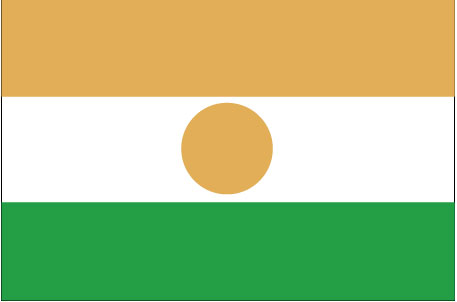
Niger
Niger
Declare Your Relationship to Niger
CountryReports Community
- Studying0
- From Niger0
- Niger heritage0
- Visited0
- Want to visit0
Customs and Culture
Customs and Culture
Cultural Attributes
City people are working for rent, electricity, water bills or occasionally major purchases like a t.v. or satellite dish or maybe a motorcycle. These people are in the minority. Normally people are working for food.
The poorest people normally live in a hut and rarely have electricity or running water. Kerosene lamps and the well are standard. Livestock is a symbol of wealth. So is a trip to Mecca. The majority of the population lives in a rural area, no debts, rent, etc. Most people wish for food.

Land of the Niger, Desert and Resilience
Get More Customs and Culture
5 more cultural topics for members
Social Customs & Etiquette · Diet · Family · Dating Customs · Recreation
Holidays
Republic Day
12/18Independence
Dates of Interest
- December 18th
How do people greet each other in Niger?
Greetings depend on the language spoken; Hausa and Djerma each have their own common exchanges. Men usually shake hands and touch their heart to show sincerity, while women do not shake but touch their heart.
Do
- In Hausa, say "Ina ini?" (reply "Lahiya lau" - Fine) or "Ina Kwana" for good morning
- In Djerma, say "Mate ni go?" (reply "Bani samaay" - Fine)
- Use "Sai an jima" (See you later) in Hausa when parting
- Touch your heart when meeting someone to show sincerity
Good to know
- To get attention in Hausa say "kai mi yaki" (Hey, come here); in Djerma "Kai, ka"
What are the dining customs in Niger?
People typically eat one main meal a day, usually millet patties with sauce in the evening, and eat from a shared bowl using the right hand. Women and children eat together while men eat separately.
Do
- Eat with your right hand from the shared food bowl
- Expect to eat seated in chairs or on mats on the floor
- Eat breakfast (6-7 AM) and dinner (after last prayer, about 8:30) at home
Don’t
- Do not use your left hand to touch food, as it is considered unclean
- Do not expect utensils or tables
Good to know
- A millet porridge is drunk during the day; beans and rice or rice and sauce may be had for lunch if affordable
- Siesta runs from 12:30 to 3:30 because of the heat
- Street vendors sell food eaten on sidewalk benches
What should I know about hospitality and social etiquette in Niger?
Hospitality is central: impromptu visits are the norm and a visitor is never turned away, following the motto "Your guest is your god." Traditional strongly brewed tea is the most important social event.
Do
- Accept and share traditional tea brewed in a small teapot on coals
- Socialize under shade trees or while watching television together
Good to know
- Men eat and socialize with men, women with women
- Women socialize at the well
How should I dress in Niger?
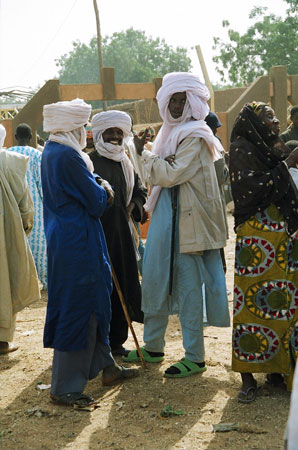
Traditional dress is modest and covering. Men wear a boo-boo (a long roomy ankle-length dress) with pants underneath.
Do
- Women wear a long, colorful wrap-around skirt with a matching shirt, a head covering, and usually a shawl covering head and shoulders
What gestures and body language should I be aware of in Niger?
Same-sex handholding is common and non-affectionate, showing happiness to see someone, but there are no public displays of romantic intimacy.
Do
- Men shake hands and touch the heart; women touch the heart without shaking
- As a woman, avoid direct eye contact with elders of the opposite sex to show respect
Don’t
- Do not display romantic intimacy in public
What are family customs like in Niger?
Women spend most of the day caring for children and preparing meals. A man may have up to four wives at a time.
Don’t
- Among the Hausa, a woman cannot show affection for her eldest child in public
Good to know
- Young men must raise money on their own when ready to marry
What do people do for recreation in Niger?
Soccer is a favorite among children, and wrestling is popular with arenas in most cities. Horse races and storytelling are also common pastimes.
Good to know
- In rural areas, market days are opportunities to socialize
Last updated: 2026-07-12 · Sources: CountryReports
Photos of Niger
Photos of Niger


Travel and Tourism
Travel and Tourism
- Travel Alert Status
- Level 3: Reconsider Travel
- Time Difference
- UTC+1 (6 hours ahead of Washington, DC, during Standard Time)
- Climate
- Niamey's climate varies with distinct seasons. April and May are the hottest months, with noontime temperatures often rising above 48°C (118°F) in the shade. Direct sunlight is intense during this period, and at night temperatures remain above 20°C (80°F). In May, the first rains come to the usually parched landscape and with them the planting of millet and sorghum, the major food crops. Niamey gets on average 55.8 centimeters (22 inches) of rainfall between June and September, normally in short torrential downpours preceded by high winds and dust or sand storms. At this time, the surrounding countryside takes on a verdant hue as the crops and the native grasses begin to grow. The rainy season is followed by a short period of hot, humid weather in October during which temperatures range between 15°C (60°F) and 45°C (112°F). From November to March, the weather is dry and pleasant. During this season, clear days are interspersed with hazy, overcast skies caused by the "harmattan"--a hot, dry wind carrying dust from the Sahara. Normally, the winds stay at high altitudes, creating slightly overcast skies; the harmattan, however, occasionally causes localized dust storms.
- Airports
- 27
Read the full travel guide — health, safety, vaccinations, disease risk, sanitation, and transit details.
View full travel guideRecipes
Recipes
History
History
Historical Eras
Pre-Islamic Kingdoms
600000 BCE – 1591
The Niger region hosted human habitation for hundreds of thousands of years and became a vital Saharan crossroads. Successive empires — including Mali, Songhai, Kanem-Bornu, and the Gao state — controlled portions of the territory, while Hausa city-states flourished in the south. The fall of the Songhai Empire after the Moroccan invasion of 1591 fragmented centralized power and reshaped the region's political landscape.
Fulani & Tuareg Era
1591 – 1890
Following the collapse of Songhai, the nomadic Tuareg formed powerful confederations and pushed southward, clashing with the expanding Fulani Empire of Sokoto, which seized much of Hausa territory in the late 18th century. European explorers, notably Mungo Park and Heinrich Barth, traversed the region in the 19th century seeking the Niger River's course. This era was defined by competing Islamic polities, slave trading networks, and the first tentative Western contacts.
French Colonial Period
1890 – 1960
France began military pacification campaigns before 1900, but Tuareg resistance in the desert north was not fully subdued until 1922, when Niger was formally constituted as a French colony administered from Dakar. The 1946 French constitution and the 1956 Loi Cadre progressively extended limited self-governance, and by 1958 Niger became an autonomous republic within the French Community. Colonial rule shaped Niger's administrative structures, infrastructure, and political class, though economic development remained severely limited.
First Republic & Military Rule
1960 – 1991
Niger gained full independence on August 3, 1960, with Hamani Diori leading a single-party civilian state for fourteen years. A catastrophic drought and widespread corruption charges prompted a 1974 military coup by Colonel Seyni Kountché, whose junta governed until his death in 1987. His successor, Colonel Ali Saibou, liberalized some policies and introduced a new constitution in 1989, but mounting union and student pressure forced the regime to accept multiparty democracy by 1990.
Democratic Transition & Instability
1991 – 1999
A national conference convened in July 1991 paved the way for the Third Republic, and Niger's first free elections were held in 1993 under President Mahamane Ousmane. Coalition rivalries paralyzed governance, enabling Colonel Ibrahim Baré Maïnassara's coup in 1996; his assassination in 1999 triggered a second coup and the formation of a National Reconciliation Council. A 1995 peace accord had meanwhile ended the five-year Tuareg insurgency in the north, and civilian rule was restored by December 1999.
Modern Niger
1999 – present
Elected civilian governments have alternated with periodic political crises, including further coups in 2010 and 2023, underscoring the fragility of democratic consolidation. Niger remains one of the world's poorest nations, persistently challenged by Sahel droughts, food insecurity, jihadist insurgencies in border regions, and a rapidly growing population. Significant uranium and oil deposits offer potential development resources, but governance instability and climate vulnerability continue to constrain economic progress.
Overview
Considerable evidence indicates that about 600,000 years ago, humans inhabited what has since become the desolate Sahara of northern Niger. Long before the arrival of French influence and control in the area, Niger was an important economic crossroads, and the empires of Songhai, Mali, Gao, Kanem, and Bornu, as well as a number of Hausa states, claimed control over portions of the area.
Timeline of Key Events
1890
French occupy Niger.
French occupy Niger.
1958
Niger becomes autonomous republic of the French Community.
Niger becomes autonomous republic of the French Community.
1960
Niger gained independence from France. Hamani Diori was president.
Niger gained independence from France. Hamani Diori was president.
1968 – 1973
Severe drought devastates Niger’s livestock and crop production.
Severe drought devastates Niger’s livestock and crop production.
1989
A new constitution brings Niger back to civilian rule, but under a one-party system.
A new constitution brings Niger back to civilian rule, but under a one-party system; Seybou re-elected president.
1990
Rebellion by Tuareg people in the north begins.
Rebellion by Tuareg people in the north begins.
1993
The first democratic government was elected.
The first democratic government was elected.
Read the full history profile — narrative overview, defining eras, and the complete timeline in one place.
View expanded historyInteresting Facts
Interesting Facts
With little primary education, Niger has one of the lowest literacy rates in the world.
As of December 2009 there were 23,982,200 Internet users in Niger
Niger is a leading producer of uranium, and is rich in other minerals. However, the United Nations rates it as one of world’s poorest countries.
See every fact — trivia, oddities, and curious tidbits gathered from across the country.
View all interesting factsGeography and Environment
Geography and Environment
- Terrain
- predominately desert plains and sand dunes; flat to rolling plains in south; hills in north
- Climate
- Niamey's climate varies with distinct seasons. April and May are the hottest months, with noontime temperatures often rising above 48°C (118°F) in the shade. Direct sunlight is intense during this period, and at night temperatures remain above 20°C (80°F). In May, the first rains come to the usually parched landscape and with them the planting of millet and sorghum, the major food crops. Niamey gets on average 55.8 centimeters (22 inches) of rainfall between June and September, normally in short torrential downpours preceded by high winds and dust or sand storms. At this time, the surrounding countryside takes on a verdant hue as the crops and the native grasses begin to grow. The rainy season is followed by a short period of hot, humid weather in October during which temperatures range between 15°C (60°F) and 45°C (112°F). From November to March, the weather is dry and pleasant. During this season, clear days are interspersed with hazy, overcast skies caused by the "harmattan"--a hot, dry wind carrying dust from the Sahara. Normally, the winds stay at high altitudes, creating slightly overcast skies; the harmattan, however, occasionally causes localized dust storms.
- Natural Hazards
- recurring droughts
- Current Environmental Issues
- overgrazing; soil erosion; deforestation; desertification; wildlife populations (such as elephant, hippopotamus, giraffe, and lion) threatened because of poaching and habitat destruction
Read the full geography and environment profile — terrain, climate, natural resources, hazards, land use, and international agreements.
View full geographyPeople & Demographics
People & Demographics
Religion
Languages Spoken
French (official), Hausa, Djerma
- French
- Hausa
Population
- Population
- 26,342,784
- Population in Major Urban Areas
- NIAMEY (capital) 1.297 million
- Nationality Noun
- Nigerien(s)
- Ethnic Groups
- Hausa 56%, Djerma 22%, Fula 8.5%, Tuareg 8%, Beri Beri (Kanouri) 4.3%, Arab, Toubou, and Gourmantche 1.2%, about 1,200 French expatriates
Education
- Literacy Definition
- age 15 and over can read and write
Health Information
- Life Expectancy at Birth
- Life expectancy at birth in Niger is among the lowest in the world, reflecting the profound development challenges the country continues to face. As of the most recent data, the average life expectancy in Niger stands at approximately 63 years, with modest variations between males and females. Women generally live slightly longer than men, a pattern consistent with global trends. Several interconnected factors contribute to this low figure. Niger has the highest fertility rate in the world, with women averaging more than seven births over their lifetime. While high birth rates do not directly lower life expectancy, they place enormous strain on maternal and child health systems. Maternal mortality remains critically high, and infant and under-five mortality rates are among the most severe globally, both of which pull down the overall life expectancy average. Access to clean drinking water, sanitation, and healthcare infrastructure remains limited, particularly in rural areas where the majority of Niger's population lives. Malnutrition is widespread, affecting children especially, and contributes to vulnerability to infectious diseases such as malaria, respiratory infections, and diarrheal illnesses — all of which are leading causes of death. Niger's healthcare system is significantly underfunded. The country has very few physicians and hospital beds per capita relative to its population, and geographic barriers make reaching medical facilities difficult for many communities. Despite these obstacles, Niger has made measurable progress over recent decades. Life expectancy has climbed from the low 40s in the 1960s, representing a meaningful, if still insufficient, improvement driven by vaccination campaigns, international health aid, and gradual improvements in child survival rates. Poverty is a fundamental underlying driver of poor health outcomes. Niger consistently ranks at or near the bottom of the United Nations Human Development Index, and economic constraints limit both public health investment and individual household capacity to access care. Political instability in recent years has introduced additional uncertainty around the continuity of international aid programs and public health initiatives. Sustained international partnerships and targeted investments in primary healthcare, nutrition, and education remain critical to improving life expectancy in the decades ahead.
- Major Infectious Diseases — degree of risk
- very high
- Infant Mortality Rate
- Niger has one of the highest infant mortality rates in the world, reflecting the country's significant challenges in healthcare access, nutrition, and infrastructure. As of the most recent available data, Niger's infant mortality rate stands at approximately 68 to 72 deaths per 1,000 live births, meaning that roughly one in every fourteen infants does not survive to their first birthday. This figure is substantially higher than the global average of around 27 deaths per 1,000 live births, and it remains among the highest on the African continent. Several interconnected factors drive this sobering statistic. Niger is a landlocked, predominantly arid nation in West Africa where poverty is widespread and access to quality healthcare is severely limited, particularly in rural and remote areas. Many births occur outside of formal medical facilities without trained attendants, increasing the risk of complications for both mother and child. Neonatal conditions such as preterm birth complications, birth asphyxia, and infections account for a significant proportion of infant deaths. Malnutrition is another critical contributing factor. Niger consistently ranks among the countries with the highest rates of child malnutrition globally, and undernourished infants are far more vulnerable to infectious diseases such as malaria, pneumonia, and diarrheal illnesses, which remain leading causes of infant death in the country. Despite these challenges, Niger has made measurable progress over the past two decades. In the early 2000s, the infant mortality rate exceeded 120 deaths per 1,000 live births, and the decline to current levels represents a meaningful improvement driven by expanded vaccination programs, increased community health worker outreach, oral rehydration therapy promotion, and international humanitarian partnerships with organizations such as UNICEF and the World Health Organization. Sustained investment in maternal and child health services, clean water and sanitation infrastructure, and girls' education — which is closely linked to improved child health outcomes — will be essential for Niger to continue reducing its infant mortality rate in the coming decades.
Life Expectancy
- Life Expectancy at Birth
- Life expectancy at birth in Niger is among the lowest in the world, reflecting the profound development challenges the country continues to face. As of the most recent data, the average life expectancy in Niger stands at approximately 63 years, with modest variations between males and females. Women generally live slightly longer than men, a pattern consistent with global trends. Several interconnected factors contribute to this low figure. Niger has the highest fertility rate in the world, with women averaging more than seven births over their lifetime. While high birth rates do not directly lower life expectancy, they place enormous strain on maternal and child health systems. Maternal mortality remains critically high, and infant and under-five mortality rates are among the most severe globally, both of which pull down the overall life expectancy average. Access to clean drinking water, sanitation, and healthcare infrastructure remains limited, particularly in rural areas where the majority of Niger's population lives. Malnutrition is widespread, affecting children especially, and contributes to vulnerability to infectious diseases such as malaria, respiratory infections, and diarrheal illnesses — all of which are leading causes of death. Niger's healthcare system is significantly underfunded. The country has very few physicians and hospital beds per capita relative to its population, and geographic barriers make reaching medical facilities difficult for many communities. Despite these obstacles, Niger has made measurable progress over recent decades. Life expectancy has climbed from the low 40s in the 1960s, representing a meaningful, if still insufficient, improvement driven by vaccination campaigns, international health aid, and gradual improvements in child survival rates. Poverty is a fundamental underlying driver of poor health outcomes. Niger consistently ranks at or near the bottom of the United Nations Human Development Index, and economic constraints limit both public health investment and individual household capacity to access care. Political instability in recent years has introduced additional uncertainty around the continuity of international aid programs and public health initiatives. Sustained international partnerships and targeted investments in primary healthcare, nutrition, and education remain critical to improving life expectancy in the decades ahead.
- Infant Mortality Rate
- Niger has one of the highest infant mortality rates in the world, reflecting the country's significant challenges in healthcare access, nutrition, and infrastructure. As of the most recent available data, Niger's infant mortality rate stands at approximately 68 to 72 deaths per 1,000 live births, meaning that roughly one in every fourteen infants does not survive to their first birthday. This figure is substantially higher than the global average of around 27 deaths per 1,000 live births, and it remains among the highest on the African continent. Several interconnected factors drive this sobering statistic. Niger is a landlocked, predominantly arid nation in West Africa where poverty is widespread and access to quality healthcare is severely limited, particularly in rural and remote areas. Many births occur outside of formal medical facilities without trained attendants, increasing the risk of complications for both mother and child. Neonatal conditions such as preterm birth complications, birth asphyxia, and infections account for a significant proportion of infant deaths. Malnutrition is another critical contributing factor. Niger consistently ranks among the countries with the highest rates of child malnutrition globally, and undernourished infants are far more vulnerable to infectious diseases such as malaria, pneumonia, and diarrheal illnesses, which remain leading causes of infant death in the country. Despite these challenges, Niger has made measurable progress over the past two decades. In the early 2000s, the infant mortality rate exceeded 120 deaths per 1,000 live births, and the decline to current levels represents a meaningful improvement driven by expanded vaccination programs, increased community health worker outreach, oral rehydration therapy promotion, and international humanitarian partnerships with organizations such as UNICEF and the World Health Organization. Sustained investment in maternal and child health services, clean water and sanitation infrastructure, and girls' education — which is closely linked to improved child health outcomes — will be essential for Niger to continue reducing its infant mortality rate in the coming decades.
Read the full people and society profile — demographics, health, education, religion, languages, and notable people.
View full people and societyGovernment & Politics
Government & Politics
Country Identity
- Country Name
- Niger
- Full Country Name
- Republic of Niger
- Local - Long
- Republique du Niger
- Local - Short
- Niger
Government Structure
- Government Type
- republic
- Legal System
- based on French civil law system and customary law; has not accepted compulsory ICJ jurisdiction
- Executive Branch
- chief of state: President of the National Council for the Safeguard of the Homeland (CNSP) General Abdourahamane TCHIANI (since 28 July 2023); note - General TCHIANI assumed power following a military coup that deposed elected President Mohamed BAZOUM on 26 July 2023 head of government: Prime Minister Ali MAHAMAN LAMINE ZEINE (since 9 August 2023); appointed by General TCHIANI following the coup; the CNSP has suspended the constitution and dissolved government institutions, concentrating executive authority within the military council cabinet: Cabinet appointed by the CNSP following the suspension of constitutional governance elections: Prior to the coup, the president was elected by popular vote for a five-year term; the most recent democratic presidential election was held in February 2021, in which Mohamed BAZOUM won with approximately 55.7% of the vote in the second round, defeating Mahamadou ISSOUFOU's former ally Mahamane OUSMANE; all electoral and constitutional processes have been suspended under the current military administration election results: Mohamed BAZOUM was elected president in the February 2021 runoff with approximately 55.7% of the vote versus Mahamane OUSMANE's 44.3%; BAZOUM was subsequently deposed in a military coup on 26 July 2023 and remains detained by the CNSP
- Legislative Branch
- Following a military coup in July 2023, Niger's democratic institutions were suspended. Prior to the coup, the country operated under a unicameral National Assembly composed of 171 seats, with members elected by popular vote to serve five-year terms. The most recent legislative elections under the democratic system were held on December 27, 2020, in which the Nigerien Party for Democracy and Socialism (PNDS-Tarayya) secured the largest share of seats, followed by the Nigerien Democratic Movement for an African Federation (MODEN-FA Lumana), the National Movement for the Development of Society (MNSD-Nassara), and several smaller parties. Following the July 26, 2023 coup led by the Presidential Guard, the ruling junta — the National Council for the Safeguard of the Homeland (CNSP) — dissolved all constitutional and republican institutions, including the National Assembly. Legislative activity has since been suspended, with governing authority held by the military council. The junta has indicated intentions to eventually restore civilian governance but has not committed to a firm electoral timeline recognized by international bodies. Niger's political situation remains in transition as of 2024.
- Judicial Branch
- State Court or Cour d'Etat; Court of Appeals or Cour d'Appel
- Suffrage
- 18 years of age; universal
- Constitution
- the constitution of January 1993 was revised by national referendum on 12 May 1996 and again by referendum on 18 July 1999
- Independence
- 3 August 1960 (from France)
- National Holiday
- Republic Day, 18 December (1958)
Capital City
- Capital Name
- Niamey
- Capital - geographic coordinate
- 13 31 N, 2 07 E
- Capital Time Difference
- UTC+1 (6 hours ahead of Washington, DC, during Standard Time)
according to tradition, the site was originally a fishing village named after a prominent local tree referred to as "nia niam"
Military
Branches: Nigerien Armed Forces (Forces Armees Nigeriennes, FAN): Army, Nigerien Air Force (Force Aerienne du Niger)
Embassy / Diplomatic Mission
Embassy Niamey
Address: The U.S. Embassy is located on Rue des Ambassades, Niamey, Niger. The U.S. Embassy's mailing address is B.P. 11201, Niamey, Niger.
Telephone: 227-20-72-26-61 through 64
Emergency after-hours telephone: 227-20-72-31-41
Facsimile: 227- 20-73-31-67 or 20-72-31-46
Read the full government profile — flag symbolism, national anthem, and other national symbols.
View full government detailsEconomy
Economy
Niger is one of the world's poorest countries, a landlocked Sub-Saharan nation whose economy is built on subsistence agriculture, livestock, and the export of raw commodities, particularly uranium and, more recently, crude oil.
Snapshot
- Currency Name and Code
- West Afrtican CFA Franc (XOF)
- GDP — official exchange rate
- $3,432,000,000 (USD)
- GDP Real Growth Rate
- 6.4%
- Gini Index
- 50.5
News & Weather
News & Weather
Current Weather
Latest News
Cocaine and conflict in Mali, Niger, and Libya - Global Initiative against Transnational Organized Crime (GI-TOC)
Global Initiative against Transnational Organized Crime (GI-TOC) · 11h ago
Exclusive: Niger uranium stockpile attracts interest from Romanian company - The Africa Report
The Africa Report · 6h ago
Niger - Open Doors US
Open Doors US · 3d ago
Niger: 3 Years of Military Rule Deepens Human Rights Crisis - Human Rights Watch
Human Rights Watch · 15d ago
Niger’s junta marks three years amid rising violence and lost freedoms - RFI
RFI · 11d ago
Update on the Political Transition in Burkina Faso and Niger - Amani Africa
Amani Africa · 11d ago
Nigerian security forces rescue 308 abductees from Kainji Lake National Park - BBC
BBC · 1d ago
ICC 'concerned' over withdrawal of Mali, Burkina Faso and Niger - africanews.com
africanews.com · 36d ago
News via Google News
Climate Overview
Niamey's climate varies with distinct seasons. April and May are the hottest months, with noontime temperatures often rising above 48°C (118°F) in the shade. Direct sunlight is intense during this period, and at night temperatures remain above 20°C (80°F). In May, the first rains come to the usually parched landscape and with them the planting of millet and sorghum, the major food crops. Niamey gets on average 55.8 centimeters (22 inches) of rainfall between June and September, normally in short torrential downpours preceded by high winds and dust or sand storms. At this time, the surrounding countryside takes on a verdant hue as the crops and the native grasses begin to grow. The rainy season is followed by a short period of hot, humid weather in October during which temperatures range between 15°C (60°F) and 45°C (112°F).
From November to March, the weather is dry and pleasant. During this season, clear days are interspersed with hazy, overcast skies caused by the "harmattan"--a hot, dry wind carrying dust from the Sahara. Normally, the winds stay at high altitudes, creating slightly overcast skies; the harmattan, however, occasionally causes localized dust storms.
Frequently Asked Questions
Frequently Asked Questions
What is the population of Niger?
How do people greet each other in Niger?
What are the dining customs in Niger?
What should I know about hospitality and social etiquette in Niger?
How should I dress in Niger?
What gestures and body language should I be aware of in Niger?
What are family customs like in Niger?
What do people do for recreation in Niger?
What is the capital of Niger?
Where is Niger located?
What countries border Niger?
What is the predominant religion in Niger?
What currency does Niger use?
What language is spoken in Niger?
What is Niger known for?
Last reviewed 2026