
 English
 Español
 中文
中文 हिन्दी
 Français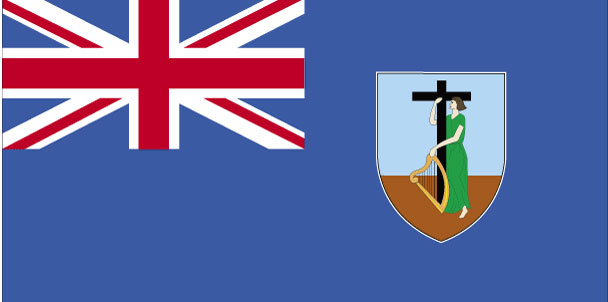
Montserrat
Declare Your Relationship to Montserrat
CountryReports Community
- Studying1
- From Montserrat1
- Montserrat heritage0
- Visited1
- Want to visit1
Customs and Culture
Customs and Culture
Cultural Attributes
Montserrat is a small British Overseas Territory in the Eastern Caribbean, and its culture reflects a rich blend of African, Irish, and British influences — a combination that makes it distinctive among Caribbean islands. The island's African heritage, rooted in the legacy of enslaved people brought to work the sugar plantations, forms the foundation of much of its music, storytelling, and community life. Irish indentured servants who arrived in the 17th century left a lasting imprint as well, giving the island its nickname "The Emerald Isle of the Caribbean." This Irish connection is visible in local surnames, place names, and even the Montserrat coat of arms, which features an Irish harp alongside a woman holding a cross. Notably, Montserrat is one of the few places outside Ireland where St. Patrick's Day is observed as a public holiday. Music is central to Montserratian identity. The island has a strong tradition of calypso, soca, and steelpan music, and it was once home to the famous AIR Studios, founded by Beatles producer Sir George Martin in 1979. The studio attracted internationally renowned artists including the Rolling Stones, Paul McCartney, Elton John, and Dire Straits before it was damaged by Hurricane Hugo in 1989. This legacy has cemented Montserrat's reputation as a place of musical significance far beyond its small size. The devastating eruption of the Soufrière Hills volcano beginning in 1995 profoundly reshaped Montserratian culture and society. The eruption displaced much of the population — reducing it from around 12,000 to fewer than 5,000 — and buried the original capital, Plymouth, under ash and pyroclastic debris. This shared experience of loss and resilience has become a defining cultural narrative for Montserratians, both those who remained on the island and those in the diaspora, particularly in the United Kingdom. Community festivals such as the Montserrat Festival, held around the Christmas and New Year period, celebrate local music, dance, and cuisine, reinforcing a sense of cultural pride and continuity. Traditional dishes like goat water stew, considered the national dish, and seasoned rice reflect the island's Afro-Caribbean culinary heritage.
Emerald Isle of Resilience
Get More Customs and Culture
2 more cultural topics for members
Social Customs & Etiquette · Dating Customs
Dates of Interest
- Untitled date
What food should I try in Montserrat?
Montserratian cuisine reflects its Afro-Caribbean heritage, with goat water stew as the national dish.
Good to know
- Try goat water stew, the national dish
- Sample seasoned rice, a traditional local dish
What do people do for fun and celebration in Montserrat?
Music is central to Montserratian identity, with calypso, soca, and steelpan traditions, and community festivals celebrating local culture.
Good to know
- Experience calypso, soca, and steelpan music
- Attend the Montserrat Festival, held around Christmas and New Year, for music, dance, and cuisine
- St. Patrick's Day is observed as a public holiday — one of few places outside Ireland to do so
What should I know about Montserrat's culture before visiting?
Montserrat is a small British Overseas Territory blending African, Irish, and British influences, nicknamed 'The Emerald Isle of the Caribbean.'
Good to know
- The island's African heritage shapes its music, storytelling, and community life
- Irish influence appears in local surnames, place names, and the coat of arms
- The 1995 Soufrière Hills volcano eruption buried the former capital, Plymouth, and reshaped island society
- Montserrat was once home to AIR Studios, founded by Sir George Martin in 1979
Last updated: 2026-07-12 · Sources: CountryReports
Travel and Tourism
Travel and Tourism
- Travel Alert Status
- Level 1: Exercise Normal Precautions
- Currency
- East Caribbean dollar (XCD)
- Time Difference
- UTC-4 (1 hour ahead of Washington, DC, during Standard Time)
- Climate
- tropical; little daily or seasonal temperature variation
- Airports
- 1
Read the full travel guide — health, safety, vaccinations, disease risk, sanitation, and transit details.
View full travel guideRecipes
Recipes
History
History
Historical Eras
Pre-Colonial Era
2000 BCE – 1493
Montserrat was originally inhabited by Arawak and later Carib indigenous peoples, who called the island 'Alliouagana,' meaning 'land of the prickly bush.' These communities sustained themselves through fishing, agriculture, and inter-island trade across the Lesser Antilles. Christopher Columbus sighted the island in 1493 on his second voyage, naming it after the Santa María de Montserrat monastery in Catalonia, Spain.
Early Colonial Period
1493 – 1783
Montserrat was formally settled as an English colony in 1632, with many early settlers being Irish Catholics displaced from St. Kitts, giving the island a distinctive Gaelic cultural heritage. Sugar cultivation expanded rapidly, relying heavily on enslaved African labor. France seized the island twice, most notably in 1782, but the Treaty of Versailles in 1783 permanently restored Montserrat to British sovereignty.
British Crown Colony
1783 – 1958
Following the abolition of slavery in 1834, Montserrat's sugar economy declined sharply and was largely replaced by lime cultivation and cotton production. In 1871 the island was incorporated into the federated Leeward Islands colony, consolidating British administrative control over the region. The island remained a quiet agricultural outpost through the late nineteenth and early twentieth centuries.
Federation & Decolonization
1958 – 1966
Montserrat joined the short-lived Federation of the West Indies in 1958, an ambitious attempt to unite British Caribbean territories into a single independent state. When the federation collapsed in 1962, most member islands pursued full independence, but Montserrat chose to remain a British Crown Colony, later reconstituted as a British Dependent Territory in 1966, reflecting the islanders' preference for continued ties with Britain.
Modern Territory
1966 – 1995
As a British Dependent Territory, Montserrat developed a modest offshore banking sector and a celebrated recording industry — AIR Studios attracted artists including the Rolling Stones and Paul McCartney during the 1980s. Hurricane Hugo devastated the island in 1989, destroying roughly half of all structures. Despite recovery efforts, the island was rebuilding steadily when volcanic activity renewed the cycle of disruption.
Volcanic Crisis & Rebuilding
1995 – present
The eruption of the Soufrière Hills volcano beginning on 18 July 1995 — the first in approximately 350 years — proved catastrophic; Plymouth, the capital, was buried under ash and pyroclastic flows and the entire southern half of the island was rendered uninhabitable. Two-thirds of the population fled abroad, reducing Montserrat to fewer than 5,000 residents. The island continues to function from its northern zone, with ongoing volcanic monitoring and gradual social and economic reconstruction.
Overview
Named after a monastery in Spain by Christopher Columbus during his
Timeline of Key Events
1493
Christopher Columbus sights the island which he names after a Spanish abbey.
Christopher Columbus sights the island which he names after a Spanish abbey.
1632
Montserrat becomes an English colony.
Montserrat becomes an English colony.
1782
French invaders take possession.
French invaders take possession, having previously captured the island for short periods in 1664 and 1667.
1783
Under the Treaty of Versailles, Montserrat is returned to Britain.
Under the Treaty of Versailles, Montserrat is returned to Britain.
1871
Montserrat becomes part of the Leeward Islands colony.
Montserrat becomes part of the Leeward Islands colony. The federation is dissolved in 1956.
1958 – 1962
Montserrat is part of the short-lived Federation of the West Indies.
Montserrat is part of the short-lived Federation of the West Indies.
1989
Hurricane Hugo causes widespread damage.
Hurricane Hugo causes widespread damage.
Read the full history profile — narrative overview, defining eras, and the complete timeline in one place.
View expanded historyInteresting Facts
Interesting Facts
The first recorded name for Montserrat was "Alliouagana" given by the Carib people. It is thought that the name was derived from a prickly bush growing on the island.
the Soufriere Hills volcano erupted in July 1995, severely affecting the island and on occasion sprinkling the neighboring islands with ash.
Montserrat is a lush green mountainous island in the northeastern Caribbean, also known as Alliougana or the Emerald Isle of the Caribbean
See every fact — trivia, oddities, and curious tidbits gathered from across the country.
View all interesting factsGeography and Environment
Geography and Environment
- Terrain
- volcanic island, mostly mountainous, with small coastal lowland
- Climate
- tropical; little daily or seasonal temperature variation
- Natural Hazards
- severe hurricanes (June to November); volcanic eruptions (Soufriere Hills volcano has erupted continuously since 1995)
- Current Environmental Issues
- land erosion occurs on slopes that have been cleared for cultivation
Read the full geography and environment profile — terrain, climate, natural resources, hazards, land use, and international agreements.
View full geographyPeople & Demographics
People & Demographics
Languages Spoken
English
- English
Population
- Population
- 4,386
- Nationality Noun
- Montserratian(s)
- Ethnic Groups
- black, white
Education
- Literacy Definition
- age 15 and over has ever attended school
Health Information
- Life Expectancy at Birth
- Life expectancy at birth in Montserrat stands at approximately 75 to 76 years overall, with women typically outliving men by several years. Females on the island can generally expect to live into their late seventies or early eighties, while males have an average life expectancy closer to the early-to-mid seventies. These figures place Montserrat broadly in line with other small Caribbean island territories, though the island's unique demographic circumstances make direct comparisons somewhat complex. Montserrat's population remains one of the smallest in the Caribbean, numbering only around 4,000 to 5,000 residents — a figure that reflects the lasting demographic impact of the catastrophic eruptions of the Soufrière Hills volcano beginning in 1995. The eruptions devastated the southern portion of the island, rendered the former capital Plymouth uninhabitable, displaced the majority of the population, and fundamentally reshaped Montserrat's society and health infrastructure. Despite this dramatic upheaval, the island has maintained a functional healthcare system, supported in large part by its status as a British Overseas Territory, which provides access to funding, medical training, and healthcare resources from the United Kingdom. The Glendon Hospital, located in the north of the island near Brades, serves as the island's primary medical facility and provides essential services to the resident population. For more complex or specialized medical needs, residents are typically referred to facilities in Antigua or other neighboring islands, or may travel to the United Kingdom. This reliance on regional and international medical care reflects both the small scale of the island's infrastructure and the geographic realities of a small island community in the Eastern Caribbean. Cardiovascular disease, diabetes, and hypertension are among the leading health concerns affecting residents, consistent with broader health trends seen across the Caribbean region. These non-communicable diseases place ongoing demands on an already limited local healthcare system. Public health initiatives on the island have focused on preventive care, chronic disease management, and improving access to primary healthcare services for the small but aging population. The relatively modest but stable life expectancy figures reflect a combination of adequate basic healthcare provision, the challenges of delivering services to a very small and geographically isolated community, and the lingering social and economic effects of the volcanic crisis that continue to shape daily life on the island.
- Infant Mortality Rate
- Montserrat, a British Overseas Territory in the Eastern Caribbean, maintains a relatively low infant mortality rate compared to many developing nations, reflecting the island's access to basic healthcare infrastructure despite its small size and population. Current estimates place Montserrat's infant mortality rate at approximately 10 to 13 deaths per 1,000 live births, a figure consistent with other small Caribbean territories that benefit from British administrative support and regional health partnerships. While this rate is higher than the United Kingdom's own figure of around 4 per 1,000 live births, it compares favorably with many independent nations in the broader Latin American and Caribbean region. The island's healthcare system is anchored by the Glendon Hospital in Brades, the de facto capital since the 1995 eruption of the Soufrière Hills volcano rendered the original capital, Plymouth, uninhabitable. The volcano's devastating impact dramatically reduced the island's population — from approximately 12,000 before the eruption to fewer than 5,000 residents today — which has significant implications for how health statistics are measured and interpreted. With such a small population base, even a handful of infant deaths in a given year can produce notable fluctuations in the reported rate. Factors contributing to infant health outcomes on Montserrat include access to prenatal and postnatal care through the government-run health system, immunization programs supported by regional health organizations such as the Pan American Health Organization (PAHO), and general improvements in nutrition and sanitation. Breastfeeding promotion and maternal health education are also components of the territory's public health approach. Challenges persist, however. The island's geographic isolation means that complex neonatal cases often require medical evacuation to neighboring islands such as Antigua, adding risk for vulnerable newborns requiring specialized care. Limited local specialist capacity and the ongoing social and economic aftereffects of the volcanic disaster continue to influence health outcomes. Overall, Montserrat's infant mortality rate reflects a territory that has worked to maintain functional health services under exceptional circumstances, supported by British government funding and regional health cooperation.
Life Expectancy
- Life Expectancy at Birth
- Life expectancy at birth in Montserrat stands at approximately 75 to 76 years overall, with women typically outliving men by several years. Females on the island can generally expect to live into their late seventies or early eighties, while males have an average life expectancy closer to the early-to-mid seventies. These figures place Montserrat broadly in line with other small Caribbean island territories, though the island's unique demographic circumstances make direct comparisons somewhat complex. Montserrat's population remains one of the smallest in the Caribbean, numbering only around 4,000 to 5,000 residents — a figure that reflects the lasting demographic impact of the catastrophic eruptions of the Soufrière Hills volcano beginning in 1995. The eruptions devastated the southern portion of the island, rendered the former capital Plymouth uninhabitable, displaced the majority of the population, and fundamentally reshaped Montserrat's society and health infrastructure. Despite this dramatic upheaval, the island has maintained a functional healthcare system, supported in large part by its status as a British Overseas Territory, which provides access to funding, medical training, and healthcare resources from the United Kingdom. The Glendon Hospital, located in the north of the island near Brades, serves as the island's primary medical facility and provides essential services to the resident population. For more complex or specialized medical needs, residents are typically referred to facilities in Antigua or other neighboring islands, or may travel to the United Kingdom. This reliance on regional and international medical care reflects both the small scale of the island's infrastructure and the geographic realities of a small island community in the Eastern Caribbean. Cardiovascular disease, diabetes, and hypertension are among the leading health concerns affecting residents, consistent with broader health trends seen across the Caribbean region. These non-communicable diseases place ongoing demands on an already limited local healthcare system. Public health initiatives on the island have focused on preventive care, chronic disease management, and improving access to primary healthcare services for the small but aging population. The relatively modest but stable life expectancy figures reflect a combination of adequate basic healthcare provision, the challenges of delivering services to a very small and geographically isolated community, and the lingering social and economic effects of the volcanic crisis that continue to shape daily life on the island.
- Infant Mortality Rate
- Montserrat, a British Overseas Territory in the Eastern Caribbean, maintains a relatively low infant mortality rate compared to many developing nations, reflecting the island's access to basic healthcare infrastructure despite its small size and population. Current estimates place Montserrat's infant mortality rate at approximately 10 to 13 deaths per 1,000 live births, a figure consistent with other small Caribbean territories that benefit from British administrative support and regional health partnerships. While this rate is higher than the United Kingdom's own figure of around 4 per 1,000 live births, it compares favorably with many independent nations in the broader Latin American and Caribbean region. The island's healthcare system is anchored by the Glendon Hospital in Brades, the de facto capital since the 1995 eruption of the Soufrière Hills volcano rendered the original capital, Plymouth, uninhabitable. The volcano's devastating impact dramatically reduced the island's population — from approximately 12,000 before the eruption to fewer than 5,000 residents today — which has significant implications for how health statistics are measured and interpreted. With such a small population base, even a handful of infant deaths in a given year can produce notable fluctuations in the reported rate. Factors contributing to infant health outcomes on Montserrat include access to prenatal and postnatal care through the government-run health system, immunization programs supported by regional health organizations such as the Pan American Health Organization (PAHO), and general improvements in nutrition and sanitation. Breastfeeding promotion and maternal health education are also components of the territory's public health approach. Challenges persist, however. The island's geographic isolation means that complex neonatal cases often require medical evacuation to neighboring islands such as Antigua, adding risk for vulnerable newborns requiring specialized care. Limited local specialist capacity and the ongoing social and economic aftereffects of the volcanic disaster continue to influence health outcomes. Overall, Montserrat's infant mortality rate reflects a territory that has worked to maintain functional health services under exceptional circumstances, supported by British government funding and regional health cooperation.
Read the full people and society profile — demographics, health, education, religion, languages, and notable people.
View full people and societyGovernment & Politics
Government & Politics
Country Identity
- Country Name
- Montserrat
Government Structure
- Government Type
- NA
- Legal System
- English common law and statutory law
- Executive Branch
- chief of state: King CHARLES III (since 8 September 2022), represented by Governor Sarah TUCKER (since March 2020) head of government: Premier Joseph FARRELL (since 12 November 2019) cabinet: Executive Council consists of the governor, the premier, three other ministers, the attorney general, and the financial secretary elections: the monarch is hereditary; governor appointed by the monarch; following legislative elections, the leader of the majority party usually becomes premier
- Legislative Branch
- Unicameral Legislative Assembly (12 seats; 9 members directly elected in a single constituency by simple majority vote and 3 ex-officio members — the attorney general, the financial secretary, and the deputy governor — who serve in a non-voting capacity; elected members serve five-year terms). Note: The body was renamed from the Legislative Council to the Legislative Assembly following the adoption of Montserrat's revised Constitution in 2011. The single constituency/voter-at-large system, introduced by the Elections Commission in 2001, remains in place, whereby all eligible voters cast ballots for all nine elected seats. Elections: Last held on November 18, 2019 (next to be held in 2024). Election results: Seats by party — People's Democratic Movement (PDM) 5, Movement for Change and Prosperity (MCAP) 4.
- Judicial Branch
- Eastern Caribbean Supreme Court (based in Saint Lucia, one judge of the Supreme Court is a resident of the islands and presides over the High Court)
- Suffrage
- 18 years of age; universal
- Constitution
- present constitution came into force 19 December 1989
- Independence
- none (overseas territory of the UK)
- National Holiday
- Birthday of Queen ELIZABETH II, second Saturday in June (1926)
Capital City
- Capital Name
- Plymouth; note - Plymouth was abandoned in 1997 because of volcanic activity; interim government buildings have been built at Brades Estate, the de facto capital, in the Carr's Bay/Little Bay vicinity at the northwest end of Montserrat
- Capital - geographic coordinate
- 16 42 N, 62 13 W
- Capital Time Difference
- UTC-4 (1 hour ahead of Washington, DC, during Standard Time)
now entirely deserted because of volcanic activity, the city was originally named after Plymouth, England; de jure, Plymouth remains the capital city of Montserrat; it is therefore the only ghost town that serves as the capital of a political entity
Military
Branches: no regular military forces; Royal Montserrat Police Force
Embassy / Diplomatic Mission
U.S. Embassy in Bridgetown
Wildey Business park
Wildey
St. Michael, Barbados
Telephone: (246) 227-4399
Emergency after-hours telephone: (246) 227-4000
Facsimile: (246) 431-0179
Email: BridgetownACS@state.gov
Hours of operation are 8:30 a.m.– 4:30 p.m. Monday through Friday, except Barbadian and U.S. holidays.
Read the full government profile — flag symbolism, national anthem, and other national symbols.
View full government detailsEconomy
Economy
Montserrat's small, open economy continues to be shaped by the legacy of the Soufrière Hills volcanic eruptions that began in July 1995 and intensified in June 1997, destroying the capital, Plymouth, and rendering much of the southern two-thirds of the…
Snapshot
- Currency Name and Code
- East Caribbean Dollar (XCD)
- GDP Real Growth Rate
- 7.4%
News & Weather
News & Weather
Current Weather
Latest News
Montserrat - World Population Review
World Population Review · 6d ago
Bob Simpson’s Former Montserrat Mansion Is on the Market - Fort Worth Magazine
Fort Worth Magazine · 5d ago
Gallery of International Housing Competition: Montserrat House - 1 - ArchDaily
ArchDaily · 1d ago
Union Leader Montserrat Garibay Advances to General Election for Texas House District 49 - Texas AFL-CIO
Texas AFL-CIO · 70d ago
Pope Leo XIV entrusts his ministry to Our Lady of Montserrat - OSV News
OSV News · 56d ago
Pope Leo entrusts his pontificate to Our Lady of Montserrat: May she ‘guide us to Jesus’ - EWTN News
EWTN News · 56d ago
Pope to Benedictines in Montserrat: Thank you for the gift of silence - Vatican News
Vatican News · 56d ago
Montserrat Garibay to Succeed State Rep. Gina Hinojosa in Austin-Area Texas House District - thetexan.news
thetexan.news · 70d ago
News via Google News
Climate Overview
tropical; little daily or seasonal temperature variation
Frequently Asked Questions
Frequently Asked Questions
What is the population of Montserrat?
What food should I try in Montserrat?
What do people do for fun and celebration in Montserrat?
What should I know about Montserrat's culture before visiting?
What is the capital of Montserrat?
Where is Montserrat located?
What ocean and sea surround Montserrat?
What currency is used in Montserrat?
What language is spoken in Montserrat?
What is the geography of Montserrat like?
What is Montserrat known for?
Last reviewed 2026