
 English
 Español
 中文
中文 हिन्दी
 Français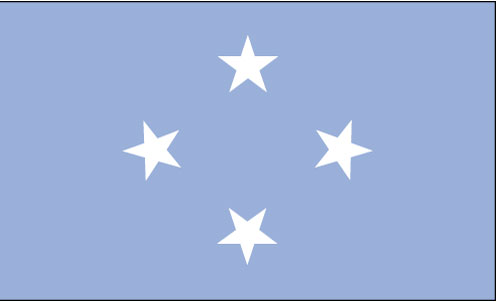
Micronesia
Declare Your Relationship to Micronesia
CountryReports Community
- Studying8
- From Micronesia2
- Micronesia heritage3
- Visited2
- Want to visit2
Customs and Culture
Customs and Culture
Cultural Attributes
The Federated States of Micronesia (FSM) is a culturally rich nation composed of four main states — Yap, Chuuk, Pohnpei, and Kosrae — each with its own distinct traditions, languages, and social customs. This diversity within a single nation is one of Micronesia's most defining cultural characteristics, as the islands developed largely in isolation from one another despite their shared geographic region. Traditional social structures remain deeply influential in Micronesian society. In Yap, for example, a complex caste system still shapes community life, and the island is famous for its use of large stone discs known as "rai" or stone money, which can weigh several tons and continue to serve as symbols of wealth and social standing even today. Yapese culture also places great importance on traditional navigation, weaving, and dance, with certain ceremonial dances restricted to specific clans. Extended family networks, known locally as lineages or clans, form the backbone of social organization across the islands. Most communities in Micronesia follow matrilineal descent systems, meaning property, land rights, and social status are traditionally inherited through the mother's line. Respect for elders is a cornerstone value, and community decision-making often involves consultation with senior family members and traditional leaders known as chiefs. Oral tradition has long been the primary means of preserving history and cultural knowledge, with stories, chants, and songs passed down through generations. Christianity, introduced by Spanish missionaries in the 17th century and later reinforced by American and other Protestant missionaries, is now widely practiced and has become woven into daily life alongside traditional spiritual beliefs. Fishing and agriculture remain culturally significant, not only as sources of livelihood but also as practices tied to identity and ceremony. Breadfruit, taro, and yam cultivation carry ceremonial importance in several island communities. Traditional canoe building and navigation, once essential survival skills, are today celebrated as expressions of cultural heritage. Festivals and community gatherings frequently showcase traditional music performed on instruments such as hand drums and nose flutes, affirming the importance Micronesians place on preserving ancestral customs in a rapidly modernizing world.

Islands of Stone Money and Living Tradition
Get More Customs and Culture
4 more cultural topics for members
Social Customs & Etiquette · Diet · Family · Dating Customs
Every country, every topic, all activities & recipes
✓ Instant access on this device · ✓ No subscription
Holidays
Constitution Day
5/10Independence
Dates of Interest
- May 10th
What should I know about food and eating in Micronesia?
Local diets center on taro root, breadfruit, coconuts, and yams as staples, with fish being the most important source of protein.
Good to know
- Packaged foods are becoming increasingly popular, especially among younger people
- Breadfruit, taro, and yam carry ceremonial importance in several island communities
- Fishing and agriculture are tied to identity and ceremony, not just livelihood
What are the key etiquette and social customs in Micronesia?
Respect for elders is a cornerstone value, and community decisions often involve consultation with senior family members and traditional chiefs.
Do
- Show respect to elders and traditional leaders
- Recognize that each state — Yap, Chuuk, Pohnpei, and Kosrae — has distinct traditions and languages
Don’t
- Don't assume ceremonial dances are open to all — in Yap certain dances are restricted to specific clans
Good to know
- Extended family lineages or clans form the backbone of social organization
- Most communities follow matrilineal descent, with property, land, and status inherited through the mother's line
- In Yap, a caste system still shapes community life and stone money ('rai') symbolizes wealth
How should I dress in Micronesia?
Micronesians wear Western-style clothing.
What is family life like in Micronesia?
Families typically include the husband, wife, and their unmarried children, while broader clan networks organize society.
Good to know
- Most communities follow matrilineal descent through the mother's line
- Extended family lineages and clans are central to social life
What cultural traditions and pastimes will I encounter in Micronesia?
Festivals and gatherings showcase traditional music, dance, navigation, and canoe building, all celebrated as expressions of cultural heritage.
Good to know
- Traditional music is performed on hand drums and nose flutes
- Yapese culture values traditional navigation, weaving, and dance
- Canoe building and navigation are celebrated cultural heritage
- Oral tradition preserves history through stories, chants, and songs
What should I know before visiting Micronesia?
The Federated States of Micronesia comprises four culturally distinct states — Yap, Chuuk, Pohnpei, and Kosrae — each with its own traditions and languages.
Good to know
- Christianity is widely practiced alongside traditional spiritual beliefs
- Traditional social structures and chiefs remain deeply influential
- Expect significant cultural diversity between the islands
Last updated: 2026-07-12 · Sources: CountryReports
Photos of Micronesia
Photos of Micronesia


Travel and Tourism
Travel and Tourism
- Travel Alert Status
- Level 3: Reconsider Travel
- Currency
- US dollar (USD)
- Time Difference
- UTC+11 (16 hours ahead of Washington, DC, during Standard Time) time zone note: Micronesia has two time zones
- Airports
- 6
Read the full travel guide — health, safety, vaccinations, disease risk, sanitation, and transit details.
View full travel guideRecipes
Recipes
History
History
Historical Eras
Ancient Settlement
2000 BCE – 1500
Austronesian-speaking peoples settled the Caroline Islands over 4,000 years ago, establishing decentralized chieftain-based societies across the scattered atolls and islands. Over centuries, a sophisticated inter-island exchange network emerged, most notably the Yapese Empire, which exercised economic and religious authority over distant islands through a tribute system known as the sawei. Stone money (rai) and elaborate navigation traditions became hallmarks of this era.
Spanish Colonial Era
1500 – 1899
Portuguese and Spanish explorers reached the Caroline Islands in the 16th century during voyages seeking the Spice Islands, with Spain formally claiming sovereignty over the Carolines, Marianas, and Marshall Islands by 1565. Spanish colonial influence remained relatively thin across the Carolines compared to the Marianas, where Catholic missionaries and military garrisons transformed indigenous Chamorro society. Resistance to Spanish rule was persistent, and the islands' remoteness limited effective administration for much of this period.
German Administration
1899 – 1914
Following Spain's defeat in the 1898 Spanish-American War, Germany purchased the Caroline Islands for 25 million pesetas, incorporating them into German New Guinea. German administrators promoted copra and phosphate extraction, reorganized land tenure, and suppressed traditional chiefly authority in favor of colonial governance structures. The period was relatively brief but introduced plantation-based economics that reshaped island societies.
Japanese Mandate
1914 – 1947
Japan seized Micronesia from Germany at the outset of World War I and received a League of Nations mandate over the islands in 1920. Japanese settlers outnumbered indigenous Micronesians in some districts as Tokyo invested heavily in sugar, fisheries, and military infrastructure. During World War II the islands became a major Pacific battleground, with devastating Allied bombardment of Japanese strongholds at Chuuk Lagoon and elsewhere leaving lasting physical and cultural scars.
US Trust Territory
1947 – 1986
Following World War II, the United States administered Micronesia as the Trust Territory of the Pacific Islands under United Nations auspices, using the strategic island chain as a Cold War buffer and conducting nuclear tests in the broader region. On May 10, 1979, the districts of Kosrae, Pohnpei, Chuuk, and Yap ratified a new constitution, formally establishing the Federated States of Micronesia, while Palau, the Marshall Islands, and the Northern Marianas pursued separate political paths.
Independent FSM
1986 – present
The Federated States of Micronesia attained full sovereignty in 1986 through a Compact of Free Association with the United States, which provides substantial financial assistance and defense guarantees in exchange for US military access rights. The FSM joined the United Nations in 1991 and has since navigated challenges including high unemployment, outmigration, overfishing of its exclusive economic zone, and deep structural dependence on American aid. Renegotiated Compacts in 2003 and ongoing climate vulnerability define the nation's contemporary political agenda.
Overview
The ancestors of the Micronesians settled the Caroline Islands over 4,000 years ago. A decentralized chieftain-based system eventually evolved into a more centralized economic and religious empire centered on Yap. European explorers--first the Portuguese in search of the Spice Islands (Indonesia) and then the Spanish--reached the Carolines in the 16th century, with the Spanish establishing sovereignty. The current FSM passed to German control in 1899, then to the Japanese in 1914, and finally to the U.S.
Every country, every topic, all activities & recipes
✓ Instant access on this device · ✓ No subscription
Timeline of Key Events
1500
Spanish explorers sight islands of Micronesia.
Spanish explorers sight islands of Micronesia.
1565
Spain claimed Marianas, Marshall Islands, Carolinas.
Spain claimed Marianas, Marshall Islands, Carolinas.
1898
Caroline Islands come under German colonial control.
Caroline Islands come under German colonial control.
1914
Japan occupies Micronesia.
Japan occupies Micronesia.
1939 – 1945
Micronesia becomes major battleground during World War II.
Micronesia becomes major battleground during World War II.
1979
Kosrae, Pohnpei, Chuuk and Yap ratify constitution setting up the Federated States of Micronesia.
Kosrae, Pohnpei, Chuuk and Yap ratify constitution setting up the Federated States of Micronesia.
1991
Micronesia joins the UN.
Micronesia joins the UN.
Read the full history profile — narrative overview, defining eras, and the complete timeline in one place.
View expanded historyInteresting Facts
Interesting Facts
The Federated States of Micronesia is composed of the island states of Yap, Chuuk (Truk), Pohnpei (Ponape), and Kosrae, all in the Caroline Islands.
See every fact — trivia, oddities, and curious tidbits gathered from across the country.
View all interesting factsGeography and Environment
Geography and Environment
- Terrain
- islands vary geologically from high mountainous islands to low, coral atolls; volcanic outcroppings on Pohnpei, Kosrae, and Chuuk
- Climate
- Pohnpei is one of the wettest spots on Earth, with an annual rainfall of about 200 inches a year in Kolonia and as much as 400 inches in the interior. Rain falls heavily throughout the year, though January through March are the least rainy months. Northeasterly trade winds blow most of the year, but damaging tropical storms generally bypass Pohnpei. The temperature averages 81°F year round. Evenings are mild, in the low 70s, and daytime temperatures seldom exceed the upper 80s. Humidity is high, averaging 89%, resulting in rapid growth of mildew and mold in non-air-conditioned environments. Air quality is excellent and free of pollutants.
- Natural Hazards
- typhoons (June to December)
- Current Environmental Issues
- overfishing, climate change, pollution
Read the full geography and environment profile — terrain, climate, natural resources, hazards, land use, and international agreements.
View full geographyPeople & Demographics
People & Demographics
Religion
Languages Spoken
English (official and common language), Trukese, Pohnpeian, Yapese, Kosrean, Ulithian, Woleaian, Nukuoro, Kapingamarangi
- English
- Trukese
Population
- Population
- 114,164
- Population in Major Urban Areas
- PALIKIR (capital) 7,000
- Nationality Noun
- Micronesian(s)
- Ethnic Groups
- nine ethnic Micronesian and Polynesian groups
Education
- Literacy Definition
- age 15 and over can read and write
Life Expectancy
- Life Expectancy at Birth
- Life expectancy at birth in the Federated States of Micronesia sits at approximately 71 years overall, with women typically outliving men by several years. Female life expectancy averages around 73 years, while male life expectancy falls closer to 69 years. These figures place Micronesia in a moderate range among Pacific Island nations, reflecting both the persistent challenges and gradual improvements in the country's public health landscape over recent decades. Several factors influence these numbers. Non-communicable diseases represent the leading cause of premature death in Micronesia, with cardiovascular disease, type 2 diabetes, and certain cancers being particularly prevalent. Rates of obesity and tobacco use remain elevated across the island states, contributing significantly to the burden of chronic illness. Limited access to advanced medical care, especially on outer islands far from the main population centers, also affects health outcomes. Residents of remote atolls often must travel considerable distances for specialist treatment, creating delays that can worsen prognoses for serious conditions. At the same time, life expectancy has risen meaningfully over the past several generations. In the 1960s and 1970s, life expectancy in Micronesia was considerably lower, and steady gains have been made through improvements in maternal and child health, expanded vaccination programs, and basic sanitation infrastructure. International health assistance, including support from the United States under the Compact of Free Association, has helped fund clinic construction, medical training, and disease surveillance efforts across the four states of Chuuk, Pohnpei, Yap, and Kosrae. Infant mortality, while still a concern in some areas, has declined substantially over recent decades, and this reduction has been a key driver of rising overall life expectancy. Access to prenatal care and skilled birth attendants has expanded, though gaps persist between urban and rural populations, particularly on the more isolated outer islands. Climate-related threats, including the contamination of freshwater sources through saltwater intrusion and the increased frequency and intensity of severe typhoons, pose emerging risks to long-term population health in Micronesia. Disruptions to food security and safe water access can heighten vulnerability to both infectious and chronic diseases. The potential impact of these environmental pressures on future life expectancy remains an area of growing concern for policymakers and health professionals throughout the region.
- Infant Mortality Rate
- The Federated States of Micronesia faces moderate challenges in infant health outcomes compared to more developed Pacific nations, though it has made measurable progress over recent decades. The infant mortality rate — defined as the number of deaths among infants under one year of age per 1,000 live births — stands at approximately 26 to 28 deaths per 1,000 live births, according to recent World Bank and WHO data. This figure places Micronesia notably higher than regional peers such as Palau and the Marshall Islands, and significantly above the averages seen in high-income countries. Several factors contribute to this rate. Geographic isolation is a central challenge: the country comprises more than 600 islands spread across an enormous area of the western Pacific Ocean, making consistent access to maternal and neonatal healthcare difficult, particularly in outer islands far from the main population centers of Pohnpei, Chuuk, Kosrae, and Yap. Rural and remote communities frequently lack reliable access to trained healthcare workers, modern obstetric facilities, and emergency neonatal care. Underlying health conditions also play a role. Poor maternal nutrition, limited prenatal care in some communities, and a high prevalence of non-communicable diseases among the broader population can indirectly affect birth outcomes and infant survival rates. Diarrheal diseases, acute respiratory infections, and other preventable illnesses remain leading causes of infant death in the region. Despite these challenges, Micronesia has shown a downward trend in infant mortality over the past several decades. Improved immunization coverage — including vaccines against measles, diphtheria, pertussis, and tetanus — along with UNICEF-supported child health programs and investments in community health aides have contributed to this improvement. The government, in partnership with international organizations, has worked to expand access to antenatal care and skilled birth attendance, which are key factors in reducing both maternal and infant mortality. Continued investment in healthcare infrastructure, transportation links between islands, and community health education will be essential to sustaining further reductions in infant mortality in the coming years.
Read the full people and society profile — demographics, health, education, religion, languages, and notable people.
View full people and societyGovernment & Politics
Government & Politics
Country Identity
- Country Name
- Micronesia
- Full Country Name
- Federated States of Micronesia
- Former Name
- Ponape, Truk, and Yap Districts (Trust Territory of the Pacific Islands)
Government Structure
- Government Type
- constitutional government in free association with the US; the Compact of Free Association entered into force 3 November 1986; economic provisions of the Compact are being renegotiated
- Legal System
- based on adapted Trust Territory laws, acts of the legislature, municipal, common, and customary laws
- Executive Branch
- chief of state: President Wesley W. SIMINA (since 12 May 2023); Vice President Aren B. PALIK (since 12 May 2023); note - the president is both the chief of state and head of government head of government: President Wesley W. SIMINA (since 12 May 2023); Vice President Aren B. PALIK (since 12 May 2023); note - the president is both the chief of state and head of government cabinet: Cabinet includes the vice president and the heads of the eight executive departments elections: president and vice president elected by Congress from among the four at-large senators for four-year terms; election last held on 12 May 2023 (next to be held in May 2027) election results: Wesley W. SIMINA elected president by Congress; Aren B. PALIK elected vice president by Congress
- Legislative Branch
- Unicameral Congress (14 seats; 4 senators — one elected from each of the four states to serve four-year terms, and 10 senators elected from single-member districts apportioned by population to serve two-year terms; members elected by popular vote) Elections: Elections for four-year term seats are held every four years; elections for two-year term seats are held every two years, with both cycles converging every four years when all 14 seats are contested simultaneously. The most recent general elections were held in March 2023. Election results: All 14 seats are held by independents, as Micronesia does not have formal political parties. Candidates run and serve as independents, making the Congress a non-partisan legislative body.
- Judicial Branch
- Supreme Court
- Suffrage
- 18 years of age; universal
- Constitution
- 10-May-79
- Independence
- 3 November 1986 (from the US-administered UN Trusteeship)
- National Holiday
- Constitution Day, 10 May (1979)
Capital City
- Capital Name
- Palikir note: Palikir became the new capital of the country in 1989, three years after independence; Kolonia, the former capital, remains the site for many foreign embassies; it also serves as the Pohnpei state capital
- Capital - geographic coordinate
- 6 55 N, 158 09 E
- Capital Time Difference
- UTC+11 (16 hours ahead of Washington, DC, during Standard Time) time zone note: Micronesia has two time zones
islands name comes from the Greek mikros ("small") and nesos ("island").
Military
Branches: no regular military forces
Embassy / Diplomatic Mission
U.S. Embassy Kolonia
1286 U.S. Embassy Place, Pohnpei (near the movie theater)
P.O. Box 1286, Pohnpei, Federated States of Micronesia 96941
Telephone: (691) 320-2187
Duty Officer: (691) 920-2369
Facsimile: (691) 320-2186
Read the full government profile — flag symbolism, national anthem, and other national symbols.
View full government detailsEconomy
Economy
Economic activity in the Federated States of Micronesia consists primarily of subsistence farming and fishing, with the public sector playing a dominant role and employing more than half of the formal workforce.
Snapshot
- Currency Name and Code
- US Dollar (USD)
- GDP Real Growth Rate
- 1%
Every country, every topic, all activities & recipes
✓ Instant access on this device · ✓ No subscription
News & Weather
News & Weather
Current Weather
Latest News
Micronesia's One Pacific Airways secures first E145 - ch-aviation
ch-aviation · 20h ago
What is the average US tariff rate for Micronesia? - USAFacts
USAFacts · 11d ago
State Minister for Foreign Affairs HORII’s attendance at the reception to commemorate the 40th Anniversary of the Independence of the Federated States of Micronesia - Ministry of Foreign Affairs of Japan
Ministry of Foreign Affairs of Japan · 4d ago
ADB Approves $5.6 Million to Federated States of Micronesia to Ease Fuel Price Shock - Asian Development Bank
Asian Development Bank · 5d ago
BREAKING NEWS: Japan vows support for Micronesia to enhance resilience of Pacific states - Japan Wire by Kyodo News
Japan Wire by Kyodo News · 5d ago
Cirie Fields and Parvati Shallow discuss who would have won a ‘Survivor: Micronesia’ final 3 - Entertainment Weekly
Entertainment Weekly · 12d ago
Japan, Micronesia affirm cooperation on free and open Indo-Pacific - Nikkei Asia
Nikkei Asia · 4d ago
Expert: Micronesia 'on the front line' of Chinese activity in Pacific - guampdn.com
guampdn.com · 3d ago
News via Google News
Frequently Asked Questions
Frequently Asked Questions
What is the population of Micronesia?
What is the capital of Micronesia?
Where is Micronesia located?
What are the ocean borders of Micronesia?
What religion is practiced in Micronesia?
What currency does Micronesia use?
What languages are spoken in Micronesia?
What is Micronesia known for?
Last reviewed 2026