
 English
 Español
 中文
中文 हिन्दी
 Français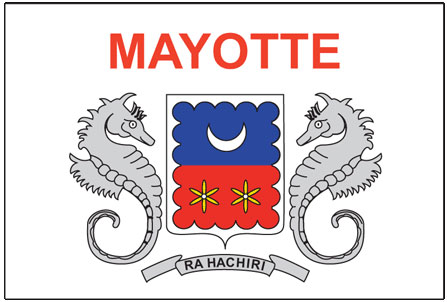
Mayotte
Declare Your Relationship to Mayotte
CountryReports Community
- Studying3
- From Mayotte1
- Mayotte heritage1
- Visited0
- Want to visit1
Customs and Culture
Customs and Culture
Cultural Attributes
Mayotte is a French overseas department and region located in the Indian Ocean, situated between Madagascar and the northern coast of Mozambique. Its cultural identity is a rich and layered blend of African, Arab, and French influences, shaped by centuries of trade, migration, and colonial history. The majority of the population is of Mahorais origin, a people closely related to the Comorian ethnic groups of the surrounding archipelago. Islam is the dominant religion, practiced by roughly 97 percent of the population, and it plays a central role in daily life, community organization, and social customs. Mosques are prominent features of most villages, and Islamic observances such as Ramadan and Eid are widely celebrated. Religious instruction in Arabic is common alongside formal French-language schooling. The official language is French, which is used in government, education, and formal business. However, Shimaore, a Bantu language closely related to Comorian, serves as the most widely spoken mother tongue. Kibushi, a language with Malagasy roots, is also spoken by a significant portion of the population, particularly in the south and northwest of the island. Traditional Mahorais society is largely matrilineal, meaning that property, lineage, and social identity are often traced through the mother's side. This matrilineal structure distinguishes Mahorais culture from many other Muslim-majority societies and has historically given women important roles in land ownership and community decision-making, though gender dynamics continue to evolve. Traditional dress reflects the island's Islamic heritage. Women commonly wear the salouva, a brightly colored wraparound garment, and many apply msindzano, a paste made from ground coral and sandalwood, to their faces as both a cosmetic and sun-protective treatment. This practice is considered a distinctive cultural hallmark of the island. Music, dance, and oral storytelling remain important cultural expressions. The twarab, a style of music with Arab and Swahili influences, is popular at celebrations and social gatherings. Weddings, in particular, are elaborate multi-day affairs that showcase traditional music, dance, and communal feasting.

Perfumed Islands of the Indian Ocean
Get More Customs and Culture
2 more cultural topics for members
Social Customs & Etiquette · Dating Customs
Every country, every topic, all activities & recipes
✓ Instant access on this device · ✓ No subscription
Holidays
Bastille Day
7/14Other
Dates of Interest
- July 14th
What do people wear in Mayotte?
Traditional dress reflects the island's Islamic heritage, with women commonly wearing brightly colored wraparound garments.
Do
- Recognize the salouva, a brightly colored wraparound garment worn by women
Good to know
- Many women apply msindzano, a paste of ground coral and sandalwood, to their faces as a cosmetic and sun-protective treatment—a distinctive cultural hallmark
How is family and society structured in Mayotte?
Traditional Mahorais society is largely matrilineal, so property, lineage, and social identity are often traced through the mother's side.
Good to know
- This matrilineal structure has historically given women important roles in land ownership and community decision-making
- Gender dynamics continue to evolve
What music and celebrations are important in Mayotte?
Music, dance, and oral storytelling are important cultural expressions, with twarab music popular at celebrations and gatherings.
Good to know
- Twarab is a style of music with Arab and Swahili influences
- Weddings are elaborate multi-day affairs featuring traditional music, dance, and communal feasting
What should I know before visiting Mayotte?
Mayotte is a French overseas department in the Indian Ocean with a cultural identity blending African, Arab, and French influences, and Islam is practiced by roughly 97 percent of the population.
Good to know
- French is the official language used in government, education, and formal business
- Shimaore, a Bantu language, is the most widely spoken mother tongue
- Kibushi, with Malagasy roots, is spoken particularly in the south and northwest
- Islam plays a central role in daily life; observances like Ramadan and Eid are widely celebrated
Last updated: 2026-07-12 · Sources: CountryReports
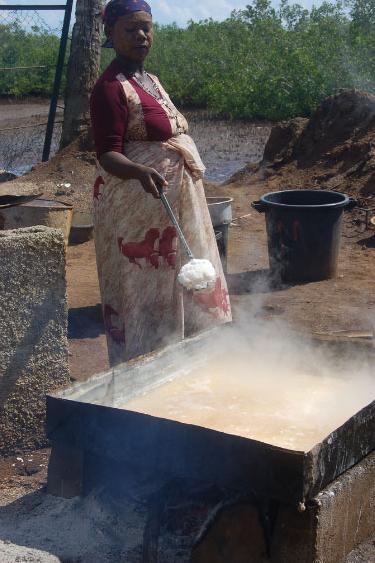
Photos of Mayotte
Photos of Mayotte


Travel and Tourism
Travel and Tourism
- Currency
- euro (EUR)
- Airports
- 1
Read the full travel guide — health, safety, vaccinations, disease risk, sanitation, and transit details.
View full travel guideHistory
History
Historical Eras
Early Settlement
800 – 1500
Arab and Swahili traders established settlements on Mayotte, integrating the island into Indian Ocean trade networks. The population adopted Islam, which became the dominant faith and cultural foundation. Local sultanates began to form, shaping the island's political and social structure for centuries to come.
Sultanate Era
1500 – 1841
Mayotte was ruled by a succession of local sultans who competed and negotiated with neighboring Comorian islands and coastal African powers. The island's strategic position in the Mozambique Channel made it a point of interest for Portuguese, Omani, and later French navigators. Internal rivalries among sultans eventually made the island vulnerable to foreign acquisition.
French Acquisition
1841 – 1946
In 1841, Sultan Andriantsouly sold Mayotte to France, and formal cession followed in 1843, making it France's first foothold in the Comoros archipelago. The island served as a colonial administrative base and was grouped administratively with the broader Comoros territory. French plantation agriculture and administrative structures gradually transformed the island's economy and governance.
Comoros Territory
1946 – 1974
Mayotte became part of the French overseas territory of the Comoros following the postwar reorganization of French colonial possessions. Pressure for independence grew across the archipelago during the 1960s and early 1970s, aligned with broader African decolonization movements. Mayotte's population, however, developed a distinct pro-French political identity that set it apart from the other islands.
Territorial Collectivity
1974 – 2011
In the 1974 referendum on Comorian independence, Mayotte uniquely voted to remain tied to France, a position reaffirmed in a 1976 follow-up vote. The island held the ambiguous status of a French territorial collectivity for decades, navigating tensions with the newly independent Comoros and a growing influx of undocumented migrants from the archipelago. A 2009 referendum saw 95.2% of voters approve full departmental status.
French Department
2011 – present
Mayotte became France's 101st département in 2011, bringing full integration into French legal, administrative, and social frameworks. Islamic personal law, polygamy, and customary practices were phased out in alignment with French civil law. The island continues to face significant demographic pressures, with large-scale irregular migration from the Comoros driving ongoing social and political challenges.
Overview
Mayotte is a French island in the Indian Ocean off East Africa between Madagascar and Mozambique. It was formerly part of France’s Comoros
Every country, every topic, all activities & recipes
✓ Instant access on this device · ✓ No subscription
Timeline of Key Events
1841
Sultan Sakalva Andriantsouly sold the island of Mayotte to the French.
Sultan Sakalva Andriantsouly sold the island of Mayotte to the French. Having established a foothold in Mayotte, the French sought to gain control of the other three islands.
1843
Mayotte was ceded to France along with the other Comoros.
Mayotte was ceded to France along with the other Comoros.
1974
Mayotte, votes to stay with France.
Three of the islands making up the Comoros vote for independence, but a fourth island, Mayotte, votes to stay with France.
Read the full history profile — narrative overview, defining eras, and the complete timeline in one place.
View expanded historyInteresting Facts
Interesting Facts
Mayotte was ceded to France along with the other islands of the Comoros group in 1843
See every fact — trivia, oddities, and curious tidbits gathered from across the country.
View all interesting factsGeography and Environment
Geography and Environment
- Terrain
- generally undulating, with deep ravines and ancient volcanic peaks
- Climate
- tropical; marine; hot, humid, rainy season during northeastern monsoon (November to May); dry season is cooler (May to November)
- Natural Hazards
- cyclones during rainy season
- Current Environmental Issues
- NA
Read the full geography and environment profile — terrain, climate, natural resources, hazards, land use, and international agreements.
View full geographyPeople & Demographics
People & Demographics
Religion
Languages Spoken
Mahorian (a Swahili dialect), French (official language) spoken by 35% of the population
- French
Population
- Population
- 321,901
- Nationality Noun
- Mahorais (singular and plural)
- Ethnic Groups
- NA
Education
- Literacy Definition
- NA
Life Expectancy
- Life Expectancy at Birth
- Life expectancy at birth in Mayotte reflects the significant improvements in health infrastructure that have taken place in this French overseas department over recent decades, though it still lags behind metropolitan France and many other French territories. As of the most recent available estimates, life expectancy at birth in Mayotte stands at approximately 74 to 75 years overall, with women generally outliving men by several years — a pattern consistent with global trends. This figure represents a notable increase from earlier decades, when Mayotte's health statistics were considerably lower. The improvement has been driven in large part by Mayotte's integration into the French administrative system, which has brought expanded access to healthcare services, vaccination programs, maternal and child health initiatives, and modern medical facilities. The main public hospital, the Centre Hospitalier de Mayotte (CHM) in Mamoudzou, serves as the primary medical hub for the island's population. Despite these gains, life expectancy in Mayotte remains lower than in mainland France, where life expectancy is approximately 82 to 83 years. Several factors contribute to this gap. Mayotte faces persistent challenges including a rapidly growing and relatively young population, high rates of poverty, overcrowding, limited access to clean water and adequate sanitation in some areas, and a heavily strained healthcare system that serves both legal residents and a substantial undocumented migrant population. Infant mortality, while declining over time, also remains higher than in other French territories, which pulls the overall life expectancy figure downward. The demographic structure of Mayotte is also unusually young by global standards, with a large proportion of the population under the age of 20. This youthful makeup influences how life expectancy statistics are calculated and interpreted in the context of national health policy. The island's population has grown rapidly in recent decades, placing increasing pressure on public services, housing, and healthcare infrastructure. French authorities and international health organizations continue to invest in improving health outcomes in Mayotte, recognizing that closing the gap with metropolitan France requires sustained efforts in sanitation, education, prenatal care, and healthcare capacity. The December 2024 cyclone Chido, which caused widespread destruction across the island, represented a significant setback to public health infrastructure and may affect near-term health indicators as recovery and rebuilding efforts continue. Despite such challenges, the long-term trajectory for life expectancy in Mayotte is expected to remain upward as sustained investments in healthcare and living conditions take effect.
- Infant Mortality Rate
- Mayotte faces significant challenges in infant health outcomes, though measurable progress has been made over recent decades. The infant mortality rate — defined as the number of deaths among infants under one year of age per 1,000 live births — remains notably higher in Mayotte than in mainland France and other French overseas departments. Estimates place Mayotte's infant mortality rate at approximately 12 to 15 deaths per 1,000 live births in recent years, a figure that reflects both improvements in healthcare access and the persistent structural challenges the territory faces. By comparison, mainland France records an infant mortality rate of around 3 to 4 per 1,000 live births, highlighting the substantial gap between Mayotte and the broader French state. Several factors contribute to the elevated infant mortality rate in Mayotte. The island has experienced rapid and sustained population growth, driven in part by high birth rates and significant immigration from neighboring Comoros. This demographic pressure has strained healthcare infrastructure, including maternity wards and neonatal care facilities. The main hospital, Centre Hospitalier de Mayotte in Mamoudzou, handles an extraordinarily high number of deliveries annually — often among the highest per facility in all French territories — which places considerable demands on medical staff and resources. Poverty and socioeconomic inequality also play a role. A large proportion of the population lives below the poverty threshold applicable in French overseas territories, limiting access to prenatal care, adequate nutrition, and clean water. Malnutrition among young children and mothers remains a concern and indirectly contributes to adverse birth outcomes. Nonetheless, consistent investment in public health initiatives, vaccination programs, and maternal health services has helped reduce infant mortality over time compared to earlier decades. International health organizations and French national authorities continue to work on improving neonatal care capacity, sanitation infrastructure, and health education across the island. Sustained effort in these areas will be essential to further closing the gap between Mayotte's infant health outcomes and those seen elsewhere in France and the broader European Union.
Read the full people and society profile — demographics, health, education, religion, languages, and notable people.
View full people and societyGovernment & Politics
Government & Politics
Country Identity
- Country Name
- Mayotte
- Full Country Name
- Territorial Collectivity of Mayotte
Government Structure
- Government Type
- NA
- Legal System
- French law
- Executive Branch
- chief of state: President Emmanuel MACRON of France (since 14 May 2017), represented by Prefect Thierry SUQUET (since 2023) head of government: President of the Departmental Council Ben ISSA OUSSENI (since 2021) cabinet: NA elections: French president elected by popular vote for a five-year term; prefect appointed by the French president on the advice of the French Ministry of the Interior; president of the Departmental Council elected by the members of the Departmental Council; Mayotte became France's 101st department in 2011, replacing the former General Council structure with a Departmental Council
- Legislative Branch
- Mayotte has a unicameral Departmental Council (Conseil Départemental) with 26 seats. Members are elected by popular vote to serve six-year terms, with half the seats renewed every three years. Following Mayotte's transformation from a French Overseas Collectivity into a full French Overseas Department in 2011, the former General Council was reorganized and expanded into the current Departmental Council. Elections are held on a cantonal basis using a two-round majority system. Elections: last held on 20 and 27 March 2021 (next to be held in 2027). Election results: seats by party — Divers Droite (DVD) and allies 13, Divers Gauche (DVG) and allies 8, other 5. The council is currently chaired by Ben Issa Ousseni of the ruling majority. Note: Mayotte elects two members to the French Senate; elections last held in September 2023 (next to be held in 2026); results — seats held by centrist and right-leaning independents affiliated with national French parties. Mayotte also elects two members to the French National Assembly; elections last held in June 2022 (next to be held in 2027); results — seats won by candidates aligned with the national majority coalition.
- Judicial Branch
- Supreme Court or Tribunal Superieur d'Appel
- Suffrage
- 18 years of age; universal
- Constitution
- 28 September 1958 (French Constitution)
- Independence
- none (territorial collectivity of France)
- National Holiday
- Bastille Day, 14 July (1789)
Capital City
- Capital Name
- Mamoutzou
Read the full government profile — flag symbolism, national anthem, and other national symbols.
View full government detailsEconomy
Economy
Mayotte's economy remains heavily dependent on France, which provides substantial financial assistance that is essential to the island's GDP and development.
Snapshot
- Currency Name and Code
- Euro (EUR)
- GDP Real Growth Rate
- 6.9%
Every country, every topic, all activities & recipes
✓ Instant access on this device · ✓ No subscription
News & Weather
News & Weather
Current Weather
Latest News
CPI | Orange Ordered to Halt Fiber Network Expansion in Mayotte Amid Competition Dispute - PYMNTS.com
PYMNTS.com · 2d ago
Christopher J Mayotte Obituary Feb 11, 2026 - Cotter Funeral Home
Cotter Funeral Home · 256d ago
Vaxchora shows high effectiveness against Mayotte cholera outbreak - Bioengineer.org
Bioengineer.org · 5d ago
Town clerk files third lawsuit against Townsend - Lowell Sun
Lowell Sun · 14d ago
Raymond Mayotte Obituary (2026) - Chicopee, MA - MassLive.com
MassLive.com · 88d ago
Colorado College Locks Up Coach Kris Mayotte With 5-Year Extension - Colorado College Athletics
Colorado College Athletics · 229d ago
PHOTOS: Brattleboro honors veteran Dennis Mayotte’s joyful legacy - reformer.com
reformer.com · 15d ago
In Mayotte, Young People Learn to Know the Sea in Order to Protect It - Earth.Org
Earth.Org · 68d ago
News via Google News
Frequently Asked Questions
Frequently Asked Questions
What is the population of Mayotte?
What is the capital of Mayotte?
Where is Mayotte located?
What are the ocean borders of Mayotte?
What religion is practiced in Mayotte?
What currency does Mayotte use?
What language is spoken in Mayotte?
What is the geography of Mayotte like?
What is Mayotte known for?
Last reviewed 2026