
 English
 Español
 中文
中文 हिन्दी
 Français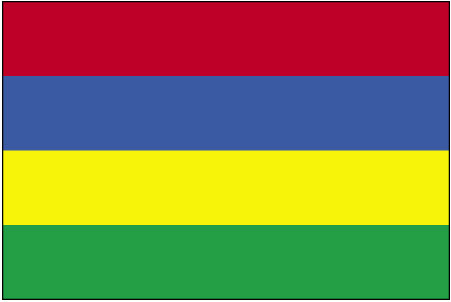
Mauritius
Declare Your Relationship to Mauritius
CountryReports Community
- Studying0
- From Mauritius0
- Mauritius heritage0
- Visited1
- Want to visit0
Customs and Culture
Customs and Culture
Cultural Attributes
Mauritius an island nation in the indian ocean was formed by volcanoes. More than a third of the peoples' income comes from the sugar industry with about 90 percent of the famland planted as sugar cane. People grow vegetables in small gardens for their own use.
About 70 percent of the people are Asian Indians.

Star of the Indian Ocean
Get More Customs and Culture
5 more cultural topics for members
Social Customs & Etiquette · Diet · Family · Dating Customs · Recreation
Holidays
Independence Day
3/12Independence Day
Christmas
12/25Christmas
Mauritius is the most developed of the Mascarene Islands, in the warm and tropical southern hemisphere. Hence, Christmas in Mauritius is usually a nice, sunny day. The Creole ‘Pere Noel,’ pronounced ‘pear- no-el’ or Santa Claus is a bit warm beneath his beard.
On the Mauritian island, many different cultures co-exist. These cultures include Indian Hindus, Indian Muslims, Creoles, Chinese and Caucasians. Christmas in Mauritius is marked to celebrate the birth of Jesus Christ. Since Mauritius has a large Christian population, practically every living room has a Christmas tree. Children wake up on Christmas morning to see what Santa Claus has brought them. Shopping arcades are filled with Santa’s in a red cap and beard. There are also many short programs comprised of Christmas poems, songs and dances, which spread Christmas cheer.
The city hall of Curepipe is filled with a Christmas trees all decorated with lights. In Mauritius, Christmas trees are often made of filao. Even if Christmas is a Christian celebration, many Muslim and Hindu families exchange gifts on Christmas Day, even if they don’t have a Christmas tree or attend Midnight Mass. After attending Midnight Mass, where the choirs sing Christmas songs and a Nativity telling the story of Jesus is performed, families go home to enjoy a Christmas dinner.
Mauritius Christmas eating habits reflect the ethnic variety of the people. Traditional blends of home-ground spices are found in a lot of the dishes. The Christmas menu in Mauritius is a French-Mauritian delightful combination of cold fish terrine, cold meats, a fruit salad composed of pineapples, grapes, carrots and bacon and other salads made of mangoes, lychees and bananas. Spice cakes composed of cloves, vanilla, cinnamon and cardamom are also available.
Dates of Interest
- December 25th
Mauritius is the most developed of the Mascarene Islands, in the warm and tropical southern hemisphere. Hence, Christmas in Mauritius is usually a warm, sunny day. The Creole "Pere Noel," pronounced "pear- no-el," or Santa Claus, is a bit warm beneath his beard. On the Mauritian island, many different cultures co-exist. These cultures include Indian Hindus, Indian Muslims, Creoles, Chinese and Caucasians. Christmas in Mauritius is marked to celebrate the birth of Jesus Christ. Since Mauritius has a large Christian population, practically every living room has a Christmas tree. Children wake up on Christmas morning to see what Santa Claus has brought them. Shopping arcades are filled with Santa's in a red cap and beard. There are also many short programs comprised of Christmas poems, songs and dances, which spread Christmas cheer.
How do people greet each other in Mauritius?
Most Mauritians speak French and greet with "Bonjour" or "Salut" along with a handshake. Among friends they may say "Korek?" or "Ki position?" (how are things?).
Do
- Shake hands when greeting
- Use "S'il te plait" to get someone's attention
- Respect personal space
Good to know
- Eye contact is not required
What are dining customs like in Mauritius?
Meals blend cultures: a continental breakfast, Indian lunch, and a Chinese dinner, with everyone eating Creole food influenced by African, Indian and French cooking. Lunch is usually at noon and dinner later at 8 PM.
Good to know
- Try street fast food from vans, like roti and dholl puri
- Sample condiments such as rougaille, santini or achard
- Creole food reflects African, Indian and French styles
How should you dress in Mauritius?
Traditional clothes are saris and churidaars, worn on special occasions or daily by some, while younger people wear jeans and t-shirts.
Good to know
- Wear traditional saris or churidaars for special occasions
What gestures should travelers know in Mauritius?
When receiving gifts, use the right hand or both hands. Guests are not expected to bring gifts except for a formal lunch or dinner.
Do
- Receive gifts with the right hand or both hands
- Bring a gift for a formal lunch or dinner
Don’t
- Don't receive gifts with the left hand
What is family life like in Mauritius?
Many Mauritian families have three generations living together, and children often stay with parents after marriage until they can afford their own home. Elders enter retirement homes only if they have no family to care for them.
Good to know
- Weddings vary by tradition: Hindu gamat receptions, Muslim, Creole and Chinese ceremonies
- At Hindu weddings the couple walks three times around a sacred fire
- Chinese weddings feature firecrackers and sometimes a tea ceremony
What do people do for fun in Mauritius?
Soccer is the most popular sport. Children enjoy marbles, toupies (spinning tops), marelle (hopscotch), goli danda and dolls.
Good to know
- Watch or join a soccer game
- Traditional children's games include marbles, spinning tops and hopscotch
Last updated: 2026-07-12 · Sources: CountryReports
Photos of Mauritius
Photos of Mauritius


Travel and Tourism
Travel and Tourism
- Travel Alert Status
- Level 1: Exercise Normal Precautions
- Currency
- Mauritian rupee (MUR)
- Time Difference
- UTC+4 (9 hours ahead of Washington, DC, during Standard Time)
- Climate
- Mauritius has a maritime climate with slight differences between tropical summer and subtropical winter. Humidity is high, and annual rainfall along the central plateau's western slopes totals nearly 200 inches. In Floreal the winter low can drop to 50°F with high winds and rain, making it seem much colder. The summer daytime high is in the 80s with nighttime temperatures about 10°F cooler. Temperatures in Port Louis and at the beach are about 10°F higher than elsewhere on the island. Rainy and dry seasons are not well defined, and vegetation remains green all year. Cyclones threaten the island between November and April.
- Airports
- 5
Read the full travel guide — health, safety, vaccinations, disease risk, sanitation, and transit details.
View full travel guideRecipes
Recipes
History
History
Historical Eras
Early Visitors
900 – 1638
Arab and Malay sailors knew of Mauritius as early as the 10th century, and Portuguese navigator Pedro Mascarenhas visited in 1510, naming the island Cirné. The island remained uninhabited by any settled population during this period, functioning only as a waypoint for maritime explorers. No permanent colony was established until the Dutch arrived in the following century.
Dutch Colony
1638 – 1715
The Dutch East India Company established the first permanent settlement in 1638, naming the island Mauritius in honor of Prince Maurice of Nassau. Colonists harvested ebony and introduced sugar cane, but the settlement struggled with cyclones, rats, and logistical difficulties. The Dutch abandoned the colony entirely in 1710, leaving the island uninhabited once more.
French Île de France
1715 – 1810
France claimed Mauritius in 1715 and renamed it Île de France, developing it into a prosperous plantation colony under the French East India Company before the Crown assumed direct control in 1767. Port Louis grew into a vital Indian Ocean naval base and privateering hub, particularly during the Napoleonic Wars. African enslaved laborers were brought in to work the sugar estates, forming the foundation of the Creole community.
British Colonial Rule
1810 – 1968
Britain captured Mauritius in 1810 and retained it under the 1814 Treaty of Paris, preserving French legal institutions, including the Napoleonic Code, and the French language. The abolition of slavery in 1835 prompted the large-scale importation of Indian indentured laborers, fundamentally reshaping the island's demographics and eventually shifting political power toward the Indo-Mauritian Hindu majority. The first elections to a Legislative Assembly were held in 1947, initiating a gradual transition toward self-government and independence.
Independence & Modern Era
1968 – present
Mauritius achieved independence on March 12, 1968, with Sir Seewoosagur Ramgoolam of the Mauritian Labour Party becoming the country's first prime minister. The new nation built a stable multiparty democracy and diversified its economy beyond sugar into manufacturing, tourism, and financial services, attaining one of Africa's highest per capita incomes. Periodic natural disasters such as Cyclone Claudette in 1979, alongside social tensions within the Creole community over economic inequality, have remained recurring challenges.
Overview
While Arab and Malay sailors knew of Mauritius as early as the 10th
Timeline of Key Events
1498
Portuguese explorers stumble upon Mauritius.
Portuguese explorers stumble upon Mauritius in the wake of Vasco da Gama’s voyage around the Cape of Good Hope.
1510
Portuguese navigator Pedro Mascarenhas visits the island and names it Cirné.
Portuguese navigator Pedro Mascarenhas visits the island and names it Cirné. It is used as a port of call, but the Portuguese do not establish a permanent settlement.
1598 – 1710
The Dutch period.
The Dutch period. In 1598, a Dutch squadron, under the orders of Admiral Wybrand Van Warwyck, landed at Grand Port and named the island “Mauritius”, in honor of Prince Maurice Van Nassau, “Stathouder” of Holland. However, it was not until 1638 that there was a first attempt of Dutch settlement.
1715 – 1810
The French period.
The French period. Abandoned by the Dutch, the island became a French colony when, in September 1715, Guillaume Dufresne D’Arsel landed and took possession of this precious port of call on the route to India. He named the island “Isle de France”, but it was only in 1721 that the French started their occupation.
1810 – 1968
The British period.
The British period. The British administration, which began with Robert Farquhar as governor, was followed by rapid social and economic changes. One of the most important events was the abolition of slavery in 1835.
1834
British abolish slavery.
British abolish slavery. It is phased out on the island under a transition period known as “apprenticeship”.
1876
Indian rupee becomes official currency.
Indian rupee becomes official currency.
Read the full history profile — narrative overview, defining eras, and the complete timeline in one place.
View expanded historyInteresting Facts
Interesting Facts
Mark Twain, who visited the island in 1896, was so impressed by its beauty that he said, “God first made Mauritius and from it, he created Paradise.” Mauritius has also been called “The Star of the Indian Ocean” and “The Island of Rainbows.”
Mauritius and its neighbouring islands, including Rodrigues and Réunion, were once known as the Mascarene Islands, after the Portuguese admiral Pedro Mascarenhas, one of the first Portuguese explorers of the area.
The dodo, a large, flightless bird, once lived on Mauritius. It quickly became extinct, killed by the Dutch and the domestic animals they brought with them.
Bertrand François Mahé de la Bourdonnais was the most famous French governor of Mauritius. He greatly improved living conditions on the island in the 18th century, ensuring a regular supply of food, encouraging the cultivation of sugar cane and expanding port facilities.
See every fact — trivia, oddities, and curious tidbits gathered from across the country.
View all interesting factsGeography and Environment
Geography and Environment
- Terrain
- small coastal plain rising to discontinuous mountains encircling central plateau
- Climate
- Mauritius has a maritime climate with slight differences between tropical summer and subtropical winter. Humidity is high, and annual rainfall along the central plateau's western slopes totals nearly 200 inches. In Floreal the winter low can drop to 50°F with high winds and rain, making it seem much colder. The summer daytime high is in the 80s with nighttime temperatures about 10°F cooler. Temperatures in Port Louis and at the beach are about 10°F higher than elsewhere on the island. Rainy and dry seasons are not well defined, and vegetation remains green all year. Cyclones threaten the island between November and April.
- Natural Hazards
- cyclones (November to April); almost completely surrounded by reefs that may pose maritime hazards
- Current Environmental Issues
- water pollution, degradation of coral reefs
Read the full geography and environment profile — terrain, climate, natural resources, hazards, land use, and international agreements.
View full geographyPeople & Demographics
People & Demographics
Religion
Languages Spoken
English (official), Creole, French (official), Hindi, Urdu, Hakka, Bhojpuri
- Bhojpuri
- Creole
- English
- French
- French
- Hindi
- Urdu
Population
- Population
- 1,310,504
- Population in Major Urban Areas
- PORT LOUIS (capital) 151,000
- Nationality Noun
- Mauritian(s)
- Ethnic Groups
- Indo-Mauritian 68%, Creole 27%, Sino-Mauritian 3%, Franco-Mauritian 2%
Education
- Literacy Definition
- age 15 and over can read and write
Health Information
- Life Expectancy at Birth
- Life expectancy at birth in Mauritius stands among the highest on the African continent, reflecting the island nation's strong public health infrastructure, accessible medical care, and relatively high standard of living. As of the most recent estimates, the overall life expectancy at birth is approximately 74 to 75 years, with women typically living longer than men. Female life expectancy hovers around 77 to 78 years, while male life expectancy falls closer to 71 to 72 years — a gap consistent with global patterns observed across many countries. This relatively high figure is the result of several decades of sustained investment in healthcare. Mauritius operates a universal public health system that provides free medical services to all citizens, from primary care clinics to hospital treatment. This broad access has contributed to lower rates of infant and child mortality, both of which factor significantly into life expectancy calculations. The infant mortality rate in Mauritius has declined considerably over the past few decades, falling to approximately 12 to 13 deaths per 1,000 live births in recent years. Mauritius has undergone an epidemiological transition typical of upper-middle-income countries, shifting from infectious diseases as the primary cause of death toward non-communicable diseases such as cardiovascular disease, diabetes, and cancer. Diabetes in particular presents a significant public health challenge on the island, with prevalence rates among the highest in the region, and it remains a factor that places downward pressure on continued life expectancy gains. Despite these challenges, overall trends reflect meaningful long-term progress. Life expectancy in Mauritius has risen by more than a decade since the 1960s, when figures were considerably lower due to higher rates of infectious disease and limited medical infrastructure. It is worth noting that life expectancy saw a modest dip in the early 2020s, largely attributed to the impact of the COVID-19 pandemic, a pattern observed in many countries globally. Ongoing government initiatives focused on preventive care, diabetes management, and health education continue to support incremental improvements. The country's performance in this area has made it a notable example of health development success within sub-Saharan Africa and the broader Indian Ocean region.
- Infant Mortality Rate
- Mauritius has achieved remarkably low infant mortality rates by regional and global standards, reflecting the country's sustained investments in healthcare infrastructure, maternal health services, and public health programs over several decades. As of recent data, the infant mortality rate in Mauritius stands at approximately 11 to 13 deaths per 1,000 live births, placing it among the better-performing nations in Sub-Saharan Africa and the broader Indian Ocean region. This figure represents a dramatic improvement from earlier decades, when infant mortality was considerably higher, and demonstrates the effectiveness of the country's universal healthcare system and targeted child health initiatives. Several factors contribute to this positive outcome. Mauritius provides free public healthcare to all citizens, ensuring that prenatal care, skilled birth attendance, and postnatal services are accessible across the population. The vast majority of births in Mauritius take place in medical facilities attended by trained health professionals, which significantly reduces risks associated with complications during delivery. Vaccination coverage rates in the country are high, protecting infants from a range of preventable infectious diseases that historically contributed to early childhood mortality. Neonatal mortality — deaths occurring within the first 28 days of life — has been a particular focus of health authorities in recent years, as this segment accounts for a significant portion of overall infant deaths. Improvements in neonatal intensive care units and the training of specialized nursing and medical staff have helped reduce deaths in this critical early window. Gender disparities in infant survival are minimal, and urban-rural differences in healthcare access, while present, are less pronounced in Mauritius than in many developing nations due to the country's small geographic size and relatively well-distributed health services network. Despite these achievements, health officials continue to monitor and address underlying causes of infant mortality, including low birth weight, preterm delivery, and congenital conditions, with ongoing programs aimed at further reducing these rates in line with global Sustainable Development Goal targets.
Life Expectancy
- Life Expectancy at Birth
- Life expectancy at birth in Mauritius stands among the highest on the African continent, reflecting the island nation's strong public health infrastructure, accessible medical care, and relatively high standard of living. As of the most recent estimates, the overall life expectancy at birth is approximately 74 to 75 years, with women typically living longer than men. Female life expectancy hovers around 77 to 78 years, while male life expectancy falls closer to 71 to 72 years — a gap consistent with global patterns observed across many countries. This relatively high figure is the result of several decades of sustained investment in healthcare. Mauritius operates a universal public health system that provides free medical services to all citizens, from primary care clinics to hospital treatment. This broad access has contributed to lower rates of infant and child mortality, both of which factor significantly into life expectancy calculations. The infant mortality rate in Mauritius has declined considerably over the past few decades, falling to approximately 12 to 13 deaths per 1,000 live births in recent years. Mauritius has undergone an epidemiological transition typical of upper-middle-income countries, shifting from infectious diseases as the primary cause of death toward non-communicable diseases such as cardiovascular disease, diabetes, and cancer. Diabetes in particular presents a significant public health challenge on the island, with prevalence rates among the highest in the region, and it remains a factor that places downward pressure on continued life expectancy gains. Despite these challenges, overall trends reflect meaningful long-term progress. Life expectancy in Mauritius has risen by more than a decade since the 1960s, when figures were considerably lower due to higher rates of infectious disease and limited medical infrastructure. It is worth noting that life expectancy saw a modest dip in the early 2020s, largely attributed to the impact of the COVID-19 pandemic, a pattern observed in many countries globally. Ongoing government initiatives focused on preventive care, diabetes management, and health education continue to support incremental improvements. The country's performance in this area has made it a notable example of health development success within sub-Saharan Africa and the broader Indian Ocean region.
- Infant Mortality Rate
- Mauritius has achieved remarkably low infant mortality rates by regional and global standards, reflecting the country's sustained investments in healthcare infrastructure, maternal health services, and public health programs over several decades. As of recent data, the infant mortality rate in Mauritius stands at approximately 11 to 13 deaths per 1,000 live births, placing it among the better-performing nations in Sub-Saharan Africa and the broader Indian Ocean region. This figure represents a dramatic improvement from earlier decades, when infant mortality was considerably higher, and demonstrates the effectiveness of the country's universal healthcare system and targeted child health initiatives. Several factors contribute to this positive outcome. Mauritius provides free public healthcare to all citizens, ensuring that prenatal care, skilled birth attendance, and postnatal services are accessible across the population. The vast majority of births in Mauritius take place in medical facilities attended by trained health professionals, which significantly reduces risks associated with complications during delivery. Vaccination coverage rates in the country are high, protecting infants from a range of preventable infectious diseases that historically contributed to early childhood mortality. Neonatal mortality — deaths occurring within the first 28 days of life — has been a particular focus of health authorities in recent years, as this segment accounts for a significant portion of overall infant deaths. Improvements in neonatal intensive care units and the training of specialized nursing and medical staff have helped reduce deaths in this critical early window. Gender disparities in infant survival are minimal, and urban-rural differences in healthcare access, while present, are less pronounced in Mauritius than in many developing nations due to the country's small geographic size and relatively well-distributed health services network. Despite these achievements, health officials continue to monitor and address underlying causes of infant mortality, including low birth weight, preterm delivery, and congenital conditions, with ongoing programs aimed at further reducing these rates in line with global Sustainable Development Goal targets.
Read the full people and society profile — demographics, health, education, religion, languages, and notable people.
View full people and societyGovernment & Politics
Government & Politics
Country Identity
- Country Name
- Mauritius
- Full Country Name
- Republic of Mauritius
Government Structure
- Government Type
- parliamentary democracy
- Legal System
- based on French civil law system with elements of English common law in certain areas
- Executive Branch
- chief of state: President Prithvirajsing ROOPUN (since 2 December 2019) and Vice President Marie Cyril Eddy BOISSÉZON (since 2 December 2019) head of government: Prime Minister Navinchandra RAMGOOLAM (since 12 November 2024) cabinet: Council of Ministers appointed by the president on the recommendation of the prime minister elections: president and vice president elected by the National Assembly for five-year terms; prime minister and deputy prime minister appointed by the president and responsible to the National Assembly election results: Prithvirajsing ROOPUN elected president and Marie Cyril Eddy BOISSÉZON elected vice president on 2 December 2019; Navinchandra RAMGOOLAM appointed prime minister following the Labour Party-led alliance victory in the November 2024 general elections, returning him to the post he previously held from 2005 to 2014
- Legislative Branch
- Unicameral National Assembly (70 seats; 62 members elected by popular vote through a first-past-the-post system in multi-member constituencies, and up to 8 seats allocated by the Electoral Supervisory Commission under a "best loser" system designed to ensure fair representation of ethnic and religious communities; members serve five-year terms) Elections: Last held on 10 November 2019 (next to be held in 2024) Election results: Percent of vote by party - NA; seats by party - MSM-led Morisien Alliance 42, PTr-MMM alliance 14, OPR 2; appointed seats - MSM-led alliance 4, PTr-MMM alliance 2, OPR 2
- Judicial Branch
- Supreme Court
- Suffrage
- 18 years of age; universal
- Constitution
- 12 March 1968; amended 12 March 1992
- Independence
- 12 March 1968 (from UK)
- National Holiday
- Independence Day, 12 March (1968)
Capital City
- Capital Name
- Port Louis
- Capital - geographic coordinate
- 20 09 S, 57 29 E
- Capital Time Difference
- UTC+4 (9 hours ahead of Washington, DC, during Standard Time)
named after LOUIS XV, who was king of France in 1736 when the port became the administrative center of Mauritius and a major reprovisioning stop for French ships traveling between Europe and Asia
Military
Branches: no regular military forces; Mauritius Police Force, Special Mobile Force, National Coast Guard
Embassy / Diplomatic Mission
U.S. Embassy Mauritius
4th floor of the Rogers House on John F. Kennedy Street
Port Louis, Mauritius
Emergency after-hours telephone: ( 230) 5 253-3641
Telephone: ( 230) 202-4400
Facsimile: ( 230) 208-9534
Email: ptlconsular@state.gov
Read the full government profile — flag symbolism, national anthem, and other national symbols.
View full government detailsEconomy
Economy
Since independence in 1968, Mauritius has transformed from a low-income, agriculturally based economy into an upper-middle-income diversified economy with thriving industrial, financial, tourism, and information technology sectors.
Snapshot
- Currency Name and Code
- Mauritius Rupee (MUR)
- GDP — official exchange rate
- $6,681,000,000 (USD)
- GDP Real Growth Rate
- 6%
- Gini Index
- 37
News & Weather
News & Weather
Current Weather
Latest News
“We are not giving up”: Mauritius Religious Leaders Pledge United Action against Drug Abuse - ACI Africa
ACI Africa · 18h ago
Nocturnal dodo? Study suggests we were very wrong about Mauritius' iconic flightless bird - Live Science
Live Science · 1d ago
NASA Welcomes Mauritius as 70th Artemis Accords Signatory - NASA (.gov)
NASA (.gov) · 27d ago
Mauritius becomes 70th nation to sign the Artemis Accords - SpaceNews
SpaceNews · 26d ago
Mauritius must mobilise development financing at scale to achieve high-income ambition – says AfDB Report - The Sierra Leone Telegraph
The Sierra Leone Telegraph · 14h ago
Navy chief meets Mauritius PM, assures full support in capacity building - timesofindia.indiatimes.com
timesofindia.indiatimes.com · 22h ago
They Were Eager to Return Home. Then the U.S. Bombed Iran. - The New York Times
The New York Times · 5d ago
FSB Regional Consultative Group for Sub-Saharan Africa meets in Mauritius - Financial Stability Board
Financial Stability Board · 28d ago
News via Google News
Climate Overview
Mauritius has a maritime climate with slight differences between tropical summer and subtropical winter. Humidity is high, and annual rainfall along the central plateau's western slopes totals nearly 200 inches. In Floreal the winter low can drop to 50°F with high winds and rain, making it seem much colder. The summer daytime high is in the 80s with nighttime temperatures about 10°F cooler. Temperatures in Port Louis and at the beach are about 10°F higher than elsewhere on the island. Rainy and dry seasons are not well defined, and vegetation remains green all year. Cyclones threaten the island between November and April.
Videos
Videos
1 curated YouTube videos.
Source: YouTube
Frequently Asked Questions
Frequently Asked Questions
What is the population of Mauritius?
How do people greet each other in Mauritius?
What are dining customs like in Mauritius?
How should you dress in Mauritius?
What gestures should travelers know in Mauritius?
What is family life like in Mauritius?
What do people do for fun in Mauritius?
What is the capital of Mauritius?
Where is Mauritius located?
What are the ocean and sea borders of Mauritius?
What religion is practiced in Mauritius?
What is the currency of Mauritius?
What languages are spoken in Mauritius?
What is the geography and terrain of Mauritius like?
What is Mauritius known for?
Last reviewed 2026