
 English
 Español
 中文
中文 हिन्दी
 Français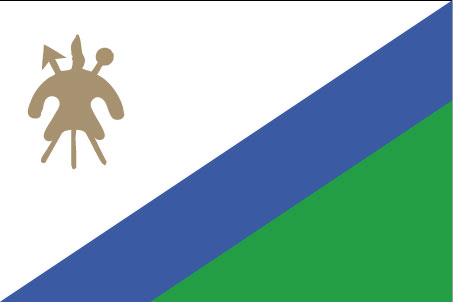
Lesotho
Declare Your Relationship to Lesotho
CountryReports Community
- Studying0
- From Lesotho0
- Lesotho heritage0
- Visited0
- Want to visit0
Customs and Culture
Customs and Culture
Cultural Attributes
Politeness, good manners and willingness to server are values that are strongly encouraged in children.The general attitude of childhood is defined by the statement "Children benefit from serving their elders".

Kingdom of Ancient Footprints
Get More Customs and Culture
6 more cultural topics for members
Social Customs & Etiquette · Diet · Family · Dating Customs · Recreation · Student Life
Holidays
Independence Day
10/4Independence Day
Dates of Interest
- October 4th
How do people address each other in Lesotho?
Respectful terms of address are important: use ntate (father) and mme (mother) for elders, and abuti (brother) or ausi (sister) for people your own age.
Do
- Address elders as ntate (father) or mme (mother)
- Use abuti (brother) or ausi (sister) for peers
- Answer politely, e.g., 'yes my father' or 'yes my mother'
Don’t
- Don't answer a question with a simple 'yes,' which is considered impolite
What are the eating customs in Lesotho?
Staple foods include maize eaten as a thick paste and bread, with beef, chicken and mutton as popular meats and milk drunk soured. Families often share a communal pot.
Do
- Share a pot of nsima with the family
- Pick a ball of the porridge and make a small scoop with your thumb to hold the stew
- Use European-style eating in urban areas
Good to know
- Breakfast and the evening meal are the main meals
- Some people skip lunch
- Milk is drunk in a soured form
What should I know about hospitality in Lesotho?
Hospitality and generosity are expected, and even those with very little will share their food with visitors. Politeness and good manners are highly valued.
Good to know
- Expect to be offered food even from those with little
How should I dress in Lesotho?
Western-style clothing is the norm; for women, a dress is the most acceptable form of clothing.
Do
- Women may cover their hair with a scarf, head cloth or hat
- Many people wear brightly colored (store-bought) blankets instead of coats
What is family life like in Lesotho?
The man is considered the head of the household, women are seen as farmers and bearers of children, and many marriages are arranged through transfer of the bohadi (bride wealth).
Good to know
- Upon marriage, a bride is expected to leave her family and live with the husband's family
- Many clans bear animal names
- Family life has recently been disrupted as men live in all-male housing to work in the gold mines
What do people do for recreation in Lesotho?
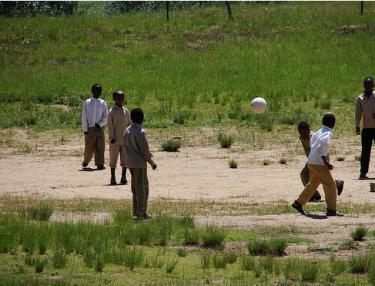
Soccer is popular among children, while netball and running are the main competitive school sports. Both indigenous and Western-style games are played.
Good to know
- Liketo is an indigenous game using stones
- Children play Khati (skipping), Lebekere (hide and seek) and Hop Scotch
- School sports competitions are organized annually
Last updated: 2026-07-12 · Sources: CountryReports
Photos of Lesotho
Photos of Lesotho


Travel and Tourism
Travel and Tourism
- Travel Alert Status
- Level 1: Exercise Normal Precautions
- Currency
- loti (LSL); South African rand (ZAR)
- Time Difference
- UTC+2 (7 hours ahead of Washington, DC, during Standard Time)
- Climate
- The climate is temperate year round. Rainfall, occurring mostly from October to April, ranges from 24 inches a year over most of the lowlands to over 40 inches a year in the mountains. A windy season during August and September occasionally brings dust storms. Average daytime temperatures are in the high 80°F in summer and can reach 100°F in Maseru. In winter, daytime temperatures average in the mid 60°F and at night sometimes drop to the teens in Maseru. Nighttime temperatures are regularly below freezing in June, July and August. Temperatures in the mountains are even more extreme with snowfalls common in winter. The humidity year round is quite low.
- Airports
- 28
Read the full travel guide — health, safety, vaccinations, disease risk, sanitation, and transit details.
View full travel guideRecipes
Recipes
History
History
Historical Eras
Basotho Origins
1820 – 1868
King Moshoeshoe I consolidated diverse Sotho-speaking clans into a unified nation at Thaba Bosiu during the difaqane, a period of widespread displacement and warfare across southern Africa. His skilled diplomacy and military strategy allowed the Basotho to resist Zulu, Boer, and other encroachments. This era established the cultural and political foundations of the Basotho nation.
British Protectorate
1868 – 1966
Facing mounting pressure from Boer settlers, Moshoeshoe I requested British protection in 1868, and Basutoland became a Crown protectorate administered from the Cape Colony, then directly from London after 1884. The Gun War of 1880–1881 saw the Basotho resist British disarmament orders, preserving a degree of autonomy. Approximately 20,000 Sotho men served with Allied forces during World War II, accelerating nationalist consciousness and demands for self-governance.
Independence & Early Rule
1966 – 1986
Lesotho gained independence on October 4, 1966, under Prime Minister Leabua Jonathan and his Basotho National Party. Jonathan annulled the 1970 elections when his party faced defeat, imprisoning opposition leaders and ruling by decree. The kingdom remained economically dependent on South Africa while Jonathan increasingly distanced his government from the apartheid regime, drawing cross-border tensions.
Military Rule
1986 – 1993
A military coup in January 1986 ousted Jonathan, installing a Military Council that granted executive authority to King Moshoeshoe II. Internal army power struggles led to the king's forced exile in 1990 and the installation of his son, Letsie III. Major General Ramaema ultimately replaced coup leader Lekhanya and steered the country toward a democratic transition.
Democratic Transition
1993 – 2002
The Basotho Congress Party won the 1993 elections, ending over two decades of authoritarian rule, though political instability persisted through a royal coup in 1994 and Letsie III's brief deposition of the elected government. A South African and Botswana military intervention in 1998 suppressed a mutiny following disputed elections, causing widespread destruction. Electoral reforms introducing proportional representation stabilized the system, producing internationally accepted elections in 2002.
Modern Lesotho
2002 – present
The reformed mixed-member proportional electoral system allowed meaningful opposition representation for the first time, with nine parties winning seats in 2002. Lesotho celebrated its fortieth independence anniversary in 2006 with a redesigned national flag, while challenges including HIV/AIDS, chronic poverty, and regional drought required sustained international development assistance. The country continues to deepen democratic institutions while navigating economic dependence on South Africa and remittances from migrant labor.
Overview
Lesotho gained independence from Britain on October 4, 1966. In January 1970 the ruling Basotho National Party (BNP) appeared set to lose the first post-independence general elections when Prime Minister Leabua Jonathan annulled the election. He refused to cede power to the Basotho Congress Party (BCP) and imprisoned its leadership.
Timeline of Key Events
1860
Lesotho becomes a British protectorate.
Lesotho becomes a British protectorate.
1884
Becomes a British colony.
Becomes a British colony after revolt against Cape Colonial rule. Paramount chiefs retain large degree of autonomy.
1939 – 1945
World War II, with 20,000 Sotho serving in the British forces.
World War II, with 20,000 Sotho serving in the British forces.
1966
Lesotho gained independence from Britain.
Lesotho gained independence from Britain.
1990
King Moshoeshoe II goes into exile. His son is sworn in as Letsie III.
King Moshoeshoe II goes into exile. His son is sworn in as Letsie III.
1994
Fighting among rival army factions.
Fighting among rival army factions.
1995
Moshoeshoe II restored to throne, but dies in a car crash. Letsie III restored as king.
Moshoeshoe II restored to throne, but dies in a car crash. Letsie III restored as king.
Read the full history profile — narrative overview, defining eras, and the complete timeline in one place.
View expanded historyInteresting Facts
Interesting Facts
Dinosaur footprints can be found in many sites in Lesotho. A dinosaur is named after Lesotho. Lesothosaurus was one metre long and lived around two hundred million years ago.
See every fact — trivia, oddities, and curious tidbits gathered from across the country.
View all interesting factsGeography and Environment
Geography and Environment
- Terrain
- mostly highland with plateaus, hills, and mountains
- Climate
- The climate is temperate year round. Rainfall, occurring mostly from October to April, ranges from 24 inches a year over most of the lowlands to over 40 inches a year in the mountains. A windy season during August and September occasionally brings dust storms. Average daytime temperatures are in the high 80°F in summer and can reach 100°F in Maseru. In winter, daytime temperatures average in the mid 60°F and at night sometimes drop to the teens in Maseru. Nighttime temperatures are regularly below freezing in June, July and August. Temperatures in the mountains are even more extreme with snowfalls common in winter. The humidity year round is quite low.
- Natural Hazards
- periodic droughts
- Current Environmental Issues
- population pressure forcing settlement in marginal areas results in overgrazing, severe soil erosion, and soil exhaustion; desertification; Highlands Water Project controls, stores, and redirects water to South Africa
Read the full geography and environment profile — terrain, climate, natural resources, hazards, land use, and international agreements.
View full geographyPeople & Demographics
People & Demographics
Religion
Languages Spoken
Sesotho (southern Sotho), English (official), Zulu, Xhosa
- Sesotho
- English
- Xhosa
- Zulu
Population
- Population
- 2,281,453
- Population in Major Urban Areas
- MASERU (capital) 239,000
- Nationality Noun
- Mosotho (singular), Basotho (plural)
- Ethnic Groups
- Sotho 99.7%, Europeans, Asians, and other 0.3%,
Education
- Literacy Definition
- age 15 and over can read and write
On average primary school starts at 6 years to 12 years, however, because of unknown reasons, some children start at a late age. Classrooms are always crowded, now more than before because education is considered free. Desks are short, books are few, so the teachers normally read to the children and write on the board for notes, tasks, exams and/or assignments. Children provide their own writing books, exam books, writing utensils and stationery. Government schools do not offer computer lessons.
Health Information
- Life Expectancy at Birth
- Life expectancy at birth in Lesotho is among the lowest in the world, reflecting the severe and compounding health challenges the country has faced over several decades. As of the most recent available data, the average life expectancy at birth in Lesotho stands at approximately 53 to 55 years, a figure that places the country near the bottom of global rankings and well below the sub-Saharan African average of roughly 62 years. The primary driver of this low life expectancy is the extraordinarily high prevalence of HIV/AIDS. Lesotho has one of the highest HIV infection rates on the planet, with an adult prevalence rate estimated at around 20 to 22 percent — a burden that has dramatically shortened average lifespans, particularly among working-age adults. The epidemic has not only caused widespread mortality directly but has also left the population more vulnerable to opportunistic infections such as tuberculosis, which is itself a major cause of death in the country. Lesotho carries one of the highest tuberculosis incidence rates in the world, and the co-epidemic of HIV and TB represents one of the most serious public health crises in the region. Lesotho also struggles with a weak healthcare infrastructure. The country has a shortage of trained medical professionals, limited access to hospitals and clinics in rural highland areas, and persistent challenges in supplying essential medicines. Maternal and child mortality rates remain elevated, further pulling down the overall life expectancy figure. The maternal mortality ratio in Lesotho is among the highest in southern Africa, reflecting the dangers many women face during pregnancy and childbirth. Additional contributing factors include high rates of poverty, food insecurity, and malnutrition, all of which undermine general health and reduce resilience to disease. The mountainous terrain of much of the country isolates many communities from health services, creating significant disparities between urban and rural populations. Non-communicable diseases, including cardiovascular conditions and diabetes, are also becoming an increasing burden alongside the existing infectious disease challenges. There are, however, modest signs of improvement. Antiretroviral therapy programs have expanded meaningfully since the mid-2000s, and international health partnerships have helped increase access to HIV treatment and care. Efforts to scale up tuberculosis detection and treatment have also shown some progress. If current public health efforts are sustained and strengthened, gradual improvements in life expectancy are projected in the coming decades. Nevertheless, closing the gap with regional and global averages will require sustained investment in healthcare access, poverty reduction, and disease prevention.
- Infant Mortality Rate
- Lesotho faces one of the more challenging infant mortality situations in sub-Saharan Africa, though the country has made measurable progress over recent decades. The infant mortality rate — defined as the number of deaths among children under one year of age per 1,000 live births — stood at approximately 48 to 50 deaths per 1,000 live births in recent years, a figure that remains considerably higher than global and regional averages for middle-income nations. Several interconnected factors drive this elevated rate. HIV/AIDS continues to have a significant impact, as Lesotho carries one of the highest HIV prevalence rates in the world. Mother-to-child transmission of HIV remains a concern, though national programs aimed at prevention have helped reduce transmission rates over time. Neonatal infections, pneumonia, diarrheal diseases, and complications during childbirth are among the leading direct causes of infant death. Access to quality healthcare is a persistent challenge. Lesotho is a landlocked, mountainous country where rural communities can face serious geographic barriers to reaching clinics and hospitals. Skilled birth attendance, while improving, is not universal, and gaps in antenatal care affect outcomes for both mothers and newborns. Malnutrition compounds these health risks. Stunting and underweight rates among young children remain elevated, weakening immune systems and increasing vulnerability to otherwise preventable illnesses. On a more positive note, the infant mortality rate in Lesotho has declined substantially from peaks recorded in the early 2000s, when the rate exceeded 80 deaths per 1,000 live births. Government initiatives supported by international health organizations have expanded immunization coverage, improved access to oral rehydration therapy, and strengthened maternal health services. These combined efforts reflect real progress, though significant work remains to bring Lesotho's infant mortality rate in line with broader global health targets, including those outlined in the Sustainable Development Goals.
Life Expectancy
- Life Expectancy at Birth
- Life expectancy at birth in Lesotho is among the lowest in the world, reflecting the severe and compounding health challenges the country has faced over several decades. As of the most recent available data, the average life expectancy at birth in Lesotho stands at approximately 53 to 55 years, a figure that places the country near the bottom of global rankings and well below the sub-Saharan African average of roughly 62 years. The primary driver of this low life expectancy is the extraordinarily high prevalence of HIV/AIDS. Lesotho has one of the highest HIV infection rates on the planet, with an adult prevalence rate estimated at around 20 to 22 percent — a burden that has dramatically shortened average lifespans, particularly among working-age adults. The epidemic has not only caused widespread mortality directly but has also left the population more vulnerable to opportunistic infections such as tuberculosis, which is itself a major cause of death in the country. Lesotho carries one of the highest tuberculosis incidence rates in the world, and the co-epidemic of HIV and TB represents one of the most serious public health crises in the region. Lesotho also struggles with a weak healthcare infrastructure. The country has a shortage of trained medical professionals, limited access to hospitals and clinics in rural highland areas, and persistent challenges in supplying essential medicines. Maternal and child mortality rates remain elevated, further pulling down the overall life expectancy figure. The maternal mortality ratio in Lesotho is among the highest in southern Africa, reflecting the dangers many women face during pregnancy and childbirth. Additional contributing factors include high rates of poverty, food insecurity, and malnutrition, all of which undermine general health and reduce resilience to disease. The mountainous terrain of much of the country isolates many communities from health services, creating significant disparities between urban and rural populations. Non-communicable diseases, including cardiovascular conditions and diabetes, are also becoming an increasing burden alongside the existing infectious disease challenges. There are, however, modest signs of improvement. Antiretroviral therapy programs have expanded meaningfully since the mid-2000s, and international health partnerships have helped increase access to HIV treatment and care. Efforts to scale up tuberculosis detection and treatment have also shown some progress. If current public health efforts are sustained and strengthened, gradual improvements in life expectancy are projected in the coming decades. Nevertheless, closing the gap with regional and global averages will require sustained investment in healthcare access, poverty reduction, and disease prevention.
- Infant Mortality Rate
- Lesotho faces one of the more challenging infant mortality situations in sub-Saharan Africa, though the country has made measurable progress over recent decades. The infant mortality rate — defined as the number of deaths among children under one year of age per 1,000 live births — stood at approximately 48 to 50 deaths per 1,000 live births in recent years, a figure that remains considerably higher than global and regional averages for middle-income nations. Several interconnected factors drive this elevated rate. HIV/AIDS continues to have a significant impact, as Lesotho carries one of the highest HIV prevalence rates in the world. Mother-to-child transmission of HIV remains a concern, though national programs aimed at prevention have helped reduce transmission rates over time. Neonatal infections, pneumonia, diarrheal diseases, and complications during childbirth are among the leading direct causes of infant death. Access to quality healthcare is a persistent challenge. Lesotho is a landlocked, mountainous country where rural communities can face serious geographic barriers to reaching clinics and hospitals. Skilled birth attendance, while improving, is not universal, and gaps in antenatal care affect outcomes for both mothers and newborns. Malnutrition compounds these health risks. Stunting and underweight rates among young children remain elevated, weakening immune systems and increasing vulnerability to otherwise preventable illnesses. On a more positive note, the infant mortality rate in Lesotho has declined substantially from peaks recorded in the early 2000s, when the rate exceeded 80 deaths per 1,000 live births. Government initiatives supported by international health organizations have expanded immunization coverage, improved access to oral rehydration therapy, and strengthened maternal health services. These combined efforts reflect real progress, though significant work remains to bring Lesotho's infant mortality rate in line with broader global health targets, including those outlined in the Sustainable Development Goals.
Read the full people and society profile — demographics, health, education, religion, languages, and notable people.
View full people and societyGovernment & Politics
Government & Politics
Country Identity
- Country Name
- Lesotho
- Full Country Name
- Kingdom of Lesotho
- Former Name
- Basutoland
Government Structure
- Government Type
- parliamentary constitutional monarchy
- Legal System
- based on English common law and Roman-Dutch law; judicial review of legislative acts in High Court and Court of Appeal; has not accepted compulsory ICJ jurisdiction
- Executive Branch
- chief of state: King LETSIE III (since 7 February 1996); note - King LETSIE III formerly occupied the throne from November 1990 to February 1995, while his father, King Moshoeshoe II, was in exile head of government: Prime Minister Samuel Matekane (since 28 October 2022) cabinet: Cabinet appointed by the prime minister and approved by the king elections: none - according to the constitution, the leader of the majority party or coalition in the National Assembly automatically becomes prime minister; the monarch is hereditary, but under the terms of the constitution, which came into effect following the March 1993 elections, the monarch serves as a "living symbol of national unity" with no executive or legislative powers; under traditional law, the college of chiefs retains the authority to depose the monarch, determine the line of succession, or appoint a regent in the event that the successor has not reached maturity
- Legislative Branch
- Bicameral Parliament consists of the Senate (33 members — 22 principal chiefs and 11 other members appointed by the ruling party) and the National Assembly (120 seats — 80 members elected by direct popular vote in single-member constituencies and 40 seats allocated by proportional representation; members serve five-year terms). Elections: last held on 7 October 2022 (next to be held in 2027). Election results: percent of vote by party — RFP 38.5%, DC 19.5%, ABC 7.6%, AD 4.9%, MEC 4.5%, other 25%; seats by party — RFP 56, DC 29, ABC 8, AD 6, MEC 6, other 15.
- Judicial Branch
- High Court (chief justice appointed by the monarch acting on the advice of the Prime Minister); Court of Appeal; Magistrate's Court; customary or traditional court
- Suffrage
- 18 years of age; universal
- Constitution
- 2-Apr-93
- Independence
- 4 October 1966 (from UK)
- National Holiday
- Independence Day, 4 October (1966)
Capital City
- Capital Name
- Maseru
- Capital - geographic coordinate
- 29 19 S, 27 29 E
- Capital Time Difference
- UTC+2 (7 hours ahead of Washington, DC, during Standard Time)
in the Sesotho language the name means "[place of] red sandstones"
Military
Branches: Lesotho Defense Force (LDF): Army (includes Air Wing)
Embassy / Diplomatic Mission
U.S. Embassy Maseru
254 Kingsway Avenue
Maseru 100, Lesotho
Telephone: (266) 2231-2666
Emergency after-hours telephone: (266) 5888-4035
Facsimile: (266) 2231-0116
Email: USConsularMaseru@state.gov
Read the full government profile — flag symbolism, national anthem, and other national symbols.
View full government detailsEconomy
Economy
Small, landlocked, and mountainous, Lesotho remains one of the world's most aid-dependent and unequal economies. It relies heavily on customs duties from the Southern African Customs Union (SACU), which typically account for roughly 40–50 percent of government revenue, as well…
Snapshot
- Currency Name and Code
- Loti (LSL)
- GDP — official exchange rate
- $1,362,000,000 (USD)
- GDP Real Growth Rate
- 2.6%
- Gini Index
- 63.2
News & Weather
News & Weather
Current Weather
Latest News
Has Lesotho’s Tariff Relief Missed the Window? - WWD
WWD · 19h ago
Lesotho Secures US$6.2 Billion AI Data Centre and Hydropower Investment - The Fast Mode
The Fast Mode · 16h ago
WFP Lesotho Country Brief July 2026 - ReliefWeb
ReliefWeb · 8h ago
Thousands of African winter skiing tourists are flocking to snowy Lesotho - AP News
AP News · 15d ago
US companies win billions in African data center deals in direct competition with China - Fox News
Fox News · 3d ago
Achraf Hakimi to Miss Morocco’s Opening AFCON 2027 Qualifiers Against Gabon, Lesotho - Morocco World News
Morocco World News · 5h ago
From Highest Levy to Duty-Free: Lesotho Lauds US Shift - Bloomberg.com
Bloomberg.com · 6d ago
6th meeting of India - Lesotho Joint Bilateral Commission for Cooperation - Zawya
Zawya · 4h ago
News via Google News
Climate Overview
The climate is temperate year round. Rainfall, occurring mostly from October to April, ranges from 24 inches a year over most of the lowlands to over 40 inches a year in the mountains. A windy season during August and September occasionally brings dust storms.
Average daytime temperatures are in the high 80°F in summer and can reach 100°F in Maseru. In winter, daytime temperatures average in the mid 60°F and at night sometimes drop to the teens in Maseru. Nighttime temperatures are regularly below freezing in June, July and August. Temperatures in the mountains are even more extreme with snowfalls common in winter. The humidity year round is quite low.
Frequently Asked Questions
Frequently Asked Questions
What is the population of Lesotho?
How do people address each other in Lesotho?
What are the eating customs in Lesotho?
What should I know about hospitality in Lesotho?
How should I dress in Lesotho?
What is family life like in Lesotho?
What do people do for recreation in Lesotho?
What is the capital of Lesotho?
Where is Lesotho located?
What countries border Lesotho?
What religion is practiced in Lesotho?
What is the currency of Lesotho?
What language is spoken in Lesotho?
What is Lesotho known for?
What form of government does Lesotho have?
Last reviewed 2026