
 English
 Español
 中文
中文 हिन्दी
 Français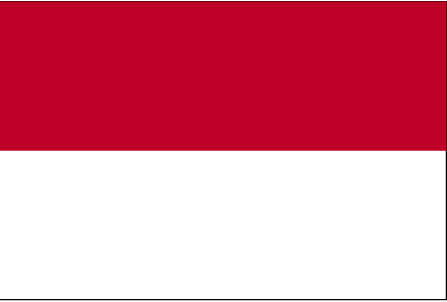
Indonesia
Indonesia
Declare Your Relationship to Indonesia
CountryReports Community
- Studying5
- From Indonesia5
- Indonesia heritage3
- Visited3
- Want to visit3
Customs and Culture
Customs and Culture
Cultural Attributes
Indonesians rarely disagree in public, seldom say "no" (they say Belum, "not yet"), and generally have time for others. Punctuality, while important, is not emphasized at the expense of personal relations.
Indonesians appreciate a quiet voice, an unassuming attitude, and discretion. To embarrass someone is a terrible insult.
Patience is the key to interaction. Attitudes vary according to diverse ethnic, political and religious backgrounds. Indonesians are loyal to family and friends more than their own concerns.

Emerald Archipelago of a Thousand Temples
Get More Customs and Culture
5 more cultural topics for members
Social Customs & Etiquette · Diet · Family · Dating Customs · Recreation
Holidays
Independence Day
8/17Independence Day
Christmas
12/25Christmas
Most of the population is Muslim with only a small percentage of Christians. For the Christians in the country the Christmas season extends from the beginning of December until the second week in January. The traditions reflect the 350 years of Dutch occupation. In many areas Sinterklass (Santa Claus) brings the Christmas gifts on December 5th the eve of St. Nicholas’s day. During the second week of December many malls and hotels sponsor events where Santa Claus is a guest and children can have pictures taken with him.
Christmas dinner often features a blend of Indonesian, European and Chinese foods, including soups, stir-fry vegetables, chicken, beef, seafood, and pork.
Dates of Interest
- September 9th
Most of the population is Muslim with only a small percentage of Christians. For the Christians in the country the Christmas season extends from the beginning of December until the second week in January. The traditions reflect the 350 years of Dutch occupation. In many areas Sinterklass (Santa Claus) brings the Christmas gifts on December 5th the eve of St. Nicholas’s day. During the second week of December many malls and hotels sponsor events where Santa Claus is a guest and children can have pictures taken with him. Christmas dinner often features a blend of Indonesian, European and Chinese foods, including soups, stir-fry vegetables, chicken, beef, seafood, and pork.
How do people greet each other in Indonesia?
Indonesian culture is built on honor and respect, so greetings are gentle and courteous. Men and women usually shake hands and slightly bow the head at a first introduction; after that, a nod or slight bow is more appropriate.
Do
- Offer your hand for a handshake and nod your head when meeting someone for the first time
- Use a person's title in greetings and conversation if they have one
- Shake hands when congratulating someone or saying good-bye before a long trip
Don’t
- Don't repeatedly shake hands in everyday greetings after the first meeting
- A man should not touch an older woman in public beyond a handshake
Good to know
- Many Indonesians, especially the Javanese, have only one name, used both formally and casually
- Letters begin with Dengan hormat ('with respect')
What are the dining customs in Indonesia?
Meals center on rice, served with vegetables, fish, meats, and often spicy hot sauces. Politeness and waiting for the host's invitation matter more than speed.
Do
- Wait to be invited before you eat or drink
- Keep both hands above the table while eating
- Compliment the food to please the hostess
- Leave a little food on your plate when finished
Don’t
- Don't eat or drink while standing or walking on the street
- Don't finish your drink unless you want it refilled
- Don't use the left hand to eat
- Don't clear your plate completely, as that signals you want more
Good to know
- A service charge is usually included at restaurants and tipping is uncommon
- Avoid public use of toothpicks; if needed, cover the mouth with one hand
- Muslims do not eat pork or drink alcohol
What etiquette should visitors know in Indonesia?
Indonesians value patience, discretion, a quiet voice, and an unassuming attitude, and consider embarrassing someone a terrible insult. Unannounced visits are common and hospitality is important.
Do
- Be patient and keep a quiet, unassuming manner
- Sit only when invited, and rise when the host or hostess enters the room
- Eat at least a little of any refreshments served to avoid offending hosts
- Remove your shoes if the host is not wearing footwear, or before entering carpeted rooms and holy places
Don’t
- Don't disagree openly or embarrass anyone in public
- Don't drink until invited to by the host
- Don't refuse a gift, as that is impolite
Good to know
- Indonesians rarely say 'no' directly; they may say Belum ('not yet')
- Punctuality is valued but not at the expense of personal relationships
- Westernized Indonesians appreciate flowers when invited to dinner
How should I dress in Indonesia?
Indonesians prefer modest dress, whether Western or traditional styles. Authentic hand-made batik clothing may be worn for formal occasions by both men and women.
Do
- Dress modestly
Good to know
- Batik is the national handicraft, made by using molten wax to create designs before dyeing
- Traditional women's dress includes the kain (a long batik wraparound) and kebaya (a long-sleeved blouse)
What gestures are polite or offensive in Indonesia?
Body language matters greatly, and the head and left hand carry special significance. Beckon only children or a becak driver, by waving all fingers with the palm facing down.
Do
- Cover your mouth with a hand if you must yawn in public
- Offer your seat to the elderly on public transportation
- Show approval with a pat on the shoulder
Don’t
- Never touch another person's head
- Don't use the left hand to shake, touch, point, eat, or give and receive objects
- Don't stand with hands in pockets or on hips, a sign of defiance or arrogance
- Don't laugh at another's mistake, which is very offensive
What is family life like in Indonesia?
Loyalty and cooperation among family members are highly valued, and extended families often live together or nearby. The home is traditionally led by the father, with the mother caring for the household and children.
Good to know
- Families were traditionally large, but many now stop at two children
- Many urban women work outside the home, making up 40 percent of the labor force
- Indonesian women have relatively strong rights in property, inheritance, and divorce
What do people do for fun and sport in Indonesia?
Popular pastimes include sepak takraw (keeping a rattan ball airborne with the feet), the martial art pencak silat, and the traditional board game congklak. The government promotes 'Sport for All.'
Good to know
- Congklak is played with a wooden board and shells or pebbles, often at family gatherings
- A National Sports Day is held every September 9th as a symbol of unity
- Youth can join Karang Taruna (ages 10-25) or Pramuka, the Indonesian Scouts, where boys and girls may share a pack
Last updated: 2026-07-12 · Sources: CountryReports
Photos of Indonesia
Photos of Indonesia
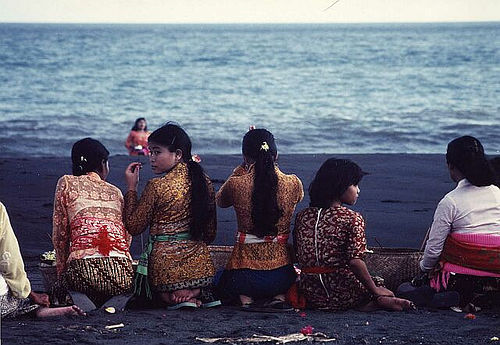
Young girls perform prayers at the beach, Bali, Indonesia
Orang-utan at Bukit Lawang, Sumatra
Local market in Sumatra
Bullfight near Bukitinggi north of Sumatra
Remote island in the Lingga Islands
Rice fields
Historical site 19th century Stupa, Borobudur
Colourful market near Berastagi on Sumatra
Seven Mountains Lake
Beach at Ujung Genteng in soutwest Java
Old man takes a nap in central Sumatra
King male orang-utan eats lunch


Travel and Tourism
Travel and Tourism
- Travel Alert Status
- Level 2: Exercise Increased Caution
- Currency
- Indonesian rupiah (IDR)
- Time Difference
- UTC+7 (12 hours ahead of Washington, DC, during Standard Time) note: Indonesia has three time zones
- Climate
- The tropical climate varies with location, season, and altitude. Jakarta lies in the lowlands. Spanning the Equator, Indonesia experiences no real seasons. However, a wet season begins in November and lasts until March, followed by a dry season from April to October. Days and nights each last 12 hours. The tropical climate and rich soil support abundant flora and fauna. Mangrove swamps and marshes flourish along the coast; tropical rain forests cover most of the terrain up to 3,000 feet; and abundant subtropical vegetation, such as oak, pine, and hardwoods, thrives at higher altitudes. The abundant forest cover and favorable climate have stimulated a diverse animal life. Many endangered and unique animals, such as single”‘horn rhinoceroses, orangutans, saltwater crocodiles, Komodo "dragons," Sumatran tigers, giant monitor lizards, and anoa, the pygmy buffalo of Celebes, still find a home in Indonesia. Many species of snakes, insects, and birds abound.
- Airports
- 661
Read the full travel guide — health, safety, vaccinations, disease risk, sanitation, and transit details.
View full travel guideRecipes
Recipes
Bubuh Injin (Black Rice Pudding)
Main Dish
Main Dish
Prawns with Peanut Sauce
Main Dish
Sambal Balado (Indonesian Crispy Crunchy Beef)
Main Dish
Rendang (Beef Cooked in Garlic, Shallots, Ginger, Chilies, Lemon Grass and Coconut Milk)
Main Dish
Gado-Gado (Vegetables and Tofu topped with Peanut Sauce)
Main Dish
Steamed Rice with Meat and Vegetables
Main Dish
Bubuh Injin (Black Rice Pudding)
History
History
Historical Eras
Early Kingdoms
600 – 1500
Hindu-Buddhist maritime and agrarian kingdoms shaped the archipelago's political and cultural identity. The Srivijaya empire dominated Sumatra and regional trade from the 7th century, while the Majapahit kingdom, founded in 1293 in eastern Java, became the most powerful Indianized state in Southeast Asian history, unifying much of the archipelago under its influence. Monumental works such as Borobudur and the Prambanan temples remain enduring legacies of this era.
Islamization & Spice Trade
1500 – 1619
Islam spread progressively through coastal trading networks, displacing Hindu-Buddhist court cultures and giving rise to powerful Muslim sultanates across Java, Sumatra, and the Maluku archipelago. Portuguese and Spanish traders arrived in the early 16th century seeking to control the immensely profitable spice trade, establishing a limited but disruptive European presence. This period set the conditions for the more systematic Dutch colonial project that followed.
Dutch Colonial Rule
1619 – 1942
The Dutch United East India Company (VOC) established Batavia in 1619 as its headquarters and progressively seized control of the spice trade and political authority across the archipelago. After the VOC's dissolution in 1799, the Netherlands Indies government continued economic exploitation, most notoriously through the Cultivation System (1830–1870), which forced Javanese peasants to grow cash crops for Dutch profit. By the early 20th century, Indonesian nationalism began to coalesce around figures such as Sukarno and Mohammad Hatta in direct response to colonial subjugation.
Japanese Occupation
1942 – 1945
Imperial Japan swept through the Dutch colonial administration in early 1942, dismantling European authority almost overnight and fundamentally altering Indonesia's political landscape. Though primarily motivated by resource extraction—especially oil—Japan permitted and even encouraged Indonesian political organizing, giving nationalist leaders Sukarno and Hatta platforms for mass mobilization. On August 17, 1945, two days after Japan's surrender, Sukarno and Hatta proclaimed Indonesian independence.
National Revolution & Early Republic
1945 – 1966
Indonesia's declaration of independence triggered a bitter four-year National Revolution against Dutch attempts to reimpose colonial control, ending with international recognition of sovereignty in 1949. President Sukarno's guided democracy consolidated nationalist ideology but grew increasingly authoritarian and economically dysfunctional, culminating in the failed coup of October 1, 1965, attributed to the Indonesian Communist Party (PKI), and the subsequent anti-communist massacres that killed hundreds of thousands.
New Order & Reformasi
1966 – present
General Suharto's New Order regime (1966–1998) brought political stability and economic development at the cost of authoritarian repression, endemic corruption, and military impunity. The 1997 Asian financial crisis destabilized Suharto's government, forcing his resignation and launching the Reformasi era of democratic transition. Indonesia has since held multiple free elections and decentralized governance, while continuing to address poverty, separatist pressures in Aceh and Papua, and the legacy of institutional corruption.
Overview
Bima (right) and Arjuna (left), two of the
Timeline of Key Events
670
Chinese traveller, I Ching, visits Srivijaya.
Chinese traveler, I Ching, visits Srivijaya.
752 – 1045
The Hindu Mataram dynasty flourishes and declines.
The Hindu Mataram dynasty flourishes and declines.
825
Borobudur Buddhist monument constructed.
The Buddhist temple of Borobudur on the island of Java was completed about this time under the supervision of an architect named Gunadharma.
910
Building of the Hindu temples at Prambanan begins.
Building of the Hindu temples at Prambanan begins.
1135 – 1157
King Joyoboyo rules until
King Joyoboyo rules until 1157 and is remembered for a prophecy that Indonesia would be ruled by a white race for a long time, then a yellow race for a short time, then be independent.
1292
Marco Polo visits Sumatra and Java.
Marco Polo visits Sumatra and Java.
1293
The Hindu Majapahit kingdom is founded in eastern Java.
The Hindu Majapahit kingdom is founded in eastern Java.
Read the full history profile — narrative overview, defining eras, and the complete timeline in one place.
View expanded historyInteresting Facts
Interesting Facts
When a child loses a tooth they throw their tooth backwards over the roof. Their mother says they must throw it very straight so that their new tooth will grow in straight.
The Buddhist temple of Borobudur that lies in Eastern Java on the Kedu Plain. It is surrounded by an idyllic landscape of incomparable beauty of rice-terraced hills and overlooked by four volcanoes. The industrious subjects of the Sailendra dynasty built it over a period of 80 years in the ninth century who transformed a volcanic plug of basalt into a stepped pyramid with a base measuring 120 meters square and a height of 35 meters. It was built to resemble a microcosm of the universe and its purpose was to provide a visual image of the teachings of the Buddha and show, in a practical manner, the steps through life that each person must follow to achieve enlightenment. The pilgrim to this shrine would first have been led around the base and shown the friezes, which illustrate the consequences of living in the World of Desire. In this realm ruled by Greed, Envy, and Ignorance, man is a slave to earthly desires and suffers from the illusions that are caused by these unfulfilled yearnings, a state regarded as hell by Buddhists. After completing this circuit, the pilgrim was then led in a clockwise fashion through five levels in a gradual ascension of the pyramid. Here he was shown how to conquer desire and attachment by viewing 1300 panelled friezes that illustrate the life of the Buddha and his previous incarnations. These levels were called the World of Form and correspond to the earthly realm in Buddhist symbology. The passages of both of these realms followed the square shape of the pyramid but above these two lay the World of Formlessness where the right-angled, heavily decorated passages gave way to a round unadorned summit where meditating Buddhas and saints sit in supreme bliss contemplating a view of exquisite beauty. In the centre a bell shaped tower, or stupa, points to heaven, a blissful realm beyond form and concept, known as Nirvana. Encompassing the totality of existence with its representations of heaven, earth, and hell in this metaphor of stone, the monument was abandoned after a severe earthquake and a large eruption of the volcano Merapi in 1006 AD until it was rediscovered by the West during colonial times. One of the miracles, perhaps equalling the miracle of its construction and craftsmanship, is that the monument still exists and can be seen to this day. This area of Java is one of the most earthquake prone regions in the world as well as one of the most volcanic.
The volcano Krakatoa, which was part of the Indonesian archipelago, erupted on August 27, 1883, producing one of the biggest explosions in history. The island on which it was situated was destroyed, creating a 41-square-kilometre hole in the sea floor and causing a tidal wave that killed 30,000 people. The sound was heard 4,000 kilometers away.
Komodo dragons are found on the island of Komodo. They are lizards about three meters long, weighing up to 140 kilograms. They have scaly bodies, short muscular legs, massive tails and razor-sharp teeth.
See every fact — trivia, oddities, and curious tidbits gathered from across the country.
View all interesting factsGeography and Environment
Geography and Environment
- Terrain
- mostly coastal lowlands; larger islands have interior mountains
- Climate
- The tropical climate varies with location, season, and altitude. Jakarta lies in the lowlands. Spanning the Equator, Indonesia experiences no real seasons. However, a wet season begins in November and lasts until March, followed by a dry season from April to October. Days and nights each last 12 hours. The tropical climate and rich soil support abundant flora and fauna. Mangrove swamps and marshes flourish along the coast; tropical rain forests cover most of the terrain up to 3,000 feet; and abundant subtropical vegetation, such as oak, pine, and hardwoods, thrives at higher altitudes. The abundant forest cover and favorable climate have stimulated a diverse animal life. Many endangered and unique animals, such as single‑horn rhinoceroses, orangutans, saltwater crocodiles, Komodo "dragons," Sumatran tigers, giant monitor lizards, and anoa, the pygmy buffalo of Celebes, still find a home in Indonesia. Many species of snakes, insects, and birds abound.
- Natural Hazards
- occasional floods, severe droughts, tsunamis, earthquakes, volcanoes, forest fires
- Current Environmental Issues
- deforestation; water pollution from industrial wastes, sewage; air pollution in urban areas; smoke and haze from forest fires
Read the full geography and environment profile — terrain, climate, natural resources, hazards, land use, and international agreements.
View full geographyPeople & Demographics
People & Demographics
Religion
Languages Spoken
Bahasa Indonesia (official, modified form of Malay), English, Dutch, local dialects
- Bahasa
- Bahasa Indonesia
- Dutch
- English
Population
- Population
- 277,534,122
- Population in Major Urban Areas
- JAKARTA (capital) 9.769 million; Surabaya 2.787 million; Bandung 2.429 million; Medan 2.118 million; Semarang 1.573 million; Palembang 1.455 million
- Nationality Noun
- Indonesian(s)
- Ethnic Groups
- Javanese 45%, Sundanese 14%, Madurese 7.5%, coastal Malays 7.5%, other 26%
- Language Note
- The official language is Indonesian (a variety of Malay). However, some 300 other languages are also spoken in the country. One of them, Javanese is the most common with more than 70 million speakers. More than half the population speaks some Indonesian or Malay. Because Dutch was the official language until 1942, some older adults still speak it. English is the leading international language and is taught as a second language in the schools (after Indonesian). Ethnic languages are taught in special classes.
Education
- Literacy Definition
- age 15 and over can read and write
Health Information
- Life Expectancy at Birth
- Life expectancy at birth in Indonesia has risen significantly over recent decades, reflecting improvements in healthcare access, nutrition, sanitation, and public health infrastructure. As of the most recent available data, the average life expectancy at birth in Indonesia stands at approximately 67 to 68 years overall, with women living longer on average — around 69 to 70 years — compared to men, who average roughly 65 to 66 years. This gender gap in longevity is consistent with global patterns observed across most countries. In the mid-20th century, life expectancy in Indonesia was considerably lower, hovering around 40 years in the early 1950s. Decades of investment in maternal health programs, childhood immunization campaigns, and the expansion of community health centers known locally as Puskesmas (Pusat Kesehatan Masyarakat) have contributed substantially to this upward trend. It is worth noting that the COVID-19 pandemic caused a measurable dip in life expectancy figures in the early 2020s, a setback that Indonesia shared with many countries around the world, though gradual recovery has since been observed. Despite these gains, life expectancy in Indonesia remains below the global average of approximately 73 years, and notable disparities exist between urban and rural areas as well as between different regions of the archipelago. Residents of Java and Bali generally enjoy better access to healthcare facilities and tend to live longer than those in more remote provinces such as Papua, where infrastructure and medical services remain limited. Leading causes of death that influence life expectancy figures include cardiovascular disease, stroke, diabetes, and lower respiratory infections. Non-communicable diseases have grown increasingly prevalent as Indonesia undergoes an epidemiological transition, shifting from infectious diseases toward chronic, lifestyle-related conditions. Tobacco use remains a significant public health concern, particularly among Indonesian men, and is a contributing factor to premature mortality. The Indonesian government has worked to address these challenges through the national health insurance program known as Jaminan Kesehatan Nasional (JKN), launched in 2014, which aims to provide universal health coverage to all citizens. Enrollment in the program has expanded considerably since its introduction, now covering the majority of the population. Continued expansion of this program, alongside improvements in preventive care, health education, and regional health equity, is expected to support further gradual increases in life expectancy in the coming decades.
- Major Infectious Diseases — degree of risk
- very high
- Infant Mortality Rate
- Indonesia's infant mortality rate has declined significantly over recent decades, reflecting the country's sustained investments in public health infrastructure, maternal care, and child nutrition programs. As of the most recent available data, Indonesia's infant mortality rate stands at approximately 20 to 21 deaths per 1,000 live births, a notable improvement from figures exceeding 60 per 1,000 live births recorded in the early 1990s. Despite this progress, infant mortality remains unevenly distributed across the archipelago. Urban centers such as Jakarta and Surabaya tend to report lower rates due to greater access to hospitals, skilled birth attendants, and postnatal care services. In contrast, more remote and rural provinces — particularly in Papua, East Nusa Tenggara, and parts of Kalimantan — continue to experience higher rates, often driven by limited healthcare access, poverty, and inadequate sanitation infrastructure. The leading causes of infant death in Indonesia include neonatal complications such as birth asphyxia, sepsis, and prematurity, as well as preventable infectious diseases like pneumonia and diarrheal illnesses. Malnutrition also plays a compounding role, weakening immune responses in vulnerable newborns and young infants. The Indonesian government, in partnership with international organizations including UNICEF and the World Health Organization, has implemented a range of targeted programs to address these challenges. These include the expansion of community health centers known as Puskesmas, promotion of exclusive breastfeeding, immunization campaigns, and training programs for village midwives called bidan desa. The national health insurance program, known as JKN, has also improved access to maternal and child health services for lower-income populations. Indonesia's infant mortality rate remains higher than the global average for upper-middle-income countries, where rates typically fall below 12 per 1,000 live births. Continued focus on reducing regional disparities, improving nutrition, and strengthening rural healthcare delivery systems will be essential for Indonesia to meet its longer-term child health development targets.
Life Expectancy
- Life Expectancy at Birth
- Life expectancy at birth in Indonesia has risen significantly over recent decades, reflecting improvements in healthcare access, nutrition, sanitation, and public health infrastructure. As of the most recent available data, the average life expectancy at birth in Indonesia stands at approximately 67 to 68 years overall, with women living longer on average — around 69 to 70 years — compared to men, who average roughly 65 to 66 years. This gender gap in longevity is consistent with global patterns observed across most countries. In the mid-20th century, life expectancy in Indonesia was considerably lower, hovering around 40 years in the early 1950s. Decades of investment in maternal health programs, childhood immunization campaigns, and the expansion of community health centers known locally as Puskesmas (Pusat Kesehatan Masyarakat) have contributed substantially to this upward trend. It is worth noting that the COVID-19 pandemic caused a measurable dip in life expectancy figures in the early 2020s, a setback that Indonesia shared with many countries around the world, though gradual recovery has since been observed. Despite these gains, life expectancy in Indonesia remains below the global average of approximately 73 years, and notable disparities exist between urban and rural areas as well as between different regions of the archipelago. Residents of Java and Bali generally enjoy better access to healthcare facilities and tend to live longer than those in more remote provinces such as Papua, where infrastructure and medical services remain limited. Leading causes of death that influence life expectancy figures include cardiovascular disease, stroke, diabetes, and lower respiratory infections. Non-communicable diseases have grown increasingly prevalent as Indonesia undergoes an epidemiological transition, shifting from infectious diseases toward chronic, lifestyle-related conditions. Tobacco use remains a significant public health concern, particularly among Indonesian men, and is a contributing factor to premature mortality. The Indonesian government has worked to address these challenges through the national health insurance program known as Jaminan Kesehatan Nasional (JKN), launched in 2014, which aims to provide universal health coverage to all citizens. Enrollment in the program has expanded considerably since its introduction, now covering the majority of the population. Continued expansion of this program, alongside improvements in preventive care, health education, and regional health equity, is expected to support further gradual increases in life expectancy in the coming decades.
- Infant Mortality Rate
- Indonesia's infant mortality rate has declined significantly over recent decades, reflecting the country's sustained investments in public health infrastructure, maternal care, and child nutrition programs. As of the most recent available data, Indonesia's infant mortality rate stands at approximately 20 to 21 deaths per 1,000 live births, a notable improvement from figures exceeding 60 per 1,000 live births recorded in the early 1990s. Despite this progress, infant mortality remains unevenly distributed across the archipelago. Urban centers such as Jakarta and Surabaya tend to report lower rates due to greater access to hospitals, skilled birth attendants, and postnatal care services. In contrast, more remote and rural provinces — particularly in Papua, East Nusa Tenggara, and parts of Kalimantan — continue to experience higher rates, often driven by limited healthcare access, poverty, and inadequate sanitation infrastructure. The leading causes of infant death in Indonesia include neonatal complications such as birth asphyxia, sepsis, and prematurity, as well as preventable infectious diseases like pneumonia and diarrheal illnesses. Malnutrition also plays a compounding role, weakening immune responses in vulnerable newborns and young infants. The Indonesian government, in partnership with international organizations including UNICEF and the World Health Organization, has implemented a range of targeted programs to address these challenges. These include the expansion of community health centers known as Puskesmas, promotion of exclusive breastfeeding, immunization campaigns, and training programs for village midwives called bidan desa. The national health insurance program, known as JKN, has also improved access to maternal and child health services for lower-income populations. Indonesia's infant mortality rate remains higher than the global average for upper-middle-income countries, where rates typically fall below 12 per 1,000 live births. Continued focus on reducing regional disparities, improving nutrition, and strengthening rural healthcare delivery systems will be essential for Indonesia to meet its longer-term child health development targets.
Read the full people and society profile — demographics, health, education, religion, languages, and notable people.
View full people and societyGovernment & Politics
Government & Politics
Country Identity
- Country Name
- Indonesia
- Full Country Name
- Republic of Indonesia
- Local - Long
- Republik Indonesia
- Local - Short
- Indonesia
- Former Name
- Netherlands East Indies; Dutch East Indies
Government Structure
- Government Type
- republic
- Legal System
- based on Roman-Dutch law, substantially modified by indigenous concepts and by new criminal procedures and election codes; has not accepted compulsory ICJ jurisdiction
- Executive Branch
- chief of state: President PRABOWO Subianto (since 20 October 2024) and Vice President GIBRAN Rakabuming Raka (since 20 October 2024); note - the president is both the chief of state and head of government head of government: President PRABOWO Subianto (since 20 October 2024) and Vice President GIBRAN Rakabuming Raka (since 20 October 2024); note - the president is both the chief of state and head of government cabinet: Cabinet appointed by the president elections: president and vice president elected for five-year terms by direct vote of the citizenry; last held on 14 February 2024 (next to be held in 2029) election results: PRABOWO Subianto elected president in the first round, receiving approximately 58.6% of the vote; ANIES Baswedan received approximately 24.9%; GANJAR Pranowo received approximately 16.5%
- Legislative Branch
- Bicameral legislature consisting of the House of Representatives (Dewan Perwakilan Rakyat or DPR) and the House of Regional Representatives (Dewan Perwakilan Daerah or DPD), both of which together form the People's Consultative Assembly (Majelis Permusyawaratan Rakyat or MPR). The DPR currently holds 580 seats, with members elected by popular vote to serve five-year terms. The DPR is the primary legislative body responsible for passing national legislation, approving the state budget, and overseeing the executive branch. The DPD provides legislative input to the DPR on matters directly affecting Indonesia's regions and provinces, and its role is constitutionally mandated. The MPR, composed of all sitting members of the DPR and DPD, is responsible for inaugurating and impeaching the president and for amending the constitution. The MPR does not independently formulate national policy. Elections for the DPR are held every five years. The most recent legislative elections were held on 14 February 2024. The Golkar Party, the Indonesian Democratic Party of Struggle (PDI-P), and Gerindra were among the leading parties. PDI-P received the largest share of the vote at approximately 16.7%, followed by Golkar at approximately 15.3% and Gerindra at approximately 13.2%. Other significant parties include the National Awakening Party (PKB), the National Democrat Party (NasDem), the Democrat Party (PD), the National Mandate Party (PAN), and the Prosperous Justice Party (PKS), among others. Note: Due to Indonesia's electoral threshold rules and proportional representation system, the distribution of seats does not always directly correspond to the percentage of votes received by each party.
- Judicial Branch
- Supreme Court or Mahkamah Agung (justices appointed by the president from a list of candidates approved by the legislature); a separate Constitutional Court or Mahkamah Konstitusi was invested by the president on 16 August 2003; in March 2004 the Supreme Court assumed administrative and financial responsibility for the lower court system from the Ministry of Justice and Human Rights; Labor Court under supervision of Supreme Court began functioning in January 2006
- Suffrage
- 17 years of age; universal and married persons regardless of age
- Constitution
- August 1945, abrogated by Federal Constitution of 1949 and Provisional Constitution of 1950, restored 5 July 1959
- Independence
- 17 August 1945 (proclaimed independence; on 27 December 1949, Indonesia became legally independent from the Netherlands)
- National Holiday
- Independence Day, 17 August (1945)
Capital City
- Capital Name
- Jakarta; note - Indonesian lawmakers on 18 January 2022 approved the relocation of the country’s capital from Jakarta to a site on the island of Borneo between Samarinda City and the port city of Balikpapan; Nusantara ("archipelago"), the name of the new capital, is expected to be established in August 2024
- Capital - geographic coordinate
- 6 10 S, 106 49 E
- Capital Time Difference
- UTC+7 (12 hours ahead of Washington, DC, during Standard Time) note: Indonesia has three time zones
"Jakarta" derives from the Sanscrit "Jayakarta" meaning "victorious city" and refers to a successful defeat and expulsion of the Portuguese in 1527; previously the port had been named "Sunda Kelapa"
Military
Branches: Indonesian Armed Forces (Tentara Nasional Indonesia, TNI): Army (TNI-Angkatan Darat (TNI-AD)), Navy (TNI-Angkatan Laut (TNI-AL); includes marines (Korps Marinir, KorMar), naval air arm), Air Force (TNI-Angkatan Udara (TNI-AU)), National Air Defense Command (Kommando Pertahanan Udara Nasional (Kohanudnas))
Embassy / Diplomatic Mission
U.S. Embassy Jakarta is located at Medan Merdeka Selatan 5, Jakarta 10110; telephone: (62)(21) 3435-9000; fax (62)(21) 385-7189. The most secure international mail address is: U.S. Embassy Jakarta, DPO, AP 96520 USA. The consular section of the Embassy can be reached by e-mail. Instructions on how to receive SMS emergency messages on your cell phone can be found on the Embassy's FAQ page.
U.S. Consulate General in Surabaya is at Jl. Citra Raya Niaga No. 2, Surabaya 60217; telephone: (62) (31) 297-5300; fax (62) (31) 567-4492, after-hours duty officer (62) (811) 334-183. The consulate can also be reached by e-mail. The consulate should be the first point of contact for assistance to U.S. citizens who are present or residing in the Indonesian provinces of East Java, Nusa Tenggara Timor, Nusa Tenggara Barat, all of Sulawesi and North and South Maluku.
There is a Consular Agency in Bali at Jalan Hayam Wuruk 310, Denpasar, Bali; telephone: (62) (361) 233-605; fax (62) (361) 222-426; or BaliConsularAgency@state.gov. The U.S. Consulate in Surabaya is an alternate contact for U.S. citizens in Bali.
The American Presence Post in Medan, North Sumatra, provides only emergency assistance to U.S. citizens and does not offer routine consular services. U.S. citizens needing emergency consular assistance in Sumatra should call (62) (61) 451-9000.
Read the full government profile — flag symbolism, national anthem, and other national symbols.
View full government detailsEconomy
Economy
Indonesia, the world's largest archipelagic nation and Southeast Asia's biggest economy, has emerged as one of the most dynamic emerging markets globally, with a gross domestic product exceeding $1.4 trillion and membership in the G20.
Snapshot
- Currency Name and Code
- Rupiah (IDR)
- GDP — official exchange rate
- $270,000,000,000 (USD)
- GDP Real Growth Rate
- 5.05%
- Gini Index
- 34.3
News & Weather
News & Weather
Current Weather
Latest News
Five dead, 41 missing after Indonesian ferry catches fire, authorities say - Reuters
Reuters · 1d ago
Indonesia posts second straight trade deficit in June as imports surge - Reuters
Reuters · 15h ago
Vietnam regain control of ASEAN Championship Group A with stunning win over Indonesia - ESPN
ESPN · 1h ago
Moment deadly fire engulfs ferry in Indonesia - CNN
CNN · 3h ago
Indonesia wanted to give children free school meals. How did it go so wrong? - Financial Times
Financial Times · 1d ago
Pilot caught with suitcase full of drugs in Indonesia - DW.com
DW.com · 3d ago
Indonesia president is willing to go to North Korea to open dialogue on request of South Korea - Yahoo
Yahoo · 2d ago
ASEAN HYUNDAI CUP™ 2026 GROUP A: INDONESIA 0-3 VIETNAM - ASEAN United FC
ASEAN United FC · 4h ago
News via Google News
Climate Overview
The tropical climate varies with location, season, and altitude. Jakarta lies in the lowlands. Spanning the Equator, Indonesia experiences no real seasons. However, a wet season begins in November and lasts until March, followed by a dry season from April to October. Days and nights each last 12 hours.
The tropical climate and rich soil support abundant flora and fauna. Mangrove swamps and marshes flourish along the coast; tropical rain forests cover most of the terrain up to 3,000 feet; and abundant subtropical vegetation, such as oak, pine, and hardwoods, thrives at higher altitudes. The abundant forest cover and favorable climate have stimulated a diverse animal life.
Many endangered and unique animals, such as single”‘horn rhinoceroses, orangutans, saltwater crocodiles, Komodo "dragons," Sumatran tigers, giant monitor lizards, and anoa, the pygmy buffalo of Celebes, still find a home in Indonesia. Many species of snakes, insects, and birds abound.
Videos
Videos
1 curated YouTube videos.
Source: YouTube
Frequently Asked Questions
Frequently Asked Questions
What is the population of Indonesia?
How do people greet each other in Indonesia?
What are the dining customs in Indonesia?
What etiquette should visitors know in Indonesia?
How should I dress in Indonesia?
What gestures are polite or offensive in Indonesia?
What is family life like in Indonesia?
What do people do for fun and sport in Indonesia?
What is the capital of Indonesia?
Where is Indonesia located?
What are Indonesia's ocean and sea borders?
What is the predominant religion in Indonesia?
What is the currency of Indonesia?
What language is spoken in Indonesia?
What is Indonesia known for?
What type of government does Indonesia have?
Last reviewed 2026