
 English
 Español
 中文
中文 हिन्दी
 Français
Guam
Declare Your Relationship to Guam
CountryReports Community
- Studying0
- From Guam0
- Guam heritage0
- Visited0
- Want to visit1
Customs and Culture
Customs and Culture
Cultural Attributes
Guam, a small island territory in the western Pacific Ocean, is home to a vibrant and unique culture that is shaped by a rich history and diverse influences. From its indigenous Chamorro heritage to its Spanish, American, and Asian influences, Guam's culture is a fascinating blend of old and new, traditional and modern.
At the heart of Guam's culture is the Chamorro people, the indigenous inhabitants of the island. The Chamorro people have a rich cultural heritage that dates back thousands of years and includes a unique language, art, music, and dance. Today, the Chamorro culture remains an important part of Guam's identity, with many traditions and customs still practiced and celebrated on the island.
One of the most important aspects of Chamorro culture is family and community. In Chamorro culture, the extended family is highly valued, and family members often live together or in close proximity to one another. Family gatherings, such as barbecues and fiestas, are a common occurrence on Guam and are an opportunity for family members to come together, share a meal, and celebrate their shared heritage.
Another important aspect of Chamorro culture is respect for elders. Elders are highly valued in Chamorro culture and are seen as a source of wisdom and guidance. It is not uncommon for younger family members to seek the advice and counsel of their elders, and elders are often involved in the upbringing and education of younger family members.
In addition to its indigenous heritage, Guam has also been influenced by its history as a Spanish colony and later as a territory of the United States. These influences are reflected in Guam's architecture, language, and traditions. For example, many of Guam's historic buildings, such as the Spanish-era Fort Nuestra Señora de la Soledad, reflect the island's Spanish heritage.
Guam's history as a U.S. territory has also had a significant impact on its culture. Today, Guam is home to a large military presence, with U.S. military bases and personnel stationed on the island. This has led to a number of cultural exchanges between the U.S. and Guam, including the introduction of American music, movies, and fashion.
Despite these external influences, Guam has managed to maintain its unique identity and culture. One of the ways in which Guam has done this is through its traditional arts and crafts. Chamorro weaving, pottery, and carving are just a few examples of the island's traditional arts, and many artists and craftspeople continue to practice these skills today.
Music and dance are also important part of Guam's culture. Traditional Chamorro dances, such as the Chamorro Sirena and the Tinian Pago Pago, are still performed on the island, and many Guam residents are involved in the local music scene. In addition, Guam hosts a number of festivals and cultural events throughout the year, including the Guam Micronesia Island Fair and the Guam International Film Festival.
Another important aspect of Guam's culture is its cuisine. Chamorro cuisine is a unique blend of indigenous, Spanish, and Asian influences and includes dishes such as red rice, kelaguen, and finadene. Local produce, such as taro and breadfruit, is also an important part of the island's cuisine.

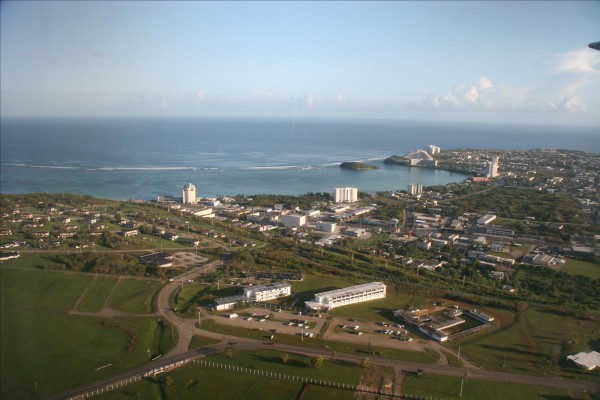
Island of Taotao Mo'na
Get More Customs and Culture
3 more cultural topics for members
Social Customs & Etiquette · Dating Customs · Recreation
Dates of Interest
- December 25th
What is dining and food like in Guam?
Chamorro cuisine blends indigenous, Spanish, and Asian influences, and family gatherings like barbecues and fiestas are common occasions to share a meal.
Do
- Try local dishes such as red rice, kelaguen, and finadene
- Sample local produce like taro and breadfruit
- Join family barbecues and fiestas if invited
What are important customs and etiquette in Guam?
Chamorro culture places high value on family, community, and respect for elders, who are seen as sources of wisdom and guidance.
Do
- Show respect to elders
- Value extended family and community ties
- Seek and honor the counsel of elders
What should I wear in Guam?
Dress is a blend of traditional Chamorro clothing and modern casual western-style clothing suited to the hot, humid climate.
Do
- Wear light, comfortable clothing like t-shirts, shorts, and sandals
- Choose lightweight fabrics such as cotton or linen for the warm weather
- Dress up for formal events or nightclubs
Good to know
- The mestisa dress is a traditional Chamorro dress worn for special occasions like weddings and festivals
- The muumuu is a loose, cool dress popular in the hot climate
- The lufuti is a traditional two-piece outfit for men
- Sandals and flip-flops are common, though sneakers are popular among young people
How important is family in Guam?
The extended family is highly valued in Chamorro culture, with family members often living together or nearby and gathering for barbecues and fiestas.
Do
- Respect and involve elders in family life
- Participate in family gatherings and celebrations
What can I do for fun in Guam?
Guam offers water sports, hiking, golfing, beaches, cultural tours, and a vibrant nightlife.
Do
- Go snorkeling or diving to see coral reefs and the underwater statue park in Piti
- Try stand-up paddleboarding in calm lagoons
- Hike trails leading to waterfalls and scenic overlooks
- Visit the Guam Museum in Hagåtña and the ancient latte stones in Inarajan
Good to know
- Golf courses offer tropical settings and breathtaking views
- Beaches offer swimming, sunbathing, and beach volleyball
- Nightlife includes bars, nightclubs, casinos, and live music or cultural shows
Last updated: 2026-07-12 · Sources: CountryReports
Photos of Guam
Photos of Guam

Travel and Tourism
Travel and Tourism
- Travel Alert Status
- Level 1: Exercise Normal Precautions
- Currency
- US dollar (USD)
- Time Difference
- UTC+10 (15 hours ahead of Washington, DC, during Standard Time)
- Climate
- Tropical marine; generally warm and humid, moderated by northeast trade winds; dry season from January to June, rainy season from July to December; little seasonal temperature variation
- Airports
- 5
Read the full travel guide — health, safety, vaccinations, disease risk, sanitation, and transit details.
View full travel guideRecipes
Recipes
History
History
Historical Eras
Ancient Chamorro
2000 BCE – 1521
The indigenous Chamorro people, believed to have migrated from Southeast Asia, established a sophisticated society on Guam by at least 2000 BCE. Skilled navigators, potters, and weavers, they organized around a matriarchal clan structure. Their most distinctive cultural achievement, the coral limestone latte stones used as house foundations, remains unique to the Mariana Islands and defines the Latte Period spanning roughly AD 1000 to 1521.
Spanish Colonial Era
1521 – 1898
Ferdinand Magellan made first Western contact at Umatac Bay in 1521, and Spain formally claimed Guam in 1565 under Miguel López de Legazpi. Jesuit missionaries arrived in 1668, triggering prolonged Chamorro-Spanish wars that drastically reduced the indigenous population. Despite brutal suppression, Chamorro women preserved much of their language and cultural traditions throughout nearly three and a half centuries of Spanish rule.
American Territory
1898 – 1941
Spain ceded Guam to the United States following the Spanish-American War, and the island was placed under U.S. Naval administration. Guamanians were classified as U.S. nationals but denied full citizenship, and the Naval government exercised strict control over political and economic life. The Organic Act of 1950, though not yet enacted, was preceded by decades of Chamorro petitions for greater rights and self-governance.
Japanese Occupation
1941 – 1944
Japan invaded and seized Guam on December 8, 1941, just hours after the attack on Pearl Harbor, subjecting its population to forced labor, internment, and systematic brutality. The occupation suppressed Chamorro identity by banning the Chamorro language and imposing Japanese culture and administration. U.S. forces retook the island in the Battle of Guam from July to August 1944, at great cost to both military personnel and the civilian population.
Postwar U.S. Territory
1944 – 1986
The Organic Act of 1950 granted Guamanians U.S. citizenship and established a civilian government, though the island remained under significant federal oversight. Guam served as a critical American military logistics hub during the Korean and Vietnam Wars, and the 1962 Naval Clearing Act opened the island to civilian immigration, spurring rapid demographic and economic transformation. Political discussions around self-determination intensified, culminating in a rejected 1979 constitutional referendum.
Modern Guam
1986 – present
Guam continues as an unincorporated U.S. territory with an elected governor and legislature, while debates over political status, decolonization, and a potential referendum on self-determination remain active. A major U.S. military buildup beginning in the 2000s expanded Guam's strategic role in the Pacific as a counterweight to rising regional tensions. The Chamorro people pursue cultural revitalization alongside ongoing negotiations with Washington over land rights, sovereignty, and full representation.
Overview
The island of Guam, Guahan in native Chamorro, is a true cosmopolitan community that reflects the cultures of its original Chamorro inhabitants as early as 2,000 B.C., influenced by countless European, American, Asian, Micronesian, and other people who have occupied, visited and immigrated to Guam since the 16th Century.
Timeline of Key Events
1521
Ferdinand Magellan arrived, named them Islas de los Ladrones.
Ferdinand Magellan arrived, named them Islas de los Ladrones.
1565
Spain claimed Guam, Marianas together with Philippines.
Spain claimed Guam, Marianas together with Philippines.
1898
Following the Spanish-American War, Spain ceded Guam to the U.S.
Following the Spanish-American War, Spain ceded Guam to the U.S., sold the other Mariana Islands to Germany.
1941 – 1944
Japanese occupation.
Japanese occupation.
1954 – 1975
Vietnam War; Guam logistical base.
Vietnam War; Guam logistical base.
1962
Naval Clearing Act (U.S.); ports of Guam opened for civilian traffic.
Naval Clearing Act (U.S.); ports of Guam opened for civilian traffic.
1979
Referendum rejected Guam constitution.
Referendum rejected Guam constitution.
Read the full history profile — narrative overview, defining eras, and the complete timeline in one place.
View expanded historyInteresting Facts
Interesting Facts
Guam is the largest and southernmost island in the Marianas Archipelago.
See every fact — trivia, oddities, and curious tidbits gathered from across the country.
View all interesting factsGeography and Environment
Geography and Environment
- Terrain
- volcanic origin, surrounded by coral reefs; relatively flat coralline limestone plateau (source of most fresh water), with steep coastal cliffs and narrow coastal plains in north, low hills in center, mountains in south
- Climate
- tropical marine; generally warm and humid, moderated by northeast trade winds; dry season from January to June, rainy season from July to December; little seasonal temperature variation
- Natural Hazards
- frequent squalls during rainy season; relatively rare, but potentially very destructive typhoons (June - December)
- Current Environmental Issues
- extirpation of native bird population by the rapid proliferation of the brown tree snake, an exotic, invasive species
Read the full geography and environment profile — terrain, climate, natural resources, hazards, land use, and international agreements.
View full geographyPeople & Demographics
People & Demographics
Religion
Languages Spoken
English, Chamorro, Japanese
- English
- Japanese
Population
- Population
- 153,836
- Population in Major Urban Areas
- HAGATNA (capital) 169,000
- Nationality Noun
- Guamanian(s)
- Ethnic Groups
- Chamorro 37%, Filipino 26%, white 10%, Chinese, Japanese, Korean, and other 27%
Education
- Literacy Definition
- age 15 and over can read and write
Health Information
- Life Expectancy at Birth
- Life expectancy at birth in Guam reflects the island's relatively strong healthcare infrastructure and its close ties to the United States medical system. Residents of Guam can generally expect to live into their late seventies, with overall life expectancy hovering around 77 to 79 years. As with most populations worldwide, women in Guam tend to outlive men, with female life expectancy reaching approximately 80 to 82 years compared to roughly 74 to 76 years for males. Guam's health profile is shaped by a combination of factors. On the positive side, the island benefits from access to modern medical facilities, U.S. federal health programs, and a public health system modeled after American standards. The Guam Memorial Hospital Authority serves as the primary public hospital, and residents have access to federally funded programs such as Medicaid and Medicare, which help extend quality healthcare to a broader portion of the population. However, Guam also faces significant health challenges that weigh on longevity figures. The island has notably high rates of diabetes, obesity, cardiovascular disease, and hypertension among its population. These chronic conditions are particularly prevalent among the indigenous Chamorro people and reflect broader dietary and lifestyle shifts that have occurred over recent decades. Cancer rates on the island are also a concern, and access to specialized care sometimes requires travel to the continental United States, which can delay treatment. Mental health services and substance abuse resources have historically been underfunded relative to need, adding further complexity to the overall health picture. Environmental factors, including legacy contamination from former military activities and occasional climate-related disruptions, also play a role in shaping community health outcomes. When compared to the broader Pacific Island region, Guam's life expectancy is relatively favorable, though it falls modestly below the U.S. national average, which has fluctuated in recent years partly due to the impact of the COVID-19 pandemic on national mortality data. Ongoing public health initiatives focused on chronic disease prevention, improved nutrition, and expanded primary care access are aimed at closing that gap and improving long-term outcomes for all residents of the island.
- Infant Mortality Rate
- Guam's infant mortality rate reflects the island territory's relatively developed healthcare infrastructure, though it faces unique challenges as a small Pacific island community with limited medical resources compared to mainland United States standards. Recent data places Guam's infant mortality rate at approximately 10 to 12 deaths per 1,000 live births, a figure that is notably higher than the U.S. national average of around 5 to 6 per 1,000 live births, but considerably lower than many developing nations across the broader Pacific and Southeast Asian regions. This gap between Guam and the U.S. mainland reflects disparities in access to specialized neonatal care, the geographic isolation of the island, and socioeconomic factors affecting a portion of the local population. The primary causes of infant mortality in Guam are consistent with those seen across Pacific Island communities, including premature birth complications, congenital abnormalities, and sudden infant death syndrome (SIDS). Access to prenatal care has been an ongoing area of focus for public health officials on the island, as adequate prenatal screening and support can significantly reduce preventable infant deaths. Guam's healthcare system is anchored by Guam Memorial Hospital Authority, which serves as the main public hospital, and a number of private clinics and medical facilities. However, complex or high-risk neonatal cases often require medical evacuation to facilities in Hawaii or the continental United States, which can pose logistical and financial burdens on families. Efforts by local health authorities, in coordination with federal programs and international health organizations, have gradually improved maternal and infant health outcomes over the decades. Programs focusing on breastfeeding support, nutrition education for mothers, and expanded prenatal care access have contributed to incremental progress in reducing infant deaths. Despite these improvements, health disparities remain, particularly among the indigenous Chamorro population and lower-income communities, where rates of preterm birth and inadequate prenatal visits tend to be higher. Continued investment in community health infrastructure and maternal support services remains essential to further closing the gap between Guam's infant mortality figures and those of the broader United States.
Life Expectancy
- Life Expectancy at Birth
- Life expectancy at birth in Guam reflects the island's relatively strong healthcare infrastructure and its close ties to the United States medical system. Residents of Guam can generally expect to live into their late seventies, with overall life expectancy hovering around 77 to 79 years. As with most populations worldwide, women in Guam tend to outlive men, with female life expectancy reaching approximately 80 to 82 years compared to roughly 74 to 76 years for males. Guam's health profile is shaped by a combination of factors. On the positive side, the island benefits from access to modern medical facilities, U.S. federal health programs, and a public health system modeled after American standards. The Guam Memorial Hospital Authority serves as the primary public hospital, and residents have access to federally funded programs such as Medicaid and Medicare, which help extend quality healthcare to a broader portion of the population. However, Guam also faces significant health challenges that weigh on longevity figures. The island has notably high rates of diabetes, obesity, cardiovascular disease, and hypertension among its population. These chronic conditions are particularly prevalent among the indigenous Chamorro people and reflect broader dietary and lifestyle shifts that have occurred over recent decades. Cancer rates on the island are also a concern, and access to specialized care sometimes requires travel to the continental United States, which can delay treatment. Mental health services and substance abuse resources have historically been underfunded relative to need, adding further complexity to the overall health picture. Environmental factors, including legacy contamination from former military activities and occasional climate-related disruptions, also play a role in shaping community health outcomes. When compared to the broader Pacific Island region, Guam's life expectancy is relatively favorable, though it falls modestly below the U.S. national average, which has fluctuated in recent years partly due to the impact of the COVID-19 pandemic on national mortality data. Ongoing public health initiatives focused on chronic disease prevention, improved nutrition, and expanded primary care access are aimed at closing that gap and improving long-term outcomes for all residents of the island.
- Infant Mortality Rate
- Guam's infant mortality rate reflects the island territory's relatively developed healthcare infrastructure, though it faces unique challenges as a small Pacific island community with limited medical resources compared to mainland United States standards. Recent data places Guam's infant mortality rate at approximately 10 to 12 deaths per 1,000 live births, a figure that is notably higher than the U.S. national average of around 5 to 6 per 1,000 live births, but considerably lower than many developing nations across the broader Pacific and Southeast Asian regions. This gap between Guam and the U.S. mainland reflects disparities in access to specialized neonatal care, the geographic isolation of the island, and socioeconomic factors affecting a portion of the local population. The primary causes of infant mortality in Guam are consistent with those seen across Pacific Island communities, including premature birth complications, congenital abnormalities, and sudden infant death syndrome (SIDS). Access to prenatal care has been an ongoing area of focus for public health officials on the island, as adequate prenatal screening and support can significantly reduce preventable infant deaths. Guam's healthcare system is anchored by Guam Memorial Hospital Authority, which serves as the main public hospital, and a number of private clinics and medical facilities. However, complex or high-risk neonatal cases often require medical evacuation to facilities in Hawaii or the continental United States, which can pose logistical and financial burdens on families. Efforts by local health authorities, in coordination with federal programs and international health organizations, have gradually improved maternal and infant health outcomes over the decades. Programs focusing on breastfeeding support, nutrition education for mothers, and expanded prenatal care access have contributed to incremental progress in reducing infant deaths. Despite these improvements, health disparities remain, particularly among the indigenous Chamorro population and lower-income communities, where rates of preterm birth and inadequate prenatal visits tend to be higher. Continued investment in community health infrastructure and maternal support services remains essential to further closing the gap between Guam's infant mortality figures and those of the broader United States.
Read the full people and society profile — demographics, health, education, religion, languages, and notable people.
View full people and societyGovernment & Politics
Government & Politics
Country Identity
- Country Name
- Guam
- Full Country Name
- Territory of Guam
- Local - Long
- Guahan
Government Structure
- Government Type
- NA
- Legal System
- modeled on US; US federal laws apply
- Executive Branch
- chief of state: President Donald J. TRUMP of the US (since 20 January 2025) and Vice President JD VANCE (since 20 January 2025) head of government: Governor Lourdes "Lou" Leon GUERRERO (since 7 January 2019) and Lieutenant Governor Josh TENORIO (since 7 January 2019) cabinet: heads of executive departments; appointed by the governor with the consent of the Guam Legislature elections: under the US Constitution, residents of unincorporated territories, such as Guam, do not vote in elections for US president and vice president; however, Guam residents who are US citizens may vote in presidential elections if they establish residency in one of the 50 states or the District of Columbia; governor and lieutenant governor elected on the same ticket by popular vote for a four-year term; election last held on 8 November 2022 (next to be held in November 2026) election results: Lourdes "Lou" Leon GUERRERO reelected governor; percent of vote - Lourdes Leon GUERRERO (Democratic Party) 56.5%, Felix CAMACHO (Republican Party) 43.5%
- Legislative Branch
- Unicameral Legislature (15 seats; members are elected by popular vote to serve two-year terms) Elections: last held in November 2022 (next to be held in November 2024) Election results: percent of vote by party - NA; seats by party - Democratic Party 7, Republican Party 8 Note: Guam elects one nonvoting delegate to the US House of Representatives; election last held in November 2022 (next to be held in November 2024); results - James Moylan (Republican Party) was elected as delegate, defeating incumbent Michael San Nicolas; seats by party - Republican Party 1
- Judicial Branch
- Federal District Court (judge is appointed by the president); Territorial Superior Court (judges appointed for eight-year terms by the governor)
- Suffrage
- 18 years of age; universal; US citizens, but do not vote in US presidential elections
- Constitution
- Organic Act of 1 August 1950
- Independence
- none (territory of the US)
- National Holiday
- Discovery Day, first Monday in March (1521)
Capital City
- Capital Name
- Hagatna (Agana)
- Capital - geographic coordinate
- 13 28 N, 144 44 E
- Capital Time Difference
- UTC+10 (15 hours ahead of Washington, DC, during Standard Time)
The name is derived from the Chamoru word "haga," meaning "blood", and may refer to the bloodlines of the various families that established the original settlement
Read the full government profile — flag symbolism, national anthem, and other national symbols.
View full government detailsEconomy
Economy
Guam's economy depends primarily on U.S. military spending, tourism, and limited exports of fish and handicrafts. Federal spending, including military construction, wages, and procurement, contributes several billion dollars annually to the local economy, with the ongoing buildup of U.S.
Snapshot
- Currency Name and Code
- US Dollar (USD)
- GDP Real Growth Rate
- 0.3%
News & Weather
News & Weather
Current Weather
Latest News
Guam’s newest Coast Guard cutter joins search effort instead of welcome ceremony - stripes.com
stripes.com · 9h ago
Guam Women Look to Defend Their Micronesian Crown with New Generation Rising - FIBA
FIBA · 17h ago
Guam Police Department investigating 2 serious traffic crashes - dailydispatch.com
dailydispatch.com · 13h ago
Guam Awarded $600,000 Federal Grant For Apprenticeship Training - WNY Labor Today
WNY Labor Today · 1d ago
Environmental Groups From Five U.S. Territories Back Guam Case Before Supreme Court - St. Thomas Source
St. Thomas Source · 17h ago
Press Release: Moylan Announces Approval of Guam Living Quarters Allowance Implementation - Quiver Quantitative
Quiver Quantitative · 1d ago
Plaintiff struggling to serve defendant George Chiu in high-profile civil case - The Guam Daily Post
The Guam Daily Post · 7h ago
Mission Marge Brings Legacy of America's 'Ace of Aces' to Guam Airmen - U.S. Department of War (.gov)
U.S. Department of War (.gov) · 12d ago
News via Google News
Climate Overview
Tropical marine; generally warm and humid, moderated by northeast trade winds; dry season from January to June, rainy season from July to December; little seasonal temperature variation
Frequently Asked Questions
Frequently Asked Questions
What is the population of Guam?
What is dining and food like in Guam?
What are important customs and etiquette in Guam?
What should I wear in Guam?
How important is family in Guam?
What can I do for fun in Guam?
What is the capital of Guam?
Where is Guam located?
What are the ocean and sea borders of Guam?
What is the predominant religion in Guam?
What currency is used in Guam?
What languages are spoken in Guam?
What is Guam known for?
Last reviewed 2026