
 English
 Español
 中文
中文 हिन्दी
 Français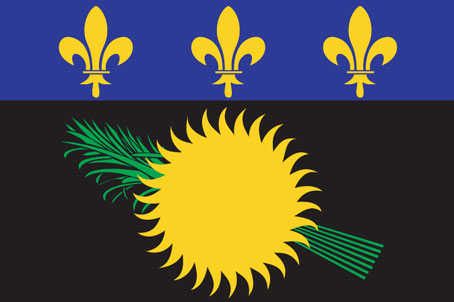
Guadeloupe
Guadeloupe
Declare Your Relationship to Guadeloupe
CountryReports Community
- Studying0
- From Guadeloupe0
- Guadeloupe heritage0
- Visited0
- Want to visit0
Customs and Culture
Customs and Culture
Cultural Attributes
Guadeloupe's culture is a vibrant fusion of African, French, and Caribbean influences, shaped by centuries of colonial history, the legacy of the transatlantic slave trade, and the island's status as an overseas region of France. This layered heritage is visible in nearly every aspect of daily life, from language and cuisine to music and religious practice. The official language is French, but most residents also speak Antillean Creole, known locally as Gwadloupéyen. This Creole language blends French vocabulary with African grammatical structures and is a cornerstone of local identity, used widely in informal settings, music, and oral storytelling traditions. Roman Catholicism is the dominant religion, practiced by the majority of the population, and religious festivals play a significant role in community life. The Fête des Cuisinières, held each August in Pointe-à-Pitre, is one of the most distinctive cultural events on the island. During this celebration, women cooks parade through the streets in traditional Creole dress and present elaborately prepared local dishes to be blessed at the cathedral, honoring the patron saint of cooks. Music and dance are deeply embedded in Guadeloupean culture. Gwo ka, a form of drumming and song rooted in African traditions brought by enslaved people, was recognized by UNESCO as an Intangible Cultural Heritage of Humanity in 2014. Zouk, a genre that originated in the French Caribbean in the 1980s, also remains enormously popular throughout the island and the broader francophone Caribbean world. Traditional Creole dress, featuring madras fabric in bright checkered patterns, colorful headscarves, and gold jewelry, is worn with pride during festivals and special occasions. The number of points on a woman's headscarf historically signaled her relationship status, a custom that has become a symbol of cultural heritage rather than social signaling today. Guadeloupean cuisine reflects its multicultural roots, combining French culinary techniques with African ingredients and Caribbean produce. Dishes such as colombo (a spiced stew influenced by South Asian indentured laborers), accras de morue (salt cod fritters), and boudin créole are central to the local food culture.

Island of Beautiful Waters
Social Customs & Etiquette
Greetings in Guadeloupe reflect the island's identity as an overseas region of France, where French culture blends with vibrant Caribbean traditions. French is the official language and the primary medium for formal greetings, so "Bonjour" (Good day) and "Bonsoir" (Good evening) are standard and widely used in everyday interactions. "Salut" serves as a casual, informal hello among friends and younger people.
However, Guadeloupean Creole — known locally as Kreyòl Gwadloupéyen — plays an equally important role in daily life and carries significant cultural pride. Common Creole greetings include "Bonjou" (Good morning/Hello) and "Bonswa" (Good evening), which mirror their French counterparts but carry a distinctly local flavor. "Sa ou fè?" meaning "How are you?" is a warm and common expression used between friends and neighbors, with a typical response being "M ka alé," roughly meaning "I'm getting along."
Physical greetings are an important part of social interaction in Guadeloupe. It is customary to exchange the "la bise," the traditional French cheek kiss, when greeting friends or acquaintances. Among people who know each other well, this typically involves two kisses, one on each cheek. A handshake is appropriate in more formal or professional settings. Making direct eye contact and acknowledging people individually — rather than addressing a group collectively — is considered respectful and polite.
Guadeloupeans generally place high value on courtesy and warmth in social encounters. Entering a shop, waiting room, or small gathering without offering a general greeting to those present can be perceived as rude. Saying "Bonjour" upon entering a space and "Au revoir" or "Bonne journée" (Have a good day) when leaving are considered basic social courtesies.
For visitors, making even a small effort to greet locals in French or Creole is warmly appreciated and can open the door to more genuine and friendly exchanges. It signals respect for local culture and is often met with enthusiasm from residents proud of their dual linguistic heritage.
Dating Customs
Dating and marriage customs in Guadeloupe reflect the island's complex cultural heritage, shaped by French colonial history, African traditions, and Caribbean influences. As an overseas region of France, Guadeloupe follows French civil law, meaning legal marriages are conducted through civil ceremonies at the local town hall (mairie). Religious ceremonies, often Catholic, may follow but hold no legal standing on their own.
The legal minimum age for marriage in Guadeloupe aligns with French national law, which sets the minimum age at 18 for both men and women, though exceptions can be granted by judicial authorization in rare circumstances. Same-sex marriage has been legal in Guadeloupe since 2013, when France extended marriage equality to all its territories.
Cohabitation and common-law partnerships (known in French law as concubinage or PACS — Pacte Civil de Solidarité) are widely practiced and socially accepted across the archipelago. The PACS, introduced in France in 1999, provides couples with many of the legal and financial protections of marriage without a full marital commitment, and its use has grown significantly in Guadeloupe as in metropolitan France.
Family life in Guadeloupe tends to be deeply community-oriented, with extended family networks playing an important role in both courtship and the raising of children. Matrifocal family structures, in which the mother serves as the central figure of the household, have historically been common in Guadeloupe and across the broader Caribbean, a legacy tied to the disruptions of the slave trade and plantation era.
Weddings in Guadeloupe can be lively, multi-day celebrations incorporating Creole music, traditional cuisine, and communal gatherings. Gwoka drumming and zouk music often feature prominently in festivities. Traditional Guadeloupean dress, including the colorful Madras fabric worn by women, may be incorporated into wedding celebrations as a cultural expression of Creole identity.
Divorce is governed by French civil law and is legally available through mutual consent or fault-based proceedings.
Holidays
Bastille Day
7/14Other
Dates of Interest
- July 14th
What is the food culture like in Guadeloupe?
Guadeloupean cuisine is a multicultural blend of French techniques, African ingredients, and Caribbean produce, with distinctive local dishes at its heart.
Do
- Try colombo, a spiced stew influenced by South Asian indentured laborers
- Sample accras de morue (salt cod fritters)
- Taste boudin créole
Good to know
- The Fête des Cuisinières in August in Pointe-à-Pitre celebrates women cooks who parade in traditional dress and present dishes to be blessed at the cathedral
How do people dress in Guadeloupe?
Traditional Creole dress featuring bright checkered madras fabric, colorful headscarves, and gold jewelry is worn with pride during festivals and special occasions.
Good to know
- The number of points on a woman's headscarf historically signaled her relationship status, now a symbol of cultural heritage
What are music and dance like in Guadeloupe?
Music and dance are deeply embedded in Guadeloupean culture, with African-rooted gwo ka drumming and the popular zouk genre both central to island life.
Good to know
- Gwo ka, rooted in African traditions, was recognized by UNESCO as Intangible Cultural Heritage in 2014
- Zouk originated in the French Caribbean in the 1980s and remains enormously popular
What should I know about language and religion before visiting Guadeloupe?
French is the official language, but most residents also speak Antillean Creole (Gwadloupéyen), and Roman Catholicism is the dominant religion.
Good to know
- Creole is used widely in informal settings, music, and oral storytelling
- Religious festivals play a significant role in community life
Last updated: 2026-07-12 · Sources: CountryReports
Photos of Guadeloupe
Photos of Guadeloupe
Travel and Tourism
Travel and Tourism
- Currency
- euro (EUR); French franc (FRF)
- Climate
- Subtropical tempered by trade winds; moderately high humidity
- Airports
- 9
Read the full travel guide — health, safety, vaccinations, disease risk, sanitation, and transit details.
View full travel guideHistory
History
Historical Eras
Pre-Columbian Era
3000 BCE – 1493
Guadeloupe was initially inhabited by Arawak peoples, later displaced or absorbed by the Caribs (Kalinago), who called the island Karukera, meaning 'Island of Beautiful Waters.' The Caribs maintained a strong presence and resisted outside intrusion for centuries. Their society was organized around fishing, agriculture, and inter-island trade throughout the Lesser Antilles.
Early Colonial Period
1493 – 1674
Christopher Columbus sighted Guadeloupe in 1493 during his second voyage, but sustained European settlement did not begin until French colonizers under Charles Liénard de l'Olive and Jean du Plessis arrived in 1635. The French displaced the Carib population and established sugar plantations, introducing enslaved Africans as forced labor. The island passed briefly through the hands of the Knights of Malta before the French Crown took direct control in 1674.
French Royal Colony
1674 – 1816
Under direct royal administration, Guadeloupe became one of France's most profitable sugar colonies, dependent on the transatlantic slave trade. The island changed hands with Britain twice — notably after British seizure in 1759 — before being restored to France. The French Revolution brought turbulent change, including the abolition of slavery in 1794 and its violent reimposition by Napoleon in 1802.
Established French Colony
1816 – 1946
Following the Napoleonic Wars, Guadeloupe was permanently restored to France by the Congress of Vienna in 1816. Slavery was definitively abolished throughout French colonies in 1848, largely through the advocacy of Victor Schoelcher. The island's economy struggled with the decline of sugar, persistent social inequality, and the devastating 1843 earthquake, though cultural and political identity continued to develop.
Overseas Department
1946 – 1982
In 1946, Guadeloupe was transformed from a colony into an Overseas Department of France, granting its inhabitants full French citizenship and representation in the National Assembly. This shift brought greater social investment but also fueled independence movements that grew through the 1960s and 1970s. Periodic unrest and calls for greater autonomy marked the era, reflecting tensions between metropolitan integration and local identity.
Decentralization & Modern Era
1982 – present
France's 1982 decentralization laws granted Guadeloupe its own Regional Council, increasing local governance. Despite rejecting autonomy reforms in a 2003 referendum, the island has continued to navigate questions of political status and economic development. The 2009 general strike, in which unions won wage increases amid protests against inequality and the high cost of living, underscored enduring socioeconomic tensions within the French Republic.
Timeline of Key Events
1493
Christopher Columbus discovered Guadeloupe during his second expedition.
Christopher Columbus discovered Guadeloupe during his second expedition.
1648
The island of St. Martin in the Lesser Antilles was divided between the French and Dutch.
The island of St. Martin in the Lesser Antilles was divided between the French and Dutch. The southern half went to the Dutch as Sint Maarten, while the northern half, Saint Martin, became part of the French department of Guadeloupe. Legend has it that a Dutchman and a Frenchman stood back to back at the center of the island and paced of their shares. The Dutchman stopped often to drink beer and was left with the smaller share.
1759
British seized Basse-Terre and Guadeloupe in the Antilles from France.
British seized Basse-Terre and Guadeloupe in the Antilles from France.
2003
Guadeloupe and Martinique rejected reforms.
Voters on the French Caribbean islands of Guadeloupe and Martinique rejected reforms to their legislatures that opponents had criticized as a step toward independence from France.
2009
Unions in Guadeloupe scored a victory in getting a deal to raise some workers’ salaries.
Unions in Guadeloupe scored a victory in getting a deal to raise some workers’ salaries, but said they will not end a general strike now concluding its sixth week.
Read the full history profile — narrative overview, defining eras, and the complete timeline in one place.
View expanded historyInteresting Facts
Interesting Facts
Early inhabitants of the islands were Arawak and Carib people from South America.
The Amerindian inhabitants called Guadeloupe "Karukera" which means "Island of Beautiful Waters".
Christopher Columbus, in the service of Spain, visited the islands in 1493. Columbus named Guadeloupe "Santa Maria de Guadalupe de Extremadura" after the statue of the Virgin Mary in a Spanish monastery.
See every fact — trivia, oddities, and curious tidbits gathered from across the country.
View all interesting factsGeography and Environment
Geography and Environment
- Terrain
- Basse-Terre is volcanic in origin with interior mountains; Grande-Terre is low limestone formation; most of the seven other islands are volcanic in origin
- Climate
- subtropical tempered by trade winds; moderately high humidity
- Natural Hazards
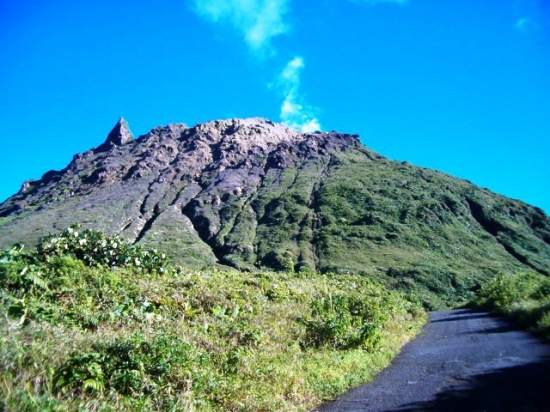
- hurricanes (June to October); Soufriere de Guadeloupe is an active volcano
- Current Environmental Issues
- NA
Read the full geography and environment profile — terrain, climate, natural resources, hazards, land use, and international agreements.
View full geographyPeople & Demographics
People & Demographics
Religion
Languages Spoken
French (official) 99%, Creole patois
- Creole patois
- French
Population
- Population
- 395,700
- Nationality Noun
- Guadeloupian(s)
- Ethnic Groups
- Black or mulatto 90%, white 5%, East Indian, Lebanese, Chinese less than 5%
Education
- Literacy Definition
- age 15 and over can read and write
Health Information
- Life Expectancy at Birth
- Life expectancy at birth in Guadeloupe is notably high compared to many countries in the Caribbean region, reflecting the island's status as an overseas region of France and the associated benefits of the French public health system. As of recent estimates, the overall life expectancy at birth stands at approximately 80 to 81 years, with women living significantly longer than men. Female life expectancy is estimated at around 83 to 84 years, while male life expectancy hovers closer to 77 to 78 years — a gap consistent with global patterns observed in developed nations. This relatively high life expectancy is largely attributable to Guadeloupe's integration into the French social welfare system, which provides residents with access to universal healthcare, subsidized medical services, and public health infrastructure comparable to metropolitan France. The island benefits from hospitals, clinics, and specialist care that are funded in part through the French national health insurance system, known as Assurance Maladie. Chronic disease management plays an important role in health outcomes across the island. Like other Caribbean populations, Guadeloupeans face elevated rates of cardiovascular disease, diabetes, and hypertension, which are among the leading causes of mortality. Public health efforts targeting diet, physical activity, and early detection of chronic conditions have helped mitigate the impact of these diseases on overall longevity. Access to clean water, sanitation, and nutrition also contribute positively to life expectancy figures. Infant mortality rates in Guadeloupe are low relative to regional neighbors, which further bolsters the overall life expectancy calculation at birth. It is worth noting that despite favorable health indicators, Guadeloupe has faced environmental health challenges, most notably the legacy contamination from chlordecone, a pesticide formerly used in banana cultivation that has been linked to elevated rates of prostate cancer and other health concerns among the local population. This remains an ongoing public health issue that health authorities continue to monitor and address. Overall, Guadeloupe's life expectancy figures place it well above the Caribbean average, reflecting the significant influence of French public investment in healthcare and social services on the well-being of its population.
Life Expectancy
- Life Expectancy at Birth
- Life expectancy at birth in Guadeloupe is notably high compared to many countries in the Caribbean region, reflecting the island's status as an overseas region of France and the associated benefits of the French public health system. As of recent estimates, the overall life expectancy at birth stands at approximately 80 to 81 years, with women living significantly longer than men. Female life expectancy is estimated at around 83 to 84 years, while male life expectancy hovers closer to 77 to 78 years — a gap consistent with global patterns observed in developed nations. This relatively high life expectancy is largely attributable to Guadeloupe's integration into the French social welfare system, which provides residents with access to universal healthcare, subsidized medical services, and public health infrastructure comparable to metropolitan France. The island benefits from hospitals, clinics, and specialist care that are funded in part through the French national health insurance system, known as Assurance Maladie. Chronic disease management plays an important role in health outcomes across the island. Like other Caribbean populations, Guadeloupeans face elevated rates of cardiovascular disease, diabetes, and hypertension, which are among the leading causes of mortality. Public health efforts targeting diet, physical activity, and early detection of chronic conditions have helped mitigate the impact of these diseases on overall longevity. Access to clean water, sanitation, and nutrition also contribute positively to life expectancy figures. Infant mortality rates in Guadeloupe are low relative to regional neighbors, which further bolsters the overall life expectancy calculation at birth. It is worth noting that despite favorable health indicators, Guadeloupe has faced environmental health challenges, most notably the legacy contamination from chlordecone, a pesticide formerly used in banana cultivation that has been linked to elevated rates of prostate cancer and other health concerns among the local population. This remains an ongoing public health issue that health authorities continue to monitor and address. Overall, Guadeloupe's life expectancy figures place it well above the Caribbean average, reflecting the significant influence of French public investment in healthcare and social services on the well-being of its population.
Read the full people and society profile — demographics, health, education, religion, languages, and notable people.
View full people and societyGovernment & Politics
Government & Politics
Country Identity
- Country Name
- Guadeloupe
- Full Country Name
- Department of Guadeloupe
- Local - Long
- Departement de la Guadeloupe
- Local - Short
- Guadeloupe
Government Structure
- Government Type
- NA
- Legal System
- French legal system
- Executive Branch
- chief of state: President Emmanuel MACRON of France (since 14 May 2017), represented by Prefect Xavier LEFORT (since 2022) head of government: President of the Departmental Council Josette BOREL-LINCERTIN (since 2015); President of the Regional Council Ary CHALUS (since April 2017) cabinet: NA elections: French president elected by popular vote for a five-year term; prefect appointed by the French president on the advice of the French Ministry of Interior; the presidents of the Departmental and Regional Councils are elected by the members of those councils election results: NA
- Legislative Branch
- Guadeloupe's legislative structure was significantly reformed in 2015, when the General Council (Conseil Général) and the Regional Council (Conseil Régional) were merged into a single body, the Departmental Council (Conseil Départemental et Régional), as part of broader French territorial reforms. However, Guadeloupe ultimately retained separate departmental and regional councils following local political decisions, and elections continue to be held for both bodies. The Regional Council (Conseil Régional) has 41 seats, with members elected by popular vote to serve six-year terms. The most recent regional elections were held in June 2021. In those elections, the Guadeloupean list led by Ary Chalus of the Guadeloupe Rassemblement party secured a majority. The Departmental Council (Conseil Départemental) has 42 seats, also filled through popular vote for six-year terms, with the most recent departmental elections held in June 2021. As an overseas department and region of France, Guadeloupe also sends representatives to the French Parliament. Guadeloupe elects four deputies to the French National Assembly, with the most recent elections held in June 2022. Guadeloupe is also represented by three senators in the French Senate, with the most recent senatorial elections held in September 2023.
- Judicial Branch
- Court of Appeal or Cour d'Appel with jurisdiction over Guadeloupe, French Guiana, and Martinique
- Suffrage
- 18 years of age; universal
- Constitution
- 28 September 1958 (French Constitution)
- Independence
- none (overseas department of France)
- National Holiday
- Bastille Day, 14 July (1789)
Capital City
- Capital Name
- Basse-Terre
Embassy / Diplomatic Mission
U.S. Embassy in Bridgetown
Wildey Business park
Wildey
St. Michael, Barbados
Telephone: (246) 227-4399
Emergency after-hours telephone: (246) 227-4000
Facsimile: (246) 431-0179
Email: BridgetownACS@state.gov
Hours of operation are 8:30 a.m. – 4:30 p.m. Monday through Friday, except Barbadian and U.S. holidays.
Read the full government profile — flag symbolism, national anthem, and other national symbols.
View full government detailsEconomy
Economy
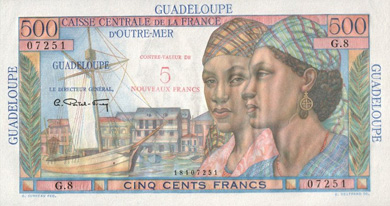
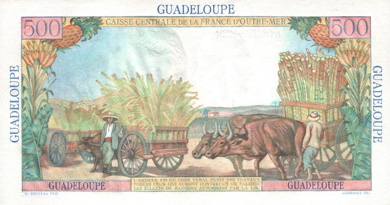
Guadeloupe, an overseas region and department of France located in the eastern Caribbean, has a developed economy closely integrated with that of mainland France and the European Union. The euro serves as the official currency, and the territory benefits from substantial financial transfers from the French government, which support public services, infrastructure, and social welfare programs. GDP per capita is among the highest in the Caribbean region, though it remains below the French national average.
The service sector dominates the economy, accounting for roughly 85% of GDP and employment. Tourism is a cornerstone industry, attracting visitors primarily from France and other European countries to the islands' beaches, rainforests, and the active La Soufrière volcano. The territory welcomes hundreds of thousands of tourists annually, including significant cruise ship arrivals at Pointe-à-Pitre, the main commercial port.
Agriculture, while a smaller component of GDP, remains culturally and economically significant. Sugarcane and bananas are the principal export crops, with bananas historically representing one of the largest agricultural exports. Rum production from local sugarcane is internationally recognized, with Guadeloupean rhum agricole holding a protected designation. Other crops include pineapples, melons, coffee, cocoa, and vanilla. Fishing also contributes to the local economy, though much of the seafood consumed is imported.
Industry is limited and largely centered on food processing, particularly sugar refining and rum distillation, along with construction and light manufacturing. The territory imports the vast majority of its consumer goods, food products, fuels, and machinery, mainly from metropolitan France, leading to a persistent trade deficit. The cost of living is notably high due to import dependence and transportation costs.
Unemployment has historically been a persistent challenge, often exceeding 20%, with youth unemployment significantly higher. Economic disparities and the high cost of basic goods have periodically led to social unrest, including major strikes in 2009 over purchasing power. The labor force is concentrated in public administration, commerce, tourism, and services. Guadeloupe also benefits from EU structural funds aimed at reducing regional inequalities and supporting economic diversification, renewable energy projects, and infrastructure development.
Snapshot
- Currency Name and Code
- Euro (EUR)
- GDP Real Growth Rate
- 2.7%
Banknotes
Budget & Public Finance
- Fiscal Year
- calendar year
- Annual Budget
- $680,100,000 (USD)
Labor, Industry & Trade
- Labor Force by Occupation
- NA
- Industries
- construction, cement, rum, sugar, tourism
- Agriculture Products
- bananas, sugarcane, tropical fruits and vegetables; cattle, pigs, goats
- Export Commodities
- bananas, sugar, rum
- Export Partners
- France 60%, Martinique 18%, US 4%
- Import Commodities
- foodstuffs, fuels, vehicles, clothing and other consumer goods, construction materials
- Import Partners
- France 63%, Germany 4%, US 3%, Japan 2%, Netherlands Antilles 2%
Energy
- Oil Production
- 0 bbl/day
- Oil Consumption
- 13,000 bbl/day
- Oil Reserves
- 0 bbl/day
- Natural Gas Production
- 0 cu m
- Natural Gas Consumption
- 0 cu m
- Natural Gas Imports
- 0 cu m
- Natural Gas Exports
- 0 cu m
- Natural Gas Reserves
- 0 cu m
Communications
- Internet Country Code
- .gp
News & Weather
News & Weather
Current Weather
Latest News
One dead in Guadeloupe distillery explosion - The Spirits Business
The Spirits Business · 1d ago
So Many Beaches, So Little Time in This Wild Corner of the Caribbean - The New York Times
The New York Times · 159d ago
Liat Air launches twice-weekly Guadeloupe-Montego Bay service - Jamaica Gleaner
Jamaica Gleaner · 1d ago
I've Traveled to 15 Caribbean Islands—and This Butterfly-shaped Archipelago Is Often Overlooked by American Tourists - Travel + Leisure
Travel + Leisure · 127d ago
Sodebo Ultim 3 relaunched: Countdown to the Route du Rhum-Destination Guadeloupe has begun - Sail-World.com
Sail-World.com · 4d ago
Guadeloupe - AFD - Agence Française de Développement
AFD - Agence Française de Développement · 179d ago
6 Reasons to Visit Guadeloupe in 2026 - Recommend Magazine
Recommend Magazine · 203d ago
Sangster Airport launches direct flights between Montego Bay and Guadeloupe - Caribbean National Weekly
Caribbean National Weekly · 5d ago
News via Google News
Climate Overview
Subtropical tempered by trade winds; moderately high humidity
Frequently Asked Questions
Frequently Asked Questions
What is the population of Guadeloupe?
What is the food culture like in Guadeloupe?
How do people dress in Guadeloupe?
What are music and dance like in Guadeloupe?
What should I know about language and religion before visiting Guadeloupe?
What is the capital of Guadeloupe?
Where is Guadeloupe located?
What are the sea and ocean borders of Guadeloupe?
What is the main religion practiced in Guadeloupe?
What currency is used in Guadeloupe?
What language is spoken in Guadeloupe?
What is the geography of Guadeloupe like?
What is Guadeloupe known for?
Last reviewed 2026