
 English
 Español
 中文
中文 हिन्दी
 Français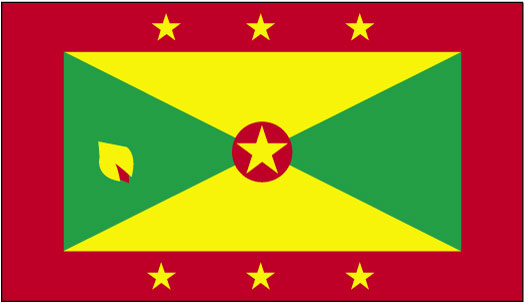
Grenada
Declare Your Relationship to Grenada
CountryReports Community
- Studying0
- From Grenada1
- Grenada heritage1
- Visited1
- Want to visit2
Customs and Culture
Customs and Culture
Cultural Attributes
Sharing food and drink are an important part of family life, and Grenadians try to have at least one meal every day at which all the family members are present. Grenadians are very sociable people. Politics is a favorite topic of discussion. Grenadians always offer guests a refreshment and it is considered impolite to refuse.

The Isle of Spice
Get More Customs and Culture
5 more cultural topics for members
Social Customs & Etiquette · Diet · Family · Dating Customs · Recreation
Holidays
Independence Day
2/7Independence Day
Christmas
12/25Christmas
Christmas customs include caroling groups traveling from house to house during the weeks prior to Christmas, decorations of nativity scenes, poinsettias, streamers and stars, and community Christmas trees. The Christmas dinner consists of turkey, pork, pigeon peas, yams, ginger bear and sorrel (a drink made from the red or white fleshy portion of sorrel – a plant originating in the Sudan – sweetened with sugar or fermented). The season ends on Epiphany, January 6th when all decorations are removed.
Dates of Interest
- December 25th
Christmas customs include caroling groups traveling from house to house during the weeks prior to Christmas, decorations of nativity scenes, poinsettias, streamers and stars, and community Christmas trees. The Christmas dinner consists of turkey, pork, pigeon peas, yams, ginger bear and sorrel (a drink made from the red or white fleshy portion of sorrel – a plant originating in the Sudan – sweetened with sugar or fermented). The season ends on Epiphany, January 6th when all decorations are removed.
How do people greet each other in Grenada?
Grenadian culture places great importance on courtesy, and greeting people is essential—not greeting someone is seen as disrespectful.
Do
- Always greet people you encounter
Don’t
- Don't ignore or fail to greet people, as it's viewed as disrespectful
Good to know
- If someone says they will "pass by," it means they will come and visit you
- As a former British colony, Grenada drives on the left side of the road
What are dining and food customs like in Grenada?
Grenadian cuisine blends East Indian, African and French influences, with breadfruit, seafood, and spices like nutmeg and mace featuring heavily; sharing food is central to family life.
Do
- Try local dishes like "oil down" (breadfruit cooked in coconut milk with turmeric) and "callaloo" (meat with dasheen/taro leaves)
- Accept a refreshment when offered—refusing is considered impolite
Good to know
- Popular foods include breadfruit, yams, sweet potatoes and cassava
- Seafood such as conches (lambi), crabs and shrimps is popular, and some dishes use armadillo or iguana meat
- Chili peppers, nutmeg and mace are integral to many dishes
- Families try to share at least one meal together every day
What social etiquette should I know in Grenada?
Grenadians are very sociable people who value courtesy and always offer guests a refreshment.
Do
- Accept refreshments offered to you
- Be ready to engage in conversation—politics is a favorite topic
Don’t
- Don't refuse offered refreshments, as it's considered impolite
How should I dress in Grenada?
Grenadians take great pride in their appearance, and sloppy or overly casual dress is not the norm.
Do
- Dress neatly and take pride in your appearance
Don’t
- Don't dress sloppily or too casually
Good to know
- Red, yellow and green colors are used everywhere in clothing
What is family life like in Grenada?
Grenadian families tend to be large, with couples usually having two to six children, and extended family often living together and helping raise the children.
Good to know
- Grandparents, uncles, aunts and cousins often live in the same house or nearby
- Urban families tend to be smaller than rural ones
- Divorces are rare, though they have increased in recent decades
What sports and recreation are popular in Grenada?
Cricket, soccer (called football) and netball are the most popular sports.
Good to know
- Children play rounders, a baseball-like game using a tennis ball hit with a cricket bat
- Intercol is a popular annual event where secondary schools compete in running, jumping and other athletics
Last updated: 2026-07-12 · Sources: CountryReports
Photos of Grenada
Photos of Grenada


Travel and Tourism
Travel and Tourism
- Travel Alert Status
- Level 1: Exercise Normal Precautions
- Currency
- East Caribbean dollar (XCD)
- Time Difference
- UTC-4 (1 hour ahead of Washington, DC, during Standard Time)
- Climate
- Grenada”™s climate is sunny and tropical, averaging 80°F, with dry and rainy seasons. The dry season, January through May, is more comfortable; with cooling trade winds and occasional showers. The rainy season, June through December, has a more humid climate and moderate-to-heavy rainfall, which varies considerably each year. Temperatures drop in the evening, making it pleasantly cool. Sunrise is at 6:30 am and dusk varies between 6 and 6:30 pm, according to the time of year. The wet season is characterized by heavy rains, high wind, and hurricanes, but the last hurricane to actually hit Grenada was Hurricane Janet in 1955.
- Airports
- 3
Read the full travel guide — health, safety, vaccinations, disease risk, sanitation, and transit details.
View full travel guideRecipes
Recipes
History
History
Historical Eras
Indigenous & Pre-Contact
1000 – 1498
Grenada was inhabited first by the Arawak people and later by the more warlike Carib Indians, who displaced the Arawaks across the Lesser Antilles. The Caribs' fierce resistance to European encroachment kept the island uncolonized for well over a century after Columbus sighted it in 1498 and named it 'Concepcion' during his third voyage to the New World.
French Colonial Era
1498 – 1763
French settlers, backed by a company founded under Cardinal Richelieu, established a permanent colony in 1650 and founded the town that became Saint George's. After defeating the last Carib holdouts — who famously leaped from cliffs rather than surrender — France developed the island through sugar cultivation using enslaved labor, holding control until Britain seized Grenada during the Seven Years' War.
British Colonial Era
1763 – 1974
Formally ceded to Britain by the Treaty of Paris in 1763, Grenada underwent significant economic transformation as nutmeg and cocoa displaced sugar after natural disasters devastated the estates. Slavery was abolished in 1834, giving rise to a yeoman farming class; Grenada passed through the Windward Islands Administration and a short-lived West Indies Federation before achieving full independence on February 7, 1974.
Independence & Revolution
1974 – 1983
Sir Eric Gairy led Grenada as its first Prime Minister following independence, but his increasingly authoritarian rule was ended by the Marxist New Jewel Movement's nearly bloodless coup in March 1979. Prime Minister Maurice Bishop forged close alliances with Cuba and the Soviet Union until an internal power struggle resulted in his arrest and execution in October 1983, triggering a rapid collapse of civil order.
U.S. Intervention & Restoration
1983 – 1984
On October 25, 1983, a joint U.S.-Caribbean military force invaded Grenada in response to appeals from the Governor General and regional neighbors, swiftly neutralizing the People's Revolutionary Army and detaining hundreds of Cuban military advisers. The intervention restored constitutional order within days, and free democratic elections were held in December 1984, returning Grenada to parliamentary governance.
Modern Grenada
1984 – present
Since the restoration of democracy, Grenada has pursued a stable parliamentary system modeled on Westminster traditions, with an economy anchored in spice exports, tourism, and agriculture. The island suffered a severe setback with Hurricane Ivan in 2004, which destroyed much of its infrastructure, but undertook substantial reconstruction and continued developing diversified agricultural initiatives such as organic banana production.
Overview
Before the arrival of Europeans, Carib Indians who had driven the more peaceful Arawaks from the island inhabited Grenada. Columbus landed on Grenada in 1498 during his third voyage to the new world. He named the island "Concepcion." The origin of the name "Grenada" is obscure, but it is likely that Spanish sailors renamed the island for the city of Granada. By the beginning of the 18th century, the name "Grenada," or "la Grenade" in French, was in common use.
Timeline of Key Events
1498
Christopher Columbus sights the islands, which he names Grenada after the Spanish city.
Christopher Columbus sights the islands, which he names Grenada after the Spanish city.
1650
French settlers from Martinique establish a colony and found Saint George’s, the present capital.
French settlers from Martinique establish a colony and found Saint George’s, the present capital.
1783
France cedes Grenada to Britain in accordance with the Treaty of Versailles.
France cedes Grenada to Britain in accordance with the Treaty of Versailles; African slaves brought in to work on the cotton, sugar and tobacco plantations.
1834
Slavery abolished.
Slavery abolished.
1974
Grenada becomes independent with Gairy as prime minister.
Grenada becomes independent with Gairy as prime minister.
2002
Major organic banana project launched in an effort to boost the industry.
Major organic banana project launched in an effort to boost the industry; 150 acres are set aside for organic cultivation.
2004
Grenada takes a direct hit from Hurricane Ivan.
Grenada takes a direct hit from Hurricane Ivan. Prime Minister Mitchell declares a national disaster; he says the island is 90% devastated.
Read the full history profile — narrative overview, defining eras, and the complete timeline in one place.
View expanded historyInteresting Facts
Interesting Facts
Canada and Grenada both became British colonies in the same year, 1763.
Julius Isaac, chief justice of the Federal Court of Canada, is of Grenadian heritage. Eddie Bullen is a Grenadian- born musician, arranger and composer who now lives in Canada.
Grenada is called the “Isle of Spice.” Nutmeg, cloves and cinnamon grow there.
The town of Sauteurs (“leapers” in French) is so named because it is believed that the last Carib warriors jumped to their death from a nearby cliff, rather than submit to the Europeans.
See every fact — trivia, oddities, and curious tidbits gathered from across the country.
View all interesting factsGeography and Environment
Geography and Environment
- Terrain
- volcanic in origin with central mountains
- Climate
- Grenada’s climate is sunny and tropical, averaging 80°F, with dry and rainy seasons. The dry season, January through May, is more comfortable; with cooling trade winds and occasional showers. The rainy season, June through December, has a more humid climate and moderate-to-heavy rainfall, which varies considerably each year. Temperatures drop in the evening, making it pleasantly cool. Sunrise is at 6:30 am and dusk varies between 6 and 6:30 pm, according to the time of year. The wet season is characterized by heavy rains, high wind, and hurricanes, but the last hurricane to actually hit Grenada was Hurricane Janet in 1955.
- Natural Hazards
- lies on edge of hurricane belt; hurricane season lasts from June to November
- Current Environmental Issues
- NA
Read the full geography and environment profile — terrain, climate, natural resources, hazards, land use, and international agreements.
View full geographyPeople & Demographics
People & Demographics
Religion
Languages Spoken
English (official), French patois
- English
- French patois
Population
- Population
- 125,438
- Population in Major Urban Areas
- SAINT GEORGE'S (capital) 41,000
- Nationality Noun
- Grenadian(s)
- Ethnic Groups
- Black 82%, mixed black and European 13%, European and East Indian 5% , and trace of Arawak/Carib Amerindian
Education
- Literacy Definition
- Age 15 and over can read and write
Health Information
- Life Expectancy at Birth
- Life expectancy at birth in Grenada stands at approximately 74 to 75 years overall, with women typically outliving men by several years. Female life expectancy hovers around 76 to 77 years, while male life expectancy falls closer to 72 to 73 years. These figures place Grenada in a relatively favorable position compared to many other small island developing states in the Caribbean and globally. Over the past several decades, Grenada has made meaningful progress in extending the lifespan of its population. In the 1970s and 1980s, life expectancy was considerably lower, reflecting limited healthcare infrastructure and higher rates of preventable disease. Sustained investment in public health, improved access to medical services, and better maternal and child health programs have contributed significantly to these gains. The leading causes of death in Grenada are largely consistent with patterns seen across the Caribbean, with non-communicable diseases such as cardiovascular disease, diabetes, hypertension, and certain cancers representing the primary health burdens. These chronic conditions, often linked to diet, physical activity levels, and lifestyle factors, place pressure on the healthcare system and can affect healthy life expectancy even as overall longevity increases. Grenada's healthcare system includes the General Hospital in St. George's, which serves as the main referral facility, along with a network of health centers spread across the island's parishes. The government partners with regional bodies such as the Pan American Health Organization and the Caribbean Public Health Agency, and receives support from international health initiatives to strengthen health service delivery. The country's small population of roughly 125,000 people means that health statistics can fluctuate notably from year to year due to individual-level changes. Despite this, the long-term trend in life expectancy has been consistently positive. Continued focus on preventive care, lifestyle education, and management of chronic diseases will be critical to maintaining and further improving life expectancy outcomes for Grenadians in the coming decades.
- Infant Mortality Rate
- Grenada maintains a relatively low infant mortality rate compared to many other developing nations in the Caribbean and Latin America, reflecting the country's sustained investments in public health infrastructure and maternal and child care services. As of recent estimates, Grenada's infant mortality rate stands at approximately 9 to 10 deaths per 1,000 live births, a figure that represents significant improvement over previous decades. This progress is largely attributed to the expansion of prenatal and postnatal care services, trained birth attendance, childhood immunization programs, and improved access to clean water and sanitation. The majority of births in Grenada take place in medical facilities under the supervision of skilled healthcare professionals, which plays a critical role in reducing complications during and immediately after delivery. Grenada's healthcare system, while modest in scale given the country's small population of roughly 125,000, benefits from government-funded clinics distributed across the island's parishes, as well as the main referral hospital, the General Hospital in St. George's. These facilities provide essential neonatal care, vaccinations, and nutrition monitoring for newborns and young children. Common causes of infant mortality in Grenada align with regional patterns and include complications from prematurity, low birth weight, and congenital conditions. Respiratory infections and diarrheal diseases, while declining in prevalence due to better sanitation and healthcare access, continue to require ongoing public health attention. UNICEF and the Pan American Health Organization have supported various child health initiatives in the Eastern Caribbean, including Grenada, aimed at reducing preventable infant deaths through community outreach, nutrition programs, and the strengthening of emergency obstetric care. While Grenada's infant mortality figures compare favorably within the region, health officials continue to work toward further reductions, recognizing that each preventable infant death represents both a human tragedy and an indicator of systemic gaps in healthcare delivery. Ongoing monitoring and international cooperation remain central to sustaining and improving these outcomes.
Life Expectancy
- Life Expectancy at Birth
- Life expectancy at birth in Grenada stands at approximately 74 to 75 years overall, with women typically outliving men by several years. Female life expectancy hovers around 76 to 77 years, while male life expectancy falls closer to 72 to 73 years. These figures place Grenada in a relatively favorable position compared to many other small island developing states in the Caribbean and globally. Over the past several decades, Grenada has made meaningful progress in extending the lifespan of its population. In the 1970s and 1980s, life expectancy was considerably lower, reflecting limited healthcare infrastructure and higher rates of preventable disease. Sustained investment in public health, improved access to medical services, and better maternal and child health programs have contributed significantly to these gains. The leading causes of death in Grenada are largely consistent with patterns seen across the Caribbean, with non-communicable diseases such as cardiovascular disease, diabetes, hypertension, and certain cancers representing the primary health burdens. These chronic conditions, often linked to diet, physical activity levels, and lifestyle factors, place pressure on the healthcare system and can affect healthy life expectancy even as overall longevity increases. Grenada's healthcare system includes the General Hospital in St. George's, which serves as the main referral facility, along with a network of health centers spread across the island's parishes. The government partners with regional bodies such as the Pan American Health Organization and the Caribbean Public Health Agency, and receives support from international health initiatives to strengthen health service delivery. The country's small population of roughly 125,000 people means that health statistics can fluctuate notably from year to year due to individual-level changes. Despite this, the long-term trend in life expectancy has been consistently positive. Continued focus on preventive care, lifestyle education, and management of chronic diseases will be critical to maintaining and further improving life expectancy outcomes for Grenadians in the coming decades.
- Infant Mortality Rate
- Grenada maintains a relatively low infant mortality rate compared to many other developing nations in the Caribbean and Latin America, reflecting the country's sustained investments in public health infrastructure and maternal and child care services. As of recent estimates, Grenada's infant mortality rate stands at approximately 9 to 10 deaths per 1,000 live births, a figure that represents significant improvement over previous decades. This progress is largely attributed to the expansion of prenatal and postnatal care services, trained birth attendance, childhood immunization programs, and improved access to clean water and sanitation. The majority of births in Grenada take place in medical facilities under the supervision of skilled healthcare professionals, which plays a critical role in reducing complications during and immediately after delivery. Grenada's healthcare system, while modest in scale given the country's small population of roughly 125,000, benefits from government-funded clinics distributed across the island's parishes, as well as the main referral hospital, the General Hospital in St. George's. These facilities provide essential neonatal care, vaccinations, and nutrition monitoring for newborns and young children. Common causes of infant mortality in Grenada align with regional patterns and include complications from prematurity, low birth weight, and congenital conditions. Respiratory infections and diarrheal diseases, while declining in prevalence due to better sanitation and healthcare access, continue to require ongoing public health attention. UNICEF and the Pan American Health Organization have supported various child health initiatives in the Eastern Caribbean, including Grenada, aimed at reducing preventable infant deaths through community outreach, nutrition programs, and the strengthening of emergency obstetric care. While Grenada's infant mortality figures compare favorably within the region, health officials continue to work toward further reductions, recognizing that each preventable infant death represents both a human tragedy and an indicator of systemic gaps in healthcare delivery. Ongoing monitoring and international cooperation remain central to sustaining and improving these outcomes.
Read the full people and society profile — demographics, health, education, religion, languages, and notable people.
View full people and societyGovernment & Politics
Government & Politics
Country Identity
- Country Name
- Grenada
Government Structure
- Government Type
- constitutional monarchy with Westminster-style parliament
- Legal System
- based on English common law
- Executive Branch
- chief of state: King CHARLES III (since 8 September 2022), represented by Governor General Dame Cecile LA GRENADE (since 7 May 2013) head of government: Prime Minister Dickon MITCHELL (since 24 June 2022) cabinet: Cabinet appointed by the governor general on the advice of the prime minister elections: none; the monarch is hereditary; governor general appointed by the monarch; following legislative elections, the leader of the majority party or the leader of the majority coalition is usually appointed prime minister by the governor general
- Legislative Branch
- Grenada's bicameral Parliament consists of the Senate, a 13-member body with 10 senators appointed by the government and 3 by the leader of the opposition, and the House of Representatives, which has 15 seats whose members are elected by popular vote to serve five-year terms. Elections for the House of Representatives were last held on 23 March 2022. Election results: House of Representatives — percent of vote by party: NDC 51.8%, NNP 47.8%; seats by party: NDC 9, NNP 6. The outcome marked a return to power for the National Democratic Congress after the New National Party had held all 15 seats in the previous two consecutive elections.
- Judicial Branch
- Eastern Caribbean Supreme Court, consisting of a court of Appeal and a High Court of Justice (a High Court judge is assigned to and resides in Grenada)
- Suffrage
- 18 years of age; universal
- Constitution
- 19-Dec-73
- Independence
- 7 February 1974 (from UK)
- National Holiday
- Independence Day, 7 February (1974)
Capital City
- Capital Name
- Saint George's
- Capital - geographic coordinate
- 12 03 N, 61 45 W
- Capital Time Difference
- UTC-4 (1 hour ahead of Washington, DC, during Standard Time)
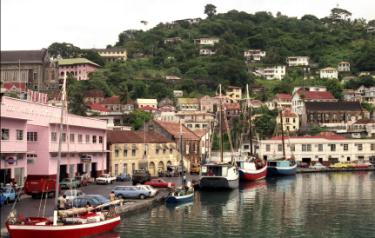
The 1763 Treaty of Paris transferred possession of Grenada from France to Great Britain; the new administration renamed Ville de Fort Royal (Fort Royal Town) to Saint George's Town, after the patron saint of England; eventually the name became simply Saint George's
Military
Branches: No regular military forces; Royal Grenada Police Force (includes Coast Guard)
Read the full government profile — flag symbolism, national anthem, and other national symbols.
View full government detailsEconomy
Economy
Grenada's economy relies heavily on tourism as its main source of foreign exchange, a sector that expanded significantly after the opening of Maurice Bishop International Airport in 1984.
Snapshot
- Currency Name and Code
- East Caribbean Dollar (XCD)
- GDP Real Growth Rate
- 4.7%
News & Weather
News & Weather
Current Weather
Latest News
Husband of missing North Carolina woman in Grenada says he believes 'no foul play' involved - ABC News - Breaking News, Latest News and Videos
ABC News - Breaking News, Latest News and Videos · 2d ago
Family of Cary mom missing in Grenada leaving island after numerous searches - CBS17.com
CBS17.com · 3d ago
Husband of missing North Carolina woman in Grenada says he believes 'no foul play' involved - ABC7 New York
ABC7 New York · 2d ago
North Carolina woman last seen swimming before disappearance in Grenada, police say - Spectrum News
Spectrum News · 5d ago
Husband of North Carolina woman missing in Grenada doesn't suspect foul play - CBS News
CBS News · 4d ago
Surveillance video shows Cary woman Elizabeth Waddell swimming on the day she disappeared in Grenada - WUNC News
WUNC News · 5d ago
Police reveal timeline in disappearance of North Carolina woman in Grenada - Cleveland.com
Cleveland.com · 4d ago
Liz Waddell: Missing Cary Woman vanished, not seen returning from swim at Grand Anse Beach area of St. George's, police say - ABC11 News
ABC11 News · 5d ago
News via Google News
Climate Overview
Grenada”™s climate is sunny and tropical, averaging 80°F, with dry and rainy seasons. The dry season, January through May, is more comfortable; with cooling trade winds and occasional showers. The rainy season, June through December, has a more humid climate and moderate-to-heavy rainfall, which varies considerably each year. Temperatures drop in the evening, making it pleasantly cool. Sunrise is at 6:30 am and dusk varies between 6 and 6:30 pm, according to the time of year.
The wet season is characterized by heavy rains, high wind, and hurricanes, but the last hurricane to actually hit Grenada was Hurricane Janet in 1955.
Frequently Asked Questions
Frequently Asked Questions
What is the population of Grenada?
How do people greet each other in Grenada?
What are dining and food customs like in Grenada?
What social etiquette should I know in Grenada?
How should I dress in Grenada?
What is family life like in Grenada?
What sports and recreation are popular in Grenada?
What is the capital of Grenada?
Where is Grenada located?
What are the ocean borders of Grenada?
What religion is practiced in Grenada?
What currency is used in Grenada?
What language is spoken in Grenada?
What is the geography of Grenada like?
What is Grenada known for?
Last reviewed 2026