
 English
 Español
 中文
中文 हिन्दी
 Français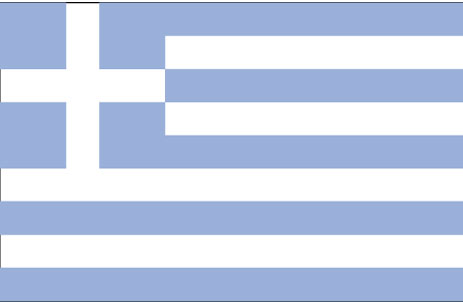
Greece
Ellas or Ellada
Declare Your Relationship to Greece
CountryReports Community
- Studying4
- From Greece0
- Greece heritage0
- Visited0
- Want to visit3
Customs and Culture
Customs and Culture
Cultural Attributes
While women have gained greater prominence and rights in the last generation, Greek society is still male-dominated. Men may attribute their failure to external circumstances rather than to personal inadequacies. While Greece’s older generations value family, religion, tradition, and education, younger generations view status and friends as very important.
Greeks like to "pass" time, not to "use" it. That is, they may not be prompt in keeping appointments and they consider it foolish to set a specific length of time for a meeting. Greeks are very proud of their cultural heritage, which they view as being central to Western civilization.

Birthplace of Democracy and Gods
Get More Customs and Culture
6 more cultural topics for members
Social Customs & Etiquette · Diet · Family · Dating Customs · Recreation · Student Life
Holidays
Independence Day
3/25Independence Day
first modern day Olympic Games
4/6Other
The first modern day Olympic Games held in Athens, Greece.
Birth date - Socrates
6/5Birthday
Birth date - Socrates, Greek philosopher, was born on June 5, 496 B.C. in Athens, Greece.
Christmas
12/25Christmas
Dates of Interest
- First Sunday of November
Follows the historic route from Marathon to Athens, attracting runners worldwide.
How do people greet each other in Greece?
Friends and relatives usually hug and kiss when greeting, while others shake hands. Young men often slap each other on the back or arm instead of shaking hands.
Do
- Use first names with close friends and family
- Address acquaintances and strangers by their title
What are the dining customs in Greece?
Lunch, served in the early afternoon, is traditionally the main meal, though dinner is becoming the largest meal as work schedules change. Common foods include lamb, seafood, olives, cheese, moussaka, souvlaki, bean soup, eggplant, stuffed tomatoes and pasta.
Don’t
- Don't leave the table before everyone has finished eating
- Don't leave food on your plate
What should I know about social etiquette and hospitality in Greece?
Greeks value their cultural heritage and enjoy hosting friends for dinner and special occasions; they tend to 'pass' time rather than 'use' it, so appointments may not be prompt.
Do
- Accommodate a host who insists several times, as they usually mean it
- Expect friends and relatives to drop by unannounced in rural towns
Good to know
- Unannounced visits are less common in larger cities due to hectic schedules
- Don't expect strict punctuality or fixed meeting lengths
What should I wear in Greece?
Urban Greeks wear contemporary Western-style clothing similar to other European cities, while dress is more practical in rural areas; traditional attire is reserved for special occasions and festivals.
Do
- Wear light, breathable fabrics, shorts, sundresses and sandals in summer
- Layer with sweaters, jackets, scarves and boots in winter
- Dress formally for weddings, with suits or gowns
Good to know
- For church and religious ceremonies, wear conservative clothing; women should cover the knees and men should wear long pants and shirts
What gestures should I be aware of in Greece?
Greeks frequently use their hands in conversation and may smile even when angry or upset.
Good to know
- Tilting the head side to side or backwards means 'no'
- Nodding the head forward means 'yes'
- A puff of breath through pursed lips may ward off the 'evil eye' after a compliment
What is family life like in Greece?
The elderly are respected and hold much authority, being addressed by courteous titles and served first at meals. Parents discipline children firmly but invest heavily in their upbringing and education.
Do
- Show respect to elders and serve them first at mealtime
- Address the elderly by courteous titles
Good to know
- Children typically arrange and frequently visit elderly parents in care homes
- Parents usually help their children, married or not, when able
What do people do for fun in Greece?
Soccer is the most popular national sport, followed by basketball and increasingly volleyball, while water sports like swimming, sailing and diving are important. Greeks also enjoy socializing in cafes, outdoor theaters, restaurants and nightclubs.
Good to know
- Try backgammon (távli), a favorite cafe pastime
- Enjoy open-air theatrical events from June through September
- Music and dance are central to Greek life, with traditional dances like kalamatianós, sirtó and hasápiko
Last updated: 2026-07-12 · Sources: CountryReports
Photos of Greece
Photos of Greece


Travel and Tourism
Travel and Tourism
- Travel Alert Status
- Level 1: Exercise Normal Precautions
- Currency
- euro (EUR)
- Time Difference
- UTC+2 (7 hours ahead of Washington, DC during Standard Time)
- Climate
- Greece has mild, wet winters and hot, dry summers. Athens daytime summer temperature averages 90°F and often exceeds 100°F for periods in July-August. Humidity is low and the heat is tempered by sea breezes. Summer evenings are comfortable outdoors. Spring and fall temperatures are pleasant, and winter temperatures are 30°-55°F. Snow flurries occur, particularly in the northern suburbs, but seldom accumulate. Air pollution is a major problem in Athens throughout the year, but the climate is otherwise healthy. Thessaloniki, in northern Greece, experiences high temperatures and humidity from the end of May until the end of September. Summer heat is sometimes tempered by late morning and early evening breezes. July and August nights can be uncomfortably warm. In winter, periods of mild, sunny, and spring-like weather are interspersed with uncomfortable cold periods. Thessaloniki has periods of chilly and damp weather, with considerable rainfall and occasional snow. Temperatures often fall below freezing in winter. Although snow does not linger, the city has been struck by blizzards. One feature of Thessaloniki”™s climate is the vardari, a strong northwesterly wind that appears suddenly and irregularly from the area of the Axios (Vardar) River Valley.
- Airports
- 82
Read the full travel guide — health, safety, vaccinations, disease risk, sanitation, and transit details.
View full travel guideRecipes
Recipes
Honey Curls (Diples)
Dessert
Appetizer
Papadakis (Stuffed Grape Leaves)
Main Dish
Greek Lamb
Main Dish
Greek Homestyle Chicken
Main Dish
Souvlaki (Shish Kebab with Cubes of Pork or Lamb, Mushrooms and Vegetables)
Main Dish
Avgha Me Tomatoes (Eggs with Tomatoes)
Main Dish
Makaronia Sto Fourno (Baked Macaroni)
Main Dish
PremiumArni a La Hasapa (Baked Lamb with Tomatoes)
Side Dish
PremiumDolmades Avgolemono (Meat Stuffed Grape Leaves)
Side Dish
PremiumPiperies Psites (Grilled Green Peppers)
History
History
Historical Eras
Bronze Age & Antiquity
3000 BCE – 800 BCE
The Bronze Age saw the flourishing of the Minoan civilization on Crete and the Mycenaean culture on the mainland, the latter associated with the legendary Trojan War around 1200 BCE. A prolonged Dark Age followed the collapse of Mycenaean society circa 1100 BCE, marked by depopulation and the loss of writing. Recovery brought the Geometric period and the gradual emergence of the polis, or city-state, as the defining Greek political form.
Classical Greece
800 BCE – 323 BCE
The Archaic and Classical periods witnessed the rise of Athens, Sparta, and other powerful city-states, the development of democracy under Cleisthenes, and the repulsion of Persian invasions at Marathon and Salamis. The 5th century BCE golden age produced Socrates, Plato, Sophocles, and the Parthenon. Prolonged conflict, particularly the Peloponnesian War between Athens and Sparta, ultimately weakened the city-states and prepared the way for Macedonian dominance under Philip II and Alexander the Great.
Hellenistic & Roman
323 BCE – 330
Following Alexander the Great's death in 323 BCE, his generals divided his vast empire, spreading Greek language and culture across the Near East and Central Asia. Rome gradually absorbed the Greek world, making Macedonia a province in 146 BCE and ultimately incorporating all of Greece. Greek culture profoundly influenced Roman civilization, and cities such as Athens and Corinth remained important intellectual and commercial centers under Roman rule.
Byzantine Era
330 – 1453
With the founding of Constantinople in 330 CE, Greece became a core territory of the Eastern Roman, or Byzantine, Empire, where Orthodox Christianity, Greek language, and Roman administration were fused into a distinctive civilization. The empire endured centuries of pressure from Slavic migrations, Arab raids, and Crusader interference, including the sack of Constantinople in 1204. The final fall of Constantinople to the Ottoman Turks in 1453 ended Byzantine rule and inaugurated centuries of Ottoman domination over Greek lands.
Ottoman Rule
1453 – 1821
Under Ottoman rule, Greek Orthodox communities maintained their religious and cultural identity through the millet system, with the Ecumenical Patriarchate of Constantinople serving as a key institutional anchor. Enlightenment ideas spreading from Western Europe in the 18th century, combined with growing nationalist sentiment and the influence of the merchant diaspora, gave rise to a Greek national consciousness. Revolutionary societies such as the Filiki Etaireia, founded in 1814, organized the uprising that ignited the War of Independence in 1821.
Modern Greece
1821 – present
Greece secured independence from the Ottoman Empire by 1830, gradually expanding its territory through the Balkan Wars and World War I to encompass Macedonia, Crete, and Thrace. The 20th century brought catastrophic upheaval: the Asia Minor Disaster of 1922, brutal Axis occupation during World War II, and a devastating civil war ending in 1949. A military junta ruled from 1967 to 1974, after which democracy was restored, the monarchy abolished, and Greece joined the European Community in 1981, anchoring itself firmly within the Western democratic order.
Overview
The Greek War of Independence began in 1821 and concluded in 1830 when England, France, and Russia forced the Ottoman Empire to grant Greece its independence under a European monarch, Prince Otto of Bavaria.
Timeline of Key Events
8000 BCE – 7000 BCE
Mesolithic Period.
Mesolithic Period.
7000 BCE – 3000 BCE
Neolithic Period.
Neolithic Period.
3000 BCE – 2000 BCE
Aegean Bronze Age or Early Bronze Age.
Aegean Bronze Age or Early Bronze Age.
2600 BCE – 1900 BCE
Minoan Prepalatial Period.
Minoan Prepalatial Period.
2000 BCE – 1550 BCE
Middle Helladic Period or Middle Bronze Age.
Middle Helladic Period or Middle Bronze Age.
1500 BCE – 1100 BCE
Late Helladic Period.
Late Helladic Period.
1400 BCE – 1150 BCE
Minoan Postpalatial Period.
Minoan Postpalatial Period.
Read the full history profile — narrative overview, defining eras, and the complete timeline in one place.
View expanded historyInteresting Facts
Interesting Facts
When a child loses a tooth they throw the tooth on the roof for good luck and make a wish so that their teeth will grow in strong and healthy.
Parthenon for the Parthena (“Virgin” or “Maiden”) Athena. The Emperor Theodosius turned the Parthenon into a Christian Church dedicated to the Virgin Mary, the Franks into a Catholic Church (1204) and the Turks into a Mosque (1458). Part of the Metopes were destroyed by the Christians when the Parthenon was transformed into a Church. The Parthenon in Athens, Greece, was built at the initiative of Pericles. In 480-479 BC Persians destroyed most of the buildings of the Acropolis in Athens. The architects were Iktinos and Kallikrates (or Callicrates). Construction began in 447 BC and it was completed by 438 BC, while decorations were added until at least 432 BC for which the sculptor Pheidias (or Phidias) was responsible with around 70 other sculptors working for him. Additional work was done also until 425 BC. The Venetian Francesco Morosini (1618-94) destroyed Athena's team of chariot horses trying to remove the sculpture group from the west pediment. In 1686, the temple of Nike was destroyed by the Turks and was restored in 1835. In 1687, while the Turks were using it as a powder magazine, they were attacked by Venetian military forces of Morosini (with Otto Vilhelm von Königsmark (1639-1688) as field commander). A German lieutenant fired the fatal shot (26 September 1687) which reduced this crowning glory of Grecian art to a mere skeleton. The roof collapsed, parts of the sculptures and pillars were destroyed. Jacques Carrey, a French artist in 1674 spent two weeks making sketches and drawings of the Parthenon that provide an idea of the building as it was before the explosion. The cost for the Parthenon building is estimated to 1000 Talents (from 447-432) or around 6 million drachmae.The buildings costs from 447-427 in Athens was around 8000 Talents or 48 million drachmae. Penteli Marble was used and transported from the synonymous place in 20 km distance. The reported monetary reserves of Athens in 432 BC: 9000 talents according to Thucydides. The Parthenon was build partly on the bedrock and part on a bedding of stone so that the foundation was flexible during an earthquake.
More than 7 million Greeks or persons of Greek origin live outside of Greece.
Greeks call themselves “Hellenes,” their country “Hellas” and their language “Hellenic.” The words “Greece” and “Greek” are derived from Roman words used to describe the people of Hellas.
See every fact — trivia, oddities, and curious tidbits gathered from across the country.
View all interesting factsGeography and Environment
Geography and Environment
- Terrain
- mostly mountains with ranges extending into the sea as peninsulas or chains of islands
- Climate
- Greece has mild, wet winters and hot, dry summers. Athens daytime summer temperature averages 90°F and often exceeds 100°F for periods in July–August. Humidity is low and the heat is tempered by sea breezes. Summer evenings are comfortable outdoors. Spring and fall temperatures are pleasant, and winter temperatures are 30°F–55°F. Snow flurries occur, particularly in the northern suburbs, but seldom accumulate. Air pollution is a major problem in Athens throughout the year, but the climate is otherwise healthy. Thessaloniki, in northern Greece, experiences high temperatures and humidity from the end of May until the end of September. Summer heat is sometimes tempered by late morning and early evening breezes. July and August nights can be uncomfortably warm. In winter, periods of mild, sunny, and spring-like weather are interspersed with uncomfortable cold periods. Thessaloniki has periods of chilly and damp weather, with considerable rainfall and occasional snow. Temperatures often fall below freezing in winter. Although snow does not linger, the city has been struck by blizzards. One feature of Thessaloniki’s climate is the vardari, a strong northwesterly wind that appears suddenly and irregularly from the area of the Axios (Vardar) River Valley.
- Natural Hazards
- severe earthquakes
- Current Environmental Issues
- air pollution; water pollution
Read the full geography and environment profile — terrain, climate, natural resources, hazards, land use, and international agreements.
View full geographyPeople & Demographics
People & Demographics
Religion
Languages Spoken
Greek (official) 99%,
- French
- Greek
Population
- Population
- 10,413,683
- Population: Male/Female
- male: 5,117,862 female: 5,343,229
- Population Distribution
- one-third of the population lives in and around metropolitan Athens; the remainder of the country has moderate population density mixed with sizeable urban clusters
- Urban Population
- urban population: 80.7% of total population rate of urbanization: 0.11% annual rate of change
- Population in Major Urban Areas
- 3.154 million ATHENS (capital), 815,000 Thessaloniki
- Nationality Noun
- noun: Greek(s) adjective: Greek
- Ethnic Groups
- Greek 91.6%, Albanian 4.4%, other 4%
- Language Note
- Greek (official) 99%, other (includes English and French) 1%
Education
- Literacy Definition
- age 15 and over can read and write
Children are obligated to attend nine years of school in Greece, primary level being the first six. Today there are thoughts that school should be obligatory for 12 years and it is very likely that this law will soon be applied. Primary level schools are always in a different building than secondary schools. They hold around 100 children for each class. Half of the primary level schools in big cities are old buildings that have always been schools and have some history. There are also many new buildings that were built to accommodate children as the population increased. However, in some areas far from the city center they do not have adequate buildings to be used for schooling or the buildings used don’t have the right technical specifications. Small villages almost always have new buildings for schools. However, there is usually one school in each region and many children have to walk a long distance regardless of the weather.
Classrooms have desks and chairs for each child and a lot of free space. There is a board and a desk for the teacher. Classrooms have toys, especially toys that teach numbers and letters, and it is also common to have musical instruments for children, usually small electric pianos, xylophones, and harmonicas. Electronic and audiovisual equipment is usually available in a private classroom and not in each classroom. Teachers either move the equipment to the classroom when they want to use it or take the children to that classroom to attend the lesson there. This applies to schools in small villages as well, as these areas are usually the first to implement advanced technological changes.
Schools usually have a kiosk selling fast food in the schoolyard. These kiosks are normally private and therefore not controlled by the school. Many children buy snacks from there and eat them during breaks.
Health Information
- Life Expectancy at Birth
- total population: 82.6 years male: 80.2 years female: 85.1 years
- Alcohol consumption per capita
- total: 6.33 liters of pure alcohol beer: 2.13 liters of pure alcohol wine: 2.66 liters of pure alcohol spirits: 1.45 liters of pure alcohol other alcohols: 0.08 liters of pure alcohol
- Tobacco Use
- total: 33.5% male: 36.5% female: 30.5%
- Infant Mortality Rate
- total: 3.6 deaths/1,000 live births male: 3.9 deaths/1,000 live births female: 3.2 deaths/1,000 live births
Life Expectancy
- Life Expectancy at Birth
- total population: 82.6 years male: 80.2 years female: 85.1 years
- Median Age
- total: 46.5 years male: 44.6 years female: 48.3 years
- Age Structure
- 0-14 years: 13.8% (male 742,131/female 699,079) 15-64 years: 62.6% (male 3,278,906/female 3,267,140) 65 years and over: 23.6% (male 1,096,825/female 1,377,010)
- Infant Mortality Rate
- total: 3.6 deaths/1,000 live births male: 3.9 deaths/1,000 live births female: 3.2 deaths/1,000 live births
Read the full people and society profile — demographics, health, education, religion, languages, and notable people.
View full people and societyGovernment & Politics
Government & Politics
Country Identity
- Country Name
- Greece
- Full Country Name
- Hellenic Republic
- Local - Long
- Elliniki Dhimokratia
- Local - Short
- Ellas or Ellada
- Former Name
- Kingdom of Greece
Government Structure
- Government Type
- parliamentary republic; monarchy rejected by referendum 8 December 1974
- Legal System
- based on codified Roman law; judiciary divided into civil, criminal, and administrative courts
- Executive Branch
- chief of state: President Katerina SAKELLAROPOULOU (since 13 March 2020) head of government: Prime Minister Kyriakos MITSOTAKIS (since 8 July 2019; reappointed 26 June 2023 following legislative elections) cabinet: Cabinet appointed by the president on the recommendation of the prime minister elections: President elected by parliament for a five-year term; election last held 22 January 2020 (next to be held in 2025); according to the Greek Constitution, presidents may only serve two terms; the president appoints the leader of the party securing a plurality of votes in the legislative election to become prime minister and form a government election results: Katerina SAKELLAROPOULOU elected president; she is the first woman to hold the office; received 261 out of 300 parliamentary votes
- Legislative Branch
- Unicameral Parliament or Vouli ton Ellinon (300 seats; members are elected by direct popular vote to serve four-year terms). Greece uses a reinforced proportional representation system, with a bonus of seats awarded to the party receiving the most votes. Elections: Most recent elections held on 21 May 2023, with a second election following on 25 June 2023 after no party was able to form a governing coalition following the first round. Election results (June 2023): Percent of vote by party — New Democracy (ND) 40.6%, SYRIZA 17.8%, PASOK-KINAL 11.9%, Communist Party (KKE) 7.7%, Spartiates 4.7%, Elliniki Lysi 3.7%, Niki 3.7%, Plefsi Eleftherias 3.2%; seats by party — ND 158, SYRIZA 48, PASOK-KINAL 32, KKE 21, Spartiates 13, Elliniki Lysi 10, Niki 10, Plefsi Eleftherias 8. New Democracy, led by Prime Minister Kyriakos Mitsotakis, secured a majority government following the June vote.
- Judicial Branch
- Supreme Judicial Court; Special Supreme Tribunal; all judges appointed for life by the president after consultation with a judicial council
- Suffrage
- 18 years of age; universal and compulsory
- Constitution
- 11 June 1975; amended March 1986 and April 2001
- Independence
- 1829 (from the Ottoman Empire)
- National Holiday
- Independence Day, 25 March (1821)
Capital City
- Capital Name
- Athens
- Capital - geographic coordinate
- 37 59 N, 23 44 E
- Capital Time Difference
- UTC+2 (7 hours ahead of Washington, DC during Standard Time)
Athens is the oldest European capital city; according to tradition, the city is named after Athena, the Greek goddess of wisdom; in actuality, the appellation probably derives from a lost name in a pre-Hellenic language
Military
Branches: Hellenic Army (Ellinikos Stratos, ES), Hellenic Navy (Elliniko Polemiko Navtiko, EPN), Hellenic Air Force (Elliniki Polemiki Aeroporia, EPA)
Embassy / Diplomatic Mission
U.S. Embassy Athens
91 Vasilissis Sophias Boulevard
Telephone: (30) (210) 721-2951
Emergency after-hours telephone: (30) (210) 729-4444 or (30) (210) 729-4301
Fax: (30) (210) 724-5313
Read the full government profile — flag symbolism, national anthem, and other national symbols.
View full government detailsEconomy
Economy
Greece has a capitalist economy with a robust services sector, which accounts for approximately 80% of GDP, while industry contributes around 15% and agriculture about 4%.
Snapshot
- Currency Name and Code
- Euro (EUR)
- GDP — official exchange rate
- $209,700,000,000 (USD)
- GDP Real Growth Rate
- 2.3%
- Gini Index
- 35.1
News & Weather
News & Weather
Current Weather
Latest News
Firefighting helicopters collide midair in Greece as wildfires rage across Europe - CBS News
CBS News · 1d ago
Man arrested after Scottish woman found dead inside suitcase in Athens - The Guardian
The Guardian · 1d ago
Dortmund signs Greece midfielder Konstantinos Karetsas from Genk for reported $34.6 million - Yahoo Sports
Yahoo Sports · 1h ago
I arrived in Greece with sky-high expectations. I left disappointed and wishing I'd avoided these 5 mistakes. - Business Insider
Business Insider · 2d ago
This Stunning Coastal Region of Greece Is a Less-crowded Alternative to Santorini—With Luxe Resorts and Secluded Beaches - Travel + Leisure
Travel + Leisure · 2d ago
Greece joins dig at Spain over migrants - eKathimerini.com
eKathimerini.com · 1d ago
Uncovering a global ancient history beyond Greece and Rome - Aeon
Aeon · 14d ago
Greece Approves Acquisition of VICTA Diver Delivery Units and V-BAT Drones - navalnews.com
navalnews.com · 53d ago
News via Google News
Climate Overview
Greece has mild, wet winters and hot, dry summers.
Athens daytime summer temperature averages 90°F and often exceeds 100°F for periods in July-August. Humidity is low and the heat is tempered by sea breezes. Summer evenings are comfortable outdoors. Spring and fall temperatures are pleasant, and winter temperatures are 30°-55°F. Snow flurries occur, particularly in the northern suburbs, but seldom accumulate. Air pollution is a major problem in Athens throughout the year, but the climate is otherwise healthy.
Thessaloniki, in northern Greece, experiences high temperatures and humidity from the end of May until the end of September. Summer heat is sometimes tempered by late morning and early evening breezes. July and August nights can be uncomfortably warm. In winter, periods of mild, sunny, and spring-like weather are interspersed with uncomfortable cold periods. Thessaloniki has periods of chilly and damp weather, with considerable rainfall and occasional snow. Temperatures often fall below freezing in winter. Although snow does not linger, the city has been struck by blizzards. One feature of Thessaloniki”™s climate is the vardari, a strong northwesterly wind that appears suddenly and irregularly from the area of the Axios (Vardar) River Valley.
Videos
Videos
2 curated YouTube videos.
Source: YouTube
Source: YouTube
Frequently Asked Questions
Frequently Asked Questions
What is the population of Greece?
How do people greet each other in Greece?
What are the dining customs in Greece?
What should I know about social etiquette and hospitality in Greece?
What should I wear in Greece?
What gestures should I be aware of in Greece?
What is family life like in Greece?
What do people do for fun in Greece?
What is the capital of Greece?
Where is Greece located?
What countries border Greece?
What religion is practiced in Greece?
What is the currency of Greece?
What language is spoken in Greece?
What is the geography of Greece like?
What is Greece known for?
Last reviewed 2026