
 English
 Español
 中文
中文 हिन्दी
 Français
Gibraltar
Declare Your Relationship to Gibraltar
CountryReports Community
- Studying3
- From Gibraltar2
- Gibraltar heritage2
- Visited2
- Want to visit1
Customs and Culture
Customs and Culture
Cultural Attributes
Gibraltar's culture is a fascinating blend of British, Spanish, Moorish, Genoese, Jewish, and Portuguese influences, reflecting centuries of diverse settlement and strategic importance at the entrance to the Mediterranean Sea. This small territory of roughly 6.8 square kilometers has developed a unique identity that is neither wholly British nor wholly Iberian, but a distinct hybrid that Gibraltarians proudly call their own. The official language is English, used in government, education, and formal settings, but the majority of residents also speak Spanish fluently. Perhaps most distinctive is Llanito (pronounced "yah-nee-to"), a colloquial blend of Andalusian Spanish and British English, peppered with Genoese, Hebrew, Maltese, and Portuguese words. Llanito is considered a key marker of Gibraltarian identity and is spoken casually in everyday conversation. Religion plays a significant role in daily life. Roman Catholicism is the most widely practiced faith, followed by Anglicanism, Islam, and Judaism. Gibraltar maintains one of the oldest Jewish communities in the British Commonwealth, with records of Jewish presence dating back to shortly after the British capture of the Rock in 1704. Several historic synagogues, including Nefusot Yehudah (founded in 1800), remain active today. The people of Gibraltar, known as Gibraltarians or "Llanitos," are generally warm and community-oriented. The territory's small population of approximately 34,000 people fosters a tight-knit social atmosphere where family and community ties are strong. Despite its British sovereignty, daily cultural life features strong Spanish influences — many residents cross into Spain regularly for shopping, leisure, and family visits. Local cuisine reflects this cultural layering, drawing on British staples, Spanish tapas traditions, and Sephardic Jewish dishes. Foods such as calentita, a chickpea flour bread of Genoese origin, are considered traditional Gibraltar dishes. Public festivals combine British and Mediterranean traditions. National Day on September 10th is celebrated with great enthusiasm as an expression of Gibraltarian identity and the community's strong desire to maintain its distinct culture and ties to the United Kingdom.

The Rock at the Edge of the World
Social Customs & Etiquette
Greetings in Gibraltar reflect the territory's unique cultural blend of British, Spanish, and Genoese influences. Because Gibraltar is a British Overseas Territory located at the southern tip of the Iberian Peninsula, its residents — known as Gibraltarians — primarily speak English as the official language, meaning most formal and everyday greetings follow standard British English conventions. A simple "Hello," "Good morning," "Good afternoon," or "Good evening" is entirely appropriate and universally understood.
However, the local population also speaks Llanito (sometimes spelled Yanito), a fascinating creole language that freely mixes English and Andalusian Spanish, often within the same sentence. As a result, Spanish greetings are equally common and well-received. Saying "Hola" (Hello), "Buenos días" (Good morning), "Buenas tardes" (Good afternoon), or "Buenas noches" (Good evening) will be understood by virtually everyone and is a sign of cultural awareness that locals genuinely appreciate.
Handshakes are the standard greeting for first meetings, particularly in professional or formal contexts. Among friends and family, especially women greeting women or mixed-gender acquaintances, a single kiss on the cheek — reflecting the Spanish influence — is common social practice. This contrasts with the more reserved British style but mirrors the customs of neighboring Andalusia, Spain.
Eye contact during greetings is considered respectful, and a warm, friendly demeanor is valued in Gibraltarian culture. The community is notably small — Gibraltar's population numbers around 34,000 people within a territory of just 6.7 square kilometers — which fosters a tight-knit social environment where personal relationships matter and genuine warmth in greetings is the norm rather than the exception.
Visitors who acknowledge both the British and Spanish dimensions of Gibraltar's identity tend to be received with particular friendliness. Making the effort to use even a basic phrase in Llanito, such as "Ke tal?" (a Llanito adaptation of the Spanish "¿Qué tal?" meaning "How are you?"), can spark a positive and memorable interaction with locals proud of their distinctive cultural heritage.

Dating Customs
Dating and marriage customs in Gibraltar reflect the territory's unique blend of cultural influences, shaped by centuries of Spanish, Moroccan, Genoese, British, and Jewish heritage. This multicultural background creates a society where traditional Mediterranean family values coexist with modern British social norms.
Gibraltar has a predominantly Catholic population, with around 78 percent of residents identifying as Roman Catholic. As a result, religious ceremonies remain an important part of marriage traditions for many families, and church weddings are common. At the same time, civil marriages are legally recognized and increasingly popular, particularly among younger Gibraltarians and mixed-nationality couples.
The legal age for marriage in Gibraltar is 16, though those under 18 require parental consent. Civil marriage registration is conducted through the Gibraltar Civil Registration Office, and the territory's marriage laws closely follow British legal frameworks, reflecting its status as a British Overseas Territory.
Family ties are strong in Gibraltarian culture, and social life often revolves around extended family networks. It is common for young adults to live with their parents until marriage, a pattern influenced by both Catholic values and the practical realities of Gibraltar's extremely limited housing stock and high property costs. The territory covers just 6.7 square kilometers, making it one of the most densely populated places in the world and putting significant pressure on available housing.
Dating culture in Gibraltar is generally open and relaxed, blending British and Southern European influences. Young people socialize through the territory's active bar and restaurant scene, local festivals, and community events. The close-knit nature of Gibraltarian society means that social circles are often tight and overlapping, and it is common to maintain long-term relationships within the same community.
Intermarriage between Gibraltarians of different ethnic and religious backgrounds is not uncommon, reflecting the territory's historically diverse population. Marriage to foreign nationals, particularly British, Spanish, and Moroccan partners, is also relatively frequent given Gibraltar's geographic position and its international workforce.
Holidays
National Day
9/10Independence
day of the national referendum to decide whether to remain with the UK or go with Spain
Dates of Interest
- Septermber 10th
Day of the national referendum to decide whether to remain with the United Kingdom or with Spain.
How do people communicate and greet each other in Gibraltar?
English is the official language used in government, education, and formal settings, but most residents also speak Spanish fluently and casually use Llanito, a blend of Andalusian Spanish and British English. Gibraltarians are generally warm and community-oriented.
Good to know
- Llanito (pronounced "yah-nee-to") is a key marker of local identity, mixing Spanish, English, Genoese, Hebrew, Maltese, and Portuguese words
- English works in formal and official settings
What is the food like in Gibraltar?
Local cuisine reflects Gibraltar's cultural layering, drawing on British staples, Spanish tapas traditions, and Sephardic Jewish dishes.
Good to know
- Try calentita, a chickpea flour bread of Genoese origin considered a traditional Gibraltar dish
What should I know about local customs and religion in Gibraltar?
Religion plays a significant role in daily life, with Roman Catholicism most widely practiced, followed by Anglicanism, Islam, and Judaism. The small, tight-knit community has strong family and social ties.
Do
- Respect Gibraltar's distinct hybrid identity, which is neither wholly British nor wholly Iberian
- Be aware of the historic Jewish community and active synagogues such as Nefusot Yehudah
Good to know
- Gibraltarians take pride in their unique culture and ties to the UK
- National Day on September 10th is a major celebration of Gibraltarian identity
How important is family and community in Gibraltar?
Family and community ties are strong, with the small population of roughly 34,000 fostering a tight-knit social atmosphere.
Good to know
- Many residents regularly cross into Spain for shopping, leisure, and family visits
What festivals and leisure activities are common in Gibraltar?
Public festivals combine British and Mediterranean traditions, with National Day on September 10th celebrated enthusiastically.
Good to know
- Residents often cross into Spain for shopping and leisure
Last updated: 2026-07-12 · Sources: CountryReports
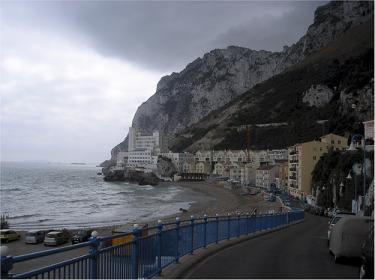
Photos of Gibraltar
Photos of Gibraltar


Travel and Tourism
Travel and Tourism
- Currency
- Gibraltar pound (GIP)
- Time Difference
- UTC+1 (6 hours ahead of Washington, DC, during Standard Time)
- Climate
- Mediterranean with mild winters and warm summers
- Airports
- 1
Read the full travel guide — health, safety, vaccinations, disease risk, sanitation, and transit details.
View full travel guideHistory
History
Historical Eras
Moorish Gibraltar
711 – 1462
Muslim commander Tariq ibn Ziyad seized the Rock in 711, making it a strategic foothold for the Moorish conquest of Iberia. The first city on Gibraltar, Medinat al-Fath, was founded in 1160 under Almohad rule. Control passed between Marinid and Nasrid dynasties, with the Rock serving as a contested military and religious stronghold until its reconquest by Castile in 1462.
Castilian Rule
1462 – 1704
Following its reconquest, Gibraltar was absorbed into the Spanish Crown when Queen Isabella I formally annexed it in 1501, granting the town its distinctive coat of arms. The period saw the expulsion of Jews in 1492 and Moriscos in 1606, many of whom passed through the Rock. A devastating pirate raid in 1540 exposed chronic vulnerabilities in the territory's defenses.
British Conquest & Early Colony
1704 – 1830
An Anglo-Dutch force captured Gibraltar in 1704 during the War of the Spanish Succession, and Spain formally ceded it to Britain in perpetuity under the 1713 Treaty of Utrecht. The original Spanish population largely departed, replaced by a diverse influx of Genoese, Jewish, Portuguese, and British settlers who formed the nucleus of a distinct Gibraltarian identity. Spain mounted several sieges, most notably the Great Siege of 1779–1783, all of which failed to dislodge the British garrison.
Crown Colony Era
1830 – 1945
Gibraltar was formally declared a British Crown Colony in 1830, initiating a period of gradual constitutional and civic development alongside its enduring military role. The Exchange Committee, founded in 1817, evolved into a vehicle for merchant-class political aspirations, eventually leading to the creation of an Executive Council in 1922. During World War II the civilian population was evacuated to Britain, Malta, and Jamaica, underscoring Gibraltar's overwhelming strategic importance to Allied operations in the Mediterranean.
Self-Determination & Autonomy
1945 – 1988
The post-war return of evacuees galvanized Gibraltarian political consciousness, culminating in a new constitution in 1964 and the establishment of the Gibraltar Legislative Council. In the 1967 referendum, Gibraltarians voted by an overwhelming majority to remain under British sovereignty, directly rejecting Spanish claims. Spain's closure of the land border in 1969 lasted over a decade, reinforcing a distinct Gibraltarian national identity forged in opposition to external pressure.
Modern Gibraltar
1988 – present
The full reopening of the Spanish border in 1988 ushered in a new era of economic diversification, with Gibraltar developing robust financial services, online gaming, and tourism sectors alongside its traditional port trade. A 2002 referendum saw Gibraltarians again reject any form of shared sovereignty with Spain by more than 98 percent. Gibraltar's future relationship with the European Union became a pressing concern following the United Kingdom's 2016 Brexit vote, initiating ongoing negotiations over border arrangements and access rights.
Overview
Dr H W Howes’s study of the origins and development of the population of Gibraltar from 1704, was first published in 1951, and since then no detailed academic study has emerged to supplement his researches and bring them up to date. The aim of this extract is to do precisely that. That is to say, to chart the political and constitutional development of the people of Gibraltar from the problems created by the evacuation of the civilian population during the Second World War, up to the present day.
It is essential, however, to establish from the outset exactly who the people of Gibraltar are. When the Rock fell to an Anglo-Dutch force in 1704 during the War of the Spanish Succession, almost all its approximately 4000 Spanish inhabitants left for the neighbouring parts of Spain. Immigration from other Mediterranean regions then took place, with incomers from Malta, Genoa, and Portugal, among others, settling on the Rock. It was formally ceded by Spain to Britain under Article X of the Treaty of Utrecht in 1713. Eight years later a count of civilians able to bear arms was taken and this revealed that 45 were English, 96 were Spaniards and above 169 were Genoese. This Genoese element supplied a vital contribution towards what was to make a Gibraltarian. By 1753 the civilian population had grown to 1816 persons, the main elements in which were 597 Genoese, 575 Jews and 351 British inhabitants. This British component were mainly merchants, who arrived on the Rock to service the needs of the military, and who soon recognised the importance of the place as a trading post from which to advance northwards into the Iberian peninsula, southwards towards Africa and east into the Mediterranean.
The first real census of inhabitants was taken in February 1777. It stands as testimony to the agglomeration of nationalities that have made the modern day Gibraltarian. The total number of civilians was 3201, of these 1832 were Roman Catholics, the rest were British Protestants. The majority of the Roman Catholics were classified either as natives (845), as Genoese and Savoyards (672), and as Spaniards (134). Other minor Catholic groups included English, Irish, Minorcans, Portuguese and French. It is significant to note the appearance of this ’native’ element in the registers of 1777, containing the implicit recognition of the birth of the Gibraltarian. Dr Howes concluded from his researches that ’the basic element in what has become the Gibraltarian is the Genoese’, conceding at the same time the importance of other groupings, namely the Spaniards, Jews and British.
Regarded for many decades purely as an appendix to the military base, the constitutional development of this heterogeneous community was understandably slow. Under letters patent a civil judiciary was authrised in 1720, and in 1739 criminal and civil jurisdiction was granted to Gibraltar, but no courts were created and this jurisdiction was exercised by the military, headed by the Governor himself. Justices of the Peace were appointed in 1753, and forty years later a Vice-Admiralty Court was established to tap the first real basis of Gibraltar’s wealth, the public auctioning of enemy ships captured by the Royal Navy.
The Governorship of General George Don, which started in 1814 and lasted for 17 years led to the first real advances in the political development of Gibraltar. In 1817 the Exchange and Commercial Library was founded, largely to rival the Garrison Library from which civilians, however eminent, were excluded. The Exchange Committee concerned itself with forwarding the interests of the prosperous merchant group which had grown up in the city. Initially, they had no political objectives, and concentrated on matters of a social and economic nature in so far as they affected the merchants. Thus the Exchange Committee had little to do with the first moves which led to Gibraltar being given the status of a Colony in 1830. A Charter of Justice was granted in that year, a civilian magistracy established, and civil rights bestowed on its inhabitants. A Supreme Court was also created by letters patent, with a resident chief justice and jury system. Only a year after Sir Robert Peel’s Metropolitan Police Force was created in London in 1829, Gibraltar followed suit, setting up what has become the second oldest British police force after Peel’s. "The City and garrison of Gibraltar in the Kingdom of Spain ", had become the "Crown Colony of Gibraltar. " The changes of 1830 were vitally important in that they recognised the inherent duality in a fortress-colony
Timeline of Key Events
0
The African Plate collided tightly with Europe some 55 million years ago.
The African Plate collided tightly with Europe some 55 million years ago. The Mediterranean became a lake which, in the course of time, dried up until 5 million years ago when the Atlantic broke through the Strait of Gibraltar and flooded it again, isolating the Rock of Jurassic limestone.
711
Gibraltar captured by Muslim commander Tariq Ibn-Ziyad.
Gibraltar captured by Muslim commander Tariq Ibn-Ziyad.
940
The Rock becomes a place of worship.
The Phoenicians follow other navigators from the eastern Mediterranean in visiting the Strait and found the city Carteia at the head of the Bay of Gibraltar. The Rock becomes a place of worship where sailors sacrifice to the gods before entering the Atlantic.
1160
Foundations were laid for the first city in Gibraltar - the Medinat al-Fath, the City of Victory.
By the 11th Century AD Gibraltar is part of the Arab kingdom of Seville except for a short period when it comes under Berber rule from Malaga. The mounting threat of invasion by North Africa sects forces the Arab Governor of Algeciras to order in 1068 the building of a fort in Gibraltar. Spain is eventually overrun by another North African sect, the Almohads, and it was their leader, Abd-ad-Mummin, who commanded the building of the first city in Gibraltar - the Medinat al-Fath, the City of Victory. It was by all accounts, an impressive city and its foundations were laid on the 19th May 1160 AD. On completion of the works Al - Mummin personally crossed the Strait to inspect the works and stayed in Gibraltar for two months, inviting all his subordinate kings to see his works. It is said that Al - Mummin was especially impressed by a large windmill which had been built on top of the hill (Windmill Hill).
1333
Ferdinand to offer freedom from justice to anyone who lived in Gibraltar for one year and one day.
The Spaniards set to repair the fortifications and shipyard but few people wanted to settle in Gibraltar, which was considered to be a high risk town. This forced Ferdinand to offer freedom from justice to anyone who lived in Gibraltar for one year and one day. By 1333 Gibraltar was once more in Muslim hands as Abdul Malik, son of the King of Morocco, laid siege. The garrison surrendered after four and a half months of siege.
1374
Gibraltar becomes part of the Muslim Kingdom of Granada.
Gibraltar becomes part of the Muslim Kingdom of Granada.
1462
Gibraltar is recaptured by Castille.
Gibraltar is recaptured by Castille and became part of the estates of the Duke of Medina Sidonia.
Read the full history profile — narrative overview, defining eras, and the complete timeline in one place.
View expanded historyInteresting Facts
Interesting Facts
To the ancient Greeks and Romans, it was one of the two Pillars of Hercules, set up by the mythical hero to mark the edge of the known world.
Gibraltar consists of a long limestone mountain. The highest point is 426 m.
See every fact — trivia, oddities, and curious tidbits gathered from across the country.
View all interesting factsGeography and Environment
Geography and Environment
- Terrain
- a narrow coastal lowland borders the Rock of Gibraltar
- Climate
- Mediterranean with mild winters and warm summers
- Natural Hazards
- NA
- Current Environmental Issues
- limited natural freshwater resources: large concrete or natural rock water catchments collect rainwater (no longer used for drinking water) and adequate desalination plant
Read the full geography and environment profile — terrain, climate, natural resources, hazards, land use, and international agreements.
View full geographyPeople & Demographics
People & Demographics
Religion
Languages Spoken
English (used in schools and for official purposes), Spanish, Italian, Portuguese
- English
- Italian
- Portuguese
- Spanish
Population
- Population
- 34,000
- Nationality Noun
- Gibraltarian(s)
- Ethnic Groups
- Spanish, Italian, English, Maltese, Portuguese
Education
- Literacy Definition
- NA
Health Information
- Life Expectancy at Birth
- Gibraltar consistently ranks among the top territories in the world for life expectancy, reflecting its high standard of living, quality healthcare infrastructure, and generally favorable lifestyle conditions. Residents of Gibraltar can expect to live, on average, into their early to mid-80s, with overall life expectancy at birth estimated at approximately 82 to 83 years. Women in Gibraltar tend to outlive men by several years, with female life expectancy reaching into the mid-to-upper 80s while male life expectancy typically falls in the late 70s to early 80s. These figures place Gibraltar on par with, or slightly above, many Western European nations and reflect the territory's access to modern medical care. Gibraltar operates a publicly funded healthcare system that provides residents with free or heavily subsidized medical services, including access to specialists and hospital care both locally and through referrals to hospitals in Spain and the United Kingdom when advanced treatment is required. Several factors contribute to Gibraltar's strong life expectancy outcomes. The territory has a relatively small and well-managed population of approximately 32,000 to 34,000 people, which allows healthcare resources to be concentrated effectively. Gibraltar benefits economically from its status as a British Overseas Territory and as a financial and online gaming services hub, generating a high GDP per capita that supports sustained investment in public health and social services. Low rates of extreme poverty and a well-educated population further contribute to positive health outcomes. Gibraltar also records low infant mortality rates, which positively influence overall life expectancy figures. The territory's Mediterranean climate and cultural proximity to Spain may also play a role in lifestyle habits, including diet, though the influences of British culture on food and daily life are also significant. While Gibraltar does not always appear in major global health indices due to its status as a non-sovereign territory, the data available consistently indicate that its residents enjoy long, healthy lives comparable to those in some of the world's most developed nations. Ongoing investment in healthcare services and public health programs supports the continuation of these positive trends.
- Infant Mortality Rate
- Gibraltar maintains one of the lowest infant mortality rates in the world, reflecting the territory's high standard of living, advanced healthcare infrastructure, and close integration with the United Kingdom's medical systems. The infant mortality rate in Gibraltar is estimated at approximately 4 to 6 deaths per 1,000 live births, placing it among the most favorable outcomes globally and well below the worldwide average of roughly 27 deaths per 1,000 live births. This exceptionally low rate is the result of several contributing factors. Gibraltar operates a publicly funded healthcare system that provides comprehensive prenatal care, skilled attendance at birth, and postnatal follow-up for mothers and newborns. The Gibraltar Health Authority oversees primary and specialist medical services, and residents requiring complex care can access facilities in nearby Spain or be transferred to the United Kingdom under existing healthcare arrangements. This access to a broader network of specialized pediatric and neonatal services provides an important safety net for high-risk cases. Socioeconomic conditions in Gibraltar also play a significant role. The territory has a high per capita income, low poverty rates, clean water and sanitation infrastructure, and strong food security — all of which are closely correlated with lower infant mortality. Literacy rates are high, and parental awareness of infant health practices, including breastfeeding, immunization schedules, and early medical consultation, is well established. Immunization coverage in Gibraltar is comprehensive, with children routinely vaccinated against a broad range of preventable diseases in line with UK and European health guidelines. This reduces the risk of infectious disease-related infant deaths significantly. Gibraltar's small population — hovering around 34,000 to 35,000 residents — means that even minor fluctuations in the annual number of infant deaths can cause statistical variation from year to year. As a result, precise year-to-year figures should be interpreted cautiously. Nonetheless, the overall trajectory and long-term average firmly place Gibraltar in the category of territories with very low infant mortality, comparable to other highly developed European nations and territories.
Life Expectancy
- Life Expectancy at Birth
- Gibraltar consistently ranks among the top territories in the world for life expectancy, reflecting its high standard of living, quality healthcare infrastructure, and generally favorable lifestyle conditions. Residents of Gibraltar can expect to live, on average, into their early to mid-80s, with overall life expectancy at birth estimated at approximately 82 to 83 years. Women in Gibraltar tend to outlive men by several years, with female life expectancy reaching into the mid-to-upper 80s while male life expectancy typically falls in the late 70s to early 80s. These figures place Gibraltar on par with, or slightly above, many Western European nations and reflect the territory's access to modern medical care. Gibraltar operates a publicly funded healthcare system that provides residents with free or heavily subsidized medical services, including access to specialists and hospital care both locally and through referrals to hospitals in Spain and the United Kingdom when advanced treatment is required. Several factors contribute to Gibraltar's strong life expectancy outcomes. The territory has a relatively small and well-managed population of approximately 32,000 to 34,000 people, which allows healthcare resources to be concentrated effectively. Gibraltar benefits economically from its status as a British Overseas Territory and as a financial and online gaming services hub, generating a high GDP per capita that supports sustained investment in public health and social services. Low rates of extreme poverty and a well-educated population further contribute to positive health outcomes. Gibraltar also records low infant mortality rates, which positively influence overall life expectancy figures. The territory's Mediterranean climate and cultural proximity to Spain may also play a role in lifestyle habits, including diet, though the influences of British culture on food and daily life are also significant. While Gibraltar does not always appear in major global health indices due to its status as a non-sovereign territory, the data available consistently indicate that its residents enjoy long, healthy lives comparable to those in some of the world's most developed nations. Ongoing investment in healthcare services and public health programs supports the continuation of these positive trends.
- Infant Mortality Rate
- Gibraltar maintains one of the lowest infant mortality rates in the world, reflecting the territory's high standard of living, advanced healthcare infrastructure, and close integration with the United Kingdom's medical systems. The infant mortality rate in Gibraltar is estimated at approximately 4 to 6 deaths per 1,000 live births, placing it among the most favorable outcomes globally and well below the worldwide average of roughly 27 deaths per 1,000 live births. This exceptionally low rate is the result of several contributing factors. Gibraltar operates a publicly funded healthcare system that provides comprehensive prenatal care, skilled attendance at birth, and postnatal follow-up for mothers and newborns. The Gibraltar Health Authority oversees primary and specialist medical services, and residents requiring complex care can access facilities in nearby Spain or be transferred to the United Kingdom under existing healthcare arrangements. This access to a broader network of specialized pediatric and neonatal services provides an important safety net for high-risk cases. Socioeconomic conditions in Gibraltar also play a significant role. The territory has a high per capita income, low poverty rates, clean water and sanitation infrastructure, and strong food security — all of which are closely correlated with lower infant mortality. Literacy rates are high, and parental awareness of infant health practices, including breastfeeding, immunization schedules, and early medical consultation, is well established. Immunization coverage in Gibraltar is comprehensive, with children routinely vaccinated against a broad range of preventable diseases in line with UK and European health guidelines. This reduces the risk of infectious disease-related infant deaths significantly. Gibraltar's small population — hovering around 34,000 to 35,000 residents — means that even minor fluctuations in the annual number of infant deaths can cause statistical variation from year to year. As a result, precise year-to-year figures should be interpreted cautiously. Nonetheless, the overall trajectory and long-term average firmly place Gibraltar in the category of territories with very low infant mortality, comparable to other highly developed European nations and territories.
Read the full people and society profile — demographics, health, education, religion, languages, and notable people.
View full people and societyGovernment & Politics
Government & Politics
Country Identity
- Country Name
- Gibraltar
Government Structure
- Government Type
- NA
- Legal System
- English law
- Executive Branch
- chief of state: King CHARLES III (since 8 September 2022), represented by Governor Sir David STEEL (since 8 February 2020) head of government: Chief Minister Fabian PICARDO (since 9 December 2011) cabinet: Council of Ministers appointed from among the 17 elected members of the Gibraltar Parliament by the governor in consultation with the chief minister elections: none; the monarch is hereditary; governor appointed by the monarch; following legislative elections, the leader of the majority party or the leader of the majority coalition is usually appointed chief minister by the governor
- Legislative Branch
- Unicameral Parliament of Gibraltar (17 seats; 10 members elected by popular vote from a single constituency using a modified block voting system, with voters casting up to 10 votes; members serve four-year terms; the Speaker, who is elected by the Parliament and need not be a member, presides but does not vote; the Governor may also appoint an Attorney General and a Financial Secretary as ex officio members in certain circumstances) Elections: last held on 12 October 2023 (next to be held no later than 2027) Election results: percent of vote by party - GSLP-Liberal Alliance 52.0%, GSD 47.7%; seats by party - GSLP-Liberal Alliance 8, GSD 7; the GSLP-Liberal Alliance, led by Chief Minister Fabian Picardo, retained power for a fourth consecutive term
- Judicial Branch
- Supreme Court; Court of Appeal
- Suffrage
- 18 years of age; universal, plus other UK subjects who have been residents six months or more
- Constitution
- 30-May-69
- Independence
- none (overseas territory of the UK)
- National Holiday
- National Day, 10 September (1967); note - day of the national referendum to decide whether to remain with the UK or go with Spain
Capital City
- Capital Name
- Gibraltar
- Capital - geographic coordinate
- 36 08 N, 5 21 W
- Capital Time Difference
- UTC+1 (6 hours ahead of Washington, DC, during Standard Time)
From the Spanish derivation of the Arabic "Jabal Tariq," which means "Mountain of Tariq" and which refers to the Rock of Gibraltar
Military
Branches: Royal Gibraltar Regiment
Read the full government profile — flag symbolism, national anthem, and other national symbols.
View full government detailsEconomy
Economy
Gibraltar's economy is driven by financial services, online gaming, tourism, shipping and bunkering services, and duties on consumer goods. The British military presence, once the dominant force in the local economy, has declined dramatically since the 1980s and now accounts for only a small share of GDP, compared with roughly 60% in 1984. Tourism remains a major contributor, with Gibraltar attracting well over 10 million visitors annually, the majority arriving as day-trippers across the land border with Spain. Financial services and online gaming together account for a substantial portion of GDP, with the gaming sector alone employing thousands of residents and cross-border workers. Shipping and bunkering services at the Port of Gibraltar also generate significant revenue, as the territory is one of the busiest bunkering ports in the Mediterranean.
In recent decades, Gibraltar has undergone a major structural shift from a public-sector economy to one led by private enterprise, with services accounting for the overwhelming majority of economic output. The territory maintains a low-tax regime, no value-added tax, and a corporate tax rate that has helped attract international business. Gibraltar's departure from the European Union alongside the United Kingdom has introduced new challenges, particularly concerning the movement of goods and workers across the Spanish border, and negotiations over a post-Brexit treaty governing its relationship with the EU remain a key factor shaping the economic outlook.
Snapshot
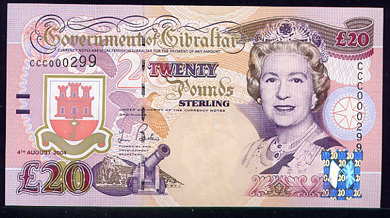
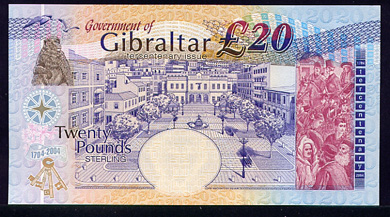
- Currency Name and Code
- Gibraltar Pound (GIP)
- GDP Real Growth Rate
- 6%
Banknotes
Budget & Public Finance
- Fiscal Year
- 1 July - 30 June
Labor, Industry & Trade
- Labor Force by Occupation
- services 60%; industry 40%; agriculture NEGL%
- Industries
- tourism, banking and finance, ship repairing, tobacco
- Agriculture Products
- none
- Export Commodities
- (principally reexports) petroleum 51%, manufactured goods 41%, other 8%
- Export Partners
- Switzerland 28.7%, UK 22.8%, Germany 9.6%, France 5.9%, Hong Kong 5.1%, Spain 5.1%, Turkmenistan 4.4%
- Import Commodities
- fuels, manufactured goods, and foodstuffs
- Import Partners
- Germany 27.5%, Spain 21.9%, UK 12.2%, Italy 8%
Energy
- Oil Production
- 0 bbl/day
- Oil Consumption
- 23,500 bbl/day
- Oil Reserves
- 0 bbl/day
- Natural Gas Production
- 0 cu m
- Natural Gas Consumption
- 0 cu m
- Natural Gas Imports
- 0 cu m
- Natural Gas Exports
- 0 cu m
- Natural Gas Reserves
- 0 cu m
Communications
- Telephone System
- General assessment: Adequate, automatic domestic system and adequate international facilities Domestic: Automatic exchange facilities International: Country code - 350; radiotelephone; microwave radio relay; satellite earth station - 1 Intelsat (Atlantic Ocean)
- Internet Country Code
- .gi
News & Weather
News & Weather
Current Weather
Latest News
Photos: Photos of the Gibraltar Trade Center through the years. See link below ⬇️ 📸 Robert Allen, Detroit Free Press - facebook.com
facebook.com · 4h ago
Is Gibraltar Trade Center 2 coming to Mall of Monroe? What we know - Monroe Evening News
Monroe Evening News · 2d ago
Gibraltar 2? Comeback planned for Michigan's iconic trade center - Detroit Free Press
Detroit Free Press · 1d ago
Signature Litigation hires seasoned litigator from Triay Lawyers to head up Gibraltar office - The Global Legal Post
The Global Legal Post · 1d ago
Is Financial Health Strain Altering The Investment Case For Gibraltar Industries Stock (ROCK)? - simplywall.st
simplywall.st · 2d ago
Gibraltar Trade Center Not Reopening, Despite Taylor And Monroe Mall Rumors Circulating Online - 1077 WRKR
1077 WRKR · 1d ago
A look back at the Gibraltar Trade Center - Yahoo
Yahoo · 1d ago
Gibraltar faces data center developer lawsuit after city passes moratorium - Planet Detroit
Planet Detroit · 18d ago
News via Google News
Climate Overview
Mediterranean with mild winters and warm summers
Videos
Videos
1 curated YouTube videos.
Source: YouTube
Frequently Asked Questions
Frequently Asked Questions
What is the population of Gibraltar?
How do people communicate and greet each other in Gibraltar?
What is the food like in Gibraltar?
What should I know about local customs and religion in Gibraltar?
How important is family and community in Gibraltar?
What festivals and leisure activities are common in Gibraltar?
What is the capital of Gibraltar?
Where is Gibraltar located?
What countries border Gibraltar?
What is the religion of Gibraltar?
What currency is used in Gibraltar?
What language is spoken in Gibraltar?
What is the geography of Gibraltar like?
What is Gibraltar known for?
Last reviewed 2026