
 English
 Español
 中文
中文 हिन्दी
 Français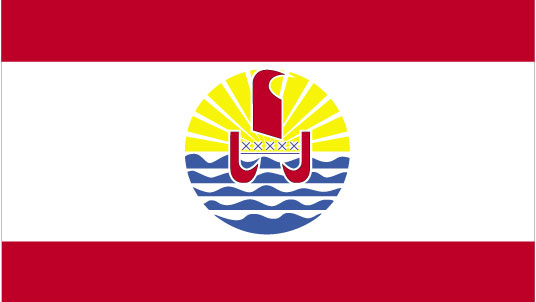
French Polynesia
Polynesie Francaise
Declare Your Relationship to French Polynesia
CountryReports Community
- Studying0
- From French Polynesia0
- French Polynesia heritage0
- Visited0
- Want to visit0
Customs and Culture
Customs and Culture
Cultural Attributes
Kindness, generosity, and hospitality are central values in the islands.

Islands of Aloha and Atolls
Get More Customs and Culture
4 more cultural topics for members
Social Customs & Etiquette · Diet · Family · Dating Customs
Holidays
Bastille Day
7/14Other
Dates of Interest
- July 14th
How do people greet each other in French Polynesia?
Handshakes are customary, and it's polite to shake hands with everyone in a group. Kissing friends on the cheeks reflects the French influence in the islands.
Do
- Shake the hands of everyone in a group
- Kiss friends on the cheeks in keeping with French custom
Don’t
- Don't fail to shake hands with everyone unless the room is very crowded
What are dining customs like in French Polynesia?
Lunch is usually the large, main meal of the day, while dinner is lighter and sometimes leftovers from lunch. People mainly use a knife and fork but eat some traditional foods with their fingers.
Do
- Wash your hands before eating, as many Tahitians eat with their hands
- Expect breakfast of baguettes with butter and jam in urban areas
Good to know
- In rural areas, people provide much of their own food through fishing and gardening taro, breadfruit, sweet potatoes, and manioc
- Chinese food is available at local Chinese-owned general stores and small restaurants in larger villages and urban areas
What etiquette should I know in French Polynesia?
Kindness, generosity, and hospitality are central values in the islands.
Do
- Remove your shoes before entering a house
How should I dress in French Polynesia?
Clothing styles are relaxed in French Polynesia, though Sunday worship calls for your best dress.
Do
- Wear your best dress on Sunday, a day of worship
Good to know
- For men, beachwear is often just from the waist down
What is family and social life like in French Polynesia?
The way of life varies by location: Papeete is a cosmopolitan, Western-influenced city, while remote islands move at a slower pace and rely on subsistence activities.
Good to know
- Descendants of chiefly families and the Tahitian monarchy remain socially prominent
- On remote islands, people rely more heavily on subsistence activities and locally found materials
- Most clothing and goods in Papeete are imported, largely from France
Last updated: 2026-07-12 · Sources: CountryReports
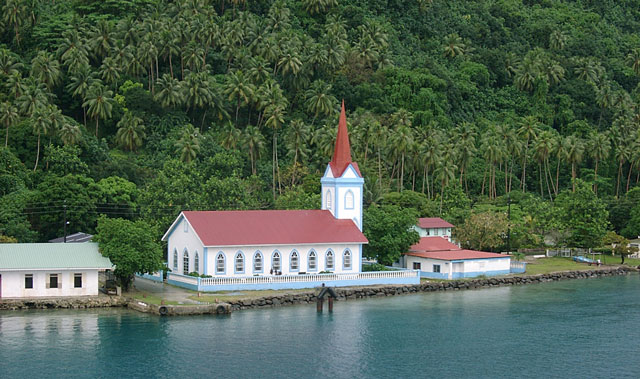
Photos of French Polynesia
Photos of French Polynesia


Travel and Tourism
Travel and Tourism
- Travel Alert Status
- Level 1: Exercise Normal Precautions
- Currency
- Comptoirs Francais du Pacifique franc (XPF)
- Time Difference
- UTC-10 (5 hours behind Washington, DC, during Standard Time)
- Climate
- Tropical, but moderate
- Airports
- 49
Read the full travel guide — health, safety, vaccinations, disease risk, sanitation, and transit details.
View full travel guideRecipes
Recipes
History
History
Historical Eras
Polynesian Settlement
300 BCE – 1767
Skilled Polynesian navigators settled the islands of what is now French Polynesia beginning around 300 CE, developing rich oral traditions, hierarchical chiefdom societies, and distinctive art forms including tapa cloth and intricate tattooing. European contact began incrementally, with Magellan sighting the Tuamotus in 1521 and Dutch explorer Roggeveen glimpsing Bora Bora in 1722, before Englishman Samuel Wallis made the first recorded European landing on Tahiti in 1767.
Early Contact & Pomare Era
1767 – 1842
European contact transformed Tahitian society through the introduction of new goods, diseases, and Christian missionaries, while the Pomare dynasty consolidated political power across the islands. Queen Pomare IV, who began her influential 50-year reign in 1827, presided over a kingdom increasingly pressured by competing French and British colonial interests, navigating a rapidly changing social and religious landscape shaped by the London Missionary Society.
French Protectorate
1842 – 1880
France declared Tahiti and the Marquesas a protectorate in 1842, triggering the Tahitian War of Independence from 1844 to 1847, in which local resistance fighters mounted a determined but ultimately unsuccessful guerrilla campaign against French forces. The capital of Papeete was formally founded in 1843, becoming the administrative center of expanding French influence. Queen Pomare IV died in 1877, and her son Pomare V ceded full sovereignty to France in 1880.
Colonial Period
1880 – 1946
Formally annexed as a French colony, the territory was reorganized under direct metropolitan administration and its diverse island groups progressively brought under centralized French control. The 1918 influenza pandemic devastated the indigenous population, killing roughly 20 percent of Polynesians. During World War II, the islands declared for Free France under de Gaulle, and the United States established a strategic military base on Bora Bora in 1942 as part of Allied Pacific operations.
Overseas Territory
1946 – 1996
Redesignated an Overseas Territory in 1946, French Polynesia received a Territorial Assembly and gradually expanded its administrative autonomy, with France granting partial internal self-governance in 1977. The territory became the site of French nuclear testing, most controversially at Mururoa Atoll, generating sustained international protest and environmental concern. France's resumption of nuclear tests in September 1995 after a three-year moratorium provoked widespread global demonstrations before testing was suspended in January 1996.
Autonomy & Overseas Collectivity
1996 – present
Organic laws in 1996 and 2004 progressively deepened French Polynesia's autonomy, redefining it as an overseas country within the French Republic and creating the elected office of President of French Polynesia. Political life has been marked by significant instability, with seven changes of government following the landmark 2004 statute, as independentist leaders such as Oscar Temaru competed with long-dominant figures like Gaston Flosse. French Polynesia retains its own flag, anthem, and seal while France maintains authority over defense, foreign affairs, and monetary policy.
Overview
French Polynesia was designated an Overseas Territory of
Timeline of Key Events
1521
Magellan sights the Pukapuka Atoll in the Tuamotus.
Magellan sights the Pukapuka Atoll in the Tuamotus .
1722
Dutch explorer Roggeveen sights Bora Bora.
Dutch explorer Roggeveen sights Bora Bora .
1767
English explorer Samuel Wallis lands on Tahiti.
English explorer Samuel Wallis lands on Tahiti .
1827
The 50-year reign of Queen Pomare IV begins.
The 50-year reign of Queen Pomare IV begins.
1842
France declares Tahiti and the Marquesas as a protectorate.
France declares Tahiti and the Marquesas as a protectorate.
1843
The capitol city of Papeete is founded.
The capitol city of Papeete is founded.
1844 – 1847
Tahitian War of Independence.
Tahitian War of Independence.
Read the full history profile — narrative overview, defining eras, and the complete timeline in one place.
View expanded historyInteresting Facts
Interesting Facts
Tahiti is French Polynesia's largest island.
See every fact — trivia, oddities, and curious tidbits gathered from across the country.
View all interesting factsGeography and Environment
Geography and Environment
- Terrain
- mixture of rugged high islands and low islands with reefs
- Climate
- tropical, but moderate
- Natural Hazards
- occasional cyclonic storms in January
- Current Environmental Issues
- NA
Read the full geography and environment profile — terrain, climate, natural resources, hazards, land use, and international agreements.
View full geographyPeople & Demographics
People & Demographics
Religion
Languages Spoken
French (official), Tahitian (official)
- Tahitian
Population
- Population
- 306,279
- Population in Major Urban Areas
- PAPEETE (capital) 137,000
- Nationality Noun
- French Polynesian(s)
- Ethnic Groups
- Polynesian 78%, Chinese 12%, local French 6%, metropolitan French 4%
Education
- Literacy Definition
- Age 14 and over can read and write
Health Information
- Life Expectancy at Birth
- Life expectancy at birth in French Polynesia stands at approximately 77 to 78 years overall, with women typically living longer than men. Female life expectancy hovers around 80 to 81 years, while male life expectancy is generally a few years lower, ranging near 74 to 76 years. These figures place French Polynesia well above the global average and broadly in line with many developed nations, reflecting the territory's relatively high standard of living as an overseas collectivity of France. Several factors contribute to these favorable outcomes. French Polynesia benefits from access to French-funded public healthcare infrastructure, including hospitals on the main island of Tahiti and smaller medical centers distributed across the archipelagos. Residents have access to subsidized healthcare under the territory's social protection system, which helps reduce barriers to medical treatment for both preventive care and chronic disease management. At the same time, the territory faces health challenges that temper its longevity profile. Non-communicable diseases such as type 2 diabetes, cardiovascular disease, and obesity are significant public health concerns. Dietary transitions away from traditional Pacific foods toward processed and imported foods have contributed to rising rates of metabolic conditions, particularly among younger and middle-aged populations. Geographic isolation across the 118 islands also creates disparities in healthcare access, with residents of remote atolls in the Tuamotu or Marquesas archipelagos often having limited access to specialist care compared to those living in Papeete. Life expectancy in French Polynesia has improved steadily over recent decades, consistent with broader regional and global trends driven by advances in maternal care, infectious disease control, and general improvements in nutrition and sanitation. However, sustaining and improving these gains will likely depend on how effectively the territory addresses the growing burden of lifestyle-related diseases and maintains equitable healthcare access across its widely dispersed island communities.
- Infant Mortality Rate
- Infant mortality rate is an important indicator of a territory's overall health infrastructure, access to medical care, and standard of living. French Polynesia, an overseas collectivity of France located in the South Pacific Ocean, has achieved notably low infant mortality rates compared to many other Pacific island nations, largely due to its close administrative and financial ties with France. As of recent estimates, French Polynesia's infant mortality rate stands at approximately 4 to 5 deaths per 1,000 live births. This figure places the territory well below the global average and reflects the relatively advanced healthcare system available to residents across the islands. For context, the global average infant mortality rate hovers around 27 to 28 deaths per 1,000 live births, making French Polynesia's performance considerably better than the worldwide benchmark. The territory benefits from French government subsidies and a healthcare framework modeled on the French metropolitan system. Residents have access to modern hospital facilities, maternal and child health programs, and trained medical professionals. The main island of Tahiti, home to the capital Papeete, hosts the most advanced medical facilities, including the Centre Hospitalier de Polynésie Française, which serves as the primary referral hospital for the entire territory. Despite these achievements, disparities exist between the more urbanized islands near Tahiti and the remote outer islands of the Tuamotu, Marquesas, and Austral archipelagos. Residents of distant atolls and islands may face challenges in accessing timely medical care, particularly for neonatal emergencies that require specialized intervention. Medical evacuation services help bridge some of these gaps, but geographic isolation remains a practical challenge. Improvements in infant mortality over recent decades have been driven by higher rates of prenatal care, increased access to vaccinations, better nutrition support programs, and improved sanitation infrastructure. UNICEF and World Health Organization data consistently reflect a downward trend in infant deaths across the territory over the past several decades, signaling sustained progress in child health outcomes. Continued investment in healthcare access across all island groups remains essential to maintaining and improving upon these gains.
Life Expectancy
- Life Expectancy at Birth
- Life expectancy at birth in French Polynesia stands at approximately 77 to 78 years overall, with women typically living longer than men. Female life expectancy hovers around 80 to 81 years, while male life expectancy is generally a few years lower, ranging near 74 to 76 years. These figures place French Polynesia well above the global average and broadly in line with many developed nations, reflecting the territory's relatively high standard of living as an overseas collectivity of France. Several factors contribute to these favorable outcomes. French Polynesia benefits from access to French-funded public healthcare infrastructure, including hospitals on the main island of Tahiti and smaller medical centers distributed across the archipelagos. Residents have access to subsidized healthcare under the territory's social protection system, which helps reduce barriers to medical treatment for both preventive care and chronic disease management. At the same time, the territory faces health challenges that temper its longevity profile. Non-communicable diseases such as type 2 diabetes, cardiovascular disease, and obesity are significant public health concerns. Dietary transitions away from traditional Pacific foods toward processed and imported foods have contributed to rising rates of metabolic conditions, particularly among younger and middle-aged populations. Geographic isolation across the 118 islands also creates disparities in healthcare access, with residents of remote atolls in the Tuamotu or Marquesas archipelagos often having limited access to specialist care compared to those living in Papeete. Life expectancy in French Polynesia has improved steadily over recent decades, consistent with broader regional and global trends driven by advances in maternal care, infectious disease control, and general improvements in nutrition and sanitation. However, sustaining and improving these gains will likely depend on how effectively the territory addresses the growing burden of lifestyle-related diseases and maintains equitable healthcare access across its widely dispersed island communities.
- Infant Mortality Rate
- Infant mortality rate is an important indicator of a territory's overall health infrastructure, access to medical care, and standard of living. French Polynesia, an overseas collectivity of France located in the South Pacific Ocean, has achieved notably low infant mortality rates compared to many other Pacific island nations, largely due to its close administrative and financial ties with France. As of recent estimates, French Polynesia's infant mortality rate stands at approximately 4 to 5 deaths per 1,000 live births. This figure places the territory well below the global average and reflects the relatively advanced healthcare system available to residents across the islands. For context, the global average infant mortality rate hovers around 27 to 28 deaths per 1,000 live births, making French Polynesia's performance considerably better than the worldwide benchmark. The territory benefits from French government subsidies and a healthcare framework modeled on the French metropolitan system. Residents have access to modern hospital facilities, maternal and child health programs, and trained medical professionals. The main island of Tahiti, home to the capital Papeete, hosts the most advanced medical facilities, including the Centre Hospitalier de Polynésie Française, which serves as the primary referral hospital for the entire territory. Despite these achievements, disparities exist between the more urbanized islands near Tahiti and the remote outer islands of the Tuamotu, Marquesas, and Austral archipelagos. Residents of distant atolls and islands may face challenges in accessing timely medical care, particularly for neonatal emergencies that require specialized intervention. Medical evacuation services help bridge some of these gaps, but geographic isolation remains a practical challenge. Improvements in infant mortality over recent decades have been driven by higher rates of prenatal care, increased access to vaccinations, better nutrition support programs, and improved sanitation infrastructure. UNICEF and World Health Organization data consistently reflect a downward trend in infant deaths across the territory over the past several decades, signaling sustained progress in child health outcomes. Continued investment in healthcare access across all island groups remains essential to maintaining and improving upon these gains.
Read the full people and society profile — demographics, health, education, religion, languages, and notable people.
View full people and societyGovernment & Politics
Government & Politics
Country Identity
- Country Name
- FrenchPolynesia
- Full Country Name
- Territory of French Polynesia
- Local - Long
- Territoire de la Polynesie Francaise
- Local - Short
- Polynesie Francaise
- Former Name
- French Colony of Oceania
Government Structure
- Government Type
- NA
- Legal System
- based on French system
- Executive Branch
- chief of state: President Emmanuel MACRON of France (since 14 May 2017), represented by High Commissioner of the Republic Eric SPITZ (since July 2021) head of government: President of the Government of French Polynesia Moetai BROTHERSON (since 12 May 2023); President of the Territorial Assembly Antony GEROS (since May 2023) cabinet: Council of Ministers; the president of French Polynesia submits a list of members drawn from the Territorial Assembly for approval by the assembly to serve as ministers elections: French president elected by popular vote for a five-year term; high commissioner appointed by the French president on the advice of the French Ministry of Interior; president of the Government of French Polynesia and the president of the Territorial Assembly are elected by the members of the assembly
- Legislative Branch
- Unicameral Assembly of French Polynesia or Assemblée de la Polynésie française (57 seats; members are elected by popular vote using a proportional representation system to serve five-year terms). Elections: Last held on 22 April and 6 May 2018 (next scheduled to be held in 2023). Note: French Polynesia held elections in April–May 2023, with results confirming a shift in the political landscape under the leadership of Moetai Brotherson and the Tavini Huiraatira (pro-independence) party, which won a majority of seats. Election results: In the April–May 2023 elections, Tavini Huiraatira won a decisive majority, securing approximately 38 seats. The Tapura Huiraatira party, which had previously held a majority under Edouard Fritch, was reduced to the opposition. This outcome marked a significant political transition, with Moetai Brotherson becoming President of French Polynesia. Note: French Polynesia elects representatives to the French Parliament in Paris. The territory sends two senators to the French Senate and three deputies to the French National Assembly. The most recent elections to the National Assembly were held in June 2022. French Polynesia also holds the status of an overseas collectivity of France, granting it a degree of internal autonomy while remaining subject to French constitutional law.
- Judicial Branch
- Court of Appeal or Cour d'Appel; Court of the First Instance or Tribunal de Premiere Instance; Court of Administrative Law or Tribunal Administratif
- Suffrage
- 18 years of age; universal
- Constitution
- 28 September 1958 (French Constitution)
- Independence
- none (overseas territory of France)
- National Holiday
- Bastille Day, 14 July (1789)
Capital City
- Capital Name
- Papeete (located on Tahiti)
- Capital - geographic coordinate
- 17 32 S, 149 34 W
- Capital Time Difference
- UTC-10 (5 hours behind Washington, DC, during Standard Time)
The name means "water basket" and refers to the fact that the islanders originally used calabashes enclosed in baskets to fetch water at a spring in the area
Military
Branches: No regular military forces
Read the full government profile — flag symbolism, national anthem, and other national symbols.
View full government detailsEconomy
Economy
Since 1962, when France stationed military personnel in the region, French Polynesia transitioned from a subsistence agricultural economy to one heavily dependent on the French military presence and the tourism sector.
Snapshot
- Currency Name and Code
- CFP Franc (XPF)
- GDP Real Growth Rate
- 1%
News & Weather
News & Weather
Current Weather
Latest News
Obesity rises sharply as French Polynesia faces chronic health challenges - RFI
RFI · 5h ago
Green Lodge Moorea chooses Shiji Daylight PMS to elevate eco-luxury hospitality in French Polynesia - Hospitality Net
Hospitality Net · 3d ago
I cruised around French Polynesia’s most secluded islands - Escape Australia
Escape Australia · 5d ago
French Polynesia's Air Moana plans $5.8mn crowdfunding - ch-aviation
ch-aviation · 3d ago
Raiatea, Leeward Islands, French Polynesia Weather Conditions - Weather Underground
Weather Underground · 4d ago
Runner-up Tahiti finish moves San Clemente surfer into Top-10 - fox5sandiego.com
fox5sandiego.com · 1d ago
Visit Rurutu, French Polynesia, & Watch Humpback Whales - britannica.com
britannica.com · 6d ago
VESSEL REVIEW | Dory 2 – Lifeline freight ferry for inter-island routes in French Polynesia - bairdmaritime.com
bairdmaritime.com · 2d ago
News via Google News
Climate Overview
Tropical, but moderate
Videos
Videos
1 curated YouTube videos.
Source: YouTube
Frequently Asked Questions
Frequently Asked Questions
What is the population of French Polynesia?
How do people greet each other in French Polynesia?
What are dining customs like in French Polynesia?
What etiquette should I know in French Polynesia?
How should I dress in French Polynesia?
What is family and social life like in French Polynesia?
What is the capital of French Polynesia?
Where is French Polynesia located?
What are the ocean and sea borders of French Polynesia?
What religion is practiced in French Polynesia?
What currency is used in French Polynesia?
What languages are spoken in French Polynesia?
What is the geography of French Polynesia like?
What is French Polynesia known for?
Last reviewed 2026