
 English
 Español
 中文
中文 हिन्दी
 Français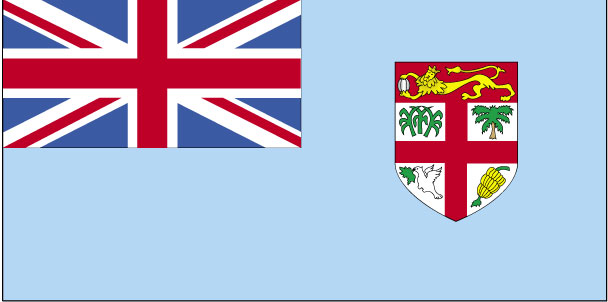
Fiji
Declare Your Relationship to Fiji
CountryReports Community
- Studying17
- From Fiji4
- Fiji heritage2
- Visited7
- Want to visit8
Customs and Culture
Customs and Culture
Cultural Attributes
Fijians are generally relaxed and courteous. They are proud of their traditions and culture.

Islands Where Every Day Begins First
Get More Customs and Culture
5 more cultural topics for members
Social Customs & Etiquette · Diet · Family · Dating Customs · Recreation
Every country, every topic, all activities & recipes
✓ Instant access on this device · ✓ No subscription
Dates of Interest
- Untitled date
How do people greet each other in Fiji?
Fijians are warm and will go out of their way to greet people they meet, commonly using first names.
Do
- Address most people by their first names
- Greet people warmly, even strangers
Good to know
- Relatives may be greeted by their relationship rather than their first name
What are dining customs like in Fiji?
Meals in Fijian villages are often eaten seated cross-legged on a mat-covered floor, with food shared communally; the diet centers on taro, cassava, tropical fruits, seafood and dishes cooked in coconut milk.
Do
- Accept offered refreshments like juice or tea
- Wash your hands from the bowl passed around before and after the meal
- Try traditional foods steamed, boiled, or roasted, and dishes cooked in a lovo (ground oven)
Don’t
- Don't refuse refreshments — it is considered impolite
Good to know
- Spoons and forks are becoming more common in urban areas, though utensils were traditionally not used
- Women and girls usually eat after the men and boys
- Indian cuisine tends to be spicy and curry-based, with roti a daily staple
What etiquette should I know when visiting a home in Fiji?
Visiting is relaxed and often unannounced, but certain courtesies around footwear and posture are important.
Do
- Remove your shoes when entering a house
- Accept the refreshments you are offered
Don’t
- Don't stand higher than those who are sitting — it is impolite
- Don't refuse offered refreshments
Good to know
- The custom of Kerekere means relatives or neighbors may ask for something needed, which is given willingly without expectation of repayment
What should I wear in Fiji?
Dress is generally casual, and Western-style clothing is increasingly common throughout Fiji.
Good to know
- Casual clothing is usually worn
- Native women wear a wraparound dress and native men wear pants and shirts
Are there gestures or physical behaviors to avoid in Fiji?
Fijians are relaxed and courteous, but some physical gestures are considered offensive.
Don’t
- Don't touch someone's head (except a child's) — it is offensive
- Don't stare, as it is considered offensive
- Avoid public displays of affection, even between married couples
What is family life like in Fiji?
The father acts as head of the family, large families are common, and the elderly are often cared for by their own children.
Good to know
- Cooking is often done in a smaller separate structure
- Urban dwellers of any ethnic group often live in Western-style homes
What do people do for recreation in Fiji?
Rugby is the most popular sport, followed closely by soccer, and drinking yaqona (kava) is an important social ritual among men.
Good to know
- Other popular activities include volleyball and swimming
Last updated: 2026-07-12 · Sources: CountryReports
Photos of Fiji
Photos of Fiji


Travel and Tourism
Travel and Tourism
- Travel Alert Status
- Level 1: Exercise Normal Precautions
- Currency
- 2.075
- Time Difference
- UTC+12 (17 hours ahead of Washington, DC, during Standard Time)
- Airports
- 28
Read the full travel guide — health, safety, vaccinations, disease risk, sanitation, and transit details.
View full travel guideRecipes
Recipes
History
History
Historical Eras
Ancient Settlement
1500 BCE – 1800
Melanesian and Polynesian peoples settled the Fijian archipelago approximately 3,500 years ago, establishing complex chieftainship societies with distinct systems of communal land ownership and oral tradition. For millennia these confederacies developed in relative isolation, engaging in inter-island trade and periodic warfare. Dutch explorer Abel Tasman made the first recorded European contact in 1643, followed by Captain James Cook in 1774, though sustained outside engagement remained minimal.
European Contact & Unrest
1800 – 1874
The arrival of sandalwood traders, whalers, and Christian missionaries in the early 19th century dramatically disrupted traditional Fijian society, intensifying rivalries among chiefly confederacies and fueling prolonged inter-island wars, including the eleven-year war beginning in 1845. Ratu Cakobau emerged as the most powerful chief by the 1850s, gaining limited dominance over the western islands, yet persistent unrest and lawlessness among European settlers ultimately persuaded Cakobau and a convention of chiefs to cede the islands unconditionally to Britain in 1874.
British Colonial Era
1874 – 1970
As a British Crown Colony, Fiji was pacified and reorganized under Governor Sir Arthur Gordon, who crucially preserved communal land ownership while introducing Indian indentured laborers beginning in 1879 to work the expanding sugar plantations — a demographic transformation that would define Fijian politics for generations. The capital was relocated from Levuka to Suva in 1882, and Fijian soldiers earned distinction fighting alongside Allied forces in the Solomon Islands campaign during World War II. A 1875 measles epidemic had earlier devastated roughly one-third of the indigenous population, underscoring the severe human costs of colonization.
Independence & Democracy
1970 – 1987
Fiji became a fully sovereign independent nation within the Commonwealth on October 10, 1970, following a constitutional conference in London. Post-independence governance was dominated by the Alliance Party under Prime Minister Ratu Sir Kamisese Mara, who steered a relatively stable multiracial political order through the 1970s and early 1980s. Underlying ethnic tensions between indigenous Fijians and the substantial Indo-Fijian community, however, continued to strain the democratic framework.
Coups & Political Turmoil
1987 – 1999
The April 1987 election victory of an Indo-Fijian-supported coalition under Prime Minister Timoci Bavadra triggered two military coups by Lt. Col. Sitiveni Rabuka, who revoked the constitution, declared a republic, and expelled Fiji from the Commonwealth. A racially discriminatory 1990 constitution reserved legislative majorities for ethnic Fijians, prompting mass Indo-Fijian emigration and significant economic decline. A reformed, more equitable constitution adopted in 1997 restored Commonwealth membership and set the stage for fresh democratic elections.
Modern Fiji
1999 – present
The 1999 elections brought Mahendra Chaudhry of the Fiji Labor Party to power as the country's first Indo-Fijian prime minister, but a civilian-led coup in May 2000 plunged Fiji into renewed instability. Further electoral turbulence followed, including a 2006 military coup led by Commodore Frank Bainimarama, who ruled by decree before overseeing a new constitution in 2013 and elections in 2014 that returned Fiji to parliamentary democracy. The country has since pursued economic development through tourism and sugar exports while continuing to navigate complex questions of ethnic equality and land rights.
Overview
Melanesian and Polynesian peoples settled the Fijian islands some 3,500 years ago. European traders and missionaries arrived in the first half of the 19th century, and the resulting disruption led to increasingly serious wars among the native Fijian confederacies. One Ratu (chief), Cakobau, gained limited control over the western islands by the 1850s, but the continuing unrest led him and a convention of chiefs to cede Fiji unconditionally to the British in 1874.
Every country, every topic, all activities & recipes
✓ Instant access on this device · ✓ No subscription
Timeline of Key Events
1643
Dutch explorer Abel Tasman is the first European to visit the islands.
Dutch explorer Abel Tasman is the first European to visit the islands.
1774
Visited by Captain James Cook of England.
Visited by Captain James Cook of England.
1800
Traders visited to get sandalwood.
Traders visited to get sandalwood.
1844
First Roman Catholic missionaries arrive in Lakeba.
First Roman Catholic missionaries arrive in Lakeba.
1845
The 11 year war
On a June morning the Roko Tui Dreketi, Banuve, was invited aboard Cakobau’s canoe, Ra Marama, where he was to formally accept Cakobau’s offer of peace, but no sooner had he stepped on board when Cakobau split his head with his battle axe. Chief Cakobau gains control of most of western Fiji, while another Christian convert, Ma’afu from Tonga, controls the east.
1868
Cakobau sells Suva - the current capital of Fiji - to an Australian company.
Cakobau sells Suva - the current capital of Fiji - to an Australian company.
1871
European settlers at Levuka island organize a national government .
European settlers at Levuka island organize a national government and name Cakobau king of Fiji following local disorder.
Read the full history profile — narrative overview, defining eras, and the complete timeline in one place.
View expanded historyInteresting Facts
Interesting Facts
The International Date Line crosses the Fiji islands. This imaginary line marks the change from one day to the next. The Date Line swings around to the east of the islands, so that the whole country can be in the same time zone.
During hurricane season (November to April), people prepare for violent storms when they see birds flying inland. In 1985, four cyclones hit Fiji, causing severe damage. Cyclone Kina in 1993 and Hurricane Gavin in 1997 also devastated parts of the country.
Cakobau's finest war club, called “Blood-Bather,” is used as the ceremonial mace in the Fijian Parliament. It has been embossed with silver.
In indigenous Fijian villages, the families of a bride and groom bring food such as taro or yams, and goods such as bolts of cloth or drums of kerosene. At a Hindu wedding, guests present the couple with clothes, dishes, household linens and money.
2 more facts for members
Every country, every topic, all activities & recipes
✓ Instant access on this device · ✓ No subscription
Geography and Environment
Geography and Environment
- Terrain
- mostly mountains of volcanic origin
- Climate
- The wet summer season lasts from December through March. The cooler, drier winter season falls between May and October. Although temperature changes are noticeable, the average number of days of rainfall in Suva varies little from month to month. Humidity during summer is usually high, often reaching 90% and above. Fiji is in the hurricane zone. The last hurricane to hit Suva directly was Cyclone Kina, in January 1991. In March 1997, Cyclone Gavin swept through northern Vanua Levu and the northwestern part of Viti Levu, devastating several outer island-groups. Southeast trade winds blow steadily from March to October, with variable winds during the Southern Hemisphere summer
- Natural Hazards
- cyclonic storms can occur from November to January
- Current Environmental Issues
- deforestation; soil erosion
Read the full geography and environment profile — terrain, climate, natural resources, hazards, land use, and international agreements.
View full geographyPeople & Demographics
People & Demographics
Religion
Languages Spoken
English (official), Fijian, Hindustani
- English
- Fijian
Population
- Population
- 929,766
- Population in Major Urban Areas
- SUVA (capital) 177,000
- Nationality Noun
- Fijian(s)
- Ethnic Groups
- Fijian 51% (predominantly Melanesian with a Polynesian admixture), Indian 44%, European, other Pacific Islanders, overseas Chinese, and other 5% (1998 est.)
Education
- Literacy Definition
- Age 15 and over can read and write
Life Expectancy
- Life Expectancy at Birth
- Life expectancy at birth in Fiji stands at approximately 67 years for the overall population, reflecting a combination of improving healthcare infrastructure alongside persistent challenges related to chronic disease, geographic access to medical services, and socioeconomic disparities. Women in Fiji generally outlive men by several years, with female life expectancy estimated at around 69 to 70 years compared to roughly 65 years for males. This gender gap is consistent with global patterns and reflects differences in lifestyle factors, occupational risks, and healthcare-seeking behavior. Over the past several decades, Fiji has made meaningful strides in extending life expectancy. In the 1960s and 1970s, life expectancy was considerably lower, and improvements in access to clean water, maternal and child health programs, and basic immunization contributed to steady gains through the late twentieth and early twenty-first centuries. However, progress has plateaued in more recent years. Fiji faces a significant and growing burden from non-communicable diseases, which are now the leading cause of premature death in the country. Cardiovascular disease, diabetes, and hypertension are particularly prevalent, driven by dietary shifts toward processed foods, rising obesity rates, and reduced physical activity. These conditions have slowed further improvements in life expectancy and place considerable strain on the national health system. The geographic nature of Fiji, an archipelago of more than 330 islands, creates additional challenges. Residents of outer islands and remote rural areas often have limited access to hospitals and specialized medical care, which can affect health outcomes compared to those living in urban centers like Suva and Lautoka. Fiji's life expectancy figures place it in a middle range when compared to other Pacific Island nations. Countries such as Tonga and Samoa report broadly similar figures, while wealthier Pacific neighbors tend to trend higher. International health organizations and the Fijian government continue to prioritize programs targeting diabetes prevention, cardiovascular health, and maternal care as part of broader efforts to extend healthy life expectancy across all communities in the country.
- Infant Mortality Rate
- Fiji's infant mortality rate has shown meaningful improvement over recent decades, reflecting broader gains in healthcare access, maternal health services, and public health infrastructure across the island nation. As of the most recent available data, Fiji's infant mortality rate stands at approximately 20 to 22 deaths per 1,000 live births, placing it in a moderate range compared to both its Pacific Island neighbors and global averages. This rate represents a significant decline from figures recorded in earlier decades, when limited rural healthcare access and higher rates of preventable disease contributed to greater infant deaths. Key factors behind the improvement include expanded immunization coverage, better prenatal and postnatal care programs, increased access to trained birth attendants, and government investments in rural health clinics. Despite this progress, disparities remain between urban centers like Suva and Nausori and more remote rural or outer island communities. Infants born in areas with limited healthcare infrastructure face higher risks from complications during childbirth, neonatal infections, respiratory illness, and diarrheal diseases. Poverty and food insecurity in certain communities also contribute to undernutrition, which increases vulnerability during the critical first year of life. Neonatal mortality — deaths occurring within the first 28 days of life — accounts for a substantial portion of overall infant deaths in Fiji, a pattern consistent with trends across lower-middle-income countries. Addressing this requires continued focus on skilled birth attendance, neonatal care equipment in hospitals, and community health education for new mothers. The Fijian government, in partnership with international organizations including UNICEF and the World Health Organization, has implemented programs targeting maternal and child health to push these numbers lower. The goal of reducing preventable infant deaths remains a priority within Fiji's national health strategy, and continued investment in both primary care infrastructure and community-level health awareness is expected to drive further reductions in the years ahead.
Read the full people and society profile — demographics, health, education, religion, languages, and notable people.
View full people and societyGovernment & Politics
Government & Politics
Country Identity
- Country Name
- Fiji
- Full Country Name
- Republic of the Fiji Islands
Government Structure
- Government Type
- republic
- Legal System
- based on British system
- Executive Branch
- chief of state: President Ratu Wiliame KATONIVERE (since 12 November 2021) head of government: Prime Minister Sitiveni RABUKA (since 24 December 2022) cabinet: Cabinet appointed by the prime minister from among the members of Parliament and is responsible to Parliament; note - the Great Council of Chiefs, which historically consisted of the highest ranking members of the traditional chief system, was suspended in 2012 and has not been formally reconstituted elections: president elected by Parliament for a three-year term; prime minister appointed by the president and must command majority support in Parliament election results: Ratu Wiliame KATONIVERE elected president by Parliament on 22 October 2021; Sitiveni RABUKA appointed prime minister following the December 2022 general elections, in which his People's Alliance party led a coalition to victory
- Legislative Branch
- Fiji's Parliament is unicameral, consisting of the Parliament of Fiji (55 seats; members directly elected in multi-seat constituencies by open-list proportional representation vote; members serve four-year terms). The previous bicameral structure, which included both a Senate and a House of Representatives, was abolished following the military coup of December 2006. A new constitution adopted in 2013 established the current unicameral system under which elections are conducted on a proportional representation basis, eliminating the ethnic seat reservations that had characterized the earlier legislature. Elections: Parliament — last held on 14 December 2022 (next to be held in 2026). Election results: Parliament — percent of vote by party — FijiFirst 23.4%, Social Democratic Liberal Party (SODELPA) 21.0%, National Federation Party (NFP) 14.5%, People's Alliance 21.4%, People's Alliance coalition partners and others receiving remaining votes; seats by party — People's Alliance 26, FijiFirst 12, NFP 5, SODELPA 5, Social Democratic Liberal Party alliance 3, others 4. The 2022 election resulted in a coalition government led by People's Alliance party leader Sitiveni Rabuka, ending the administration of Frank Bainimarama, who had governed since the 2006 coup.
- Judicial Branch
- Supreme Court (judges are appointed by the president); Court of Appeal; High Court; Magistrates' Courts
- Suffrage
- 21 years of age; universal
- Constitution
- promulgated on 25 July 1990 and amended on 25 July 1997 to allow nonethnic Fijians greater say in government and to make multiparty government mandatory; entered into force 28 July 1998; note - the May 1999 election was the first test of the amended constitution and introduced open voting - not racially prescribed - for the first time at the national level
- Independence
- 10 October 1970 (from UK)
- National Holiday
- Independence Day, second Monday of October (1970)
Capital City
- Capital Name
- Suva (on Viti Levu)
- Capital - geographic coordinate
- 18 08 S, 178 25 E
- Capital Time Difference
- UTC+12 (17 hours ahead of Washington, DC, during Standard Time)
The name means "little hill" in the native Fijian (iTaukei) language and refers to a mound where a temple once stood
Military
Branches: Republic of Fiji Military Forces (RFMF): Land Forces, Naval Forces
Embassy / Diplomatic Mission
U.S. Embassy
158 Princes Road, Suva, Fiji
Telephone: (679) 331-4466
Emergency after-hours telephone: (679) 772-8049
Facsimile: (679) 330-2267
Email: consularsuva@state.gov.
Read the full government profile — flag symbolism, national anthem, and other national symbols.
View full government detailsEconomy
Economy
Fiji, endowed with forest, mineral, and fish resources, is one of the most developed of the Pacific island economies, though it still retains a sizable subsistence sector.
Snapshot
- Currency Name and Code
- Fijian dollars (FJD)
- GDP — official exchange rate
- $1,937,000,000 (USD)
- GDP Real Growth Rate
- 4.6%
Every country, every topic, all activities & recipes
✓ Instant access on this device · ✓ No subscription
News & Weather
News & Weather
Current Weather
Latest News
Is This The Best Flight In Surfing? - SURFER Magazine
SURFER Magazine · 1d ago
Despite Getting Eliminated Early, Jack Robinson Made the Most of His Fiji Vacation - The Inertia
The Inertia · 1d ago
Central Kentucky OB-GYN resident trades hospital scrubs for Fiji beaches on ‘Survivor’ Season 51 - WKYT
WKYT · 20h ago
Central Kentucky OB-GYN resident trades hospital scrubs for Fiji beaches on ‘Survivor’ Season 51 - WKYT
WKYT · 22h ago
Fred Pompermayer Just Dropped a Fiji Gallery That Will Ruin Your Monday - SURFER Magazine
SURFER Magazine · 3d ago
Georgia man deported from Fiji to face $165m crypto Ponzi scheme charges - The Guardian
The Guardian · 37d ago
Fiji declares HIV emergency. One in 60 people now have the virus as drug crisis fuels outbreak - CNN
CNN · 8d ago
Exclusive | RFK Jr. Got Free Flights to Fiji and Greece From a Top Donor - WSJ
WSJ · 5d ago
News via Google News
Videos
Videos
1 curated YouTube videos.
Source: YouTube
Frequently Asked Questions
Frequently Asked Questions
What is the population of Fiji?
What is the capital of Fiji?
Where is Fiji located?
What are Fiji's ocean and sea borders?
What religion is practiced in Fiji?
What is the currency of Fiji?
What languages are spoken in Fiji?
What is the geography of Fiji like?
What is Fiji known for?
Last reviewed 2026