
 English
 Español
 中文
中文 हिन्दी
 Français
Cook Islands
Declare Your Relationship to Cook Islands
CountryReports Community
- Studying3
- From Cook Islands1
- Cook Islands heritage1
- Visited1
- Want to visit5
Customs and Culture
Customs and Culture
Cultural Attributes
The Cook Islands possesses a rich and distinctive Polynesian culture shaped by centuries of tradition, strong community bonds, and a deep connection to the Pacific Ocean. The islands' people, known as Cook Islanders or Māori (not to be confused with New Zealand Māori, though the two groups share ancestral ties), maintain cultural practices that permeate daily life, from language to music, dance, and craft. The Cook Islands Māori language is one of two official languages alongside English and remains widely spoken across the islands. Oral tradition has historically been the primary means of passing down genealogies, legends, and knowledge, a practice that continues to be honored by elders and community leaders. Dance holds a central place in Cook Islands culture. The traditional form known as ura is performed at community celebrations, festivals, and the annual Te Maeva Nui festival, which commemorates the nation's self-governance established on August 4, 1965. This festival brings together performers from all fifteen islands and serves as a major showcase of cultural identity. The rhythmic hip movements and elaborate costumes characteristic of Cook Islands dance distinguish it from other Polynesian traditions. Tivaevae, intricately hand-sewn patchwork quilts, represent another significant cultural art form. Introduced through missionary influence in the nineteenth century, the practice evolved into a deeply local tradition. These quilts are often made collaboratively by groups of women and are presented as gifts at important life events such as weddings and funerals, carrying considerable social and emotional weight. Religion plays an important role in community life, with the majority of Cook Islanders identifying as Christian. The Cook Islands Christian Church, established by London Missionary Society activity in the nineteenth century, remains the largest denomination. Church attendance and community service connected to religious institutions are common practices. Extended family networks, known as the vaka system, structure social organization and responsibilities. Decisions about land, community matters, and cultural events are frequently made collectively, reflecting a broader Pacific value of communal obligation over individual interest.

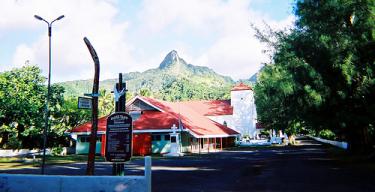
Paradise Woven in Ocean and Song
Get More Customs and Culture
2 more cultural topics for members
Social Customs & Etiquette · Dating Customs
Every country, every topic, all activities & recipes
✓ Instant access on this device · ✓ No subscription
Dates of Interest
- Untitled date
What social customs and community values shape daily life in the Cook Islands?
Cook Islands culture centers on strong community bonds and communal obligation over individual interest, structured through extended family networks called the vaka system. Decisions about land, community matters, and cultural events are frequently made collectively.
Do
- Respect the authority of elders and community leaders who preserve oral tradition
- Recognize the social and emotional weight of tivaevae quilts given at weddings and funerals
Good to know
- The Cook Islands M?ori language is an official language alongside English and is widely spoken
- Cook Islanders are also known as M?ori, sharing ancestral ties with New Zealand M?ori but distinct from them
How is family and community organized in the Cook Islands?
Extended family networks known as the vaka system structure social organization and responsibilities, reflecting a broader Pacific value of communal obligation over individual interest.
Good to know
- Decisions about land, community, and cultural events are often made collectively
What cultural celebrations and arts can travelers experience in the Cook Islands?
Dance holds a central place in the culture, with the traditional ura performed at celebrations and the annual Te Maeva Nui festival, which commemorates self-governance established on August 4, 1965.
Good to know
- Te Maeva Nui brings together performers from all fifteen islands as a major showcase of cultural identity
- Look for tivaevae, intricately hand-sewn patchwork quilts often made collaboratively by groups of women
- Cook Islands dance is distinguished by rhythmic hip movements and elaborate costumes
What should travelers know about religion in the Cook Islands?
Religion plays an important role in community life, with the majority of Cook Islanders identifying as Christian. The Cook Islands Christian Church, established through London Missionary Society activity in the nineteenth century, remains the largest denomination.
Good to know
- Church attendance and community service connected to religious institutions are common practices
Last updated: 2026-07-12 · Sources: CountryReports
Photos of Cook Islands
Photos of Cook Islands


Travel and Tourism
Travel and Tourism
- Currency
- 1.4279
- Time Difference
- UTC-10 (5 hours behind Washington, DC, during Standard Time)
- Airports
- 9
- Recommended Vaccinations
- How important is it to do your research about vaccinations? It might just save your life! Make yourself aware of the different types of vaccinations and which ones you may need to travel to your destination. Schedule an appointment with your doctor at least four to six weeks before you travel to ensure you receive all important shots. Be sure that you and your family are up to date on your routine vaccinations. Which vaccinations you need will depend on a number of factors including your destination, whether you will be spending time in rural areas, the season of the year you are traveling, your age, health status, and previous immunizations.
Read the full travel guide — health, safety, vaccinations, disease risk, sanitation, and transit details.
View full travel guideHistory
History
Historical Eras
Polynesian Settlement
900 – 1821
Migrants from French Polynesia and Samoa settled the fifteen islands from around the 13th century, establishing chiefly societies governed by ariki. Rarotonga became a crucial waypoint on trans-Pacific voyaging routes, with oral tradition crediting its navigators — most famously the 1350 fleet of seven vaka from Avana Harbour — as among the founding ancestors of New Zealand's Māori people.
Missionary Era
1821 – 1888
London Missionary Society representatives arrived in 1821 and rapidly converted influential ariki, transforming the social and legal fabric of the islands. Working alongside chiefs, missionaries drafted legal codes and abolished violent dispute settlement, producing remarkable political stability. European contact accelerated, with Spanish navigator Álvaro de Mendaña making the first recorded European sighting in 1595 and Captain James Cook surveying the islands between 1773 and 1777.
British Protectorate
1888 – 1901
At the petition of leading ariki seeking protection from rival colonial powers, Britain declared a protectorate over the Southern Group in 1888, extending it to the Northern Group islands in the early 1890s. New Zealand, itself a self-governing British colony, funded and effectively controlled the resident consul, who held advisory and legislative veto powers. Tensions between traditional leaders and New Zealand administrators grew, with some ariki ultimately requesting direct British annexation.
New Zealand Administration
1901 – 1965
On 27 September 1900 the New Zealand Parliament approved annexation, and the islands formally became a New Zealand territory in 1901. Colonial administration restructured land tenure, governance, and public services, while significant emigration of Cook Islanders to New Zealand began reshaping island demographics. The period saw gradual moves toward internal self-governance culminating in a United Nations-supervised plebiscite process.
Self-Governance
1965 – present
In 1965 Cook Islanders voted to become a self-governing territory in free association with New Zealand, retaining New Zealand citizenship while managing their own internal affairs. The economy has relied heavily on tourism, remittances, and foreign aid, while persistent emigration of skilled workers and recurring government deficits remain structural challenges. Natural disasters, including four cyclones in rapid succession in 2005, have periodically set back development gains.
Overview
The 15 islands that make up the Cook Islands were settled by migrants
Every country, every topic, all activities & recipes
✓ Instant access on this device · ✓ No subscription
Timeline of Key Events
1596
Spaniard Alvaro de Mendana is the first European to sight the islands.
Spaniard Alvaro de Mendana is the first European to sight the islands.
1773
Captain James Cook explores the islands and names them the Hervey Islands.
Captain James Cook explores the islands and names them the Hervey Islands. Fifty years later they are renamed in his honor.
1888
Cook Islands are proclaimed a British protectorate.
Cook Islands are proclaimed a British protectorate and a single federal parliament is established.
1901
Islands are annexed to New Zealand.
Islands are annexed to New Zealand.
1965
Islands become a self-governing territory in free association with New Zealand.
Islands become a self-governing territory in free association with New Zealand. Albert Henry, leader of the Cook Islands Party, is elected as the territory’s first prime minister.
2005
Four cyclones in as many weeks hit the territory, causing widespread damage.
Four cyclones in as many weeks hit the territory, causing widespread damage.
Read the full history profile — narrative overview, defining eras, and the complete timeline in one place.
View expanded historyInteresting Facts
Interesting Facts
The islands were formerly called the Hervey Islands. Avarua on Rarotonga is the administrative center of the group.
See every fact — trivia, oddities, and curious tidbits gathered from across the country.
View all interesting factsGeography and Environment
Geography and Environment
- Terrain
- low coral atolls in north; volcanic, hilly islands in south
- Climate
- tropical; moderated by trade winds
- Natural Hazards
- typhoons (November to March)
- Current Environmental Issues
- NA
Read the full geography and environment profile — terrain, climate, natural resources, hazards, land use, and international agreements.
View full geographyPeople & Demographics
People & Demographics
Religion
Languages Spoken
English (official), Maori
- English
- Maori
Population
- Population
- 17,011
- Nationality Noun
- Cook Islander(s)
- Ethnic Groups
- Polynesian (full blood) 81.3%, Polynesian and European 7.7%, Polynesian and non-European 7.7%, European 2.4%, other 0.9%
Education
- Literacy Definition
- NA
Life Expectancy
- Life Expectancy at Birth
- Life expectancy at birth in the Cook Islands is relatively high compared to many Pacific island nations, reflecting the country's access to healthcare services, its close ties with New Zealand, and ongoing public health initiatives. Current estimates place overall life expectancy at approximately 76 to 77 years, with women typically outliving men by several years — female life expectancy averaging around 79 years and male life expectancy around 74 years. These figures are notable given the Cook Islands' small, dispersed population spread across 15 islands in the South Pacific. The country benefits significantly from its free association status with New Zealand, which allows Cook Islanders to access New Zealand's healthcare system and provides a pipeline of medical training and resources back to the islands. Rarotonga Hospital serves as the primary referral center for the entire island group, while outer islands rely on smaller health clinics and regular visits from medical teams. Despite these advantages, the Cook Islands faces persistent health challenges that put pressure on longevity outcomes. Noncommunicable diseases — particularly cardiovascular disease, type 2 diabetes, and obesity — are leading causes of illness and premature death. The prevalence of obesity in the Cook Islands is among the highest in the world, a factor strongly linked to shifting dietary patterns, reduced physical activity, and the widespread availability of imported processed foods. Emigration also complicates health statistics for the Cook Islands. A significant portion of the indigenous population lives in New Zealand or Australia, meaning that health data collected locally reflects a smaller, sometimes older or more health-compromised resident population. This demographic reality can affect how life expectancy figures are interpreted and compared internationally. Public health authorities continue to prioritize programs targeting diet, physical activity, and chronic disease management. Regional organizations, including the Pacific Community and the World Health Organization's Western Pacific office, provide ongoing support for health surveillance and capacity building across the islands. Reducing the burden of noncommunicable diseases remains the most significant lever for improving life expectancy outcomes in the coming decades.
- Infant Mortality Rate
- The Cook Islands maintains a relatively low infant mortality rate compared to many Pacific Island nations, reflecting the country's commitment to public health infrastructure and maternal and child care services. The infant mortality rate stands at approximately 9 to 10 deaths per 1,000 live births, a figure that places the Cook Islands in a favorable position regionally, though still above rates seen in many developed nations. Several factors contribute to this outcome. The Cook Islands benefits from a government-funded health system that provides free or heavily subsidized medical care to residents, including prenatal and postnatal services. The main island of Rarotonga hosts the Tupapa Hospital, which serves as the primary medical facility for the country and offers maternal and neonatal care. Outer island communities, however, face greater challenges in accessing timely medical services, which can influence health outcomes for vulnerable newborns. Geographic isolation remains one of the most significant challenges to reducing infant mortality further. Emergency medical evacuations to New Zealand, which handles complex cases beyond the capacity of local facilities, are sometimes necessary, and logistical delays can affect outcomes in critical situations. The country has a close health partnership with New Zealand, and many Cook Islanders hold dual citizenship, allowing them to access New Zealand's healthcare system when needed. The government, in collaboration with international organizations, has worked to improve trained birth attendance, neonatal nutrition programs, and community health education. Breastfeeding promotion and immunization coverage have been key pillars of child health initiatives in recent decades. While progress has been steady, the small population size of the Cook Islands — estimated at fewer than 20,000 people — means that even a handful of infant deaths can cause noticeable statistical fluctuation from year to year. Continued investment in outer island health services and maternal care training remains a priority for sustaining and improving upon current outcomes.
Read the full people and society profile — demographics, health, education, religion, languages, and notable people.
View full people and societyGovernment & Politics
Government & Politics
Country Identity
- Country Name
- CookIslands
- Former Name
- Harvey Islands
Government Structure
- Government Type
- self-governing parliamentary democracy
- Legal System
- based on New Zealand law and English common law
- Executive Branch
- chief of state: King CHARLES III (since 8 September 2022), represented by Sir Tom MARSTERS (since 9 August 2024); New Zealand High Commissioner represents New Zealand interests in the Cook Islands head of government: Prime Minister Mark BROWN (since 1 October 2020); Deputy Prime Minister Teariki HEATHER (since 2024) cabinet: Cabinet chosen by the prime minister; collectively responsible to Parliament elections: none; the monarch is hereditary; the King's representative is appointed by the monarch on the advice of the Cook Islands Government; the New Zealand High Commissioner is appointed by the New Zealand Government; following legislative elections, the leader of the majority party or the leader of the majority coalition usually becomes prime minister
- Legislative Branch
- Unicameral Parliament of the Cook Islands (24 seats; members elected by popular vote to serve four-year terms) Elections: last held on 1 August 2022 (next to be held in 2026) Election results: percent of vote by party - NA%; seats by party - Cook Islands Party (CIP) 12, Democratic Party (Demo) 11, One Cook Islands Movement (OCI) 1 Note: the House of Ariki (a council of hereditary chiefs) advises on matters relating to custom, tradition, and land, and maintains considerable cultural influence, but holds no formal legislative powers
- Judicial Branch
- High Court
- Suffrage
- NA years of age; universal adult
- Constitution
- 4-Aug-65
- Independence
- none (became self-governing in free association with New Zealand on 4 August 1965 and has the right at any time to move to full independence by unilateral action)
- National Holiday
- Constitution Day, first Monday in August (1965)
Capital City
- Capital Name
- Avarua
- Capital - geographic coordinate
- 21 12 S, 159 46 W
- Capital Time Difference
- UTC-10 (5 hours behind Washington, DC, during Standard Time)
Military
Branches: No regular military forces; National Police Department
Read the full government profile — flag symbolism, national anthem, and other national symbols.
View full government detailsEconomy
Economy
Like many other South Pacific island nations, the Cook Islands' economic development is hindered by isolation from foreign markets, the limited size of the domestic market, a lack of natural resources, periodic devastation from natural disasters, and inadequate infrastructure.
Snapshot
- Currency Name and Code
- NZ dollars (NZD)
- GDP Real Growth Rate
- 4.2%
Every country, every topic, all activities & recipes
✓ Instant access on this device · ✓ No subscription
News & Weather
News & Weather
Current Weather
Videos
Videos
2 curated YouTube videos.
Source: YouTube
Source: YouTube
Frequently Asked Questions
Frequently Asked Questions
What is the population of Cook Islands?
What is the capital of the Cook Islands?
Where are the Cook Islands located?
What bodies of water surround the Cook Islands?
What religion is practiced in the Cook Islands?
What currency is used in the Cook Islands?
What languages are spoken in the Cook Islands?
What is the geography of the Cook Islands like?
What is the Cook Islands known for?
Last reviewed 2026