
 English
 Español
 中文
中文 हिन्दी
 Français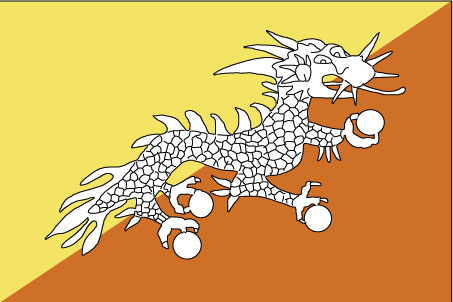
Bhutan
Declare Your Relationship to Bhutan
CountryReports Community
- Studying1
- From Bhutan1
- Bhutan heritage0
- Visited0
- Want to visit1
Customs and Culture
Customs and Culture
Cultural Attributes
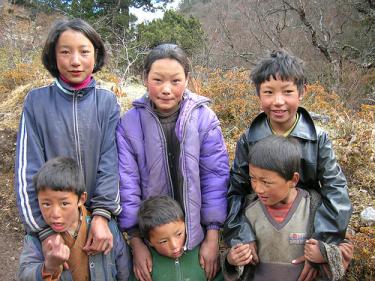
Bhutan has three main ethnic groups, viz. Sharchops, Ngalongs and Lhotsampas. Bhutanese are friendly and hospitable people. Bhutan is known for handicraft items in bronze, silver, and other metals. Sculpting of religious figures is widely practiced and every temple houses large brightly painted and gilded statues of the Buddha and other saints. The Bhutanese way of life is greatly influenced by religion. Every Bhutanese home has a special room used for prayers which are known as chosum.

Land of the Thunder Dragon
Get More Customs and Culture
3 more cultural topics for members
Social Customs & Etiquette · Diet · Dating Customs
Holidays
National Day
12/17Independence
(Ugyen WANGCHUCK became first hereditary king)
Dates of Interest
- December 17th
Ugyen Wangchuck became the first hereditary King of Bhutan on this date in 1907.
How do people greet each other in Bhutan?
Bhutanese use the traditional chaglen greeting (bowing with both palms spread over the knee, ankle and instep depending on the addressee's social and religious status), and handshaking has also become common.
Do
- Offer a handshake at introductions and departures to promote good relations
- Use the traditional chaglen bow, adjusting to the addressee's social and religious status
Good to know
- Doma, or betel nut, is offered as a customary gesture of greeting
What is dining and food like in Bhutan?
The staple diet includes red rice, buckwheat, wheat, maize, pork, beef, chicken, yak meat, cheese and chilies, with meat dishes lavishly spiced with chilies.
Good to know
- Chilies are eaten as a vegetable, not just as a spice
- Emadatse, made of chili, cottage cheese and herbs, is considered the unofficial national dish
- Salted butter tea (suja) is served on all social occasions
- Chang, a local beer, and arra, a distilled spirit, are widely favored
What should I know about etiquette and customs in Bhutan?
Bhutanese are friendly and hospitable, and their way of life is greatly influenced by religion.
Good to know
- Public body contact is very limited in Bhutanese culture
- Every Bhutanese home has a special prayer room known as chosum
How should I dress in Bhutan?
Traditional dress includes the gho for men and the kira for women.
Good to know
- Men wear the gho, a longish robe tied at the waist with a cloth belt called kera
- Women wear the ankle-length kira, made of bright, finely woven fabric with traditional patterns
Last updated: 2026-07-12 · Sources: CountryReports
Photos of Bhutan
Photos of Bhutan


Travel and Tourism
Travel and Tourism
- Travel Alert Status
- Level 1: Exercise Normal Precautions
- Currency
- 68.39
- Time Difference
- UTC+6 (11 hours ahead of Washington, DC, during Standard Time)
- Climate
- Varies; tropical in southern plains; cool winters and hot summers in central valleys; severe winters and cool summers in the Himalayas
- Airports
- 2
- Recommended Vaccinations
- How important is it to do your research about vaccinations? It might just save your life! Make yourself aware of the different types of vaccinations and which ones you may need to travel to your destination. Schedule an appointment with your doctor at least four to six weeks before you travel to ensure you receive all important shots. Be sure that you and your family are up to date on your routine vaccinations. Which vaccinations you need will depend on a number of factors including your destination, whether you will be spending time in rural areas, the season of the year you are traveling, your age, health status, and previous immunizations.
Read the full travel guide — health, safety, vaccinations, disease risk, sanitation, and transit details.
View full travel guideRecipes
Recipes
Kewa Datshi (Potatoes and Cheese)
Side Dish
Main Dish
Hapai Hantue (Buckwheat Dumplings with Bok Choy and Poppy Seed Filling)
Main Dish
Pork Fing (Pork with Bean Threads and Chili Peppers)
Side Dish
Cucumbers with Onion and Cheeses
Side Dish
Ema Datshi (Chili and Cheese)
Side Dish
Kewa Datshi (Potatoes and Cheese)
History
History
Historical Eras
Monyul & Early Kingdoms
500 BCE – 810
The proto-state of Lhomon or Monyul occupied the Himalayan territory of present-day Bhutan from roughly 500 BCE to 600 CE. Following the introduction of Mahayana Buddhism around the 7th century, early Buddhist temples were constructed and small independent monarchies began to emerge. Tibetan religious and cultural influence took firm hold by the 830s–840s, laying the spiritual foundation of Bhutanese civilization.
Tibetan Influence & Sectarian Rivalry
810 – 1616
Independent principalities competed for dominance while rival Buddhist subsects—including Tibetan-Mongol military incursions in the 11th century—shaped Bhutan's fragmented political landscape. The flight of Gelukpa monks from Tibet in the 1360s intensified sectarian competition, particularly between the Drukpa Kagyu and other schools. This prolonged rivalry prevented political unification and kept Bhutan vulnerable to external Tibetan interference.
Theocratic Unification
1616 – 1907
The Drukpa monk Ngawang Namgyal arrived from Tibet in 1616 and, after repelling successive Tibetan invasions between 1629 and 1647, forged a unified theocratic state known as Drukyul—Land of the Thunder Dragon. Following his death in 1651, Bhutan operated under a dual civil-religious administration combining a secular Desi with the spiritual authority of the Je Khenpo. Bhutan expanded its regional influence, bringing Cooch Behar and the Assam Duars under its sway by the 1760s, before British encroachment reshaped its borders.
British Suzerainty
1907 – 1947
Under British influence following the Treaty of Sinchulu (1865), Bhutan's dual theocratic system gave way to an absolute hereditary monarchy in 1907, with the Wangchuck family installed as Druk Gyalpo (Dragon King). A 1910 treaty formalized British direction of Bhutanese foreign affairs in exchange for non-interference in internal matters. The arrangement preserved Bhutan's de facto domestic autonomy while integrating it into Britain's broader South Asian security architecture.
Indian Partnership & Development
1947 – 2008
After Indian independence, a 1949 Indo-Bhutanese accord returned territories annexed by Britain, continued annual subsidies, and assigned India responsibility for Bhutan's defense and foreign relations. Under Jigme Singye Wangchuck, who acceded in 1972, Bhutan pursued cautious modernization while preserving its Gross National Happiness philosophy and Buddhist cultural identity. Tensions emerged over the expulsion of ethnic Nepali Lhotshampas in the early 1990s, leaving roughly 100,000 refugees in UNHCR camps in Nepal.
Constitutional Monarchy
2008 – present
Bhutan transitioned from absolute to constitutional monarchy in 2008 when Jigme Khesar Namgyel Wangchuck was crowned and the country held its first national parliamentary elections under a new written constitution. The document established a bicameral parliament, an independent judiciary, and multi-party democracy while retaining the monarchy as the unifying institution. Bhutan continues to balance development with environmental conservation and cultural preservation, maintaining its distinctive Gross National Happiness framework as a guiding national philosophy.
Overview
THE HIMALAYAN KINGDOMS of Nepal and Bhutan share a
Timeline of Key Events
500 BCE
State of Monyul established; continues to A.D. 600.
630
ca. A.D. 630-640 Early Buddhist temples built.
810
ca. 810 Independent monarchies develop.
830
830s-840s Tibetan Buddhist religion and culture firmly established.
1200
eleventh century Bhutan occupied by Tibetan-Mongol military forces.
1360
1360s Gelukpa sect monks flee to Bhutan from Tibet.
1616
Drukpa monk Ngawang Namgyal arrives from Tibet, seeking freedom from Dalai Lama.
Read the full history profile — narrative overview, defining eras, and the complete timeline in one place.
View expanded historyInteresting Facts
Interesting Facts
One of the most popular figures in Bhutanese history was Drukpa Kunley (1455-1529). Known as the “divine madman” because of his shocking behavior, Drukpa Kunley was an eccentric person. An aristocrat form the great Gya family, he refused to take his monastic vows and instead wandered the country teaching Buddhism through songs. It is difficult to attribute historical significance to DK, although every Bhutanese will place him among the most important national historical characters.
Bhutanese exchange presents as a form of etiquette. Those receiving a gift do not open it until they are alone. To do otherwise would be more than bad manners, it would imply that the recipient wants more of the same. Gifts between equals are always reciprocated. However, when a gift is of significant value and comes from a person of high status, it is reciprocated with loyalty and service rather than with a gift. Cloth is highly valued in Bhutan. Traditional gifts at funerals and other occasions are pieces of cloth, given in uneven numbers. The more cloth given, the higher the status of the giver. Money put in an envelope may be used as a substitute, along with the obligatory white scarf. The symbolic value of the scarf is of vital importance when visiting dzongs, monasteries, or taking part in official ceremonies. The act of giving a white scarf speaks louder than words and is a must for every Bhutanese at any important event. These scarves are recycled until they show signs of wear and tear.
Titles: Any Bhutanese of high status is addressed by his or her title, followed by first name or both names. Dasho refers to a male member of the royal family, to those who have been honored by the king with the red scarf, and by polite extension to senior government officials. Ashi is used with a femal member of the royal family. Lyonpo is reserved for ministers. Lopon is used when speaking to a senior monk. Rimpoche is used when addressing a reincarnated lama; and Anim when speaking to a nun. Aap is used when speaking to a man (equal) Busu for a boy; Am is for an older woman; and Bum for a girl Aapa, Ama, Alou, Bumo, are used respectively for men, women, boys, and girls of unknown name, for instance, restaurant staff.
Bhutanese consider a clear “no” to be too blunt for good manners. Thus, they have perfected various ways of saying yes, which vary from full agreement, through “I’m not sure,” to the full meaning of no, which is likely to be expressed with nothing stronger than “perhaps.”
See every fact — trivia, oddities, and curious tidbits gathered from across the country.
View all interesting factsGeography and Environment
Geography and Environment
- Terrain
- mostly mountainous with some fertile valleys and savanna
- Climate
- varies; tropical in southern plains; cool winters and hot summers in central valleys; severe winters and cool summers in Himalayas
- Natural Hazards
- violent storms from the Himalayas are the source of the country's name which translates as Land of the Thunder Dragon; frequent landslides during the rainy season
- Current Environmental Issues
- soil erosion; limited access to potable water
Read the full geography and environment profile — terrain, climate, natural resources, hazards, land use, and international agreements.
View full geographyPeople & Demographics
People & Demographics
Religion
Languages Spoken
Dzongkha (official), Bhotes speak various Tibetan dialects, Nepalese speak various Nepalese dialects
- nepali
Population
- Population
- 787,424
- Population in Major Urban Areas
- THIMPHU (capital) 99,000
- Nationality Noun
- Bhutanese (singular and plural)
- Ethnic Groups
- Bhote 50%, ethnic Nepalese 35% (includes Lhotsampas - one of several Nepalese ethnic groups), indigenous or migrant tribes 15%
Education
- Literacy Definition
- Age 15 and over can read and write
Health Information
- Life Expectancy at Birth
- Life expectancy at birth in Bhutan has undergone a remarkable transformation over the past several decades, reflecting the country's significant investments in public health infrastructure and its unique development philosophy centered on Gross National Happiness. As of the most recently available data, Bhutan's average life expectancy at birth stands at approximately 72 to 74 years, with women generally living slightly longer than men — a pattern consistent with global trends. This figure represents a dramatic improvement from the early 1960s, when life expectancy hovered around just 32 to 34 years, making the increase one of the most substantial gains recorded among Asian nations over a comparable period. Several factors have driven this improvement. Bhutan expanded free healthcare access to all citizens, building a network of hospitals, basic health units, and outreach clinics across its mountainous terrain. The government has prioritized maternal and child health, leading to sharp reductions in infant and under-five mortality rates. Immunization programs, improved access to clean water and sanitation, and campaigns targeting communicable diseases such as tuberculosis and malaria have all contributed meaningfully to longer, healthier lives. The country still faces certain health challenges that temper further gains. Non-communicable diseases, including cardiovascular disease, diabetes, and cancers, are increasingly prevalent as Bhutan undergoes economic development and lifestyle changes associated with urbanization. Mental health, particularly given the stress of rapid modernization in a traditionally isolated society, is also an emerging area of concern. Geographically, there are disparities in health outcomes between urban centers like Thimphu and Phuentsholing and the more remote eastern and northern districts, where access to medical facilities remains limited due to difficult terrain and infrastructure constraints. Despite these challenges, Bhutan's progress on life expectancy is frequently cited as evidence that a nation need not prioritize economic growth above all else to achieve meaningful gains in population well-being. Its health outcomes compare favorably with many countries at similar or higher income levels, underscoring the effectiveness of the government's long-term commitment to accessible public healthcare.
- Major Infectious Diseases — degree of risk
- High
- Infant Mortality Rate
- Bhutan has made remarkable progress in reducing infant mortality over the past several decades, reflecting the country's sustained investment in public health infrastructure and maternal care services. As of the most recent available data, Bhutan's infant mortality rate stands at approximately 24 to 27 deaths per 1,000 live births, a dramatic improvement from rates exceeding 100 per 1,000 live births recorded in the 1980s. This decline is largely attributed to the expansion of Bhutan's free public healthcare system, which has extended basic medical services to even remote and mountainous communities. Increased access to skilled birth attendants, antenatal care, and postnatal checkups has played a central role in keeping newborn deaths lower than in many comparable low-income and lower-middle-income nations. The government's policy of free healthcare for all citizens, enshrined as a constitutional right, has been particularly influential in improving outcomes for vulnerable infants. Immunization programs have also contributed significantly to this progress. Bhutan maintains high vaccination coverage rates for diseases such as diphtheria, pertussis, tetanus, measles, and pneumococcal infections, all of which are leading causes of infant death in developing nations. UNICEF and the World Health Organization have supported several of these immunization initiatives in collaboration with Bhutan's Ministry of Health. Despite these gains, challenges remain. Geographic barriers continue to complicate healthcare delivery in rural and high-altitude areas, where mothers may face limited access to emergency obstetric care. Neonatal conditions, including birth asphyxia, sepsis, and complications from preterm birth, account for a significant share of remaining infant deaths. Bhutan's infant mortality rate, while still higher than those of developed nations — which commonly fall below 5 deaths per 1,000 live births — compares favorably within the South Asian region. The country's continued commitment to Gross National Happiness as a guiding development philosophy places strong emphasis on the health and well-being of its youngest citizens, suggesting that further reductions in infant mortality remain a national priority.
Life Expectancy
- Life Expectancy at Birth
- Life expectancy at birth in Bhutan has undergone a remarkable transformation over the past several decades, reflecting the country's significant investments in public health infrastructure and its unique development philosophy centered on Gross National Happiness. As of the most recently available data, Bhutan's average life expectancy at birth stands at approximately 72 to 74 years, with women generally living slightly longer than men — a pattern consistent with global trends. This figure represents a dramatic improvement from the early 1960s, when life expectancy hovered around just 32 to 34 years, making the increase one of the most substantial gains recorded among Asian nations over a comparable period. Several factors have driven this improvement. Bhutan expanded free healthcare access to all citizens, building a network of hospitals, basic health units, and outreach clinics across its mountainous terrain. The government has prioritized maternal and child health, leading to sharp reductions in infant and under-five mortality rates. Immunization programs, improved access to clean water and sanitation, and campaigns targeting communicable diseases such as tuberculosis and malaria have all contributed meaningfully to longer, healthier lives. The country still faces certain health challenges that temper further gains. Non-communicable diseases, including cardiovascular disease, diabetes, and cancers, are increasingly prevalent as Bhutan undergoes economic development and lifestyle changes associated with urbanization. Mental health, particularly given the stress of rapid modernization in a traditionally isolated society, is also an emerging area of concern. Geographically, there are disparities in health outcomes between urban centers like Thimphu and Phuentsholing and the more remote eastern and northern districts, where access to medical facilities remains limited due to difficult terrain and infrastructure constraints. Despite these challenges, Bhutan's progress on life expectancy is frequently cited as evidence that a nation need not prioritize economic growth above all else to achieve meaningful gains in population well-being. Its health outcomes compare favorably with many countries at similar or higher income levels, underscoring the effectiveness of the government's long-term commitment to accessible public healthcare.
- Infant Mortality Rate
- Bhutan has made remarkable progress in reducing infant mortality over the past several decades, reflecting the country's sustained investment in public health infrastructure and maternal care services. As of the most recent available data, Bhutan's infant mortality rate stands at approximately 24 to 27 deaths per 1,000 live births, a dramatic improvement from rates exceeding 100 per 1,000 live births recorded in the 1980s. This decline is largely attributed to the expansion of Bhutan's free public healthcare system, which has extended basic medical services to even remote and mountainous communities. Increased access to skilled birth attendants, antenatal care, and postnatal checkups has played a central role in keeping newborn deaths lower than in many comparable low-income and lower-middle-income nations. The government's policy of free healthcare for all citizens, enshrined as a constitutional right, has been particularly influential in improving outcomes for vulnerable infants. Immunization programs have also contributed significantly to this progress. Bhutan maintains high vaccination coverage rates for diseases such as diphtheria, pertussis, tetanus, measles, and pneumococcal infections, all of which are leading causes of infant death in developing nations. UNICEF and the World Health Organization have supported several of these immunization initiatives in collaboration with Bhutan's Ministry of Health. Despite these gains, challenges remain. Geographic barriers continue to complicate healthcare delivery in rural and high-altitude areas, where mothers may face limited access to emergency obstetric care. Neonatal conditions, including birth asphyxia, sepsis, and complications from preterm birth, account for a significant share of remaining infant deaths. Bhutan's infant mortality rate, while still higher than those of developed nations — which commonly fall below 5 deaths per 1,000 live births — compares favorably within the South Asian region. The country's continued commitment to Gross National Happiness as a guiding development philosophy places strong emphasis on the health and well-being of its youngest citizens, suggesting that further reductions in infant mortality remain a national priority.
Read the full people and society profile — demographics, health, education, religion, languages, and notable people.
View full people and societyGovernment & Politics
Government & Politics
Country Identity
- Country Name
- Bhutan
- Full Country Name
- Kingdom of Bhutan
Government Structure
- Government Type
- monarchy; special treaty relationship with India
- Legal System
- based on Indian law and English common law; has not accepted compulsory ICJ jurisdiction
- Executive Branch
- chief of state: King Jigme Khesar Namgyel WANGCHUCK (since 9 November 2008 coronation; acceded to the throne 15 December 2006 following the abdication of his father) head of government: Prime Minister Tshering TOBGAY (since 28 January 2024, serving his second term) cabinet: Council of Ministers (Lhengye Shungtsog) nominated by the monarch and approved by the National Assembly; members serve fixed five-year terms; a Royal Advisory Council (Lodoi Tsokde) also advises the throne, with members nominated by the monarch elections: the monarch is hereditary; Bhutan transitioned from an absolute to a constitutional monarchy in 2008, with the adoption of a formal constitution that established a parliamentary democracy; the Prime Minister is the leader of the party that wins the majority of seats in the National Assembly through direct popular elections held every five years; the most recent parliamentary elections were held in January 2024
- Legislative Branch
- Bhutan transitioned from a unicameral to a bicameral Parliament following its shift to a constitutional monarchy in 2008. The Parliament now consists of two chambers: the National Assembly (lower house) and the National Council (upper house). The National Assembly has 47 seats, with members elected by proportional representation to serve five-year terms. The National Council has 25 seats, comprising 20 members elected from each of Bhutan's 20 districts and 5 members appointed by the monarch; members also serve five-year terms. Bhutan's first parliamentary elections under the new constitutional framework were held in 2008, marking a historic democratic transition. Subsequent elections have been held on a five-year cycle, with the most recent National Assembly elections held in January 2024, in which the People's Democratic Party won a majority of seats.
- Judicial Branch
- Supreme Court of Appeal (the monarch); High Court (judges appointed by the monarch)
- Suffrage
- each family has one vote in village-level elections; note - in late 2003 Bhutan's legislature passed a new election law, though no elections have been held
- Constitution
- no written constitution or bill of rights; note - in 2001 the King commissioned the drafting of a constitution, which is to become effective in 2005
- Independence
- 8 August 1949 (from India)
- National Holiday
- National Day (Ugyen WANGCHUCK became first hereditary king), 17 December (1907)
Capital City
- Capital Name
- Thimphu
- Capital - geographic coordinate
- 27 28 N, 89 38 E
- Capital Time Difference
- UTC+6 (11 hours ahead of Washington, DC, during Standard Time)
the origins of the name are unclear; the traditional explanation, dating to the 14th century, is that thim means "dissolve" and phu denotes "high ground" to express the meaning of "dissolving high ground," in reference to a local deity that dissolved before a traveler's eyes, becoming a part of the rock on which the present city stands
Military
Branches: Royal Bhutan Army (includes Royal Bodyguard and Royal Bhutan Police)
Embassy / Diplomatic Mission
There is no U.S. Embassy or Consulate in Bhutan. Although no formal diplomatic relations exist between the United States and Bhutan, engagement is maintained through the U.S. Embassy in New Delhi, India. Updated information on travel and security in Bhutan may be obtained at the U.S. Embassy in New Delhi. The U.S. Embassy in New Delhi is located on Shanti Path, Chanakya Puri, New Delhi 110 021, India, telephone (91)(11) 2419-8000, fax (91)(11) 2419-8407. In the case of an emergency involving a U.S. citizen, please call the 24-hour operator at (91)(11) 2419-8000 and ask for American Citizen Services.
Read the full government profile — flag symbolism, national anthem, and other national symbols.
View full government detailsEconomy
Economy
Bhutan's economy, though still one of the smallest in the world, has transitioned from least-developed country status and is on track to formally graduate from the UN's LDC category.
Snapshot
- Currency Name and Code
- Bhutanese Ngultrum (BTN)
- GDP Real Growth Rate
- 5%
News & Weather
News & Weather
Current Weather
Latest News
Asset Manager 3iQ To Manage Bhutan's Bitcoin Reserves - Bitcoin Magazine
Bitcoin Magazine · 19h ago
When Small States Practice Buddhist Diplomacy - The Diplomat – Asia-Pacific
The Diplomat – Asia-Pacific · 11h ago
A Mother-Daughter Healing Journey Around Bhutan - Prestige Online - Singapore
Prestige Online - Singapore · 18h ago
Bhutan's GMC puts part of its bitcoin treasury to work after 10,000 BTC pledge - CoinDesk
CoinDesk · 1d ago
Inside the Last Country on Earth to Legalize Television - PBS
PBS · 14d ago
In the Field with Yauheniya Shershunovich: Measuring What Matters, from Bhutan to the World - UNU | United Nations University
UNU | United Nations University · 5d ago
Bhutan is refusing India's new E20 fuel and demanding plain petrol instead, for a reason tied to its mountains - Vozpopuli
Vozpopuli · 4d ago
Bhutan to select Eurovision Song Contest Asia act on August 11 - ESCXTRA.com -
ESCXTRA.com - · 1d ago
News via Google News
Climate Overview
Varies; tropical in southern plains; cool winters and hot summers in central valleys; severe winters and cool summers in the Himalayas
Videos
Videos
1 curated YouTube videos.
Source: YouTube
Frequently Asked Questions
Frequently Asked Questions
What is the population of Bhutan?
How do people greet each other in Bhutan?
What is dining and food like in Bhutan?
What should I know about etiquette and customs in Bhutan?
How should I dress in Bhutan?
What is the capital of Bhutan?
Where is Bhutan located?
What countries border Bhutan?
What is the predominant religion in Bhutan?
What is the currency of Bhutan?
What language is spoken in Bhutan?
What is Bhutan known for?
Last reviewed 2026