
 English
 Español
 中文
中文 हिन्दी
 Français
Bangladesh
Declare Your Relationship to Bangladesh
CountryReports Community
- Studying19
- From Bangladesh3
- Bangladesh heritage10
- Visited3
- Want to visit2
Customs and Culture
Customs and Culture
Cultural Attributes
Society is male-dominated. Social classes play an integral but diminishing role in Bangladesh. Bangladeshis are proud of their artistic tradition, which is much older than their young country.

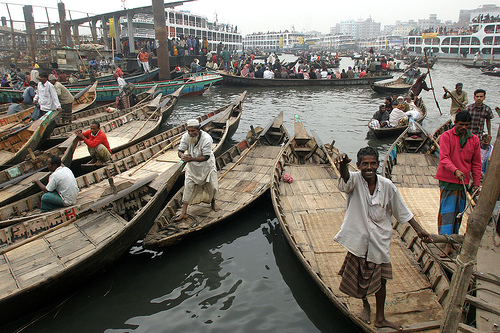
River of Resilience
Get More Customs and Culture
6 more cultural topics for members
Social Customs & Etiquette · Diet · Family · Dating Customs · Recreation · Student Life
Every country, every topic, all activities & recipes
✓ Instant access on this device · ✓ No subscription
Holidays
Independence Day
3/26Independence Day
26 March 1971 is the date of independence from West Pakistan, 16 December 1971 is Victory Day and commemorates the official creation of the state of Bangladesh
How do people greet each other in Bangladesh?
Bangladeshis attach respectful suffixes to names and factor in age when addressing others; they will shake a Western man's hand, but when meeting a woman of either nationality they simply nod during the introduction.
Do
- Use respectful suffixes with people's names
- Address people according to their age
- Use "brother" or "sister" for friends as well as family
Don’t
- Don't show affection to the opposite sex in public
- Don't offer a handshake when meeting a woman; a nod is expected
What are the dining customs in Bangladesh?
Meals center on rice with spicy, often shu'ra-marinated dishes, and food is eaten with the right hand rather than knives and forks at home.
Do
- Eat with your right hand
- Take your plate to the main dish to serve yourself
- Use a spoon for eating sweets
Don’t
- Don't transfer food from your plate to another person's plate, even a spouse's
- Don't expect food to be passed around the table
Good to know
- Rice is the staple and spicy food is preferred
- Masoor Daal is a very common dish; Rasguallas is a favorite holiday dessert
- Wash your right hand after each meal
What etiquette should visitors know in Bangladesh?
A calm, serious expression signals maturity, so unsmiling faces are not unfriendly; friendships are valued highly and people rarely say no to invitations.
Do
- Understand that not smiling in public isn't rudeness
- Try to avoid being the first or last to arrive at events
Don’t
- Don't expect thanks to be offered for a favor
- Don't take a vague "I'll try to attend" as a firm commitment
Good to know
- Gifts aren't expected of guests, but dinner invitations are often reciprocated
- Bangladeshis visit friends and family frequently
How should I dress in Bangladesh?
Dress is modest: adults do not wear shorts and women do not usually wear pants.
Don’t
- Adults shouldn't wear shorts
- Women usually shouldn't wear pants
Good to know
- In rural areas men wear a lungi (a wrapped cotton cloth) with a vest or shirt
What gestures are polite or rude in Bangladesh?
Eye contact shows sincerity and pointing with the chin is polite, while beckoning with the index finger is very rude.
Do
- Maintain eye contact to show sincerity
- Point with your chin
- Remove your shoes before entering a mosque
Don’t
- Don't beckon with your index finger
- Don't let your foot touch books or reading materials
What is family life like in Bangladesh?
Family needs come first, and with few nursing homes and no government retirement program, children—especially sons—are expected to care for elderly parents.
Good to know
- Grandparents often help with childcare while parents work
- Extended families often share a dwelling, though nuclear families are rising among the young
- Society is male-dominated and the group is valued over the individual
What sports and games are popular in Bangladesh?
Kabaddi is the national sport, a two-team contest where a chanting 'raider' tries to tag opponents and return in one breath; children also play tag-style games like Golla chut and Dari a bandha.
Good to know
- Kabaddi teams have 12 players (7 on court, 5 in reserve) and play two 20-minute halves
- A raider must chant 'kabaddi' and return to his court in one breath
- Golla chut is a team tag game freeing a 'prisoner' from a circle called the golla
- Dari a bandha is like Golla chut but played on a badminton court without a circle
Last updated: 2026-07-12 · Sources: CountryReports
Photos of Bangladesh
Photos of Bangladesh


Travel and Tourism
Travel and Tourism
- Travel Alert Status
- Level 2: Exercise Increased Caution
- Currency
- 78.5
- Time Difference
- UTC+6 (11 hours ahead of Washington, DC, during Standard Time)
- Airports
- 16
- Recommended Vaccinations
- How important is it to do your research about vaccinations? It might just save your life! Make yourself aware of the different types of vaccinations and which ones you may need to travel to your destination. Schedule an appointment with your doctor at least four to six weeks before you travel to ensure you receive all important shots. Be sure that you and your family are up to date on your routine vaccinations. Which vaccinations you need will depend on a number of factors including your destination, whether you will be spending time in rural areas, the season of the year you are traveling, your age, health status, and previous immunizations.
Read the full travel guide — health, safety, vaccinations, disease risk, sanitation, and transit details.
View full travel guideRecipes
Recipes
History
History
Historical Eras
Ancient Bengal
1000 BCE – 1202
Early settlement of the Bengal delta gave rise to successive imperial formations, including the Mauryan and Gupta empires, which spread Buddhism and classical Hindu culture across the region. The Pala Dynasty (750–1150) became a major Buddhist power, patronizing art and scholarship, before the Hindu Sena Dynasty briefly succeeded them. This era established the deep cultural and linguistic roots of Bengali civilization.
Sultanate & Medieval
1202 – 1576
Turkish forces defeated the Sena Dynasty in 1202, inaugurating Islamic rule in Bengal and integrating the region into the Delhi Sultanate. Bengal periodically asserted independence, achieving it formally in 1341 under local sultans who fostered a syncretic Bengali-Islamic culture. This period saw the widespread conversion of lower-caste Hindus to Islam, laying the demographic foundation of modern Bangladesh.
Mughal Period
1576 – 1757
Emperor Akbar conquered Bengal in 1576, incorporating it as one of the Mughal Empire's wealthiest provinces, renowned for its muslin trade and river commerce. Dhaka rose to prominence as a provincial capital and major urban center, marked by notable monuments including mosques and caravanserais. Mughal rule blended Persian administrative traditions with Bengali culture, producing a distinctive regional identity.
British Colonial Rule
1757 – 1947
The British East India Company's victory at the Battle of Plassey in 1757 effectively ended Mughal authority in Bengal, initiating nearly two centuries of colonial administration. Bengal was the administrative heartland of British India, experiencing both the 1905 partition of Bengal and devastating famines, including the catastrophic Bengal Famine of 1943 that killed an estimated three million people. Rising nationalist and Muslim League movements ultimately contributed to the 1947 partition of India.
East Pakistan
1947 – 1971
The partition of British India created Pakistan as a Muslim state, with Bengali-speaking East Pakistan separated from West Pakistan by 1,600 kilometers of Indian territory. Cultural and economic grievances intensified as West Pakistan dominated political power and attempted to impose Urdu as the sole national language, sparking the Bengali Language Movement of 1952. Growing demands for autonomy, championed by Sheikh Mujibur Rahman and the Awami League, culminated in the brutal crackdown of March 1971 and the subsequent Liberation War.
Independent Bangladesh
1971 – present
Bangladesh declared independence on March 26, 1971, and after nine months of armed struggle supported by India, achieved liberation on December 16, 1971, at a cost of enormous civilian casualties. The early years were marked by the assassination of founding leader Sheikh Mujibur Rahman in 1975, followed by prolonged military and authoritarian rule under Ziaur Rahman and Hussain Muhammad Ershad. Since the restoration of parliamentary democracy in 1991, Bangladesh has made notable gains in poverty reduction, garment exports, and social development despite persistent political instability.
Overview
Detail of the Seven Dome Mosque in Dhaka,
Every country, every topic, all activities & recipes
✓ Instant access on this device · ✓ No subscription
Timeline of Key Events
1000 BCE
Settlement of Bangladesh
Settlement of Bangladesh Bengal (see Glossary) by Dravidian-speaking peoples.
550 BCE – 486 BCE
Founding of Buddhism
Life of Siddartha Gautama--the Buddha; founding of Buddhism.
320 BCE – 180 BCE
Mauryan Empire
Mauryan Empire; reign of Asoka (273-232 B.C.); spread of Buddhism.
319 – 540
Gupta Empire; Classical Age in northern India.
Gupta Empire; Classical Age in northern India.
606 – 647
North Indian empire of Harsha
North Indian empire of Harsha.
750 – 1150
Pala Dynasty
Pala Dynasty.
1001 – 1030
Turkish armies led by Mahmud of Ghazni raid into Indian subcontinent.
Turkish armies led by Mahmud of Ghazni raid into Indian subcontinent.
Read the full history profile — narrative overview, defining eras, and the complete timeline in one place.
View expanded historyInteresting Facts
Interesting Facts
When a child loses a tooth they throw their tooth in a mouse or rat hole and hope the mice will give them back strong white teeth like theirs. They usually get a present also.
The world's deadliest cyclone was in Nov. 12 1970. There were an estimated 200,000 deaths.
Bangladesh has archeological sites of cultures dating back more than 2000 years.
Most Bangladeshi women wear a sari, a colourful five-metre length of fabric they drape into a flowing robe. The sari goes over a petticoat and short blouse. Some choose the salwar kameez, a long tunic worn over loose trousers.
2 more facts for members
Every country, every topic, all activities & recipes
✓ Instant access on this device · ✓ No subscription
Geography and Environment
Geography and Environment
- Terrain
- mostly flat alluvial plain; hilly in southeast
- Climate
- The climate of Bangladesh ranges from subtropical to tropical. The humidity remains high all year and reaches between 90%–95% from June to September. Bangladesh has three main seasons. The mild (70s [ºF]) or cold season, from mid-October to the end of February, is characterized by sunny skies, drier weather, and cool (high 50s [ºF]) evenings. During the hot season, from March until the end of May, there is quite a change. The early part is pleasant (75ºF), but as the monsoon approaches, hot (95ºF) temperatures and high humidity make life difficult. The monsoon season lasts from June to October. At the beginning of the monsoon, the continuous rains cool the atmosphere. Temperatures are milder (85ºF to 90ºF), but the humidity can be oppressive. Tropical cyclones emerge from the Bay of Bengal with high winds and tidal waves on the average of one major cyclone every 3 years. There are two cyclone seasons, one just before the monsoon (May to June) and one just after the monsoon (October to November). Damage generally is limited to the southern finger of the country (east of Chittagong and Cox’s Bazaar). During the monsoon season in a normal year, about 30% of the country is under water. Some years, however, floods cover 70% of the country. At some times during the year, up to 70% of the country is under water. Annual flooding is a way of life but often the flooding is not due to rainfall but caused by water coming from across the borders via the Ganges, Meghna, and the Brahmaputra Rivers.
- Natural Hazards
- droughts, cyclones; much of the country routinely inundated during the summer monsoon season
- Current Environmental Issues
- many people are landless and forced to live on and cultivate flood-prone land; water-borne diseases prevalent in surface water; water pollution, especially of fishing areas, results from the use of commercial pesticides; ground water contaminated by naturally occurring arsenic; intermittent water shortages because of falling water tables in the northern and central parts of the country; soil degradation and erosion; deforestation; severe overpopulation
Read the full geography and environment profile — terrain, climate, natural resources, hazards, land use, and international agreements.
View full geographyPeople & Demographics
People & Demographics
Religion
Languages Spoken
Bangla (official, also known as Bengali), English
- Bangla
Population
- Population
- 173,562,364
- Population in Major Urban Areas
- DHAKA (capital) 15.391 million; Chittagong 5.239 million; Khulna 1.781 million; Rajshahi 932,000
- Nationality Noun
- Bangladeshi(s)
- Ethnic Groups
- Bengali 98%, tribal groups, non-Bengali Muslims
- Language Note
- Bangla, the official language, is also spoken in India’s West Bengal. People with a university education usually speak English.
Education
- Literacy Definition
- Age 15 and over can read and write
Health Information
- Major Infectious Diseases — degree of risk
- High
Life Expectancy
- Life Expectancy at Birth
- Life expectancy at birth in Bangladesh has undergone a remarkable transformation over the past several decades, reflecting significant advances in public health infrastructure, maternal and child care, and disease prevention. As of the most recent available data, the average life expectancy at birth in Bangladesh stands at approximately 72 to 73 years overall, with women living slightly longer than men — around 74 years for females compared to roughly 70 to 71 years for males. This represents a dramatic improvement from the early 1970s, when life expectancy hovered near just 45 years following the nation's independence and the devastating 1971 Liberation War. The gains achieved in the intervening decades are widely regarded as one of the more striking public health success stories in South Asia. Several factors have contributed to this upward trend. Expansion of oral rehydration therapy programs has sharply reduced child mortality from diarrheal disease, which was once a leading killer of infants and young children. Immunization coverage has increased substantially, protecting children against preventable illnesses such as measles, polio, and tuberculosis. Access to skilled birth attendants and antenatal care has improved maternal survival rates, reducing deaths associated with childbirth. Micronutrient supplementation programs, community health worker networks, and the work of nongovernmental organizations alongside government health initiatives have all played roles in extending healthy years of life across the population. Reductions in extreme poverty and improvements in sanitation and safe drinking water access have also contributed meaningfully to longer lifespans. Despite these achievements, challenges remain. Noncommunicable diseases such as cardiovascular disease, diabetes, and respiratory illness are growing concerns as the population ages and urbanization accelerates. Environmental factors, including air pollution in major urban centers like Dhaka and vulnerability to climate-related events such as flooding and cyclones, continue to pose health risks. The strain on healthcare systems, particularly in rural areas, also limits the pace of further improvement. Nonetheless, Bangladesh's progress in raising life expectancy stands as a testament to targeted public health investment and sustained community-level health outreach maintained over multiple decades.
- Infant Mortality Rate
- Bangladesh has made remarkable strides in reducing infant mortality over the past several decades, emerging as one of the more notable public health success stories in South Asia. The infant mortality rate — defined as the number of deaths per 1,000 live births among children under one year of age — stood at approximately 24 deaths per 1,000 live births as of recent estimates, a dramatic improvement from rates exceeding 100 per 1,000 in the early 1980s. This decline reflects sustained investments in maternal and child health infrastructure, widespread deployment of community health workers, and successful immunization campaigns targeting diseases such as diphtheria, tetanus, measles, and pneumonia. The expansion of oral rehydration therapy to combat diarrheal diseases — one of the leading causes of infant death — has been particularly significant in driving mortality rates down across both urban and rural communities. Despite this progress, disparities remain. Infants born in rural and remote areas, particularly in the Chittagong Hill Tracts and coastal char regions, face higher mortality risks due to limited access to skilled birth attendants and emergency obstetric care. Neonatal deaths — those occurring within the first 28 days of life — account for the largest share of infant mortality, with complications from preterm birth, birth asphyxia, and neonatal infections being the primary causes. Malnutrition continues to compound infant vulnerability. Stunting and low birth weight remain elevated in parts of the country, weakening immune responses and increasing susceptibility to fatal illnesses. Bangladesh has addressed some of these challenges through programs promoting exclusive breastfeeding, vitamin A supplementation, and antenatal care visits. Government initiatives coordinated through the Ministry of Health and Family Welfare, alongside partnerships with UNICEF, WHO, and numerous international NGOs, have been central to sustaining momentum. Bangladesh's performance in reducing infant mortality has been recognized internationally as evidence that low-income countries can achieve meaningful health gains through targeted, community-based interventions even in resource-constrained environments.
Read the full people and society profile — demographics, health, education, religion, languages, and notable people.
View full people and societyGovernment & Politics
Government & Politics
Country Identity
- Country Name
- Bangladesh
- Full Country Name
- People's Republic of Bangladesh
- Former Name
- East Pakistan
Government Structure
- Government Type
- parliamentary democracy
- Legal System
- based on English common law
- Executive Branch
- chief of state: President Mohammad Shahabuddin CHUPPU (since 24 April 2023); note - the president's duties are largely ceremonial, with executive power resting primarily with the prime minister; however, the president's role becomes more significant during periods when Parliament is dissolved and a caretaker government is installed to supervise elections head of government: Prime Minister Sheikh HASINA (since 6 January 2009, with a brief interruption in 2006–2008); note - Sheikh HASINA and her cabinet resigned in August 2024 following a mass uprising, after which an interim government led by Nobel Peace Prize laureate Muhammad YUNUS was formed as Chief Adviser cabinet: Cabinet selected by the prime minister and appointed by the president elections: President elected by the National Parliament for a five-year term; Mohammad Shahabuddin CHUPPU was elected unopposed by Parliament and sworn in on 24 April 2023; following legislative elections, the leader of the party that wins the most seats is typically appointed prime minister by the president; in periods of political transition, interim or caretaker arrangements may govern until a new elected government is established election results: Mohammad Shahabuddin CHUPPU elected unopposed by the National Parliament; percent of National Parliament vote - NA
- Legislative Branch
- Unicameral National Parliament or Jatiya Sangsad; 350 seats total, comprising 300 seats elected by popular vote from single territorial constituencies and 50 seats reserved for women, allocated proportionally among parties based on their share of the 300 directly elected seats; members serve five-year terms. Elections: The most recent general election was held on 7 January 2024. The previous general election was held on 30 December 2018. Election results (2024): The Awami League, led by Sheikh Hasina, won a fourth consecutive term in a vote that was largely boycotted by the main opposition Bangladesh Nationalist Party (BNP) and its allies. The Awami League secured approximately 223 seats, with independent candidates and smaller allied parties accounting for the remainder. Voter turnout was reported to be low amid the boycott and widespread political tensions. Following the election, a mass uprising in August 2024 led to Sheikh Hasina's resignation and departure from the country. An interim government, led by Nobel laureate Muhammad Yunus as Chief Adviser, was subsequently formed to oversee a transitional period, with fresh elections anticipated after necessary political and electoral reforms are completed.
- Judicial Branch
- Supreme Court (the chief justices and other judges are appointed by the president)
- Suffrage
- 18 years of age; universal
- Constitution
- 4 November 1972, effective 16 December 1972, suspended following coup of 24 March 1982, restored 10 November 1986, amended many times
- Independence
- 16 December 1971 (from West Pakistan); note - 26 March 1971 is the date of independence from West Pakistan, 16 December 1971 is known as Victory Day and commemorates the official creation of the state of Bangladesh
- National Holiday
- Independence Day, 26 March (1971); note - 26 March 1971 is the date of independence from West Pakistan, 16 December 1971 is Victory Day and commemorates the official creation of the state of Bangladesh
Capital City
- Capital Name
- Dhaka
- Capital - geographic coordinate
- 23 43 N, 90 24 E
- Capital Time Difference
- UTC+6 (11 hours ahead of Washington, DC, during Standard Time)
the origins of the name are unclear, but some sources state that the city's site was originally called "dhakka," meaning "watchtower," and that the area served as a watch-station for Bengal rulers
Military
Branches: Bangladesh Defense Force: Bangladesh Army (Sena Bahini), Bangladesh Navy (Noh Bahini, BN), Bangladesh Air Force (Biman Bahini, BAF)
Embassy / Diplomatic Mission
U.S. Embassy, Dhaka, Bangladesh
Madani Avenue, Baridhara, Dhaka, 1212
Embassy Telephone: (88-02) 885-5500
American Citizen Services telephone: (88-02) 882-3805
Emergency after-hours telephone: (88-02) 885-5500, press “0” and ask for the duty officer
American Citizen Services E-mail: DhakaACS@state.gov
Facsimile: (88-02) 882-4449
The Consular Section’s American Citizens Services unit operates Sunday through Thursday from 8:00 a.m. to 4:30 p.m. All American Citizens Services are by appointment only, except in the event of an emergency.
Read the full government profile — flag symbolism, national anthem, and other national symbols.
View full government detailsEconomy
Economy
Bangladesh has transformed from one of the world's poorest nations into one of the fastest-growing economies in South Asia, though it continues to face significant structural and governance challenges.
Snapshot
- Currency Name and Code
- Bangladeshi Taka (BDT)
- GDP — official exchange rate
- $63,560,000,000 (USD)
- GDP Real Growth Rate
- 5.78%
- GDP by Sector
- agriculture: 24% industry: 26.7% services: 49.3%
- Gini Index
- 31.8
Every country, every topic, all activities & recipes
✓ Instant access on this device · ✓ No subscription
News & Weather
News & Weather
Current Weather
Latest News
Bangladesh says it was not informed of its citizens' execution by Saudi Arabia - BBC
BBC · 22h ago
‘Concealed death penalties’: Bangladesh seeks answers after Saudi Arabia executes two citizens without prior notification - Asia News Network
Asia News Network · 5h ago
Saudi Arabia executes 2 Bangladeshi citizens; Bangladesh asks why - Yahoo
Yahoo · 12h ago
Bangladesh seeks answers after Saudi Arabia executes two of its citizens without notice - Middle East Eye
Middle East Eye · 18h ago
Bangladesh, families kept in dark about trial process - New Age BD
New Age BD · 11h ago
Jamaat chief questions Bangladesh embassy’s role in Saudi executions - New Age BD
New Age BD · 16h ago
Bangladesh is battling measles. It's a 'real warning' to other nations - Reuters
Reuters · 3d ago
‘A ticking time bomb’: AI threatens to deepen youth job crisis in Bangladesh - Asia News Network
Asia News Network · 2h ago
News via Google News
Videos
Videos
1 curated YouTube videos.
Source: YouTube
Frequently Asked Questions
Frequently Asked Questions
What is the population of Bangladesh?
What is the capital of Bangladesh?
Where is Bangladesh located?
What countries border Bangladesh?
What is the main religion of Bangladesh?
What currency does Bangladesh use?
What language is spoken in Bangladesh?
What is Bangladesh's geography like?
What is Bangladesh known for?
Last reviewed 2026