
 English
 Español
 中文
中文 हिन्दी
 Français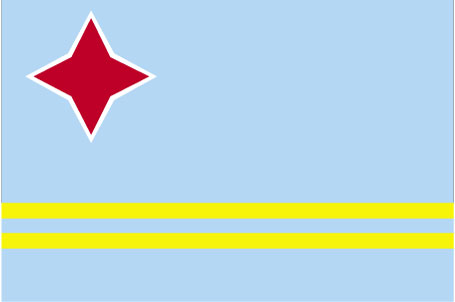
Aruba
Aruba
Declare Your Relationship to Aruba
CountryReports Community
- Studying0
- From Aruba0
- Aruba heritage0
- Visited0
- Want to visit0
Customs and Culture
Customs and Culture
Cultural Attributes
Aruba's culture is a vibrant tapestry woven from the influences of its indigenous Arawak heritage, Dutch colonial history, Spanish contact, and a long tradition of welcoming immigrants from across the Caribbean and beyond. This blend has produced a society with a distinct identity that sets Aruba apart from its neighbors in the Lesser Antilles. The official languages are Papiamento and Dutch, but Papiamento — a creole language blending Portuguese, Spanish, Dutch, English, and African languages — serves as the true mother tongue and a powerful symbol of Aruban identity. Most Arubans also speak English and Spanish fluently, reflecting the island's deep ties to tourism and regional trade. Religion plays a central role in daily life, with Roman Catholicism being the dominant faith, practiced by roughly 75 percent of the population. Religious festivals, processions, and saint's day celebrations are woven into the community calendar and reinforce strong family and neighborhood bonds. Aruba's most celebrated cultural event is Carnival, held annually from January through the Tuesday before Ash Wednesday. The festivities include elaborate costume parades, calypso competitions, and the election of Carnival royalty, drawing both locals and international visitors. The Grand Parade in Oranjestad is among the most spectacular in the Caribbean. Traditional Aruban music reflects the island's multicultural roots. Tumba and dande are indigenous folk music forms, with dande historically performed door-to-door during the New Year season as a form of musical greeting. The wiri, a percussion instrument made from a ribbed gourd, is closely associated with these traditions. Aruban cuisine also reflects its multicultural heritage. Dishes such as keshi yena — a baked stuffed cheese shell filled with spiced meat — are considered national staples. Fresh seafood, funchi (a cornmeal porridge), and pan bati (a slightly sweet pancake-like bread) are everyday foods that connect residents to centuries of culinary tradition. The Aruban people, known for their warmth and multilingual ease, have cultivated a culture of hospitality that extends naturally to the island's robust tourism industry, while maintaining a strong sense of local pride and community identity.

One Happy Island
Get More Customs and Culture
2 more cultural topics for members
Social Customs & Etiquette · Dating Customs
Holidays
Flag Day
3/18Independence
Dates of Interest
- January 6th
A traditional Aruban festivity is celebrated in the town of San Nicolas, featuring music, dance, and a parade with a symbolic "captain" leading the procession.
How do people communicate and greet each other in Aruba?
Arubans are known for their warmth and multilingual ease, and greetings often reflect the island's diverse linguistic heritage. Papiamento is the true mother tongue and a powerful symbol of Aruban identity, though most Arubans also speak Dutch, English, and Spanish fluently.
Good to know
- Papiamento is a creole language blending Portuguese, Spanish, Dutch, English, and African languages
- English and Spanish are widely spoken, so travelers can communicate easily
- During the New Year season, dande music is historically performed door-to-door as a form of musical greeting
What foods should I try in Aruba?
Aruban cuisine reflects the island's multicultural heritage, with several dishes considered national staples.
Good to know
- Try keshi yena, a baked stuffed cheese shell filled with spiced meat
- Sample everyday foods like fresh seafood, funchi (a cornmeal porridge), and pan bati (a slightly sweet pancake-like bread)
What should I know about local customs and religion in Aruba?
Religion plays a central role in daily life, with Roman Catholicism practiced by roughly 75 percent of the population. Religious festivals, processions, and saint's day celebrations reinforce strong family and neighborhood bonds.
Good to know
- Religious festivals and processions are woven into the community calendar
- Arubans maintain a strong sense of local pride and community identity alongside their hospitality
What cultural events and music can I experience in Aruba?
Aruba's most celebrated cultural event is Carnival, held annually from January through the Tuesday before Ash Wednesday, and traditional music reflects the island's multicultural roots.
Good to know
- The Grand Parade in Oranjestad is among the most spectacular in the Caribbean
- Carnival features elaborate costume parades, calypso competitions, and the election of Carnival royalty
- Look out for traditional folk music forms tumba and dande, often accompanied by the wiri, a percussion instrument made from a ribbed gourd
What should I know before visiting Aruba?
Aruba's culture is a vibrant blend of indigenous Arawak heritage, Dutch colonial history, Spanish contact, and Caribbean immigration, giving it a distinct identity within the Lesser Antilles.
Good to know
- The official languages are Papiamento and Dutch
- The island has a robust tourism industry supported by a culture of hospitality
- Time your visit for Carnival (January through the Tuesday before Ash Wednesday) to experience Aruba's biggest celebration
Last updated: 2026-07-12 · Sources: CountryReports
Photos of Aruba
Photos of Aruba


Travel and Tourism
Travel and Tourism
- Travel Alert Status
- Level 1: Exercise Normal Precautions
- Currency
- 1.79
- Time Difference
- UTC-4 (1 hour ahead of Washington, DC, during Standard Time)
- Climate
- Tropical marine; little seasonal temperature variation
- Airports
- 1
- Recommended Vaccinations
- How important is it to do your research about vaccinations? It might just save your life! Make yourself aware of the different types of vaccinations and which ones you may need to travel to your destination. Schedule an appointment with your doctor at least four to six weeks before you travel to ensure you receive all important shots. Be sure that you and your family are up to date on your routine vaccinations. Which vaccinations you need will depend on a number of factors including your destination, whether you will be spending time in rural areas, the season of the year you are traveling, your age, health status, and previous immunizations.
Read the full travel guide — health, safety, vaccinations, disease risk, sanitation, and transit details.
View full travel guideHistory
History
Historical Eras
Caquetio Settlement
650 – 1499
The Caquetio people, an Arawak-speaking group from the South American mainland, settled Aruba around 650 AD, establishing fishing and agricultural communities across the island. Their petroglyphs and ceramic remnants remain among the most tangible traces of pre-European Caribbean culture in the southern Lesser Antilles. Spanish arrival in 1499 effectively ended Aruba's era of indigenous autonomy.
Spanish Colonial Period
1499 – 1636
Explorer Alonso de Ojeda claimed Aruba for the Spanish Crown in 1499, and the island was subsequently designated a 'useless island' due to its lack of gold and fresh water, sparing it from large-scale plantation slavery. Spain maintained a sparse garrison and used the island primarily for livestock ranching. The fall of neighboring Bonaire and Curaçao to the Dutch in 1634 left Aruba's Spanish presence untenable.
Dutch Colonial Era
1636 – 1924
The Dutch West India Company took control of Aruba in 1636, incorporating it into a broader Caribbean trading network centered on Curaçao. British interruptions during the Napoleonic Wars (1799–1802 and 1805–1816) proved temporary, and Dutch sovereignty was firmly restored by 1816. The discovery of gold near Bushiribana in 1824 briefly transformed the island's economy, and the abolition of slavery in 1863 reshaped its social order.
Oil Refinery Age
1924 – 1986
The opening of a major oil refinery in 1924, expanded at San Nicolaas in 1929, made Aruba one of the world's leading petroleum processing centers and brought rapid economic modernization and demographic diversification. Under the 1954 Charter of the Kingdom, Aruba became part of the autonomous Netherlands Antilles federation. The refinery's closure in 1985 created an economic crisis that accelerated the island's push for a separate political status.
Status Aparte & Tourism
1986 – present
In 1986 Aruba seceded from the Netherlands Antilles and became an autonomous constituent country within the Kingdom of the Netherlands, a status known as Status Aparte. A scheduled transition to full independence was halted at Aruba's own request in 1990, and the island instead consolidated its self-governance while pivoting decisively toward tourism. The resumption of oil refining in 1991 alongside a thriving tourism sector established the dual-pillar economy that defines Aruba today.
Overview
Aruba’s first inhabitants were the Caquetios Indians from the Arawak tribe. Fragments of the earliest known Indian settlements date back to about 1000 A.D. Spanish explorer Alonso de Ojeda is regarded as the first European to arrive in about 1499. The Spanish garrison on Aruba dwindled following the Dutch capture of nearby Bonaire and Curacao in 1634. The Dutch occupied Aruba shortly thereafter, and retained control for nearly two centuries.
Timeline of Key Events
650
First Arawak arrival
First Arawak arrival.
1499
The Spanish discovered the islands
The Spanish discovered the islands.
1636
Aruba was aquired by the Dutch
Aruba was aquired by the Dutch.
1799 – 1802
The United Kingdon occupied Aruba
The United Kingdom occupied Aruba until 1802.
1805 – 1815
The island fell to the British during the Napoleonic Wars
From 1805 to 1815 the island fell to the British during the Napoleonic Wars, Aruba has remained under Dutch control ever since.
1805 – 1816
The United Kingdon occupied Aruba again
The United Kingdom occupied Aruba until 1816.
1816
Island is returned to the Netherlands after coming under British rule during the Napoleonic Wars.
Island is returned to the Netherlands after coming under British rule during the Napoleonic Wars.
Read the full history profile — narrative overview, defining eras, and the complete timeline in one place.
View expanded historyInteresting Facts
Interesting Facts
As far as can be concluded from historical records, the first European to set foot on Aruba was Alonso de Ojeda. This Spanish explorer landed on the Island in 1499. One of his first observations was that the remains he found belonging to the first settlers were considered to be larger than the average European of that day. He remarked that he had come to "an Island of giants".
Children take a treat to school for their classmates and all teachers. Each teacher receives a treat and gives the birthday child a small gift like a pencil, an eraser or a postcard. The birthday child is also allowed to wear special clothes instead of the school uniform.
See every fact — trivia, oddities, and curious tidbits gathered from across the country.
View all interesting factsGeography and Environment
Geography and Environment
- Terrain
- flat with a few hills; scant vegetation
- Climate
- tropical marine; little seasonal temperature variation
- Natural Hazards
- lies outside the Caribbean hurricane belt
- Current Environmental Issues
- NA
Read the full geography and environment profile — terrain, climate, natural resources, hazards, land use, and international agreements.
View full geographyPeople & Demographics
People & Demographics
Religion
Languages Spoken
Dutch (official), Papiamento (a Spanish, Portuguese, Dutch, English dialect), English (widely spoken), Spanish
- Dutch
- Papiamento
- Spanish
Population
- Population
- 106,537
- Population: Male/Female
- male: 59,101 female: 65,962
- Population Distribution
- most residents live in or around Oranjestad and San Nicolaas; most settlments tend to be located on the less mountainous western side of the island
- Urban Population
- urban population: 44.3% of total population rate of urbanization: 0.77% annual rate of change
- Population in Major Urban Areas
- 30,000 ORANJESTAD (capital)
- Nationality Noun
- noun: Aruban(s) adjective: Aruban; Dutch
- Ethnic Groups
- Dutch 78.7%, Colombian 6.6%, Venezuelan 5.5%, Dominican 2.8%, Haitian 1.3%, other 5.1%
- Language Note
- Papiamento (official) (a creole language that is a mixture of Portuguese, Spanish, Dutch, English, and, to a lesser extent, French, as well as elements of African languages and the language of the Arawak) 69.4%, Spanish 13.7%, English (widely spoken) 7.1%, Dutch (official) 6.1%, Chinese 1.5%, other 1.7%, unspecified 0.4%
Education
- Literacy Definition
- age 15 and over can read and write
Health Information
- Life Expectancy at Birth
- Total population: 76.9 years Male: 74.0 years Female: 79.9 years
- Infant Mortality Rate
- total: 11.4 deaths/1,000 live births male: 12.6 deaths/1,000 live births female: 10.1 deaths/1,000 live births
Life Expectancy
- Life Expectancy at Birth
- Total population: 76.9 years Male: 74.0 years Female: 79.9 years
- Median Age
- total: 40.9 years male: 39.3 years female: 42.4 years
- Age Structure
- 0-14 years: 17.2% (male 10,815/female 10,747) 15-64 years: 65.7% (male 39,621/female 42,487) 65 years and over: 17.1% (2024 est.) (male 8,665/female 12,728)
- Infant Mortality Rate
- total: 11.4 deaths/1,000 live births male: 12.6 deaths/1,000 live births female: 10.1 deaths/1,000 live births
Read the full people and society profile — demographics, health, education, religion, languages, and notable people.
View full people and societyGovernment & Politics
Government & Politics
Country Identity
- Country Name
- Aruba
- Full Country Name
- Aruba
- Local - Long
- Aruba
- Local - Short
- Aruba
- Former Name
- Aruba
Government Structure
- Government Type
- parliamentary democracy
- Legal System
- based on Dutch civil law system, with some English common law influence
- Executive Branch
- chief of state: King WILLEM-ALEXANDER of the Netherlands (since 30 April 2013), represented by Governor General Alfonso BOEKHOUDT (since 1 January 2017) head of government: Prime Minister Evelyn WEVER-CROES (since 17 November 2017) cabinet: Council of Ministers elected by the Staten (Aruban Parliament) elections: the monarch is hereditary; governor general appointed for a six-year term by the monarch; prime minister and deputy prime minister elected by the Staten for four-year terms election results: Evelyn WEVER-CROES elected prime minister following her party's victory in the 2017 parliamentary elections; she was subsequently returned to office following the 2021 elections, in which her party, Movimiento Electoral di Pueblo (MEP), secured a majority in the Staten
- Legislative Branch
- Unicameral Legislature or Staten (21 seats; members elected by direct, popular vote to serve four-year terms) Elections: last held on 25 June 2021 (next to be held in 2025) Election results: percent of vote by party - AVP 35.3%, MEP 31.3%, MAS 10.6%, Raiz 7.4%, POR 6.5%, PPT 4.5%, other 4.4%; seats by party - AVP 9, MEP 8, MAS 2, Raiz 1, POR 1
- Judicial Branch
- Common Court of Justice of Aruba (judges are appointed by the monarch)
- Suffrage
- 18 years of age; universal
- Constitution
- 1-Jan-86
- Independence
- none (part of the Kingdom of the Netherlands)
- National Holiday
- Flag Day, 18 March
Capital City
- Capital Name
- Oranjestad
- Capital - geographic coordinate
- 12 31 N, 70 02 W
- Capital Time Difference
- UTC-4 (1 hour ahead of Washington, DC, during Standard Time)
translates as "orange town" in Dutch; the city is named after William I (1533-1584), Prince of Orange, the first ruler of the Netherlands
Military
Branches: No regular military forces
Embassy / Diplomatic Mission
United States Consulate General Curacao
J.B. Gorsiraweg 1, Willemstad, Curaçao
Telephone: (599-9) 461-3066
Emergency after-hours telephone: (599-9) 510-6870
Facsimile: (599-9) 461-6489
Read the full government profile — flag symbolism, national anthem, and other national symbols.
View full government detailsEconomy
Economy
Tourism remains the cornerstone of Aruba's small, open economy, with the financial services sector also playing a significant role. The sustained growth of the tourism industry over recent decades has driven expansion across related sectors, including retail, hospitality, and construction.
Snapshot
- Currency Name and Code
- Aruban guilders/florins
- GDP Real Growth Rate
- 3%
- GDP by Sector
- agriculture: NA% industry: NA% services: NA%
News & Weather
News & Weather
Current Weather
Latest News
Recap: British Columbia vs. Aruba - Little League
Little League · 15h ago
Aruba is my favorite Caribbean island — here's why I keep returning to this "sweet" destination - Yahoo Creators
Yahoo Creators · 3d ago
Watch Victoria, British Columbia vs. Santa Cruz, Aruba - Disney Plus
Disney Plus · 13h ago
RIU Palace Aruba reopens after major renovation - paxnews.com
paxnews.com · 3h ago
CIMARRON 615 PERFORMS "ARUBA" ON TODAY IN NASHVILLE - WSMV
WSMV · 4d ago
Achievements of Don José Sulaimán: The historic 1997 Aruba Medical Congress that transformed global boxing safety - World Boxing Council
World Boxing Council · 22h ago
Aruba - World Population Review
World Population Review · 6d ago
Nashville airport getting new nonstop flights to Aruba, Virgin Islands - Axios
Axios · 19d ago
News via Google News
Climate Overview
Tropical marine; little seasonal temperature variation
Videos
Videos
1 curated YouTube videos.
Source: YouTube
Frequently Asked Questions
Frequently Asked Questions
What is the population of Aruba?
How do people communicate and greet each other in Aruba?
What foods should I try in Aruba?
What should I know about local customs and religion in Aruba?
What cultural events and music can I experience in Aruba?
What should I know before visiting Aruba?
What is the capital of Aruba?
Where is Aruba located?
What are Aruba's ocean borders?
What religion is practiced in Aruba?
What currency does Aruba use?
What languages are spoken in Aruba?
What is Aruba known for?
Last reviewed 2026