
 English
 Español
 中文
中文 हिन्दी
 Français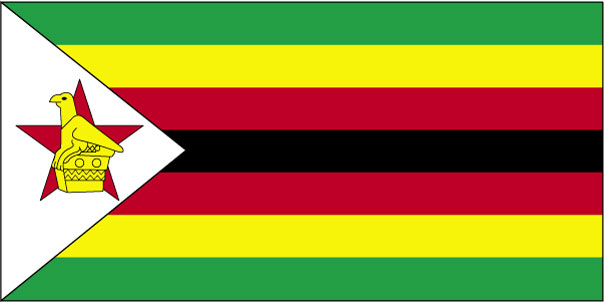
Zimbabwe
Declare Your Relationship to Zimbabwe
CountryReports Community
- Studying20
- From Zimbabwe4
- Zimbabwe heritage3
- Visited3
- Want to visit7
Customs and Culture
Customs and Culture
Cultural Attributes
Zimbabwe has an interesting variety of customs. Humility is an esteemed attribute. Zimbabweans are usually optimistic, courteous and friendly. They are more open among friends than with strangers. Zimbabweans are sensitive to racism and discrimination because of many years of colonial subjugation.

The Smoke That Thunders
Get More Customs and Culture
6 more cultural topics for members
Social Customs & Etiquette · Diet · Family · Dating Customs · Recreation · Student Life
Every country, every topic, all activities & recipes
✓ Instant access on this device · ✓ No subscription
Holidays
Independence Day
4/18Independence Day
Christmas
12/25Christmas
Family visits are important this time of year. Many businesses close for two to three weeks allowing for urban dwellers to return to their rural relatives.
Many Zimbabweans mix Christmas and traditional beliefs, Many celebrations may have Christian sermons, followed by dancing and singing to drums and horns, slaughtering cattle to appease their ancestors, and feasting upon the beef.
Soliciting gifts from one’s relatives on Christmas day is proper and expresses kinship and family ties. One custom states that when two people meet the first to ask for “Christmas” will be the recipient of a gift from the other person. A person may seek gifts from as many people as possible in this manner but never from the same person twice. Many cities also host a “Mayor’s Christmas Cheer Fund” in which the wealthy are urged to give to the poor.
How do people greet each other in Zimbabwe?
A handshake is the common greeting, sometimes accompanied by clapping hands when asking how things are.
Do
- Shake hands when greeting
- Greet strangers you pass, especially in rural areas
- In urban areas, follow English-style customs including titles
Don’t
- Don't expect titles to be used outside urban areas
What are the dining customs in Zimbabwe?
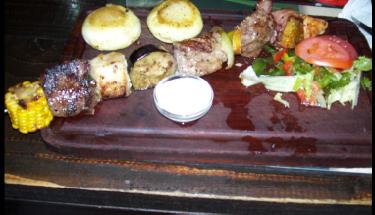
Sadza, a stiff maize porridge, is the staple served at nearly every meal, and tea is popular with meals and in the office. The hostess usually serves each plate.
Do
- Wash your hands with the water provided before eating
- Leave a little food behind to show you are not greedy
- Ask permission of others before leaving the table
Don’t
- Don't refuse offers of refreshments or food
Good to know
- Western utensils are common, but eating with fingers is also common in rural areas
- Breakfast is eaten before work, the main meal after work, and lunch is usually light
What etiquette should I know when visiting people in Zimbabwe?
Zimbabweans are hospitable and welcome unannounced visits, valuing patience and politeness in conversation.
Do
- Be patient and polite in conversation
- Bring small practical gifts, which are appreciated
- Give and accept items with both hands
Good to know
- Humility is an esteemed attribute
- Zimbabweans are more reserved with strangers and sensitive to racism and discrimination
How should I dress in Zimbabwe?
Zimbabweans generally wear Western-style clothing, and dressing neatly in clean clothes is important.
Do
- Wear neat, clean clothing
Good to know
- Traditional African dress is reserved for performances or special occasions
- It is not uncommon for a woman to wear a scarf on her head
What gestures are important in Zimbabwe?
Gestures carry meaning: clapping can express gratitude, and eye contact norms differ from Western ones.
Do
- Give and accept items with both hands
- Clap hands as a gesture of gratitude
Don’t
- Don't use direct eye contact during conversation, especially in rural areas, as it shows a lack of respect
What is family life like in Zimbabwe?
The father is usually the family leader making final decisions, though the mother also has influence, and family ties are strong and important.
Don’t
- Don't suggest nursing homes, as the concept is highly offensive
Good to know
- Extended families living together are common in rural areas, while urban families tend to be more nuclear
- The elderly are considered a family treasure and always have a place in the home
- Polygamy is still common among some groups
What sports and recreation are popular in Zimbabwe?
Soccer is the most popular sport in Zimbabwe.
Good to know
- Other sports include track and field, cricket, rugby, wrestling, and horse racing
Last updated: 2026-07-12 · Sources: CountryReports
Photos of Zimbabwe
Photos of Zimbabwe


Travel and Tourism
Travel and Tourism
- Travel Alert Status
- Level 2: Exercise Increased Caution
- Currency
- Zimbabwean dollar (ZWD)
- Time Difference
- UTC+2 (7 hours ahead of Washington, DC, during Standard Time)
- Airports
- 404
Read the full travel guide — health, safety, vaccinations, disease risk, sanitation, and transit details.
View full travel guideRecipes
Recipes
History
History
Historical Eras
Early Civilizations
700 – 1888
Shona-speaking Bantu peoples established complex societies across the Zimbabwe plateau, constructing the Great Zimbabwe stone enclosures between the 9th and 13th centuries as a center of trade linking the interior to coastal Swahili and Arabian merchants. The Monomotapa domain rose to regional dominance between 1200 and 1600, and the Rozvi branch later supplanted it. The Ndebele, an offshoot of the Zulu, migrated northward around 1830 and established control over much of the Shona population until European colonization.
British South Africa Company
1888 – 1923
Cecil Rhodes secured mineral concessions from local chiefs in 1888, and the British South Africa Company was chartered the following year, establishing Salisbury in 1890 and formally naming the territory Rhodesia in 1895. Company administration oversaw white settler expansion, the suppression of Ndebele and Shona uprisings in the 1890s, and the gradual displacement of indigenous land rights. The company's charter was abrogated in 1922 following a whites-only referendum that chose self-governance over absorption into South Africa.
Colonial Rhodesia
1923 – 1965
Southern Rhodesia became a self-governing British colony in 1923, with political power firmly concentrated among white settlers. Britain organized the short-lived Federation of Rhodesia and Nyasaland from 1953 to 1963, which dissolved as Zambia and Malawi moved toward independence. Ian Smith's Rhodesian Front government, elected in 1964, pressed Britain for independence without majority rule, setting the stage for a unilateral break.
Unilateral Independence & Bush War
1965 – 1980
Ian Smith's Unilateral Declaration of Independence in November 1965 brought UN sanctions and international isolation while entrenching white-minority rule under a 1969 republican constitution. ZANU and ZAPU nationalist movements launched a sustained guerrilla insurgency — the Second Chimurenga — from the early 1970s onward, drawing support from neighboring Mozambique and Zambia. Mounting military pressure and international negotiations produced the Lancaster House Agreement in 1979, paving the way for free elections and legal independence.
Mugabe Era
1980 – 2017
Zimbabwe achieved internationally recognized independence in April 1980 with Robert Mugabe as prime minister, transitioning to an executive presidency in 1987 and consolidating one-party dominance. The early post-independence period was marred by the Gukurahundi massacres in Matabeleland, in which an estimated 20,000 Ndebele civilians were killed by the Fifth Brigade. From 2000 onward, a chaotic Fast Track Land Reform programme triggered economic collapse, hyperinflation, and mass emigration, while Mugabe repeatedly suppressed opposition and rigged elections until a military-assisted coup removed him in November 2017.
Post-Mugabe Zimbabwe
2017 – present
Emmerson Mnangagwa assumed the presidency following Mugabe's forced resignation in 2017, promising economic reform and a new openness to foreign investment under a 'Zimbabwe is Open for Business' platform. Political repression, corruption, and currency instability persisted, however, and disputed elections in 2018 and 2023 maintained ZANU-PF dominance amid opposition allegations of fraud. Zimbabwe continues to grapple with rebuilding its economy and institutions after decades of mismanagement and international isolation.
Overview
Primarily of the Bantu group of south and central Africa, the black Zimbabweans are divided into two major language groups, which are subdivided into several ethnic groups. The Mashona (Shona speakers), who constitute about 75% of the population, have lived in the area the longest and are the majority language group. The Matabele (Sindebele speakers), representing about 20% of the population and centered in the southwest around Bulawayo, arrived within the last 150 years.
Every country, every topic, all activities & recipes
✓ Instant access on this device · ✓ No subscription
Timeline of Key Events
700
Arabian and Persians trade with ivory, rhino horn, gold, shells and slaves
Arabian and Persians trade with ivory, rhino horn, gold, shells and slaves.
700
Shona people began their rule and built a city called Zimbabwe.
Shona people began their rule and built a city called Zimbabwe.
1200 – 1600
Rise and decline of the Monomotapa domain.
Rise and decline of the Monomotapa domain, thought to have been associated with Great Zimbabwe and to have been involved in gold mining and international trade.
1500
Rowzi branch rebelled
Rowzi branch rebelled and formed the Changamire Empire Christianity was introduced by the Portuguese explorers.
1830
Ndebele people fleeing Zulu violence move north
Ndebele people fleeing Zulu violence and Boer migration in present-day South Africa move north and settle in what becomes known as Matabeleland. European slave traders establish coastal ports for the increasing traffic in slaves destined for the Americas.
1893
The British South African Company occupied the region and called the territory Rhodesia.
The British South African Company occupied the region and called the territory Rhodesia.
1897
Great Britain recognized southern and northern Rhodesia as separate territories.
Great Britain recognized southern and northern Rhodesia as separate territories.
Read the full history profile — narrative overview, defining eras, and the complete timeline in one place.
View expanded historyInteresting Facts
Interesting Facts
Victoria Falls carries more water than any other waterfall. It is 355 feet high.
The name Zimbabwe was derived from the stone structures of Great Zimbabwe or Dzimbahwe which means "houses of stone".
The local name for the Victoria Falls is Mosi-oa-Tunya, "the smoke that thunders".
See every fact — trivia, oddities, and curious tidbits gathered from across the country.
View all interesting factsGeography and Environment
Geography and Environment
- Terrain
- mostly high plateau with higher central plateau (high veld); mountains in east
- Climate
- The climate on the central plateau is moderate in all seasons with warm days and cool nights. Homes do not have central heating or air-conditioning, although room heaters and fireplaces are used on winter nights (May-August). Annual rainfall averages about 28 inches on the highveld (Harare), more in the Eastern Highlands, and much less in the lowveld of the southeast and the Zambezi Valley. The sun shines nearly every day, even at the height of the warm rainy season (November-April). In Harare, the average low temperature in winter is 45°F at night, though frost occasionally occurs. The average daily temperature in summer is 75°F, with temperatures seldom surpassing 90°F.
- Natural Hazards
- recurring droughts; floods and severe storms are rare
- Current Environmental Issues
- deforestation; soil erosion; land degradation; air and water pollution; the black rhinoceros herd - once the largest concentration of the species in the world - has been significantly reduced by poaching; poor mining practices have led to toxic waste and heavy metal pollution
Read the full geography and environment profile — terrain, climate, natural resources, hazards, land use, and international agreements.
View full geographyPeople & Demographics
People & Demographics
Religion
Languages Spoken
English (official), Shona, Sindebele
- English
Population
- Population
- 16,665,409
- Population in Major Urban Areas
- HARARE (capital) 1.542 million
- Nationality Noun
- Zimbabwean(s)
- Ethnic Groups
- African 98% (Shona 82%, Ndebele 14%, other 2%), mixed and Asian 1%, white less than 1%
- Language Note
- English is the official language of the republic and is spoken by most educated people. In rural areas English is less commonly spoken. Ndebele and Shona and are commonly spoken. People often speak more than one language and many mix parts of several languages in daily speech.
Education
- Literacy Definition
- age 15 and over can read and write English
Health Information
- Major Infectious Diseases — degree of risk
- very high
Life Expectancy
- Life Expectancy at Birth
- Life expectancy at birth in Zimbabwe has undergone significant fluctuations over the past several decades, reflecting the country's turbulent social, economic, and public health history. As of the most recent available data, life expectancy in Zimbabwe stands at approximately 60 to 61 years overall, with women living slightly longer than men — roughly 62 to 63 years for females compared to around 58 to 59 years for males. Zimbabwe experienced one of the most dramatic collapses in life expectancy ever recorded for a country not at war. During the 1990s and early 2000s, a devastating HIV/AIDS epidemic, compounded by a severe economic crisis, caused life expectancy to plummet from a high of around 62 years in the late 1980s to a historic low of approximately 44 years by the mid-2000s. At its peak, Zimbabwe had one of the highest HIV/AIDS prevalence rates in the world, with adult infection rates exceeding 20 percent. The subsequent recovery has been notable. Increased access to antiretroviral therapy, international health assistance, and public health initiatives contributed to a meaningful rebound in life expectancy from the late 2000s onward. The HIV prevalence rate among adults has since dropped to approximately 11 to 12 percent, a significant improvement, though the disease remains a major public health challenge. Beyond HIV/AIDS, life expectancy in Zimbabwe continues to be shaped by factors including access to clean water and sanitation, maternal and child mortality rates, malnutrition, and an underfunded healthcare system. Infant mortality remains a concern, with rates estimated at roughly 35 to 38 deaths per 1,000 live births, which pulls down overall life expectancy figures. Recurring cholera outbreaks, including a significant outbreak in 2023 and 2024, highlight the ongoing vulnerabilities in public health infrastructure. Despite these challenges, Zimbabwe has made measurable progress over the past two decades. Continued investment in healthcare infrastructure, disease prevention programs, and economic stabilization will be critical to sustaining and improving life expectancy gains in the coming decades.
- Infant Mortality Rate
- Zimbabwe's infant mortality rate has undergone significant fluctuations over recent decades, reflecting the country's broader public health challenges and economic instability. As of the most recent available data, Zimbabwe's infant mortality rate stands at approximately 35 to 40 deaths per 1,000 live births, a figure that, while still elevated compared to high-income nations, represents a marked improvement from the crisis years of the late 2000s when the rate exceeded 60 deaths per 1,000 live births. The primary causes of infant death in Zimbabwe include neonatal complications, pneumonia, diarrheal diseases, malaria, and HIV/AIDS-related conditions. Malnutrition is also a significant contributing factor, weakening immune responses in newborns and young infants. The HIV/AIDS epidemic has had a particularly pronounced impact, as mother-to-child transmission of the virus remains a persistent concern despite progress in prevention programs. Access to skilled healthcare workers at birth varies widely between urban and rural areas. In cities such as Harare and Bulawayo, hospital delivery rates are considerably higher, while rural communities often rely on traditional birth attendants with limited medical training and supplies. This geographic disparity plays a direct role in infant survival outcomes. Zimbabwe has made measurable strides through partnerships with UNICEF, the World Health Organization, and other international health bodies. Expanded vaccination campaigns targeting measles, polio, and rotavirus have helped reduce preventable infant deaths. Oral rehydration therapy programs and improved access to antiretroviral treatment for HIV-positive mothers have also contributed positively to declining infant mortality figures. Nevertheless, Zimbabwe's healthcare system continues to face serious structural challenges, including chronic underfunding, a shortage of trained medical personnel due to emigration, and deteriorating infrastructure at many public health facilities. Economic hardship limits many families' ability to afford transportation to clinics or purchase essential medicines. The country's infant mortality rate, while improving, remains a key indicator of the ongoing development work needed to bring Zimbabwe's health outcomes in line with regional and global targets established under the United Nations Sustainable Development Goals.
Read the full people and society profile — demographics, health, education, religion, languages, and notable people.
View full people and societyGovernment & Politics
Government & Politics
Country Identity
- Country Name
- Zimbabwe
- Full Country Name
- Republic of Zimbabwe
- Former Name
- Southern Rhodesia, Rhodesia
Government Structure
- Government Type
- parliamentary democracy
- Legal System
- mixture of Roman-Dutch and English common law
- Executive Branch
- chief of state: Executive President Emmerson Dambudzo MNANGAGWA (since 24 November 2017); Vice President Constantino CHIWENGA (since 28 December 2017) and Vice President Kembo MOHADI (since 28 December 2017); note - the president is both the chief of state and head of government head of government: Executive President Emmerson Dambudzo MNANGAGWA (since 24 November 2017); Vice President Constantino CHIWENGA (since 28 December 2017) and Vice President Kembo MOHADI (since 28 December 2017); note - the president is both the chief of state and head of government cabinet: Cabinet appointed by the president; responsible to the National Assembly elections: presidential candidates nominated with a nomination paper signed by registered voters and elected by popular vote for a five-year term; election last held on 23 August 2023 (next to be held in 2028); co-vice presidents appointed by the president election results: Emmerson MNANGAGWA reelected president in the August 2023 general election; percent of vote - Emmerson MNANGAGWA (ZANU-PF) 52.6%, Nelson CHAMISA (CCC) 44.0%, other 3.4%
- Legislative Branch
- Bicameral Parliament consists of a Senate (80 seats; 60 members directly elected in multi-seat constituencies by proportional representation vote, 16 appointed by the president, and 18 reserved for chiefs; members serve five-year terms) and a National Assembly (280 seats; 210 members directly elected in single-seat constituencies by simple majority vote, 60 seats reserved for women elected by proportional representation, and 10 seats reserved for youths elected by proportional representation; members serve five-year terms). Elections: National Assembly last held on 23–24 August 2023 (next to be held in 2028); Senate last held on 23–24 August 2023 (next to be held in 2028). Election results: National Assembly – percent of vote by party – ZANU-PF 54.9%, CCC 21.8%, other and independent 23.3%; seats by party – ZANU-PF 190, CCC 73, other 17. Senate – seats by party – ZANU-PF 57, CCC 21, other 2.
- Judicial Branch
- Supreme Court; High Court
- Suffrage
- 18 years of age; universal
- Constitution
- 21-Dec-79
- Independence
- 18 April 1980 (from UK)
- National Holiday
- Independence Day, 18 April (1980)
Capital City
- Capital Name
- Harare
- Capital - geographic coordinate
- 17 49 S, 31 02 E
- Capital Time Difference
- UTC+2 (7 hours ahead of Washington, DC, during Standard Time)
named after a village of Harare at the site of the present capital; the village name derived from a Shona chieftain, NE-HARAWA, whose name meant "he who does not sleep"
Military
Branches: Zimbabwe Defense Forces (ZDF): Zimbabwe National Army (ZNA), Air Force of Zimbabwe (AFZ)
Embassy / Diplomatic Mission
U.S. Embassy Harare, Zimbabwe
172 Herbert Chitepo Avenue, Harare
Telephone: (263)-4-250-593/4
Emergency, after-hours telephone: (263)-4-250-595
Fax: (263)-4-250-343.
Read the full government profile — flag symbolism, national anthem, and other national symbols.
View full government detailsEconomy
Economy
Zimbabwe's economy continues to grapple with deep-seated structural challenges, including chronic fiscal deficits, currency instability, high inflation, and persistent shortages of foreign exchange.
Snapshot
- Currency Name and Code
- Zimbabwe Dollar (ZWD)
- GDP — official exchange rate
- $3,207,000,000 (USD)
- GDP Real Growth Rate
- 5.3%
- Gini Index
- 56.8
Every country, every topic, all activities & recipes
✓ Instant access on this device · ✓ No subscription
News & Weather
News & Weather
Current Weather
Latest News
How Zimbabwe's government turned international condemnation into political ammunition - Phys.org
Phys.org · 19h ago
REGULATION | Payments Firm, Wiremit, Reportedly Becomes First FIU Regulated Crypto Firm in Zimbabwe - BitKE
BitKE · 13h ago
The uplifting story of one of Zimbabwe’s pioneering women rangers - news - Mongabay
news - Mongabay · 7d ago
Can Zimbabwe’s ZiG win trust and replace the US dollar? - Al Jazeera
Al Jazeera · 7d ago
Zimbabwe Suspends Antimony, Tungsten Exports in Processing Push - Bloomberg.com
Bloomberg.com · 45d ago
Former Zimbabwe player and umpire Sarah Dambanevana dies aged 36 - Cricinfo
Cricinfo · 11d ago
Chinese pottery discovered in Great Zimbabwe reveals medieval African empire's vast connections spanning thousands of miles - Live Science
Live Science · 9d ago
Zimbabwe's dinosaurs were different from South Africa's: New species offers clues - Phys.org
Phys.org · 13d ago
News via Google News
Videos
Videos
1 curated YouTube videos.
Source: YouTube
Frequently Asked Questions
Frequently Asked Questions
What is the population of Zimbabwe?
What is the capital of Zimbabwe?
Where is Zimbabwe located?
What countries border Zimbabwe?
What religion is practiced in Zimbabwe?
What is the currency of Zimbabwe?
What languages are spoken in Zimbabwe?
What is Zimbabwe known for?
Last reviewed 2026