
 English
 Español
 中文
中文 हिन्दी
 Français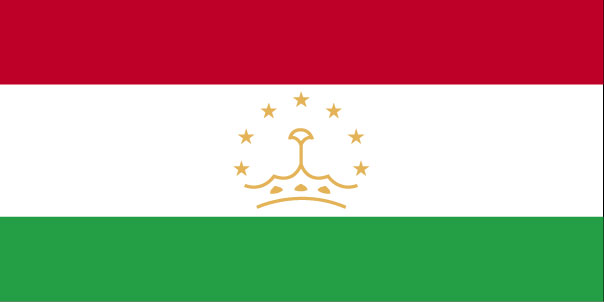
Tajikistan
Tojikiston
Declare Your Relationship to Tajikistan
CountryReports Community
- Studying1
- From Tajikistan1
- Tajikistan heritage1
- Visited1
- Want to visit1
Customs and Culture
Customs and Culture
Cultural Attributes
Tajikistan is a country with a rich and diverse cultural heritage that reflects its location at the crossroads of different civilizations and cultures. The country's culture is shaped by its history, religion, language, traditions, and customs.
Language and Religion:
The official language of Tajikistan is Tajik, a variety of Persian that is written in the Cyrillic alphabet. Tajik is closely related to Farsi, the language spoken in Iran. Most people in Tajikistan practice Islam, specifically Sunni Islam, which is the largest religion in the country. However, there are also small communities of Orthodox Christians, Shia Muslims, and followers of other religions.
Art and Architecture:
Tajikistan is known for its beautiful art and architecture, which is characterized by intricate designs and vibrant colors. Traditional Tajik art includes carpet weaving, pottery, embroidery, and miniature painting. Tajik architecture features colorful mosaics, domes, and intricate woodcarvings. The country's most famous historical site is the city of Bukhara, which is home to many well-preserved examples of Islamic architecture.
Music and Dance:
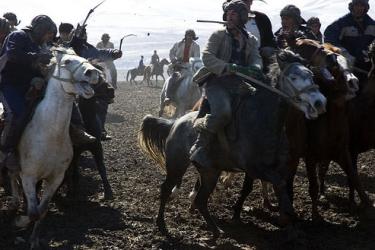
Music and dance are an important part of Tajik culture. Traditional Tajik music is often played on stringed instruments such as the rubab and the setar, as well as the doira, a type of tambourine. Folk dances such as the "Lazgi" and the "Buzkashi" are popular in Tajikistan, and are often performed at weddings and other celebrations.
Food and Hospitality:
Tajik cuisine is a blend of Central Asian, Persian, and Russian influences, and includes dishes such as plov (rice pilaf), shurbo (meat and vegetable soup), and laghman (noodle soup). Hospitality is highly valued in Tajik culture, and guests are often treated to elaborate meals and given gifts as a sign of respect.
Celebrations and Holidays:
Tajikistan has several national holidays, including Independence Day (September 9th), New Year's Day (January 1st), and Navruz (March 21st), the Persian New Year. Navruz is one of the most important holidays in Tajikistan, and is celebrated with music, dancing, and the exchange of gifts.

Roof of the World, Land of Mountain Honor
Get More Customs and Culture
5 more cultural topics for members
Social Customs & Etiquette · Diet · Family · Dating Customs · Recreation
Every country, every topic, all activities & recipes
✓ Instant access on this device · ✓ No subscription
Holidays
Independence Day
9/9Independence Day
or National Day
Christmas
12/25Christmas
Tajikistan is a nation that is predominantly Islamic in religion. The country has a very small minority Christian religion Demographically speaking it is composed of 90 percent Muslims. Thus, the majority of the people of Tajikistan do not celebrating Christmas
During the month of December perhaps the biggest celebration is the New Year celebration to welcome the blessing that will come to them for the coming year.
The biggest annual celebration held is the spring festival called Navruz that means “New Day.” This festival marks the advent of the Persian New Year which starts at the spring equinox.
Dates of Interest
- November 6th
Zardaly is a festival celebrated in the Khatlon region of southern Tajikistan. The festival is held in June and is associated with the harvesting of apricots. The festival features traditional music, dance, and the sharing of apricot-based dishes and drinks.
How do people greet each other in Tajikistan?
Handshakes are common in formal settings, while friends and family often greet with cheek kisses or hugs; the traditional "Salaam" is used for first meetings and formal occasions.
Do
- Shake hands firmly and make eye contact in formal settings
- Kiss once on each cheek, starting with the right, among friends and family
- Use titles like Doctor, Professor, or religious titles as a sign of respect
- Use someone's full name in formal settings
Good to know
- Hugging is common among friends and family, especially among women
- Nicknames or shortened names are fine in casual settings
What are the dining customs in Tajikistan?
Hosts serve elaborate meals around a dasturkhan (a tablecloth spread on the floor or a low table), and guests are treated generously. The national dish is ash, a mix of rice, meat, carrots and onions.
Do
- Accept food and drink such as tea, sweets, and snacks offered by your host
Good to know
- The guest of honor sits at the head of the dasturkhan, furthest from the door
- Try plov (rice pilaf), shurbo (meat and vegetable soup), and laghman (noodle soup)
- The word for food in Tajik is avqat
What etiquette should I know when visiting a home in Tajikistan?
Hospitality is highly valued, and children, the elderly, and guests are treated as privileged. Politeness and respect for elders are essential when visiting.
Do
- Bring a gift such as fruit, sweets, or a small gift for the children
- Remove your shoes before entering a home
- Show respect to hosts, particularly older ones
- Use formal, polite language
Don’t
- Don't raise topics that may be considered sensitive
Good to know
- Friends and family take turns hosting each other to maintain social ties
What should I wear in Tajikistan?
Western-style clothing is common in urban areas, while traditional dress is still widely worn in rural regions like the Pamirs. Modesty, especially for women, is an important value.
Do
- Consider modest clothing that covers arms, legs, and chest, particularly for women
Good to know
- Traditional dress includes colorful silk, cotton or wool "Atlas" with embroidery
- Rural men may wear chapan or kurta robes and skullcaps; women wear long dresses with headscarves and woolen chodur coats
- Some women wear traditional clothing for weddings and religious festivals
Are there any gestures or superstitions to be aware of in Tajikistan?
Several everyday actions carry superstitious meanings, and certain objects should never be passed directly hand to hand.
Don’t
- Don't pass scissors, needles, or keys hand to hand — place them on a table for the other person to pick up
- Don't stand in the doorway (believed to cause debt)
- Don't spill salt in the house (believed to cause a fight)
- Don't whistle in the house (believed to cause loss of something valuable)
Good to know
- If you return home for something forgotten, look in the mirror before leaving again
What are family roles like in Tajikistan?
Women's roles vary by background: Soviet-influenced women participate fully in society, while Muslim-influenced women stay at home to care for children.
Good to know
- Arranged marriages are still common, with family involvement in choosing partners
- Public displays of affection are generally frowned upon; couples may hold hands but not kiss or hug in public
What can I do for recreation in Tajikistan?
Tajikistan's mountains and rivers offer hiking, trekking, mountain climbing, skiing, and water sports, while its cultural sites provide sightseeing opportunities.
Good to know
- Hike or trek in the Pamir, Fann, or Alay Mountains
- Ski or snowboard in winter, e.g. at Safed Dara Ski Resort near Dushanbe
- Try rafting or kayaking on the Panj River
- Visit sites like the Hissar Fortress, the Ismaili Center, and the National Museum of Tajikistan
- Gushtigiri (wrestling) is the national sport; Buzkashi is performed at New Year
Last updated: 2026-07-12 · Sources: CountryReports
Photos of Tajikistan
Photos of Tajikistan


Travel and Tourism
Travel and Tourism
- Travel Alert Status
- Level 2: Exercise Increased Caution
- Currency
- somoni
- Time Difference
- UTC+5 (10 hours ahead of Washington, DC, during Standard Time)
- Airports
- 66
Read the full travel guide — health, safety, vaccinations, disease risk, sanitation, and transit details.
View full travel guideRecipes
Recipes
History
History
Historical Eras
Ancient & Pre-Islamic
500 BCE – 750
The territory of present-day Tajikistan formed part of the Achaemenid Persian Empire and later fell under Greek, Kushan, and Sasanian influence. Sogdian and Bactrian civilizations flourished here, establishing trade networks along the Silk Road. Arab Islamic forces conquered the region in the early 8th century, initiating a profound religious and cultural transformation.
Samanid Empire
750 – 999
The Samanid dynasty (875–999) represented the apex of early Tajik cultural identity, championing a revival of written Persian language and literature following the Arab conquest. Under rulers such as Ismail Samani, the empire patronized scholars and poets, preserving pre-Islamic Persian heritage while embracing Islam. The Samanids remain the foundational symbol of Tajik national identity, their currency bearing their name today.
Mongol & Timurid Rule
999 – 1500
Following Samanid collapse, the region passed through successive Turkic and Ghaznavid hands before Genghis Khan's Mongol forces devastated Central Asia in the 13th century. The Timurid dynasty under Tamerlane subsequently incorporated the territory into a vast empire centered at Samarkand, bringing relative stability and cultural patronage. Persian remained the language of administration and high culture throughout this period.
Khanates & Russian Conquest
1500 – 1920
Tajik-inhabited lands were divided among the Bukharan Emirate, the Kokand Khanate, and the Khanate of Khiva, which competed for dominance across Central Asia. The expanding Russian Empire absorbed these territories during the late 19th century, with Bukhara becoming a protectorate and northern Tajikistan incorporated directly. Following the 1917 Revolution, the Basmachi resistance movement fought Soviet consolidation before being suppressed by 1925.
Soviet Tajikistan
1920 – 1991
Tajikistan was established as an Autonomous Soviet Socialist Republic within Uzbekistan in 1924, achieving full union-republic status in 1929. Soviet rule brought mass literacy, industrialization, and collectivization, while also suppressing Islamic practice and national culture. By 1960 Tajikistan had become the Soviet Union's third-largest cotton producer, though its economy remained heavily dependent and its population the poorest in the USSR.
Independence & Modern Era
1991 – present
Tajikistan declared independence from the Soviet Union in 1991, but almost immediately descended into a devastating civil war between government forces and a coalition of Islamist and democratic opposition groups that lasted from 1992 to 1997. A UN-brokered peace agreement ended the conflict, and President Emomali Rahmon consolidated authoritarian rule while the country pursued economic recovery. International engagement deepened after 2001 through development aid, NATO's Partnership for Peace, and agreements with the United States.
Overview
The current Tajik Republic hearkens back to the Samanid Empire (A.D.
Every country, every topic, all activities & recipes
✓ Instant access on this device · ✓ No subscription
Timeline of Key Events
701 – 800
Tajiks emerge as distinct ethnic group.
Tajiks emerge as distinct ethnic group. Arab invaders conquer Central Asia, including what is now Tajikistan, and introduce Islam.
1201 – 1300
Genghis Khan conquers Tajikistan.
Genghis Khan conquers Tajikistan and the rest of Central Asia, which becomes part of the Mongol Empire.
1301 – 1400
Tajikistan becomes part of Turkic ruler Tamerlane’s empire.
Tajikistan becomes part of Turkic ruler Tamerlane’s empire.
1860 – 1900
Tajikistan divided.
Tajikistan divided, with the north coming under Tsarist Russian rule while the south is annexed by the Emirate of Bukhara.
1921
Northern Tajikistan becomes part of the Bolshevik-designated Turkestan ASSR.
Northern Tajikistan becomes part of the Bolshevik-designated Turkestan Autonomous Soviet Socialist Republic (ASSR), which also included Uzbekistan, Kyrgyzstan, part of northern Turkmenistan and southern Kazakhstan.
1960
Tajikistan becomes the third largest cotton-producing republic in the Soviet Union.
Tajikistan becomes the third largest cotton-producing republic in the Soviet Union.
1991
Supreme Soviet declares Tajikistan independent from the Soviet Union.
Supreme Soviet declares Tajikistan independent from the Soviet Union. Rahmon Nabiyev, Communist leader during 1982-85, wins Tajikistan’s first direct presidential election with 57% of the vote; Tajikistan joins Commonwealth of Independent States (CIS) following the collapse of the Soviet Union in December.
Read the full history profile — narrative overview, defining eras, and the complete timeline in one place.
View expanded historyInteresting Facts
Interesting Facts
When a child loses a tooth they sow their teeth in the fields and they grow up to be warriors.
The world's highest dam is the Nurek which is 984 feet tall.
See every fact — trivia, oddities, and curious tidbits gathered from across the country.
View all interesting factsGeography and Environment
Geography and Environment
- Terrain
- Pamir and Alay Mountains dominate landscape; western Fergana Valley in north, Kofarnihon and Vakhsh Valleys in southwest
- Climate
- There are four distinct seasons in Tajikistan gorgeous springs, with soft breezes and flowers blooming everywhere; hot, dry summers; pleasant autumns with warm days and cool evenings, and in the low altitude city of Dushanbe, relatively mild winters. Snowfall rapidly increases with altitude. The climate of the mountainous Gorno-Badakhshan Autonomous Oblast (GBAO), which occupies the eastern half of Tajikistan, is more extreme. The mountainous east receives 90% of Tajikistan's yearly precipitation, and its average annual temperature is 49°F; in Dushanbe it's 65 °F.
- Natural Hazards
- earthquakes and floods
- Current Environmental Issues
- inadequate sanitation facilities; increasing levels of soil salinity; industrial pollution; excessive pesticides
Read the full geography and environment profile — terrain, climate, natural resources, hazards, land use, and international agreements.
View full geographyPeople & Demographics
People & Demographics
Religion
Languages Spoken
Tajik (official), Russian widely used in government and business
- Tajik
- Russian
Population
- Population
- 10,143,543
- Population in Major Urban Areas
- DUSHANBE (capital) 739,000
- Nationality Noun
- Tajikistani(s)
- Ethnic Groups
- Tajik 64.9%, Uzbek 25%, Russian 3.5% (declining because of emigration), other 6.6%
Education
- Literacy Definition
- age 15 and over can read and write
Health Information
- Major Infectious Diseases — degree of risk
- high
Life Expectancy
- Life Expectancy at Birth
- Life expectancy at birth in Tajikistan has improved steadily over recent decades, reflecting gradual advances in healthcare access, nutrition, and public health infrastructure. As of the most recent available data, the overall life expectancy at birth in Tajikistan stands at approximately 72 years, with women living longer on average — around 74 years — compared to men, who average roughly 69 to 70 years. This gender gap in longevity is consistent with patterns observed across Central Asia and much of the world. These figures represent a notable recovery from the early 1990s, when Tajikistan experienced a devastating civil war (1992–1997) that severely disrupted health services, caused widespread poverty, and contributed to a temporary decline in life expectancy. In the post-conflict period, the country has worked to rebuild its healthcare system with support from international organizations and foreign aid. Despite these improvements, Tajikistan's life expectancy remains below the global average and lags behind many of its regional neighbors. Several factors continue to challenge further progress. The country is one of the poorest in the post-Soviet space, with a large share of its population living in rural and mountainous areas where access to medical facilities and qualified healthcare workers is limited. High rates of labor migration — particularly among working-age men who travel to Russia and other countries for employment — also influence demographic and health statistics. Chronic non-communicable diseases such as cardiovascular disease are among the leading causes of death in Tajikistan, alongside respiratory illnesses and tuberculosis, which continues to pose a public health challenge. Maternal and infant mortality rates, while improving, remain elevated compared to regional benchmarks, which affects overall life expectancy calculations at birth. The government has prioritized health sector reform and expanded primary care outreach in recent years, and international partners including the World Health Organization and UNICEF have supported vaccination programs, maternal health initiatives, and disease prevention campaigns. Efforts to strengthen the primary healthcare network and improve early diagnosis of chronic conditions have shown measurable results over the past decade. These combined efforts suggest that life expectancy in Tajikistan is likely to continue its gradual upward trend in coming years, provided economic development and healthcare investment remain consistent.
- Infant Mortality Rate
- Tajikistan has made measurable progress in reducing its infant mortality rate over recent decades, though the country continues to face challenges common to lower-middle-income nations in Central Asia. As of recent estimates, the infant mortality rate in Tajikistan stands at approximately 30 to 33 deaths per 1,000 live births, reflecting a significant improvement from rates exceeding 70 per 1,000 live births recorded in the early 1990s following the collapse of the Soviet Union. Infant mortality is defined as the number of deaths occurring within the first year of life per 1,000 live births. In Tajikistan, the leading causes of infant death include complications from premature birth, neonatal infections, pneumonia, and diarrheal diseases. Malnutrition and limited access to clean drinking water remain contributing factors, particularly in rural and mountainous regions where healthcare infrastructure is less developed. Geographic disparities play a notable role in outcomes. Infants born in remote areas such as the Gorno-Badakhshan Autonomous Region face considerably higher risks due to difficult terrain, limited access to skilled birth attendants, and fewer functioning medical facilities. Urban centers like the capital Dushanbe tend to have better-equipped hospitals and higher rates of antenatal care visits, which correlate with improved survival rates. UNICEF and the World Health Organization have partnered with the Tajik government on several maternal and child health initiatives aimed at expanding immunization coverage, improving nutrition programs, and training healthcare workers. Vaccination coverage for diseases such as measles and diphtheria-tetanus-pertussis has increased substantially over the past two decades, contributing to the overall decline in infant deaths. Despite these gains, Tajikistan's infant mortality rate remains higher than the global average and above the rates seen in neighboring Kazakhstan and Kyrgyzstan. Continued investment in rural healthcare access, maternal education, and sanitation infrastructure will be essential if the country is to meet internationally established child health benchmarks in the years ahead.
Read the full people and society profile — demographics, health, education, religion, languages, and notable people.
View full people and societyGovernment & Politics
Government & Politics
Country Identity
- Country Name
- Tajikistan
- Full Country Name
- Republic of Tajikistan
- Local - Long
- Jumhurii Tojikiston
- Local - Short
- Tojikiston
- Former Name
- Tajik Soviet Socialist Republic
Government Structure
- Government Type
- republic
- Legal System
- based on civil law system; no judicial review of legislative acts
- Executive Branch
- chief of state: President Emomali RAHMON (since 6 November 1994; head of state since 19 November 1992; note: the president officially dropped the Russified suffix "-ov" from his surname in 2007) head of government: Prime Minister Kokhir RASULZODA (since 23 November 2013) cabinet: Council of Ministers appointed by the president, approved by the Supreme Assembly elections: president elected by popular vote for a seven-year term; Tajikistan's constitution permits a maximum of two seven-year terms, though a 2016 constitutional amendment removed term limits for the current president; election last held on 11 October 2020 (next to be held in 2027); prime minister appointed by the president election results: Emomali RAHMON reelected president in 2020; percent of vote - Emomali RAHMON approximately 91%, with the remaining votes distributed among five other candidates; elections have been criticized by international observers as lacking genuine political competition
- Legislative Branch
- Bicameral Supreme Assembly or Majlisi Oli consists of the Assembly of Representatives (lower chamber) or Majlisi Namoyandagon (63 seats; members are elected by popular vote to serve five-year terms) and the National Assembly (upper chamber) or Majlisi Milliy (34 seats; members are indirectly elected, 25 selected by local deputies, 8 appointed by the president; 1 seat reserved for the former president; all serve five-year terms) Elections: last held on 1 March 2020 for the Assembly of Representatives (next to be held in 2025) and March 2020 for the National Assembly (next to be held in 2025) Election results: Assembly of Representatives - percent of vote by party - PDPT 50.4%, Agrarian Party of Tajikistan 16.6%, Party of Economic Reforms 16.5%, Communist Party 5.0%, Socialist Party 5.0%, Democratic Party 3.0%, other 3.5%; seats by party - PDPT 47, Agrarian Party 7, Party of Economic Reforms 5, Communist Party 2, Socialist Party 1, Democratic Party 1; National Assembly - seats by party - PDPT 27, independents and other 7
- Judicial Branch
- Supreme Court (judges are appointed by the president)
- Suffrage
- 18 years of age; universal
- Constitution
- 6-Nov-94
- Independence
- 9 September 1991 (from Soviet Union)
- National Holiday
- Independence Day (or National Day), 9 September (1991)
Capital City
- Capital Name
- Dushanbe
- Capital - geographic coordinate
- 38 33 N, 68 46 E
- Capital Time Difference
- UTC+5 (10 hours ahead of Washington, DC, during Standard Time)
today's city was originally at the crossroads where a large bazaar occurred on Mondays, hence the name Dushanbe, which in Persian means Monday, i.e., the second day (du) after Saturday (shambe)
Military
Branches: Ground Forces, Air and Air Defense Forces, Mobile Forces
Embassy / Diplomatic Mission
U.S. Embassy Dushanbe
109A Ismoili Somoni Avenue
Dushanbe, Tajikistan
Phone: 992-37-229-2000
Consular direct line: 992-37-229-2300
email: dushanbeconsular@state.gov
Emergency after hours: 992-98-580-1032
Facsimile: 992-37-229-2050
Read the full government profile — flag symbolism, national anthem, and other national symbols.
View full government detailsEconomy
Economy
Tajikistan has one of the lowest per capita GDPs among the former Soviet republics, though it has made notable economic progress in recent decades.
Snapshot
- Currency Name and Code
- Somoni (TJS)somon
- GDP — official exchange rate
- $1,887,000,000 (USD)
- GDP Real Growth Rate
- 8%
- Gini Index
- 34.7
Every country, every topic, all activities & recipes
✓ Instant access on this device · ✓ No subscription
News & Weather
News & Weather
Current Weather
Latest News
Night view of Dushanbe, Tajikistan - Global Times
Global Times · 4h ago
Palestine vs Tajikistan Box Score - September 28, 2026 - The Athletic - The New York Times
The New York Times · 7h ago
Azerbaijan 1-0 Tajikistan (Sep 23, 2026) Final Score - ESPN
ESPN · 3d ago
Tajikistan's Shohin Airlines takes first Let 410NG - ch-aviation
ch-aviation · 3h ago
Tajikistan Seeks 2.55 Million Tons of Iranian Oil and Fuel as Russian Supplies Falter - timesca.com
timesca.com · 3d ago
Kyrgyzstan, Kazakhstan, Uzbekistan and Tajikistan plant a pilot electricity market - akipress.com
akipress.com · 1h ago
Tajikistan says UNSC bid is about responsibility, not status as it competes with India - Firstpost
Firstpost · 12h ago
EDB reveals widening trade deficit in Tajikistan - trend.az
trend.az · 11h ago
News via Google News
Videos
Videos
1 curated YouTube videos.
Source: YouTube
Frequently Asked Questions
Frequently Asked Questions
What is the population of Tajikistan?
What is the capital of Tajikistan?
Where is Tajikistan located?
What countries border Tajikistan?
What is the predominant religion in Tajikistan?
What is the currency of Tajikistan?
What language is spoken in Tajikistan?
What is the geography of Tajikistan like?
What is Tajikistan known for?
Last reviewed 2026