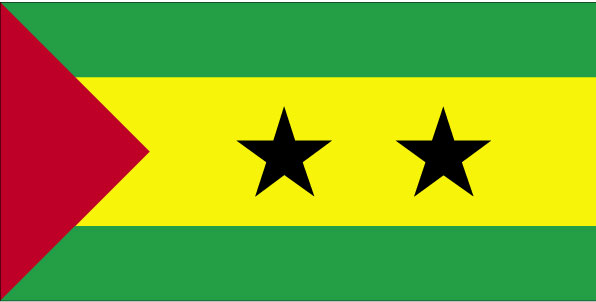
Sao Tome and Principe
Sao Tome e Principe
Declare Your Relationship to Sao Tome and Principe
CountryReports Community
- Studying0
- From Sao Tome and Principe0
- Sao Tome and Principe heritage0
- Visited1
- Want to visit1
Customs and Culture
Customs and Culture
Cultural Attributes
São Tomé and Príncipe, a small island nation in the Gulf of Guinea off the western coast of Central Africa, has a unique and diverse culture shaped by its history, geography, and the blend of African, Portuguese, and Creole influences.
Luso-African Heritage: São Tomé and Príncipe was a Portuguese colony until it gained independence in 1975. As a result, the country's culture reflects a fusion of African and Portuguese influences. Portuguese is the official language, and many cultural elements, including language, cuisine, religion, and architecture, have Portuguese origins.
Music and Dance: Music and dance are integral parts of São Toméan culture, with a rich tradition of rhythmic music and vibrant dance styles. Traditional music genres such as zouk, coladeira, socopé, and danço-congo blend African rhythms with Portuguese melodies, creating a unique musical heritage. Festivals and celebrations often feature live music performances and colorful dance displays.
Carnival: São Toméan Carnival, known as "Carnaval de São Tomé e Príncipe," is a lively annual celebration held before Lent. It features vibrant parades, music, dance, and elaborate costumes, drawing participants and spectators from across the islands. Carnival is a time for revelry, creativity, and cultural expression, with communities coming together to celebrate their heritage.
Religion: The majority of the population in São Tomé and Príncipe practices Christianity, with Roman Catholicism being the predominant religion. The Catholic Church has had a significant influence on the cultural and social life of the islands, shaping traditions, customs, and rituals associated with religious holidays and ceremonies.
Community and Social Life: São Toméan society places a strong emphasis on community, family, and social cohesion. Extended families are common, and social gatherings such as family reunions, religious events, and festivals play an essential role in maintaining social bonds and traditions.
Arts and Crafts: São Tomé and Príncipe has a thriving arts and crafts scene, with artisans producing a wide range of handmade items such as ceramics, wood carvings, batik fabrics, and woven baskets. These traditional crafts often incorporate motifs and designs inspired by local flora, fauna, and cultural symbols.
Natural Heritage: The natural environment of São Tomé and Príncipe, characterized by lush rainforests, volcanic landscapes, and pristine beaches, is an integral part of the country's cultural identity. The islands' biodiversity, including unique species of flora and fauna, inspires local art, folklore, and storytelling traditions.
Chocolate Islands of the Gulf of Guinea
Social Customs & Etiquette
Greetings
Greetings are an important part of social interactions and are often accompanied by warmth, respect, and friendliness.
Handshake: A handshake is a common greeting in São Tomé and Príncipe, particularly in formal or business settings. When shaking hands, making eye contact and offering a firm but not overly strong handshake is customary. Men typically shake hands with each other, while women may shake hands with other women or offer a nod in greeting.
Verbal Greetings: Verbal greetings are also common in São Toméan culture and may vary depending on the time of day and familiarity between individuals. Common greetings include "Bom dia" (Good morning), "Boa tarde" (Good afternoon), and "Boa noite" (Good evening/night). A smile often accompanies these greetings and may be followed by inquiries about one's well-being or the well-being of their family members.
Kiss on the Cheek: In more informal or social settings, particularly among friends and family members, it is common for people to exchange kisses on the cheek as a greeting. This custom typically involves touching cheeks and making a kissing sound, but the number of kisses may vary (usually one or two). However, it's essential to consider the level of familiarity and comfort between individuals before initiating this form of greeting.
Hugs: Hugging is another common form of greeting in São Tomé and Príncipe, especially among close friends and family members. Hugs are typically exchanged with a warm embrace and may be accompanied by verbal expressions of affection or well-wishes.
Respect for Elders: In São Toméan culture, it's customary to show respect for elders by greeting them with particular deference and courtesy. This may include bowing slightly, using formal language or titles, and expressing gratitude or appreciation for their wisdom and guidance.
Hand on Heart: In more heartfelt or emotional greetings, particularly between close friends or family members, it's common for individuals to place a hand over their heart as a sign of sincerity, affection, or respect.
Gestures
Certain gestures or behaviors may be considered offensive or inappropriate. While the cultural norms in São Tomé and Príncipe are generally relaxed and tolerant, it's essential to be respectful and mindful of local customs and sensitivities.
Pointing with Fingers: Pointing at someone or something with your finger, especially with an extended index finger, can be rude or aggressive in São Toméan culture. Instead, gestures with an open hand or nodding toward what you refer to are more polite.
Showing the Sole of Your Foot or Shoe: Showing the sole of your foot or shoe, whether intentionally or unintentionally, can be seen as disrespectful in São Toméan culture. It's best to avoid crossing your legs or sitting in a way that exposes the soles of your feet when interacting with others.
Public Displays of Affection: Public displays of affection, such as kissing, hugging, or holding hands, may not be well-received in conservative areas or among older generations in São Tomé and Príncipe. It's advisable to be discreet and respectful of local customs regarding physical contact in public spaces.
Using the Left Hand: In many cultures, including São Toméan culture, the left hand is traditionally considered unclean because it is used for personal hygiene purposes. Therefore, it's considered impolite to use the left hand for gestures such as shaking hands, eating, or passing objects to others. The right hand is generally preferred for these actions.
Pointing Feet Towards Others: Similar to showing the sole of your foot or shoe, pointing your feet towards others when sitting or standing can be perceived as disrespectful in São Toméan culture. It's courteous to keep your feet positioned away from others or to tuck them underneath you when sitting.
Negative Body Language: Negative body language, such as crossing your arms, frowning, or rolling your eyes, can convey disrespect or disapproval in São Toméan culture. It's essential to maintain an open and friendly demeanor, even in challenging or frustrating situations.
Interrupting or Speaking Loudly: Interrupting someone while they are speaking or raising your voice in conversation can be seen as rude or confrontational in São Toméan culture. It's important to listen attentively, wait for your turn to speak, and communicate respectfully with others.
Personal Appearance
In São Tomé and Príncipe, the traditional attire varies depending on the occasion, cultural background, and personal preferences of individuals.
Everyday Clothing: In everyday life, people in São Tomé and Príncipe typically wear casual and comfortable clothing suited to the tropical climate. This often includes lightweight and breathable fabrics such as cotton and linen. Men may wear shirts, T-shirts, shorts, or lightweight trousers, while women may opt for dresses, skirts, or trousers paired with blouses or T-shirts.
Traditional Attire: Traditional clothing in São Tomé and Príncipe reflects the country's multicultural heritage and includes elements influenced by African, Portuguese, and Creole traditions. Traditional attire may vary by region and ethnic group. For men, traditional clothing may include colorful shirts or tunics paired with trousers, often accessorized with a hat or headscarf. Women's traditional attire may include colorful dresses, skirts, or wraps adorned with vibrant patterns or prints, accessorized with headscarves, jewelry, and beads.
Ceremonial Dress: For special occasions, ceremonies, and celebrations such as weddings, festivals, or religious holidays, people in São Tomé and Príncipe may wear more formal attire. This could include traditional ceremonial garments adorned with intricate embroidery, embellishments, or traditional textiles. Men may wear suits or formal attire, while women may opt for elegant dresses or ensembles in vibrant colors and fabrics.
Beachwear: Given the islands' tropical climate and beautiful coastline, beachwear is common attire for leisure activities such as swimming, sunbathing, or relaxing by the sea. Beachwear typically includes swimsuits, cover-ups, sarongs, flip-flops, and sun hats.
Western Influence: Due to globalization and modernization, Western-style clothing is also prevalent in São Tomé and Príncipe, particularly among the younger generation and in urban areas. Western-style clothing such as jeans, T-shirts, dresses, and sneakers are commonly worn for everyday activities, work, and social events.
Islamic Dress: While São Tomé and Príncipe is predominantly Christian, there is a small Muslim community on the islands. Muslim women who observe Islamic dress codes may wear modest clothing such as hijabs, abayas, or headscarves in accordance with their religious beliefs.
Overall, the dress code in São Tomé and Príncipe is diverse and influenced by cultural, social, an
Dating Customs
Dating and marriage customs in São Tomé and Príncipe reflect a blend of African traditions and Portuguese colonial influences, shaped over centuries of cultural exchange on this small island nation off the coast of Central Africa.
The legal minimum age for marriage is 18 years for both men and women, though exceptions have historically occurred in practice in rural communities. The government, with support from international organizations, has worked to strengthen enforcement of these protections, particularly for young women.
Relationships on the islands often begin informally, with courtship influenced by the close-knit nature of island communities where extended family networks play an important social role. Both civil and religious marriages are practiced, with Catholic ceremonies being especially common given that the majority of the population identifies as Roman Catholic, a legacy of Portuguese colonization beginning in the 15th century.
A notable feature of family life in São Tomé and Príncipe is the relatively high rate of consensual unions, where couples live together and raise children without formal legal marriage. This pattern is common throughout much of Portuguese-speaking Africa and reflects both economic factors and longstanding social customs. As a result, a significant proportion of households are headed by single mothers, and births outside of formal marriage are common and generally accepted without social stigma.
Polygamy is not legally recognized under the civil code, which is based on Portuguese legal traditions. However, informal arrangements involving men with multiple partners do occur, particularly in rural areas.
Gender roles within relationships have traditionally placed men in a dominant position, though urbanization and access to education have begun shifting dynamics, particularly among younger generations in the capital, São Tomé city. Women's organizations and government initiatives have increasingly focused on promoting gender equality and reducing domestic violence, which has been identified as a concern in national social reports.
Family ties remain central to daily life, and weddings, when formally celebrated, are important community events involving extended family, music, food, and dancing — often lasting well into the evening.
Recreation
Recreational activities are often centered around the islands' natural beauty, cultural heritage, and community gatherings.
Beach Activities: With its pristine beaches and crystal-clear waters, São Tomé and Príncipe offer ample opportunities for swimming, sunbathing, snorkeling, and diving. Visitors and locals enjoy exploring the colorful coral reefs, marine life, and underwater landscapes.
Hiking and Nature Walks: The islands' lush rainforests, volcanic peaks, and scenic landscapes provide excellent opportunities for hiking, trekking, and nature walks. Popular hiking trails include those leading to Pico de São Tomé, the highest peak on São Tomé Island, and through Obo National Park, home to diverse flora and fauna.
Birdwatching: São Tomé and Príncipe are renowned for their rich birdlife, including endemic species such as the São Tomé ibis, São Tomé olive pigeon, and São Tomé paradise flycatcher. Birdwatching enthusiasts can explore the islands' forests, wetlands, and coastal areas to spot a variety of bird species.
Cultural Tours and Heritage Sites: São Tomé and Príncipe have a rich cultural heritage, with historic landmarks, colonial architecture, and cultural attractions to explore. Visitors can take guided tours of historic plantations, colonial buildings, and museums to learn about the islands' history, culture, and Creole heritage.
Fishing and Boat Tours: Fishing is a popular recreational activity in São Tomé and Príncipe, with opportunities for deep-sea fishing, sport fishing, and traditional fishing techniques. Visitors can also take boat tours, cruises, or sailing trips around the islands to explore the coastline, visit secluded beaches, and spot marine wildlife.
Cultural Festivals and Events: São Tomé and Príncipe hosts various cultural festivals and events throughout the year, celebrating music, dance, food, and local traditions. These festivals, such as Carnival, São João (St. John's Day), and Independence Day celebrations, offer opportunities for community gatherings, cultural exchange, and festive celebrations.
Photography and Nature Exploration: The islands' scenic beauty, diverse landscapes, and unique flora and fauna make São Tomé and Príncipe a paradise for photographers and nature enthusiasts. Whether exploring the rainforests, capturing sunset views, or observing wildlife, there are plenty of opportunities for photography and nature exploration.
Community Gatherings and Socializing: São Toméan culture places a strong emphasis on community, family, and social gatherings. Locals often gather for picnics, barbecues, and beach outings with family and friends, enjoying food, music, and leisure time together.
Holidays
Independence Day
7/12Independence Day
Dates of Interest
- January 29th
Some holidays and festivals in São Tomé and Príncipe are specific to certain plantations or regions and celebrate the cultural heritage of those areas. These events often include traditional music, dance, food, and activities that highlight the history and contributions of the local community.
How do people greet each other in Sao Tome and Principe?
Greetings are warm and respectful, ranging from a firm handshake in formal settings to cheek kisses and hugs among friends and family. Verbal greetings vary by time of day and are usually accompanied by a smile.
Do
- Offer a firm but not overly strong handshake with eye contact in formal settings
- Use 'Bom dia', 'Boa tarde', or 'Boa noite' depending on the time of day
- Exchange one or two cheek kisses with friends and family in informal settings
- Show elders extra deference, using formal language or titles
Don’t
- Don't initiate cheek kisses before gauging familiarity and comfort
Good to know
- A hand over the heart signals sincerity and affection in heartfelt greetings
- Asking about someone's family well-being is a common courtesy
Which gestures should I avoid in Sao Tome and Principe?
Norms are generally relaxed, but avoid pointing, showing the soles of your feet, and using the left hand for social interactions. Keep body language open and speak calmly.
Do
- Gesture with an open hand or nod toward what you mean
- Use the right hand for handshakes, eating, and passing objects
- Keep feet positioned away from others or tucked underneath when sitting
- Listen attentively and wait your turn to speak
Don’t
- Don't point at people or things with an extended index finger
- Don't show the sole of your foot or shoe, or point your feet at others
- Don't use the left hand for gestures, eating, or passing items
- Don't cross your arms, frown, roll your eyes, interrupt, or raise your voice
Good to know
- Be discreet with public displays of affection, especially around older generations or in conservative areas
What should I wear in Sao Tome and Principe?
Everyday dress is casual and comfortable, using lightweight fabrics suited to the tropical climate, with Western-style clothing common in urban areas. More formal or traditional attire is worn for ceremonies and celebrations.
Do
- Wear lightweight, breathable fabrics like cotton and linen
- Choose more formal attire for weddings, festivals, and religious holidays
- Pack beachwear such as swimsuits, cover-ups, sarongs, and sun hats for the coast
Good to know
- Traditional attire features vibrant patterns, prints, and accessories like headscarves, jewelry, and beads
- Muslim women may wear modest clothing such as hijabs or abayas
What role do family and community play in Sao Tome and Principe?
Society places strong emphasis on community, family, and social cohesion, with extended families being common. Social gatherings like family reunions, religious events, and festivals help maintain bonds and traditions.
Good to know
- Locals often gather for picnics, barbecues, and beach outings with family and friends
What do people do for recreation in Sao Tome and Principe?
Recreation centers on the islands' natural beauty, cultural heritage, and community gatherings, including beach activities, hiking, birdwatching, and festivals.
Do
- Swim, snorkel, or dive to explore coral reefs and marine life
- Hike trails such as Pico de Sao Tome or through Obo National Park
- Go birdwatching for endemic species in forests, wetlands, and coastal areas
- Take cultural tours of historic plantations, colonial buildings, and museums
Good to know
- Carnival, Sao Joao (St. John's Day), and Independence Day offer festive community celebrations
- Fishing and boat tours are popular ways to explore the coastline
What should I know about Sao Tome and Principe before visiting?
This Gulf of Guinea island nation blends African, Portuguese, and Creole influences, with Portuguese as the official language and Roman Catholicism as the predominant religion. Music, dance, and lush natural landscapes are central to its cultural identity.
Good to know
- Portuguese is the official language
- Traditional music genres include zouk, coladeira, socope, and danco-congo
- Look for local arts and crafts like ceramics, wood carvings, batik fabrics, and woven baskets
Last updated: 2026-07-12 · Sources: CountryReports
Travel and Tourism
Travel and Tourism
- Travel Alert Status
- Level 1: Exercise Normal Precautions
- Currency
- dobra (STD)
- Time Difference
- UTC 0 (5 hours ahead of Washington, DC, during Standard Time)
- Climate
- tropical; hot, humid; one rainy season (October to May)
- Airports
- 2
Read the full travel guide — health, safety, vaccinations, disease risk, sanitation, and transit details.
View full travel guideRecipes
Recipes
History
History
Historical Eras
Portuguese Discovery & Settlement
1470 – 1522
Portuguese navigators discovered the uninhabited islands between 1469 and 1472, with the first permanent settlement established on São Tomé in 1493 under Álvaro Caminha. Príncipe was settled shortly after in 1500. The islands quickly attracted colonists and enslaved Africans, laying the groundwork for a plantation economy in one of the Atlantic's most strategically positioned archipelagos.
Sugar Colony Era
1522 – 1800
After the Portuguese Crown took direct administrative control of São Tomé in 1522 and Príncipe in 1573, the islands became Africa's foremost sugar exporter, driven entirely by enslaved labor. Sugar's dominance waned by the mid-1600s as Brazilian competition intensified, reducing São Tomé largely to a provisioning stop for transatlantic slave ships. The islands entered a prolonged period of economic stagnation and periodic attacks by Dutch and French raiders.
Cocoa & Coffee Plantation Era
1800 – 1953
The introduction of coffee and cocoa in the early 19th century revived the plantation economy, and by 1908 São Tomé was the world's largest cocoa producer. Vast estates known as roças, owned by Portuguese companies and absentee landlords, dominated the land and relied on African contract laborers under conditions widely condemned as forced labor. This era culminated in the Batepa Massacre of 1953, in which Portuguese authorities killed several hundred African workers, galvanizing nascent independence sentiment.
Late Colonial & Liberation
1953 – 1975
The Batepa Massacre spurred Santomean activists to form the Movement for the Liberation of São Tomé and Príncipe (MLSTP) in the late 1950s, which organized from exile in Gabon. Portugal's Carnation Revolution of April 1974 brought a new Lisbon government committed to decolonization; negotiations in Algiers between Portuguese officials and the MLSTP rapidly produced an independence agreement. São Tomé and Príncipe formally became independent on July 12, 1975, with MLSTP leader Manuel Pinto da Costa as its first President.
One-Party Socialist State
1975 – 1991
Under Pinto da Costa, the MLSTP governed as the sole legal party, nationalizing the roças and aligning the country initially with Marxist-bloc states before pragmatically distancing itself as the economy deteriorated in the 1980s. A coup attempt in 1988 underscored growing internal discontent. By 1990, facing economic crisis and continental pressure for reform, the government legalized opposition parties and amended the constitution, setting the stage for multiparty democracy.
Democratic & Modern Era
1991 – present
São Tomé held its first free elections in 1991, making it among Africa's earliest multiparty democracies, though political instability persisted through frequent government changes and coup attempts in 1995 and 2003. Miguel Trovoada and later Fradique de Menezes led the country through turbulent coalitional politics while the economy remained heavily dependent on cocoa and foreign aid. The discovery of offshore oil in the Gulf of Guinea and a production-sharing agreement signed with Nigeria in 2005 introduced significant new prospects for economic transformation.
Overview
Sugar cultivation declined over the next 100 years, and by the mid-1600s, Sao Tome was little more than a port of call for bunkering ships. In the early 1800s, two new cash crops, coffee and cocoa, were introduced. The rich volcanic soils proved well suited to the new cash crop industry, and soon extensive plantations (rocas), owned by Portuguese companies or absentee landlords, occupied almost all of the good farmland. By 1908, Sao Tome had become the world’s largest producer of cocoa, still the country’s most important crop.
The rocas system, which gave the plantation managers a high degree of authority, led to abuses against the African farm workers. Although Portugal officially abolished slavery in 1876, the practice of forced paid labor continued. In the early 1900s, an internationally publicized controversy arose over charges that Angolan contract workers were being subjected to forced labor and unsatisfactory working conditions. Sporadic labor unrest and dissatisfaction continued well into the 20th century, culminating in an outbreak of riots in 1953 in which several hundred African laborers were killed in a clash with their Portuguese rulers. This "Batepa Massacre" remains a major event in the colonial history of the islands, and the government officially observes its anniversary.
By the late 1950s, when other emerging nations across the African Continent were demanding independence, a small group of Sao Tomeans had formed the Movement for the Liberation of Sao Tome and Principe (MLSTP), which eventually established its base in nearby Gabon. Picking up momentum in the 1960s, events moved quickly after the overthrow of the Salazar and Caetano dictatorship in Portugal in April 1974. The new Portuguese regime was committed to the dissolution of its overseas colonies; in November 1974, their representatives met with the MLSTP in Algiers and worked out an agreement for the transfer of sovereignty. After a period of transitional government, Sao Tome and Principe achieved independence on July 12, 1975, choosing as its first President the MLSTP Secretary General, Manuel Pinto da Costa.
In 1990, Sao Tome became one of the first African countries to embrace democratic reform. Changes to the constitution, including the legalization of opposition political parties, led to nonviolent, free, and transparent elections in 1991. Miguel Trovoada, a former Prime Minister who had been in exile since 1986, returned as an independent candidate and was elected President. Trovoada was re-elected in Sao Tome’s second multiparty presidential election in 1996. The Party of Democratic Convergence (PCD) toppled the MLSTP to take a majority of seats in the National Assembly, with the MLSTP becoming an important and vocal minority party. Municipal elections followed in late 1992, in which the MLSTP came back to win a majority of seats on five of seven regional councils. In early legislative elections in October 1994, the MLSTP won a plurality of seats in the Assembly. It regained an outright majority of seats in the November 1998 elections.
The Government of Sao Tome fully functions under a multiparty system. Presidential elections were held in July 2001. The candidate backed by the Independent Democratic Action Party, Fradique de Menezes, was elected in the first round and inaugurated on September 3. Parliamentary elections held in March 2002 led to a coalition government after no party gained a majority of seats. An attempted coup d’etat in July 2003 by a few members of the military and the Christian Democratic Front (mostly representative of former Sao Tomean volunteers from the apartheid-era Republic of South African Army) was reversed by international, including American, mediation without bloodshed. In September 2004, President de Menezes dismissed the Prime Minister and appointed a new cabinet, which was accepted by the majority party. In June 2005, following public discontent with oil exploration licenses granted in the Joint Development Zone (JDZ) with Nigeria, the MLSTP, the party with the largest number of seats in the National Assembly, and its coalition partners threatened to resign from government and force early parliamentary elections. After several days of negotiations, the President and the MLSTP agreed to form a new government and to avoid early elections. The new government includes Maria Silveira, the well-resp
Timeline of Key Events
1501 – 1600
Sao Tome colonized by the Portuguese.
Sao Tome colonized by the Portuguese, who bring in slaves to work sugar plantations. Becomes important staging post for slave trade.
1800
Cocoa introduced. Sao Tome develops into one of world’s main cocoa producers.
1951
Becomes overseas province of Portugal.
1975
Independence
Independence, with Manuel Pinto da Costa (MLSTP) as president and Miguel Trovoada as prime minister. Plantations nationalized, strong ties built up with communist countries.
1980
Government scales down links with communist world as economy deteriorates.
Government scales down links with communist world as economy deteriorates. Declares itself nonaligned, seeks Western support for recovery plans.
1988
Coup attempt.
Coup attempt.
1997
Unrest over economic conditions.
Read the full history profile — narrative overview, defining eras, and the complete timeline in one place.
View expanded historyInteresting Facts
Interesting Facts
The chief exports are cocoa, coffee, copra, and palm products.
In the 15th century, Portuguese navigators discovered these two volcanic islands off the coast of West Africa in the Gulf of Guinea.
See every fact — trivia, oddities, and curious tidbits gathered from across the country.
View all interesting factsGeography and Environment
Geography and Environment
- Terrain
- volcanic, mountainous
- Climate
- tropical; hot, humid; one rainy season (October to May)
- Natural Hazards
- NA
- Current Environmental Issues
- deforestation; soil erosion and exhaustion
Read the full geography and environment profile — terrain, climate, natural resources, hazards, land use, and international agreements.
View full geographyPeople & Demographics
People & Demographics
Religion
Languages Spoken
Portuguese (official)
- Spanish
Population
- Population
- 229,300
- Population in Major Urban Areas
- SAO TOME (capital) 64,000
- Nationality Noun
- Sao Tomean(s)
- Ethnic Groups
- mestico, angolares (descendants of Angolan slaves), forros (descendants of freed slaves), servicais (contract laborers from Angola, Mozambique, and Cape Verde), tongas (children of servicais born on the islands), Europeans (primarily Portuguese)
Education
- Literacy Definition
- age 15 and over can read and write
Health Information
- Life Expectancy at Birth
- Life expectancy at birth in Sao Tome and Principe has shown meaningful improvement over recent decades, reflecting the island nation's gradual advances in healthcare access, disease control, and maternal and child health services. As of the most recent available data, the overall life expectancy at birth stands at approximately 71 to 72 years, placing the country in a mid-range position relative to other sub-Saharan African nations. Women in Sao Tome and Principe tend to outlive men by several years, with female life expectancy reaching roughly 73 to 74 years compared to approximately 69 to 70 years for males. This gender gap is consistent with global patterns and reflects differences in occupational risks, health-seeking behavior, and biological factors. Several factors have contributed to the nation's improving longevity trends. Increased access to basic healthcare services, improvements in sanitation and clean water infrastructure, and targeted public health campaigns addressing malaria — historically one of the leading causes of mortality on the islands — have all played a role. Malaria remains a significant health concern, though sustained control efforts have reduced its death toll considerably over the years. Infant and child mortality, while still higher than in more developed nations, has declined substantially since the 1980s and 1990s. Reductions in under-five mortality have been a key driver of the overall rise in life expectancy, as childhood deaths disproportionately drag down national averages. Challenges remain, however. The country's remote island geography creates logistical difficulties in delivering consistent healthcare, particularly for residents of Príncipe island and rural communities on São Tomé. Limited medical infrastructure, a shortage of trained health professionals, and dependence on international aid and foreign medical partnerships continue to constrain further gains. Compared to global averages — where life expectancy stands at approximately 73 years — Sao Tome and Principe falls slightly below but performs notably better than many of its continental African neighbors, where averages in several countries remain in the mid-to-low 60s. Continued investment in public health systems and international partnerships will be essential for sustaining and building upon the progress achieved in recent decades.
- Major Infectious Diseases — degree of risk
- high
- Infant Mortality Rate
- Infant mortality in Sao Tome and Principe has declined significantly over recent decades, reflecting improvements in healthcare access, nutrition programs, and maternal health services across the island nation. As of the most recent available data, the infant mortality rate stands at approximately 25 to 30 deaths per 1,000 live births, a notable reduction from rates that exceeded 60 per 1,000 live births in the early 1990s. Despite this progress, the rate remains considerably higher than the global average for upper-middle-income countries, underscoring ongoing challenges in the country's health infrastructure. Sao Tome and Principe is a small island developing state with limited resources, and geographic isolation between its two main islands can complicate timely access to medical care for mothers and newborns in rural or remote areas. The leading causes of infant death in the country include neonatal complications such as birth asphyxia and prematurity, as well as infectious diseases including malaria, diarrheal diseases, and acute respiratory infections. Malnutrition also plays a contributing role, weakening infant immune responses and increasing vulnerability to illness. International organizations including UNICEF and the World Health Organization have partnered with the Santomean government to expand immunization coverage, improve skilled birth attendance, and promote exclusive breastfeeding during the critical first six months of life. These initiatives have contributed meaningfully to the downward trend in infant deaths. Access to clean water and improved sanitation has also been identified as a key factor in reducing infant mortality, and ongoing development programs continue to address gaps in these essential services. The country has made measurable strides toward broader child health goals, though sustaining and accelerating progress will require continued investment in healthcare workers, medical facilities, and community-level health education. Compared to regional neighbors in sub-Saharan Africa, Sao Tome and Principe performs relatively well, though the country acknowledges that further reductions in infant mortality remain a public health priority.
Life Expectancy
- Life Expectancy at Birth
- Life expectancy at birth in Sao Tome and Principe has shown meaningful improvement over recent decades, reflecting the island nation's gradual advances in healthcare access, disease control, and maternal and child health services. As of the most recent available data, the overall life expectancy at birth stands at approximately 71 to 72 years, placing the country in a mid-range position relative to other sub-Saharan African nations. Women in Sao Tome and Principe tend to outlive men by several years, with female life expectancy reaching roughly 73 to 74 years compared to approximately 69 to 70 years for males. This gender gap is consistent with global patterns and reflects differences in occupational risks, health-seeking behavior, and biological factors. Several factors have contributed to the nation's improving longevity trends. Increased access to basic healthcare services, improvements in sanitation and clean water infrastructure, and targeted public health campaigns addressing malaria — historically one of the leading causes of mortality on the islands — have all played a role. Malaria remains a significant health concern, though sustained control efforts have reduced its death toll considerably over the years. Infant and child mortality, while still higher than in more developed nations, has declined substantially since the 1980s and 1990s. Reductions in under-five mortality have been a key driver of the overall rise in life expectancy, as childhood deaths disproportionately drag down national averages. Challenges remain, however. The country's remote island geography creates logistical difficulties in delivering consistent healthcare, particularly for residents of Príncipe island and rural communities on São Tomé. Limited medical infrastructure, a shortage of trained health professionals, and dependence on international aid and foreign medical partnerships continue to constrain further gains. Compared to global averages — where life expectancy stands at approximately 73 years — Sao Tome and Principe falls slightly below but performs notably better than many of its continental African neighbors, where averages in several countries remain in the mid-to-low 60s. Continued investment in public health systems and international partnerships will be essential for sustaining and building upon the progress achieved in recent decades.
- Infant Mortality Rate
- Infant mortality in Sao Tome and Principe has declined significantly over recent decades, reflecting improvements in healthcare access, nutrition programs, and maternal health services across the island nation. As of the most recent available data, the infant mortality rate stands at approximately 25 to 30 deaths per 1,000 live births, a notable reduction from rates that exceeded 60 per 1,000 live births in the early 1990s. Despite this progress, the rate remains considerably higher than the global average for upper-middle-income countries, underscoring ongoing challenges in the country's health infrastructure. Sao Tome and Principe is a small island developing state with limited resources, and geographic isolation between its two main islands can complicate timely access to medical care for mothers and newborns in rural or remote areas. The leading causes of infant death in the country include neonatal complications such as birth asphyxia and prematurity, as well as infectious diseases including malaria, diarrheal diseases, and acute respiratory infections. Malnutrition also plays a contributing role, weakening infant immune responses and increasing vulnerability to illness. International organizations including UNICEF and the World Health Organization have partnered with the Santomean government to expand immunization coverage, improve skilled birth attendance, and promote exclusive breastfeeding during the critical first six months of life. These initiatives have contributed meaningfully to the downward trend in infant deaths. Access to clean water and improved sanitation has also been identified as a key factor in reducing infant mortality, and ongoing development programs continue to address gaps in these essential services. The country has made measurable strides toward broader child health goals, though sustaining and accelerating progress will require continued investment in healthcare workers, medical facilities, and community-level health education. Compared to regional neighbors in sub-Saharan Africa, Sao Tome and Principe performs relatively well, though the country acknowledges that further reductions in infant mortality remain a public health priority.
Read the full people and society profile — demographics, health, education, religion, languages, and notable people.
View full people and societyGovernment & Politics
Government & Politics
Country Identity
- Country Name
- SaoTomeandPrincipe
- Full Country Name
- Democratic Republic of Sao Tome and Principe
- Local - Long
- Republica Democratica de Sao Tome e Principe
- Local - Short
- Sao Tome e Principe
Government Structure
- Government Type
- republic
- Legal System
- based on Portuguese legal system and customary law; has not accepted compulsory ICJ jurisdiction
- Executive Branch
- chief of state: President Carlos Vila NOVA (since 2 October 2021) head of government: Prime Minister Américo RAMOS (since 11 November 2022) cabinet: Council of Ministers appointed by the president on the proposal of the prime minister elections: president elected by popular vote for a five-year term; election last held on 18 July 2021, with a runoff on 8 August 2021 (next to be held in 2026); prime minister chosen by the National Assembly and approved by the president election results: Carlos Vila NOVA elected president in the second round; percent of vote in runoff - Carlos Vila NOVA (MDFM) 57.5%, Guilherme POSSER DA COSTA (MLSTP-PSD) 42.5%
- Legislative Branch
- Unicameral National Assembly or Assembleia Nacional (55 seats; members are elected by direct, popular vote to serve four-year terms) Elections: last held on 25 September 2022 (next to be held in 2026) Election results: percent of vote by party — Action of the Independent Citizens of São Tomé and Príncipe (ACIS) 43.9%, Movement for the Liberation of São Tomé and Príncipe–Social Democratic Party (MLSTP-PSD) 24.8%, Independent Democratic Action (ADI) 20.8%, other 10.5%; seats by party — ACIS 30, MLSTP-PSD 18, ADI 5, other 2
- Judicial Branch
- Supreme Court (judges are appointed by the National Assembly)
- Suffrage
- 18 years of age; universal
- Constitution
- approved March 1990; effective 10 September 1990
- Independence
- 12 July 1975 (from Portugal)
- National Holiday
- Independence Day, 12 July (1975)
Capital City
- Capital Name
- Sao Tome
- Capital - geographic coordinate
- 0 20 N, 6 44 E
- Capital Time Difference
- UTC 0 (5 hours ahead of Washington, DC, during Standard Time)
named after Saint Thomas the Apostle
Military
Branches: Armed Forces of Sao Tome and Principe (Forcas Armadas de Sao Tome e Principe, FASTP): Army, Coast Guard of Sao Tome e Principe (Guarda Costeira de Sao Tome e Principe, GCSTP); also called "Navy"), Presidential Guard
Embassy / Diplomatic Mission
Although there is not a U.S. embassy in São Tomé and Príncipe, the U.S. Embassy in Libreville, Gabon, is accredited to São Tomé and Príncipe and can provide assistance to U.S. citizens there.
U.S. Embassy Libreville
BP 4000
Sabliere Neighborhood
Libreville, Gabon
Telephone: 241-01-45-71-00
Emergency after-hours telephone: 241-07-38-01-71
Facsimile: 241-01-45-71-05
Email: LibrevilleACS@state.gov
Read the full government profile — flag symbolism, national anthem, and other national symbols.
View full government detailsEconomy
Economy
Sao Tome and Principe is a small island economy that has historically depended on cocoa, though the sector has declined significantly due to drought, mismanagement, and falling productivity. Today, cocoa remains the principal export crop, but the country's economic base has diversified modestly toward tourism, services, and construction. Sao Tome must import nearly all fuels, most manufactured and consumer goods, and a substantial portion of its food, leaving it highly vulnerable to external price shocks.
The country has long struggled to service its external debt and has relied heavily on concessional aid, foreign assistance, and debt relief. Sao Tome reached the completion point under the Heavily Indebted Poor Countries (HIPC) Initiative in 2007, which significantly reduced its debt burden, though public debt has since risen again and remains a concern. The economy continues to depend on support from multilateral institutions, including the International Monetary Fund, World Bank, African Development Bank, and bilateral partners such as Portugal.
Tourism has emerged as one of the most promising sectors, with the government investing in infrastructure and promoting the islands' biodiversity, beaches, and eco-tourism potential. Agriculture, fisheries, and a small services sector round out economic activity. Structural reforms, improvements in public financial management, and efforts to liberalize prices and reduce subsidies have been pursued with mixed success.
Although Sao Tome long anticipated revenues from offshore petroleum exploration in the Gulf of Guinea, commercial production has yet to materialize, and prospects remain uncertain. Persistent challenges include a narrow export base, energy shortages, vulnerability to climate change, and limited domestic revenue mobilization. Economic growth has been modest in recent years, constrained by global shocks, inflation, and fiscal pressures, but the country continues to pursue reforms aimed at building a more resilient and diversified economy.
Snapshot
- Currency Name and Code
- Dobra (STD)
- GDP Real Growth Rate
- 4.1%
Banknotes


Budget & Public Finance
- Fiscal Year
- calendar year
- External Debt
- $318,000,000 (USD)
- Investment (% of GDP)
- 31.2%
- Economic Aid
- $200,000,000 (USD)
- Current Account Balance
- -$19,000,000 (USD)
- Reserves of Foreign Exchange
- $20,000,000 (USD)
Labor, Industry & Trade
- Labor Force by Occupation
- population mainly engaged in subsistence agriculture and fishing
- Industries
- light construction, textiles, soap, beer; fish processing; timber
- Agriculture Products
- cocoa, coconuts, palm kernels, copra, cinnamon, pepper, coffee, bananas, papayas, beans; poultry; fish
- Export Commodities
- cocoa 80%, copra, coffee, palm oil
- Export Partners
- Netherlands 37.5%, Belgium 12.5%, Canada 12.5%, Germany 12.5%, Spain 12.5%
- Import Commodities
- machinery and electrical equipment, food products, petroleum products
- Import Partners
- Portugal 50.8%, Germany 10.2%, UK 8.5%, Belgium 6.8%
Energy
- Oil Production
- 0 bbl/day
- Oil Consumption
- 650 bbl/day
- Oil Reserves
- 0 bbl/day
- Natural Gas Consumption
- 0 cu m
- Natural Gas Reserves
- 0 cu m
Communications
- Telephone System
- general assessment: local telephone network of adequate quality with most lines connected to digital switches domestic: combined fixed-line and mobile-cellular teledensity roughly 65 telephones per 100 persons international: country code - 239; satellite earth station - 1 Intelsat (Atlantic Ocean)
- Internet Country Code
- .st
News & Weather
News & Weather
Current Weather
Latest News
TGS Kicks Off São Tomé And Príncipe 2D Pre-Stack Depth Migration Reprocessing Project - Ocean News & Technology
Ocean News & Technology · 3h ago
TGS Commences Regional Scale Seismic Reprocessing, offshore São Tomé and Príncipe - Africa Oil+Gas Report
Africa Oil+Gas Report · 9h ago
Sao Tome and Principe votes for president, Vila Nova seeks new term - Reuters
Reuters · 23d ago
Amid elections, Sao Tome and Principe balances global powers - dw.com
dw.com · 24d ago
São Tomé and Príncipe heads to polls in tense presidential election | Sao Tome and Principe - The Guardian
The Guardian · 23d ago
WHO São Tomé and Príncipe Newsletter – January to March 2026 - WHO | Regional Office for Africa
WHO | Regional Office for Africa · 3d ago
São Tomé and Príncipe’s historic plantations added to UNESCO world heritage list - africanews.com
africanews.com · 14d ago
São Tomé Reelects President as Great-Power Rivalry in Gulf of Guinea Thrusts It Into Spotlight - globalpost.com
globalpost.com · 18d ago
News via Google News
Climate Overview
tropical; hot, humid; one rainy season (October to May)
Videos
Videos
1 curated YouTube videos.
Source: YouTube
Frequently Asked Questions
What is the population of Sao Tome and Principe?
How do people greet each other in Sao Tome and Principe?
Which gestures should I avoid in Sao Tome and Principe?
What should I wear in Sao Tome and Principe?
What role do family and community play in Sao Tome and Principe?
What do people do for recreation in Sao Tome and Principe?
What should I know about Sao Tome and Principe before visiting?
What is the capital of São Tomé and Príncipe?
Where is São Tomé and Príncipe located?
What bodies of water surround São Tomé and Príncipe?
What is the predominant religion in São Tomé and Príncipe?
What currency is used in São Tomé and Príncipe?
What language is spoken in São Tomé and Príncipe?
What is the geography of São Tomé and Príncipe like?
What is São Tomé and Príncipe known for?
Last reviewed 2026

English
Español
中文
हिन्दी
Français