
 English
 Español
 中文
中文 हिन्दी
 Français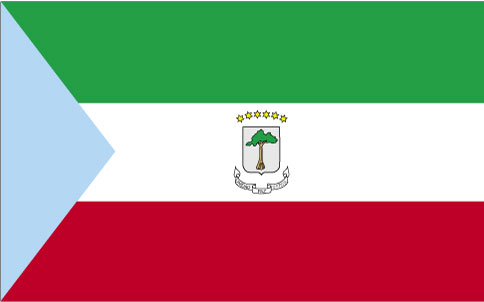
Equatorial Guinea
Guinea Ecuatorial
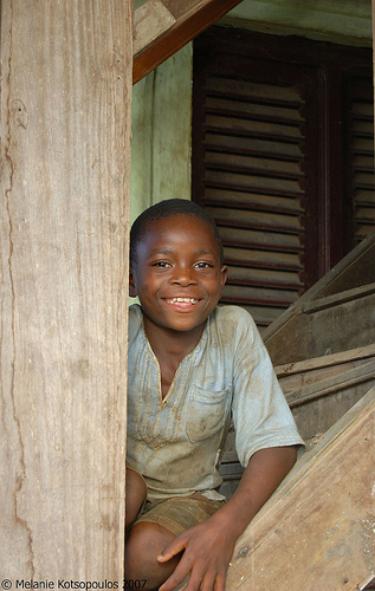
Declare Your Relationship to Equatorial Guinea
CountryReports Community
- Studying8
- From Equatorial Guinea3
- Equatorial Guinea heritage1
- Visited2
- Want to visit1
Customs and Culture
Customs and Culture
Cultural Attributes
People who live on Bioko Island, or the Bubi society divides people by function farmers, hunters, and fishers.

Island and Mainland, Bound by the Gulf
Social Customs & Etiquette
Greetings
Greetings in Equatorial Guinea reflect the country's rich cultural blend of African traditions and strong Spanish and Portuguese colonial influences. The nation's official languages — Spanish, French, and Portuguese — shape everyday interactions, though the indigenous Fang, Bubi, and other Bantu languages remain widely spoken, particularly in local and family settings.
In formal and urban contexts, Spanish-style greetings are standard. A handshake is the most common form of greeting between acquaintances and strangers, and it is considered polite to greet each person individually when entering a room or joining a group rather than offering a general wave to everyone at once. Among close friends and family, particularly women, a light kiss on one cheek is a common greeting, similar to customs seen throughout the Spanish-speaking world.
In traditional Fang culture, which is predominant on the mainland region of Bioko and Río Muni, greetings carry significant social weight. Elders are greeted first as a mark of respect, and it is impolite to rush past someone without acknowledging them. A greeting is often accompanied by inquiries about health, family, and well-being, and taking the time to engage in this brief social exchange is seen as a sign of respect and good character.
Common Spanish greetings used daily include "Buenos días" (Good morning), "Buenas tardes" (Good afternoon), and "Buenas noches" (Good evening). In Fang, a common greeting is "Mboa" or variations depending on the dialect and region. In the island communities on Bioko, where the Bubi people are concentrated, greetings in the Bubi language are still very much alive and reflect a distinct cultural identity.
Visitors are advised to be warm and patient during greetings, as hurrying through social pleasantries can be seen as disrespectful. Dress and demeanor during greetings also matter — conservative and modest presentation is valued in both professional and community settings. Demonstrating even a small effort to use local phrases is generally met with appreciation and goodwill.
Gestures
Equatorial Guineans share respect for the people of status. Greeting one another is considered an important gesture, Equatorial Guineans are friendly and shake hands. People indulge in social interaction where touching or conversing close to one other is considered important as it shows due respect between one another.
Personal Appearance
Equatorial Guineans try to look good in public, In Urban areas Western style clothes are worn. Women and girls wear bright colored pleated skirts with African patterns, starched blouses and polished shoes. Children in the villages wear shorts, jeans and tee-shirts. Tailored dresses are popular for girls. Head scarves are also common. People make very little money and many go barefoot.
Diet
Staple foods include cocoyams, plantains, rice and peanuts. People eat little meat. Many people only eat what they can grow. The supplement their diets with eggs or an occasional chicken. Meat is the preferred source of protein
when available. Goats, chickens, rodents, monkeys, and snakes are all
eaten in Equatorial Guinea.
Fish are abundant in the coastal areas. A popular dish is ground squash seeds made
into a curd. People in urban areas have three meals a day, in rural areas, people often eat only a light meal in the middle of the morning and a larger meal before dark. One of the most traditional meals starts
with gari, flour made from cassava that is a staple of many dishes
turned into porridge, or spiced as a side dish with added crushed seeds
or leaves, and mushrooms, snails, plantains and skewered chicken.

Family
The family and the clan are very important in Equatorial Guinea. Fang men may have more than one wife and can marry outside of their clan. Bubi men marry within the same clan or tribe. The Bubi are also matriarchal and place importance on having girls. Girls are the eyes of the home.
Dating Customs
Dating and marriage customs in Equatorial Guinea reflect a blend of indigenous African traditions, Spanish colonial influence, and Catholic religious values that have shaped the country's social fabric over centuries. The population is predominantly Christian, with Roman Catholicism being the most widely practiced faith, and religious ceremonies play a central role in formal marriage rites for many families.
Traditional marriage practices among the Fang, the country's largest ethnic group, historically involved the payment of bride price, known locally as dot or bridewealth. This practice, in which the groom's family offers gifts or monetary compensation to the bride's family, remains culturally significant in many rural communities today, even when a civil or church ceremony also takes place. The exchange is considered a formal acknowledgment of the union and a means of strengthening ties between families.
Marriage is viewed as a communal and family affair rather than solely a personal decision between two individuals. Extended family members often play an important role in vetting and approving potential partners, and large wedding celebrations involving the wider community are common. Traditional music, dance, and feasting are integral parts of wedding festivities.
The legal framework governing marriage in Equatorial Guinea sets the minimum age of marriage at 18 for both men and women, though early marriage does occur in some rural areas. Polygamy, while not permitted under civil law, is practiced in certain communities where traditional customs hold greater influence than formal legal codes.
Urban areas such as Malabo and Bata have seen some shifting in social norms, particularly among younger, educated populations who may meet and date more independently than in previous generations. Nevertheless, family involvement and community expectations continue to carry significant weight even in urban courtship.
Gender roles within relationships and households tend to follow more traditional lines, with men typically occupying the role of primary breadwinner and head of household, while women manage domestic responsibilities. Efforts by international organizations and local civil society groups to promote gender equality continue to influence evolving attitudes around relationships and marriage.
Recreation
Soccer is a favorite pastime as well as table tennis that was learned from Chinese aid workers. Equatorial Guineans enjoy socializing with family and friends. It is common to see them playing cards, checkers, and chess.
Student Life
The Majority of children in Equatorial Guinea live in the villages where the day begins early. Children who have to go to school usually wake up before sunrise and the first activity is usually long trek to fetch water for family use before they set off for schools. The lack of water prevents many, especially the girls from going to school consistently, especially in the dry months, collecting water takes priority over every other activity. Piped water is available only in the affluent areas of major towns. As for the boys they may leave school to take care of the few family animals that could be there.
The journey to school is on foot. Because schools are sparse, children from neighboring villages will all congregate in one school, which leads to overcrowding. The journey to school may be long with some children having to walk for over 5 kilometers. Classes begin at about 7:30 am and the lessons usually take close to 40 minutes, with a short break at around 10:30 am when children will play and catch up with their friends from neighboring villages. There is usually a lunch break which is followed thereafter by afternoon classes. Although primary education is free and compulsory, there are several obstacles preventing universal access to the benefits offered by the education system. No legal provision has yet been adopted to determine the scope of the principle of free primary education. The poor rate of school attendance by girls remains a cultural problem. Despite legislation establishing gender equality, the persistence of cultural and/or traditional factors is impeding universal attendance by girls.
Education in general has not been given a great priority here and there is no real development for schools and materials that are involved in learning. Schools in Equatorial Guinea face some of the greatest challenges anywhere in Africa. The teachers themselves are not usually many and very few of them are properly trained to be teachers. This leads to a high student teacher ratio which makes it very hard for the teachers to have time to concentrate on assisting any child who may have special needs in the class. Many classes, which are made of earth bricks, are crumbling. Materials such as blackboards and chalk, books and any other teaching materials are usually very hard to come by so the teacher must do with the little that the government provides. There are some areas where teachers face politically instigated violence because they are perceived to be friendly to the government. This makes it difficult for children to have access to qualified teachers because the teachers fear being victimized.
Classes are conducted in Spanish and everyone tries to learn the language because it is the language in which business is conducted, although English and French are sometimes used.
3:30 p.m. or 4:00 p.m. marks the end of the school day and children have to run home to assist their parents in doing evening chores before they retire at the end of the day. The evening chores include cleaning up and sweeping the compound together with helping in preparation of the evening meal which must be ready by about 6:00 p.m. The reason is there is no electricity in most homes. For those children who are lucky to live next to cities or any establishments that have electricity, studying in the evening is done outside where there are street lights. In the evenings parking lots and any areas with floodlights including the vicinity of factories or even the international airport are filled with children reading for their exams or doing their homework. Children from the same locality usually group themselves together so that they will walk back home as a group when they are though with the evening study period. Those who do not access to lights go to bed as early as 8:00 because there is never anything to illuminate the rooms where they live. Parents require girls to be chaperoned to the airport or any other place where there is light by an older brother or a trusted male friend.
Holidays
Independence Day
10/12Independence Day
Dates of Interest
- October 12th
How do people greet each other in Equatorial Guinea?
Equatorial Guineans are friendly and greet one another by shaking hands, considering greetings an important gesture. Standing close and touching during conversation shows mutual respect.
Do
- Shake hands when greeting
- Show respect to people of status
- Engage in close social interaction
What are the dining customs in Equatorial Guinea?
Staple foods include cocoyams, plantains, rice and peanuts, with little meat eaten; many people only eat what they can grow. Meat is the preferred protein when available and fish are abundant in coastal areas.
Good to know
- Urban dwellers eat three meals a day
- In rural areas, people often eat a light meal mid-morning and a larger meal before dark
- Try gari, a cassava-flour porridge or spiced side dish
- A popular dish is ground squash seeds made into a curd
- Goats, chickens, rodents, monkeys, snakes and fish are all eaten
How should I dress in Equatorial Guinea?
Equatorial Guineans try to look good in public, with Western-style clothes worn in urban areas. Women and girls wear bright pleated skirts with African patterns, starched blouses and polished shoes.
Good to know
- Head scarves are common
- Tailored dresses are popular for girls
- Children in villages wear shorts, jeans and tee-shirts
- Many people make little money and go barefoot
What is family life like in Equatorial Guinea?
The family and the clan are very important. Customs vary by group: Fang men may have more than one wife and can marry outside their clan, while Bubi men marry within the same clan or tribe.
Good to know
- The Bubi are matriarchal and value having girls
- Girls are considered the eyes of the home
What do people do for fun in Equatorial Guinea?
Soccer is a favorite pastime, along with table tennis learned from Chinese aid workers. Equatorial Guineans enjoy socializing with family and friends.
Good to know
- It is common to see people playing cards, checkers, and chess
Last updated: 2026-07-12 · Sources: CountryReports
Photos of Equatorial Guinea
Photos of Equatorial Guinea


Travel and Tourism
Travel and Tourism
- Travel Alert Status
- Level 1: Exercise Normal Precautions
- Currency
- 605.7
- Time Difference
- UTC+1 (6 hours ahead of Washington, DC, during Standard Time)
- Climate
- Tropical; always hot, humid
- Airports
- 3
Read the full travel guide — health, safety, vaccinations, disease risk, sanitation, and transit details.
View full travel guideRecipes
Recipes
History
History
Historical Eras
Pre-Colonial Era
1471 – 1778
Portuguese navigator Fernão do Pó sighted Bioko Island in 1471, initiating European awareness of the region. Pygmy peoples inhabited the mainland interior, while Bantu migrations gradually introduced coastal tribes and the Fang. Portugal held nominal control over the islands until ceding them to Spain via the Treaty of Pardo in 1778.
Spanish Colonial Rule
1778 – 1968
Spain administered the territory known as Spanish Guinea, developing lucrative cacao plantations on Bioko using imported Nigerian labor. Britain briefly occupied Fernando Poo from 1827 to 1843 to suppress the slave trade, while the 1900 Treaty of Paris resolved mainland boundary disputes. By independence, Spanish paternalism had produced one of Africa's highest literacy rates and per capita incomes.
Macías Dictatorship
1968 – 1979
Francisco Macías Nguema became the country's first president upon independence in October 1968, rapidly consolidating power into a brutal single-party state by 1970 and declaring himself President-for-Life in 1972. His regime abolished education, suppressed religion, and dismantled all public infrastructure through systematic terror. Up to one-third of the population fled or perished, leaving the country in near-total ruin.
Obiang's Rule
1979 – 1995
Teodoro Obiang Nguema Mbasogo overthrew and executed his uncle Macías in a military coup in August 1979, establishing a new authoritarian government. Nominal multiparty democracy was introduced in 1991 under international pressure, though elections remained deeply flawed and opposition parties were controlled through patronage. The country slowly rebuilt infrastructure but remained among Africa's poorest nations.
Oil Boom Era
1995 – present
Mobil's 1996 discovery of major offshore oil and gas reserves transformed Equatorial Guinea into one of sub-Saharan Africa's leading petroleum exporters, making it briefly one of the world's fastest-growing economies by 2001. Government revenues surged dramatically, funding large-scale construction, yet wealth remained concentrated among the ruling elite and living standards for most citizens improved little. Obiang has continued to govern with consolidated personal authority, facing repeated international criticism over corruption and human rights abuses.
Overview
The Portuguese explorer, Fernando Po (Fernao do Poo), seeking a route to India, is credited with having discovered the island of Bioko in 1471. He called it Formosa ("pretty flower"), but it quickly took on the name of its European discoverer. The Portuguese retained control until 1778, when the island, adjacent islets, and commercial rights to the mainland between the Niger and Ogoue Rivers were ceded to Spain in exchange for territory in South America (Treaty of Pardo). From 1827 to 1843, Britain established a base on the island to combat the slave trade. The Treaty of Paris settled conflicting claims to the mainland in 1900, and periodically, the mainland territories were united administratively under Spanish rule.
Spain lacked the wealth and the interest to develop an extensive economic infrastructure in what was commonly known as Spanish Guinea during the first half of this century. However, through a paternalistic system, particularly on Bioko Island, Spain developed large cacao plantations for which thousands of Nigerian workers were imported as laborers. At independence in 1968, largely as a result of this system, Equatorial Guinea had one of the highest per capita incomes in Africa. The Spanish also helped Equatorial Guinea achieve one of the continent’s highest literacy rates and developed a good network of health care facilities.
In 1959, the Spanish territory of the Gulf of Guinea was established with status similar to the provinces of metropolitan Spain. As the Spanish Equatorial Region, a governor general ruled it exercising military and civilian powers. The first local elections were held in 1959, and the first Equatoguinean representatives were seated in the Spanish parliament. Under the Basic Law of December 1963, limited autonomy was authorized under a joint legislative body for the territory’s two provinces. The name of the country was changed to Equatorial Guinea. Although Spain’s commissioner general had extensive powers, the Equatorial Guinean General Assembly had considerable initiative in formulating laws and regulations.
In March 1968, under pressure from Equatoguinean nationalists and the United Nations, Spain announced that it would grant independence to Equatorial Guinea. A constitutional convention produced an electoral law and draft constitution. In the presence of a UN observer team, a referendum was held on August 11, 1968, and 63% of the electorate voted in favor of the constitution, which provided for a government with a General Assembly and a Supreme Court with judges appointed by the president.
In September 1968, Francisco Macias Nguema was elected first president of Equatorial Guinea, and independence was granted in October. In July 1970, Macias created a single-party state and by May 1971, key portions of the constitution were abrogated. In 1972 Macias took complete control of the government and assumed the title of President-for-Life. The Macias regime was characterized by abandonment of all government functions except internal security, which was accomplished by terror; this led to the death or exile of up to one-third of the country’s population. Due to pilferage, ignorance, and neglect, the country’s infrastructure--electrical, water, road, transportation, and health--fell into ruin. Religion was repressed, and education ceased. The private and public sectors of the economy were devastated. Nigerian contract laborers on Bioko, estimated to have been 60,000, left en masse in early 1976. The economy collapsed, and skilled citizens and foreigners left.
In August 1979, Macias’ nephew from Mongomo and former director of the infamous Black Beach prison, Teodoro Obiang Nguema Mbasogo, led a successful coup d’etat; Macias was arrested, tried, and executed. Obiang assumed the Presidency in October 1979. Obiang initially ruled Equatorial Guinea with the assistance of a Supreme Military Council. A new constitution, drafted in 1982 with the help of the United Nations Commission on Human Rights, came into effect after a popular vote on August 15, 1982; the Council was abolished, and Obiang remained in the presidency for a 7-year term. He was reelected in 1989. In February 1996, he again won reelection with 98% of the vote; several opponents withdrew from the race, however, and international observers criticized the election. Subsequently, Obiang named a new cabinet, which included some opposition figure
Timeline of Key Events
1471
Portuguese navigator Fernao do Po sights the island of Fernando Poo.
Portuguese navigator Fernao do Po sights the island of Fernando Poo, which is now called Bioko.
1777
Portuguese cedes islands of Annobon and Fernando Poo to Spain.
Portuguese cedes islands of Annobon and Fernando Poo as well as rights on the mainland coast to Spain, giving it access to a source of slaves.
1844
Spanish settle in what became the province of Rio Muni - mainland Equatorial Guinea.
Spanish settle in what became the province of Rio Muni - mainland Equatorial Guinea.
1904
Fernando Poo and Rio Muni become the Western African Territories.
Fernando Poo and Rio Muni become the Western African Territories, later renamed Spanish Guinea.
1968
Spanish Guinea granted independence.
Spanish Guinea granted independence and becomes the Republic of Equatorial Guinea with Francisco Macias Nguema as president.
1996
Mobil oil corporation announces it has discovered sizeable new oil and gas reserves.
Mobil oil corporation announces it has discovered sizeable new oil and gas reserves.
2001
Economy emerges as one of world’s fastest-growing because of oil exploitation.
Economy emerges as one of world’s fastest-growing because of oil exploitation. Opposition says trickle-down effect of growth is too slow, too small.
Read the full history profile — narrative overview, defining eras, and the complete timeline in one place.
View expanded historyInteresting Facts
Interesting Facts
Equatorial Guinea gained independence in 1968 after 190 years of Spanish rule
See every fact — trivia, oddities, and curious tidbits gathered from across the country.
View all interesting factsGeography and Environment
Geography and Environment
- Terrain
- coastal plains rise to interior hills; islands are volcanic
- Climate
- tropical; always hot, humid
- Natural Hazards
- violent windstorms, flash floods
- Current Environmental Issues
- tap water is not potable; deforestation
Read the full geography and environment profile — terrain, climate, natural resources, hazards, land use, and international agreements.
View full geographyPeople & Demographics
People & Demographics
Religion
Languages Spoken
Spanish (official), French (official), pidgin English, Fang, Bubi, Ibo
- French
- Pidgin
- Spanish
Population
- Population
- 1,544,051
- Population in Major Urban Areas
- MALABO (capital) 137,000
- Nationality Noun
- Equatorial Guinean(s) or Equatoguinean(s)
- Ethnic Groups
- Bioko (primarily Bubi, some Fernandinos), Rio Muni (primarily Fang), Europeans less than 1,000, mostly Spanish
Education
- Literacy Definition
- Age 15 and over can read and write
Education in general has not been given a great priority here and there is no real development for schools and materials that are involved in learning. Schools in Equatorial Guinea face some of the greatest challenges anywhere in Africa. The teachers themselves are not usually many and very few of them are properly trained to be teachers. This leads to a high student teacher ratio which makes it very hard for the teachers to have time to concentrate on assisting any child who may have special needs in the class.
Many classes, which are made of earth bricks, are crumbling. Materials such as blackboards and chalk, books and any other teaching materials are usually very hard to come by so the teacher must do with the little that the government provides. There are some areas where teachers face politically instigated violence because they are perceived to be friendly to the government. This makes it difficult for children to have access to qualified teachers because the teachers fear being victimized.
Health Information
- Life Expectancy at Birth
- Life expectancy at birth in Equatorial Guinea stands at approximately 62 to 63 years for the overall population, reflecting modest but notable improvements over the past several decades. Women tend to outlive men by a few years, with female life expectancy estimated around 64 to 65 years compared to roughly 60 to 61 years for males. These figures place Equatorial Guinea below the global average of around 73 years but broadly in line with many sub-Saharan African nations. Despite the country's relatively high gross national income per capita — bolstered significantly by offshore oil revenues discovered in the 1990s — the translation of that wealth into improved public health outcomes has been uneven. A considerable share of the population, particularly in rural and interior regions away from the capital Malabo and the mainland city of Bata, continues to face limited access to quality healthcare services, clean water, and adequate sanitation. Key factors influencing life expectancy include the prevalence of malaria, which remains a leading cause of morbidity and mortality, as well as challenges related to maternal and child health. The under-five mortality rate, while declining, continues to weigh on overall life expectancy calculations. Communicable diseases, poor infrastructure in remote areas, and gaps in the distribution of medical personnel across the country all contribute to health disparities between urban and rural populations. In contrast to wealthier nations where chronic non-communicable diseases such as heart disease or diabetes are the primary drivers of early death, infectious and parasitic diseases remain the dominant health burden in Equatorial Guinea. Government efforts and international health initiatives have worked to expand vaccination coverage and combat endemic diseases, contributing to the gradual upward trend in life expectancy observed since the 1960s, when the figure was closer to 35 to 40 years. While progress has been made, health advocates continue to call for greater investment in public health infrastructure to ensure that oil revenues more effectively support the long-term well-being of Equatorial Guinea's growing population.
- Major Infectious Diseases — degree of risk
- Very high
- Infant Mortality Rate
- Equatorial Guinea faces significant challenges in infant health outcomes, with an infant mortality rate estimated at approximately 59 to 62 deaths per 1,000 live births in recent years. This figure places the country well above the global average and reflects persistent gaps in healthcare access, infrastructure, and maternal and child health services across the nation. Despite Equatorial Guinea's relatively high per capita income driven by oil revenues since the 1990s, wealth distribution has been deeply unequal, meaning that improved national income has not translated proportionally into better health outcomes for the broader population. Rural communities, which make up a substantial portion of the country, often lack adequate access to trained healthcare personnel, clean water, proper sanitation, and medical facilities — all of which are critical factors in reducing infant deaths. The leading causes of infant mortality in Equatorial Guinea include malaria, respiratory infections, diarrheal diseases, neonatal complications, and preventable conditions that could be addressed through vaccination and routine medical care. Neonatal mortality — deaths occurring within the first 28 days of life — accounts for a notable share of overall infant deaths, highlighting the need for improved obstetric care and postnatal support. UNICEF and the World Health Organization have identified Equatorial Guinea as a country requiring targeted interventions to improve child survival rates. Programs focusing on expanding immunization coverage, training community health workers, improving access to skilled birth attendants, and strengthening maternal nutrition have shown promise but face challenges related to governance, funding allocation, and geographic accessibility. The under-five mortality rate in Equatorial Guinea similarly remains elevated, compounding concerns about child health in the early years of life. While there has been gradual improvement over the past two decades, progress has been slower than in comparable sub-Saharan African nations that have more effectively channeled national resources into public health systems. Continued investment in healthcare infrastructure and social services remains essential to meaningfully reducing infant mortality across the country.
Life Expectancy
- Life Expectancy at Birth
- Life expectancy at birth in Equatorial Guinea stands at approximately 62 to 63 years for the overall population, reflecting modest but notable improvements over the past several decades. Women tend to outlive men by a few years, with female life expectancy estimated around 64 to 65 years compared to roughly 60 to 61 years for males. These figures place Equatorial Guinea below the global average of around 73 years but broadly in line with many sub-Saharan African nations. Despite the country's relatively high gross national income per capita — bolstered significantly by offshore oil revenues discovered in the 1990s — the translation of that wealth into improved public health outcomes has been uneven. A considerable share of the population, particularly in rural and interior regions away from the capital Malabo and the mainland city of Bata, continues to face limited access to quality healthcare services, clean water, and adequate sanitation. Key factors influencing life expectancy include the prevalence of malaria, which remains a leading cause of morbidity and mortality, as well as challenges related to maternal and child health. The under-five mortality rate, while declining, continues to weigh on overall life expectancy calculations. Communicable diseases, poor infrastructure in remote areas, and gaps in the distribution of medical personnel across the country all contribute to health disparities between urban and rural populations. In contrast to wealthier nations where chronic non-communicable diseases such as heart disease or diabetes are the primary drivers of early death, infectious and parasitic diseases remain the dominant health burden in Equatorial Guinea. Government efforts and international health initiatives have worked to expand vaccination coverage and combat endemic diseases, contributing to the gradual upward trend in life expectancy observed since the 1960s, when the figure was closer to 35 to 40 years. While progress has been made, health advocates continue to call for greater investment in public health infrastructure to ensure that oil revenues more effectively support the long-term well-being of Equatorial Guinea's growing population.
- Infant Mortality Rate
- Equatorial Guinea faces significant challenges in infant health outcomes, with an infant mortality rate estimated at approximately 59 to 62 deaths per 1,000 live births in recent years. This figure places the country well above the global average and reflects persistent gaps in healthcare access, infrastructure, and maternal and child health services across the nation. Despite Equatorial Guinea's relatively high per capita income driven by oil revenues since the 1990s, wealth distribution has been deeply unequal, meaning that improved national income has not translated proportionally into better health outcomes for the broader population. Rural communities, which make up a substantial portion of the country, often lack adequate access to trained healthcare personnel, clean water, proper sanitation, and medical facilities — all of which are critical factors in reducing infant deaths. The leading causes of infant mortality in Equatorial Guinea include malaria, respiratory infections, diarrheal diseases, neonatal complications, and preventable conditions that could be addressed through vaccination and routine medical care. Neonatal mortality — deaths occurring within the first 28 days of life — accounts for a notable share of overall infant deaths, highlighting the need for improved obstetric care and postnatal support. UNICEF and the World Health Organization have identified Equatorial Guinea as a country requiring targeted interventions to improve child survival rates. Programs focusing on expanding immunization coverage, training community health workers, improving access to skilled birth attendants, and strengthening maternal nutrition have shown promise but face challenges related to governance, funding allocation, and geographic accessibility. The under-five mortality rate in Equatorial Guinea similarly remains elevated, compounding concerns about child health in the early years of life. While there has been gradual improvement over the past two decades, progress has been slower than in comparable sub-Saharan African nations that have more effectively channeled national resources into public health systems. Continued investment in healthcare infrastructure and social services remains essential to meaningfully reducing infant mortality across the country.
Read the full people and society profile — demographics, health, education, religion, languages, and notable people.
View full people and societyGovernment & Politics
Government & Politics
Country Identity
- Country Name
- EquatorialGuinea
- Full Country Name
- Republic of Equatorial Guinea
- Local - Long
- Republica de Guinea Ecuatorial
- Local - Short
- Guinea Ecuatorial
- Former Name
- Spanish Guinea
Government Structure
- Government Type
- republic
- Legal System
- partly based on Spanish civil law and tribal custom
- Executive Branch
- chief of state: President Teodoro OBIANG NGUEMA MBASOGO (since 3 August 1979, when he seized power in a military coup ousting his uncle, Francisco Macías Nguema) head of government: Prime Minister Manuela ROKA BOTEY (since 1 February 2023), the first woman to hold the position; First Deputy Prime Minister Clemente ENGONGA NGUEMA ONGUENE (since 2023) cabinet: Council of Ministers appointed by the president elections: president elected by popular vote for a seven-year term; election last held on 20 November 2022 (next to be held in 2029); prime minister and deputy prime ministers appointed by the president election results: Teodoro OBIANG NGUEMA MBASOGO reelected president; percent of vote - Teodoro OBIANG NGUEMA MBASOGO 94.9%; the election, like previous contests, was criticized by international observers for lacking genuine political competition and transparency
- Legislative Branch
- Equatorial Guinea has a bicameral parliament consisting of the Senate (Senate or Senado) and the House of People's Representatives (Cámara de Representantes del Pueblo). The House of People's Representatives has 100 seats, with members directly elected by popular vote to serve five-year terms. The Senate, established under the 2012 constitutional reforms, has 70 seats, of which 55 are directly elected and 15 are appointed by the president. Elections: The most recent legislative elections were held in November 2022, in which the ruling Democratic Party of Equatorial Guinea (PDGE) and its allied coalition maintained their overwhelming dominance of the legislature. The PDGE and allied parties secured nearly all seats in both chambers, with the Convergence for Social Democracy (CPDS) retaining minimal representation. Note: Despite its bicameral structure, parliament exercises limited independent authority, as the constitution concentrates executive power heavily in the presidency. Political pluralism remains restricted in practice, and opposition parties face significant barriers to meaningful participation in the electoral process.
- Judicial Branch
- Supreme Tribunal
- Suffrage
- 18 years of age; universal adult
- Constitution
- approved by national referendum 17 November 1991; amended January 1995
- Independence
- 12 October 1968 (from Spain)
- National Holiday
- Independence Day, 12 October (1968)
Capital City
- Capital Name
- Malabo; note - Malabo is on the island of Bioko; some months of the year, the government operates out of Bata on the mainland region.
- Capital - geographic coordinate
- 3 45 N, 8 47 E
- Capital Time Difference
- UTC+1 (6 hours ahead of Washington, DC, during Standard Time)
Named after King MALABO (Malabo Lopelo Melaka) (1837–1937), the last king of the Bubi, the ethnic group indigenous to the island of Bioko
Military
Branches: Equatorial Guinea Armed Forces (FAGE): Equatorial Guinea National Guard (Guardia Nacional de Guinea Ecuatoria, GNGE (Army), with Navy and Air Force
Embassy / Diplomatic Mission
U.S. Embassy Malabo
Carretera de Aeropuerto KM-3 (El Paraiso)
Apartado 95
Malabo
Telephone: 240-333-098-895
Immigrant visa services are provided through the U.S. Embassy in Yaoundé, Cameroon, Avenue Rosa Parks in the Mbankolo Quartier, adjacent to the Mount Febe Golf Club.
Mailing Address:
P.O. Box 817, Yaounde, Cameroon
Telephone: 237-2220-1500
Emergency after-hours telephone: 237-2220-1500
Facsimile: 237-2220-1572
Read the full government profile — flag symbolism, national anthem, and other national symbols.
View full government detailsEconomy
Economy
The discovery and exploitation of large oil and natural gas reserves transformed Equatorial Guinea into one of sub-Saharan Africa's largest hydrocarbon producers, driving dramatic economic growth from the mid-1990s through the early 2010s. However, declining oil output from maturing fields and volatile global prices have since pushed the economy into a prolonged contraction, with GDP shrinking in most years over the past decade. Hydrocarbons still account for the overwhelming majority of exports, government revenue, and GDP, leaving the country highly vulnerable to commodity price swings.
Forestry, farming, and fishing remain components of the non-oil economy, though their share of GDP is modest. Subsistence farming predominates in rural areas. Although pre-independence Equatorial Guinea relied on cocoa production for hard currency earnings, decades of neglect of the rural economy have diminished the potential for agriculture-led growth. Successive government development plans, including Horizon 2020 and the more recent Agenda 2035, have pledged economic diversification into agriculture, fisheries, tourism, and petrochemicals, but implementation has been limited.
Relations with international financial institutions have long been strained by concerns over corruption, governance, and mismanagement of oil wealth. In 2019, the IMF approved an Extended Fund Facility intended to support reforms and transparency, though progress has been uneven. Despite high per capita income on paper, wealth remains highly concentrated, and a large share of the population lives in poverty with limited access to basic services. Businesses are frequently linked to government officials and their family members. Undeveloped natural resources include titanium, iron ore, manganese, uranium, and alluvial gold. The near-term outlook depends heavily on new gas projects, including the Gulf of Guinea gas megahub, and on efforts to slow the decline of legacy oil fields.
Snapshot
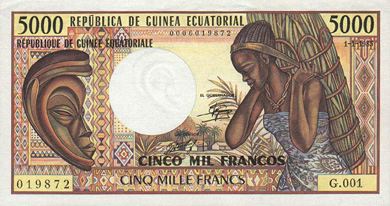
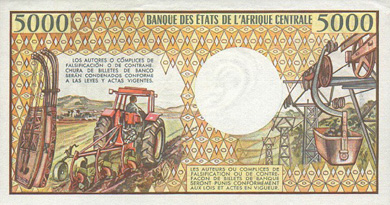
- Currency Name and Code
- Cooperation Financiere en Afrique Centrale francs (XAF)
- GDP — official exchange rate
- $7,644,000,000 (USD)
- GDP Real Growth Rate
- -3.2%
Banknotes
Budget & Public Finance
- Fiscal Year
- Calendar Year
- External Debt
- $248,000,000 (USD)
- Investment (% of GDP)
- 46.3%
- Economic Aid
- $33,800,000 (USD)
- Current Account Balance
- $1,364,000,000 (USD)
- Reserves of Foreign Exchange
- $1,078,000,000 (USD)
Labor, Industry & Trade
- Industries
- petroleum, fishing, sawmilling, natural gas
- Agriculture Products
- coffee, cocoa, rice, yams, cassava (tapioca), bananas, palm oil nuts; livestock; timber
- Export Commodities
- petroleum, methanol, timber, cocoa
- Export Partners
- US 28.3%, Spain 25.3%, China 17.5%, Canada 10.6%, France 5%
- Import Commodities
- petroleum sector equipment, other equipment
- Import Partners
- US 27.8%, Spain 15.1%, UK 14.2%, Norway 10.7%, France 10%, Netherlands 4.6%, Italy 4.4%
Energy
- Oil Production
- 85,000 bbl/day
- Oil Consumption
- 5,000 bbl/day
- Oil Reserves
- 1,100,000,000 bbl/day
- Natural Gas Production
- 6,080,000,000 cu m
- Natural Gas Consumption
- 281,000,000 cu m
- Natural Gas Imports
- 0 cu m
- Natural Gas Exports
- 141,000,000 cu m
- Natural Gas Reserves
- 36,810,000,000 cu m
Communications
- Telephone System
- General assessment: Digital fixed-line network in most major urban areas and good mobile coverage Domestic: Fixed-line density is about 2 per 100 persons; mobile-cellular subscribership has been increasing and in 2011 stood at about 60 percent of the population International: Country code - 240; international communications from Bata and Malabo to African and European countries; satellite earth station - 1 Intelsat (Indian Ocean)
- Internet Country Code
- .gq
News & Weather
News & Weather
Current Weather
Latest News
ICE deported a gay Brazilian man to Equatorial Guinea. Now he’s gone silent. - Arizona Mirror
Arizona Mirror · 1d ago
Transocean lands drillship work in Equatorial Guinea - Splash247
Splash247 · 5h ago
National Launch of the RESIslands Project in Equatorial Guinea - United Nations Economic Commission for Africa
United Nations Economic Commission for Africa · 17h ago
Deepwater Conqueror Drillship Secures 170-Day Campaign In Equatorial Guinea - Ocean News & Technology
Ocean News & Technology · 22h ago
Transocean (RIG) Secures $80 Million Deepwater Conqueror Contract In Equatorial Guinea - simplywall.st
simplywall.st · 12h ago
Deportee in Equatorial Guinea who criticised police tactics taken into custody, lawyer says - Reuters
Reuters · 4d ago
He came to study. Trot gave him a stage — and a larger mission - The Korea Herald
The Korea Herald · 10h ago
Transocean Announces Two-Well Deepwater Conqueror Contract in Equatorial Guinea - Quiver Quantitative
Quiver Quantitative · 1d ago
News via Google News
Climate Overview
Tropical; always hot, humid
Frequently Asked Questions
Frequently Asked Questions
What is the population of Equatorial Guinea?
How do people greet each other in Equatorial Guinea?
What are the dining customs in Equatorial Guinea?
How should I dress in Equatorial Guinea?
What is family life like in Equatorial Guinea?
What do people do for fun in Equatorial Guinea?
What is the capital of Equatorial Guinea?
Where is Equatorial Guinea located?
What countries border Equatorial Guinea?
What is the predominant religion in Equatorial Guinea?
What currency is used in Equatorial Guinea?
What languages are spoken in Equatorial Guinea?
What is the geography of Equatorial Guinea like?
What is Equatorial Guinea known for?
Last reviewed 2026