
 English
 Español
 中文
中文 हिन्दी
 Français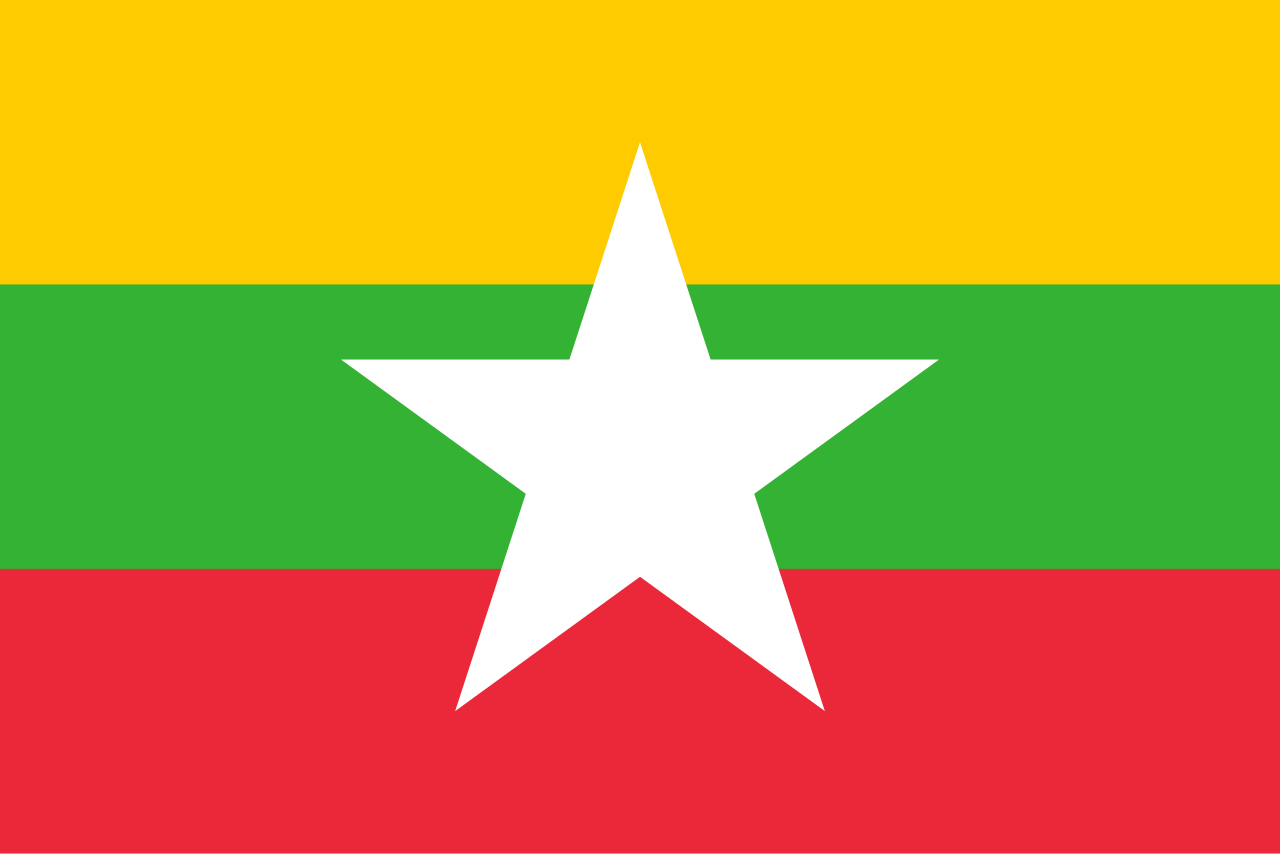
Myanmar
Myanma Naingngandaw
Declare Your Relationship to Myanmar
CountryReports Community
- Studying10
- From Myanmar2
- Myanmar heritage7
- Visited3
- Want to visit0
Customs and Culture
Customs and Culture
Cultural Attributes
Given the Buddhist teaching of non-violence toward all creatures, animals, even insects as well as humans, the Burmese people are often quite forgiving in their attitude toward others. They generally prefer non-violent change.

The Golden Land of Pagodas and Compassion
Get More Customs and Culture
5 more cultural topics for members
Social Customs & Etiquette · Diet · Family · Dating Customs · Recreation
Every country, every topic, all activities & recipes
✓ Instant access on this device · ✓ No subscription
Holidays
Independence Day
1/4Independence Day
Dates of Interest
- January 4th
How do people greet each other in Burma?
Show respect by placing your hands together palm-to-palm at chest level with a slight bow of the head. The Burmese are known for their gentle friendliness rooted in their Buddhist heritage.
Do
- Place palms together at chest level with a slight bow of the head
- Defer to monks, parents, teachers, and elders
- Refer to people by their full name, whether two or three syllables
- Use honorifics like U (Mr/Uncle) and Daw (Mrs/Ms/Madam/Aunt)
Don’t
- Never contradict monks, parents, teachers, or elders directly
- Never shorten a Burmese name
What is the food like and what do people eat in Burma?
Burmese cuisine draws on Chinese, Indian, and Thai influences, with rice as the staple served alongside vegetables and meats often cooked in curry or soup.
Good to know
- Rice is served with vegetables, chicken, pork, fresh-water seafood, and mutton
- Ngapi, a strong-flavored pickled fish, is eaten at most meals
- Desserts include palm sugar sago and semolina or rice pudding
What are the key etiquette rules in Burma?
Respect for monks and Buddhist images is central, and avoid public displays of affection.
Do
- Always treat monks with a high level of respect
- Use an intermediary when handing an object to a monk, or place it within easy reach
Don’t
- Women should never touch a monk or his robe
- Do not show public displays of affection
- Do not touch the head of a Buddha statue or image
How should I dress in Burma?
Traditional dress is the longyi (sarong), worn by men with a western-style shirt and by women with a matching top called eingyi. Business people typically wear western-style suits or shirt and tie with foreigners.
Good to know
- Men may wear a turban or gaung-baung for formal occasions
- Men and women wear simple leather thongs on their feet
- Women may wear rubies, sapphires, jade, and pearls as a form of investment
What gestures should I be careful about in Burma?
The head is considered the most precious part of the body and the feet the least sacred, so treat both accordingly.
Don’t
- Never touch a person on the head
- Do not point with your feet
- Do not show the sole of your shoe or foot to another person
What is family life like in Burma?
The husband heads the household while the wife shares equal responsibility for the family's welfare, and traditions and religious beliefs play important roles in family life.
Good to know
- Rural families are often extended, including grandparents, uncles, and aunts; urban households are smaller
- A child's horoscope is charted and name chosen by astrology, with a naming ceremony seven days after birth
- At age nine, boys have a shin-pyu initiation (a few weeks in a monastery) and girls have an ear-piercing ceremony called nahtwin
What sports and pastimes are popular in Burma?
Traditional sports include kickboxing (myanma let-hwei) and chinlon, alongside popular modern games like soccer, golf, and tennis.
Good to know
- Kickboxing matches, held at pagoda festivals and Aung Saun Stadium in Yangon, allow strikes with any body part except the head
- Chinlon is played with a woven rattan ball kept aloft using feet, legs, and knees
- Other pastimes include gonnyin, greased-pole climbing, leg rowing (khe pai kauk) on Inle Lake, and spinning tops (kalatt gyin) for children
Last updated: 2026-07-12 · Sources: CountryReports
Photos of Myanmar
Photos of Myanmar
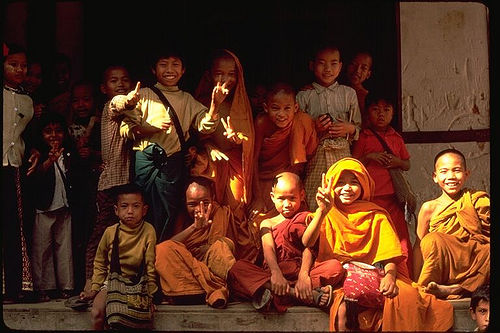
Young children attend school, Maymyo, Burma
Hot air balloon over ancient temples, Bagan
Ruins of Inwa near Mandalay
Famous railway bridge
Fisherman seeking food
Novice Buddhist monk in a monastery
House and botaman on Lake Inle
Buddhist monk at Golden Rock
Life on the train tracks near U Bein bridge
Buddhist temple in north Burma
Sunset on the Irrawaddy River, Mandalay, Burma.
An old bus passes the entrance to Mandalay Hill


Travel and Tourism
Travel and Tourism
- Travel Alert Status
- Level 4: Do Not Travel
- Currency
- 1205.9
- Time Difference
- UTC+6.5 (11.5 hours ahead of Washington, DC, during Standard Time)
- Airports
- 79
- Recommended Vaccinations
- How important is it to do your research about vaccinations? It might just save your life! Make yourself aware of the different types of vaccinations and which ones you may need to travel to your destination. Schedule an appointment with your doctor at least four to six weeks before you travel to ensure you receive all important shots. Be sure that you and your family are up to date on your routine vaccinations. Which vaccinations you need will depend on a number of factors including your destination, whether you will be spending time in rural areas, the season of the year you are traveling, your age, health status, and previous immunizations.
Read the full travel guide — health, safety, vaccinations, disease risk, sanitation, and transit details.
View full travel guideRecipes
Recipes
History
History
Historical Eras
Pagan Dynasty
1044 – 1287
King Anawrahta unified Burma for the first time in 1044, establishing Pagan as a glittering capital along the Irrawaddy River adorned with thousands of pagodas and monasteries. Theravada Buddhism took root as the defining faith of Burmese civilization during this golden age. The dynasty collapsed in 1287 when Mongol forces under Kublai Khan sacked and destroyed the city.
Toungoo Dynasty
1486 – 1752
After a period of fragmented Shan rule centered at Ava, the Toungoo kings reunified Burma's multi-ethnic territories through aggressive military expansion, extending dominion over the Shans and neighboring kingdoms. With Portuguese assistance, the dynasty reasserted Burman supremacy across mainland Southeast Asia. Prolonged warfare and internal power struggles eventually drained the state's resources, leading to its collapse by the mid-eighteenth century.
Konbaung Dynasty
1752 – 1885
Founded by King Alaungpaya, the Konbaung dynasty pursued relentless conquest, sacking the Siamese capital of Ayutthaya in 1767 and repelling four Chinese invasions. The dynasty also fought three catastrophic wars with Britain beginning in 1824, losing territory after each defeat. The Third Anglo-Burmese War of 1885 ended with the capture of Mandalay and the complete annexation of Burma into British India.
British Colonial Era
1885 – 1948
Under British rule, Burma was reorganized into a large-scale export economy, becoming the world's leading rice exporter by 1939, while strong administrative institutions reshaped Burmese society. Nationalist sentiment grew fiercely, and General Aung San and his Thirty Comrades allied with Japan to expel the British in 1942 before switching sides in 1945 to aid the Allied liberation. Independence was granted in January 1948, though Aung San was assassinated before the new constitution took effect.
Parliamentary & Early Military Rule
1948 – 1962
The Union of Burma's early parliamentary years were marked by widespread ethnic insurgencies, constitutional disputes, and chronic political instability that undermined democratic governance. Prime Minister U Nu invited the military to temporarily restore order in 1958, a precedent that proved fateful. In 1962, General Ne Win staged a full coup, abolished the constitution, and imposed a xenophobic military-socialist state that systematically isolated Burma from the world economy.
Military Junta Era
1962 – present
Ne Win's socialist dictatorship devastated Burma's economy over more than two decades, culminating in the 1988 pro-democracy uprising in which military forces killed over a thousand demonstrators on August 8. The junta reconstituted itself as SLORC and later SPDC, refusing to honor the NLD's landslide 1990 election victory and repeatedly imprisoning Nobel laureate Aung San Suu Kyi. Military dominance over political life has persisted into the twenty-first century, punctuated by cycles of protest, violent suppression, and nominal reform.
Overview
Burma was unified by Burman dynasties three times during the past millennium. The first such unification came with the foundation of the Pagan Dynasty in 1044 AD, which is considered the "Golden Age" in Burmese history. It is during this period that Theravada Buddhism first made its appearance in Burma, and the Pagan kings built a massive city with thousands of pagodas and monasteries along the Irrawaddy River.
Every country, every topic, all activities & recipes
✓ Instant access on this device · ✓ No subscription
Timeline of Key Events
1057
King Anawrahta founds the first unified Burmese state at Pagan.
King Anawrahta founds the first unified Burmese state at Pagan and adopts Theravada Buddhism.
1287
The forces of Kublai Khan overran Burma.
The forces of Kublai Khan overran Burma. The royal city of Bagan (Pagan) was abandoned under threat from Kublai Khan in the 13th century. The brick temple of Ananda Pahto is in Bagan. More than 4,400 pagodas and 3,000 other religious structures of bricks and stones were built in Bagan, Myanmar’s former capital, during a 243-year period from the 11th to 13th centuries, the result of extraordinary Buddhist fervor.
1531
Toungoo dynasty, with Portuguese help, reunites Burma.
Toungoo dynasty, with Portuguese help, reunites Burma.
1824 – 1826
First Anglo-Burmese war.
First Anglo-Burmese war. The war ends with the Treaty of Yandabo, according to which Burma ceded the Arakan coastal strip, between Chittagong and Cape Negrais, to British India.
1850
Rangoon, Burma, was destroyed by fire.
Rangoon, Burma, was destroyed by fire.
1852
Second Anglo-Burmese War, where General Bandoola died.
Second Anglo-Burmese War, where General Bandoola died.
1885
Britain captures Mandalay after a brief battle.
Britain captures Mandalay after a brief battle; Burma becomes a province of British India.
Read the full history profile — narrative overview, defining eras, and the complete timeline in one place.
View expanded historyInteresting Facts
Interesting Facts
Very young children wear holy thread around their necks or wrists to protect them from bad spirits or spells.
Burmese believe that one should not have a haircut on Monday, Friday or one’s birthday.
Burmese boxing is a violent sport in which the victor is the one who draws first blood.
Common Pregnancy and Birth Taboos: The pregnant mother should not eat: bananas or the baby will be too big for normal delivery chili or the baby will have no hair glutinous rice as this will make the placenta stick to the womb. She should not attend weddings or funerals She should leave some things incomplete during preparation such as partially sewing baby clothes and leaving out hems on the diapers. After birth she should not wash her hair for about a month She should not eat bamboo shoots for mushrooms for some time She should not handle soap
1 more facts for members
Every country, every topic, all activities & recipes
✓ Instant access on this device · ✓ No subscription
Geography and Environment
Geography and Environment
- Terrain
- central lowlands ringed by steep, rugged highlands
- Climate
- Located in the Southeast Asian monsoon belt, Rangoon has a tropical climate with three distinct seasons: monsoon, cool, and hot. During the monsoon season, mid-May through mid-October, Rangoon receives most of its 100-inch plus average annual rainfall. Temperatures are moderate (75ºF–90ºF), but relative humidity is high. During the monsoon, dampness and mildew can cause serious damage to clothing, furniture, books, records, electrical appliances, and leather goods. In mid-November, after a brief period of warm, humid weather, the cool season begins from then until March, weather is pleasant (60ºF–90ºF) with lower humidity and almost no rain. Days are sunny and clear; nights are cool. In March, temperatures and humidity rise until the monsoon begins in mid-May. During the March–May hot season, the weather is hot and humid, usually rising in the day to over 100ºF. As at most tropical posts, insects and snakes are numerous year round.
- Natural Hazards
- destructive earthquakes and cyclones; flooding and landslides common during rainy season (June to September); periodic droughts
- Current Environmental Issues
- deforestation; industrial pollution of air, soil, and water; inadequate sanitation and water treatment contribute to disease
Read the full geography and environment profile — terrain, climate, natural resources, hazards, land use, and international agreements.
View full geographyPeople & Demographics
People & Demographics
Religion
Languages Spoken
Burmese
- Burmese
Population
- Population
- 54,409,800
- Population in Major Urban Areas
- RANGOON (capital) 4.457 million; Mandalay 1.063 million; Nay Pyi Taw 1.06 million
- Nationality Noun
- Burmese (singular and plural)
- Ethnic Groups
- Burman 68%, Shan 9%, Karen 7%, Rakhine 4%, Chinese 3%, Indian 2%, Mon 2%, other 5%
- Language Note
- Burma is a nation of many races - some 135 ethnic groups, with their own languages and dialects, make up its population of nearly 45 million. It is impossible to mention more than a few of the races, for Burma is an anthropologist's paradise. The Burmese people call their own language Bamar or Myanmar and it is the main language spoken throughout the country. About 70 percent of the people of Burma speak one or other of the Burma Group of languages while the percentage of those speaking Burmese is estimated at ninety. Despite the diversity and geographic separation, the national groups share with each other a wide variety of social customs and cultures. The Burmese language vocabulary contains a large number of Pali and Sanskrit words. The earliest Burmese writing was the Myazedi Stone Inscription. which is a four-sided stone inscription constructed in 1113 A.D. during the Pagan Period. The inscription is written in Myanmar, Pyu, Mon, and Pali and was discovered in 1887.
Education
- Literacy Definition
- Age 15 and over can read and write
Health Information
- Major Infectious Diseases — degree of risk
- Very high
Life Expectancy
- Life Expectancy at Birth
- Life expectancy at birth in Myanmar stands at approximately 67 years for the overall population, with women typically outliving men by several years. Female life expectancy averages around 69 years, while male life expectancy is closer to 65 years. These figures place Myanmar below the average for the broader Southeast Asian region, reflecting ongoing challenges in healthcare access, infrastructure, and public health systems. Several interconnected factors contribute to Myanmar's relatively modest life expectancy. The country has long faced limited access to quality medical care, particularly in rural and remote areas where the majority of the population resides. Communicable diseases such as tuberculosis, malaria, and respiratory infections remain significant health burdens. Maternal and infant mortality rates, while improved over recent decades, continue to be higher than those of regional peers, weighing down overall life expectancy statistics. Malnutrition is another contributing factor, especially among children and rural communities, and it compounds vulnerability to infectious diseases and chronic conditions. Access to clean drinking water and adequate sanitation, though improving gradually, remains inconsistent across the country. Myanmar's political instability and internal conflicts have compounded these public health challenges. The military coup of February 2021 severely disrupted healthcare services, leading to a sharp decline in routine immunizations, maternal health services, and the treatment of chronic diseases. Many trained medical professionals joined civil disobedience movements and ceased working in government facilities, further straining an already fragile health system. Humanitarian organizations have reported worsening health indicators in conflict-affected regions, and ongoing civil conflict continues to displace large portions of the population, limiting their access to even basic care. Prior to 2021, Myanmar had made measurable progress in improving life expectancy over the preceding two decades, largely through targeted public health campaigns, expanded vaccination programs, and international health assistance. However, the post-coup environment has reversed some of these gains and introduced significant uncertainty around future improvement. The deterioration of health infrastructure, combined with reduced international aid access in certain regions, has made it difficult to sustain earlier advances. For travelers and expatriates, it is advisable to ensure comprehensive travel health insurance and to carry necessary medications, as access to reliable medical facilities — particularly outside Yangon and Mandalay — can be limited and unpredictable.
- Infant Mortality Rate
- Burma's infant mortality rate reflects the ongoing challenges the country faces in delivering adequate healthcare to its population, particularly in rural and conflict-affected regions. As of recent estimates, Burma records approximately 32 to 35 infant deaths per 1,000 live births, a figure that, while representing significant improvement over past decades, remains notably higher than regional neighbors such as Thailand and Malaysia. Infant mortality in Burma is driven by several interconnected factors. Neonatal conditions — including preterm birth complications, birth asphyxia, and neonatal infections — account for a substantial portion of deaths in the first year of life. Diarrheal diseases, acute respiratory infections, and vaccine-preventable illnesses also contribute meaningfully to infant deaths, particularly in areas with limited access to clean water and sanitation. Geographic disparities are pronounced. Infants born in rural areas, remote hill regions, or states experiencing ongoing armed conflict, such as Kachin, Shan, and Rakhine, face considerably higher mortality risks than those born in urban centers like Yangon or Naypyidaw. In these underserved regions, access to skilled birth attendants, postnatal care, and essential medicines is severely restricted. The political instability following the 2021 military coup has compounded these challenges substantially. Healthcare infrastructure has been disrupted, medical professionals have faced intimidation and displacement, and international humanitarian aid has encountered significant barriers to reaching vulnerable populations. UNICEF and other international agencies have raised concerns that years of incremental gains in child survival outcomes may be at risk of reversal. Historically, Burma's infant mortality rate has declined from levels exceeding 80 per 1,000 live births in the early 1990s, a testament to past immunization drives, maternal health initiatives, and improved nutritional programs. However, sustaining and accelerating this progress depends heavily on political stability, restored healthcare funding, and renewed investment in community-level health services — conditions that remain uncertain in the current environment.
Read the full people and society profile — demographics, health, education, religion, languages, and notable people.
View full people and societyGovernment & Politics
Government & Politics
Country Identity
- Country Name
- Burma
- Full Country Name
- Union of Burma
- Local - Long
- Pyidaungzu Myanma Naingngandaw (translated by the US Government as Union of Myanma and by the Burmese as Union of Myanmar)
- Local - Short
- Myanma Naingngandaw
- Former Name
- Socialist Republic of the Union of Burma
Government Structure
- Government Type
- military regime
- Legal System
- has not accepted compulsory ICJ jurisdiction
- Executive Branch
- chief of state: Senior General MIN AUNG HLAING, Chairman of the State Administration Council (SAC), serving as both head of state and head of government following the military coup of February 1, 2021 (since August 1, 2021, when he assumed the role of Prime Minister in addition to SAC Chairman) head of government: Prime Minister Sr. Gen. MIN AUNG HLAING (since August 1, 2021); prior to the coup, State Counsellor AUNG SAN SUU KYI served as de facto head of government from 2016 until her detention on February 1, 2021 cabinet: The State Administration Council (SAC), established following the February 2021 military coup, serves as the ruling body; the SAC suspended the constitution, detained elected civilian leaders, and declared a state of emergency that has been repeatedly extended; the military, known as the Tatmadaw, previously ruled under the State Peace and Development Council (SPDC) from 1997 to 2011 elections: The SAC annulled the results of the November 2020 general elections, which the National League for Democracy (NLD) had won by a landslide; no credible national elections have been held since; the military has repeatedly postponed a promised return to democratic elections, and the political situation remains highly unstable amid ongoing armed conflict across the country
- Legislative Branch
- Bicameral Parliament or Pyidaungsu Hluttaw, consisting of the House of Nationalities (Amyotha Hluttaw) with 224 seats and the House of Representatives (Pyithu Hluttaw) with 440 seats; members serve five-year terms, with one-quarter of seats in each chamber reserved for military appointees selected by the Commander-in-Chief of the Defence Services. Elections: Last general election held 8 November 2020; the military (Tatmadaw) staged a coup on 1 February 2021, detaining elected leaders including State Counsellor Aung San Suu Kyi and President Win Myint, and dissolving the elected parliament. The military established a State Administration Council (SAC) to govern the country and has suspended normal legislative functions indefinitely. Election results (2020, prior to coup): percent of vote by party - NLD approximately 58%, USDP approximately 6%, other parties the remainder; seats by party - NLD 396, USDP 33, Shan Nationalities League for Democracy 15, other parties and independents 57; military appointees 166. The military's Union Solidarity and Development Party (USDP) disputed the results, alleging widespread fraud, a claim that independent observers did not substantiate.
- Judicial Branch
- remnants of the British-era legal system are in place, but there is no guarantee of a fair public trial; the judiciary is not independent of the executive
- Suffrage
- 18 years of age; universal
- Constitution
- 3 January 1974 (suspended since 18 September 1988); national convention started on 9 January 1993 to draft a new constitution; progress has since been stalled
- Independence
- 4 January 1948 (from UK)
- National Holiday
- Independence Day, 4 January (1948)
Capital City
- Capital Name
- Rangoon (aka Yangon, continues to be recognized as the primary Burmese capital by the US Government); Nay Pyi Taw is the administrative capital
- Capital - geographic coordinate
- 16 48 N, 96 10 E
- Capital Time Difference
- UTC+6.5 (11.5 hours ahead of Washington, DC, during Standard Time)
Rangoon/Yangon derives from the Burmese words yan and koun, which mean "danger" and "no more" respectively and provide the meaning of "end of strife"; Nay Pyi Taw translates as: "Abode of Royals" or "the capital city of a kingdom"
Military
Branches: Myanmar Armed Forces (Tatmadaw): Army (Tatmadaw Kyi), Navy (Tatmadaw Yay), Air Force (Tatmadaw Lay)
Embassy / Diplomatic Mission
U.S. Embassy Rangoon
110 University Avenue
Kamayut Township
Rangoon, Burma
The Consular Section is open from 8:00 am to 5:00 pm, with non-emergency American Citizens Services from 2:00 to 3:30 pm, Monday through Friday except on U.S. and Burmese holidays.
Consular Section
Telephone: (95-1) 536-509 ext. 4240
Email: consularrangoon@state.gov
Website: www.burma.usembassy.gov
After-hours Emergency Numbers: (95-1) 536-509 ext. 4014 or 09-512-4330
Read the full government profile — flag symbolism, national anthem, and other national symbols.
View full government detailsEconomy
Economy
Myanmar (Burma) is a resource-rich country whose economy has been severely disrupted by political instability, armed conflict, and international sanctions following the February 2021 military coup that ousted the democratically elected National League for Democracy government.
Snapshot
- Currency Name and Code
- kyats (MMK)
- GDP — official exchange rate
- $7,464,000,000 (USD)
- GDP Real Growth Rate
- -1%
Every country, every topic, all activities & recipes
✓ Instant access on this device · ✓ No subscription
News & Weather
News & Weather
Current Weather
Latest News
Is Donald Trump ready to do business with Myanmar? - BBC
BBC · 1d ago
Myanmar’s Shan State Is the World’s Meth Lab - Foreign Policy
Foreign Policy · 1d ago
Myanmar's Aung San Suu Kyi speaks to son for first time in over five years - Reuters
Reuters · 2h ago
More than 1,600 children celebrate World Mission Sunday in Myanmar - Vatican News
Vatican News · 4d ago
Devastating 2025 Myanmar earthquake sheds light on how the 'Big One' could play out in California - Live Science
Live Science · 1d ago
Filipinos on the line: Inside a Myanmar scam operation - Inquirer.net
Inquirer.net · 1d ago
How Myanmar's rare earth elements reshape China’s supply chain - Daily Sabah
Daily Sabah · 2d ago
Japan envoy Sasakawa meets Myanmar's Min Aung Hlaing, state media says - Reuters
Reuters · 1d ago
News via Google News
Videos
Videos
1 curated YouTube videos.
Source: YouTube
Frequently Asked Questions
Frequently Asked Questions
What is the population of Myanmar?
What is the capital of Burma?
Where is Burma located?
What countries border Burma?
What is the predominant religion in Burma?
What currency does Burma use?
What language is spoken in Burma?
What is Burma known for?
What are some distinctive cultural traditions of Burma?
Last reviewed 2026