
 English
 Español
 中文
中文 हिन्दी
 Français
Bulgaria
Declare Your Relationship to Bulgaria
CountryReports Community
- Studying10
- From Bulgaria1
- Bulgaria heritage3
- Visited1
- Want to visit1
Customs and Culture
Customs and Culture
Cultural Attributes
Bulgarians are generally optimistic, good-humored, and loyal to family and friends. Generally, most people in Bulgaria are working to put food on the table. The dream of most parents is to be able to send their children to a higher level of education. A person who owns a business is considered wealthy.
One of the poorest groups of people is the retired elderly persons. They can not afford to buy medicines or pay for some surgeries. Most of them depend on their sons and daughters. Many families possess a flat (apartment) in the city and share a family house in a village. Those people are not rich. Most of them can not afford to go on holiday. In the village, many of them grow vegetables or livestock to prepare food for the winter.
Renting an apartment is expensive, it usually occurs when young people study or work in another city before they marry and they share a flat.

Land of Thracian Echoes and Stork-Blessed Hearths
Get More Customs and Culture
6 more cultural topics for members
Social Customs & Etiquette · Diet · Family · Dating Customs · Recreation · Student Life
Every country, every topic, all activities & recipes
✓ Instant access on this device · ✓ No subscription
Holidays
Liberation Day
3/3Independence
Christmas
12/25Christmas
Bulgaria has celebrated Christmas since 865 when Boris I (ruled 852-899) embraced the Eastern Orthodox Church. The principal celebration is Koleduvane (Christmas eve). Often the head of the house cuts a large oak or peach log which burns through the night a symbol of Christ who will be resurrected. Upon entering the home with the log the man proclaims "Do you glorify the young God? whereupon the people in the house respond by saying "Yes, we do, welcome"
Many Christian Bulgarians observe a 40 day fast prior to Christmas by abstaining from all animal products in remembrance of Christ’s 40 days in the wilderness following his baptism. In memory of Christ’s 12 apostles the Christmas eve dinner consist of 12 meatless dishes eaten on a table covered with straw. When someone sees the first star of the night, which represents the star of Bethlehem, the dinner begins. Just prior to the beginning of the meal the host proclaims "Christ is born", and the family members and guest respond with "He is Born, indeed."
At midnight Koledars (groups of single men) visit homes to sing Koledari (Christmas carols) to bear wishes of good luck and health.
In the more rural areas, on Christmas eve, the head of the household strikes the yule log and with each blow pronounces a wish of good health to the land, the livestock and a bountiful harvest.
How do people greet each other in Bulgaria?
People greet with a smile and a simple hello (Zdrasti), often extending a hand for a handshake, and use time-of-day greetings like Dobro utro (good morning) and Dobar vecher (good evening).
Do
- Offer a handshake when greeting
- Use time-of-day greetings like Dobro utro or Dobar vecher
Good to know
- Hand-slaps and hugs are popular among young people
- A kiss between close female friends is common
What are dining and eating customs like in Bulgaria?
Bulgarians eat three meals a day, usually at home, with breakfast at 8-9, lunch at noon, and dinner at 7-8 pm; the continental style of eating is most common.
Do
- Take part in conversation during the meal
- Wait for everyone to finish before leaving the table
- Place your napkin on the table
Don’t
- Don't put your napkin in your lap
Good to know
- Expect strong coffee and herbal teas
- Try dishes like kebapcheta, kavarma, and sarmi, plus desserts like baklava and torta
- Along the Black Sea coast, fish such as tsatsa and skumriya na keremidi is popular
- Local drinks include Melnik wine, slivova rakiya, and beers Zagorka and Astika
What is the etiquette for visiting a Bulgarian home?
People socialize in cafés or restaurants, or gather at homes; invited guests bring gifts and greet everyone in the room, starting with the elderly.
Do
- Bring flowers for the hostess, a bottle of alcohol for the host, and candy for the children
- Remove your shoes when entering many homes
- Greet everyone in the room, beginning with the elderly, especially the hosts
Don’t
- Don't show up impromptu expecting to be received; the host may talk to you at the door instead
Good to know
- When you leave, the host may accompany you to the door and hug or kiss you depending on your relationship
How do people dress in Bulgaria?
American and European fashions are popular; casual clothes like T-shirts and jeans are worn at home, while adults dress more formally for work.
Do
- Wear casual clothes such as T-shirts, jeans, skirts, and blouses at home
- Wear more formal clothing at work, such as suits and ties for men
Good to know
- In winter, hats, gloves, scarves, and sometimes fur coats are worn
- Traditional embroidered clothing is worn by folk performers and sometimes very old villagers
What should I know about gestures and body language in Bulgaria?
Stand close enough to hear each other and maintain eye contact; note that Bulgarians shake the head side to side for yes and nod for no.
Do
- Maintain eye contact for good communication
- Keep your hands still rather than gesturing while speaking
Don’t
- Don't point with your index finger
- Men should not cross an ankle over the knee
- Avoid physical contact except with close friends or lovers
Good to know
- Yes is shown by shaking the head side to side; no is one or two nods
- Female friends might walk arm in arm
What is family life like in Bulgaria?
Family ties are strong and supportive, with an average of three children; elderly parents are often cared for by their adult children.
Good to know
- Children often stay with grandparents while parents work
- Young couples often live with parents until they can afford their own housing
- Godparents, chosen at baptism, keep close lifelong ties with godchildren
- People usually marry in their late teens or early twenties
What do people do for recreation in Bulgaria?
Boys mainly play soccer and wrestle, girls like gymnastics, and roller blades are popular, though many sports require expensive facilities that most children can't afford.
Good to know
- Most schools lack sports facilities and have limited physical education hours
- Young people also enjoy meeting at cafés, going to movies, dancing at discos, and relaxing in parks
Last updated: 2026-07-12 · Sources: CountryReports
Photos of Bulgaria
Photos of Bulgaria


Travel and Tourism
Travel and Tourism
- Travel Alert Status
- Level 1: Exercise Normal Precautions
- Currency
- 1.802
- Time Difference
- UTC+2 (7 hours ahead of Washington, DC during Standard Time)
- Airports
- 212
- Recommended Vaccinations
- How important is it to do your research about vaccinations? It might just save your life! Make yourself aware of the different types of vaccinations and which ones you may need to travel to your destination. Schedule an appointment with your doctor at least four to six weeks before you travel to ensure you receive all important shots. Be sure that you and your family are up to date on your routine vaccinations. Which vaccinations you need will depend on a number of factors including your destination, whether you will be spending time in rural areas, the season of the year you are traveling, your age, health status, and previous immunizations.
Read the full travel guide — health, safety, vaccinations, disease risk, sanitation, and transit details.
View full travel guideRecipes
Recipes
History
History
Historical Eras
Antiquity & Early Peoples
1000 BCE – 681
Thracian tribes inhabited the region for millennia before Greek colonization and later Roman conquest integrated the area into classical Mediterranean civilization. The Romans organized the territory into the provinces of Moesia and Thrace, leaving enduring urban and infrastructural legacies. In the 6th and 7th centuries, Slavic peoples migrated into the Balkans, laying the demographic foundation upon which the Bulgarian state would be built.
First Bulgarian Empire
681 – 1018
Khan Asparuh led the Bulgar tribes across the Danube and compelled the Byzantine Empire to recognize the First Bulgarian Empire in 681. Tsar Boris I's adoption of Eastern Orthodox Christianity in 870 and the creation of the Cyrillic alphabet under Saints Cyril and Methodius defined Bulgarian cultural identity. Tsar Simeon I expanded the empire to its greatest extent in the early 10th century, but Byzantine pressure ultimately led to full conquest by Emperor Basil II in 1018.
Second Bulgarian Empire
1185 – 1396
The brothers Asen and Peter led a successful uprising against Byzantine rule in 1185, establishing the Second Bulgarian Empire with Veliko Tarnovo as its capital. Under Ivan Asen II (1218–1241) the empire reached its territorial zenith, controlling much of the Balkan Peninsula and becoming a major regional power. Internal fragmentation and mounting pressure from the Mongols and Ottomans eroded Bulgarian strength, and Sofia fell to the Ottoman Turks in 1385, with the empire extinguished by 1396.
Ottoman Rule
1396 – 1878
For nearly five centuries, Bulgaria existed under Ottoman administration, with Bulgarian political institutions suppressed and the Orthodox Church subjected to the Greek Patriarchate. By the 18th century a Bulgarian National Revival (Vuzrazhdane) took root, driven by figures such as Paisii Hilendarski, whose 1762 Slavo-Bulgarian History rekindled national consciousness. The April Uprising of 1876 was brutally crushed, provoking international outrage and ultimately Russia's intervention in the Russo-Turkish War of 1877–78, which ended Ottoman rule.
Third Bulgarian State
1878 – 1946
The Treaty of Berlin (1878) established an autonomous Bulgarian principality, and full independence was declared under Tsar Ferdinand in 1908. Bulgaria fought in the Balkan Wars (1912–13) and both World Wars in pursuit of territorial ambitions rooted in the unresolved grievances of the Berlin settlement, each time ending on the losing side. Political instability, agrarian unrest, authoritarian rule under Tsar Boris III, and wartime alliance with Nazi Germany set the stage for the communist takeover of 1944–46.
Communist & Modern Era
1946 – present
The People's Republic of Bulgaria, dominated by Todor Zhivkov from 1954 to 1989, aligned closely with the Soviet Union and undertook forced collectivization, industrialization, and the suppression of political dissent. The fall of communism in November 1989 opened a turbulent transition to multiparty democracy and a market economy, complicated by inflation, corruption, and organized crime. Bulgaria joined NATO in 2004 and the European Union in 2007, anchoring its post-communist orientation firmly within Western institutions.
Overview
Tsarevets Hill in Veliko Turnovo, capital of the Second Bulgarian
Every country, every topic, all activities & recipes
✓ Instant access on this device · ✓ No subscription
Timeline of Key Events
630
First federation of Bulgar tribes formed.
First federation of Bulgar tribes formed.
681
Byzantine Empire recognizes first Bulgarian state.
Byzantine Empire recognizes first Bulgarian state.
811
First Bulgarian Empire defeats Byzantine Empire, begins expanding.
First Bulgarian Empire defeats Byzantine Empire, begins expanding.
870
Tsar Boris I accepts Christianity (Eastern Rite Orthodox) for Bulgaria.
Tsar Boris I accepts Christianity (Eastern Rite Orthodox) for Bulgaria.
924
Simeon defeated by Byzantines; first empire begins decline.
Simeon defeated by Byzantines; first empire begins decline.
1018 – 1185
Bulgaria is part of Byzantine empire.
Bulgaria is part of Byzantine empire.
1202
Tsar Kaloian makes peace with Byzantine Empire
Tsar Kaloian makes peace with Byzantine Empire, achieves full independence, and begins Second Bulgarian Empire.
Read the full history profile — narrative overview, defining eras, and the complete timeline in one place.
View expanded historyInteresting Facts
Interesting Facts
Storks are a common sight in Bulgaria. They build untidy nests on roofs and on the top of telephone poles. Storks are considered to bring good luck.
There are about 2,000 explored and unexplored caves in Bulgaria. The Magoura Cave contains unique wall paintings that date back to a prehistoric culture.
A century ago, respect for the male head of the family meant standing up whenever he entered a room. At meals, the family started eating only when the head of the family started, and when he finished eating, they stopped too.
About 70% of the world's attar of roses (a perfume ingredient) comes from Bulgaria. It is a component of the world's most expensive perfumes. Two thousand petals are needed to make a single gram of attar of roses.
2 more facts for members
Every country, every topic, all activities & recipes
✓ Instant access on this device · ✓ No subscription
Geography and Environment
Geography and Environment
- Terrain
- mostly mountains with lowlands in north and southeast
- Climate
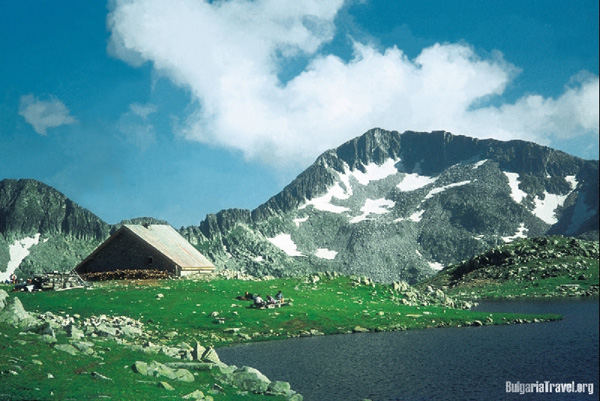
- The climate is usually designated as “continental, with many micro-climates.” From May to November, the climate is pleasantly warm and sunny. Sofia is on the same latitude as Rome, but is 1,500 feet higher in elevation and has a climate similar to the Intermountain West of the United States. Plants, flowers, and fruits common to Britain and France grow well here, but the climate is too cold for citrus. November through April are snowy and cold, with temperatures ranging between -5°F to 50°F in Sofia. Summer temperatures may reach 105°F on occasion but tend to hover around 70–75°F, and humidity is moderate to low. During July, the mean temperature is 68.7°F (20.4°C); during January, 30.6°F (8°C). Mildew and insects are not significant factors. Sofia’s main climatic problem is winter smog, which is caused by industrial air pollution, soft-coal smoke, vehicle exhaust emissions, fog, and surrounding mountains that keep winds from blowing the smog away. Gray-brown dirt or coal dust and sand are scattered on Sofia’s snow-covered streets in winter. Winters may often be gray but are quite beautiful in the nearby mountains. Mount Vitosha (altitude 2,290 m.), with its ski resorts and runs and walking paths, overlook the city. Trees and flowers make Sofia a more colorful city the rest of the year. Rainfall is moderate, averaging 25 inches a year.
- Natural Hazards
- earthquakes, landslides
- Current Environmental Issues
- air pollution from industrial emissions; rivers polluted from raw sewage, heavy metals, detergents; deforestation; forest damage from air pollution and resulting acid rain; soil contamination from heavy metals from metallurgical plants and industrial wastes
Read the full geography and environment profile — terrain, climate, natural resources, hazards, land use, and international agreements.
View full geographyPeople & Demographics
People & Demographics
Religion
Languages Spoken
Bulgarian
- Bulgarian
Population
- Population
- 6,447,710
- Population in Major Urban Areas
- SOFIA (capital) 1.174 million
- Nationality Noun
- Bulgarian(s)
- Ethnic Groups
- Bulgarian 83.9%, Turk 9.4%, Roma 4.7%, other 2% (including Macedonian, Armenian, Tatar, Circassian)
- Language Note
- The official language is Bulgarian, and nearly all inhabitants speak it. About half of the Turkish population speaks Turkish as its mother tongue. Bulgarian is a Slavic language that uses an alphabet first developed in the ninth century by Cyril and Methodise. English is now the most popular language for children to study, followed by German and French.
Education
- Literacy Definition
- Age 15 and over can read and write
Life Expectancy
- Life Expectancy at Birth
- Life expectancy at birth in Bulgaria stands at approximately 73–74 years overall, with women living notably longer than men. Female life expectancy averages around 77–78 years, while male life expectancy lags behind at roughly 70–71 years, a gap that reflects broader patterns seen across Eastern Europe. These figures represent a partial recovery from a notable dip recorded during the COVID-19 pandemic, when excess mortality caused measurable declines across the region. Bulgaria's life expectancy figures trail the European Union average by several years, a disparity shaped by a combination of healthcare, lifestyle, and socioeconomic factors. Cardiovascular disease is the leading cause of death in the country, accounting for a significant share of premature mortality. High rates of smoking, alcohol consumption, and diets heavy in saturated fats contribute substantially to this burden. Bulgaria also has one of the higher obesity rates in the region, which compounds risks for heart disease, diabetes, and stroke. The Bulgarian healthcare system has faced persistent challenges since the transition from a centrally planned economy in the early 1990s. Underfunding, emigration of skilled medical professionals, and uneven access to care between urban and rural areas have all constrained health outcomes. Many Bulgarians living in rural regions face difficulties accessing specialist care, and health literacy remains an ongoing concern. Despite these challenges, life expectancy in Bulgaria showed a gradual upward trend over the two decades prior to the pandemic. Improvements in cardiovascular treatments, increased access to pharmaceuticals through EU membership, and growing public health awareness contributed to modest gains. EU structural funds have also been directed toward modernizing healthcare infrastructure and expanding preventive care programs, efforts that continue today. Bulgaria's demographic challenges are closely linked to its life expectancy trends. The country has one of the fastest-shrinking populations in the world, driven by a combination of low birth rates, high emigration, and an aging population. The proportion of Bulgarians aged 65 and over continues to grow, placing increasing demand on pension and healthcare systems. Addressing premature mortality, particularly from cardiovascular disease, remains central to any long-term improvement in national life expectancy. For travelers, healthcare facilities in major cities such as Sofia, Plovdiv, and Varna are generally adequate for routine care, though quality and medical tourism infrastructure can vary significantly outside urban centers.
- Infant Mortality Rate
- Bulgaria has made considerable progress in reducing infant mortality over the past several decades, reflecting broader improvements in healthcare access, prenatal care, and living standards across the country. As of the most recent available data, Bulgaria's infant mortality rate stands at approximately 5 to 6 deaths per 1,000 live births, a significant decline from rates that exceeded 20 per 1,000 live births in the early 1990s following the country's post-communist transition period. Despite this positive trend, Bulgaria's infant mortality rate remains somewhat higher than the European Union average, which hovers around 3 to 4 deaths per 1,000 live births. This gap highlights ongoing challenges within the Bulgarian healthcare system, particularly in rural and economically disadvantaged regions where access to quality obstetric and neonatal care can be limited. A notable concern is the disparity in infant mortality rates among different demographic groups within the country. Roma communities, who face significant socioeconomic disadvantages, tend to experience higher rates of infant and child mortality compared to the general population. These disparities are linked to factors such as poverty, inadequate housing, limited access to healthcare services, and lower rates of maternal education. Leading causes of infant deaths in Bulgaria include congenital malformations, conditions originating in the perinatal period such as premature birth and low birth weight, and respiratory complications. The Bulgarian government, in cooperation with international health organizations including UNICEF and the World Health Organization, has implemented programs aimed at improving maternal and child health outcomes, expanding prenatal screening, and training healthcare professionals in neonatal care. Bulgaria joined the European Union in 2007, which has facilitated access to EU funding and public health initiatives designed to strengthen the national healthcare infrastructure. Continued investment in healthcare equity, particularly for vulnerable populations, remains essential to bringing Bulgaria's infant mortality figures in line with broader EU benchmarks.
Read the full people and society profile — demographics, health, education, religion, languages, and notable people.
View full people and societyGovernment & Politics
Government & Politics
Country Identity
- Country Name
- Bulgaria
- Full Country Name
- Republic of Bulgaria
Government Structure
- Government Type
- parliamentary democracy
- Legal System
- civil law and criminal law based on Roman law; accepts compulsory ICJ jurisdiction
- Executive Branch
- chief of state: President Rumen RADEV (since 22 January 2017; reelected for a second term beginning 22 January 2022); Vice President Iliana IOTOVA (since 22 January 2017; reelected alongside RADEV) head of government: Prime Minister Rossen JELIAZKOV (since 6 April 2024); Deputy Prime Ministers Atanas ZAFIROV, Krasimir KARAKACHANOV, and Tomislav DONCHEV (since April 2024) cabinet: Council of Ministers nominated by the prime minister and elected by the National Assembly elections: president and vice president elected on the same ticket by popular vote for five-year terms; election last held 14 and 21 November 2021 (next to be held in November 2026); chairman of the Council of Ministers (prime minister) nominated by the president and elected by the National Assembly; deputy prime ministers nominated by the prime minister and elected by the National Assembly election results: Rumen RADEV reelected president in runoff; percent of vote - Rumen RADEV 66.7%, Anastas GERDZHIKOV 31.8%; Rossen JELIAZKOV elected prime minister following parliamentary approval in April 2024 after a prolonged period of political instability that saw multiple caretaker governments
- Legislative Branch
- unicameral National Assembly or Narodno Sabranie (240 seats; members elected by popular vote to serve four-year terms) elections: Bulgaria has held multiple parliamentary elections in recent years due to political instability, including snap elections in April 2021, July 2021, November 2021, October 2022, and April 2023; the most recent regular election was held on 9 June 2024 election results: percent of vote by party - GERB-SDS 24.2%, PP-DB 14.2%, DPS 14.0%, Vazrazhdane 13.4%, BSP 7.0%, Velichie 4.5%, ITN 4.0%; seats by party - GERB-SDS 69, PP-DB 38, DPS 38, Vazrazhdane 38, BSP 20, Velichie 13, ITN 12, others 12
- Judicial Branch
- Supreme Administrative Court; Supreme Court of Cassation; Constitutional Court (12 justices appointed or elected for nine-year terms); Supreme Judicial Council (consists of the chairmen of the two Supreme Courts, the Chief Prosecutor, and 22 other members; responsible for appointing the justices, prosecutors, and investigating magistrates in the justice system; members of the Supreme Judicial Council elected for five-year terms, 11 elected by the National Assembly and 11 by bodies of the judiciary)
- Suffrage
- 18 years of age; universal
- Constitution
- adopted 12 July 1991
- Independence
- 3 March 1878 (from Ottoman Empire)
- National Holiday
- Liberation Day, 3 March (1878)
Capital City
- Capital Name
- Sofia
- Capital - geographic coordinate
- 42 41 N, 23 19 E
- Capital Time Difference
- UTC+2 (7 hours ahead of Washington, DC during Standard Time)
named after the Saint Sofia Church in the city, parts of which date back to the 4th century A.D.
Military
Branches: Bulgarian Armed Forces: Ground Forces, Naval Forces, Bulgarian Air Forces (Bulgarski Voennovazdyshni Sily, BVVS)
Embassy / Diplomatic Mission
U.S. Embassy Sofia
16, Kozyak St., Sofia 1408;
Telephone: ( 359 2) 937-5100;
Fax: ( 359 2) 937-5209;
Non-immigrant Visa Matters: NIV_Sofia@state.gov
Immigrant Visa Matters: IV_Sofia@gov
American Citizen Services Matters: ACS_Sofia@state.gov
Read the full government profile — flag symbolism, national anthem, and other national symbols.
View full government detailsEconomy
Economy
Bulgaria, a member of the European Union since 2007 and NATO since 2004, has transformed from a centrally planned economy into an upper-middle-income market economy.
Snapshot
- Currency Name and Code
- Bulgarian Lev (BGN)
- GDP — official exchange rate
- $25,790,000,000 (USD)
- GDP Real Growth Rate
- 2%
- Gini Index
- 31.9
Every country, every topic, all activities & recipes
✓ Instant access on this device · ✓ No subscription
News & Weather
News & Weather
Current Weather
Latest News
Bulgaria says it will no longer fund lethal weapons for Ukraine - Ukrinform
Ukrinform · 3h ago
Flight from Israel makes emergency landing in Bulgaria after bomb threat - Al Jazeera
Al Jazeera · 2d ago
Bulgaria Recovers Drone Fragments from Ship Attack While Second Ship Sinks - The Maritime Executive
The Maritime Executive · 1d ago
rammed concrete cube and terraced gardens define sunken art center proposal in bulgaria - Designboom
Designboom · 2h ago
Chinese FM urges Eurasia trust, friendship, cooperation, partnership - CGTN
CGTN · 1d ago
Bulgarian authorities seek arrests Germans in arson of Starlink antennas - AP News
AP News · 2d ago
Bulgaria Considers Ban on Young Drivers Using Powerful Cars - Novinite.com
Novinite.com · 1d ago
Drone Attacks on Cargo Ships in the Black Sea - Kyiv Post
Kyiv Post · 11h ago
News via Google News
Videos
Videos
1 curated YouTube videos.
Source: YouTube
Frequently Asked Questions
Frequently Asked Questions
What is the population of Bulgaria?
What is the capital of Bulgaria?
Where is Bulgaria located?
What countries border Bulgaria?
What is the predominant religion in Bulgaria?
What currency does Bulgaria use?
What language is spoken in Bulgaria?
What is Bulgaria known for?
What is the geography of Bulgaria like?
Last reviewed 2026