
 English
 Español
 中文
中文 हिन्दी
 Français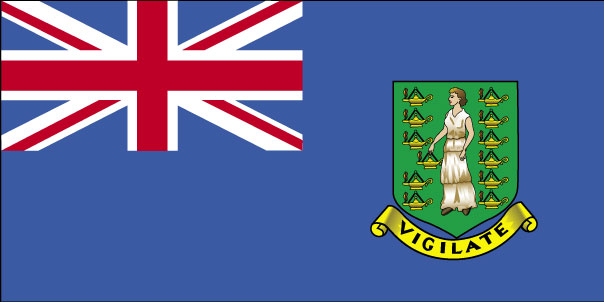
British Virgin Islands
Declare Your Relationship to British Virgin Islands
CountryReports Community
- Studying1
- From British Virgin Islands1
- British Virgin Islands heritage1
- Visited0
- Want to visit0
Quick Look Factsheet
A multi-page overview of British Virgin Islands.
British Virgin Islands FactsheetCustoms and Culture
Customs and Culture
Cultural Attributes
The British Virgin Islands possesses a rich cultural identity shaped by its African, British colonial, and Caribbean heritage. The majority of the population descends from enslaved Africans brought to the islands during the 17th and 18th centuries to work on sugar plantations, and this heritage remains deeply woven into music, cuisine, language, and community life. English is the official language, and most residents speak a local Creole dialect that blends British English with West African linguistic elements. This dialect, sometimes called "BVI dialect" or "island English," reflects the layered history of the territory and distinguishes locals from the many expatriates and seasonal workers who make up a significant portion of the population. Music plays a central role in cultural expression. Fungi music, a folk genre unique to the Virgin Islands and named after a traditional cornmeal and okra dish, is considered the unofficial national music. It combines African call-and-response traditions with scratch band instrumentation, including a locally made instrument called the "scratcher." Fungi music is actively preserved through cultural events and school programs. Christianity is the dominant religion, with a variety of Protestant denominations represented, particularly Methodist, Anglican, and Baptist congregations. Churches serve not only as places of worship but as important community gathering spaces. The annual Emancipation Festival, celebrated in late July and early August, is the most significant cultural event on the calendar. It commemorates the abolition of slavery in 1834 and features parades, live music, traditional food stalls, and festive costumes. The festival draws visitors from across the Caribbean and beyond. Cuisine reflects the African-Caribbean foundation of the culture, with dishes such as fish and dumplings, conch fritters, roti, and rice and peas featuring prominently in everyday meals. Local fishing traditions remain an important part of community life, especially on smaller islands like Anegada, known for its lobster. The territory navigates a balance between maintaining its local identity and managing the influence of a large tourism industry and significant expat community.

Isles of Hidden Treasures
Get More Customs and Culture
2 more cultural topics for members
Social Customs & Etiquette · Dating Customs
Every country, every topic, all activities & recipes
✓ Instant access on this device · ✓ No subscription
Holidays
Territory Day
7/1Independence
Dates of Interest
- July 1st
What should I know about local culture and community life in the British Virgin Islands?
The BVI has a rich culture shaped by African, British colonial, and Caribbean heritage, with music, church, and community festivals playing a central role in daily life.
Do
- Appreciate Fungi music, the unofficial national music that blends African call-and-response with scratch band instrumentation
- Recognize churches as important community gathering spaces, not just places of worship
- Try to attend the Emancipation Festival in late July and early August if visiting then
Good to know
- English is the official language, and most residents speak a local Creole dialect blending British English with West African elements
- Christianity is dominant, with Methodist, Anglican, and Baptist congregations well represented
- The Emancipation Festival commemorates the 1834 abolition of slavery with parades, live music, food stalls, and festive costumes
What is the food like in the British Virgin Islands?
Cuisine reflects the African-Caribbean foundation of the culture, featuring dishes like fish and dumplings, conch fritters, roti, and rice and peas in everyday meals.
Do
- Try local staples such as fish and dumplings, conch fritters, roti, and rice and peas
- Sample lobster on Anegada, an island known for it
Good to know
- Local fishing traditions remain an important part of community life, especially on smaller islands
Last updated: 2026-07-12 · Sources: CountryReports
Photos of British Virgin Islands
Photos of British Virgin Islands


Travel and Tourism
Travel and Tourism
- Travel Alert Status
- Level 1: Exercise Normal Precautions
- Currency
- US dollar
- Time Difference
- UTC-4 (1 hour ahead of Washington, DC during Standard Time)
- Airports
- 3
- Recommended Vaccinations
- How important is it to do your research about vaccinations? It might just save your life! Make yourself aware of the different types of vaccinations and which ones you may need to travel to your destination. Schedule an appointment with your doctor at least four to six weeks before you travel to ensure you receive all important shots. Be sure that you and your family are up to date on your routine vaccinations. Which vaccinations you need will depend on a number of factors including your destination, whether you will be spending time in rural areas, the season of the year you are traveling, your age, health status, and previous immunizations.
Read the full travel guide — health, safety, vaccinations, disease risk, sanitation, and transit details.
View full travel guideHistory
History
Historical Eras
Amerindian Settlement
1500 BCE – 1493
The Virgin Islands were inhabited for millennia by Arawak and later Carib peoples who navigated the Caribbean by canoe and subsisted on fishing, farming, and trade. Columbus encountered these islands in 1493, naming them Las Once Mil Vírgenes after St. Ursula's martyred companions. Spanish claims followed, though no permanent European colonization was established at this stage.
Early Colonial Contest
1493 – 1672
Spain claimed formal sovereignty over the Virgin Islands in 1555, but European interest remained intermittent. Dutch buccaneers established the first permanent European settlement on Tortola in 1648, using it as a base for trade and raiding. An English group expelled the Dutch in 1666, setting the stage for formal British annexation.
British Plantation Era
1672 – 1834
England formally annexed Tortola and the surrounding islands in 1672, establishing a plantation economy reliant on enslaved African labor to cultivate sugar, cotton, and other crops. The islands were incorporated into the Leeward Islands federation and governed under British colonial administration. This era defined the demographic and cultural character of the territory, shaping its African-Caribbean heritage.
Decline & Reorganization
1834 – 1956
The abolition of slavery in 1834 triggered the collapse of the plantation system, compounded by recurring droughts and falling commodity prices throughout the 19th century. The islands were formally integrated into the Leeward Islands administration in 1872, reducing their political autonomy. The economy contracted sharply, shifting toward small-scale agriculture, fishing, and subsistence living.
Separate Territory
1956 – 1967
In 1956 the British Virgin Islands became a separately administered territory, distinct from the broader Leeward Islands grouping, gaining its own flag in 1960. This period marked a critical assertion of local identity and laid the constitutional groundwork for greater self-governance. Proximity to the newly formed US Virgin Islands stimulated early economic linkages and growing tourism interest.
Modern Era
1967 – present
A new constitution in 1967 granted the British Virgin Islands greater internal self-government, and subsequent constitutional revisions further expanded local authority. Tourism and offshore financial services transformed the economy into one of the most prosperous in the Caribbean, with the US dollar adopted as legal tender to facilitate commerce. The territory remains a British Overseas Territory while maintaining a distinct and vibrant cultural identity.
Overview
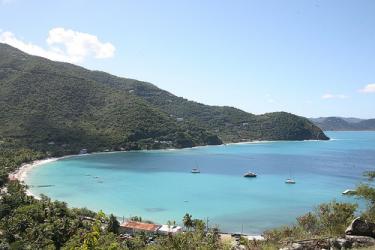
The picturesque islands and cays that make up the Virgin Islands
Every country, every topic, all activities & recipes
✓ Instant access on this device · ✓ No subscription
Timeline of Key Events
1555
The Spanish claimed the Islands.
The Spanish claimed the Islands.
1648
The Dutch established a permanent settlement on Tortola.
The Dutch established a permanent settlement on Tortola.
1672
The English ousted the Dutch from Tortola and the islands became a British colony.
The English ousted the Dutch from Tortola and the islands became a British colony.Quakers established settlements and plantations on the Islands.
1872
The islands became part of the Leeward Islands.
The islands became part of the Leeward Islands.
1917
The United States of America purchased the adjacent Danish West Indies (US Virgin Islands).
The United States of America purchased the adjacent Danish West Indies (US Virgin Islands).
1956
The British Virgin Islands became a separately administered entity.
The British Virgin Islands became a separately administered entity.
1960
The flag of the British Virgin Islands was adopted.
The flag of the British Virgin Islands was adopted.
Read the full history profile — narrative overview, defining eras, and the complete timeline in one place.
View expanded historyInteresting Facts
Interesting Facts
Legend has it that there is still hidden treasure buried on several of the islands.
The BVI are volcanic in origin except Anegada, which is a coral and limestone atoll.
See every fact — trivia, oddities, and curious tidbits gathered from across the country.
View all interesting factsGeography and Environment
Geography and Environment
- Terrain
- coral islands relatively flat; volcanic islands steep, hilly
- Climate
- subtropical; humid; temperatures moderated by trade winds
- Natural Hazards
- hurricanes and tropical storms (July to October)
- Current Environmental Issues
- limited natural fresh water resources (except for a few seasonal streams and springs on Tortola, most of the islands' water supply comes from wells and rainwater catchments)
Read the full geography and environment profile — terrain, climate, natural resources, hazards, land use, and international agreements.
View full geographyPeople & Demographics
People & Demographics
Religion
Languages Spoken
English (official)
- English
Population
- Population
- 38,000
- Population in Major Urban Areas
- ROAD TOWN (capital) 10,000
- Nationality Noun
- British Virgin Islander(s)
- Ethnic Groups
- Black 83%, white, Indian, Asian, and mixed
Education
- Literacy Definition
- Age 15 and over can read and write
Life Expectancy
- Life Expectancy at Birth
- Life expectancy at birth in the British Virgin Islands is notably high compared to regional and global averages, reflecting the territory's relatively strong healthcare infrastructure, stable economy, and access to medical services. Residents of the British Virgin Islands can expect to live an average of approximately 79 to 80 years, with women generally outliving men by several years — women averaging around 82 years and men averaging roughly 77 to 78 years. These figures place the British Virgin Islands well above the global average life expectancy, which stands at approximately 73 years, and on par with many developed nations. The territory benefits from its status as a British Overseas Territory, which provides a degree of institutional stability and access to broader healthcare standards and protocols aligned with United Kingdom guidelines. Several factors contribute to the relatively high life expectancy in the British Virgin Islands. The territory has a small population — estimated at around 31,000 to 35,000 people — which allows for more manageable healthcare delivery. The main hospital, Peebles Hospital on Tortola, serves as the primary facility for the islands, and residents with complex medical needs are often referred to neighboring islands or the United States for specialized treatment. The proximity to Puerto Rico and the United States Virgin Islands provides an important safety net for advanced medical care. The economy of the British Virgin Islands, driven largely by financial services and tourism, supports a relatively high standard of living, which in turn positively influences health outcomes. Higher income levels are generally associated with better nutrition, housing conditions, and access to preventive healthcare — all of which contribute to longer life spans. Lifestyle factors also play a role. The Caribbean diet, rich in fresh fish, fruits, and vegetables, can support cardiovascular health, though the increasing adoption of Western dietary patterns presents ongoing public health challenges. Non-communicable diseases such as hypertension, diabetes, and cardiovascular conditions remain prominent concerns for health authorities in the territory, consistent with broader trends observed across Caribbean nations. It is worth noting that the British Virgin Islands, like much of the Caribbean region, continues to strengthen its healthcare resilience following the disruptions caused by Hurricane Irma in 2017, which significantly impacted infrastructure across the islands. Recovery and reinvestment efforts have helped restore and in some areas improve health service delivery in the years since. Overall, the life expectancy figures for the British Virgin Islands reflect a population that, despite being small and geographically dispersed across multiple islands, enjoys a quality of life that supports longevity well above the world average.
- Infant Mortality Rate
- The British Virgin Islands maintains a remarkably low infant mortality rate, reflecting the territory's relatively high standard of living, accessible healthcare infrastructure, and stable economic conditions. Current estimates place the infant mortality rate at approximately 6 to 7 deaths per 1,000 live births, a figure that compares favorably not only with other Caribbean territories but also with many developed nations worldwide. This low rate is the result of several contributing factors. The British Virgin Islands benefits from a functioning public health system supported by its status as a British Overseas Territory, which provides a degree of institutional stability and access to international health standards. The territory's main healthcare facility, Dr. D. Orlando Smith Hospital on Tortola, provides maternity and neonatal care services to residents. Prenatal care is widely available, and skilled attendance at birth is the norm rather than the exception, which significantly reduces risks associated with childbirth and the immediate newborn period. Socioeconomic conditions in the British Virgin Islands also play a role. The territory has one of the higher per capita incomes in the Caribbean, driven largely by its offshore financial services sector and tourism industry. Higher income levels are generally associated with better nutrition, improved access to clean water and sanitation, and greater utilization of healthcare services — all of which contribute to lower infant mortality. While the British Virgin Islands performs well by regional standards, small island territories like this one can experience statistical fluctuations from year to year due to their limited population size. A relatively small number of births each year means that even a modest change in absolute numbers can produce noticeable shifts in the reported rate. Overall, the trajectory for infant mortality in the British Virgin Islands has been one of steady improvement over recent decades, consistent with broader global trends driven by advances in neonatal medicine, public health education, and maternal care practices.
Read the full people and society profile — demographics, health, education, religion, languages, and notable people.
View full people and societyGovernment & Politics
Government & Politics
Country Identity
- Country Name
- BritishVirginIslands
Government Structure
- Legal System
- English law
- Executive Branch
- chief of state: King CHARLES III (since 8 September 2022), represented by Governor Daniel PRUCE (since 29 August 2023) head of government: Premier Natalio "Sowande" WHEATLEY (since 5 May 2022) cabinet: Cabinet appointed by the governor from members of the House of Assembly elections: none; the monarch is hereditary; the governor is appointed by the monarch; following legislative elections, the leader of the majority party or the leader of the majority coalition is typically appointed premier by the governor
- Legislative Branch
- Unicameral House of Assembly (15 seats; 13 members elected by direct popular vote from single-member districts, and 2 at-large members; members serve four-year terms). The territory also has an appointed Speaker and an ex-officio Attorney General who participates in proceedings but does not vote. Elections: Last held on 24 April 2023 (next to be held in 2027). Election results: Percent of vote by party — VIP approximately 47%, NDP approximately 40%, other and independents approximately 13%; seats by party — VIP 10, NDP 3.
- Judicial Branch
- Eastern Caribbean Supreme Court, consisting of the High Court of Justice and the Court of Appeal (one judge of the Supreme Court is a resident of the islands and presides over the High Court); Magistrate's Court; Juvenile Court; Court of Summary Jurisdiction
- Suffrage
- 18 years of age; universal
- Constitution
- 1 June 1977
- National Holiday
- Territory Day, 1 July
Capital City
- Capital Name
- Road Town
- Capital - geographic coordinate
- 18 25 N, 64 37 W
- Capital Time Difference
- UTC-4 (1 hour ahead of Washington, DC during Standard Time)
name refers to the nautical term "roadstead" or "roads," a body of water less sheltered than a harbor but where ships can lie reasonably safely at anchor sheltered from rip currents, spring tides, or ocean swells
Embassy / Diplomatic Mission
U.S. Embassy in Bridgetown
Wildey Business Park
Wildey
St. Michael, Barbados
Telephone: (246) 227-4399
Emergency after-hours telephone: (246) 227-4000
Facsimile: (246) 431-0179
Email: BridgetownACS@state.gov
Hours of operation are 8:30 a.m. – 4:30 p.m.
Monday through Friday, except Barbadian and U.S. holidays.
Read the full government profile — flag symbolism, national anthem, and other national symbols.
View full government detailsEconomy
Economy
The economy of the British Virgin Islands is one of the most stable and prosperous in the Caribbean, driven primarily by two pillars: tourism and offshore financial services.
Snapshot
- Currency Name and Code
- US Dollar (USD)
- GDP Real Growth Rate
- 2.9%
- GDP by Sector
- agriculture: 1.8% industry: 6.2% services: 92%
Every country, every topic, all activities & recipes
✓ Instant access on this device · ✓ No subscription
News & Weather
News & Weather
Current Weather
Latest News
British Virgin Islands digital assets - October 2026 update - JD Supra
JD Supra · 2d ago
Roy Thomas - The Virgin Islands Daily News
The Virgin Islands Daily News · 5h ago
Montserrat vs British Virgin Islands | Highlights - Concacaf | Official Website
Concacaf | Official Website · 23d ago
Montserrat 3-0 Br Virgin Isl (26 Sep, 2026) Final Score - ESPN
ESPN · 23d ago
This $43.5 Million British Virgin Islands Villa Compound Has Met Its Reserve — and Bidding Is Open - Caribbean Journal
Caribbean Journal · 5d ago
British Virgin Islands (VGB) and Russia (RUS) Trade - The Observatory of Economic Complexity
The Observatory of Economic Complexity · 7d ago
British Virgin Islands investment funds - Summer 2026 update - JD Supra
JD Supra · 5d ago
Consular Representative to Hold Appointments for U.S. Citizens in the British Virgin Islands, July 15, 2026 - bb.usembassy.gov
bb.usembassy.gov · 96d ago
News via Google News
Videos
Videos
1 curated YouTube videos.
Source: YouTube
Frequently Asked Questions
Frequently Asked Questions
What is the population of British Virgin Islands?
What is the capital of the British Virgin Islands?
Where are the British Virgin Islands located?
What ocean and sea borders surround the British Virgin Islands?
What religion is practiced in the British Virgin Islands?
What currency is used in the British Virgin Islands?
What language is spoken in the British Virgin Islands?
What is the geography of the British Virgin Islands like?
What is the British Virgin Islands known for?
Last reviewed 2026