
 English
 Español
 中文
中文 हिन्दी
 Français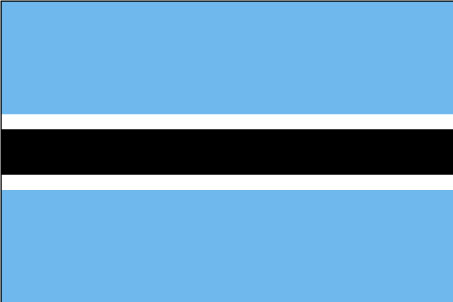
Botswana
Botswana
Declare Your Relationship to Botswana
CountryReports Community
- Studying17
- From Botswana2
- Botswana heritage3
- Visited3
- Want to visit2
Customs and Culture
Customs and Culture
Cultural Attributes
Individuals are expected to contribute to society rather than have the government support them. Cleanliness and neatness are important throughout the country.

Land of the Kalahari's Keepers
Get More Customs and Culture
6 more cultural topics for members
Social Customs & Etiquette · Diet · Family · Dating Customs · Recreation · Student Life
Every country, every topic, all activities & recipes
✓ Instant access on this device · ✓ No subscription
Holidays
Independence Day
9/30Independence Day
Dates of Interest
- September 30th
How do people greet each other in Botswana?
Formal verbal greetings are common, with a right-handed handshake while supporting your right elbow with your left hand, especially with acquaintances, elders, or people of higher social status.
Do
- Shake with the right hand while supporting your elbow with the left hand
- As an elder or someone approaching, greet first among Setswana speakers
Good to know
- Greeting customs vary by ethnic group — among the Kalanga, the younger person always greets first
What are the dining customs in Botswana?
Sharing is central to meals, with most families eating from common bowls or plates, though each person has their own cup.
Do
- Leave a little food behind to show the meal was filling
- Expect to eat with the family if you arrive at mealtime, and often help prepare the meal
Don’t
- Don't share drinks — each person has their own cup
- Don't smell food before eating it, as this implies something is wrong with it
Good to know
- Bogobe, a sorghum, maize, or millet porridge, is a staple — soured and soft for breakfast, thickened for later meals
- Phane worms dried in hot ashes are a delicacy in the northeast
- Leftovers may be kept for later or given to departing guests
What etiquette should travelers know in Botswana?
Community is at the heart of Tswana life, and cleanliness and neatness are valued throughout the country.
Do
- Value contributions that benefit the community
- Welcome unannounced visitors, especially relatives, offering water or a drink first
Good to know
- Working family members are expected to support relatives without jobs and to house traveling relatives
What should I wear in Botswana?
Western dress is common; despite the heat, urban men wear business suits with ties and women wear dresses or blouses.
Good to know
- Rural women often wear a wrap over their dresses to protect them from dirt
- Married women cover their heads with a kerchief
- Both sexes typically have very short hair
What gestures should I be aware of in Botswana?
Public displays of affection are inappropriate, and respect for elders in conversation is shown by looking toward the ground.
Don’t
- Don't show affection publicly
Good to know
- Several different gestures are used to communicate 'No thank you'
- Look toward the ground to show respect to elders during conversation
What is family life like in Botswana?
High unemployment and the search for work often keep families separated, so women remain primarily responsible for the family and often run home-based businesses.
Good to know
- Married couples may work far apart from one another
- When a couple becomes engaged, the two families negotiate the bogadi (bride price)
What do people do for recreation in Botswana?
A popular traditional game is 'stalking,' where blindfolded children play a hunter chasing a springbok to sharpen listening skills and reflexes.
Good to know
- Stalking is played by eight or more players and needs only two blindfolds
- A hunter and a springbok are blindfolded, spun, and placed in a circle for timed rounds
Last updated: 2026-07-12 · Sources: CountryReports
Photos of Botswana
Photos of Botswana


Travel and Tourism
Travel and Tourism
- Travel Alert Status
- Level 1: Exercise Normal Precautions
- Currency
- 10.21
- Time Difference
- UTC+2 (7 hours ahead of Washington, DC, during Standard Time)
- Airports
- 85
- Recommended Vaccinations
- How important is it to do your research about vaccinations? It might just save your life! Make yourself aware of the different types of vaccinations and which ones you may need to travel to your destination. Schedule an appointment with your doctor at least four to six weeks before you travel to ensure you receive all important shots. Be sure that you and your family are up to date on your routine vaccinations. Which vaccinations you need will depend on a number of factors including your destination, whether you will be spending time in rural areas, the season of the year you are traveling, your age, health status, and previous immunizations.
Read the full travel guide — health, safety, vaccinations, disease risk, sanitation, and transit details.
View full travel guideRecipes
Recipes
History
History
Historical Eras
Pre-colonial Era
200 BCE – 1885
San (Bushmen) hunter-gatherers inhabited the region for millennia before Bantu-speaking Tswana peoples migrated into the area, establishing herding and farming communities under tribal chieftainships. In the early 19th century, the Mfecane — the upheavals driven by Zulu expansion — displaced and reshaped Batswana communities. Tensions with Boer settlers from the Transvaal in the 1870s and 1880s prompted Batswana chiefs to seek British protection.
Bechuanaland Protectorate
1885 – 1966
Britain formally declared Bechuanaland a protectorate in 1885, administering the northern territory directly from a seat of government in Mafikeng. Advisory councils for Africans and Europeans were established in 1920, and proclamations in 1934 regularized tribal governance. Despite pressure from South Africa to absorb the territory, Bechuanaland's inhabitants successfully resisted inclusion in the Union of South Africa, preserving a path toward independent nationhood.
Independence & Nation-Building
1966 – 1980
Botswana gained independence on 30 September 1966, with Seretse Khama — founder of the Bechuanaland Democratic Party and heir to the Bamangwato chieftainship — elected as the country's first president. The discovery of diamonds at Orapa in 1967 transformed the economic outlook of one of the world's poorest nations. Khama established democratic institutions, a nonracial constitution, and a foreign policy of principled opposition to apartheid South Africa, serving until his death in office in 1980.
Consolidation & Growth
1980 – 1999
Vice President Ketumile Masire assumed the presidency after Khama's death and guided Botswana through sustained diamond-led economic expansion, earning it one of the world's highest GDP growth rates. The Botswana Defence Force, established in 1977, was strengthened as regional instability persisted. Multiparty elections held in 1984, 1989, and 1994 reinforced the country's reputation for stable, civilian democratic governance on a continent marked by coups and conflict.
Modern Botswana
1999 – present
President Festus Mogae, who took office in 1998 and was elected in his own right in 1999, oversaw Botswana's response to a devastating HIV/AIDS epidemic — one of the world's worst — through a landmark antiretroviral treatment program. Diamond revenues funded expanded public services, though global demand fluctuations exposed economic vulnerability, prompting efforts to diversify into tourism and conservation. Landmark court victories for the San people in 2006 highlighted ongoing tensions over indigenous land rights and resource access.
Overview
The Batswana, a term also used to denote all citizens of Botswana, refers to the country’s major ethnic group (the "Tswana" in South Africa), which came into the area from South Africa during the Zulu wars of the early 1800s. Prior to European contact, the Batswana lived as herders and farmers under tribal rule.
Every country, every topic, all activities & recipes
✓ Instant access on this device · ✓ No subscription
Timeline of Key Events
1867
European gold prospectors arrive, mining begins.
European gold prospectors arrive, mining begins.
1885
British proclaim a protectorate called Bechuanaland.
British proclaim a protectorate called Bechuanaland.
1959
Copper mines are established.
Copper mines are established.
1960
Bechuanaland People’s Party (BPP) is established.
Bechuanaland People’s Party (BPP) is established.
1962
Seretse Khama founds Bechuanaland Democratic Party (BDP)
Seretse Khama founds Bechuanaland Democratic Party (BDP), later to become Botswana Democratic Party.
1966
Bechuanaland is granted independence and becomes Republic of Botswana.
Bechuanaland is granted independence and becomes Republic of Botswana with Seretse Khama as president.
1966
Joins the United Nations.
Joins the United Nations.
Read the full history profile — narrative overview, defining eras, and the complete timeline in one place.
View expanded historyInteresting Facts
Interesting Facts
When a child loses a tooth they throw their tooth on the roof and say “Mr. Moon, Mr. Moon, please bring me a new tooth.”
African elephants are different from Indian elephants. They are larger, and both male and female have tusks.
San (The San are the original inhabitants of the land and have been living there for as long as 50,000 years) gatherers carry water in ostrich eggs.
Diamonds were discovered in Botswana in 1967. It took 4 years for mining to start.
1 more facts for members
Every country, every topic, all activities & recipes
✓ Instant access on this device · ✓ No subscription
Geography and Environment
Geography and Environment
- Terrain
- predominantly flat to gently rolling tableland; Kalahari Desert in southwest
- Climate
- Most of its area is an inhospitable semi-desert known as the Kalahari. Even the most arable sections of eastern Botswana are subject to periodic drought and unpredictable rains. Botswana straddles the Tropic of Capricorn and has an average elevation of 3,300 feet. Daily high temperatures during the hottest month, January, average in the upper 90’s to over 100 degrees Fahrenheit. Winter daytime temperatures generally reach 70 degrees, but with little cloud cover and no humidity to hold warmth in the air, they plummet to 30 or 40 degrees Fahrenheit at night.
- Natural Hazards
- periodic droughts; seasonal August winds blow from the west, carrying sand and dust across the country, which can obscure visibility
- Current Environmental Issues
- overgrazing; desertification; limited fresh water resources
Read the full geography and environment profile — terrain, climate, natural resources, hazards, land use, and international agreements.
View full geographyPeople & Demographics
People & Demographics
Religion
Languages Spoken
English (official), Setswana
- English
Population
- Population
- 2,630,438
- Population in Major Urban Areas
- GABORONE (capital) 202,000
- Nationality Noun
- Motswana (singular), Batswana (plural)
- Ethnic Groups
- Tswana (or Setswana) 79%, Kalanga 11%, Basarwa 3%, other (including Kgalagadi and white) 7%
- Language Note
- English is the official language while Setswana is considered the national language. Tjikalanga is commonly spoken in northeastern Botswana.
Education
- Literacy Definition
- Age 15 and over can read and write
Health Information
- Major Infectious Diseases — degree of risk
- High
Life Expectancy
- Life Expectancy at Birth
- Life expectancy at birth in Botswana has undergone a dramatic and well-documented transformation over the past two decades, reflecting both the devastating impact of the HIV/AIDS epidemic and the country's subsequent, determined public health response. In the early 2000s, Botswana was among the hardest-hit nations in the world by HIV/AIDS, and life expectancy plummeted to approximately 49 years — one of the lowest figures ever recorded for the country. At the peak of the crisis, the epidemic threatened to reverse an entire generation of development gains. Beginning in the mid-2000s, Botswana launched one of Africa's most ambitious antiretroviral treatment (ART) programs, providing free HIV/AIDS medication to its citizens. This initiative, combined with expanded access to healthcare, improved maternal and child health services, and rising national income from diamond revenues, produced a remarkable recovery. By the early 2010s, life expectancy had climbed back into the mid-60s, and the upward trend has largely continued. As of the most recent available data, life expectancy at birth in Botswana stands at approximately 65 to 66 years overall, with some variation between male and female populations. Women in Botswana generally outlive men, a pattern consistent with global trends. Male life expectancy is typically a few years lower, reflecting higher rates of occupational risk, road traffic accidents, and, historically, higher HIV prevalence among certain demographic groups. While these figures represent a significant improvement from the crisis years, Botswana still faces ongoing challenges. HIV/AIDS remains prevalent, with the country carrying one of the highest adult HIV prevalence rates in the world — estimated at roughly 20 to 21 percent of adults aged 15 to 49. Non-communicable diseases such as cardiovascular disease, diabetes, and cancer are also increasingly contributing to mortality as the population ages and urbanization accelerates. Despite these challenges, Botswana's experience serves as a notable example of how targeted public health investment, government commitment, and international cooperation can dramatically alter a population's health trajectory over a relatively short period of time.
- Infant Mortality Rate
- Botswana has made notable progress in reducing infant mortality over recent decades, though the rate remains relatively elevated compared to high-income nations. As of the most recent available data, Botswana's infant mortality rate stands at approximately 26 to 28 deaths per 1,000 live births. This figure represents the number of infants who die before reaching one year of age for every 1,000 children born alive in a given year. The country's infant mortality rate has declined significantly since the early 2000s, when the HIV/AIDS epidemic was at its peak and infant deaths were substantially higher. At that time, rates exceeded 50 deaths per 1,000 live births. The improvement since then reflects major investments in public health infrastructure, including the widespread rollout of antiretroviral therapy (ART), expanded access to prevention of mother-to-child transmission (PMTCT) programs, and improved antenatal care services. Key factors that continue to influence infant mortality in Botswana include neonatal complications, respiratory infections, diarrheal diseases, and the residual effects of HIV/AIDS transmission from mother to child. Rural communities face greater challenges due to limited access to healthcare facilities, trained medical personnel, and essential medicines. Urban centers such as Gaborone and Francistown generally report better health outcomes owing to more robust infrastructure. Botswana's government, in partnership with international organizations including UNICEF and the World Health Organization, has implemented programs targeting neonatal health, immunization coverage, and maternal nutrition. Vaccination rates for diseases such as measles, polio, and diphtheria have remained relatively high, contributing to the downward trend in infant deaths. Despite these gains, Botswana still faces challenges in closing the gap with countries that have achieved infant mortality rates in the single digits. Continued investment in rural healthcare access, skilled birth attendance, and early childhood nutrition programs will be essential to sustaining and accelerating this progress in the years ahead.
Read the full people and society profile — demographics, health, education, religion, languages, and notable people.
View full people and societyGovernment & Politics
Government & Politics
Country Identity
- Country Name
- Botswana
- Full Country Name
- Republic of Botswana
- Local - Long
- Republic of Botswana
- Local - Short
- Botswana
- Former Name
- Bechuanaland
Government Structure
- Government Type
- parliamentary republic
- Legal System
- based on Roman-Dutch law and local customary law; judicial review limited to matters of interpretation; has not accepted compulsory ICJ jurisdiction
- Executive Branch
- chief of state: President Duma BOKO (since 1 November 2024); note - the president is both the chief of state and head of government head of government: President Duma BOKO (since 1 November 2024); note - the president is both the chief of state and head of government cabinet: Cabinet appointed by the president elections: president indirectly elected by the National Assembly for a five-year term; election last held on 30 October 2024 (next to be held in 2029); vice president appointed by the president election results: Duma BOKO elected president following his Umbrella for Democratic Change coalition's victory in the general election, ending the Botswana Democratic Party's nearly six decades in power
- Legislative Branch
- Botswana's Parliament is bicameral, consisting of the Ntlo ya Dikgosi (formerly known as the House of Chiefs) and the National Assembly. The Ntlo ya Dikgosi is a largely advisory body comprising 33 members, including chiefs of principal tribes, elected sub-chiefs, and nominated members, and serves primarily to advise Parliament on matters related to customary law and tribal affairs. The National Assembly consists of 65 seats, with 63 members directly elected by popular vote in single-member constituencies and 2 appointed by the majority party; members serve five-year terms. Elections: National Assembly elections were last held on 30 October 2024. Election results: percent of vote by party — UDC 45.6%, BDP 19.9%, BPF 9.0%, AP 8.5%, other parties sharing remaining votes; seats by party — UDC 36, BDP 4, BPF 5, AP 4, other 14. The 2024 elections marked a historic shift, as the Botswana Democratic Party, which had governed the country since independence in 1966, was defeated for the first time, with Duma Boko of the Umbrella for Democratic Change being sworn in as the new President.
- Judicial Branch
- High Court; Court of Appeal; Magistrates' Courts (one in each district)
- Suffrage
- 18 years of age; universal
- Constitution
- March 1965, effective 30 September 1966
- Independence
- 30 September 1966 (from UK)
- National Holiday
- Independence Day (Botswana Day), 30 September (1966)
Capital City
- Capital Name
- Gaborone
- Capital - geographic coordinate
- 24 38 S, 25 54 E
- Capital Time Difference
- UTC+2 (7 hours ahead of Washington, DC, during Standard Time)
named after GABORONE (ca. 1825-1931), a revered kgosi (chief) of the Tlokwa tribe, part of the larger Tswana ethnic group
Military
Branches: Botswana Defense Force (BDF): Ground Forces Command, Air Wing Command, Defense Logistics Command, Special Forces Group
Embassy / Diplomatic Mission
The U.S. Embassy Gaborone is located on Embassy Drive in the Government Enclave.
Mailing address: P.O. Box 90, Gaborone, Botswana
Telephone: 267 395-3982
After-hours Emergency Telephone: 267 395-7111
Fax 267 318-0232
Read the full government profile — flag symbolism, national anthem, and other national symbols.
View full government detailsEconomy
Economy
Botswana has maintained one of the world's most impressive long-term economic growth records since independence in 1966.
Snapshot
- Currency Name and Code
- Pula (BWP)
- GDP — official exchange rate
- $9,046,000,000 (USD)
- GDP Real Growth Rate
- 4.3%
- Gini Index
- 63
Every country, every topic, all activities & recipes
✓ Instant access on this device · ✓ No subscription
News & Weather
News & Weather
Current Weather
Latest News
Kwa Nokeng Expands IPO as Botswana Emerges From Listings Drought - Bloomberg.com
Bloomberg.com · 8h ago
De Beers transfers $75 million to Botswana as diamond economy searches for life beyond mining - Business Insider Africa
Business Insider Africa · 7h ago
With $73 Million in Hand, Botswana Starts Showing Its Receipts - JCK
JCK · 22h ago
Leviathan Metals (TSXV:LVX) - Advancing Central Copper in Botswana, Drill Assays Ahead - Crux Investor
Crux Investor · 10h ago
US trafficking report: Botswana beats South Africa in tier ranking - SAPeople
SAPeople · 6h ago
Botswana nearing deal to raise De Beers stake to about 25%, Bloomberg reports - Reuters
Reuters · 9d ago
Botswana at 60 challenges the story of postcolonial African failure - Al Jazeera
Al Jazeera · 21d ago
Chow Tai Fook Jewellery Group Welcomes President of Botswana to Its Newly Opened Signature Boutique in Beijing - Hastings Tribune
Hastings Tribune · 2d ago
News via Google News
Videos
Videos
1 curated YouTube videos.
Source: YouTube
Frequently Asked Questions
Frequently Asked Questions
What is the population of Botswana?
What is the capital of Botswana?
Where is Botswana located?
What countries border Botswana?
What religion is practiced in Botswana?
What is the currency of Botswana?
What language is spoken in Botswana?
What is the geography of Botswana like?
What is Botswana known for?
Last reviewed 2026