
 English
 Español
 中文
中文 हिन्दी
 Français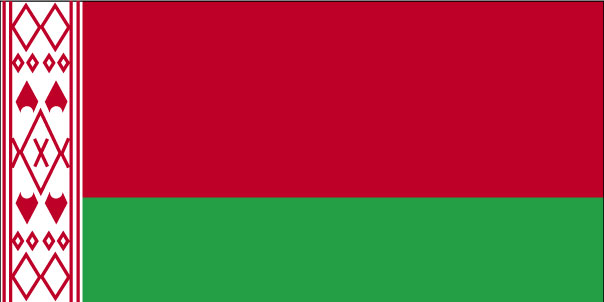
Belarus
Declare Your Relationship to Belarus
CountryReports Community
- Studying1
- From Belarus0
- Belarus heritage1
- Visited1
- Want to visit0
Customs and Culture
Customs and Culture
About the People
Belarusians remain deeply influenced by the soviet period. Generally they revere the past. Belarusians are fond of sports and excel in gymnastics. Minsk has cultural facilities but in rural areas social occasions are family centered.
Cultural Attributes
Belorussians remain deeply influenced by the Soviet period. Generally, they revere the past. Belorussians are fond of sports and excel in gymnastics. Minsk has cultural facilities but in rural areas, social occasions are family centered.

Land of Birch and Bison
Greetings, Gestures & Visiting
The Belarusian language is closer to the older Slavic languages but has been influenced by Polish and Russia as a result of political control of the country. While Belarus was part of the Soviet Union, Belarusians were forced to use Russian as their main language.
Diet
BABINA KAŠA is a conventional dish at a Belorussian birthday party. It is made from the wheaten cereal

Family
A traditional wedding gift is a rushnik (a handcrafted towel). Wedding guests are greeted with round rye bread and salt on a rushnik. Graduation from high school and college are seen as milestones to adulthood. Most Belarusians living in cities have small apartments in high-rise buildings.
Recreation
Soccer and Hockey are popular sports.
Holidays
Independence Day
7/3Independence Day
3 July 1944 was the date Minsk was liberated from German troops, 25 August 1991 was the date of independence from the Soviet Union
Christmas Traditions
12/25Christmas
Belarus still uses the Julian calendar to base some of their big festivals and celebrations. Thus, the celebration of Christmas is often thirteen days later than that of the rest of the world. Like most of Eastern European countries, Belarus celebrates the feast of the Advent on January 7.
Translated in Belarusian, Merry Christmas is ‘Z Kalyadami,’ pronounced ‘ska-leeya-da-mee.’ The traditional Christmas greeting however , is ‘Vyaselykh Kalyad,’ pronounced ‘veeya-se-lee call-yad.’
Christmas in Belarus starts on the 25th of December. Though this date is not when Christmas is actually celebrated, it is officially the beginning of the festivities as since some Belarusians believe December 25 to be the official day that Christ was born, rather than on January 7. Christmas is a non working holiday.
Christmas trees decorate every home and beautiful hand crafted ornaments, lights and five-armed stars and found on the trees. Gift giving does not happen on Christmas, but is saved for the New Year.
Known as ‘Svyaty Mikalaj,’ pronounced ‘svya-tee mee-ka-lash,’ Santa Clause plays an important role in Belarus, as he gives gifts to children who have been good. He is also often called Father Frost or Daddy Frost, or, in the Belarusian language, ‘Dzed Maroz,’ pronounced ‘zed marosh.’
In many aspects of Belarusian Christmas Celebrations, straw is the main decoration. Christmas tree ornaments are made of straw and straw is used as a fortune telling tool which takes place between Christmas and the New Year. Adults draw straws from the dinner table to predict future husbands.
Festivities usually end a week after January 7 when the celebration of the Old New Year begins. New Year celebrations which fall on December 31 are the grandest celebrations in the country with never-ending fireworks and programs held in all the parks and city centers of Belarus.
In between the days of December 25 to January 7, the Belarusian people celebrate the folk holiday of Kalyady which covers the entire period of the Christmas season. The Kalyady occurs as the winter solstice comes, bringing longer days and shorter nights.
The Kalyady rituals include three sacred dinners the first of which is served before Christmas Eve. Kalyadi traditional fare includes pancakes, fish and mushrooms, and oatmeal kisel. The Second ritual is the Rich Kutsia where they serve butter and fried bacon and is usually done on New Year’s Eve. The third part of the ritual is the Lenten Kutsia that is served on the Night of the Epiphany which is on January 6.
On Christmas Eve and Christmas Day, masses are held in all the Christian churches.
Christmas Dinner is served with the twelve courses in honor of the twelve apostles of Jesus Christ. Traditionally, straw is used as part of the decorations on the dinner table as well, which accentuates the table to signify a fortune telling event that may give an indication of their future.
Some dishes served are pies, dishes made with mushrooms, herring, vereschaka, boiled fruits, oat kissel, boiled rice with raisins and honey and nuts. One of the favorite dishes to be served is the Belarusian Borsc Borshch.
Dates of Interest
- December 25th
Belarus still bases some of its big festivals and celebrations on the Julian calendar. Thus, the celebration of Christmas is often thirteen days later than that of the rest of the world. Like most Eastern European countries, Belarus celebrates the feast of the Advent on January 7th. Translated in Belarusian, Merry Christmas is 'Z Kalyadami,' pronounced 'ska-leeya-da-mee.' The traditional Christmas greeting, however, is 'Vyaselykh Kalyad,' pronounced 'veeya-se-lee call-yad.' Christmas in Belarus starts on the 25th of December. Though this date is not when Christmas is actually celebrated, it is officially the beginning of the festivities since some Belarusians believe December 25 to be the official day that Christ was born, rather than January 7th. Christmas is a non-working holiday. Christmas trees decorate every home and beautifully hand-crafted ornaments and lights are used to decorate the tree.
How do people greet each other in Belarus?
Belarusians typically shake hands when they greet one another, and everyday polite words are useful to know.
Do
- Shake hands when greeting
- Use Pryvitannie for hello
- Say dzyakooi for thank you and kali laska for please
Good to know
- The Belarusian language is closer to older Slavic languages but influenced by Polish and Russian
- During the Soviet era Belarusians were forced to use Russian as their main language
- Useful words: tak (yes), nye (no)
What are the food and eating customs in Belarus?
Belarusian dishes rely heavily on potatoes, along with beets, peas, plums, pears and apples.
Good to know
- Potatoes are the most plentiful ingredient
- Babina kaša, made from wheaten cereal, is a conventional birthday party dish
- Wedding guests are greeted with round rye bread and salt on a rushnik
What should I know about gestures and personal space in Belarus?
People stand close and touch each other often during conversation, and shoes are removed when entering a home.
Do
- Remove your shoes when entering a home
- Expect close standing and frequent touching in conversation
Good to know
- People do not avoid eye contact with poor people on the streets, believing no one should walk the street hungry
How should I dress in Belarus?
Belarusians are fashionable and wear European clothes, sometimes decorated with traditional embroidery.
Good to know
- Rural people dress more casually
- Elderly women cover their heads with scarves
- Traditional ethnic costumes are often worn in the southern part of the country
What is family life and hospitality like in Belarus?
Social occasions in rural areas are family centered, and formal visits call for thoughtful gifts.
Do
- For formal visits, bring flowers for the lady of the house
- Bring a bottle of wine or vodka for the man
- Bring small presents or sweets for the children
Good to know
- A traditional wedding gift is a rushnik (a handcrafted towel)
- Graduation from high school and college are seen as milestones to adulthood
- Most city dwellers have small apartments in high-rise buildings
What do people do for recreation in Belarus?
Belarusians are fond of sports, excel in gymnastics, and enjoy watching popular team sports.
Good to know
- Soccer and hockey are popular sports
- Belarusians excel in gymnastics
- Minsk has cultural facilities
Last updated: 2026-07-12 · Sources: CountryReports
Photos of Belarus
Photos of Belarus


Travel and Tourism
Travel and Tourism
- Travel Alert Status
- Level 4: Do Not Travel
- Currency
- 1.9
- Time Difference
- UTC+2 (7 hours ahead of Washington, DC during Standard Time)
- Climate
- Belarus is located on the 53rd latitude--roughly the same as Hamburg, Germany; Dublin, Ireland; and Edmonton, Canada. It has a temperate continental climate. Average summer temperatures are in the mid-60s to mid-70s. (July is the warmest month.) It can be cold from October to April. Average winter temperatures are in the low teens and 20s F. Frost can occur 6 to 7 months of the year. Snow/ice can be expected from December to March, and occasionally into April. Winter days are short. Spring, summer, and fall bring long hours of welcome light. Average annual precipitation is 22-28 inches; June, July, and August are the wettest months.
- Airports
- 135
- Recommended Vaccinations
- How important is it to do your research about vaccinations? It might just save your life! Make yourself aware of the different types of vaccinations and which ones you may need to travel to your destination. Schedule an appointment with your doctor at least four to six weeks before you travel to ensure you receive all important shots. Be sure that you and your family are up to date on your routine vaccinations. Which vaccinations you need will depend on a number of factors including your destination, whether you will be spending time in rural areas, the season of the year you are traveling, your age, health status, and previous immunizations.
Read the full travel guide — health, safety, vaccinations, disease risk, sanitation, and transit details.
View full travel guideRecipes
Recipes
Kulaha
Dessert
Main Dish
Potatoes with Beetroots
Main Dish
BELARUSIAN BORSHCH
Main Dish
BIEŁAVIESKAJA CUTLET
Main Dish
SWEET AND SOUR MEAT
Main Dish
MAČANKA (PORK STEW) MIENSK MANNER
Main Dish
TONGUE BAKED IN DOUGH
Main Dish
PremiumBIERAŚCIE (ROAST CHICKEN)
Main Dish
PremiumFISH IN TOMATO PASTE WITH MUSHROOMS
Main Dish
PremiumFISH STEWED WITH APPLES
History
History
Historical Eras
Early Slavic & Medieval
862 – 1385
Slavic tribes settled the territory of modern Belarus as part of the Kievan Rus federation from the 9th century onward, with Polotsk emerging as the dominant principality. Minsk was founded in 1067 and became a key regional center. The fragmentation of Kievan Rus left Belarusian lands contested among rival principalities before gradual absorption into the expanding Grand Duchy of Lithuania.
Grand Duchy of Lithuania
1385 – 1795
Belarusian lands formed the cultural and administrative heartland of the Grand Duchy of Lithuania, which united with Poland through the Union of Lublin in 1569 to form the Polish-Lithuanian Commonwealth. Old Belarusian served as the official chancery language of the Duchy, and the region experienced significant cultural and religious development. Recurrent wars with Muscovy, including a notable Belarusian-Lithuanian victory in 1582, defined much of this period's geopolitical character.
Russian Imperial Rule
1795 – 1918
The partitions of Poland between 1772 and 1795 brought all Belarusian territories under the Russian Empire, which pursued systematic Russification — suppressing the Belarusian language, the Uniate Church, and distinct cultural identity. The region suffered tremendous devastation during the Napoleonic Wars and again in World War I. Tsarist policies also fostered violent antisemitism, culminating in the Minsk pogrom of 1905 against the city's large Jewish population.
Soviet Belarus
1918 – 1991
After a brief declaration of independence as the Belarusian National Republic in 1918, Belarus was incorporated into the Soviet Union as a founding SSR in 1922, with the Treaty of Riga (1921) first dividing its territory between Poland and Soviet Russia. The 20th century brought catastrophic violence: Stalinist purges killed an estimated two million people near Minsk between 1937 and 1941, Nazi Germany's 1941 invasion devastated the population, and the 1986 Chernobyl disaster contaminated vast swaths of Belarusian land. Decades of enforced Russification shaped a society that, even as it declared sovereignty in 1990, retained deep cultural and institutional ties to Russia.
Independent Belarus
1991 – present
Belarus declared full independence following the dissolution of the USSR in 1991, but under President Alyaksandr Lukashenka, elected in 1994, the country preserved Soviet-era political structures, state-dominated economy, and even restored the Soviet-style flag and emblem after a 1995 referendum. A 1999 union treaty with Russia envisioned deep political and economic integration, though full implementation has not occurred. Belarus remains one of Europe's most authoritarian states, defined by suppression of political opposition and an unusually close alignment with Moscow.
Overview
LOCATED ON THE WESTERN BORDERLANDS of the Russian
Timeline of Key Events
1067
Minsk (Belarus) was founded.
Minsk (Belarus) was founded.
1582
A small Belorussian-Lithuanian force overcame a larger Muscovite force.
A small Belorussian-Lithuanian force overcame a larger Muscovite force.
1905
There was a pogrom against Jews in Minsk, Byelorussia.
There was a pogrom against Jews in Minsk, Byelorussia.
1918
Belarus proclaims its independence as the Belarussian National Republic.
Towards the end of World War I, Belarus proclaims its independence as the Belarussian National Republic. But, with the end of the war, these aspirations are short-lived. The Red Army invades.
1919
The Belarusian Soviet Socialist Republic is proclaimed.
The Belarusian Soviet Socialist Republic is proclaimed.
1921
The Treaty of Riga divides Belarus between Poland and Soviet Russia.
The Treaty of Riga divides Belarus between Poland and Soviet Russia.
1922
The Belarussian SSR becomes founding member of the USSR.
The Belarussian SSR becomes founding member of the USSR.
Read the full history profile — narrative overview, defining eras, and the complete timeline in one place.
View expanded historyInteresting Facts
Interesting Facts
The literal translation of Belarus is “White Russia,” after the ancient term “Belaya Rus.” The “white” may refer to the beauty of the birch forests or to the snow that blankets the earth every year. Another explanation is that in ancient times the word “white” meant free, in the sense of free from conquering invaders.
Belarus is the country's name in the Belarusian language. During the Soviet era, the area was known as Byelorussia, which is the same word, but in the Russian language.
The Belovezhskaya Forest Nature Reserve is home to the European bison (or wisent), a relative of the American buffalo. This creature is often depicted in prehistoric wall paintings found all over Europe. It survives only in the reserve.
The period from the 16th to the 18th century is considered the golden age of Belarusian culture.
See every fact — trivia, oddities, and curious tidbits gathered from across the country.
View all interesting factsGeography and Environment
Geography and Environment
- Terrain
- generally flat and contains much marshland
- Climate
- Belarus is located on the 53rd latitude — roughly the same as Hamburg, Germany; Dublin, Ireland; and Edmonton, Canada. It has a temperate continental climate. Average summer temperatures are in the mid-60’s to mid-70’s. (July is the warmest month.) It can be cold from October to April. Average winter temperatures are in the low teens and 20’s F. Frost can occur 6 to 7 months of the year. Snow/ice can be expected from December to March, and occasionally into April. Winter days are short. Spring, summer, and fall bring long hours of welcome light. Average annual precipitation is 22–28 inches; June, July, and August are the wettest months.
- Natural Hazards
- NA
- Current Environmental Issues
- soil pollution from pesticide use; southern part of the country contaminated with fallout from 1986 nuclear reactor accident at Chornobyl' in northern Ukraine
Read the full geography and environment profile — terrain, climate, natural resources, hazards, land use, and international agreements.
View full geographyPeople & Demographics
People & Demographics
Religion
Languages Spoken
Belarusian, Russian, other
- Belarusian
- Russian
Population
- Population
- 9,612,632
- Population in Major Urban Areas
- MINSK (capital) 1.861 million
- Nationality Noun
- Belarusian(s)
- Ethnic Groups
- Belarusian 81.2%, Russian 11.4%, Polish, Ukrainian, and other 7.4%
Education
- Literacy Definition
- Age 15 and over can read and write
Read the full people and society profile — demographics, health, education, religion, languages, and notable people.
View full people and societyGovernment & Politics
Government & Politics
Country Identity
- Country Name
- Belarus
- Full Country Name
- Republic of Belarus
- Local - Long
- Belorussian (Byelorussian) Soviet Socialist Republic
- Former Name
- Belorussian (Byelorussian) Soviet Socialist Republic
Government Structure
- Government Type
- republic
- Legal System
- based on civil law system
- Executive Branch
- chief of state: President Aleksandr LUKASHENKO (since 20 July 1994) head of government: Prime Minister Sergei SIDORSKY (since 19 December 2003); First Deputy Prime Minister Vladimir SEMASHKO (since December 2003) cabinet: Council of Ministers elections: president elected by popular vote for a five-year term; first election took place 23 June and 10 July 1994; according to the 1994 constitution, the next election should have been held in 1999, however, Aleksandr LUKASHENKO extended his term to 2001 via a November 1996 referendum; subsequent election held 9 September 2001; an October 2004 referendum ended presidential term limits allowing president to run in a third election held on 19 March 2006; prime minister and deputy prime ministers appointed by the president election results: Aleksandr LUKASHENKO reelected president; percent of vote - Aleksandr LUKASHENKO 82.6%, Aleksandr MILINKEVICH 6%, Aleksandr KOZULIN 2.3%; note - election marred by electoral fraud
- Legislative Branch
- bicameral National Assembly or Natsionalnoye Sobranie consists of the Council of the Republic or Soviet Respubliki (64 seats; 56 members elected by regional councils and 8 members appointed by the president, all for four-year terms) and the Chamber of Representatives or Palata Predstaviteley (110 seats; members elected by universal adult suffrage to serve four-year terms) elections: last held 17 and 31 October 2004; international observers widely denounced the elections as flawed and undemocratic, based on massive government falsification; pro-LUKASHENKO candidates won every seat, after many opposition candidates were disqualified for technical reasons election results: Soviet Respubliki - percent of vote by party - NA; seats by party - NA; Palata Predstaviteley - percent of vote by party - NA; seats by party - NA
- Judicial Branch
- Supreme Court (judges are appointed by the president); Constitutional Court (half of the judges appointed by the president and half appointed by the Chamber of Representatives)
- Suffrage
- 18 years of age; universal
- Constitution
- 30 March 1994; revised by national referendum of 24 November 1996 giving the presidency greatly expanded powers and became effective 27 November 1996
- Independence
- 25 August 1991 (from Soviet Union)
- National Holiday
- Independence Day, 3 July (1944); note - 3 July 1944 was the date Minsk was liberated from German troops, 25 August 1991 was the date of independence from the Soviet Union
Capital City
- Capital Name
- Minsk
- Capital - geographic coordinate
- 53 54 N, 27 34 E
- Capital Time Difference
- UTC+2 (7 hours ahead of Washington, DC during Standard Time)
the origin of the name is disputed; Minsk may originally have been located 16 km to the southwest, on the banks of Menka River; remnants of a 10th-century settlement on the banks of the Menka have been found
Military
Branches: Belarus Armed Forces: Land Force, Air and Air Defense Force, Special Operations Force
Embassy / Diplomatic Mission
U.S. Embassy Minsk
46 Starovilenskaya St. Minsk 220002
Telephone: (375 17) 210-1283
After hours: (375 29) 676-0134
Facsimile (375 17) 334-7853 or (375 17) 17-217-7160 (consular section)
Email: ConsularMinsk@state.gov
Read the full government profile — flag symbolism, national anthem, and other national symbols.
View full government detailsEconomy
Economy
Belarus maintains a state-dominated economy that has remained largely insulated from the market-oriented reforms adopted by many of its post-Soviet neighbors. President Alyaksandr Lukashenka, in power since 1994, has consistently steered the country along a path of heavy state intervention, maintaining administrative controls over prices, currency exchange rates, and enterprise management. Private businesses continue to face significant obstacles, including arbitrary regulatory changes, frequent government inspections, and political pressure on owners and managers who fall out of favor with authorities.
The economy is heavily dependent on Russia, its largest trading partner and primary energy supplier, and this dependence has created ongoing vulnerabilities. Subsidized Russian energy has historically underpinned Belarusian industrial output, but periodic disputes over gas and oil pricing have exposed the fragility of this arrangement. The war in Ukraine, which began in 2022, and the sweeping Western sanctions imposed on both Russia and Belarus following years of political repression and human rights abuses, have significantly deepened Belarus' economic isolation. GDP contracted by roughly 4.7 percent in 2022 as sanctions targeted key export sectors, including potash fertilizers, petroleum products, and machinery. The economy rebounded in 2023 and 2024, growing close to 4 percent annually, driven largely by deeper integration with Russia, increased military-industrial output, and the rerouting of trade through Russian ports and rail networks.
Inflation has remained a persistent challenge, hovering between 5 and 7 percent in recent years despite extensive price controls, and the Belarusian ruble has experienced considerable volatility. A wide range of state-administered redistributive policies continues to support lower-income households, propping up social stability in the short term. Structural reforms remain minimal, and foreign direct investment is negligible by regional standards, with most remaining inflows originating from Russia. Belarus remains deeply self-isolated from Western open-market economies, with its economic trajectory now more tightly bound to Russia than at any point in the post-Soviet era.
Snapshot
- Currency Name and Code
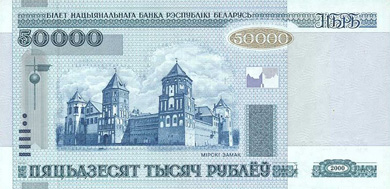
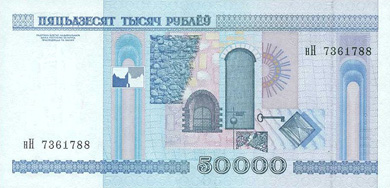
- Belarusian Rubles (BYB/BYR)
- GDP — official exchange rate
- $26,690,000,000 (USD)
- GDP Real Growth Rate
- 8%
- GDP by Sector
- agriculture: 9% industry: 31.5% services: 59.5%
- Gini Index
- 21.7
Banknotes
Budget & Public Finance
- Fiscal Year
- calendar year
- Annual Budget
- $6,343,000,000 (USD)
- External Debt
- $4,662,000,000 (USD)
- Investment (% of GDP)
- 20.7%
- Economic Aid
- $194,300,000 (USD)
- Current Account Balance
- $312,400,000 (USD)
- Reserves of Foreign Exchange
- $835,400,000 (USD)
Labor, Industry & Trade
- Industries
- metal-cutting machine tools, tractors, trucks, earthmovers, motorcycles, television sets, chemical fibers, fertilizer, textiles, radios, refrigerators
- Agriculture Products
- grain, potatoes, vegetables, sugar beets, flax; beef, milk
- Export Commodities
- machinery and equipment, mineral products, chemicals, metals; textiles, foodstuffs
- Export Partners
- Russia 59.8%, Germany 4.9%, Ukraine 3.9%
- Import Commodities
- mineral products, machinery and equipment, chemicals, foodstuffs, metals
- Import Partners
- Russia 68%, Germany 9.6%, Poland 3%
Energy
- Oil Production
- 36,000 bbl/day
- Oil Consumption
- 252,000 bbl/day
- Oil Reserves
- 0 bbl/day
- Natural Gas Production
- 250,000,000 cu m
- Natural Gas Consumption
- 20,500,000,000 cu m
- Natural Gas Imports
- 20,500,000,000 cu m
- Natural Gas Exports
- 0 cu m
- Natural Gas Reserves
- 0 cu m
Communications
- Telephone System
- General Assessment: Belarus lags behind its neighbors in upgrading telecommunications infrastructure; modernization of the network progressing with roughly two-thirds of switching equipment now digital Domestic: state-owned Beltelcom is the sole provider of fixed-line local and long-distance service; fixed-line teledensity is improving although rural areas continue to be underserved; multiple GSM mobile-cellular networks are experiencing rapid growth; mobile-cellular teledensity now exceeds 100 telephones per 100 persons International: country code - 375; Belarus is a member of the Trans-European Line (TEL), Trans-Asia-Europe (TAE) fiber-optic line, and has access to the Trans-Siberia Line (TSL); 3 fiber-optic segments provide connectivity to Latvia, Poland, Russia, and Ukraine; worldwide service is available to Belarus through this infrastructure; additional analog lines to Russia; Intelsat, Eutelsat, and Intersputnik earth stations
- Internet Country Code
- .by
News & Weather
News & Weather
Current Weather
Latest News
Attempted illegal border crossings from Belarus to Poland down over 98% this year - Notes From Poland
Notes From Poland · 9h ago
Poland Sees Sharp Decline in Illegal Border Crossings from Belarus - Kyiv Post
Kyiv Post · 1d ago
Russia Continues Missile Production Using New Foreign and Belarusian Components - UNITED24 Media
UNITED24 Media · 3d ago
‘We don’t want to be cannon fodder’: Lukashenko rules out sending troops to Ukraine - TVP World
TVP World · 43d ago
Trump defrosts relations with Europe’s last dictator, Alexander Lukashenko - NBC News
NBC News · 51d ago
Concerns mount that Belarus could be a launchpad for a new Russian offensive in Ukraine - AP News
AP News · 51d ago
Russian Offensive Campaign Assessment, May 26, 2026 - Institute for the Study of War
Institute for the Study of War · 55d ago
Update on Belarus participation in 2026/2027 IIHF Championship Season - IIHF
IIHF · 53d ago
News via Google News
Climate Overview
Belarus is located on the 53rd latitude--roughly the same as Hamburg, Germany; Dublin, Ireland; and Edmonton, Canada. It has a temperate continental climate. Average summer temperatures are in the mid-60s to mid-70s. (July is the warmest month.) It can be cold from October to April. Average winter temperatures are in the low teens and 20s F. Frost can occur 6 to 7 months of the year. Snow/ice can be expected from December to March, and occasionally into April. Winter days are short. Spring, summer, and fall bring long hours of welcome light. Average annual precipitation is 22-28 inches; June, July, and August are the wettest months.
Videos
Videos
1 curated YouTube videos.
Source: YouTube
Frequently Asked Questions
Frequently Asked Questions
What is the population of Belarus?
How do people greet each other in Belarus?
What are the food and eating customs in Belarus?
What should I know about gestures and personal space in Belarus?
How should I dress in Belarus?
What is family life and hospitality like in Belarus?
What do people do for recreation in Belarus?
What is the capital of Belarus?
Where is Belarus located?
What countries border Belarus?
What is the predominant religion in Belarus?
What currency is used in Belarus?
What languages are spoken in Belarus?
What is Belarus known for?
Who governs Belarus?
Last reviewed 2026