
 English
 Español
 中文
中文 हिन्दी
 Français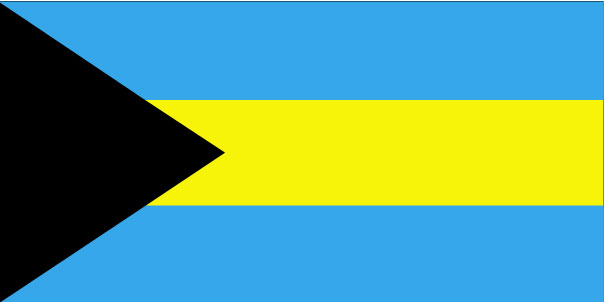
The Bahamas
Declare Your Relationship to The Bahamas
CountryReports Community
- Studying64
- From The Bahamas4
- The Bahamas heritage5
- Visited22
- Want to visit19
Customs and Culture
Customs and Culture
Cultural Attributes
Bahamians are very warm, welcoming, and generally a relaxed and easygoing people. The Bahamians are know for their zest for life and slightly reserved and conservative attitudes. Religion is inherent to life in the Bahamas. The close affiliations with the Church filter down into everyday life, customs and etiquette in the Bahamas, with a focus on proper education, kindness, respect, hospitality, and common courtesy.
Public displays of affection such as hugging, and a modest kiss between a man and a woman are acceptable. However, passionate displays or improper and aggressive advances towards the other gender are thought to be vulgar and improper.

Islands of Eternal Summer
Get More Customs and Culture
5 more cultural topics for members
Social Customs & Etiquette · Diet · Family · Dating Customs · Recreation
Every country, every topic, all activities & recipes
✓ Instant access on this device · ✓ No subscription
Holidays
Independence Day
7/10Independence Day
Christmas Traditions
12/26Christmas
The holiday celebrations of the Bahamas, called
Junkanoo, take place on December 26th and January 1st. Between 2 am and
dawn, an enormous parade presents hundreds of people along with
dancing, music, and vibrant costumes. Each troupe selects a theme for
its costumes and members are dressed in variations of
that theme. It could be something as archaic as
Vikings or as contemporary as astronauts. The groups
short-step or merengue along the street, depending on the
music they play with their goat-skin drums, cowbells,
conchshell horns and whistles.
Junkanoo is thought to have evolved from the joyous celebrations of
Caribbean slaves when they were given several days off around Christmas
to spend with their families. Today, these celebrations similar to New
Orleans’ Mardi Gras and Brazil’s Carnival have become an important
expression of Bahamian culture.
Dates of Interest
- July 10th
How do people greet each other in The Bahamas?
A handshake is the proper way to greet someone, while hugs, kisses, and first names are reserved for friends and family. Bahamians are open and conversational, offering salutations and asking 'How are you?' to friends and strangers alike.
Do
- Offer a handshake when meeting someone
- Use first names only with friends and family
Good to know
- Bahamians respect family and seniority
- Expect friendly greetings even from strangers
What should I know about food and eating in The Bahamas?
Seafood is the most important part of the diet, with the conch shellfish used in many dishes.
Good to know
- Try staples like peas with rice and Souses (pickled meat dishes)
- These are usually served with grits and johnny cake (bread)
What are the general customs and social attitudes in The Bahamas?
Bahamians are warm, welcoming, and easygoing but also slightly reserved and conservative, with religion and the Church deeply woven into daily life. There is a strong focus on kindness, respect, hospitality, and common courtesy.
Do
- Show respect, kindness, and common courtesy
- Modest public affection like hugging or a modest kiss between a man and woman is acceptable
Don’t
- Avoid passionate public displays of affection
- Do not make improper or aggressive advances toward the other gender
How should I dress in The Bahamas?
Western-style clothing is worn, but Bahamians are modest and conservative in their attire.
Do
- Dress modestly and conservatively
- Keep swimwear to the beach
Don’t
- Do not wear swimwear anywhere other than the beach
- When attending church, avoid tee-shirts, shorts, or tennis shoes
Good to know
- Colorful costumes are seen at festivals
What is family life like in The Bahamas?
Many families are headed by grandparents or single parents due to adult migration to Nassau and Freeport for tourism jobs, and the primary caretaker handles discipline.
Good to know
- Adult children often give their mothers gifts or financial assistance
- Unmarried couples living together was traditionally unusual but is changing
- Middle- and upper-class families often employ a maid; poorer families share housework
What do people do for recreation in The Bahamas?
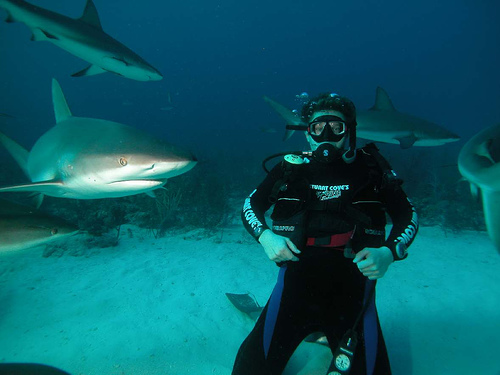
The Bahamas is famed for its beaches, clear waters, and coral reefs, making water sports like diving, snorkeling, windsurfing, deep-sea fishing, and sailing popular.
Good to know
- Almost every inhabited island hosts a sailing regatta or fishing tournament each year
- Cricket, football (soccer), and growing basketball are followed
- Bahamians also excel at track and field, tennis, and yachting
Last updated: 2026-07-12 · Sources: CountryReports
Photos of The Bahamas
Photos of The Bahamas


Travel and Tourism
Travel and Tourism
- Travel Alert Status
- Level 4: Do Not Travel
- Currency
- 1
- Time Difference
- UTC-5 (same time as Washington, DC during Standard Time)
- Airports
- 63
- Recommended Vaccinations
- How important is it to do your research about vaccinations? It might just save your life! Make yourself aware of the different types of vaccinations and which ones you may need to travel to your destination. Schedule an appointment with your doctor at least four to six weeks before you travel to ensure you receive all important shots. Be sure that you and your family are up to date on your routine vaccinations. Which vaccinations you need will depend on a number of factors including your destination, whether you will be spending time in rural areas, the season of the year you are traveling, your age, health status, and previous immunizations.
Read the full travel guide — health, safety, vaccinations, disease risk, sanitation, and transit details.
View full travel guideRecipes
Recipes
History
History
Historical Eras
Lucayan Period
500 – 1492
Arawak-speaking Lucayan people settled the Bahamian archipelago and established communities across dozens of islands. Their society was organized around fishing, agriculture, and trade. The arrival of Christopher Columbus on San Salvador in 1492 marked the catastrophic end of this era, as Spanish slave traders subsequently seized the entire Lucayan population for labor in Hispaniola, extinguishing the indigenous civilization within a generation.
Spanish & Pirate Era
1492 – 1717
Spain claimed the Bahamas but largely neglected the depopulated islands, leaving a power vacuum that attracted pirates and privateers. English and Bermudan settlers, including the Eleutheran Adventurers, established the first permanent European settlement in 1647. By the early 1700s, Nassau had become a notorious pirate haven, home to figures such as Blackbeard and Charles Vane, earning the archipelago the reputation of a 'Pirate Republic.'
British Crown Colony
1717 – 1834
Britain formally established the Bahamas as a Crown Colony in 1717, appointing Woodes Rogers—himself a former privateer—as the first Royal Governor, who swiftly expelled the pirates and imposed order. American Loyalists fleeing the Revolutionary War arrived in large numbers after 1783, bringing enslaved Africans and plantation agriculture. The era closed with the abolition of slavery throughout the British Empire in 1834, fundamentally reshaping Bahamian society.
Colonial Development
1834 – 1964
Following emancipation, the Bahamas evolved slowly under continued British rule, its economy periodically boosted by proximity to the United States. The islands served as a center for Confederate blockade-running during the American Civil War and for rum-running during U.S. Prohibition in the 1920s. The establishment of a free trade area in 1955 and the growth of tourism began transforming the economy away from its earlier dependence on contraband and subsistence activity.
Self-Government & Independence
1964 – 1973
A new constitution in 1964 granted the Bahamas internal self-government, setting the stage for full sovereignty. The Progressive Liberal Party, led by Lynden Pindling, rose to political dominance and championed majority rule in a society long governed by a white merchant elite known as the 'Bay Street Boys.' On July 10, 1973, the Bahamas achieved full independence within the Commonwealth, ending more than 250 years of British colonial authority.
Independent Nation
1973 – present
Since independence, the Bahamas has developed into one of the Caribbean's most prosperous nations, anchored by tourism and a sophisticated international banking and financial services sector. The country has faced persistent challenges including its role as a major transshipment corridor for narcotics bound for the United States and vulnerability to Atlantic hurricanes. Successive governments have worked to diversify the economy and strengthen regional partnerships while maintaining the Bahamas' status as a stable parliamentary democracy.
Overview
In 1492, Christopher Columbus made his first landfall in the Western Hemisphere in The Bahamas. Spanish slave traders later captured native Lucayan Indians to work in gold mines in Hispaniola, and within 25 years, all Lucayans perished. In 1647, a group of English and Bermudan religious refugees, the Eleutheran Adventurers, founded the first permanent European settlement in The Bahamas and gave Eleuthera Island its name.
Every country, every topic, all activities & recipes
✓ Instant access on this device · ✓ No subscription
Timeline of Key Events
1492 – 1815
The island called San Salvador
The island called San Salvador by Christopher Columbus when he first set foot in the new world in 1492 is believed to be one of the Bahamas.
1629
The Bahamas were part of the territories in the Americas
The Bahamas were part of the territories in the Americas granted by King Charles I. to Sir Robert Heath.
1666
Colonisation of New Providence Island begins.
Colonisation of New Providence Island begins.
1670
The Carolina Company
The Carolina Company acquired a grant of the islands from Charles II.
1671
The Bahamas were given a governor and a parliament.
The Bahamas were given a governor and a parliament.
1717
Bahamas become a British crown colony.
Bahamas become a British crown colony.
1783
Treaty of Paris
Spain cedes the Bahamas to Britain in accordance with the Treaty of Paris after briefly occupying the islands the previous year.
Read the full history profile — narrative overview, defining eras, and the complete timeline in one place.
View expanded historyInteresting Facts
Interesting Facts
The Exuma Islands have been the location for James Bond films, not once, but twice!
There was once an undersea post office in the Bahamas
See every fact — trivia, oddities, and curious tidbits gathered from across the country.
View all interesting factsGeography and Environment
Geography and Environment
- Terrain
- long, flat coral formations with some low rounded hills
- Climate
- There are no significant seasonal changes requiring winter clothing or central heating in the Bahamas. The rainy season is from May to October with an average in Nassau of six inches per month. From November through April, average rainfall is two inches per month. The hurricane season extends from June through November, the greatest risk being in August, September, and October. In the winter, temperatures rarely fall below 60°F, and usually reach 77°F by mid-afternoon. During the summer, temperatures fluctuate between 85–90°F in the daytime and 75°F or less in the evening. Although humidity can reach about 80% (relative humidity for September is 82%), prevailing easterly winds lessen personal discomfort. Temperatures vary from a low of 76.7°F in January to a high of 89.1°F in August. Humidity causes mildew on leather and textile products, but homes equipped with central air‑conditioning or dehumidifiers neutralize the harmful effects. Rainfall often occurs in the form of fairly intense showers, frequently accompanied by strong, gusty winds. These storms are usually short and are followed by clear skies. Weather conditions can change rapidly. Statistically, a hurricane can be expected to occur in some part of the Bahamas every nine years.
- Natural Hazards
- hurricanes and other tropical storms cause extensive flood and wind damage
- Current Environmental Issues
- coral reef decay; solid waste disposal
Read the full geography and environment profile — terrain, climate, natural resources, hazards, land use, and international agreements.
View full geographyPeople & Demographics
People & Demographics
Religion
Languages Spoken
English (official), Creole (among Haitian immigrants)
- Creole
- English
Population
- Population
- 409,984
- Population: Male/Female
- male: 190,100 female: 220,762
- Population Distribution
- most of the population lives in urban areas, with two-thirds living on New Providence Island where Nassau is located
- Urban Population
- urban population: 83.6% of total population rate of urbanization: 1.02% annual rate of change
- Population in Major Urban Areas
- 280,000 NASSAU (capital)
- Nationality Noun
- noun: Bahamian(s) adjective: Bahamian
- Ethnic Groups
- African descent 90.6%, White 4.7%, mixed 2.1%, other 1.9%, unspecified 0.7%
- Language Note
- English (official), Creole (among Haitian immigrants)
Education
- Literacy Definition
- age 15 and over can read and write
Health Information
- Alcohol consumption per capita
- total: 9.48 liters of pure alcohol beer: 3.66 liters of pure alcohol wine: 1.43 liters of pure alcohol spirits: 4.08 liters of pure alcohol other alcohols: 0.31 liters of pure alcohol
- Tobacco Use
- total: 10.6% male: 18.8% female: 2.4%
Life Expectancy
- Life Expectancy at Birth
- Total population: 74.5 years Male: 72.0 years Female: 77.1 years
- Median Age
- total: 30.7 years male: 30.6 years female: 30.7 years
- Age Structure
- 0-14 years: 21.4% (male 41,675/female 46,363) 15-64 years: 70% (male 132,626/female 154,866) 65 years and over: 8.6% (male 15,799/female 19,533)
- Infant Mortality Rate
- total: 11.2 deaths/1,000 live births male: 12.6 deaths/1,000 live births female: 9.7 deaths/1,000 live births
Read the full people and society profile — demographics, health, education, religion, languages, and notable people.
View full people and societyGovernment & Politics
Government & Politics
Country Identity
- Country Name
- TheBahamas
- Full Country Name
- Commonwealth of The Bahamas
Government Structure
- Government Type
- constitutional parliamentary democracy
- Legal System
- based on English common law
- Executive Branch
- chief of state: King CHARLES III (since 8 September 2022), represented by Governor General Cynthia A. PRATT (since 1 February 2024) head of government: Prime Minister Philip DAVIS (since 17 September 2021) and Deputy Prime Minister Chester COOPER (since 17 September 2021) cabinet: Cabinet appointed by the governor general on the prime minister's recommendation elections: none; the monarch is hereditary; governor general appointed by the monarch; following legislative elections, the leader of the majority party or the leader of the majority coalition is usually appointed prime minister by the governor general; the prime minister recommends the deputy prime minister
- Legislative Branch
- Bicameral Parliament consists of the Senate (16-member body appointed by the governor general upon the advice of the prime minister and the opposition leader for five-year terms) and the House of Assembly (39 seats; members elected by direct popular vote to serve five-year terms); the government may dissolve the Parliament and call elections at any time. Elections: last held on 16 September 2021 (next to be held by September 2026). Election results: percent of vote by party - PLP 56.3%, FNM 35.9%, other 7.8%; seats by party - PLP 32, FNM 7.
- Judicial Branch
- Supreme Court; Court of Appeal; magistrates courts
- Suffrage
- 18 years of age; universal
- Constitution
- 10-Jul-73
- Independence
- 10 July 1973 (from UK)
- National Holiday
- Independence Day, 10 July (1973)
Capital City
- Capital Name
- Nassau
- Capital - geographic coordinate
- 25 05 N, 77 21 W
- Capital Time Difference
- UTC-5 (same time as Washington, DC during Standard Time)
named after William III (1650-1702), king of England, Scotland, and Ireland, who was a member of the House of Nassau
Military
Branches: Royal Bahamas Defense Force: Land Force, Navy, Air Wing
Embassy / Diplomatic Mission
U.S. Embassy Nassau
42 Queen Street
Telephone: 242-322-1181
Emergency after-hours telephone: 242-357-7004
Facsimile: 242-356-7174
Read the full government profile — flag symbolism, national anthem, and other national symbols.
View full government detailsEconomy
Economy
The Bahamas is a stable, developing nation with an economy heavily dependent on tourism and financial services.
Snapshot
- Currency Name and Code
- Bahamian dollars (BSD)
- GDP — official exchange rate
- $5,783,000,000 (USD)
- GDP Real Growth Rate
- 2.1%
- GDP by Sector
- agriculture: 3% industry: 7% services: 90%
Every country, every topic, all activities & recipes
✓ Instant access on this device · ✓ No subscription
News & Weather
News & Weather
Current Weather
Latest News
Thousands packed for the Bahamas … but ended up in Canada. Now they’re having a blast - CTV News
CTV News · 11h ago
Passengers off cruise ship rerouted from Bahamas to Halifax making most of chilly detour - PNI Atlantic News
PNI Atlantic News · 18h ago
'Is this a joke?': Cruise ship heading for the Bahamas rerouted to Nova Scotia instead - Yahoo News Canada
Yahoo News Canada · 1d ago
Nor'easter diverts cruise ships to chilly Canada instead of warm Bahamas and Bermuda - Capital Weather
Capital Weather · 16h ago
'Is this a joke?': Cruise ship heading for the Bahamas rerouted to Nova Scotia instead - National Post
National Post · 1d ago
Oasis of the Seas cruise ship bound for Bahamas rerouted to Halifax - CTV News
CTV News · 19h ago
Slow-moving system could bring days of heavy rain and flooding to the Bahamas and Florida - FOX Weather
FOX Weather · 1d ago
What's new at Holland America's revamped Bahamas private island - USA Today
USA Today · 14h ago
News via Google News
Videos
Videos
1 curated YouTube videos.
Source: YouTube
Frequently Asked Questions
Frequently Asked Questions
What is the population of The Bahamas?
What is the capital of The Bahamas?
Where is The Bahamas located?
What are the ocean and sea borders of The Bahamas?
What religion is practiced in The Bahamas?
What is the currency of The Bahamas?
What language is spoken in The Bahamas?
What is The Bahamas known for?
Who first colonized The Bahamas and when did it gain independence?
Last reviewed 2026