
 English
 Español
 中文
中文 हिन्दी
 Français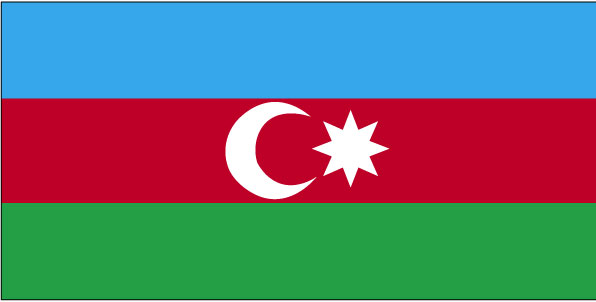
Azerbaijan
Declare Your Relationship to Azerbaijan
CountryReports Community
- Studying10
- From Azerbaijan1
- Azerbaijan heritage4
- Visited3
- Want to visit3
Customs and Culture
Customs and Culture
Cultural Attributes
The attitude of Azeris as a nation has changed over the years. Conditioned to view themselves as Soviets after World War II, the people still felt separate from Russians. The nation experienced a revival of native literature and history in the 1970s that has provided the basis for Azeri feelings in today’s political climate. A desire for national prosperity, love for the motherland, and pride in the native language and culture are strong and are being fostered.

Fire of the Caucasus
Get More Customs and Culture
5 more cultural topics for members
Social Customs & Etiquette · Diet · Family · Dating Customs · Recreation
Every country, every topic, all activities & recipes
✓ Instant access on this device · ✓ No subscription
Holidays
Founding of the Democratic Republic of Azerbaidzhan
5/28Independence
Christmas
12/25Christmas
Azerbaijan is a secular country and is situated in an area that was once part of the Soviet Union. As a whole, it has been home to several varied cultures and religions. Currently, Azerbaijan has evolved into becoming a diverse country that is open to accepting all kinds of religion. This acceptance has led to numerous festivals that are celebrated by the Azerbaijani people.
Eid, Novruz and the Christian festival that celebrates the birth of Jesus Christ called Christmas are among the celebrations that are held every year by the Azerbaijan. Traditionally, the greeting that is used to greet fellowmen on Christmas is ‘Tezze Iliniz Yahsi Olsun,’pronounced ‘te-zee ee-lee-neez yaw-see all-sun,’ which means ‘Merry Christmas’ in Azeri.
Azerbaijani children from the Christian community including children from other non-Christian religions that celebrate Christmas are on their best behavior come Christmastime and look forward to the arrival of Santa Claus during Christmas Eve.
The children would hang their stockings outside their doors and expect to find it overflowing with candies and chocolates the morning after. Azerbaijani children have made it a tradition to write Santa Claus letters requesting what they want for Christmas, and explaining how they have been good.
In Azerbaijan, the Christmas season starts around late November. At Christmas, stores are covered in holly wreaths, mistletoes, candy canes and glitters that spread Christmas cheer. Midnight Mass is held during Christmas Eve. Christian churches around Azerbaijan feature the Nativity scene and carols sung by the choir as mass is held commemorating the birth of Jesus. New Year Festivities are usually the sign of the closure of the Christmas season in Azerbaijan.
During Midnight Mass, traditional Azerbaijan music is played, which combines a combination of both major and minor scales. Musical instruments used during Christmas include a tar or a skin faced lute, a kamancha,(a skin-faced spike fiddle), an oud ( a long necked lute), a goshenagara, (drums )and armon (an accordion), tute k, (a whistle flute) and daf (a frame drum).
During both Christmas Eve and Christmas Day traditional Azerbaijan dinners are served for the whole family to enjoy. Most of the dishes served are with ingredients of saffron, caraway seeds, fennel, anise and coriander. These spices are considered to add fantastically exotic flavors to the dishes for the season. Some of the popular dishes that are served during this occasion are Baliq, Dolma, Dograma and deserts like Pahlava, and Peshmak.
Dates of Interest
- March 21st
Nowruz (pronounced NO-ROOZ) in Persian means "New-year day". Nowruz begins precisely with the beginning of spring on the vernal equinox, on about March 21st.
How do people greet each other in Azerbaijan?
Men shake hands, while women do not shake hands; female relatives or friends may hug and kiss. It is common to ask after the health of the other person's family.
Do
- Use first names with people of the same age
- Address people as "uncle" or "aunt" with their given name, even without family ties
- Ask after the health of the other person's family
Don’t
- Don't expect women to shake hands
What are the dining customs in Azerbaijan?
Azeris are proud of their cuisine and eat three meals a day, with popular dishes including pilau, kebab, and piti. Guests are served by others rather than helping themselves.
Do
- Hold the fork in the left hand and the knife in the right
- Let your hosts serve you rather than serving yourself
- Expect tea and sweets when visiting
Don’t
- Don't serve yourself as a guest
Good to know
- Dinner is eaten in the afternoon and includes soup, pilau, a meat dish, and potatoes or macaroni
- In cities men and women eat together at large gatherings, but they eat separately in rural areas
- When dining out, the host pays the entire bill and the tip
- Meals often end with sherbet or tea, murebbe preserves, and pastries
What etiquette should visitors know in Azerbaijan?
Hospitality is central to the culture, and guests are often invited for a meal or afternoon tea, which includes pastries, fruit preserves, fruit, and candy.
Do
- Stand to greet an older person who enters the room
- Bring gifts such as flowers, confectionery, or pastries when visiting
- Use the right hand for handshakes and other interactions
Don’t
- Don't cross your legs, smoke, or chew gum in the presence of elders
- Don't speak loudly to colleagues
- Don't use the left hand unless the right hand is busy
- Don't open a wrapped gift in front of the giver
Good to know
- Friends and family often visit without prior notice
- Tea is a mid-afternoon affair with pastries, preserves, fruit, and candy
What should I wear in Azerbaijan?
Men and women generally wear Western clothing, though some rural women wear traditional dress and older men may wear the papah lambskin hat.
Good to know
- Rural women may wear a long pleated skirt, long-sleeved blouse, and a charshab wrapped around the skirt
- Young women cover their heads with light kerchiefs or an orpack
- Older men often wear the traditional papah, a high round lambskin hat
Which gestures are polite or rude in Azerbaijan?
Use the right hand for interactions and point at objects (not people) with the index finger. Some finger gestures carry specific meanings.
Do
- Remove shoes before entering mosques and homes
- Use the thumbs-up gesture to signal "fine" or "OK"
- Point at objects with the index finger
Don’t
- Don't point at people
- Don't use the left hand unless the right is busy
- Don't form a circle with your finger and thumb, which is obscene
Good to know
- Shaking a vertical index finger is used to reprimand or warn someone
- The index finger is also used to get a listener's attention
What is family life like in Azerbaijan?
Azeris value family over the individual, and family needs come first. Rural families tend to be extended with the father as head, while nuclear families are more common in cities.
Good to know
- Married sons and their families may live with parents until financially independent
- Unmarried children generally live with their parents regardless of age
- Adult children are expected to care for their aged parents
- Grandparents help care for grandchildren when needed
What do people do for recreation in Azerbaijan?
Azerbaijanis enjoy chess, watching TV, and playing sports, especially football (soccer) and wrestling.
Good to know
- Football (soccer) and wrestling are especially popular sports
- Chess is a popular pastime
Last updated: 2026-07-12 · Sources: CountryReports
Photos of Azerbaijan
Photos of Azerbaijan
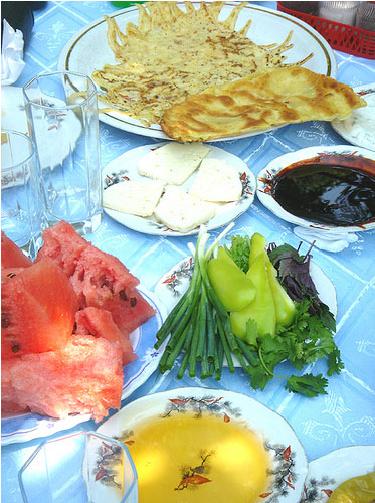
Food in a resort in the Caucasian mountains near Zagatala
Baku Azerbaijan
Baku Azerbaijan at Night Time
A Carpet Shop in Baku
Kids playing Football (soccer)
Baku Azerbaijan
Government Building in Baku Azerbaijan
Socializing in Baku
Seaside Boulevard in Baku
A Fire Temple
National Assembly of Azerbaijan
Transportation and apartments


Travel and Tourism
Travel and Tourism
- Travel Alert Status
- Level 2: Exercise Increased Caution
- Currency
- 1.526
- Time Difference
- UTC+4 (9 hours ahead of Washington, DC, during Standard Time)
- Airports
- 67
- Recommended Vaccinations
- How important is it to do your research about vaccinations? It might just save your life! Make yourself aware of the different types of vaccinations and which ones you may need to travel to your destination. Schedule an appointment with your doctor at least four to six weeks before you travel to ensure you receive all important shots. Be sure that you and your family are up to date on your routine vaccinations. Which vaccinations you need will depend on a number of factors including your destination, whether you will be spending time in rural areas, the season of the year you are traveling, your age, health status, and previous immunizations.
Read the full travel guide — health, safety, vaccinations, disease risk, sanitation, and transit details.
View full travel guideRecipes
Recipes
History
History
Historical Eras
Ancient & Medieval Roots
600 BCE – 1501
Settled by Medes, Persians, and Scythians, Azerbaijan absorbed deep Persian cultural and Zoroastrian religious influences before Arab conquest in the seventh century introduced Islam. Turkish groups gradually displaced Arab political authority between the eleventh and fourteenth centuries, while Mongol invasions twice disrupted the region. The period between 1000 and 1200 saw a golden age of Azerbaijani literature and architecture before Ottoman expansion absorbed much of the region by 1400.
Safavid & Persian Rule
1501 – 1813
The Azerbaijani-origin Safavid Dynasty established Persian imperial rule in 1501, cementing Shia Islam as the dominant faith across the region—a legacy that endures today. Persian cultural influence flourished but weakened over subsequent centuries as the empire declined, allowing Russia to begin encroaching on northern Azerbaijan from around 1700 onward. The era closed with the Treaty of Gulistan in 1813, by which Persia formally ceded its northern Azerbaijani territories to the Russian Empire.
Russian Imperial Era
1813 – 1918
Following the Treaty of Gulistan, Russia consolidated control over Azerbaijan, permanently dividing Azerbaijani populations between the Russian and Persian empires. The discovery and exploitation of Baku's enormous oil reserves in the late nineteenth century brought rapid industrialization alongside intense social inequality. By 1900, radical political organizations had begun forming in response to Tsarist rule, laying groundwork for the nationalist movements that would emerge during World War I.
First Republic & Soviet Annexation
1918 – 1936
Following the collapse of the Russian Empire, Azerbaijan declared independence in 1918 as part of the short-lived Transcaucasian federation, establishing one of the first Muslim-majority democratic republics in the world. The Red Army invaded in 1920, forcibly incorporating Azerbaijan into the Soviet Union, and in 1922 Armenia, Azerbaijan, and Georgia were merged into a single Transcaucasian Soviet republic. Stalin's 1936 constitution reorganized them as distinct Soviet Socialist Republics, giving Azerbaijan nominal but controlled separate status.
Soviet Azerbaijan
1936 – 1991
As a Soviet republic, Azerbaijan endured Stalinist purges that peaked under Lavrenti Beria in 1936–37, decimating the intelligentsia and political leadership. Soviet industrialization heavily exploited Baku's oil infrastructure, yet economic benefits accrued predominantly to the central Soviet state. Ethnic tensions over the Armenian-populated Nagorno-Karabakh enclave intensified in the late 1980s alongside the broader nationalist awakening that accompanied Gorbachev's reforms, propelling Azerbaijan toward independence.
Independent Azerbaijan
1991 – present
Azerbaijan restored independence following the Soviet Union's dissolution in 1991, but immediately faced war with Armenia over Nagorno-Karabakh, losing approximately 16 percent of its territory before a 1994 ceasefire. The conflict displaced an estimated 800,000 refugees and internally displaced persons, straining the new state's institutions. Vast Caspian petroleum reserves offered the promise of prosperity, though corruption and uneven development have constrained the benefits of oil wealth for the broader population.
Overview
THE THREE REPUBLICS of Transcaucasia--Armenia, Azerbaijan, and Georgia--were included in the Soviet Union in the early 1920s after their inhabitants had passed through long and varied periods as separate nations and as parts of neighboring empires, most recently the Russian Empire. By the time the Soviet Union dissolved at the end of 1991, the three republics had regained their independence, but their economic weakness and the turmoil surrounding them jeopardized that independence almost immediately.
Every country, every topic, all activities & recipes
✓ Instant access on this device · ✓ No subscription
Timeline of Key Events
600
Four centuries of Arab control of Azerbaijan begin, introducing Islam in seventh century.
Four centuries of Arab control of Azerbaijan begin, introducing Islam in seventh century.
1000 – 1200
Golden age of Azerbaijani literature and architecture.
Golden age of Azerbaijani literature and architecture.
1100 – 1400
Turkish groups wrest political control of Azerbaijan from Arabs.
Turkish groups wrest political control of Azerbaijan from Arabs, introducing Turkish language and culture.
1200 – 1400
Mongols twice invade Azerbaijan, establishing temporary dynasties.
Mongols twice invade Azerbaijan, establishing temporary dynasties.
1400
Most of modern Armenia, Azerbaijan, and Georgia become part of Ottoman Empire.
Most of modern Armenia, Azerbaijan, and Georgia become part of Ottoman Empire.
1501
Azerbaijani Safavid Dynasty begins rule by Persian Empire.
Azerbaijani Safavid Dynasty begins rule by Persian Empire.
1700
Russia begins moving into northern Azerbaijan as Persian Empire weakens.
Russia begins moving into northern Azerbaijan as Persian Empire weakens.
Read the full history profile — narrative overview, defining eras, and the complete timeline in one place.
View expanded historyInteresting Facts
Interesting Facts
1236-1498-Mongols of Genghis Khan control Az.
1870-1915 – Oil industry makes Baku a boomtown
1991- Azerbaijan Declares independence from the Soviet Union
Possibly the largest annual event in Azerbaijan is the Caspian Oil and Gas Show. Held in late May or early June in and around Baku, this week long event brings people together from all over the world. The Oil and Gas Show has become a festive celebration of Azerbaijan potential to return to its position as one of the great producers of oil and natural gas.
1 more facts for members
Every country, every topic, all activities & recipes
✓ Instant access on this device · ✓ No subscription
Geography and Environment
Geography and Environment
- Terrain
- large, flat Kur-Araz Ovaligi (Kura-Araks Lowland) (much of it below sea level) with Great Caucasus Mountains to the north, Qarabag Yaylasi (Karabakh Upland) in west; Baku lies on Abseron Yasaqligi (Apsheron Peninsula) that juts into Caspian Sea
- Climate
- The climate generally follows the topography, temperatures falling and precipitation rising with increasing elevation, although the southeastern corner of Azerbaijan, including its lowlands, is the wettest part of the country. The mean July temperature in the lowlands is 77°–81°F, with temperatures sometimes exceeding 100°F in Baku. The average January temperature in the lowlands is 32°–37°F. Highland temperatures average around 40°F in July and below 14°F in January. Annual precipitation averages less than 11 inches along most of the coast and in most of the Kura Depression; 12–35 inches in the foothills and mid altitude highlands; 39–51 inches along the southern slopes of the Greater Caucasus, and 47–71 inches in the southeastern Lenkoran Region. These climatic variations produce wet subtropical conditions in the Lenkoran lowlands where citrus fruits are grown; temperate semidesert on the Apsheron Peninsula and Kura lowlands; temperate moist conditions at middle elevations; and subalpine and alpine environments at the highest. Baku is marked by mild winters and hot summers. Rain can be fairly frequent, though usually light, in fall and winter, but is infrequent in the summer. In winter, the city is subject to severe north or northwest winds, but snow is infrequent.
- Natural Hazards
- droughts
- Current Environmental Issues
- local scientists consider the Abseron Yasaqligi (Apsheron Peninsula) (including Baku and Sumqayit) and the Caspian Sea to be the ecologically most devastated area in the world because of severe air, soil, and water pollution; soil pollution results from oil spills, from the use of DDT as a pesticide, and from toxic defoliants used in the production of cotton
Read the full geography and environment profile — terrain, climate, natural resources, hazards, land use, and international agreements.
View full geographyPeople & Demographics
People & Demographics
Religion
Languages Spoken
Azerbaijani (Azeri) 89%, Russian 3%, Armenian 2%, other 6%
- Armenian
- Azerbaijani
- Russian
Population
- Population
- 10,420,515
- Population: Male/Female
- male: 5,330,233 female: 5,320,006
- Population Distribution
- highest population density is found in the far eastern area of the country, in and around Baku; apart from smaller urbanized areas, the rest of the country has a fairly light and evenly distributed population
- Urban Population
- urban population: 57.6% of total population (2023) rate of urbanization: 1.38% annual rate of change note: data include Nagorno-Karabakh
- Population in Major Urban Areas
- 2.432 million BAKU (capital)
- Nationality Noun
- noun: Azerbaijani(s) adjective: Azerbaijani
- Ethnic Groups
- Azerbaijani 91.6%, Lezghin 2%, Russian 1.3%, Armenian 1.3%, Talysh 1.3%, other 2.4%
- Language Note
- Azerbaijani (Azeri) (official) 92.5%, Russian 1.4%, Armenian 1.4%, other 4.7%
Demographic Profile
Azerbaijan’s citizenry has over 80 ethnic groups. The far eastern part of the country has the highest population density, particularly in and around Baku. Apart from smaller urbanized areas, the rest of the country has a fairly light and evenly distributed population. Approximately 57% of the country’s inhabitants lives in urban areas. While the population is continuing to grow, it is in the early stages of aging. The declining fertility rate – which has decreased from about 5.5 children per woman in the 1950s to less than the 2.1 replacement level in 2022 – combined with increasing life expectancy has resulted in the elderly making up a larger share of Azerbaijan’s populace. The percentage of elderly residents and the slowed growth and eventual shrinkage of the working-age population could put pressure on the country’s pension and healthcare systems.
Education
- Literacy Definition
- age 15 and over can read and write
Health Information
- Alcohol consumption per capita
- total: 1.38 liters of pure alcohol beer: 0.36 liters of pure alcohol wine: 0.06 liters of pure alcohol spirits: 0.94 liters of pure alcohol other alcohols: 0.01 liters of pure alcohol
- Tobacco Use
- total: 24% male: 47.9% female: 0.1%
Life Expectancy
- Life Expectancy at Birth
- total population: 74.5 years male: 71.6 years female: 77.6 years
- Median Age
- total: 34.3 years male: 32.8 years female: 36 years
- Age Structure
- 0-14 years: 22.3% (male 1,269,241/female 1,104,529) 15-64 years: 68.7% (male 3,659,441/female 3,656,493) 65 years and over: 9% (male 401,551/female 558,984)
- Infant Mortality Rate
- total: 9.4 deaths/1,000 live births male: 10.8 deaths/1,000 live births female: 7.9 deaths/1,000 live births
Read the full people and society profile — demographics, health, education, religion, languages, and notable people.
View full people and societyGovernment & Politics
Government & Politics
Country Identity
- Country Name
- Azerbaijan
- Full Country Name
- Republic of Azerbaijan
- Local - Long
- Azarbaycan Respublikasi
- Former Name
- Azerbaijan Soviet Socialist Republic
Government Structure
- Government Type
- republic
- Legal System
- based on civil law system
- Executive Branch
- chief of state: President Ilham ALIYEV (since 31 October 2003; re-elected 2008, 2013, 2018, and 2024) head of government: Prime Minister Ali ASADOV (since 8 October 2019); First Deputy Prime Minister Yaqub EYYUBOV (since 4 April 2006) cabinet: Council of Ministers appointed by the president and confirmed by the Milli Majlis (National Assembly) elections: president elected by popular vote to a seven-year term (term length extended from five to seven years following a 2009 constitutional referendum); election last held on 7 February 2024 (next to be held in 2031); prime minister and first deputy prime minister appointed by the president and confirmed by the National Assembly election results: Ilham ALIYEV re-elected president in February 2024 with approximately 92.1% of the vote, defeating several other candidates; the election was held early following a presidential decree calling a snap vote
- Legislative Branch
- Unicameral National Assembly or Milli Majlis (125 seats; members elected by popular vote to serve five-year terms) Elections: last held on 9 February 2020 (next to be held in 2025) Election results: percent of vote by party - NA%; seats by party - New Azerbaijan Party (YAP) 70, independents 43, other parties and blocs 12
- Judicial Branch
- Supreme Court
- Suffrage
- 18 years of age; universal
- Constitution
- adopted 12 November 1995
- Independence
- 30 August 1991 (from Soviet Union)
- National Holiday
- Founding of the Democratic Republic of Azerbaidzhan, 28 May (1918)
Capital City
- Capital Name
- Baku (Baki, Baky)
- Capital - geographic coordinate
- 40 23 N, 49 52 E
- Capital Time Difference
- UTC+4 (9 hours ahead of Washington, DC, during Standard Time)
the name derives from the Persian designation of the city "bad-kube" meaning "wind-pounded city" and refers to the harsh winds and severe snow storms that can hit the city
note: at approximately 28 m below sea level, Baku's elevation makes it the lowest capital city in the world
Military
Branches: Army, Navy, Air, and Air Defense Forces
Embassy / Diplomatic Mission
U.S. Embassy Baku is located at 111 Azadlig Prospekt
Tel. (994-12) 498-03-35, 36, or 37
Emergency after-hours telephone: (994-12) 498-03-35, 36, or 37
Facsimile: (994-12) 465-66-71
Email: Consular Baku
Website: US Embassy Baku, Azerbaijan
Read the full government profile — flag symbolism, national anthem, and other national symbols.
View full government detailsEconomy
Economy
Azerbaijan's economy is heavily dependent on oil and natural gas, which together account for roughly 90 percent of export revenues and around half of government income.
Snapshot
- Currency Name and Code
- Azerbaijani manats (AZN)
- GDP — official exchange rate
- $10,400,000,000 (USD)
- GDP Real Growth Rate
- 1.1%
- GDP by Sector
- agriculture: 14.1% industry: 45.7% services: 40.2%
- Gini Index
- 36.5
Every country, every topic, all activities & recipes
✓ Instant access on this device · ✓ No subscription
News & Weather
News & Weather
Current Weather
Latest News
Azerbaijan Should Not Cave to Islamist Pressure on Female Education - Middle East Forum
Middle East Forum · 3h ago
Turkey and Azerbaijan: Old Allies Fall Out - Center for European Policy Analysis (CEPA)
Center for European Policy Analysis (CEPA) · 20h ago
Azerbaijan Backed Pakistan. Can India Reset Ties? - StratNews Global
StratNews Global · 6h ago
Remittances from Azerbaijan to Georgia drop 15.7% in September - AzerNews
AzerNews · 4h ago
Baku was Hitler’s target. Now it is Erdogan’s - opinion - The Jerusalem Post
The Jerusalem Post · 23h ago
Baku’s Hijab Ban Sparks Protests in Azerbaijan and Creates Problems With Türkiye - The Jamestown Foundation
The Jamestown Foundation · 16h ago
Azerbaijani-Turkish rancor reaching new heights - Eurasianet
Eurasianet · 21h ago
Azerbaijan bans 31 Turks from entering country as headscarf ban dispute escalates - Middle East Eye
Middle East Eye · 1d ago
News via Google News
Videos
Videos
1 curated YouTube videos.
Source: YouTube
Frequently Asked Questions
Frequently Asked Questions
What is the population of Azerbaijan?
What is the capital of Azerbaijan?
Where is Azerbaijan located?
What countries border Azerbaijan?
What is the main religion practiced in Azerbaijan?
What is the currency of Azerbaijan?
What language is spoken in Azerbaijan?
What is Azerbaijan known for?
Last reviewed 2026